11 Signs Your Poodle Is Aging: A Senior Care Guide
Aging is not a single moment—it is a gradual collection of small changes. The earliest signs your Poodle is aging can be easy to miss, but noticing patterns early helps you protect comfort, mobility, and quality of life.
Quick Answer
The earliest signs your Poodle is aging may include a graying muzzle, lower stamina, longer naps, a slower rise after rest, reduced hearing, a bluish haze in the eyes, muscle loss, or small changes in routine. Standard Poodles often enter senior-care planning earlier than Toy and Miniature Poodles because larger dogs generally age faster. Track gradual patterns over several weeks, but contact a veterinarian promptly for sudden decline, pain, collapse, breathing difficulty, eye redness, rapid weight loss, or complete refusal of food.
🐩 Size Matters
Toy and Miniature Poodles often live 14–17 years, while Standards typically reach 11–13. The onset of senior signs shifts accordingly.
👀 First Clues
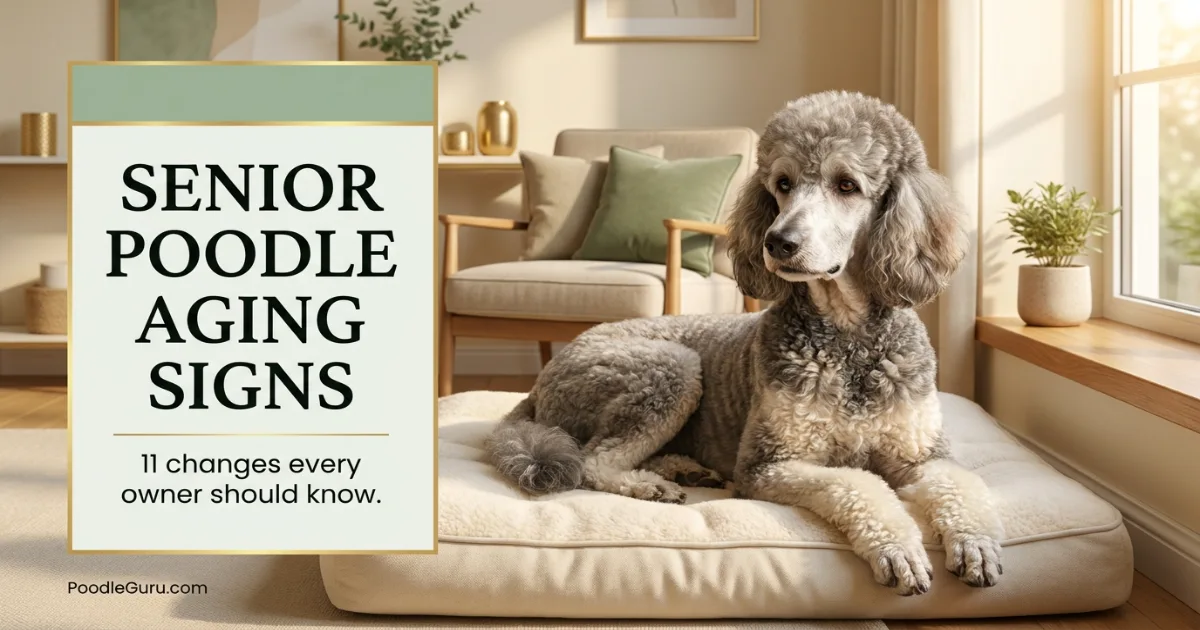
Owners first notice graying fur (usually muzzle and around eyes), cloudier eye lenses, and a preference for shorter walks.
🧠 Brain Health
Cognitive decline isn’t inevitable, but Poodles can develop canine cognitive dysfunction. Early signs include disrupted sleep and momentary confusion.
🍽 Appetite Shifts
Older Poodles may eat less due to reduced smell or dental discomfort. Sudden weight loss always warrants a vet check.
🩺 Vet Partnership
Twice-yearly senior wellness exams — including bloodwork — catch many age-related conditions before they become crises.
💛 Gentle Care
Adjusting exercise, diet, and home setup (ramps, orthopedic beds) keeps your Poodle comfortable and mentally engaged well into old age.
What Aging Really Means for a Poodle
Aging in Poodles is a gradual biological process where cells repair more slowly, sensory acuity softens, and the body’s reserve capacity shrinks. For poodle owners, this means the dog who once bounded up stairs may now take them one at a time — not because anything is wrong, but because the system is simply older. The most important thing to understand is that aging itself isn’t a disease. It’s a normal life stage. Your job is to distinguish between expected wear-and-tear and the red flags that point to treatable illness.
Poodles age differently from many breeds. Their single-layer coat doesn’t shed heavily, but it does change texture — becoming coarser, thinner, or slower to regrow after clipping. Their lean build means muscle loss is more visible than in bulkier breeds. And because Poodles are so intelligent, cognitive changes can appear more pronounced: a dog who used to learn a new trick in three sessions now needs ten. That’s not stubbornness. That’s an aging brain that needs more time.
One of the kindest things you can do is reframe what you expect. A senior Poodle isn’t a broken version of a young poodle. It’s a dog who has earned the right to a slower, more supported rhythm. When you recognize the early signs, you can make small adjustments that keep your dog comfortable and connected — often for years.
11 Signs Your Poodle Is Aging
No single item proves that a health problem is present. These are observation points that become more useful when you record when they started, whether they are progressing, and whether they affect comfort or normal activities.
- Gray hair around the muzzle or eyes. Gradual facial graying is a common visible change, although genetics can make it appear earlier in some dogs.
- Slower rising after sleep. A senior Poodle may pause, stretch, or need a few careful steps before moving normally.
- Less stamina during walks or play. Your dog may still want activity but prefer shorter sessions and longer recovery.
- More sleep or quieter rest. Older dogs commonly rest more, but they should still be responsive and interested when awake.
- Loss of muscle over the back or hindquarters. Visible thinning can reflect aging, reduced activity, pain, or disease and deserves monitoring.
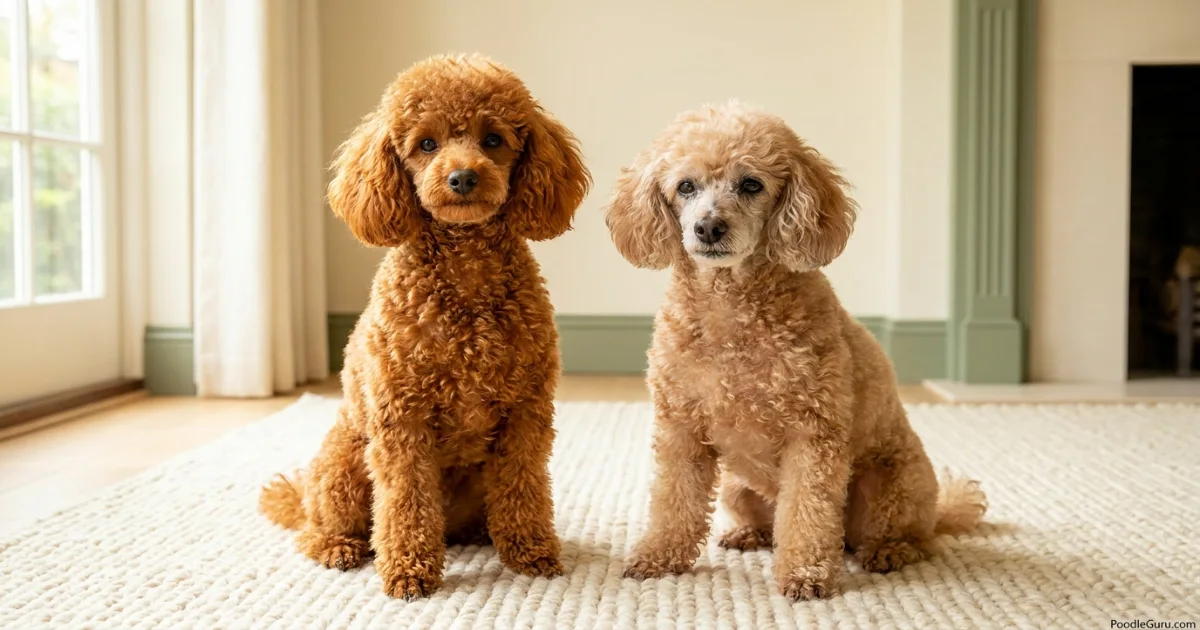
- Changes in coat texture or regrowth. The coat may feel drier, thinner, softer, or slower to return after clipping.
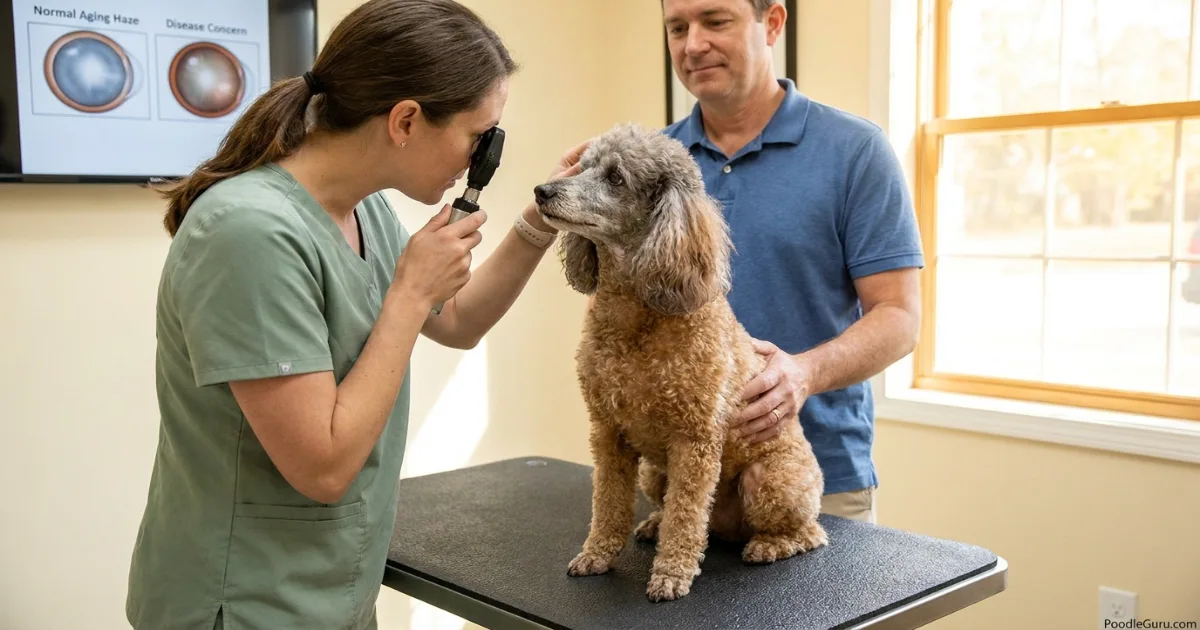
- Bluish haze in both eyes. Nuclear sclerosis is common with age, but only an eye examination can distinguish it from cataracts or painful eye disease.
- Reduced response to sound. Hearing loss may first appear as missed high-pitched sounds, deeper sleep, or being startled when approached.
- Changes in appetite, weight, or thirst. Small shifts can occur, but persistent or rapid changes should not be dismissed as normal aging.
- New anxiety, clinginess, withdrawal, or irritability. Behavior changes may reflect sensory loss, pain, stress, or cognitive decline.
- Confusion or disrupted sleep-wake patterns. Getting stuck, staring, pacing at night, house-soiling, or forgetting familiar routines warrants a veterinary discussion.
Expert Insight: The “Slow Fade” vs. Sudden Change
Healthy aging is generally gradual. A Poodle who collapses, struggles to breathe, cannot stand, develops a painful red eye, or deteriorates rapidly needs urgent veterinary care. Sudden food refusal, major behavior change, vomiting, or weakness also deserves prompt professional assessment rather than being blamed on age.
How Size Shapes the Aging Timeline
Toy, Miniature, and Standard Poodles share the same breed foundation, but body size influences how quickly age-related changes may appear. Larger dogs generally age faster, so senior screening often begins earlier for Standards. These ranges are planning guides—not deadlines or diagnoses.
| Poodle Variety | Common Lifespan Range | When Senior-Care Discussions Often Begin | What to Monitor More Closely |
|---|---|---|---|
| Toy Poodle | About 14–18 years | Often around 9–11 years | Dental health, kneecaps, vision, weight loss, and cognitive changes |
| Miniature Poodle | About 13–15 years | Often around 8–10 years | Mobility, dental health, hearing, eyes, and endocrine changes |
| Standard Poodle | About 12–15 years | Often around 7–9 years | Joint comfort, muscle mass, heart health, abdominal emergencies, and cancer screening |
Individual dogs vary widely. Genetics, body condition, dental health, chronic disease, activity, and preventive care can shift the timeline in either direction. Use age to plan screening—not to explain away symptoms.
Veterinary Sources Behind This Guide
- AAHA senior-pet guidance recommends twice-yearly veterinary visits for senior pets and discusses bloodwork and urinalysis for early detection.
- Cornell’s canine cataract guide explains that a bluish haze can be age-related nuclear sclerosis, while cataracts can impair vision.
- Merck Veterinary Manual lists disorientation, sleep changes, house-soiling, and reduced social interaction among signs of canine cognitive dysfunction.
Physical Signs: Coat, Mobility, and Senses
You’ll likely notice physical changes before anything else. The coat loses some luster. The eyes develop a bluish haze. The stride shortens. None of these are emergencies — they’re signposts. Tracking them over time is far more valuable than reacting to each in isolation.
Coat Texture and Color Fading
Poodles often experience a gradual lightening of coat color, particularly in reds, apricots, and browns. This is sometimes called “silvering out” and is genetically normal. You’ll also feel a coarser, drier texture. The skin underneath may become thinner, with less elasticity. Regular brushing still matters, but use a gentler touch and choose tools that do not scrape thin senior skin. Ask your veterinarian before adding omega-3s or any supplement, especially if your dog takes medication or has a chronic condition.
Joint Stiffness and Muscle Loss
Watch for the “slow sit” — your Poodle circles, hesitates, then lowers themselves carefully. This often signals hip or knee discomfort, even if there’s no limp. Muscle wasting along the spine and hind legs is common. You can help with non-slip rugs, a supportive harness, and shorter but more frequent gentle walks. Adapting movement for stiff or arthritic Poodles keeps joints mobile without strain.
Eyes and Ears
Nuclear (lenticular) sclerosis often creates a bluish-gray haze in both lenses as dogs age and usually has limited effect on vision. Cataracts can look denser and may reduce sight. Because painful eye disease can also cause cloudiness, redness, or squinting, a veterinarian should examine any new eye change. Hearing loss typically starts with high-pitched sounds; your Poodle may not hear the treat bag crinkle but still respond to your voice. Use hand signals for cues your dog already knows.
Cognitive and Emotional Shifts
A Poodle’s brain changes with age just like its body. Some mental slowing is expected. But a cluster of behavioral shifts — pacing at night, forgetting familiar routines, staring blankly at walls — may indicate canine cognitive dysfunction (CCD). This isn’t a personality flaw; it’s a neurological condition that can sometimes be managed.
Sleep-Wake Cycle Disruption
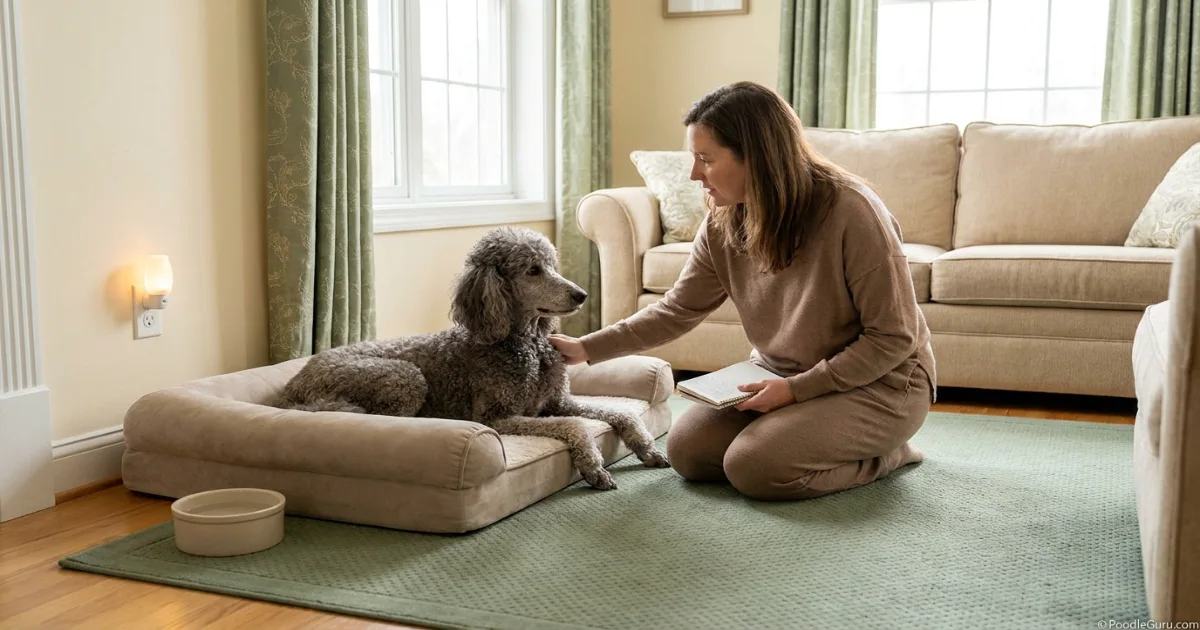
Many older Poodles begin waking at night, pacing, or seeming restless. This can stem from reduced melatonin, discomfort, or the need to urinate more often. A consistent bedtime routine, a nightlight, and a comfortable orthopedic bed often help. Keep a log; if night waking is paired with confusion or incontinence, mention it to your vet.
Social Changes
You might notice your Poodle seeking more solitude, or conversely, becoming clingier. Both are normal. The dog who used to greet every visitor may now retreat to a quiet corner. Respect this. Forcing interaction creates stress. However, sudden irritability — snapping when touched — can indicate pain, not aging. Always rule out physical discomfort first.
Training and Memory
Senior Poodles can still learn. Many do best with shorter sessions, clear cues, comfortable footing, and rewards that fit their diet. Switch to hand signals if hearing fades, and celebrate the small wins. Mental enrichment — a sniffy walk, a simple food puzzle, a gentle game of hide-and-seek — keeps brain cells firing. It’s never too late to teach an old poodle new tricks; it just takes patience and a soft touch.
Normal Aging vs. Warning Signs: A Decision Table
This table helps you distinguish between expected changes and signals that need a veterinarian’s attention. If you check several boxes in the right column, book that appointment.
| Symptom | Likely Normal Aging | Warrants a Vet Visit |
|---|---|---|
| Graying fur | Gradual muzzle and eye-area lightening over years | Sudden white patches or hair loss with skin irritation |
| Eye cloudiness | Bluish haze, both eyes equal, no vision loss | White opaque spots, redness, squinting, or bumping into furniture |
| Joint stiffness | Slow rise after rest, eases with gentle movement | Limping, crying out, refusing to bear weight, sudden lameness |
| Sleep changes | Longer naps, more deep sleep | Pacing all night, appearing disoriented, vocalizing at walls |
| Appetite shift | Eats slightly less, preference for softer foods | Complete food refusal, rapid weight loss, vomiting |
| Social withdrawal | Seeking more quiet time, less interested in rambunctious play | Hiding, trembling, snapping when touched gently |
| Toileting | Needs to go out more frequently; occasional leak when sleeping deeply | Straining, blood in urine, loss of house-training entirely |
The PoodleGuru Aging Assessment
At PoodleGuru, we evaluate aging not by a single vet checkmark but by tracking five key dimensions over time. This assessment is meant for home use — a way to notice patterns and bring useful observations to your next veterinary appointment. It’s not diagnostic, but it is empowering.
Coat & Skin Check
Once a month, run your hands over your Poodle’s body. Note any new lumps, coat texture changes, or thinning areas. Write it down. A lump that stays the same size for six months is different from one that doubles in three weeks.
What to track: coat color shift, skin elasticity, new growths, dryness.
Mobility Log
Watch how your Poodle rises from a down position, navigates stairs, and jumps (or chooses not to). A simple weekly note — “used all four paws on stairs today” or “hesitated before jumping onto couch” — creates a record that reveals trends you’d otherwise miss.
What to track: stair hesitation, jump refusals, post-exercise stiffness duration.
Cognitive Snapshot
Pick a simple task your Poodle knows well — “sit,” “touch,” or a favorite puzzle toy. Once a month, see how quickly they respond. Note any delays or confusion. Repeated confusion with a familiar cue is worth recording, but response time alone cannot diagnose cognitive decline. Hearing loss, vision changes, pain, fatigue, and distraction can look similar.
What to track: response time, recognition of familiar people, sleep-wake cycle disruptions.
Appetite & Weight Record
Weigh your Poodle every two weeks on the same scale. A 5% weight loss over a month is meaningful, even if your dog seems otherwise fine. Monitor water intake too — a sudden increase can signal kidney changes or diabetes.
What to track: weight, food enthusiasm, water bowl refill frequency.
Vet Wellness Sync
Take your notes to the vet twice a year. Senior bloodwork (CBC, chemistry panel, thyroid) often detects issues before symptoms appear. You’re not being overprotective — you’re being thorough. A baseline at age 7 or 8 gives your vet something to compare against later.
What to track: vet visit dates, bloodwork values, any prescribed adjustments.
How to Use the Assessment: A 5-Minute Monthly Routine
Set a recurring phone reminder. Spend five minutes running through the five dimensions. Jot notes in a dedicated notebook or app. At your Poodle’s next vet visit, you’ll walk in with real data — not vague impressions. That data is a gift to your veterinarian and a safety net for your dog.
When to Consult a Veterinarian
You don’t need to rush to the clinic for every gray hair. But there are clear moments when professional assessment is essential. Trust your gut. If something feels off, it probably is.
Ask Your Vet If Your Senior Poodle:
- Loses interest in food for more than 24 hours, or drinks water excessively
- Shows a sudden personality shift — aggression, hiding, or extreme clinginess
- Starts pacing at night and seems unable to settle, especially if vocalizing
- Develops a cough, labored breathing, or collapses during walks
- Strains to urinate, has accidents after years of being house-trained, or passes blood
- Has a growth that changes shape, color, or size rapidly
- Loses significant weight without a diet change
Many age-related diseases — kidney disease, hypothyroidism, dental infections, arthritis — are manageable when caught early. A senior blood panel is one of the most valuable diagnostic tools your vet has. It’s not an expense; it’s an early warning system.
An Owner’s Gentle Action Plan
Seeing your Poodle age is emotional. But there’s a lot you can do to keep them comfortable, happy, and engaged. This plan focuses on small, sustainable shifts.
🛏 Upgrade Rest Areas
Invest in a high-quality orthopedic bed with bolsters. Place one in every room your Poodle frequents. Joints ache less on memory foam. Add a washable waterproof liner for any incontinence.
🍲 Adjust Nutrition
Ask your veterinarian whether your dog should stay on a healthy-adult diet, move to a senior formula, or use a therapeutic diet for a diagnosed condition. Do not restrict protein or phosphorus automatically. Warming food slightly may improve aroma for some dogs.
🚶 Rethink Exercise
Swap one long walk for two shorter ones. Add mental enrichment — a snuffle mat, a slow sniffy walk, or a five-minute training session. Movement keeps muscles alive, but the goal is mobility, not exhaustion.
🏠 Simplify the Home
Add ramps to favorite furniture. Secure rugs with non-slip pads. Keep water bowls on each floor. Nightlights help dogs with fading vision navigate after dark. Small changes prevent big falls.
💊 Track Medications
If your Poodle starts vet-approved supplements or prescriptions, use a written schedule or phone reminder. Never add human pain relievers or combine products without checking for interactions.
❤️ Stay Connected
Even a deaf and partially blind poodle still values your touch and presence. Lie beside their bed. Speak in low, soothing tones. The bond doesn’t age — it deepens.
Many owners find that the senior years, while requiring more vigilance, are also the sweetest. The frantic puppy energy is gone, replaced by a quiet, steady companionship. For more on age-related vision concerns, see our Poodle eye-health guide. And if your dog is newly diagnosed with a chronic condition, our lifespan and long-term care guide helps you plan with clarity and compassion.
Frequently Asked Questions
At what age is a poodle considered a senior?
Standard Poodles are generally considered seniors around 7–8 years, Miniatures at 9–10, and Toys at 10–11. However, this is a guideline. Genetics, diet, and veterinary care all influence when a poodle enters its older years. The transition is gradual, not a switch.
Why is my Poodle’s coat turning white or gray?
Progressive graying, especially on the muzzle and around the eyes, is a normal aging change in Poodles. Some also experience a general lightening of coat color called “silvering out,” which is genetic and unrelated to health. Sudden white patches or hair loss, though, should be checked by a vet.
My older poodle sleeps all day. Is that normal?
Older dogs often sleep more and may prefer quieter rest. Increased sleep can be normal when your Poodle remains responsive, eats normally, and still enjoys familiar activities. If sleep is accompanied by disorientation, lethargy when awake, or loss of interest in everything, consult your vet.
How can I tell if my poodle is in pain?
Dogs do not always vocalize clearly when they hurt. Watch for subtle signs: a reluctance to jump, a stiff gait, licking a specific joint, changes in breathing when lying down, or irritability when touched. A vet can assess pain more objectively and recommend safe management strategies, including medication if appropriate.
Is canine cognitive dysfunction common in Poodles?
It can occur in any breed. Poodles follow routines closely, so owners may notice cognitive changes such as disrupted sleep, house-soiling, staring, or getting stuck in corners. There’s no cure, but medications, supplements, and environmental enrichment can slow progression and improve quality of life.
Should I change my senior Poodle’s diet?
Sometimes, but age alone does not determine the right food. Calorie needs often fall as activity decreases, while protein and mineral targets depend on body condition and diagnosed disease. Some dogs need a therapeutic diet; others do not. Never switch without veterinary guidance, especially if your Poodle has underlying conditions. A blood panel can guide the right choice.
How often should a senior Poodle see the vet?
Twice-yearly senior wellness exams are commonly recommended, with bloodwork, urinalysis, blood pressure, or other screening chosen for the individual dog. This cadence catches diseases like kidney decline, diabetes, and thyroid issues early — often before your Poodle shows obvious symptoms.
Key Takeaways: Navigating Your Poodle’s Senior Years
Your Poodle’s aging process is a journey you walk together. The more observant you are now, the more comfortable and joyful the later years will be. Keep these truths close:
- The first signs your Poodle is aging are often subtle — a graying muzzle, a slower rise, longer naps — and they begin at different ages depending on whether your Poodle is a Toy, Miniature, or Standard.
- Aging itself is not a disease, but several age-related conditions (arthritis, dental disease, kidney decline, cognitive dysfunction) are treatable when caught early through regular vet visits and home monitoring.
- The PoodleGuru Aging Assessment — tracking coat, mobility, cognition, appetite, and vet data monthly — gives you objective records that help your veterinarian detect problems before they become crises.
- Distinguishing normal aging from warning signs (pain, sudden personality shifts, rapid weight loss) prevents unnecessary worry while ensuring you never overlook a treatable condition.
- Small home adjustments — orthopedic beds, ramps, non-slip rugs, nightlights, warmed food — dramatically improve an older Poodle’s comfort without complex interventions.
- Your senior Poodle still needs mental enrichment, gentle exercise, and above all, your steady presence. The bond you’ve built doesn’t fade with age — it settles into something quieter and deeper.
Your next step: Schedule a dedicated 10 minutes this week to do the first PoodleGuru Aging Assessment. Run your hands over your dog’s coat, watch them move, and jot down what you see. That simple act starts a record that can add years of quality to your Poodle’s life.