Boston Poo (Boston Terrier Poodle Mix): Complete Guide
The Boston Poo blends the tuxedo-clad charm of the Boston Terrier with the clever, low-shedding Poodle influence. It’s a small dog with a big personality — but the mix demands careful breeder screening to avoid the respiratory and eye issues that can hide beneath a cute face.
Quick Answer
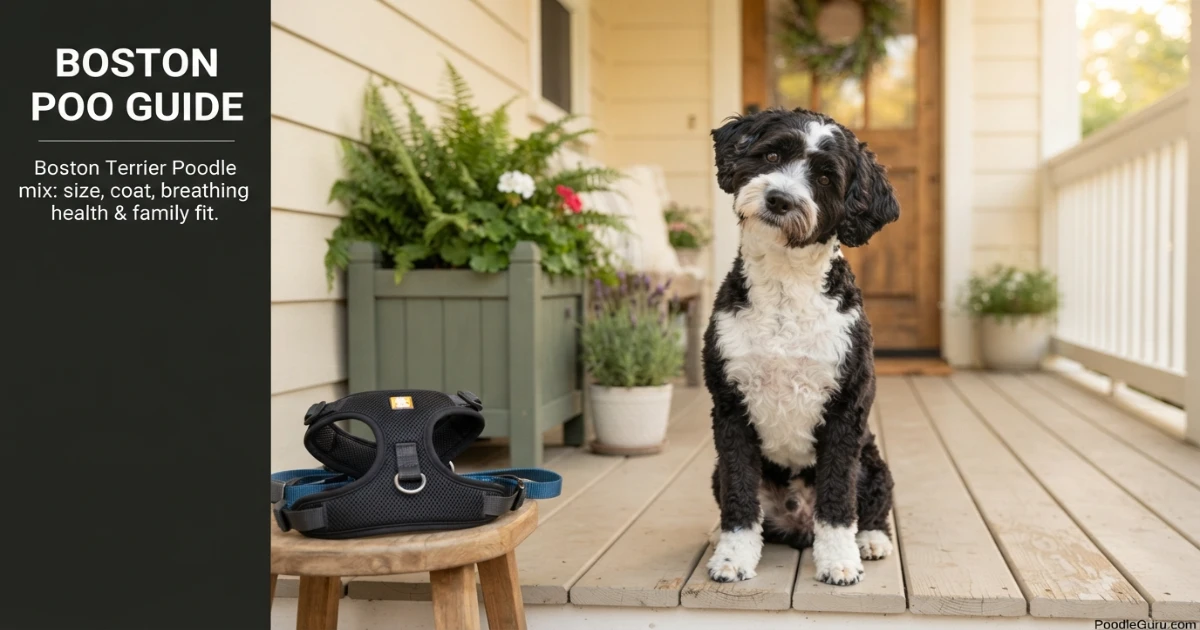
A Boston Poo is a cross between a Boston Terrier and a Toy or Miniature Poodle. They’re affectionate, compact, and often low-shedding, but potential owners must prioritize breathing health and eye safety. A Boston Poo with a longer muzzle and open nostrils is far more likely to live a comfortable, active life. This mix suits urban homes and attentive owners who can manage moderate exercise and lifelong grooming.
What Is a Boston Poo?
A Boston Poo is a first-generation designer dog created by crossing a purebred Boston Terrier with a Toy or Miniature Poodle. For poodle owners, this means a smaller, often sturdier companion with the Poodle’s keen mind and a coat that sheds very little. The most important thing to understand is that the Boston Poo’s quality of life depends heavily on its facial structure — specifically, whether it inherits the short, flat muzzle of the Boston or the longer nose of the Poodle.
Many people assume that crossing a brachycephalic breed with a Poodle automatically produces a dog with an easier airway. That’s not always the case, so structure matters more than marketing. A Boston Poo with a very short snout can still struggle with breathing, overheating, and snoring. The good news? Responsible breeders select for moderate muzzle length, and a well-bred Boston Poo is typically an active, comfortable companion. At PoodleGuru, we believe no puppy purchase should happen without a clear understanding of these risks.
Quick Facts
Size
10–25 lbs, 10–17 inches. Toy Poodle crosses trend smaller, Miniature crosses toward the higher end.
Coat
Wavy to curly, single coat. Low-shedding but needs brushing 3–4 times a week.
Lifespan
12–15 years. A longer muzzle and healthy weight contribute significantly to longevity.
Energy Level
Moderate. They enjoy playtime and short walks, but tire quickly in heat.
Trainability
Smart and eager, but can be stubborn if bored. Positive, short sessions work best.
Good with Kids
Yes, with supervision. Their small size makes them vulnerable to rough handling.
Why the Boston Poo Attracts Poodle Lovers
The Boston Terrier’s reputation as the “American Gentleman” is well-earned — they’re friendly, funny, and affectionate. Combine that with the Poodle’s trainability and low-shedding coat influence, and you get a mix that feels tailor-made for apartment dwellers and first-time poodle owners. Many people want the Boston’s tuxedo markings and silly antics without the heavy shedding or stubborn streak that can come with the terrier lineage.
But the real test is the breathing. A Boston Poo that inherits a flat face and narrow nostrils won’t be able to keep up on long walks or hot days. That’s why at PoodleGuru, we evaluate every Boston Poo cross through the lens of functional structure first, cuteness second. A dog that can’t breathe easily can’t enjoy life fully, no matter how adorable it looks.
Size, Coat, and Appearance
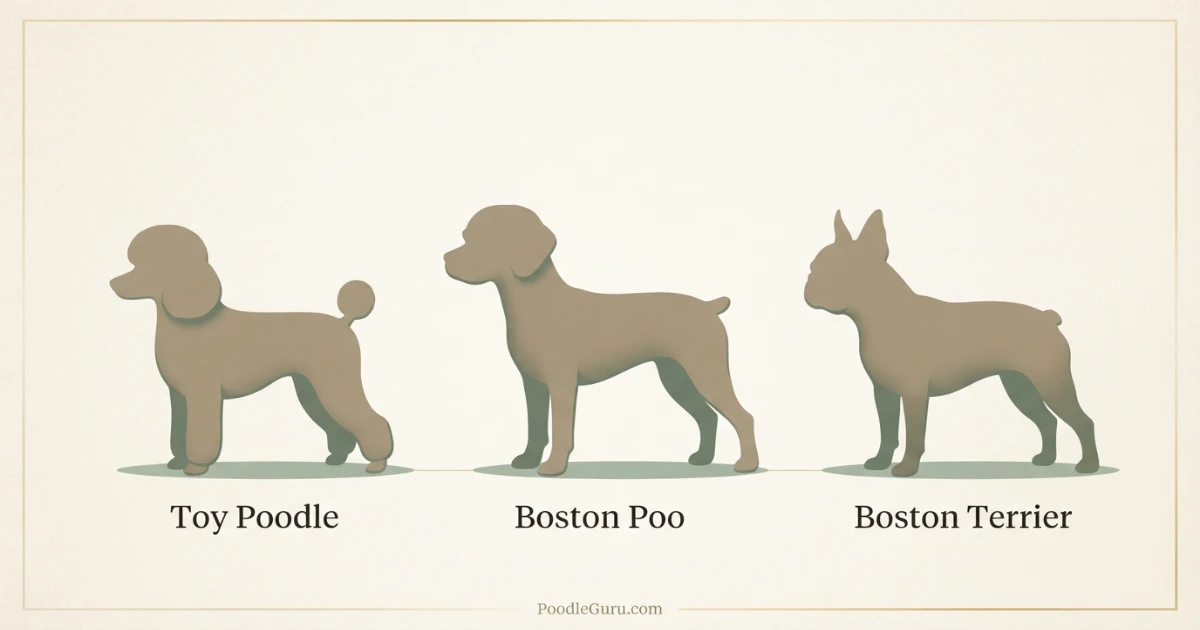
Boston Poos are compact dogs, typically weighing between 10 and 25 pounds and standing 10 to 17 inches tall. Their build is usually a happy medium — more solid than a Toy Poodle, less stocky than a purebred Boston. The head shape varies the most; some have the rounded skull and shorter muzzle of the Boston, while others reveal the longer, refined face of the Poodle.
The coat is one of the mix’s biggest selling points. Most Boston Poos have a wavy or curly single coat that sheds very little, making them appealing for allergy-conscious homes. Coat colors range widely: black and white (classic tuxedo), brindle, cream, apricot, red, and parti combinations. The texture tends to be soft and fine, but without an undercoat, it can mat quickly against the skin if not brushed regularly.
Buyers should know that puppy coats change. A fluffy eight-week-old may develop looser waves or tighter curls by adulthood. There’s no guarantee of exact coat type, but a breeder who can show you past litters from the same pairing gives a clearer preview.
Temperament and Personality
Boston Poos are people-oriented charmers. They thrive on human interaction and will happily follow you from the couch to the kitchen and back again. Most are friendly with strangers and get along well with other dogs, though early socialization is key — a poorly socialized Boston Poo can become timid or barky.
The mix tends to be playful but not hyperactive, with a silly streak inherited from the Boston side. You might catch your Boston Poo spinning in circles for a treat or “talking” with a range of grunts and snorts. The Poodle intelligence means they learn quickly, but the Boston’s independent streak can surface: they know what you want, but they might need an extra treat to comply.
Expert Insight: The Snort and Snuffle Reality
Even a moderately-muzzled Boston Poo may occasionally snort or reverse-sneeze, especially when excited or pulling on a leash. This is usually harmless, but persistent noisy breathing, open-mouth breathing at rest, or exercise intolerance warrants a veterinary evaluation. Always use a harness, never a collar, to avoid pressure on the trachea.
Health: Breathing and Beyond
The number one health concern for any Boston Poo is brachycephalic airway syndrome. VCA Animal Hospitals provides an overview of brachycephalic airway issues in dogs, which can include narrowed nostrils, elongated soft palate, and a small windpipe. A puppy with very flat facial features, small nostrils, or loud breathing at rest may be showing early signs. The best prevention is choosing a breeder who prioritizes a moderate muzzle and open nares.
Eye problems are another serious concern. The Boston Terrier’s prominent eyes are prone to injury, corneal ulcers, and cataracts. A Boston Poo with a less extreme face shape is less vulnerable, but owners should still be vigilant. The AKC Boston Terrier breed page discusses common eye issues and the importance of responsible breeding. Other potential issues include patellar luxation (loose kneecaps) common in small breeds, and dental crowding in smaller mouths.
Health Red Flags to Monitor
- Loud, open-mouth breathing at rest: may indicate a constricted airway. Consult your vet about surgical options if severe.
- Squinting, tearing, or pawing at eyes: sign of a corneal scratch or ulcer. Seek immediate veterinary attention — eyes can worsen fast.
- Skipping or hopping on a hind leg: possible patellar luxation. Many dogs manage well, but grade IV luxation requires surgery.
- Overheating or collapse in warm weather: brachycephalic dogs cannot cool themselves efficiently. Limit outdoor time on hot days.
Lifespan averages 12–15 years, with the healthiest individuals often reaching the upper end. The most impactful things you can do: choose a well-structured puppy, keep your dog lean, protect those eyes, and don’t skip annual vet checkups. Breathing problems don’t always show up in puppyhood — some worsen as the dog matures.
Grooming and Coat Care
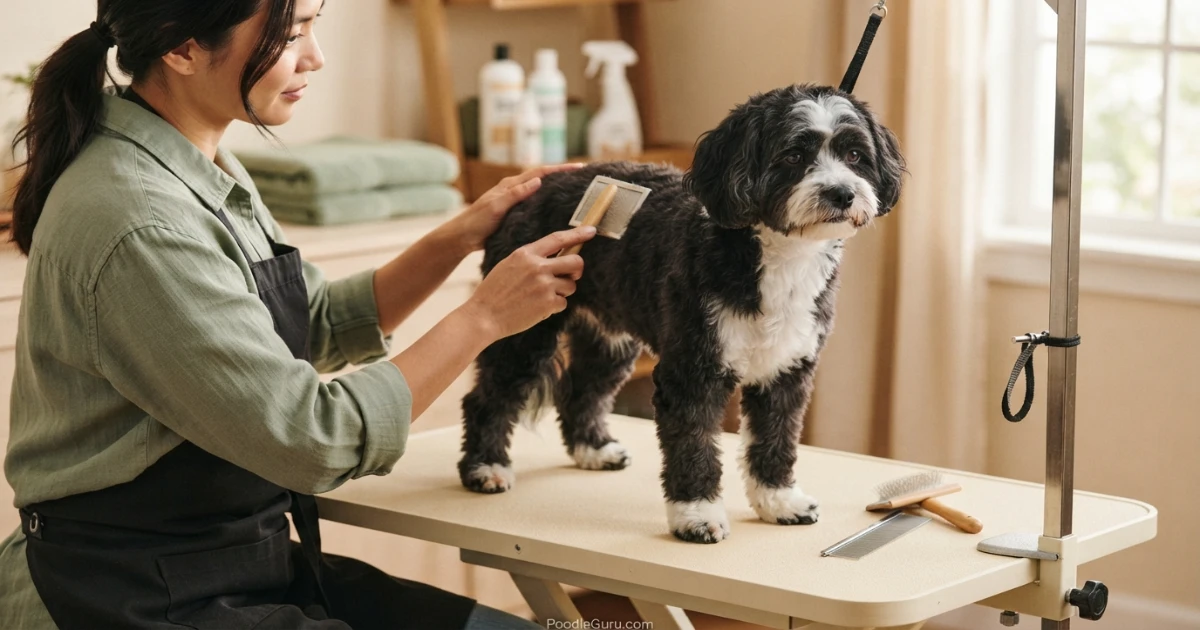
The Boston Poo’s coat is one of its most appealing features, but it requires consistent maintenance. Brush 3–4 times a week with a slicker brush and a metal comb, paying special attention behind the ears and under the collar where mats form fastest. The PoodleGuru Complete Poodle Grooming Guide covers line brushing techniques that work perfectly on this wavy coat.
Professional grooming every 6–8 weeks keeps the coat tidy and the skin healthy. Most owners opt for a simple “puppy cut” — an even ½ to ¾ inch all over. Don’t forget the facial folds, if present. A Boston Poo with any hint of wrinkles needs those skin folds cleaned and dried daily to prevent bacterial infections. The ears also demand weekly checks; floppy ears trap moisture, so a gentle wipe with a vet-approved solution prevents yeast buildup.
Exercise and Training Needs
Boston Poos need about 30–45 minutes of daily exercise, ideally split into two walks plus some indoor play. They enjoy puzzle toys and training games — the Poodle brain craves mental stimulation, and a bored Boston Poo may invent its own entertainment, like shredding toilet paper. Because of potential breathing limitations, exercise in cool hours, never in the heat of the day, and always carry water.
Training a Boston Poo is often a joyful experience. They’re intelligent and motivated by food, making them quick studies. Keep sessions short and upbeat. The Boston side can be a touch stubborn; if your dog loses interest, switch to a high-value reward or simply end the session on a success. Harness training from day one is essential — a collar puts pressure on the trachea, especially in dogs with any degree of brachycephaly.
Boston Poo vs. Miniature Poodle: Key Differences
| Trait | Boston Poo | Miniature Poodle |
|---|---|---|
| Size | 10–25 lbs, variable build | 10–15 lbs, square and elegant |
| Coat & Shedding | Wavy to curly, very low shed | Tight curls, very low shed |
| Face Shape | Can be flat or moderately elongated | Long, refined muzzle |
| Breathing Health | Variable — must be carefully bred for open airway | No brachycephalic concerns |
| Trainability | Smart, occasional stubbornness | Exceptionally biddable |
| Exercise Needs | Moderate, heat-sensitive | Moderate to high |
| Eye Safety | Prominent eyes may be injury-prone | Deep-set, generally lower risk |
The PoodleGuru Boston Poo Buyer’s Checklist
At PoodleGuru, we evaluate every brachycephalic cross through a structure-first lens. Use these five steps to find a puppy that can breathe, see, and live comfortably.
Examine the Muzzle and Nostrils
Look for a puppy with a muzzle that extends at least one-third the length of the skull, with wide-open nostrils. Avoid puppies with slit-like nares or a “pushed-in” face — these are early signs of airway trouble.
Meet Both Parent Dogs
Observe the Boston Terrier parent’s breathing and the Poodle parent’s overall structure. A parent that snorts loudly at rest or has watery, protruding eyes is a red flag.
Request Health Clearances
Ask for patellar luxation screening (OFA or equivalent) for both parents, and CERF eye exams. Breeders who test for brachycephalic syndrome proactively are rare but treasured.
Observe the Puppy at Play and Rest
A healthy Boston Poo puppy should play without open-mouth panting after a few minutes, and sleep quietly without snoring. Labored breathing at rest is a serious warning sign.
Confirm a Supportive Breeder Contract
A good breeder guarantees to take the dog back at any age, provides a health warranty, and openly discusses the mix’s structural risks. If they downplay breathing concerns, walk away.
Boston Poo Price Guide (2026)
Well-bred Boston Poo puppies from health-tested parents typically cost $1,500–$3,200. Puppies with rare colors like blue or merle, or those from champion lines, can reach $4,000. Adoption through Boston Terrier or Poodle rescues occasionally yields a Boston Poo for $200–$500, though availability is limited.
What Affects the Price
- Health testing investment: Breeders who perform patellar, eye, and cardiac screenings charge more — and that’s a price worth paying.
- Muzzle quality: Puppies with longer muzzles and open nostrils, bred intentionally for airway health, often come from higher-investment breeders.
- Color and markings: Classic tuxedo markings are common; rare colors like solid red or merle increase cost, but don’t trade structure for shade.
- Location: Prices in major metropolitan areas can be 20–30% higher than in rural regions.
Be wary of Boston Poos priced under $1,200. At that level, corners are cut — and those corners often involve breathing and eye health.
Common Buyer Mistakes
Choosing the “Cute Flat Face”
A flat face might look adorable in puppy photos, but it often brings a lifetime of breathing distress, overheating risk, and expensive surgeries.
Ignoring Eye Safety
Those large, expressive eyes are easily injured. Owners must learn to recognize early signs of trouble and seek prompt vet care.
Overexercising in Heat
Even a moderately brachycephalic dog can overheat quickly. Exercise in cool hours, always provide water, and learn the signs of heat stress.
Is a Boston Poo Right for You?
The Boston Poo shines in homes that want a compact, affectionate dog with moderate exercise needs and a low-shedding coat. They’re excellent for apartments and active retirees, provided someone is around most of the day — they don’t do well left alone for long hours. Families with gentle, older children who understand how to handle a small dog can also be a great fit.
But they’re not for everyone. If you want a dog that can jog with you on hot summer afternoons, or you’re unwilling to commit to lifelong grooming and eye safety awareness, a Boston Poo may disappoint. However, if you prioritize structure over extreme cuteness and are ready to brush that coat while laughing at your dog’s silly antics, you’ll likely fall in love.
Frequently Asked Questions
Are Boston Poos hypoallergenic?
No dog is 100% hypoallergenic. Boston Poos shed very little, producing less dander, which helps many allergy sufferers. Individual sensitivity varies — spend time with the specific dog before committing.
Do Boston Poos have breathing problems?
They can, if they inherit a very short, flat muzzle from the Boston Terrier parent. Choosing a puppy with a longer snout and open nostrils greatly reduces the risk.
How big do Boston Poos get?
Most weigh 10–25 pounds and stand 10–17 inches tall. A Toy Poodle cross tends to be smaller; a Miniature cross leans toward the upper end.
Are Boston Poos good with kids?
Yes, they’re friendly and playful, but their small size means they can be injured by rough handling. Supervise young children and teach gentle interaction.
How much grooming does a Boston Poo need?
Brush 3–4 times a week and schedule professional grooming every 6–8 weeks. Also clean facial folds (if present) and ears weekly.
What is the lifespan of a Boston Poo?
12–15 years, with well-bred individuals often reaching the higher end. Weight control, regular vet care, and airway health play major roles.
Are Boston Poos easy to train?
Generally yes. They’re intelligent and food-motivated. Short, positive sessions work best; they can get stubborn if bored or pushed too hard.
Do Boston Poos get along with other pets?
With proper socialization, they typically do well with other dogs and even cats. Early introductions are key to preventing timidity or bossiness.
Key Takeaways
A Boston Poo is a charming, compact companion — but only if you choose one with a functional face. Here’s what to remember:
- A Boston Poo is a Boston Terrier-Poodle mix, typically 10–25 pounds, with a low-shedding wavy coat that needs brushing 3–4 times weekly.
- Breathing health depends on muzzle length and nostril openness. A well-structured Boston Poo with a moderate snout is far less likely to suffer from brachycephalic airway syndrome.
- Eye safety is paramount — prominent eyes are injury-prone. Learn the signs of corneal damage and seek prompt veterinary care.
- The PoodleGuru Boston Poo Buyer’s Checklist prioritizes structure over color: evaluate muzzle, meet parents, request health clearances, and watch for labored breathing.
- Exercise should be moderate and in cool temperatures; always use a harness, never a collar, to protect the airway.
- With a health-focused breeder, consistent grooming, and an attentive home, a Boston Poo can be a delightful, long-lived companion for 12–15 years.