Schnoodle (Schnauzer Poodle Mix): Complete Guide
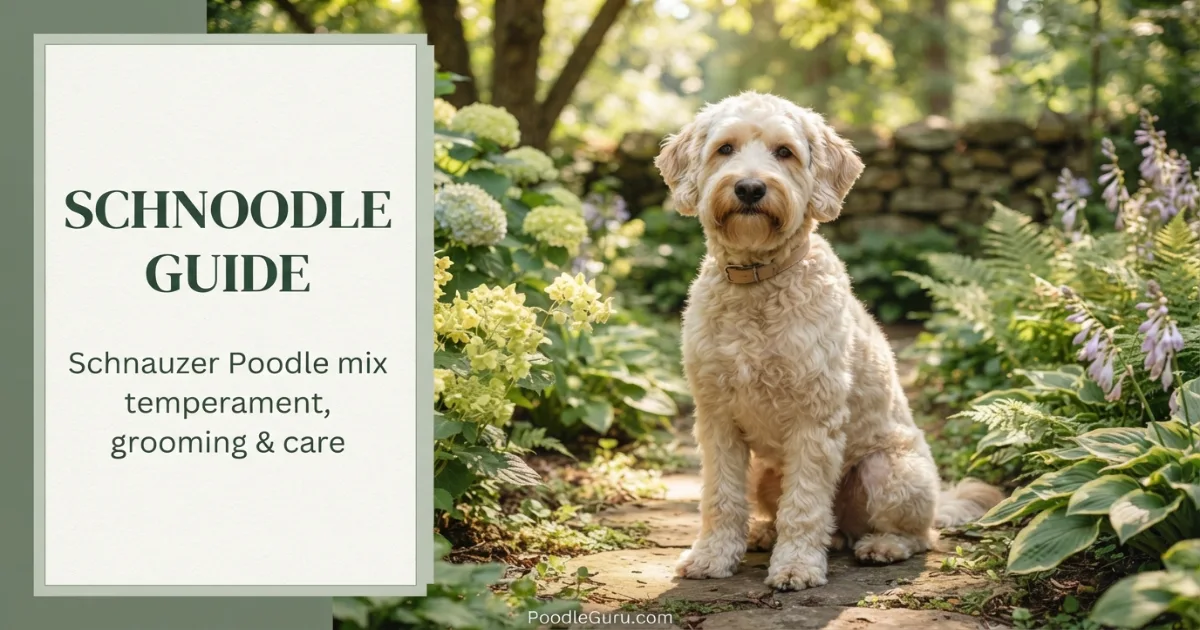
A Schnoodle blends the Schnauzer’s alert, spirited personality with the Poodle’s sharp intelligence and lower-shedding coat. That combination sounds almost too good to be true — and for the right owner, it’s genuinely wonderful. For the wrong one, it can be louder, needier, and more grooming-intensive than expected.
Quick Answer
A Schnoodle is a crossbreed between a Schnauzer (typically Miniature) and a Poodle (usually Miniature or Toy). Most weigh 10–20 lbs, live 12–15 years, and need professional grooming every 6–8 weeks. They’re smart, affectionate, and often suspicious of strangers — which makes early socialization non-negotiable. The biggest surprises for new owners? The barking, the grooming cost, and the stubborn streak that comes from two very clever parent breeds.
What Is a Schnoodle?
A Schnoodle is a deliberate crossbreed that pairs a Schnauzer with a Poodle. The goal is usually to combine the Schnauzer’s sturdy, protective nature with the Poodle’s keen intelligence and hypoallergenic-leaning coat. For poodle owners considering a mix, the Schnoodle represents one of the more personality-forward options — this isn’t a quiet, low-key companion. It’s a dog with opinions.
The cross is most commonly produced using a Miniature Schnauzer and a Miniature or Toy Poodle. Giant Schnoodle variations exist using Standard Poodles, but they’re far less common and bring significantly different exercise and space requirements. Most families encounter the small-to-medium version.
For poodle owners, the most important thing to understand is that a Schnoodle inherits traits from both sides — and the Schnauzer side can introduce a level of territorial alertness that many Poodle owners do not expect. That’s not a flaw. But it does demand a specific kind of owner who won’t be caught off guard by it.
Not a Purebred — and That Matters
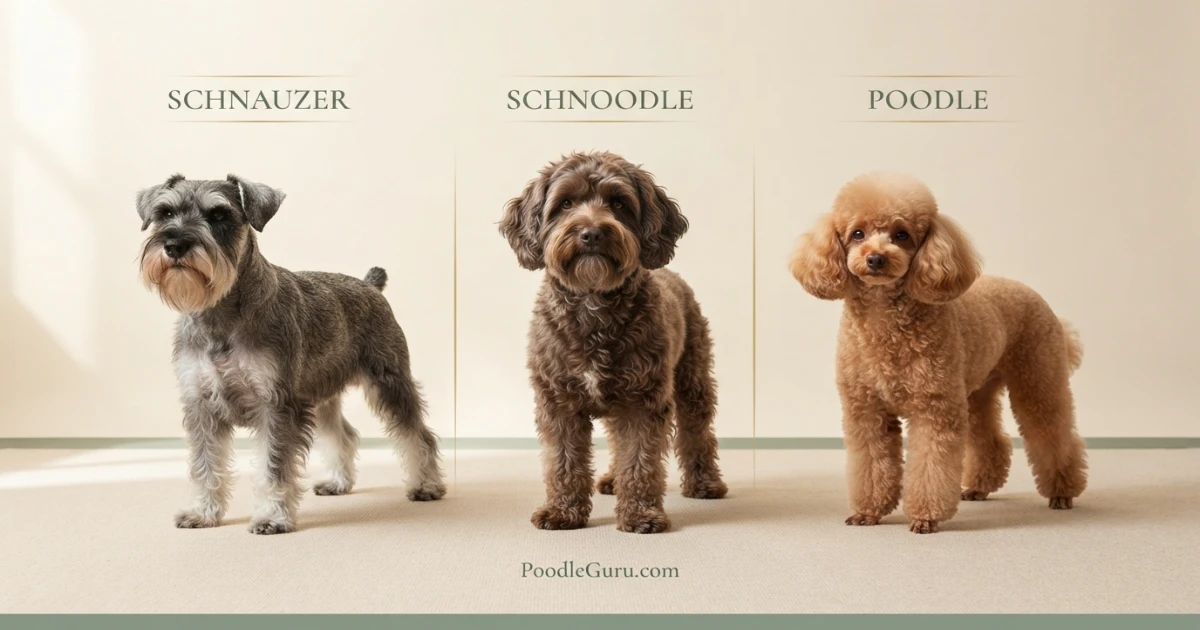
Schnoodles aren’t recognized by the American Kennel Club as a distinct breed. They’re a crossbreed, which means there’s no breed standard governing size, coat type, or temperament. Two Schnoodles from different litters — or even the same litter — can look and act quite differently. One may favor the Poodle side heavily. Another might act like a small Schnauzer with curls. Go into ownership expecting variation, not uniformity.
Schnoodle Quick Facts
Size Range
6–20 lbs (Toy/Mini), up to 60+ lbs for rare Giant Schnoodles.
Lifespan
12–15 years on average. Well cared for, many reach the upper end.
Coat Type
Wavy to curly, low-shedding. Coat can lean wiry (Schnauzer) or dense (Poodle).
Energy Level
Moderate to high. Needs daily mental engagement, not just a walk.
Barking Tendency
High. Alert barking is common. Not ideal for apartment living without training.
Good With Kids?
Yes — with early socialization. Better with older, respectful children.
Schnoodle Temperament & Personality
Schnoodles are loving dogs. They bond tightly with their families and often shadow one particular person. But “loving” and “easy” aren’t the same thing here. These dogs come with a sharp intelligence that, if under-stimulated, turns into problem behaviors — barking, digging, chewing, and occasionally outsmarting their owners in ways that are impressive and maddening in equal measure.
The Schnauzer Influence
The Schnauzer side brings a watchful, sometimes suspicious temperament. Schnoodles often alert-bark at doorbells, delivery people, squirrels with questionable intentions, and leaves blowing across the driveway. Professional trainers and experienced owners describe this as normal for the cross. What they don’t describe it as is quiet.
This protective instinct can look like aggression if it isn’t managed. It rarely is actual aggression — but a barking, stiff-bodied Schnoodle who has not been socialized can become difficult to manage around visitors, dogs, and unfamiliar places. That’s why experienced Schnoodle owners emphasize early, consistent, and ongoing socialization more than almost any other factor.
The Poodle Influence
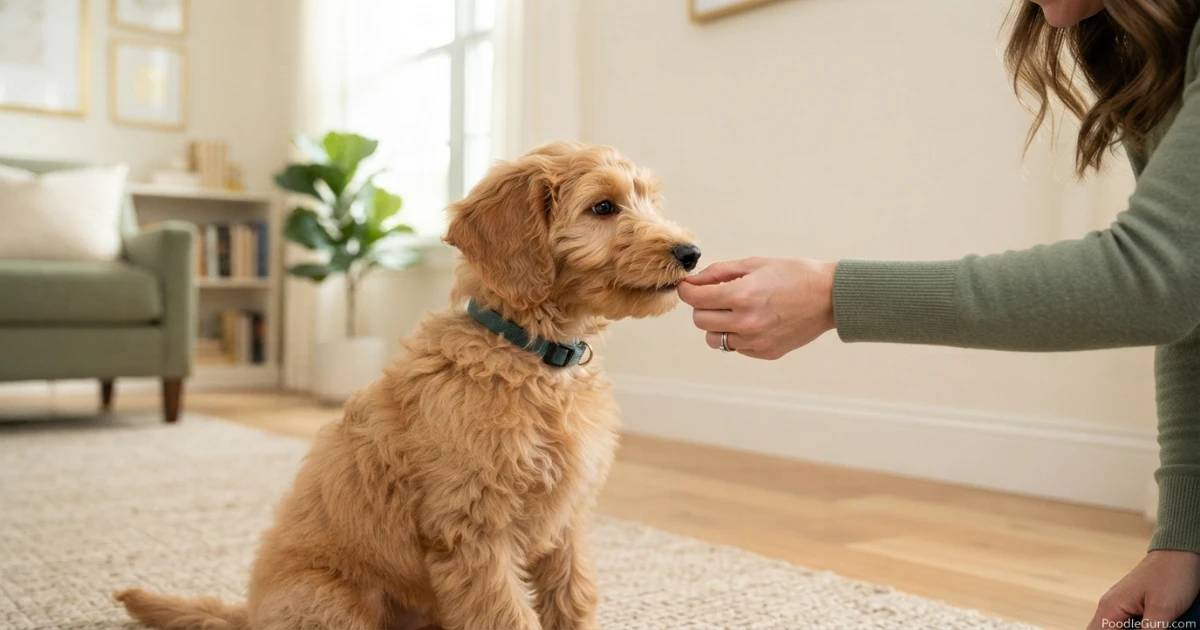
From the Poodle side, Schnoodles inherit remarkable cognitive speed. They read routines, anticipate patterns, and learn commands quickly. But Poodles can be sensitive, and so can Schnoodles. Harsh correction shuts them down. Positive reinforcement works beautifully. Inconsistent rules? They’ll exploit every gap.
What Owners Usually Misunderstand
The biggest surprise for first-time Schnoodle owners isn’t the grooming. It’s the noise. Both parent breeds were developed as working dogs with alerting instincts — Schnauzers as farm ratters and guard dogs, Poodles as water retrievers with sharp situational awareness. Your Schnoodle isn’t barking to annoy you. It’s doing exactly what its genetics programmed it to do. Training can reduce it. It won’t eliminate it.
Schnoodle Size & Generation Chart
Schnoodle size varies dramatically based on the Poodle and Schnauzer sizes used. The most common pairing — Miniature Schnauzer × Miniature Poodle — produces a dog in the 10–20 lb range. But Toy Poodle crosses can drop under 10 lbs, and Standard Poodle crosses can exceed 50 lbs.
Generation also matters. An F1 Schnoodle (first-generation cross) shows the most variation. Multigenerational Schnoodles (F1B, F2) can be more predictable, especially when bred back to a Poodle for coat consistency.
| Schnoodle Type | Parent Breeds | Typical Weight | Coat Predictability | Best For |
|---|---|---|---|---|
| Toy Schnoodle | Toy Poodle × Mini Schnauzer | 6–10 lbs | Moderate | Apartment, seniors |
| Mini Schnoodle | Mini Poodle × Mini Schnauzer | 10–20 lbs | Moderate | Families, first-time owners |
| Standard Schnoodle | Standard Poodle × Standard Schnauzer | 30–60+ lbs | Moderate | Active homes, experienced owners |
| Giant Schnoodle | Standard Poodle × Giant Schnauzer | 50–85+ lbs | Moderate | Working homes, large properties |
| F1B Schnoodle | Schnoodle × Poodle (backcross) | Varies | Higher (Poodle-leaning) | Allergy-conscious owners |
Coat Types, Colors & Grooming
The Schnoodle coat is a lottery, and anyone who tells you otherwise is oversimplifying. Both parent breeds contribute distinct coat genetics — the Schnauzer’s wiry, harsh outer coat with a soft undercoat, and the Poodle’s dense, continuously growing curls. The result can land anywhere on that spectrum.
Common Schnoodle coat colors include black, white, cream, apricot, gray, silver, and parti (two-tone) patterns. Puppy coats often lighten or fade with age — a black puppy may soften to a dark silver by age two. This fading is normal and inherited from the Poodle side’s progressive graying gene.
The Grooming Reality
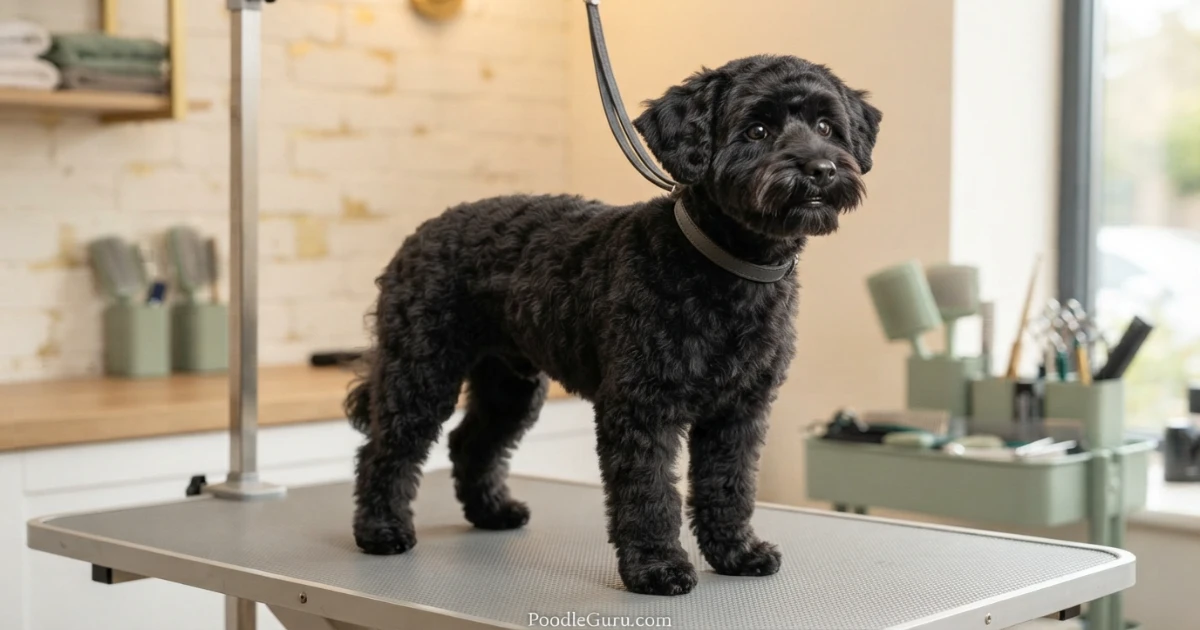
Schnoodles are frequently marketed as low-shedding, hypoallergenic dogs. The low-shedding part is usually true. The low-maintenance part isn’t. That continuously growing coat needs professional grooming every 6–8 weeks, plus at-home brushing 3–4 times per week minimum. Skip brushing for a week on a curly-coated Schnoodle, and you’re looking at mats that may need to be shaved out.
Professional Groomer Insight
Professional groomers commonly watch for matting behind the ears, in the armpits, and around the collar area on Schnoodles. These friction zones tangle fast. At home, a slicker brush and a metal comb used together will catch tangles before they become mats. If the comb can’t glide through, the coat needs more work — or a shorter clip next time.
Health & Lifespan
Schnoodles may benefit from genetic diversity, but crossbreeding does not guarantee better health. They’re not immune to inherited conditions. The cross can inherit health issues common to either parent breed — or, in some cases, both. A well-bred Schnoodle from health-tested parents typically lives 12–15 years.
Conditions to Monitor
Responsible breeders and veterinarians commonly watch for issues seen in the parent breeds, including progressive retinal atrophy (PRA), patellar luxation, hip dysplasia in larger variations, dental disease in small dogs, and pancreatitis risk in Schnauzer lines. A dog that inherits the Schnauzer’s tendency toward high blood fats combined with the Poodle’s sensitivity to certain medications needs careful dietary management.
Dental health deserves special attention in smaller Schnoodles. Crowded teeth are common in small-jawed crosses, and regular dental care — both at home and professionally — affects long-term health more than many owners realize. The VCA Animal Hospitals resource on canine dental disease outlines what owners should watch for.
When to Call a Vet
This is not a diagnostic checklist, but owners should contact a veterinarian promptly if they notice: sudden vision changes or night blindness (possible PRA sign), persistent limping or skipping gait (possible patellar luxation), or repeated vomiting with abdominal pain (possible pancreatitis). These conditions are manageable when caught early, but they don’t resolve on their own.
Schnoodle Price Guide (2026)
Schnoodle puppy prices in 2026 typically range from $1,500 to $4,000, with most well-bred puppies from health-tested parents falling between $2,000 and $3,200. That’s a significant investment, and it’s worth understanding what drives the price — and what should make you walk away.
What Affects the Price
- Health testing: Breeders who test for PRA, patellas, and cardiac health charge more — and they should. Those tests cost money and they protect your puppy’s future health.
- Generation: F1B Schnoodles (backcrossed to Poodle) often cost more, marketed for their more predictable low-shedding coat.
- Color & size: Rare coat colors like merle or unusually small “teacup” claims often inflate price — sometimes for the wrong reasons.
- Location: Urban and coastal markets consistently see higher prices than rural areas.
Red Flags When Buying a Schnoodle Puppy
A very low price is not automatically a deal — it can be a warning. Be cautious of breeders who can’t provide health testing documentation for both parents, won’t let you meet the mother dog on site, push for payment before you’ve visited, or use pressure tactics. A breeder who asks you questions about your home and lifestyle is screening you — and that’s a good sign.
For poodle owners, the quality markers you already look for apply here too. Clean environment, transparent health records, and a breeder who stays in touch after you take the puppy home. The breed isn’t recognized by the AKC, but responsible breeding practices still matter enormously.
The PoodleGuru Schnoodle Match Framework
At PoodleGuru, we evaluate poodle mixes through a simple lens: does this cross work for the real life you actually live, or only for the life you imagine? The Schnoodle is a wonderful dog for the right match — and a genuinely frustrating one for the wrong match. Here’s our honest framework for deciding.
Five Questions Before You Commit
Can you live with a vocal dog?
If barking at delivery trucks, doorbells, and neighborhood activity will cause household tension or apartment complaints, reconsider the Schnoodle. This isn’t a training failure — it’s a breed tendency that management can reduce but rarely eliminate.
Is grooming in your budget every 6–8 weeks?
Professional grooming for a Schnoodle averages $60–$100 per session depending on location and coat condition. That’s $400–$800 per year before at-home supplies. If that number surprises you, the long-term cost of this dog may surprise you more.
Do you have time for daily mental exercise?
A bored Schnoodle invents its own entertainment. Puzzle toys, training sessions, scent games — these aren’t optional extras. They’re what keeps a smart dog from becoming a destructive one.
Will you commit to early socialization?
The Schnauzer side’s wariness of strangers needs to be shaped young. Puppy classes, controlled exposure to different people and environments, and ongoing positive experiences make the difference between a confident adult dog and a reactive one.
Is your household consistent with rules?
This dog notices inconsistency. If one family member allows couch access and another doesn’t, the Schnoodle will figure that out and test both boundaries. Clear, consistent expectations from day one prevent a lot of frustration later.
Frequently Asked Questions
Are Schnoodles hypoallergenic?
No dog is truly hypoallergenic, but many Schnoodles are low-shedding and may leave less loose hair and dander around the home than many breeds. People with mild allergies sometimes tolerate them well, but individual reactions vary. Spend time with the specific dog before committing if allergies are a concern.
Do Schnoodles bark a lot?
Yes, most Schnoodles bark more than the average dog. Both parent breeds have strong alerting instincts. Training and management can reduce excessive barking, but owners should expect a vocal dog and plan accordingly — especially in shared-wall housing.
How big do Schnoodles get?
Most Schnoodles weigh 10–20 lbs and stand 12–14 inches tall at the shoulder when bred from Miniature Schnauzer and Miniature Poodle parents. Toy crosses can be smaller (6–10 lbs). Giant Schnoodle variations can exceed 60 lbs.
What is the lifespan of a Schnoodle?
Schnoodles typically live 12–15 years. Dogs from health-tested parents who receive regular veterinary care, proper nutrition, and consistent dental maintenance often reach the higher end of that range.
Are Schnoodles good family dogs?
Schnoodles can be excellent family dogs in homes with older, respectful children. Early socialization is essential — without it, their Schnauzer-inherited wariness can make them less tolerant of unpredictable handling from very young kids.
How much does a Schnoodle puppy cost?
Expect many well-bred Schnoodle puppies from health-tested parents to fall around $2,000–$3,200 in 2026, depending on location, generation, breeder practices, and included veterinary care. Puppies priced significantly lower may come from sources that skip health testing.
Do Schnoodles need professional grooming?
Yes. Their continuously growing coat requires professional grooming every 6–8 weeks. Between appointments, owners should brush 3–4 times weekly with a slicker brush and metal comb to prevent painful matting.
Are Schnoodles easy to train?
Schnoodles are highly intelligent and learn commands quickly, but they can also be opinionated. They respond best to positive reinforcement, clear routines, and consistency. Training sessions should be short, engaging, and varied — repetition bores them fast.
Key Takeaways
The Schnoodle is a smart, affectionate, and spirited crossbreed that rewards prepared owners and frustrates those who underestimate its needs. Here’s what matters most:
- A Schnoodle is a Schnauzer-Poodle cross, typically weighing 10–20 lbs, with a low-shedding coat that requires professional grooming every 6–8 weeks.
- Both parent breeds contribute working-dog instincts — expect alert barking, high intelligence, and a need for daily mental stimulation beyond physical exercise.
- Schnoodles bond deeply with their families but can be wary of strangers. Early and ongoing socialization is essential for a confident, well-adjusted adult dog.
- Well-bred Schnoodle puppies from health-tested parents cost $2,000–$3,200 in 2026. Lower prices often signal skipped health testing or poor breeding practices.
- The coat is not maintenance-free. Plan for $400–$800 per year in professional grooming, plus consistent at-home brushing with proper tools.
- A Schnoodle typically lives 12–15 years. Regular veterinary care, dental maintenance, and awareness of breed-related conditions help maximize that lifespan.
The right owner for this dog isn’t the one who wants the cutest puppy photo. It’s the one who understands that a smart, vocal, grooming-intensive dog fits their real life — not just their imagination of it. If that’s you, a Schnoodle might just be the best decision you’ll make.