Eskapoo Guide: American Eskimo Poodle Mix Traits & Care
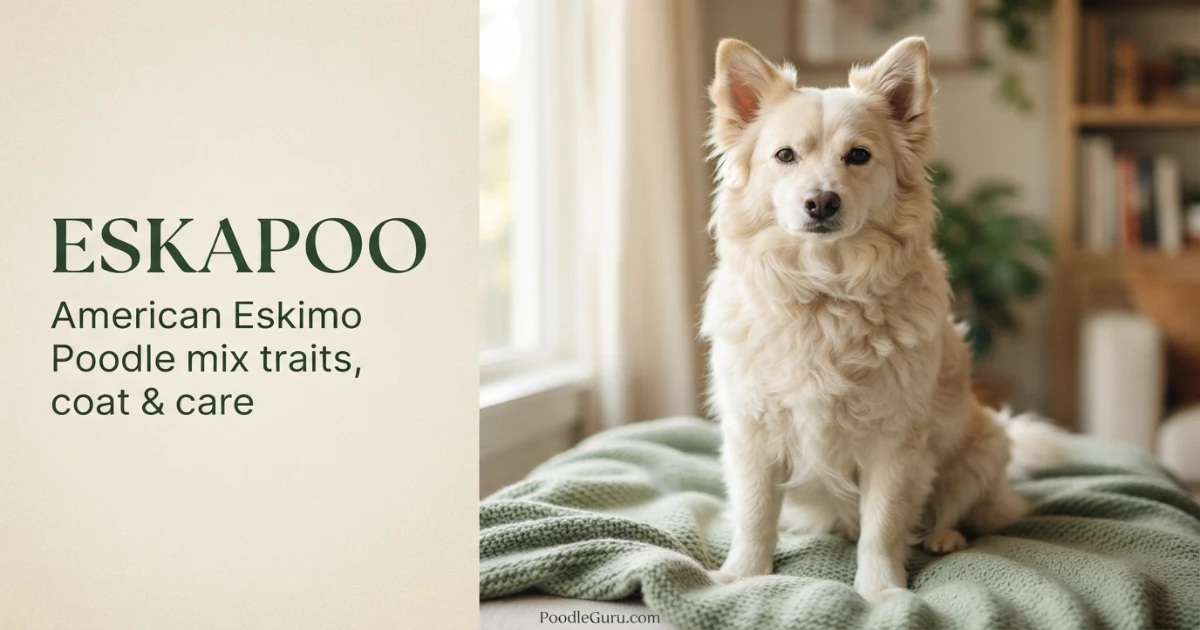
An Eskapoo is a fluffy, bright American Eskimo Poodle mix that can look like a little white cloud but live like a high-alert companion dog. This guide gives you the honest truth about Eskapoo temperament, coat variation, grooming demands, health risks, and whether this spirited cross is the right fit for your home.
Quick Answer: What Is an Eskapoo?
An Eskapoo is a designer crossbreed between an American Eskimo Dog and a Toy or Miniature Poodle. Many adults weigh about 10 to 25 pounds and stand roughly 10 to 15 inches tall, but size can vary with the parent dogs. Eskapoos are usually smart, energetic, attached companion dogs with a coat that may be wavy, curly, plush, low-shedding, or seasonally shedding. The most important thing to understand: an Eskapoo is not a guaranteed hypoallergenic, quiet, or low-maintenance lapdog. Plan for grooming, barking management, daily exercise, and coat variation before you bring one home.
What Is an Eskapoo? The Definition That Matters
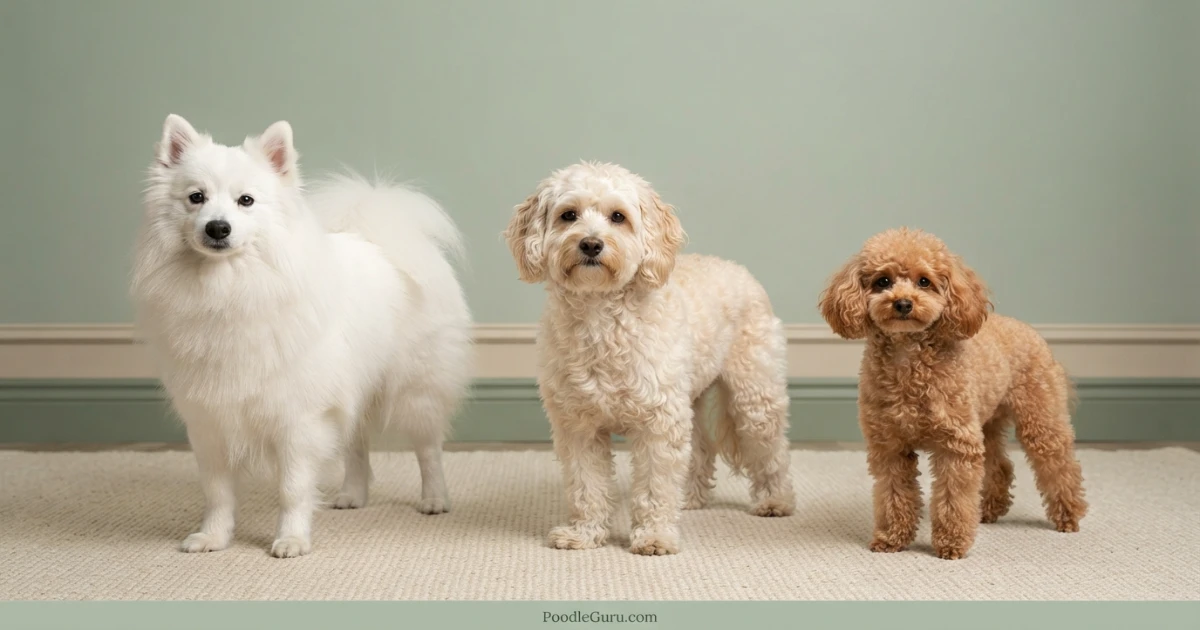
An Eskapoo is a first-generation or multigenerational crossbreed that combines the American Eskimo Dog with a Toy or Miniature Poodle. For poodle owners, this means blending the Poodle’s eager-to-please work ethic with the American Eskimo Dog’s bright, watchful nature and dense white double-coat influence. The most important thing to understand is that the Eskapoo inherits two very different coat types—the Poodle’s curly, lower-shedding single coat and the American Eskimo Dog’s thick, shedding double coat—and the resulting mix can vary widely, even within the same litter.
Parent Breed 1
American Eskimo Dog
Intelligent, alert, white double coat, moderate to heavy shedder. Comes in Toy, Miniature, and Standard sizes. Known for being watchful and sometimes vocal.
Parent Breed 2
Toy or Miniature Poodle
Highly intelligent, low-shedding, curly single coat. Biddable and people-focused. Brings the potential for reduced shedding and a more playful, trainable edge.
The Result
Eskapoo (F1 or Multigen)
A small to medium companion with a coat that ranges from wavy to thick and plush. Personality spans from calm and clever to alert and energetic—often a blend of both.
Why the Eskapoo Captures Hearts
Owners gravitate toward the Eskapoo for its striking white or cream coat, its reputation for intelligence, and the hope for a potentially lower-shedding version of the American Eskimo Dog. The ideal is a fluffy, smart, affectionate dog that thrives in apartments and may leave less fur than a pure American Eskimo Dog. Some Eskapoos deliver on that vision—especially those with a stronger Poodle influence. But the truth is more nuanced.
Many Eskapoos retain a dense undercoat that sheds seasonally, and the white coat—while gorgeous—magnifies every speck of dirt and tear stain. The Eskapoo also tends to be more alert and vocal than many Poodle owners expect, a direct inheritance from the Eskimo’s watchdog heritage. If you’re looking for a silent, low-shedding puffball, this cross may surprise you.
Expert Insight: The “Fluffy White Cloud” Trap
Puppy photos of Eskapoos are irresistible. But that pristine white coat requires constant upkeep, and the double coat can mat fiercely if not brushed down to the skin. At PoodleGuru, we see many first-time Eskapoo owners underestimate both the shedding and the grooming. A white coat is the least forgiving color a dog can have—tear stains, saliva stains, and mud become a daily battle. Go in with a grooming plan, not just a cute picture.
The PoodleGuru Eskapoo Temperament & Coat Compass
At PoodleGuru, we evaluate every Poodle cross using a practical framework that predicts real-life compatibility. For the Eskapoo, the compass highlights four critical dimensions that determine whether this dog will thrive in your home or drive you crazy.
Alertness & Barking Tendency
What to assess: American Eskimo Dogs are natural watchdogs—they bark at anything new. Poodles are generally quieter but will alert-bark. An Eskapoo can land anywhere on this spectrum. Without early training, some can develop nuisance barking. Ask the breeder about the parents’ vocal tendencies.
Coat Type & Shedding Predictability
What to assess: Eskapoos can have a single wavy coat (lower shedding), a thick double coat (heavy shedding), or something in between. If allergies or a spotless home are non-negotiable, this cross is a real gamble because no mixed breed can guarantee coat or dander level. Meet the adult dogs if possible—puppy coats change dramatically.
Trainability & Focus
What to assess: Both parent breeds are smart, but the Eskimo can be independent and stubborn. An Eskapoo might eagerly learn ten tricks or decide your treat isn’t worth the effort today. Short, game-based training with high-value rewards works best.
Energy & Mental Stimulation Needs
What to assess: This is not a couch-potato mix. Eskapoos need 45–60 minutes of daily activity plus mental enrichment—puzzle toys, scent games, or trick training. A bored Eskapoo will find its own job, usually involving barking, digging, or chewing.
Appearance & Coat: Beyond the White Fluff
The Eskapoo’s appearance is one of its biggest selling points—and its most unpredictable trait. While white and cream dominate, colors can also include biscuit, silver, or even phantom markings inherited from the Poodle side.
Size & Build
Most Eskapoos weigh between 10 and 25 pounds, standing 10 to 15 inches at the shoulder. Some may reach 30 pounds if a Standard Poodle or larger Eskimo is in the mix. The body is generally compact and slightly longer than tall, with a plush tail that curls over the back. Ears can be prick (like the Eskimo) or folded (like the Poodle), adding to the variety.
Coat Types: Three Common Expressions
| Coat Type | Texture | Shedding | Matting Risk | Grooming Frequency |
|---|---|---|---|---|
| Eskimo-dominant double coat | Thick, stand-offish outer coat with dense undercoat | Heavy (seasonal blows) | Moderate—undercoat compaction is the main concern | Brushing 4–5x/week; deshedding treatments seasonally |
| Mixed wavy (low-shedding) | Soft waves, medium density, may have light undercoat | Low to moderate | High—the soft texture tangles quickly behind ears and legs | Daily brushing; professional groom every 6–8 weeks |
| Poodle-dominant curly | Tight curls, single coat | Very low | Very high—mats at the root if unbrushed | Daily brushing; groom every 4–6 weeks |
Whichever coat you get, one thing is certain: white fur shows dirt, tear stains, and saliva stains instantly. Maintenance isn’t just about preventing mats—it’s about keeping the dog looking clean.

Eskapoo vs. American Eskimo vs. Toy Poodle: A Side-by-Side Look
If you’re weighing the Eskapoo against its purebred parents, this table highlights the real differences in daily life.
| Attribute | Eskapoo | American Eskimo Dog (Toy/Mini) | Toy Poodle |
|---|---|---|---|
| Adult weight | 10–25 lbs (varies) | 6–20 lbs (Toy/Mini) | 4–6 lbs (Toy) |
| Coat & shedding | Variable; low to heavy shedding | Thick double coat; heavy shedding | Curly single coat; very low shedding |
| Barking tendency | Moderate to high (alert) | High (watchdog) | Low to moderate |
| Trainability | High but can be independent | High; eager but sensitive | Very high; eager to please |
| Grooming demand | High (coat-dependent) | High (daily brushing, heavy shedding) | Very high (curly coat maintenance) |
| Breed standard exists? | No—crossbreed | Yes—AKC recognized | Yes—AKC recognized |
| Best fit | Owners who can manage high grooming, potential shedding, and an alert, active companion | Owners who love a white spitz breed with high energy and grooming commitment | Owners who want a small, very low-shedding, highly trainable dog with more predictable coat care |
PoodleGuru’s Honest Take
If you absolutely cannot tolerate shedding, a well-bred purebred Toy or Miniature Poodle is usually the more predictable choice. The Eskapoo can go either way. If you love the look and are prepared for grooming and potential vocalness, the Eskapoo can be a wonderful, devoted companion. Just don’t buy one expecting a silent, non-shedding or allergy-proof version of an American Eskimo.
Health & Longevity: What Eskapoo Owners Should Watch
Eskapoos often live around 12 to 15 years, though individual lifespan depends on size, genetics, weight, dental care, and veterinary follow-up. The health picture is a blend of concerns from both parent breeds, and responsible breeding practices make a significant difference.
Key Health Considerations
| Condition | Inherited From | What Owners Should Watch For |
|---|---|---|
| Patellar Luxation | Both (small breeds) | Intermittent skipping or hopping gait; may progress to lameness |
| Progressive Retinal Atrophy (PRA) | Poodle & Eskimo | Night blindness progressing to daytime vision loss; genetic testing available |
| Hip Dysplasia | Both (especially if Standard Poodle or larger Eskimo is used) | Stiffness, difficulty rising, “bunny hopping” gait |
| Dental Disease | Both (small mouths) | Bad breath, tartar buildup, tooth loss; daily dental care is essential |
| Allergies & Skin Issues | Both | Itching, hot spots, ear infections; white coats can show skin irritation easily |
Veterinary guidance notes that patellar luxation is one of the most common orthopedic issues in small-breed dogs, and regular veterinary checkups help catch it early. Breeders should provide documented patella evaluations, current eye exam results, and any size-appropriate orthopedic testing recommended for the parent breeds.
When to Call a Vet
Contact your veterinarian if your Eskapoo shows a sudden lameness that doesn’t resolve quickly, persistent head shaking or ear odor, squinting or eye cloudiness, or significant weight changes. Early intervention is key for small dogs—symptoms that seem minor can escalate fast.
Grooming Reality Check: The White Double Coat
If you’ve only owned Poodles, the Eskapoo’s coat can be a shock. The white fur shows everything, and a double coat requires different techniques than a curly Poodle coat. Regardless of coat type, expect to spend at least 10–15 minutes daily on brushing and spot-cleaning.
Daily Brushing (10–15 minutes)
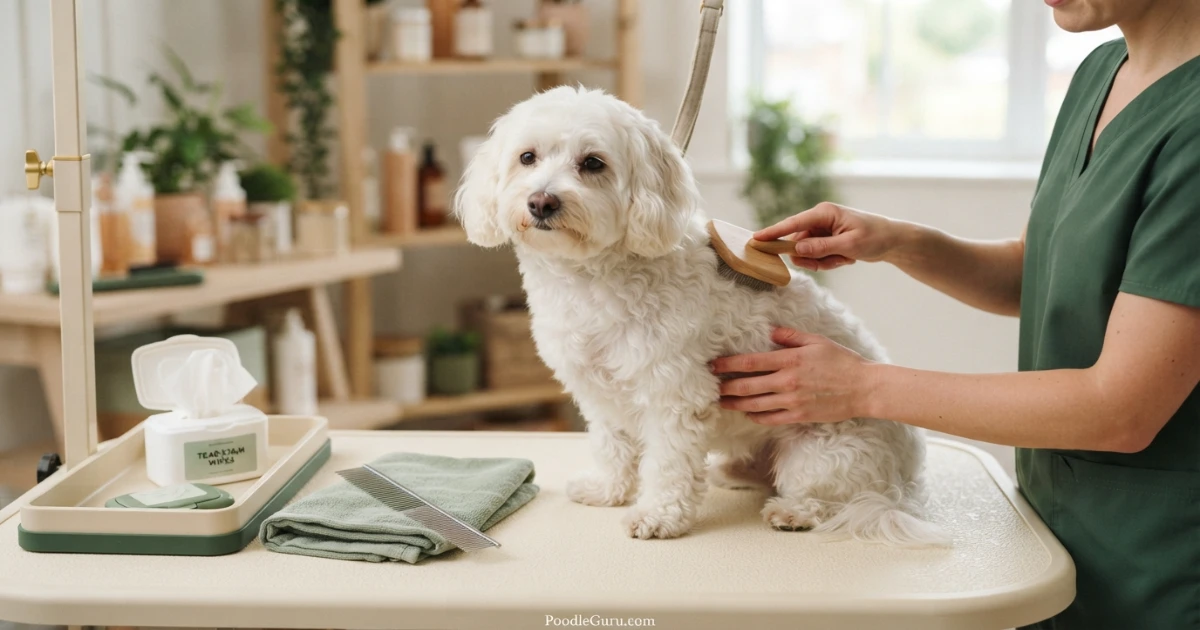
For double coats, use a slicker brush followed by a metal comb and an undercoat rake during shedding seasons. For curly/wavy coats, line-brush in sections down to the skin. Pay special attention to friction zones: behind the ears, armpits, and where the tail meets the body.
Stain Management (Daily Wipe)
White fur around the eyes and mouth can develop reddish-brown tear and saliva stains. Wipe the face daily with a damp, soft cloth. Ask your vet or groomer before using tear-stain wipes or supplements, especially if stains are persistent, one-sided, smelly, or paired with eye redness. Never use human products.
Professional Groom Every 4–8 Weeks
A groomer can do a sanitary trim, thorough deshedding for double coats, nail care, and a deep clean. For curly coats, this is non-negotiable to prevent matting. For double coats, a professional blowout during shedding season saves your home.
Ear Care Weekly
Eskapoos with drop ears (Poodle influence) trap moisture. Check ears weekly for redness, odor, or debris. Clean with a vet-approved ear cleaner. If the ears stand prick, they’re less prone to infection but still need inspection.
When to Ask a Professional Groomer
Book a groomer if you notice mats you can’t gently comb out, persistent tear stains despite daily wiping, or a sudden increase in shedding that might signal a skin issue. Professional groomers commonly spot early skin infections or ear problems hidden by dense fur.
Training the Alert, Intelligent Eskapoo
Eskapoos are sharp. They pick up commands quickly—but they also pick up on inconsistency just as fast. The American Eskimo heritage can bring a touch of independence; the Poodle side wants to work with you. The result is a dog that thrives on positive reinforcement but may test boundaries if rules aren’t clear.
Short, reward-based sessions work best. Incorporate mental challenges like puzzle toys, hide-and-seek, and trick training. Socialization from puppyhood is critical: expose your Eskapoo to various people, dogs, and environments to prevent wariness of strangers. A well-socialized Eskapoo is friendly and confident. An under-socialized one can become reactive or excessively barky.
For more on building a training foundation, read our Complete Poodle Training Guide—the principles apply beautifully to this cross.
Eskapoo Buyer’s Guide (2026): Price & Red Flags
Finding a healthy, well-bred Eskapoo requires diligence. The cross’s popularity means many breeders prioritize cuteness over health.
2026 Eskapoo Price Guide
| Source | Typical Price Range (USD) | What’s Usually Included |
|---|---|---|
| Responsible breeder (health-tested parents) | $1,800 – $3,500 | documented patella, eye, and size-appropriate orthopedic clearances; vaccination records; contract; breeder support |
| Mid-range breeder (limited testing) | $900 – $1,800 | Basic vaccinations, possibly a health guarantee (read carefully) |
| Online marketplace / pet store | $700 – $2,000 | Often no verifiable health history; high risk of puppy-mill sourcing |
| Rescue or adoption | $150 – $500 | Varies; may include spay/neuter and basic vetting |
Price inflators: “rare” color claims (anything other than white/cream is unusual), “teacup” sizing language (a red flag for health), and “champion lines” without documentation. A breeder who health-tests and socializes puppies is worth the premium.
Red Flags When Evaluating an Eskapoo Breeder
🚩 No Health Clearances
If the breeder can’t produce documented patella evaluations and current eye exam results for the parent dogs, walk away.
🚩 “Non-Shedding” Guarantee
A breeder who promises an Eskapoo won’t shed is being dishonest. Shedding depends on the coat type inherited, which is unpredictable.
🚩 Puppies Always Available
Multiple litters on the ground or constant availability suggest a commercial breeding operation, not a responsible one.
🚩 Won’t Let You Visit or Meet the Mother
You should see where the puppies are raised, observe the mother’s temperament, and verify living conditions.
Smart Questions to Ask Any Eskapoo Breeder
- “Can I see the documented patella evaluations and current eye exam results for both parents?”
- “What is the typical coat type and shedding level of your previous Eskapoo puppies?”
- “How do you socialize puppies during their first 8–12 weeks?”
- “What’s your policy if a genetic health issue arises later?”

Living With an Eskapoo: Daily Rhythms & Lifestyle Fit
Eskapoos thrive in homes where someone is around for a good part of the day. They bond intensely with their family and don’t do well with long periods of isolation. They’re often excellent with gentle older children but can be overwhelmed by toddlers who don’t respect their space.
Exercise needs are moderate to high: plan for 45–60 minutes of daily activity—brisk walks, fetch, and mentally stimulating games. A fenced yard is ideal, but apartment living works if the dog gets sufficient outdoor time and mental enrichment. Without it, barking can become a problem. Expect to invest in white-fur-friendly furniture covers and a good vacuum.
Common Myths About Eskapoos—And the Truth
Myth: Eskapoos are hypoallergenic because of the Poodle.
Reality: No dog is truly hypoallergenic. An Eskapoo that inherits the thick double coat will shed heavily and produce more dander. Even curly-coated individuals still produce allergens. Spend time with the specific dog before assuming it’s safe for allergy sufferers.
Myth: They’re quiet lap dogs.
Reality: The Eskimo watchdog instinct is strong. Many Eskapoos are vocal and will alert to any unusual sight or sound. Training and mental exercise can manage it, but expect some barking—silence is not a breed guarantee.
Myth: A white coat is easy to keep clean.
Reality: White fur stains easily from tears, saliva, food, and outdoor dirt. Keeping an Eskapoo looking clean requires daily wipe-downs and regular baths with a dog-safe whitening or brightening shampoo when recommended by your groomer. It’s a labor of love.
The PoodleGuru Eskapoo Owner Readiness Checklist
Be honest with yourself before bringing an Eskapoo home.
Grooming Commitment Confirmed
You’re prepared for daily brushing, stain management, and professional grooming every 4–8 weeks, plus seasonal deshedding if the double coat appears.
Barking Tolerance Assessed
You’re comfortable with a dog that may bark at the doorbell, delivery trucks, or squirrels, and you’re ready to train it from day one to keep barking reasonable.
Breeder Vetting Complete
You’ve chosen a breeder who provides health clearances, allows visits, and speaks honestly about the cross’s variability—and you’ve walked away from any red flags.
Shedding Acceptance Realistic
You accept that your Eskapoo may shed moderately to heavily. You have a plan for managing white fur on furniture and clothes, and it doesn’t bother you.
Exercise & Enrichment Routine Ready
You can provide at least 45 minutes of daily exercise plus puzzle toys and training sessions to keep this intelligent dog mentally satisfied.
Lifestyle Alignment Confirmed
Someone is home for meaningful parts of the day. Your living situation, noise tolerance, and willingness to engage an active, alert companion match the Eskapoo’s needs.

Frequently Asked Questions About Eskapoos
Do Eskapoos shed a lot?
It depends on the coat. Eskapoos with a double coat shed moderately to heavily, especially during seasonal changes. Those with a wavy or curly coat shed less. There’s no guarantee—shedding varies even within the same litter. If shedding is a dealbreaker, a purebred Poodle is the safer choice.
Are Eskapoos good with children?
Yes, when socialized early and handled gently. They’re affectionate and playful but can be sensitive to rough treatment due to their small size. Teach children to respect the dog’s space, and supervise interactions with young kids. A well-socialized Eskapoo is a patient, loving family companion.
How much exercise does an Eskapoo need?
About 45 to 60 minutes daily, split between walks and active play. Mental stimulation is equally important—puzzle toys, training games, and scent work prevent boredom. Without it, an Eskapoo may become restless and barky. They’re not couch potatoes.
Are Eskapoos easy to train?
They’re intelligent and can learn quickly, but the Eskimo influence can add a stubborn streak. Positive reinforcement with high-value treats works best. Keep sessions short and fun. Consistency is key—they’ll test boundaries if rules aren’t enforced.
What is the lifespan of an Eskapoo?
Many Eskapoos live around 12 to 15 years. Excellent care, health-tested parents, dental care, weight management, and regular vet checkups support the best possible lifespan. Dental care, weight management, and regular vet checkups are essential for a long life.
Do Eskapoos bark a lot?
Many do. The American Eskimo Dog is a vocal breed that alerts to anything unusual. An Eskapoo may inherit this trait. Early training and mental exercise can reduce nuisance barking, but complete silence shouldn’t be expected. They’ll likely bark at the doorbell or strangers.
Can Eskapoos be left alone?
They bond closely with their family and can develop separation anxiety if left alone for long periods. Some well-adjusted adults may handle a few hours alone with gradual training, enrichment, and a predictable routine. If you work full-time, arrange for a midday dog walker or doggy daycare to keep them company.
Eskapoo: The Bottom Line
The Eskapoo is a stunning, intelligent, and affectionate crossbreed that lights up a room—literally, with its white coat. But that coat demands daily grooming, and the dog behind it demands daily mental and physical engagement. For PoodleGuru readers who are ready for a high-alert, potentially vocal, and lovingly attached companion—and who accept that shedding is a real possibility—the Eskapoo can be a delightful, devoted family member for 12 to 15 years.
If predictability around shedding and barking is your priority, a purebred Toy or Miniature Poodle offers fewer surprises. Whatever you choose, walk in with your eyes open and a brush in hand.
- An Eskapoo is an American Eskimo Dog–Poodle cross; many adults weigh around 10–25 lbs, with a typical lifespan around 12–15 years.
- Coat type is unpredictable—from heavy-shedding double coat to low-shedding wavy or curly coat—and the white fur demands daily maintenance.
- Barking tendency can be high due to the Eskimo watchdog instinct; early training is essential to keep vocalization manageable.
- Grooming involves daily brushing, tear stain management, and professional grooming every 4–8 weeks; this is a high-upkeep coat.
- Documented patella, eye, and size-appropriate orthopedic health testing on the parents is essential when choosing a breeder.
- Eskapoos thrive with active owners who can provide 45–60 minutes of daily exercise plus mental enrichment and who are home for a good part of the day.
Next step: Read our Complete Poodle Grooming Guide to build a solid coat-care routine before the white fluff arrives.