Newfypoo (Newfoundland Poodle Mix): Complete Guide
A Newfypoo brings together the Newfoundland’s gentle, soulful nature and the Poodle’s bright intelligence in an extra-large, low-shedding package. This is a dog that will lean into your legs, follow you room to room, and require an honest reckoning with serious size, drool, and grooming realities.
Quick Answer
A Newfypoo is a cross between a Newfoundland and a Standard Poodle, bred for a larger companion with a lower-shedding coat and a gentle, family-friendly temperament. Owners love their calm affection and intelligence, but the breed demands substantial daily grooming, a huge food budget, and proactive management of bloat and joint health. This is a giant dog with giant needs — best suited to experienced owners with space, time, and financial readiness.
What Is a Newfypoo?
A Newfypoo is a first-generation designer dog that crosses a gentle-giant Newfoundland with a Standard Poodle. For poodle owners, this means a large, affectionate, and surprisingly athletic dog with a lower-shedding coat. The most important thing to understand is that this mix comes with a massive grooming commitment and a predisposition to serious health issues, particularly bloat and joint problems.
The cross gained traction over the last decade as families sought a dog with the Newfoundland’s patient, watchful nature but less of the heavy shedding and drool. The Poodle’s influence often lightens the coat and adds a spark of quick learning. However, the Newfypoo remains a giant breed at heart — with all the space, feeding, and veterinary costs that implies. At PoodleGuru, we believe the Newfypoo is a wonderful dog for the right household, but it’s not a dog anyone should bring home on impulse.
Quick Facts
Size
25–30 inches tall, 70–130 pounds. Males typically reach the upper end of the range.
Coat
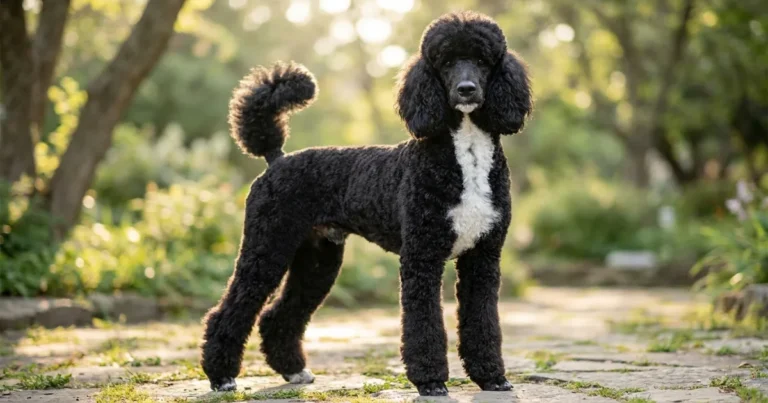
Dense, wavy to curly single coat that sheds lightly but mats easily. Common colors: black, brown, gray, and parti.
Lifespan
9–12 years. Giant breeds age faster; early health screening and weight control are critical.
Energy Level
Moderate. Enjoys a daily long walk and a swim, but is generally calm indoors.
Trainability
Highly intelligent and eager to please. Can be sensitive; positive reinforcement is a must.
Good with Kids
Excellent, but their size means supervision is essential around small children to prevent accidental knocks.
Why Poodle Lovers Consider the Newfypoo
Poodle enthusiasts often look at the Newfypoo and see a chance to own a big, calm, devoted companion without the intense, high-strung edge some Standard Poodles can display. The Newfoundland contributes a steadiness that’s hard to find — these are dogs bred to work alongside fishermen, patiently waiting and watching. When you mix that with the Poodle’s cleverness, you get a dog that’s both intuitive and trainable.
But there’s a tradeoff. The Newfypoo’s sheer size changes everything: car rides require a large SUV, grooming tables must be heavy-duty, and a simple ear infection means a lot more medication than a smaller dog. And then there’s the drool. While the Poodle genes can reduce it somewhat, many Newfypoos still sling drool after drinking or eating. For some owners, that’s part of the charm. For others, it’s a dealbreaker.
Size, Coat, and Appearance
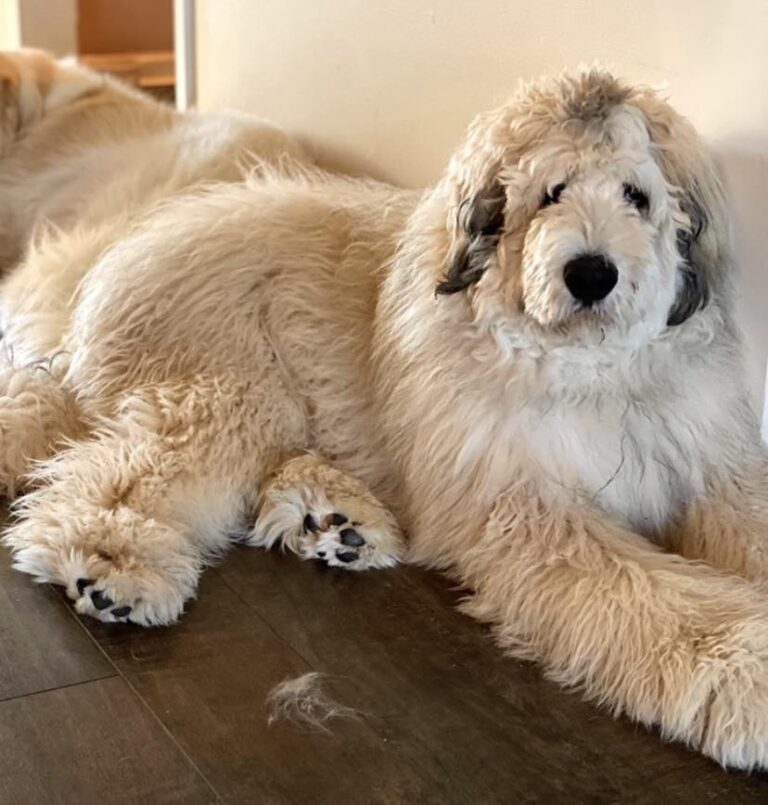
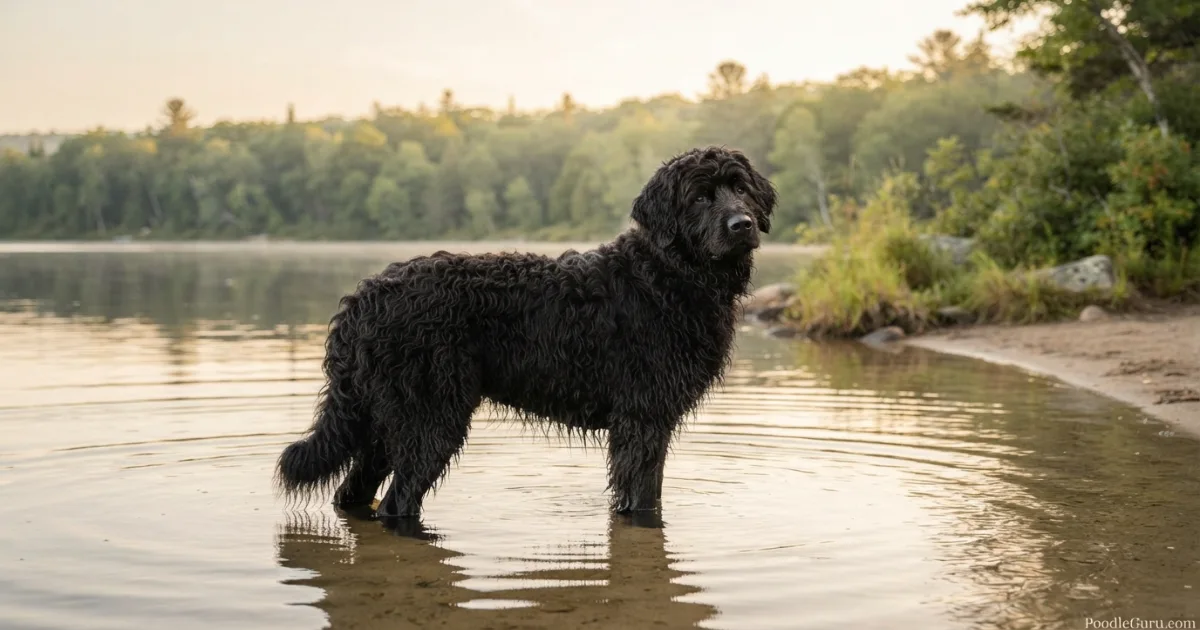
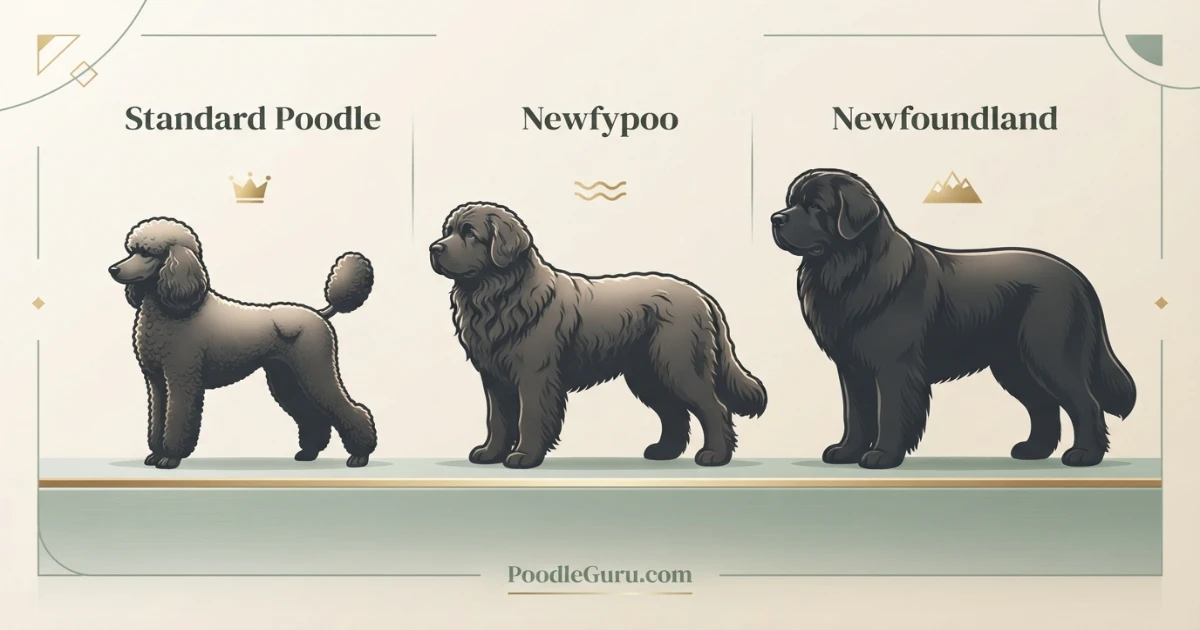
A Newfypoo typically stands 25 to 30 inches at the shoulder and weighs between 70 and 130 pounds. The body is solid and substantial, with a deep chest, broad head, and ears that hang close to the face. The tail is long and carried with a gentle plume. The overall impression is strength without coarseness — a dog that looks like it could pull a cart, but would rather lean against you instead.
The coat is the defining physical trait. Most Newfypoos inherit a single coat that is wavy to curly, soft to the touch, and very dense. Shedding is minimal, which appeals to many poodle lovers, but the tradeoff is a coat that mats like felt if neglected. Colors typically follow the Newfoundland palette — solid black, brown, or gray — but parti-colors and abstract markings can appear from the Poodle side. A puppy’s coat at eight weeks is no guarantee of adult texture; many coats loosen or tighten after the first year.
One thing you should know: Newfypoos can drool. The Newfoundland is famous for it, and while the Poodle cross can moderate drool, many Newfypoos still produce noticeable slobber, especially after drinking or during warm weather. If a dry house is non-negotiable, this is not your mix.
Temperament and Personality
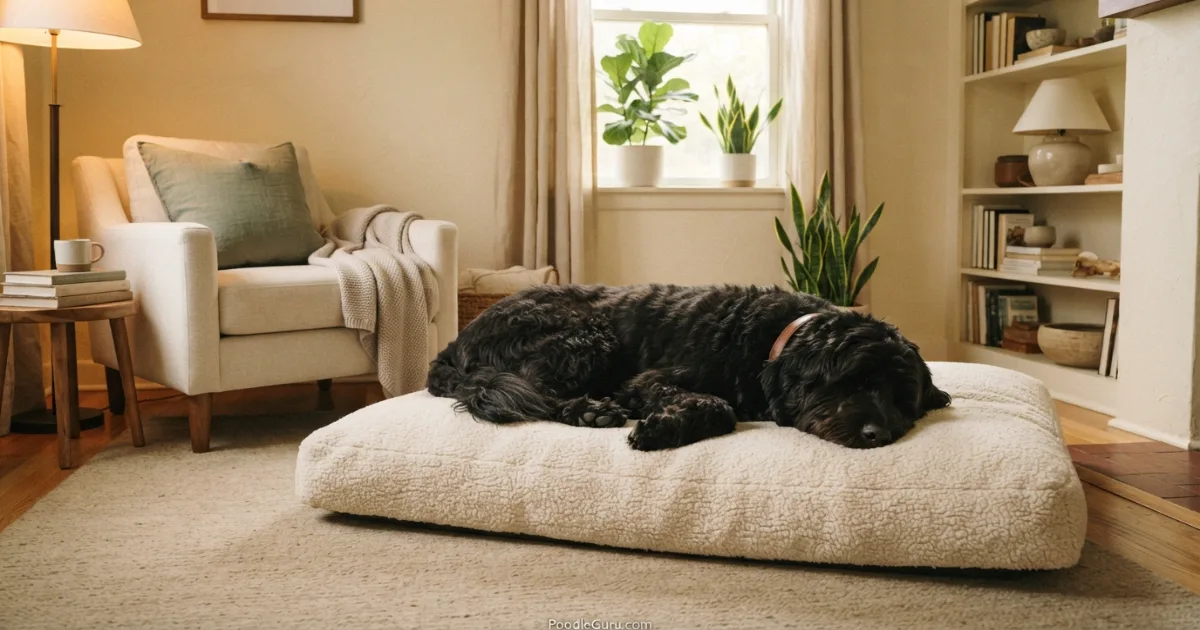
Newfypoos are famous for their sweet, gentle disposition. They tend to be excellent with children and often show a protective, watchful instinct without aggression. Most are friendly with strangers, though early socialization helps ensure that friendliness is calm and appropriate. They bond deeply with their family and can suffer from separation anxiety if left alone for long stretches. This isn’t a dog that thrives in a kennel while you work 10-hour days.
The mix usually inherits the Newfoundland’s patient tolerance and the Poodle’s alert intelligence. Training a Newfypoo is often a joyful experience because they genuinely want to please. However, their size demands early leash manners and impulse control — a 100-pound dog pulling toward a squirrel is no joke. They respond best to calm, consistent training and can shut down under harsh corrections. The PoodleGuru approach to training this mix emphasizes short, positive sessions that end on a high note.
Expert Insight: The “Newfy Lean”
Newfoundlands are known for leaning against their people as a sign of affection. Many Newfypoos do the same. A 120-pound dog leaning into your legs can feel like a hug, but it can knock over a small child or an unsteady adult. Teach a “sit” or “stand” cue early to manage this endearing but potentially hazardous habit.
Exercise and Training Needs
A Newfypoo needs about 60 minutes of daily exercise, but the intensity should be moderate. They adore swimming — both parent breeds have a strong water affinity — and a session in a safe lake or pool is ideal for building muscle without stressing joints. Long walks, hikes, and gentle fetch games work well. Avoid forced running on hard surfaces until growth plates close (around 18–24 months for this size).
Mental exercise matters just as much. Puzzle feeders, scent games, and trick training keep the Poodle mind engaged and prevent boredom-related chewing. Despite their size, many Newfypoos excel at therapy work or draft dog sports. Start training early, keep it positive, and be patient — giant breeds mature slowly both physically and mentally.
Grooming: The Daily Reality
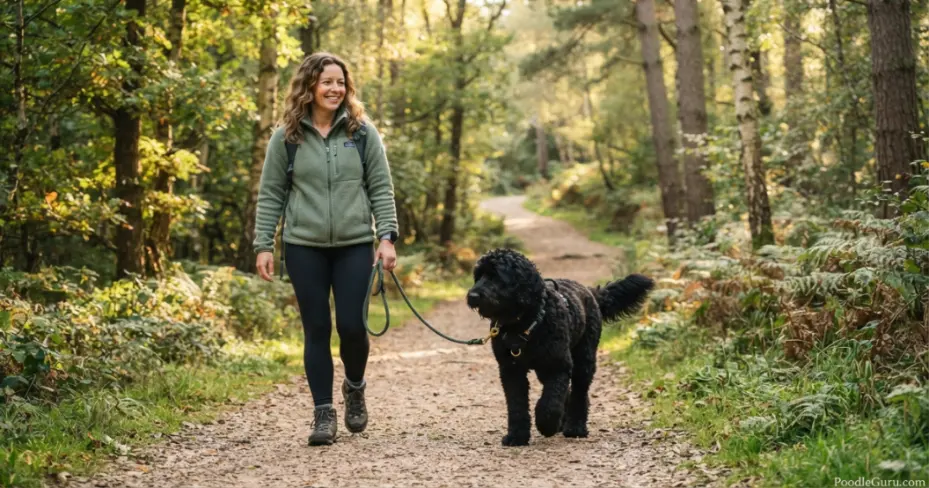
If there’s one thing that surprises Newfypoo owners, it’s the sheer amount of coat maintenance. This is not a “brush once a week” breed. A Newfypoo’s dense, wavy coat requires line brushing 4–5 times a week with a slicker brush and a metal comb, paying special attention behind the ears, under the collar, and in the feathering on the legs and tail. Mats can form in hours in damp weather.
Professional grooming every 4–6 weeks is standard. A full groom for a dog this size often costs $120–$200 per session. Many owners learn to do maintenance grooming at home between appointments, and PoodleGuru’s Complete Poodle Grooming Guide covers line brushing and dematting techniques that apply perfectly. Don’t forget the ears — floppy ears trap moisture, making yeast infections common. Weekly cleaning with a vet-approved solution is essential.
Health Risks and Lifespan
The Newfypoo can inherit serious health conditions from both parent breeds. The most critical concern is gastric dilatation-volvulus (GDV), or bloat — a life-threatening emergency where the stomach twists. VCA Animal Hospitals explains that deep-chested, large breeds are at highest risk. Many veterinarians recommend prophylactic gastropexy (tacking the stomach) during spay or neuter surgery to reduce risk.
Joint issues are another major factor. Hip and elbow dysplasia are common in both Newfoundlands and Standard Poodles. The Newfoundland is recognized by the AKC, which recommends OFA or PennHIP screening for breeding dogs. Reputable Newfypoo breeders test both parents and share results. Without that transparency, you’re gambling on a lifetime of pain and expensive orthopedic care.
Health Red Flags to Watch
- Bloating, unproductive vomiting, restlessness: signs of GDV. Immediate emergency vet attention is critical.
- Lameness, stiffness, or bunny-hopping gait: possible hip or elbow dysplasia. Weight control and joint supplements help.
- Eye issues: Progressive retinal atrophy (PRA) can be inherited from the Poodle side. CERF exams help rule it out.
- Heart conditions: Dilated cardiomyopathy is seen in Newfoundlands; cardiac screening for parents is ideal.
Lifespan for a Newfypoo typically lands between 9 and 12 years. Giant breeds simply don’t live as long as smaller dogs. You can maximize those years by choosing a health-tested puppy, keeping your dog lean, providing joint-friendly exercise, and maintaining regular veterinary care. Every extra pound shortens a giant dog’s life.
Newfypoo vs. Standard Poodle: Key Differences
| Trait | Newfypoo | Standard Poodle |
|---|---|---|
| Size | 70–130 lbs, 25–30 inches | 40–70 lbs, over 15 inches |
| Coat & Shedding | Dense, wavy, very low shed | Dense, curly, very low shed |
| Temperament | Calm, gentle, patient | Alert, active, sensitive |
| Drool | Moderate to heavy | Minimal |
| Exercise Needs | Moderate, loves water | High, needs mental work |
| Key Health Risks | Bloat, hip/elbow dysplasia, heart | Bloat, Addison’s, sebaceous adenitis |
| Grooming Cost | $120–$200 per session | $80–$150 per session |
The PoodleGuru Newfypoo Buyer’s Checklist
At PoodleGuru, we evaluate every giant doodle cross against a practical ownership framework that prioritizes health, space, and long-term commitment. Use these five steps to decide if a Newfypoo truly fits your life.
Confirm Space and Vehicle Fit
A Newfypoo needs room to move indoors without knocking over furniture. You’ll also need a vehicle that can comfortably transport a 100-pound dog. If your living space is tight, reconsider.
Audit Your Monthly Budget
Expect to spend $200–$400 per month on high-quality food for a giant breed, plus grooming, preventives, and a savings buffer for emergencies. A bloat surgery can cost $5,000+.
Verify Both Parents’ Health Clearances
Insist on OFA or PennHIP results for hips and elbows, cardiac screening for the Newfoundland parent, and PRA clearances for the Poodle parent. “Vet checked” is not enough.
Plan for Bloat Prevention
Discuss prophylactic gastropexy with your veterinarian. Feed multiple small meals, avoid exercise right after eating, and know the warning signs of bloat by heart.
Honestly Assess Your Grooming Commitment
You’ll brush 4–5 times a week and budget $150+ per month for professional grooming. If you can’t picture yourself doing that for 10+ years, a Newfypoo is not your dog.
Newfypoo Price Guide (2026)
A responsibly bred Newfypoo puppy from health-tested parents usually costs $2,000–$4,500. Puppies from champion lines or rare colors (gray, parti) can exceed $5,000. Adoption through Newfoundland or Poodle rescues occasionally yields a Newfypoo for $300–$800, though young adults are rare.
What Affects the Price
- Health testing investment: Breeders who perform OFA, cardiac, and PRA screens charge more — and rightfully so.
- Coat color: Solid black is most common; gray and brown often carry a premium, but don’t prioritize color over health.
- Breeder location: Coastal and urban areas tend to see prices 20–30% higher.
- Inclusions: Early socialization, microchipping, first vaccines, and a health guarantee add value.
Be extremely cautious of Newfypoo puppies listed below $1,800. At that price point, health testing is almost certainly skipped. The “savings” will vanish the moment a joint or heart issue appears.
Common Buyer Mistakes
Choosing a Newfypoo for an Apartment
They’re calm indoors, but sheer size makes tight quarters stressful. A first-floor home with easy outdoor access is far more practical.
Ignoring Bloat Risk
Many owners have never heard of GDV until it’s too late. Learn the signs before your puppy comes home — it saves lives.
Underestimating the Food Budget
A growing Newfypoo can eat 4–6 cups of high-quality kibble daily. That adds up fast, and cheap food worsens joint and coat problems.
Is a Newfypoo Right for You?
A Newfypoo thrives in a home with space to stretch out, a family that’s around most of the day, and an owner who genuinely enjoys the grooming process. They’re exceptional with gentle children and make wonderful therapy or emotional support dogs. But they’re a poor fit for someone who travels constantly, keeps a spotless house where drool is a dealbreaker, or isn’t prepared for the financial reality of giant-breed care.
If you’re looking for a big, soulful dog that will follow you from room to room, settle at your feet during dinner, and gaze at you like you’re the most important person in the world, the Newfypoo is hard to beat. Just make sure you’re ready for everything that size entails.
Frequently Asked Questions
Are Newfypoos hypoallergenic?
No dog is truly hypoallergenic. Newfypoos shed very little and produce less dander than many breeds, which helps some allergy sufferers. Individual reactions vary widely — spend time with adult dogs before committing.
How big do Newfypoos get?
They typically reach 25–30 inches tall and weigh 70–130 pounds. Males tend to be larger. Some can exceed 130 pounds if the Newfoundland influence is strong.
Do Newfypoos drool a lot?
Many do. The Poodle side can reduce drool somewhat, but the Newfoundland heritage means moderate to heavy slobber is common, especially after drinking or eating.
Are Newfypoos good with children?
Yes, they’re typically gentle and patient. However, their size can knock over toddlers accidentally. Always supervise interactions and teach children how to behave around large dogs.
What is the lifespan of a Newfypoo?
9–12 years on average. Good breeding, lean body condition, and preventive health care help maximize their time with you.
How much grooming does a Newfypoo need?
A lot. Brush 4–5 times a week and schedule professional grooming every 4–6 weeks. Without this, the coat will mat severely, leading to skin problems and discomfort.
Are Newfypoos easy to train?
Yes, they’re intelligent and eager to please, but they can be sensitive. Positive, consistent training works best. Early leash training is essential due to their size.
What health problems do Newfypoos have?
Bloat (GDV), hip and elbow dysplasia, heart conditions, and PRA are the biggest concerns. Health-tested parents significantly reduce the risk of inherited issues.
Key Takeaways
A Newfypoo is a loving giant, but only for owners who fully understand the commitment. Here is what matters most:
- A Newfypoo is a Newfoundland-Standard Poodle cross, typically weighing 70–130 pounds with a dense, low-shedding coat that requires near-daily line brushing and professional grooming every 4–6 weeks.
- Their temperament is calm, gentle, and deeply affectionate, but they can suffer from separation anxiety if left alone for long periods.
- Bloat (GDV) is the number one life-threatening health emergency; knowing the signs and considering a prophylactic gastropexy can save your dog’s life.
- Joint health is paramount — choose a puppy from parents with OFA or PennHIP clearances and keep your dog lean throughout its life.
- The PoodleGuru Newfypoo Buyer’s Checklist evaluates space, budget, health clearances, bloat prevention, and grooming readiness — meet all five criteria before committing.
- The monthly cost of feeding a giant breed is substantial, and giant breeds simply live fewer years; go in with both eyes open about the financial and emotional investment.