Bassetoodle Guide: Basset Hound Poodle Mix Traits & Care
Long-bodied, low-slung, and often wrapped in a surprisingly curly coat—the Bassetoodle is a head-turning mix of two very different breeds. This guide goes beyond the novelty to give you the honest truth about temperament, coat demands, spine-aware care, ear maintenance, health realities, and whether this unusual cross actually fits your life.
Quick Answer: What Is a Bassetoodle?
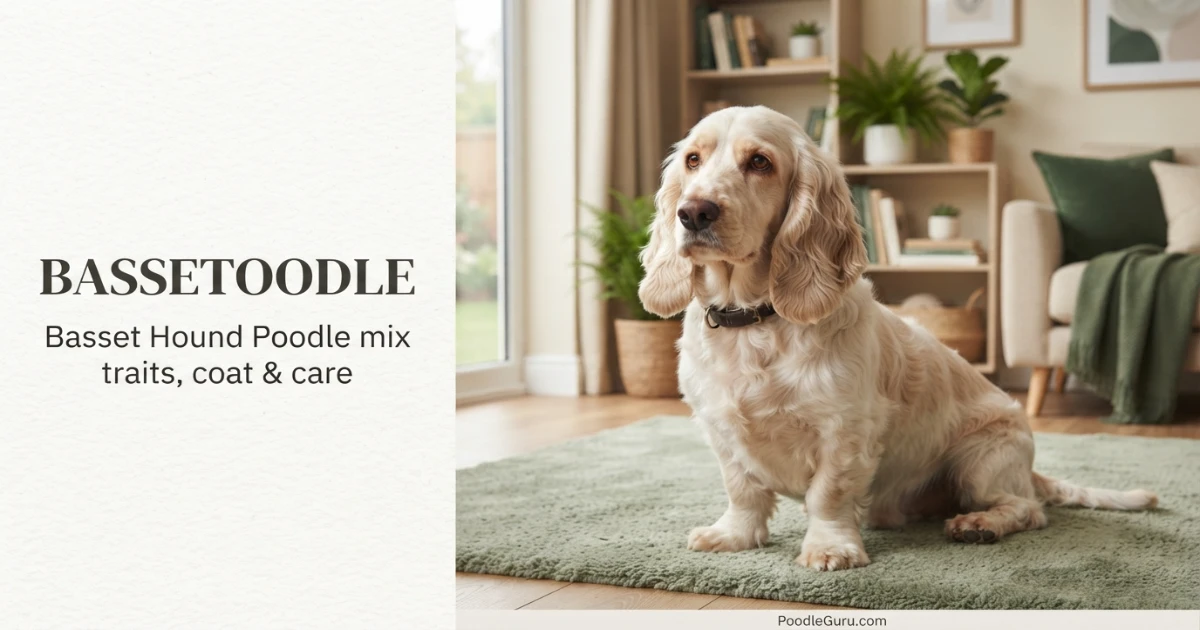
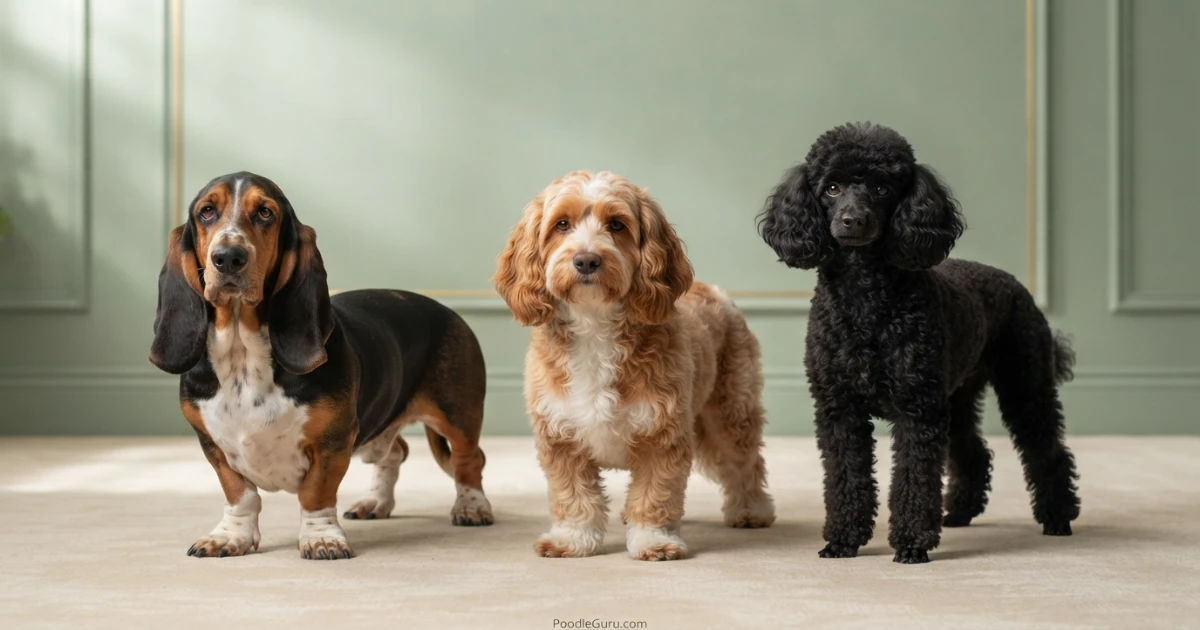
A Bassetoodle is a designer crossbreed between a Basset Hound and a Poodle, most often a Miniature or Standard Poodle. Most adults weigh about 20 to 55 pounds and stand roughly 10 to 16 inches at the shoulder, depending on the Poodle parent and generation. They are usually bred to combine the Poodle’s intelligence and lower-shedding coat potential with the Basset’s gentle, easygoing nature. But the Bassetoodle is not a standardized breed. For poodle-savvy owners, this mix means entering territory where body shape, ear care, scent-driven stubbornness, and coat variability can be as influential as the Poodle traits you love. The most important thing to understand: many Bassetoodles inherit a long, low body and heavy ears that need spine-conscious handling and consistent ear checks—and that is something no fluffy puppy photo can show you.
What Is a Bassetoodle? The Definition That Matters
A Bassetoodle is a first-generation or multigenerational crossbreed combining the Basset Hound with a Miniature or Standard Poodle, and less commonly a Toy Poodle. For poodle owners, this means blending the athletic, high-learning Poodle with a scent hound built for endurance, not speed. The result is a dog with a long body, short legs, and a coat that can range from tight curls to loose waves—or even a short, sleek Basset-like coat. The most important thing to understand is that some Bassetoodles inherit a structurally extreme, long-backed body. The Basset’s short-legged build creates the low silhouette that is undeniably cute, but it also introduces lifelong spine and joint considerations that a typical Poodle owner may not be prepared for. ACVS notes that intervertebral disc rupture can become a true surgical emergency, so long-backed dogs deserve careful handling, weight control, and prompt vet attention for back-pain signs.
Parent Breed 1
Basset Hound
Gentle, stubborn, scent-driven, long-backed, heavy ears. Brings the dwarfism, droopy eyes, and famously low-energy but persistent tracking instinct.
Parent Breed 2
Miniature or Standard Poodle
Intelligent, active, low-shedding, highly trainable. Contributes the curly coat potential, cleverness, and more upright structure.
The Result
Bassetoodle (F1 or Multigen)
A medium-sized, long-bodied dog with a personality that can be either eager-to-please or adorably stubborn—often both in the same afternoon.
Why the Bassetoodle Turns Heads
Owners seek out the Bassetoodle for a specific cocktail of traits: the Basset’s calm, friendly disposition paired with the Poodle’s intelligence and lower-shedding coat potential. The vision is a mellow, allergy-friendlier dog that is good with respectful kids and does not demand marathon runs. Some Bassetoodles deliver exactly that. But the draw also creates a set of mismatched expectations—especially around exercise, trainability, and the sheer maintenance those long ears and curly coats require.
Expert Insight: The “Laid-Back Low-Shedding” Illusion
A Bassetoodle with a Poodle-like curly coat still sheds very little, but it also traps moisture, debris, and ear gunk close to the skin. Meanwhile, a Basset-leaning dog may shed moderately and have the classic Basset odor if skin folds aren’t kept dry. At PoodleGuru, we see buyers overestimate the “low-maintenance” aspect because the dog looks like a fluffy Basset, not realizing that the combination of low stature, heavy ears, and potentially curly fur creates a perfect storm for skin and ear issues without diligent care.
The PoodleGuru Bassetoodle Fit Evaluator
At PoodleGuru, we evaluate every Poodle cross against dimensions that predict real-life compatibility. For the Bassetoodle, the framework emphasizes the structural and behavioral extremes that this mix introduces.
Trainability & Biddability
What to assess: Poodles rank among the most biddable breeds. Basset Hounds were bred to follow their nose independently. A Bassetoodle can inherit either tendency. Some are sharp and engaged during training; others will weigh every cue against the scent of a squirrel two blocks away. Expect a dog that’s smart but may choose not to comply without a compelling reward.
Body Awareness & Joint Care
What to assess: The long back and short legs aren’t just cosmetic. This body type predisposes the dog to intervertebral disc disease (IVDD). Jumping off furniture, climbing stairs repeatedly, or rough play can trigger serious injury. An owner must be willing to manage the environment—ramps, lifted food bowls, and careful handling around small children—for the dog’s lifetime.
Ear & Skin Maintenance Tolerance
What to assess: Long, heavy Basset ears trap moisture. A Poodle-style curly coat holds onto debris. Combined, you have a dog that needs weekly ear cleaning, daily ear checks, and careful drying after any water exposure. Skin folds around the face and neck (if present) also require regular wiping. If you’re squeamish about ear odor or don’t have 5–10 minutes daily for this routine, the Bassetoodle is a risky choice.
Energy & Settling Ability
What to assess: Many Bassetoodles have moderate energy—a short walk or play session satisfies them. But Poodle influence can add more spark. The key is whether the dog can settle calmly indoors without becoming destructive. A dog that’s half Basset may be a world-class napper, but mental under-stimulation from lack of scent work or puzzle toys can lead to barking or chewing.
Coat & Shedding Predictability
What to assess: You might get a lower-shedding curly coat, a wiry low-shed mix, or a short, shedding Basset-type coat—even within the same litter. If coat consistency is non-negotiable for you, a purebred Poodle is usually the more predictable choice. If you are flexible and can commit to the grooming that any coat type demands, you are in a good place.
Appearance & Coat: The Real Variables
No two Bassetoodles look exactly alike. That’s part of the appeal—and the biggest risk.
Size & Build
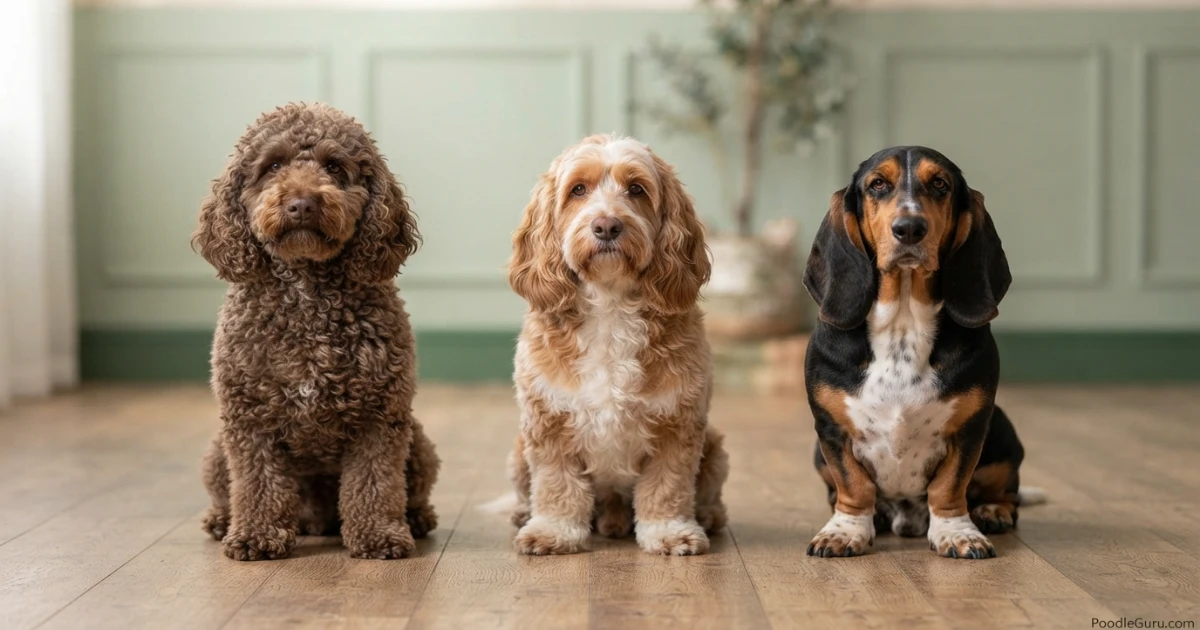
Most Bassetoodles weigh between 20 and 50 pounds and stand 10 to 15 inches tall at the shoulder. The frame is almost always longer than it is tall, with a deep chest like the Basset and a slightly more refined head from the Poodle. Legs can be very short (like the Basset) or moderately longer if the Poodle influence is strong. Ears are typically long and pendulous, though sometimes shorter and set higher.
Coat Types: Three Likely Outcomes
| Coat Type | Texture | Shedding | Grooming Frequency | Ear/Skin Considerations |
|---|---|---|---|---|
| Poodle-dominant curly | Tight curls, springy | Very low | Daily brushing; groom every 4–6 weeks | Moisture easily trapped in ears; skin folds need daily drying |
| Mixed wavy/wiry | Loose waves, may be coarse | Low to moderate | Brush 3–4 times per week; groom every 6–8 weeks | Ears still heavy; debris tends to collect in wavy coat around ears |
| Basset-leaning short coat | Smooth, dense, short | Moderate to heavy | Weekly brushing; occasional bath | Classic Basset oiliness and odor possible; skin folds need daily wipe-downs |
The “teddy bear” wavy coat is popular, but that soft texture can mat almost as quickly as tight curls if it’s dense. Whichever coat you get, those ears are a magnet for trouble—they don’t get air circulation, so they stay damp and warm, making ear infections a top concern.
Color Possibilities
Bassetoodles can appear in a wide array: cream, white, black, brown, red, sable, or any combination with white markings (parti-color). Tri-color patterns (black, white, and tan) reminiscent of the Basset Hound are common and highly sought after. Solid cream or apricot is less common but possible. As with any crossbreed, do not pay a premium for a “rare” color guarantee—puppy coats often lighten or change with age.
Bassetoodle vs. Basset Hound vs. Miniature Poodle
For PoodleGuru readers, the real question is how the Bassetoodle stacks up against the two purebreds. This table is built to highlight ownership trade-offs, not to guarantee exact size, coat, or temperament in a mixed-breed puppy.
| Attribute | Bassetoodle | Basset Hound | Miniature Poodle |
|---|---|---|---|
| Adult weight | 20–50 lbs (varies widely) | 40–65 lbs | 10–15 lbs |
| Body structure | Often long and low; structure varies | Extremely long, dwarf legs | Square, athletic, upright |
| Coat & shedding | Variable; low to heavy shedding | Short, dense; heavy shedding | Curly; very low shedding |
| Trainability | Moderate; may be stubborn | Low biddability; nose-driven | Very high; eager to please |
| Ear & skin care | Frequent ear checks essential | Essential; prone to infections | Normal ear care |
| Exercise needs | 30–45 min daily; gentle | Low to moderate | Active; needs mental + physical |
| Breed standard | No—crossbreed | Yes—AKC recognized | Yes—AKC recognized |
| Best fit | Owners who can manage a long-backed dog, rigorous ear care, and variability | Owners who love a calm, scent-driven, high-maintenance-ear dog | Owners who want predictability, trainability, and low shedding without structural extremes |
PoodleGuru’s Honest Take
If you’re coming from the poodle world and the Bassetoodle’s long body and heavy ears feel like too much of a departure, a purebred Miniature Poodle—or a cross with a less structurally extreme breed—might be a better fit. The Bassetoodle’s charm is real, but the daily care demands of that charm are not for everyone.
Health & Lifespan: The Basset Factor
Bassetoodles typically live 10 to 14 years. That’s a solid span, but it comes with a set of health considerations that Poodle owners may not be used to.
The Basset Hound’s long, low build can bring structural risks. When you add the Poodle’s predisposition to certain conditions, a responsible breeder who health-tests both parents and talks honestly about body structure becomes non-negotiable.
Key Health Concerns
| Condition | Inherited From | What Owners Should Watch For |
|---|---|---|
| Intervertebral Disc Disease (IVDD) | Basset Hound influence | Back pain, reluctance to jump, dragging hind legs, yelping when picked up. A same-day veterinary emergency. |
| Ear Infections (Otitis) | Both (heavy ears + curly coat) | Head shaking, odor, redness, discharge. Ear infections in dogs can be more common in dogs with large, floppy, or hairy ears and need veterinary diagnosis and treatment. |
| Hip & Elbow Dysplasia | Both | Limping, stiffness after rest, “bunny hopping” gait. Weight control is critical. |
| Glaucoma / Eye Issues | Basset Hound influence | Redness, cloudiness, squinting. Basset eyes are prone to injury and glaucoma. |
| Obesity | Both (especially Basset) | Extra weight stresses an already vulnerable spine and joints. Strict portion control needed. |
| Bloat (GDV) | Parent-breed influence if deep-chested | Distended abdomen, unproductive retching. A deep-chested Bassetoodle is at risk; feed multiple small meals. |
When to Call a Vet
Seek immediate veterinary attention if your Bassetoodle shows sudden back pain, dragging legs, or an inability to urinate (possible spinal/neurologic problem). Also call your vet promptly for head shaking, ear odor, eye redness, or any sign of abdominal distension. For IVDD specifically, early intervention can make the difference between recovery and permanent paralysis.
Grooming a Bassetoodle: Low-Slung and Curly
Grooming a Bassetoodle isn’t just about brushing. It’s a whole-body routine that prioritizes ears, skin folds, and the undercarriage—areas that many owners overlook until a problem develops.
Daily Ear Check & Wipe
Lift each ear, check for odor, redness, discharge, or dampness, and wipe only the visible outer ear with a dry soft cloth or a vet-approved cleanser when your veterinarian recommends it. Never insert anything deep, and do not over-clean healthy ears. Dry the ear flap thoroughly after damp walks or baths.
Skin Fold, Paw & Undercarriage Care
If your Bassetoodle has facial wrinkles, neck folds, or a low undercarriage that collects dirt, check these areas daily. Clean gently with a damp, soft cloth when needed and dry completely. Check paws for debris matted between toes—curly-coated dogs trap pebbles and moisture.
Coat Brushing (3–7x/week)
For curly or wavy coats, use a slicker brush followed by a metal comb, paying special attention to friction zones: behind the ears, under the collar, armpits, and where the legs meet the body. Short-coated Bassetoodles still benefit from a rubber curry brush to distribute oils and reduce shedding.
Professional Groom Every 4–8 Weeks
Even if you maintain the coat at home, a groomer handles the sanitary trim (especially important for a low-slung dog), nail grinding, and a thorough ear cleaning. The undercarriage and rear need to be kept short to prevent urine and feces from soiling the coat.
When to Ask a Professional Groomer
Seek a groomer if you notice mats you can’t remove within a few minutes, a foul odor despite cleaning, or skin redness beneath the coat. Professional groomers commonly spot early ear infections and skin issues that need veterinary attention. A dog that resists ear handling may already be in pain.

Training a Bassetoodle: Smart but Stubborn
A Bassetoodle can be a puzzle. One minute they’re nailing a new trick; the next, they’re following a scent trail across the yard and ignoring you completely. This isn’t a lack of intelligence—it’s the Basset Hound’s independent, nose-driven heritage clashing with the Poodle’s people-pleasing nature.
Positive reinforcement with high-value treats works best. Keep sessions short (5–10 minutes) and end on a success. Avoid punishment-based methods when a Bassetoodle is slow to obey; they can become avoidant, worried, or even more resistant. Training must also account for the physical dog: avoid repetitive jumping or high-impact exercises that stress the spine. Teach “wait” at doorways and use ramps for furniture access early, before a back injury forces the issue.
Socialization is just as critical. A Bassetoodle who isn’t exposed to different people, dogs, and environments during puppyhood can become timid or defensive. The long, low body makes them vulnerable to boisterous larger dogs, so supervised, calm interactions are key. For a deeper dive into positive methods, see our Complete Poodle Training Guide—the same principles apply brilliantly to this mix.
Bassetoodle Buyer’s Guide (2026): Price & Red Flags
The Bassetoodle’s rarity can push prices higher, but that doesn’t guarantee quality. Here’s what to expect and what to avoid.
2026 Bassetoodle Price Guide
| Source | Typical Price Range (USD) | What’s Usually Included |
|---|---|---|
| Responsible breeder (health-tested parents) | $1,500 – $3,000 | OFA hip/elbow, eye, and cardiac clearances; vaccination records; contract; breeder support |
| Mid-range breeder (limited testing) | $800 – $1,500 | Basic vaccinations, maybe a health guarantee (read carefully) |
| Online marketplace / pet store | $600 – $2,000 | Often no verifiable health history; highest risk of puppy-mill sourcing |
| Rescue or adoption | $150 – $500 | Varies; may include spay/neuter and basic vetting |
What inflates price: claims of “rare” colors like blue, merle, or solid red; “teacup” or “micro” sizing (dangerous with dwarf breeds); and “champion Basset lines” without health clearances. A Bassetoodle with verifiable OFA hip and elbow scores, eye exams, and cardiac testing is worth the premium. A cute face without paperwork is not.
Red Flags When Evaluating a Bassetoodle Breeder
🚩 Won’t Discuss Spine and Joint Risk
If the breeder cannot discuss the long-backed structure, IVDD warning signs, hip/elbow history, and weight-management expectations honestly, look elsewhere. There is no simple guarantee that removes spinal risk, so transparency matters.
🚩 “Low-Maintenance” Promises
A breeder who claims Bassetoodles are easy keepers with no special ear or back care is either dishonest or uneducated. Run.
🚩 Multiple Litters, Always Available
Responsible breeders of this uncommon cross produce very few litters. A constant supply signals a commercial operation.
🚩 Won’t Discuss Structural Risks
A good breeder talks openly about IVDD, ear infections, and weight management. If they gloss over these, they’re not prioritizing the dogs’ welfare.
Smart Questions to Ask Any Bassetoodle Breeder
- “May I see the OFA hip and elbow scores for the Basset parent, and the Poodle’s patella and eye clearances?”
- “How do you socialize puppies to being handled around the ears and back?”
- “What is your return or support policy if a serious orthopedic, spinal, or inherited health issue develops?”
- “Can you connect me with previous Bassetoodle puppy buyers?”

Living With a Bassetoodle: Daily Routines & Practical Realities
A Bassetoodle’s ideal home is one where someone is around for a good part of the day. They bond strongly with their family and don’t thrive in isolation. They’re often wonderful with respectful children and other pets, but young kids need to be taught not to pull ears or climb on the dog’s back.
Exercise is moderate: 30 to 45 minutes of daily low-impact activity—a couple of leash walks and some scent games or puzzle toys. Avoid repetitive stair climbing and discourage jumping on and off furniture. Many Bassetoodle owners invest in dog ramps early to protect the spine. A fenced yard is great, but note that the Basset nose can lead to escape attempts if a scent is compelling enough.
Myths About Bassetoodles—And What’s Actually True
Myth: Bassetoodles are lazy and don’t need exercise.
Reality: They can be couch potatoes, but without daily movement and mental engagement they gain weight quickly—spelling disaster for the spine. Short, consistent walks and scent work keep them physically and mentally fit without overdoing it.
Myth: They’re all low-shedding because of the Poodle.
Reality: A Bassetoodle with a short, shedding Basset coat is not a reliable choice for allergy-sensitive homes. Even curly-coated individuals still produce dander and saliva allergens. Spend time with the specific dog before committing if allergies are a concern.
Myth: Dwarfism is just a cute look—it’s not a health issue.
Reality: The Basset’s short-legged, long-backed structure is cute, but it can increase concern for back strain, IVDD signs, joint stress, and mobility limitations. It requires active management, not passive acceptance.
The PoodleGuru Bassetoodle Owner Readiness Checklist
Answer honestly before you bring a Bassetoodle home.
Spine-Safe Environment Prepared
You have installed ramps where helpful, limited repetitive stairs and furniture jumping, learned to support the chest and rear when lifting, and taught everyone in the household that rough play or climbing on the dog is not allowed.
Ear & Skin Routine Established
You’re ready for regular ear checks and skin-fold wipe-downs as needed, with a vet-approved ear cleaner used only as directed and a drying cloth always on hand. You’ve budgeted for possible recurring ear infection vet visits.
Breeder Vetting Complete
You’ve chosen a breeder who provides orthopedic, eye, and cardiac clearances appropriate to both parent breeds, and who speaks openly about structural risks.
Coat & Shedding Expectations Realistic
You’re prepared for any coat type and the grooming that comes with it. You are not banking on a low-allergen coat unless you have spent time with the adult dog or parent dogs.
Weight Management Plan in Place
You understand that extra pounds can seriously worsen risk for back and joint problems in a long-backed dog. You’re committed to measured meals, limited treats, and regular weigh-ins.
Training Patience Confirmed
You’re ready for a dog that may be selectively stubborn and require extra motivation. You’re willing to invest in positive-reinforcement training classes.
Frequently Asked Questions About Bassetoodles
Are Bassetoodles good with children?
They often are, with supervision. The Basset Hound side tends to be patient and gentle. However, due to their long back, children must be taught not to climb on the dog or pull its ears. Respectful handling and a calm household work best.
Do Bassetoodles drool and have a hound odor?
Some do, especially those with heavier jowls and skin folds inherited from the Basset parent. Regular cleaning of the face and ears, along with a high-quality diet, minimizes odor. Poodle-dominant coats can trap moisture that contributes to a musty smell if not dried thoroughly.
How much exercise does a Bassetoodle need?
About 30 to 45 minutes of low-impact activity daily. Two short walks and a few minutes of scent games or puzzle toys are ideal. Avoid excessive stair climbing and jumping to protect the spine. They enjoy a good sniffari more than a run.
Are Bassetoodles hard to train?
They can be challenging. Poodle intelligence is there, but the Basset’s independent, scent-driven nature can override commands. Consistency, high-value treats, and short, engaging sessions work better than repetitive drills. Patience is essential.
What is the lifespan of a Bassetoodle?
Most live between 10 and 14 years. Genetics, weight management, spinal health, and ear care all play a major role in reaching the upper end of that range. Well-cared-for individuals from health-tested lines can live even longer.
Do Bassetoodles bark a lot?
Generally no, they’re not excessive barkers. A Bassetoodle may bay or howl occasionally—a trait from the Basset Hound—but they’re not typically yappy. They may alert bark if they pick up an interesting scent.
Can a Bassetoodle be left alone during the day?
They bond closely with their family and can develop separation anxiety if left for long hours. A well-adjusted adult may handle 4–5 hours with mental enrichment. If you work full-time, a midday dog walker or doggy daycare is strongly recommended.
Bassetoodle: The Bottom Line
The Bassetoodle is a unique, affectionate companion that blends the Poodle’s smarts with the Basset Hound’s laid-back charm. But that distinctive low-slung body and those heavy ears demand a level of daily care and environmental management that many first-time owners underestimate. For PoodleGuru readers who are fully prepared to protect a long back, maintain rigorous ear hygiene, and embrace a dog that may be both clever and willful, the Bassetoodle can be a deeply rewarding 10- to 14-year family member.
If structural health risks and the grooming unknowns give you pause, a purebred Miniature Poodle or a structurally more moderate Poodle cross may bring you greater peace of mind. Whichever path you choose, going in with eyes wide open makes all the difference.
- A Bassetoodle is a Basset Hound–Poodle cross typically weighing 20–50 lbs, with a long back, short legs, and a life expectancy of 10–14 years.
- The Basset’s dwarfism predisposes the dog to IVDD, making spine-safe living (ramps, no jumping) a non-negotiable part of ownership.
- Heavy, pendulous ears and possible skin folds require daily cleaning and drying to prevent chronic ear infections.
- Coat type varies dramatically—from low-shedding curls to high-shedding short hair—so never buy a Bassetoodle solely for allergy or shedding expectations.
- Training can be a mix of brilliance and stubbornness; positive reinforcement and short, scent-rich sessions yield the best results.
- Choose a breeder who provides OFA hip and elbow clearances on the Basset parent and speaks openly about structural risks—this is the single most important buyer step.
Next step: Read our Complete Poodle Grooming Guide to understand the coat and ear care commitment in detail—before you fall for those long, velvety ears.