Poodle Destructive Chewing: How to Stop Furniture Damage
Few things test a poodle owner’s patience like coming home to a shredded sofa arm or gnawed table leg. Poodle destructive chewing is rarely about spite — it’s almost always a signal. The fix isn’t punishment. It’s a systematic plan that starts with understanding what your poodle is actually telling you.
Quick Answer
Poodle destructive chewing is a behavior pattern where a poodle damages household items — furniture, baseboards, shoes — through persistent gnawing. For poodle owners, this means the dog is communicating an unmet need: teething pain, boredom, excess energy, separation anxiety, or a learned habit. The most important thing to understand is that punishing a poodle for chewing almost always makes the underlying problem worse. You need to remove the opportunity, meet the root need, and teach a replacement behavior — in that order.
Why Poodles Chew Furniture
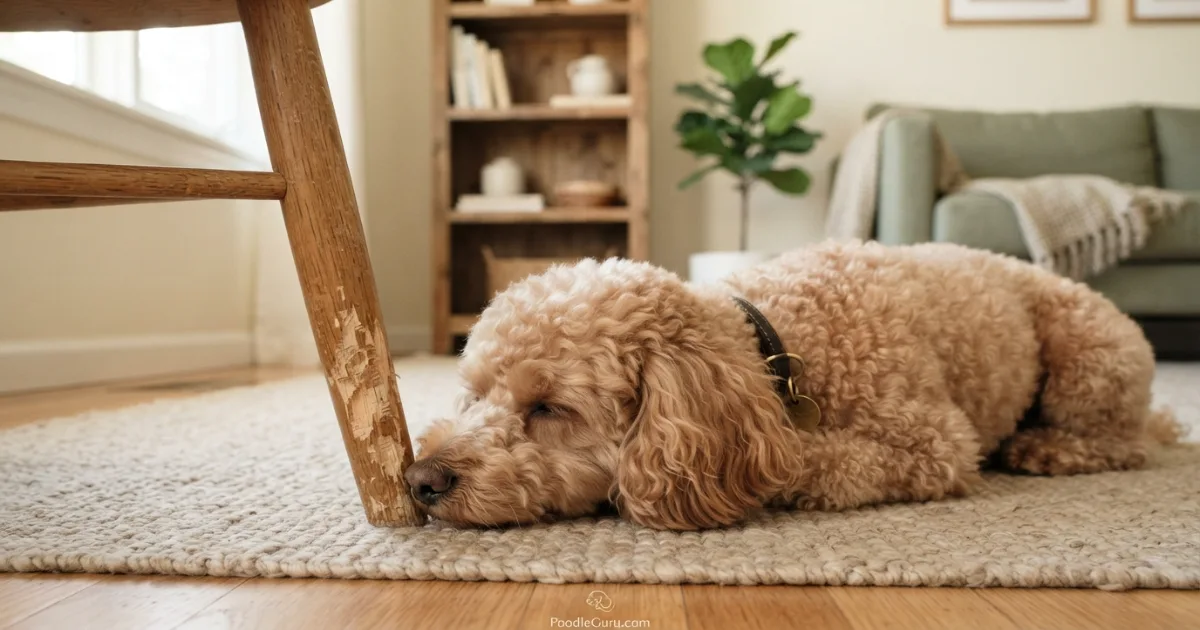
Chewing is a normal dog behavior. Poodles, with their working-retriever heritage and sharp minds, are especially prone to using their mouths. The problem begins when that natural behavior gets redirected onto your belongings. The trigger is usually one of five things, and often more than one at the same time. Veterinary behavior guidance from VCA Animal Hospitals also notes that chewing can be linked to anxiety, arousal, conflict, boredom, and normal exploratory behavior.
Teething tops the list for puppies. Between 12 weeks and 6 months, poodle puppies lose baby teeth and cut adult ones. The pressure is genuinely uncomfortable, and chewing provides relief. Boredom is the most common cause in adolescent and adult poodles. A poodle left alone with nothing to do will invent a job — and dismantling a cushion is a satisfying project. Under-exercise compounds this. A poodle with pent-up physical energy is a chewing time bomb.
Separation anxiety is a more serious trigger. Chewing that happens only when you’re gone, especially near exits (doors, windows), often signals panic, not play. Habit is the sneakiest cause. A poodle that chewed the chair leg once while teething may return to that same spot months later simply because it worked before. The behavior got reinforced, and the dog doesn’t understand why the rules suddenly changed.
Quick Facts: Poodle Chewing
Peak Chewing Age
Teething peaks at 4–6 months. Adolescent chewing (exploratory) often surges again at 7–18 months as adult teeth settle and independence grows.
Most Targeted Items
Wooden furniture legs, remote controls, shoes, baseboards, and soft furnishings. Poodles often choose textured items that feel satisfying under their gums.
Punishment Fallout
Scolding or physical punishment after the fact doesn’t connect the action to the consequence. It often increases anxiety, making anxiety-driven chewing worse.
Positive Replacement Works
Teaching a poodle what to chew instead of what not to chew, combined with management, has a high success rate when applied consistently.
Separation Anxiety Signal
Destruction focused on exit points (doors, window frames) and accompanied by vocalization or house soiling suggests anxiety, not simple boredom.
Breed Trait Relevance
Poodles were bred to retrieve from water — they are orally motivated dogs. Providing appropriate outlets for this natural drive prevents many problems.
Chewing by Life Stage
What works for a teething puppy won’t necessarily work for a two-year-old poodle with an established habit. The root cause shifts as your dog matures, and your strategy needs to shift with it.
| Life Stage | Typical Chewing Driver | What Helps Most | What to Avoid |
|---|---|---|---|
| Puppy (8 wks – 6 mo) | Teething pain, exploration | Frozen chew toys, consistent redirection, crate training | Leaving puppy unsupervised in chewable spaces |
| Adolescent (7–18 mo) | Boredom, excess energy, testing boundaries | Increased exercise, puzzle toys, structured alone time | Assuming the puppy phase is over and dropping supervision too early |
| Adult (1.5–7 yr) | Habit, under-stimulation, anxiety | Management reset, mental enrichment, anxiety assessment if needed | Relying on exercise alone without mental work |
| Senior (8+ yr) | Dental pain, cognitive decline, routine disruption | Veterinary dental check, softer chews, predictable schedule | Assuming new chewing is just “old age stubbornness” |
If a previously non-destructive adult or senior poodle suddenly starts chewing, a veterinary check is the right first step. Dental pain, neurological changes, or discomfort can all trigger oral behaviors that look like a training problem but aren’t.
6 Common Owner Mistakes (and What to Do Instead)
Most persistent furniture chewing isn’t caused by a stubborn dog. It’s caused by an owner unknowingly reinforcing the wrong pattern. These six shifts make an outsized difference.
| Mistake | Why It Backfires | The Better Approach |
|---|---|---|
| Scolding after the fact | Dogs live in the moment. They associate your anger with your return, not the chewed item. | Manage the environment so the behavior can’t happen when unsupervised. Reward calm, non-destructive behavior. |
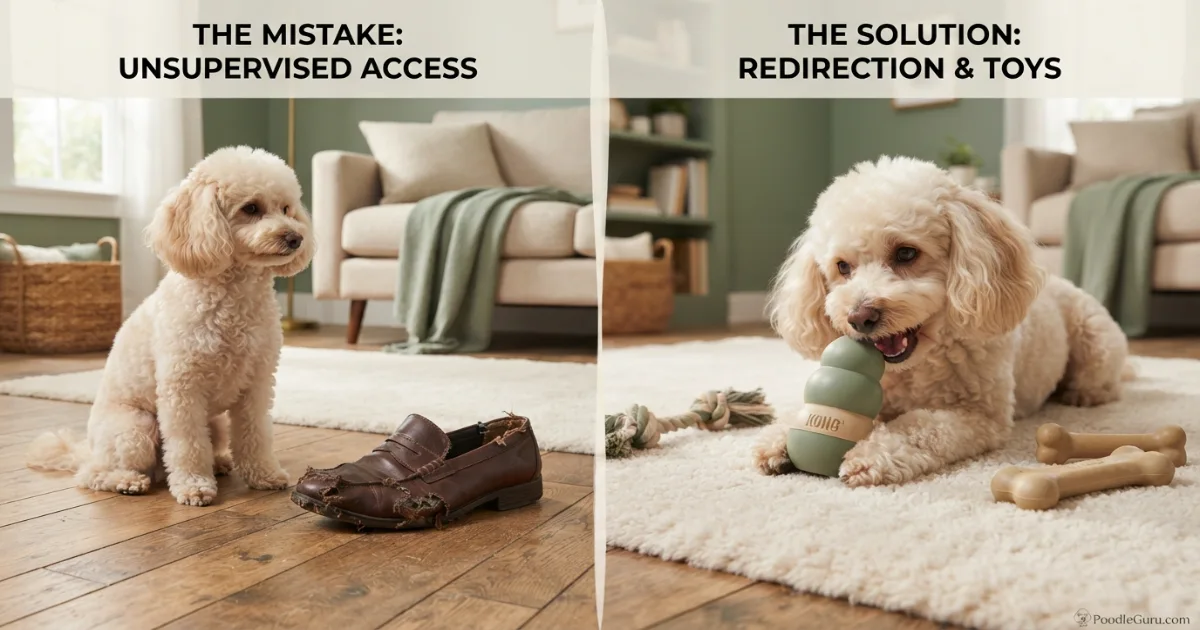
| Giving old shoes as chew toys | A dog can’t tell the difference between your worn sneaker and your new leather loafer. Scent is similar. | Offer dog-specific chew items with distinct textures and smells. Never household items that resemble forbidden objects. |
| One chew toy for all moods | Teething puppies need soft, cold relief. Adolescent chewers need durability. A bored adult needs a puzzle. | Rotate a “chew wardrobe” — 3–5 different types matched to current needs. Introduce novelty regularly. |
| Leaving a bored poodle loose all day | Freedom without structure is a recipe for self-appointed projects — like dismantling the couch. | Use baby gates, exercise pens, or a poodle-proofed room. Crate training when done positively gives a safe den. |
| Assuming “more exercise” fixes everything | A physically tired poodle with an unstimulated brain is a restless, destructive poodle. | Add 15–20 minutes of nose work, trick training, or food puzzles daily. Mental fatigue is deeper than physical fatigue. |
| Spraying bitter deterrents without alternatives | A poodle may simply move to an unsprayed item. The chewing drive hasn’t been redirected — just displaced. | Use deterrents as a temporary barrier while simultaneously offering and heavily rewarding appropriate chew items nearby. |
The PoodleGuru 3-Phase Chewing Reset
At PoodleGuru, we approach destructive chewing as a solvable puzzle, not a personality flaw. This three-phase framework moves you from crisis management to lasting change — without punishment, without frustration, and without sacrificing your furniture in the process.
Phase 1: Cut Off Access (Management)
For the first two weeks, your only goal is to prevent any rehearsal of the destructive behavior. Every time your poodle chews the couch, the brain pathway strengthens. Use baby gates, closed doors, exercise pens, and positive crate training to limit unsupervised access to furniture. Bitter apple spray can be a temporary helper on favorite spots — but only alongside providing approved alternatives. If you can’t supervise, your poodle is in a poodle-proofed zone with appropriate chews. This phase isn’t forever, but it’s non-negotiable to break the habit loop.
Phase 2: Meet the Missing Need (Enrichment)
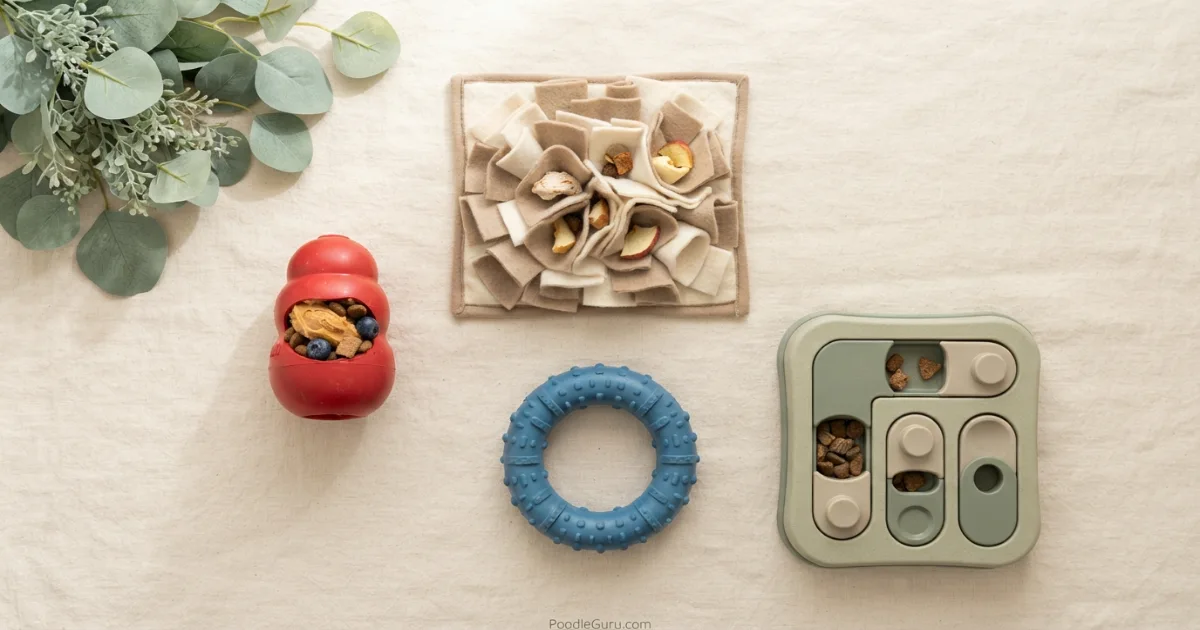
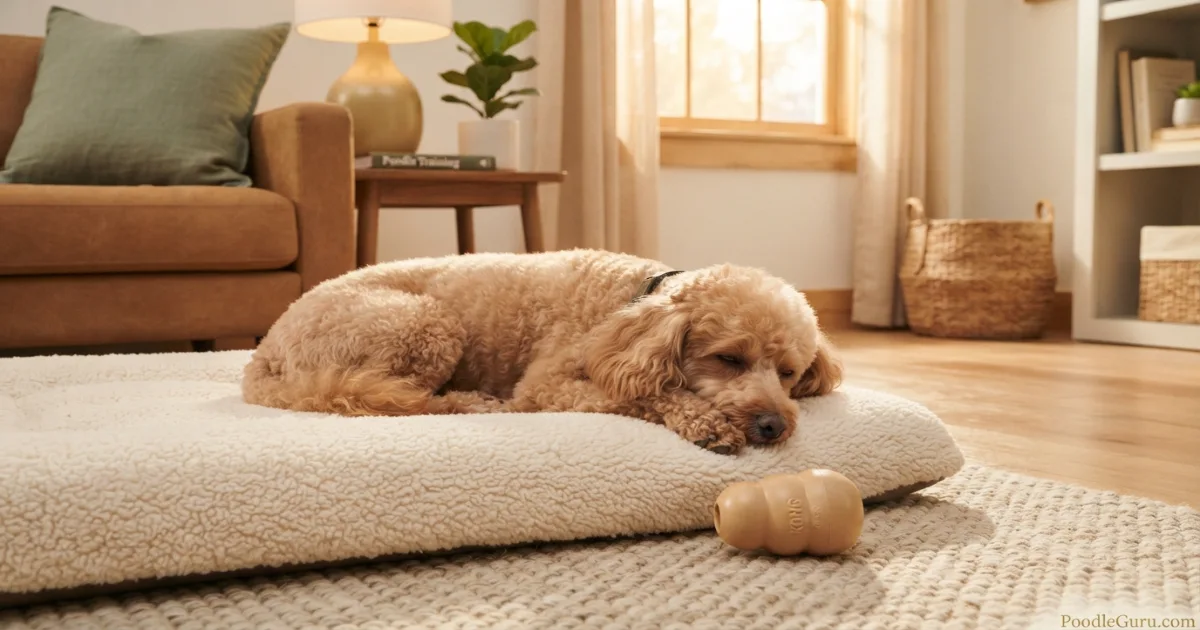
While management is in place, systematically address what’s driving the chewing. Increase daily exercise if the poodle is under-walked — but more importantly, add mental work. Feed meals from puzzle toys or snuffle mats. Practice 5–10 minute trick-training sessions that tire the brain. Introduce a rotating selection of safe chew items: frozen stuffed Kongs, dental chews, and durable rubber toys. If separation anxiety is suspected, start with very short absences and build duration gradually — but this is where you might need professional support. The chewing didn’t start in a vacuum, and it won’t end until the need underneath is genuinely filled.
Phase 3: Teach the Replacement (Redirection)
Now you shape the behavior you want. Every time you catch your poodle sniffing or mouthing an inappropriate object, calmly interrupt with a neutral sound (“ah-ah”) and immediately redirect to an approved chew item. When the poodle engages with the right object, praise quietly and let them chew. The sequence is simple: interrupt → redirect → reward. Over time, the poodle learns that chewing the Kong brings satisfaction, while chewing the chair leg brings a boring redirection. Once the new pattern sticks for several weeks, you can gradually expand supervised freedom. But don’t rush — patience here prevents regression.
This framework works because it respects how poodles learn. You stop the rehearsal, you fix the reason, and you give a clear alternative. Most owners see meaningful improvement within 3–4 weeks when all three phases are applied consistently.
Choosing the Right Chew Items for a Destructive Poodle
Not all chew toys are equal. A determined poodle can destroy a flimsy toy in minutes, which is dangerous and expensive. The key is matching the chew to your poodle’s chewing style.
For powerful chewers: Look for heavy-duty rubber toys designed for strong jaws. Avoid anything that can crack into sharp pieces, splinter, or become small enough to swallow. For edible chews such as bully sticks or dental chews, supervise closely and remove the item once it becomes a choking-size piece. Bones are not the safest default for poodles: cooked bones can splinter, and very hard bones can fracture teeth. If you are considering raw meaty bones, ask your veterinarian first based on your poodle’s dental health and chewing style. For teething puppies: soft, textured rubber toys that can be chilled provide relief; a damp washcloth twisted and frozen can be used only under close supervision because fabric can be shredded. For bored adults: puzzle toys that dispense kibble slowly turn chewing into a job. A stuffed rubber toy with soaked kibble and frozen filling can give 30–45 minutes of focused, appropriate chewing.
Avoid cooked bones, which can splinter, rawhide products that can swell or cause blockages, and any chew so hard you cannot make a thumbnail mark in it. Always supervise your poodle with any new chew until you are confident they use it safely.
When Destructive Chewing Is Really Separation Anxiety
There’s a critical difference between a poodle who chews out of boredom and one who chews out of panic. Separation anxiety is a clinical condition, not a training lapse. It requires a different approach.
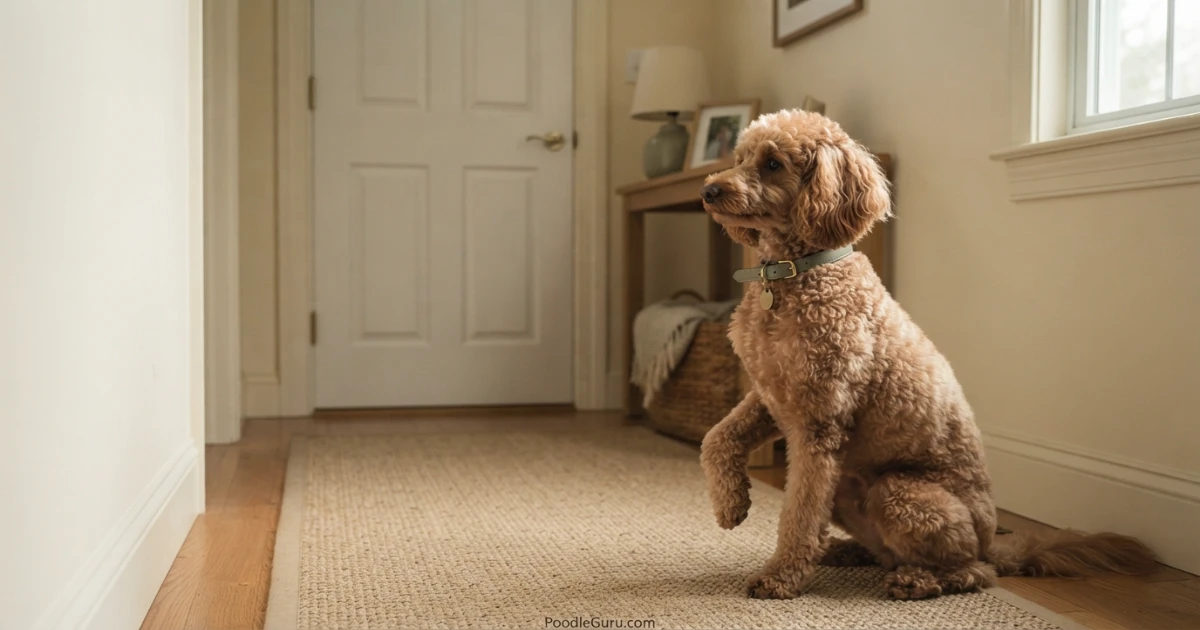
Chewing from separation anxiety often looks like: destruction focused on exit points (door frames, window sills), attempts to escape the room or crate, frantic pacing, drooling, and vocalization that starts within minutes of your departure. The behavior happens almost exclusively when you’re gone. If your poodle chews whether you’re home or away, it’s more likely boredom or habit.
Standard anti-chewing strategies — more exercise, more toys — won’t resolve true separation anxiety because the trigger is the absence itself, not the energy level. If you suspect anxiety-driven destruction, the ASPCA provides a thorough overview of destructive chewing and separation anxiety in dogs. Treatment often involves desensitization protocols, and in moderate to severe cases, a veterinary behaviorist should be consulted.
When to Seek Professional Help
Most poodle destructive chewing resolves with the strategies in this guide. But certain signs mean it’s time to bring in reinforcements.
Consult Your Veterinarian If:
- A previously non-chewing adult or senior poodle suddenly starts destroying objects — this can signal dental pain, gastrointestinal discomfort, or neurological changes.
- Chewing is accompanied by weight loss, changes in appetite, or lethargy.
- Your poodle is ingesting non-food items (pica), which can indicate nutritional deficiencies or medical issues.
Consult a Certified Behavior Consultant or Veterinary Behaviorist If:
- Destruction is clearly tied to your absence and the poodle shows panic signs (trembling, escape attempts, self-injury).
- You’ve consistently applied management, enrichment, and redirection for 6–8 weeks with no measurable improvement.
- The behavior is escalating — more items, more intensity, longer duration.
Seeking professional guidance isn’t failure. It’s recognizing that some behavior challenges need a tailored plan from someone who can assess your specific dog in your specific home. Poodles are sensitive and intelligent. When they struggle, they deserve solutions that actually help.
Owner Action Plan: Start Today
You don’t need to do everything at once. Use this checklist to move forward in the right order.
Day 1–3
Identify and block off all unsupervised access to furniture. Set up a poodle-proofed zone or crate. Remove or cover high-target items. Buy 3 different safe chew toys. Schedule a vet check if this is a new behavior in an adult or senior.
Week 1–2
Implement Phase 1 strictly — no opportunities for destructive rehearsal. Introduce meal puzzles and one daily 10-minute training session. Begin a chew-toy rotation. Observe whether chewing is tied to your absence. Start a simple log: when, where, what was chewed, and what preceded it.
Week 3–4
If the need is clearly boredom or energy, maintain enrichment and begin Phase 3 redirection during supervised time. If anxiety signs are present, consult the ASPCA resources and contact a behavior professional. Do not expand freedom yet — stability comes before more access.
Month 2+
Gradually allow short supervised periods in previously off-limits areas, with appropriate chews available. Continue the chew-toy rotation and mental enrichment. If a relapse happens, tighten management for a few days — it’s normal, not a failure. Reassess after 8 weeks and adjust.
Frequently Asked Questions
Why does my poodle only chew furniture when I’m not home?
This pattern often points to separation-related distress or boredom triggered by isolation. If the chewing is frantic and focused on exits, it’s more likely anxiety. If it’s casual and spread out, boredom and lack of enrichment are the more probable causes. A nanny cam can help you see which you’re dealing with.
Can I use a bitter spray to stop poodle destructive chewing?
Bitter sprays can work as a temporary deterrent, but they rarely solve the problem alone. A poodle may avoid the sprayed chair leg and chew the rug instead. Use deterrents alongside management and providing highly rewarding approved chew alternatives, or the drive will just find another target.
Will neutering or spaying stop my poodle from chewing?
There’s no direct link between reproductive status and destructive chewing in poodles. Chewing is driven by oral needs, energy levels, and anxiety — not hormones. Neutering may reduce roaming or marking behaviors, but it won’t fix a chewing habit that stems from boredom or teething.
How long does the poodle teething phase last?
Teething typically starts around 12 weeks and finishes by 6–7 months when all adult teeth have erupted. The most intense chewing usually occurs between 4 and 6 months. After that, chewing may continue out of habit if the dog learned that furniture-chewing was rewarding during the teething window.
Are certain poodle sizes more prone to destructive chewing?
All poodle sizes — Toy, Miniature, and Standard — can develop destructive chewing. Standards may cause more visible damage due to jaw strength, but the underlying causes are the same across sizes. The intensity of exercise and mental stimulation needed scales with size, which can influence boredom-driven chewing.
My poodle chews things even when I’m in the room. What does that mean?
Chewing that happens with you present often indicates a lack of clarity about rules, insufficient redirection training, or a deeply ingrained habit. The good news: you’re there to intervene. Redirect calmly every single time and reward the approved chew. Consistency in your presence builds the pattern faster than when you’re away.
Can I give my poodle bones to chew on?
For most poodles, bones are not the safest everyday chew choice. Never give cooked bones, which can splinter and cause choking or internal injury. Weight-bearing bones from large animals may be too hard and can risk tooth fractures. If you are considering raw meaty bones, discuss it with your veterinarian first and supervise closely. Durable rubber toys and vet-approved dental chews are safer default options for many poodles.
Key Takeaways
Stopping poodle destructive chewing isn’t about willpower or dominance — it’s about understanding the need, managing the environment, and teaching a better way. Here’s what to remember:
- Poodle destructive chewing is almost always driven by teething pain, boredom, under-exercise, separation anxiety, or a reinforced habit — not spite.
- Punishment after the fact is ineffective and can worsen anxiety-driven chewing. Management and positive redirection are the foundation of real change.
- The PoodleGuru 3-Phase Chewing Reset moves from cutting off access, to meeting the unmet need, to teaching an appropriate replacement behavior.
- Matching chew items to your poodle’s life stage and chewing style prevents frustration and keeps the dog safely engaged.
- Chewing that is tied exclusively to your absence, targets exits, or involves panic requires a separation anxiety protocol — not just more chew toys.
- Sudden chewing in an adult or senior poodle warrants a veterinary check before assuming it’s behavioral.
Best next step: Start with Phase 1 today. Block access to every target surface you can, and set up one poodle-proofed zone with 2–3 safe, engaging chew items. Then read our Poodle Training Tips guide to build the foundation skills that make redirection effortless.