Poodle Pancreatitis Symptoms: Causes, Diet & Recovery Guide
Pancreatitis hits poodles harder than many owners expect. It’s painful, it’s frightening, and it can escalate fast. This guide walks you through what poodle pancreatitis symptoms actually look like, why poodles are vulnerable, how diet plays a central role, and what a smart recovery plan looks like — so you can act quickly when it matters most.

Quick Answer: What Are Poodle Pancreatitis Symptoms?
Poodle pancreatitis symptoms typically include sudden vomiting, a hunched or prayer-bow posture, loss of appetite, abdominal pain, lethargy, and sometimes diarrhea. The pain is real and often visible — poodles may whimper, tremble, or refuse to be touched near the belly. Symptoms can range from mild and intermittent (chronic cases) to severe and rapidly worsening (acute cases).
If your poodle shows a combination of vomiting, pain, and refusing food, don’t wait. This is a vet-now situation.
⚡ Fast Onset
Acute pancreatitis can develop within hours. A poodle that seemed fine at breakfast may be visibly ill by afternoon. Speed matters.
📊 Breed Vulnerability
Miniature and Toy Poodles are overrepresented in pancreatitis cases compared to many other breeds. Small size doesn’t mean small risk.
🍽️ Diet Is Central
High-fat meals, table scraps, and sudden diet changes are among the most common triggers. Long-term low-fat feeding is often essential.
What Is Pancreatitis in Poodles?
Pancreatitis is inflammation of the pancreas — the organ that produces digestive enzymes and insulin. In a healthy dog, those enzymes activate only once they reach the small intestine. During pancreatitis, they activate too early, inside the pancreas itself. The result: the pancreas essentially starts digesting its own tissue.
For poodle owners, this means the condition isn’t just uncomfortable — it’s genuinely painful and can become life-threatening if inflammation spreads or triggers systemic complications. The most important thing to understand is that pancreatitis in poodles often presents differently than in larger breeds.
Small poodles may hide pain more effectively, and subtle signs like trembling or quiet withdrawal can be the earliest warnings.
Veterinary guidance generally categorizes pancreatitis into two forms: acute (sudden, severe, often requiring hospitalization) and chronic (low-grade, recurring, easy to miss). Poodles can experience either — or both over a lifetime. Understanding the distinction changes how you monitor, feed, and advocate for your dog.
Why Poodles Are at Higher Risk
Not every breed faces the same pancreatitis odds. Miniature and Toy Poodles, along with Miniature Schnauzers and Yorkshire Terriers, appear more frequently in clinical cases. Veterinary researchers haven’t pinned down a single genetic cause, but several converging factors make poodles more susceptible.
First, poodles — especially smaller varieties — often have naturally higher blood lipid levels. Elevated triglycerides are a known risk factor for pancreatitis across dog breeds. Second, poodles tend to be food-motivated and clever about sourcing extra calories. A Toy Poodle that raids the cat’s bowl or convinces every family member she hasn’t been fed yet can accumulate enough dietary fat to trigger an episode.
Third, poodles are sometimes over-supplemented by well-meaning owners. Rich treats, fatty toppers, and unregulated human-food sharing add up. A poodle’s small body mass means a few grams of bacon grease represent a far larger metabolic insult than they would for a 70-pound Labrador. What’s a nibble to a big dog is a dangerous fat load to a Toy or Miniature Poodle.
Poodle Pancreatitis Symptoms: What Owners Actually See
Textbook lists are helpful, but real-world poodle pancreatitis symptoms don’t always match the checklist. Owners often notice something is “off” before they can name it. Here’s what to watch for — from obvious to subtle.
Classic (Hard-to-Miss) Symptoms
Vomiting is the most common red flag. It may happen once or repeatedly over several hours. The vomit may be yellow-tinged (bile) or contain undigested food. Diarrhea often follows — loose, sometimes greasy, occasionally foul-smelling in ways that stand out from normal digestive upset. Appetite loss is another strong signal.
A poodle who normally dances for dinner and suddenly turns away from food is communicating something important.
The Pain Posture Owners Miss
Poodles with pancreatic pain often adopt a distinctive “prayer bow” position: front legs stretched forward, chest low to the ground, hindquarters raised. It looks almost like a play bow, but the context is entirely different. The dog stays in that position, reluctant to move, sometimes with a tight, guarded expression.
Other poodles simply hunch their backs, tuck their bellies, or refuse to lie down comfortably. Owners often describe it as “she can’t get comfortable.”
Subtle Signs in Toy and Miniature Poodles
Small poodles are masters at masking pain. Instead of dramatic vomiting, you might see quiet trembling, unusual clinginess, or sudden hiding. Some poodles pant excessively without obvious exertion. Others become irritable when picked up — especially if the motion puts pressure on the abdomen.
These are easily mistaken for anxiety or behavioral quirks, but in context with appetite changes or unusual posture, they warrant a closer look.
⚠️ When Normal Becomes an Emergency
A single episode of vomiting after your poodle ate something unusual may not be an emergency. But vomiting combined with any two of the following — prayer-bow posture, abdominal tenseness, refusal to eat, or visible trembling — means you should seek veterinary care immediately.
Pancreatitis can progress to systemic inflammation, dehydration, and organ stress faster than many owners realize. Trust your instinct if something feels seriously wrong.
Acute vs. Chronic Pancreatitis in Poodles
Not all pancreatitis episodes look the same. Knowing the difference between acute and chronic presentations helps you understand what your poodle is experiencing and what recovery might require.
| Feature | Acute Pancreatitis | Chronic Pancreatitis |
|---|---|---|
| Onset Speed | Sudden — within hours to 1–2 days | Gradual — builds over weeks or recurs in cycles |
| Symptom Intensity | Severe vomiting, obvious pain, collapse possible | Mild intermittent vomiting, low appetite, weight loss |
| Typical Vet Approach | Hospitalization, IV fluids, pain management, fasting then refeeding | Outpatient management, diet change, enzyme support |
| Recovery Timeline | Days to 2 weeks with intensive care | Ongoing — managed, not always cured |
| Recurrence Risk | Moderate if triggers aren’t removed | High — chronic cases flare repeatedly |
| Long-Term Outlook | Good with strict diet adherence | Guarded — requires lifelong dietary discipline |
Many poodles experience a single acute episode and recover fully with proper care. Others develop a chronic pattern where low-grade inflammation simmers between flare-ups. Chronic cases are trickier because owners may attribute mild symptoms to “just a sensitive stomach” and miss the underlying pancreatic involvement.
Common Causes & Triggers of Pancreatitis in Poodles
Pancreatitis rarely has a single cause. Most episodes result from a combination of predisposing factors meeting a trigger event. Understanding the trigger landscape helps you reduce risk.
Dietary Fat: The Most Common Trigger
A single high-fat meal is the classic spark. This could be a piece of bacon, a greasy table scrap, a stolen butter pat, or even a rich dog treat given with love. For poodles already carrying elevated triglycerides, the pancreas may simply not handle the fat load. The link between high-fat meals and pancreatitis in dogs is well-documented in veterinary literature.
Other Contributing Factors
Certain medications, including some seizure drugs and corticosteroids, can raise pancreatitis risk. Underlying conditions like hypothyroidism, diabetes, and Cushing’s disease also increase vulnerability. Obesity is a significant factor — and poodles are prone to weight gain when portions aren’t carefully managed.
Even blunt trauma to the abdomen (a fall, a rough play collision) has been known to trigger inflammation in susceptible dogs.
Genetics and Unknown Triggers
Some poodles develop pancreatitis without any obvious dietary or medication trigger. In these cases, genetic predisposition likely plays the central role. If you’re buying a poodle puppy from a breeder, asking about pancreatitis history in the bloodline is a reasonable and responsible question — even if the breeder can’t guarantee outcomes.
The PoodleGuru Pancreatitis Risk Assessment Framework
At PoodleGuru, we evaluate pancreatitis risk using a practical four-factor lens. This isn’t a diagnostic tool — it’s an owner-awareness framework designed to help you gauge your poodle’s vulnerability and adjust care accordingly.
1. Size Factor
Toy and Miniature Poodles carry higher baseline risk than Standards. Smaller body mass means lower tolerance for dietary fat errors. If you own a Toy or Miniature, default to stricter dietary caution.
2. Diet History Factor
Poodles with a history of table scraps, high-fat treats, or irregular feeding schedules score higher on risk. The good news: this is the most controllable factor. A consistent low-fat diet dramatically reduces trigger events.
3. Body Condition Factor
Overweight poodles face compounded risk. Excess body fat correlates with elevated blood lipids. A poodle at ideal body condition — ribs palpable but not visible — is metabolically better positioned to avoid pancreatic stress.
4. Medical History Factor
Previous pancreatitis episodes, endocrine disorders, or long-term medication use all raise the risk profile. These poodles benefit from proactive vet-guided diet plans rather than reactive treatment.
Risk Score Action
If your poodle scores on 2+ factors, don’t panic — but do act. Commit to a consistent low-fat diet, eliminate table scraps entirely, and discuss preventative bloodwork with your vet at the next checkup.
Diet & Pancreatitis: What Poodle Owners Need to Know
Diet is the single most powerful tool you have for both preventing and managing poodle pancreatitis. The pancreas responds directly to what your dog eats — particularly fat content. Get the diet right, and you dramatically reduce recurrence risk. Get it wrong, and even a well-intentioned treat can trigger a setback.
Why Low-Fat Feeding Matters
When a poodle eats fat, the pancreas releases enzymes to break it down. In a healthy pancreas, this process is smooth. In a vulnerable or recovering pancreas, a fat-heavy meal demands enzyme production that the inflamed tissue simply can’t handle safely.
Veterinary nutrition guidance consistently recommends limiting dietary fat to under 10–15% on a dry matter basis for dogs with pancreatitis history. Some poodles need to go even lower — your vet can help determine the right target.
What “Low-Fat” Actually Looks Like
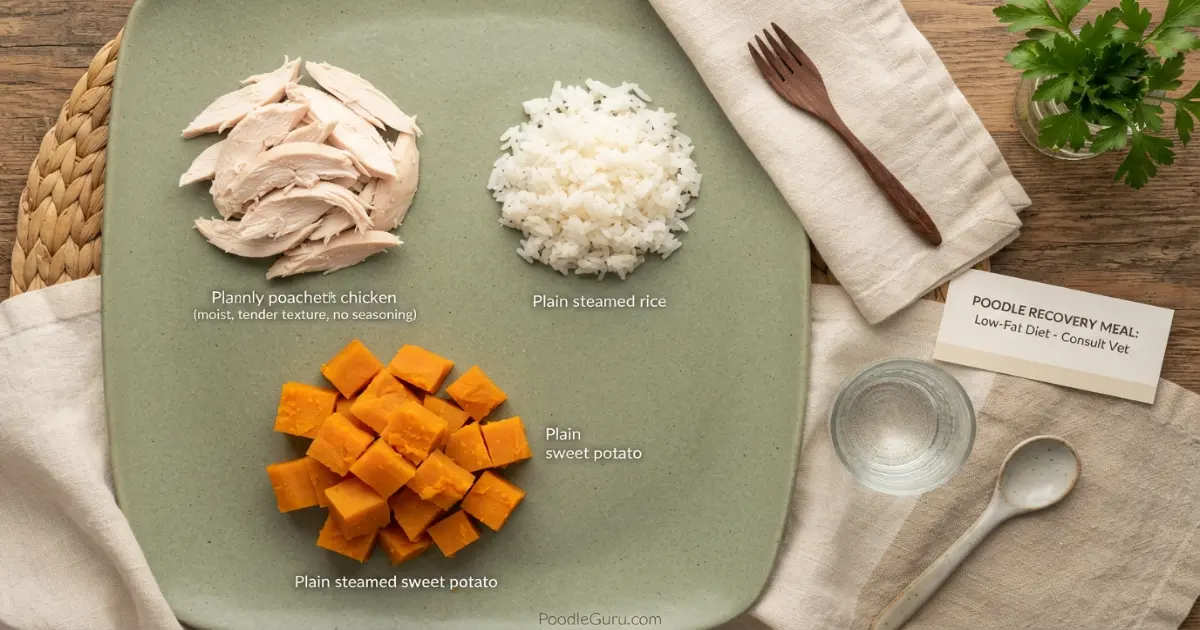
Low-fat doesn’t mean no-fat — it means controlled fat from quality sources. Lean proteins like skinless chicken breast, white fish, or lean ground turkey (well-drained) form the foundation. Complex carbohydrates like plain sweet potato or white rice provide gentle energy. Avoid anything fried, buttered, greasy, or processed.
Even “healthy” fats like salmon oil or coconut oil may need to be paused or severely limited during recovery.
🐩 Quick Diet Dos & Don’ts for Poodles With Pancreatitis
Do: Feed small, frequent meals (3–4 per day) to avoid overloading the pancreas at any single feeding.
Do: Choose veterinary therapeutic low-fat diets when recommended — they’re formulated specifically for pancreatic recovery.
Don’t: Add butter, bacon grease, cheese, or fatty toppers to make food more appealing.
Don’t: Assume “grain-free” equals low-fat — many grain-free foods are high in fat from alternative protein sources.
How to Transition Your Poodle to a Pancreatitis-Safe Diet
Switching a poodle’s diet after a pancreatitis episode isn’t just about swapping kibble. The transition itself matters — go too fast and you risk digestive upset. Go too slow with the wrong food and recovery stalls. Here’s a step-by-step approach grounded in veterinary refeeding principles.
Start With Veterinary Guidance
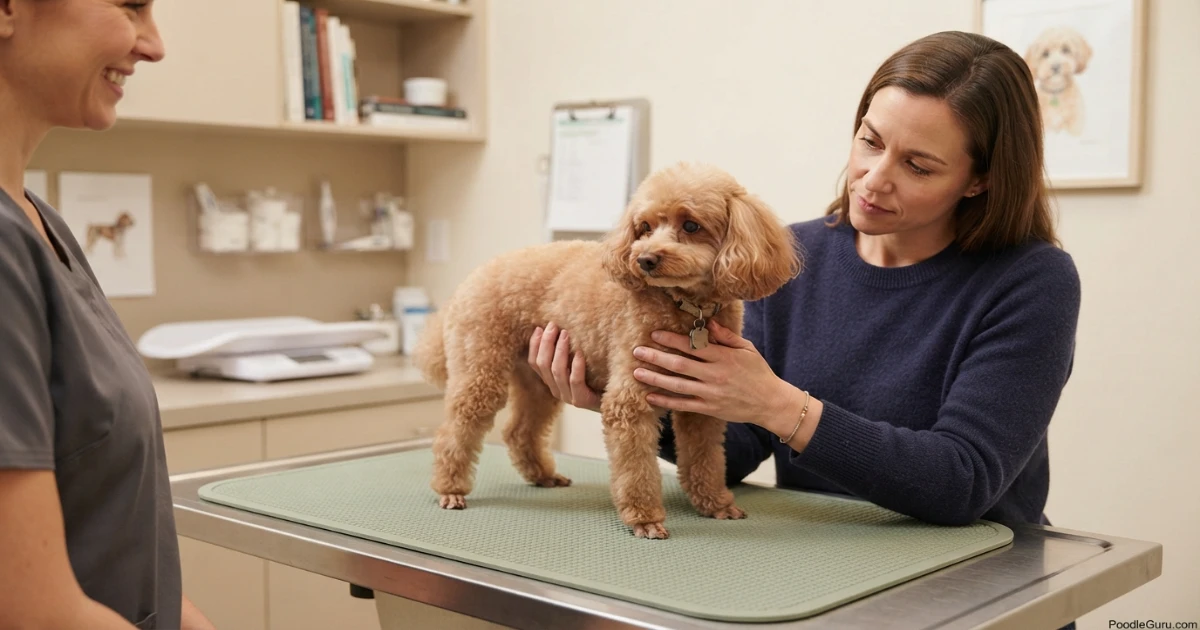
Before changing anything, confirm with your vet that your poodle is cleared for oral feeding. Some dogs need hospitalization, IV fluids, anti-nausea medication, pain control, and a vet-directed refeeding plan before food is reintroduced. Do not fast or refeed at home unless your vet gives specific instructions.
Introduce a Bland, Ultra-Low-Fat Base
Begin with a small portion — roughly a tablespoon for Toys, two for Miniatures, three to four for Standards — of poached skinless chicken breast and plain white rice. Feed this tiny meal and observe for 4–6 hours. Watch for any return of vomiting, discomfort, or appetite loss.
Increase Portions Gradually Over 3–5 Days
If the base meal is tolerated, slowly increase portion size while decreasing frequency toward 3 meals per day. Keep fat within the target your vet recommends. This is not the time for variety — stick to the same bland recipe until your poodle is consistently stable.
Transition to a Long-Term Low-Fat Food
Over 7–10 days, gradually mix increasing amounts of a veterinary-recommended low-fat diet into the bland base. A common ratio progression: 25% new food for 2 days, 50% for 2 days, 75% for 2 days, then fully transitioned. This slow crossover minimizes digestive stress.
Monitor and Maintain for the Long Haul
Once transitioned, keep your poodle on a consistent low-fat diet indefinitely if pancreatitis was moderate to severe. Track weight, energy, stool quality, and any recurrence of symptoms. Schedule follow-up bloodwork as your vet recommends — it’s the most reliable way to confirm the pancreas is staying quiet.
When to Call the Vet: A Clear Threshold
Poodle owners sometimes hesitate, unsure whether symptoms warrant an emergency visit or a wait-and-see approach. Here’s a straightforward decision framework.
🚨 Call Your Vet Immediately If:
- Your poodle has vomited more than twice in 4 hours
- You see the prayer-bow position or noticeable abdominal tenseness
- Your poodle refuses food for more than 12 hours
- Gums appear pale, tacky, or brick-red (signs of dehydration or shock)
- Your poodle seems weak, collapses, or can’t stand steadily
A milder scenario — one episode of vomiting with no other symptoms, normal energy, and willingness to drink water — may still deserve a same-day call to your veterinarian for advice, especially in Toy and Miniature Poodles. Do not give human pain medicine, anti-nausea medication, or leftover prescriptions unless your vet specifically directs it. If your poodle has a known pancreatitis history, call sooner rather than later.
Owner Mistakes That Can Worsen Poodle Pancreatitis
Even devoted poodle owners make missteps during recovery. These are the most common — and the most preventable.
| Mistake | Why It’s a Problem | What to Do Instead |
|---|---|---|
| Reintroducing rich food too soon | The pancreas needs weeks, not days, to fully settle. A single fatty treat can reignite inflammation. | Maintain strict vet-approved low-fat feeding for the full recovery window your veterinarian recommends. Many poodles need lifelong fat control after an episode. |
| Assuming “natural” treats are safe | Many natural chews (bully sticks, pig ears, marrow bones) are extremely high in fat. | Choose vet-approved low-fat treats or use tiny pieces of poached skinless chicken breast as rewards only if your veterinarian approves them. |
| Skipping follow-up bloodwork | Pancreatic enzyme levels can remain elevated even when symptoms fade. | Schedule the follow-up labs your vet recommends — they confirm true recovery, not just symptom relief. |
| Free-feeding or leaving food out | Grazing makes it impossible to monitor intake and can mask early appetite changes. | Feed measured meals on a consistent schedule. Remove uneaten food after 20 minutes. |
| Giving human pain medicine at home | Common human medications can be toxic to dogs and may worsen dehydration, kidney stress, or stomach irritation. | Use only medications prescribed for your poodle by your veterinarian, and call before giving anything new. |
| Treating pancreatitis as a one-time event | Poodles with one episode are at higher risk for recurrence. Complacency invites setbacks. | Adopt lifelong low-fat dietary habits. View every treat, topper, and table scrap through the pancreatitis lens. |
Long-Term Outlook for Poodles With Pancreatitis
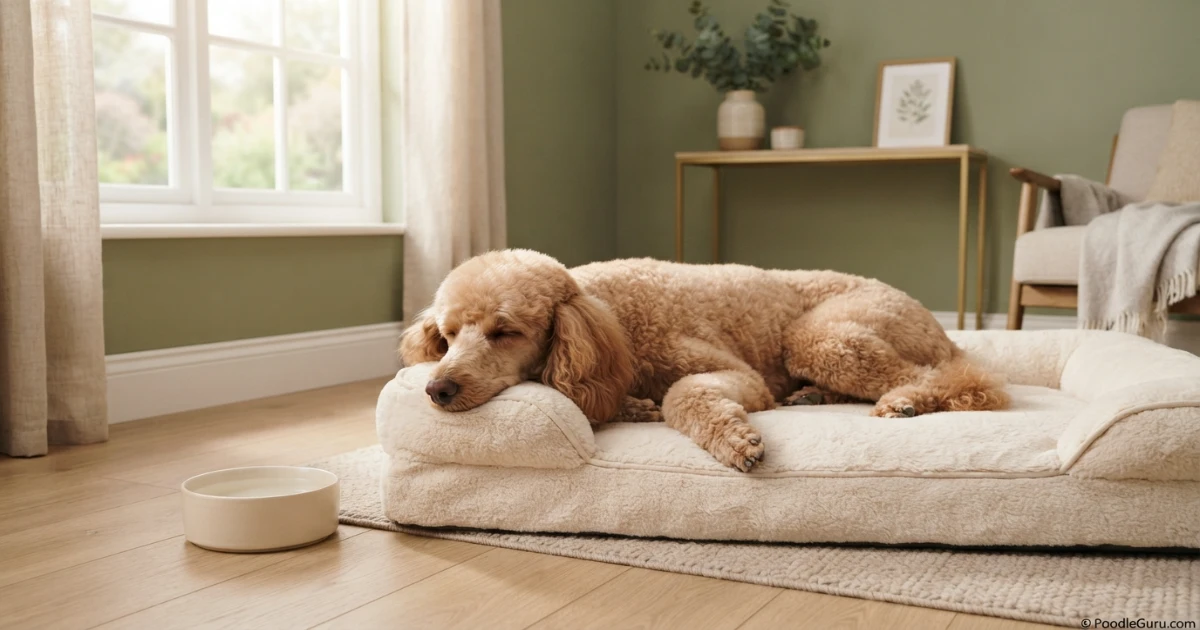
Most poodles who survive an acute pancreatitis episode and receive proper ongoing care go on to live full, comfortable lives. The key variable is owner commitment to dietary discipline. Poodles are charming, persuasive dogs — they’ll convince you they’re starving, that one tiny treat won’t hurt, that they deserve a taste of your dinner. Loving them well sometimes means saying no.
Chronic pancreatitis is a different story. It requires ongoing vigilance, regular veterinary checkups, and acceptance that flare-ups may occur despite your best efforts. Some poodles with chronic pancreatitis eventually develop exocrine pancreatic insufficiency (EPI) or diabetes, both of which require additional management. These aren’t reasons to despair — they’re reasons to stay informed and proactive.
For poodle buyers considering a puppy, ask breeders about pancreatitis and lipid-related health history in the line. No ethical breeder can guarantee a puppy will never develop pancreatitis, but transparency about familial patterns is a strong trust signal. For more on poodle health considerations across sizes, see our complete poodle size comparison guide.
Frequently Asked Questions About Poodle Pancreatitis
What are the first signs of pancreatitis in poodles?
The earliest poodle pancreatitis symptoms are often vomiting, a sudden refusal to eat, and a hunched or prayer-bow posture. Some poodles also tremble, pant excessively, or become unusually withdrawn. Owners frequently notice their poodle “just isn’t acting right” before more obvious signs appear. Trust that instinct and monitor closely.
Can pancreatitis kill a poodle?
Yes, severe acute pancreatitis can be fatal if it progresses to systemic inflammation, organ failure, or septic complications. However, with prompt veterinary care — including IV fluids, pain management, and careful refeeding — most poodles survive and recover well. The critical factor is speed: early treatment dramatically improves outcomes.
What should I feed my poodle after pancreatitis?
Start only after your vet confirms oral feeding is safe. A short-term bland, ultra-low-fat base may include poached skinless chicken breast and plain white rice in small, frequent portions, but it is not a complete long-term diet. Transition gradually to a long-term veterinary-recommended low-fat diet over 7–10 days, or according to your vet’s plan.
Are Toy Poodles more prone to pancreatitis than Standard Poodles?
Clinical experience and veterinary data suggest Toy and Miniature Poodles are overrepresented in pancreatitis cases compared to Standard Poodles. The smaller body mass means dietary fat errors have a proportionally larger metabolic impact. That said, Standard Poodles can and do develop pancreatitis — no poodle size is immune.
How long does it take for a poodle to recover from pancreatitis?
Mild acute cases may resolve within 3–7 days with proper care. Moderate to severe cases requiring hospitalization often need 1–2 weeks before the poodle returns to normal energy and appetite. Chronic pancreatitis doesn’t have a fixed recovery timeline — it’s managed over the long term with diet and monitoring.
Can poodles with pancreatitis eat chicken?
Yes, but only skinless, poached or boiled chicken breast with all visible fat removed. Dark meat, skin, and any preparation involving oil or butter are not safe. Chicken breast is a staple protein in pancreatitis recovery diets precisely because it’s lean and easily digestible when prepared correctly.
Is pancreatitis in poodles preventable?
Not entirely — genetic predisposition plays a real role. But you can dramatically reduce risk by feeding a consistent low-fat diet, avoiding table scraps and high-fat treats, maintaining your poodle at a healthy weight, and addressing underlying conditions like hypothyroidism promptly. Prevention is about controlling what’s controllable.
What triggers pancreatitis flare-ups in poodles?
High-fat meals are the number one trigger. Even a single fatty treat — bacon, cheese, a greasy piece of meat — can spark a flare in a susceptible poodle. Other triggers include certain medications, endocrine disorders, obesity, and sometimes stress. For poodles with chronic pancreatitis, flare-ups can also occur without an obvious trigger.
Key Takeaways: Poodle Pancreatitis at a Glance
Pancreatitis is serious, but it’s also manageable when you know what to watch for and how to respond. Here’s what matters most:
- Poodle pancreatitis symptoms include vomiting, prayer-bow posture, abdominal pain, appetite loss, and subtle signs like trembling or withdrawal — especially in Toy and Miniature Poodles.
- Toy and Miniature Poodles face higher baseline risk than Standards due to smaller body mass and higher lipid sensitivity.
- A single high-fat meal is the most common trigger — table scraps, fatty treats, and rich toppers are not worth the risk for vulnerable poodles.
- Acute pancreatitis demands immediate veterinary care; chronic pancreatitis requires lifelong dietary discipline and regular monitoring.
- A consistent low-fat diet (under 10–15% fat on a dry matter basis) is the cornerstone of both prevention and long-term management.
- Recovery takes weeks, not days — reintroducing rich foods too soon is the most common owner mistake that leads to setbacks.
Next step: If your poodle has shown any combination of the symptoms described in this guide, call your veterinarian today. If you’re in the prevention phase, audit your poodle’s current diet and treat routine — and remove anything high in fat. For more poodle health guidance, explore our complete poodle health issues guide.