Medical note: This guide is for education and owner awareness only. It does not replace a diagnosis from a licensed veterinarian. If your poodle is shaking suddenly, severely, or with other symptoms, contact your vet or an emergency clinic.
Poodle Shaking and Trembling: 7 Causes, Red Flags & Safe Steps
Your poodle is quivering like a leaf, and you are not sure why. The room may be warm, there may be no thunder, and your dog may still tremble. Poodle shaking and trembling can be harmless when it comes from cold, excitement, or mild fear. It can also be an early clue that your dog is in pain, has eaten something toxic, is dealing with low blood sugar, or needs urgent veterinary care.
Quick Answer: Why Is My Poodle Shaking?
Poodle shaking and trembling can happen because of cold, excitement, anxiety, pain, toxin exposure, low blood sugar, Addison’s disease, or neurological tremor syndromes. If the shaking is brief and linked to an obvious trigger, it may settle with warmth, comfort, or a quieter space. If it is sudden, intense, unexplained, lasts longer than an hour, or appears with vomiting, weakness, collapse, drooling, a hard belly, pale gums, or seizure-like movement, call a veterinarian right away.
Poodle Shaking and Trembling: Normal vs. Concerning Signs
Poodles are sensitive, expressive dogs. A Toy or Miniature Poodle may shiver after a bath, during cold weather, when the air conditioner is strong, or when the leash appears and excitement spikes. Those normal shakes are usually brief, linked to a clear trigger, and settle once the trigger changes.
Concerning trembling feels different. It may appear while your dog is warm and resting. It may continue in waves. Your poodle may look glassy-eyed, stiff, weak, nauseous, or withdrawn. The shaking may be paired with drooling, vomiting, diarrhea, panting, limping, collapse, or a refusal to move. Those signs point beyond simple emotion and deserve veterinary guidance.

| Check | Usually Normal Shivering | More Concerning Trembling |
|---|---|---|
| Trigger | Cold room, bath, grooming, excitement, thunder, fireworks | No clear reason, sudden onset, or begins while resting |
| Duration | Stops within minutes after warmth or reassurance | Continues, returns in waves, or lasts longer than expected |
| Body language | Alert, responsive, still interested in you or treats | Withdrawn, stiff, weak, glassy-eyed, hiding, or refusing touch |
| Other symptoms | None, or mild fear signals only | Vomiting, diarrhea, drooling, collapse, limping, pale gums, or seizures |
| Response to comfort | Improves with blanket, quiet space, or calm contact | Does not improve or worsens even after comfort |
7 Common Reasons Your Poodle Is Shaking and Trembling
The right response depends on the cause. Use the signs below to narrow the possibilities, but treat this as an observation guide — not a diagnosis.
1. Cold Sensitivity
Poodles have a curly single coat rather than a thick double coat. When they are clipped short, freshly bathed, wet, or resting in a cold room, they may shiver to generate body heat. Toy and Miniature Poodles show this more obviously because small dogs lose heat faster.
Try a warm blanket, dry the coat fully after bathing, move your poodle away from drafts, and consider a soft sweater in cold weather. If the trembling stops quickly once your dog is warm and comfortable, cold was likely the trigger.

2. Excitement or Anticipation
Some poodles tremble when they are emotionally overloaded in a happy way. The treat jar, leash, car keys, doorbell, or arrival of a favorite person can trigger a full-body quiver. These dogs usually have bright eyes, a wagging tail, forward interest, and normal energy.
For excitement trembling, ask for one calm behavior before the reward. Have your poodle sit, touch your hand, or wait for a second before opening the door. This teaches the body to settle without punishing the emotion.
3. Anxiety and Fear
Poodles often notice tiny changes in sound, routine, and owner mood. Thunder, fireworks, car rides, separation, guests, grooming tools, and vet visits can all cause trembling. Fear-based shaking usually comes with panting, tucked tail, pinned ears, pacing, cowering, hiding, or clinginess.
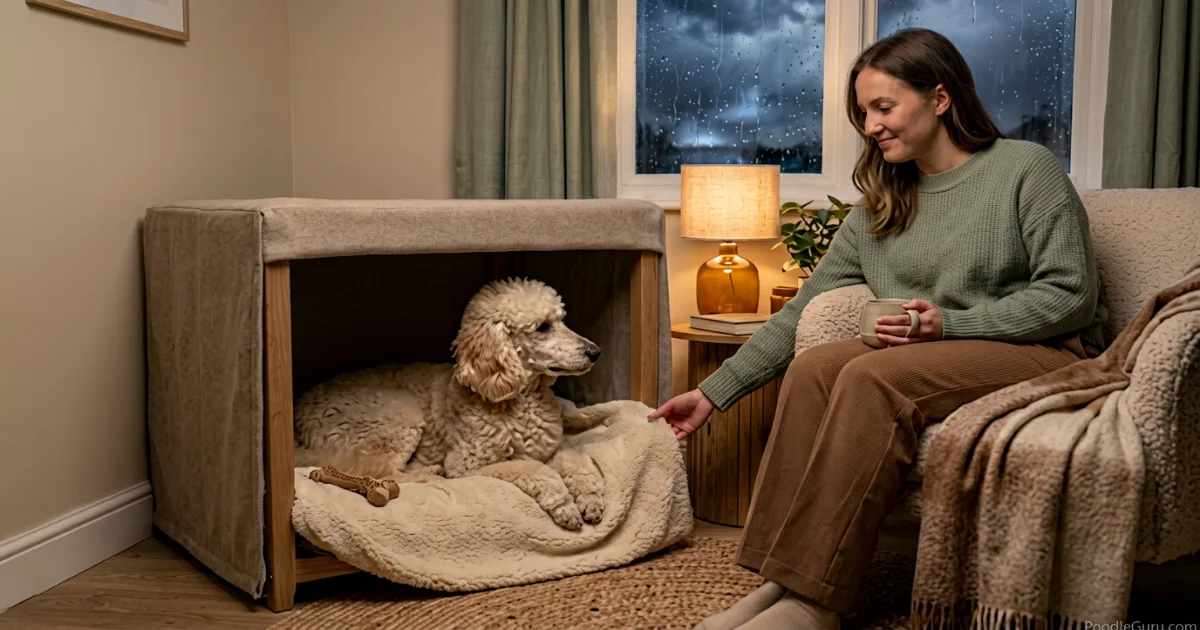
Do not scold a scared dog for shaking. Lower the stimulation, give access to a safe den-like space, and reward calm moments. If fear is frequent or severe, ask your vet about a behavior plan, sound desensitization, or medication support.
4. Pain or Hidden Injury
Poodles may tremble when they are in pain, even when there is no obvious wound. Dental pain, abdominal pain, neck or back pain, a soft-tissue injury, arthritis, pancreatitis, or a pulled muscle can all look like shaking from the outside.
Watch for yelping, hunched posture, shallow breathing, reluctance to jump, limping, guarding one area, refusal to eat, or trembling that gets worse when your dog moves or is picked up. Pain signs should not be managed at home with human painkillers. Many human medications are dangerous for dogs, so call your veterinarian.
5. Toxin Exposure or Poisoning
Poisoning can cause shaking, tremors, vomiting, drooling, weakness, agitation, disorientation, or seizures. Chocolate, xylitol, some human medications, marijuana products, caffeine, nicotine, certain plants, pesticides, and moldy food are common household concerns.
If you suspect toxin exposure, do not wait to “see what happens.” Call your vet, an emergency clinic, or a pet poison control hotline. Keep packaging nearby so the professional can check ingredients and estimate risk.
6. Low Blood Sugar
Toy Poodle puppies and very small adults can be more vulnerable to low blood sugar, especially if they skip meals, vomit, overexercise, or become stressed. Shaking from low blood sugar may appear with weakness, wobbliness, dullness, confusion, or collapse.
If your tiny poodle is weak or collapsing, treat it as urgent. Your vet may tell you how to use a small amount of sugar source on the gums while you travel, but do not delay veterinary care for a puppy or small dog that cannot stand normally.
7. Neurological Tremor Syndromes or Seizure Activity
Some dogs develop tremor syndromes where the head and body shake even without cold or fear. Shaker syndrome is also described as generalized tremor syndrome or steroid-responsive tremor syndrome. Seizure activity can also begin with trembling, anxiety, salivation, abnormal behavior, or unusual movement.
Neurological signs need an exam because the cause cannot be safely guessed from appearance alone. Record a short video of the episode if it is safe, then share it with your veterinarian.
🩺 Poodle-Specific Risk: Addison’s Disease
Standard Poodles are one of the breeds recognized as overrepresented for Addison’s disease, also called hypoadrenocorticism. This condition can cause vague signs such as trembling, weakness, low appetite, vomiting, diarrhea, dehydration, and collapse. Because an Addisonian crisis can become life-threatening, unexplained trembling with digestive signs or weakness should be treated seriously.
The PoodleGuru SHAKE Assessment Framework
Use this simple framework when your poodle starts trembling. It helps you stay calm, organize what you see, and decide whether the situation is watch-and-comfort or call-the-vet.
Scan the Environment
Check for cold air, wet fur, loud noise, grooming stress, a visitor, a car ride, or anything your poodle may find exciting or frightening.
Halt and Observe Body Language
Look at the whole dog. Is your poodle alert and responsive, or stiff, weak, glassy-eyed, panting, hiding, or refusing to move?
Assess Other Symptoms
Check for vomiting, diarrhea, drooling, limping, pale gums, a hard belly, unsteady walking, collapse, seizure-like movement, or signs of toxin exposure.
Keep Calm and Comfort
Speak softly. Offer warmth, water access, and a quiet safe space. Avoid overhandling, shouting, or forcing your poodle to move if pain is possible.
Evaluate Veterinary Care
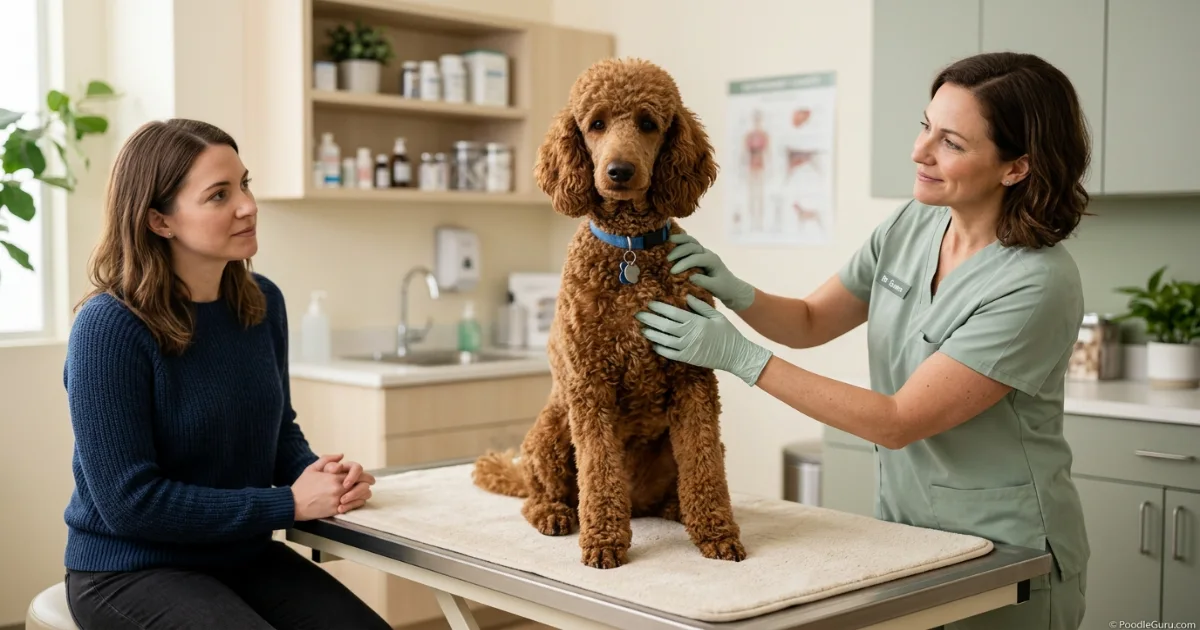
If shaking is sudden, intense, prolonged, unexplained, or paired with red-flag symptoms, call your veterinarian or emergency clinic.
When to Call a Vet: Red-Flag Checklist
Do not second-guess these signs. A trembling poodle with any of the following should be evaluated promptly.
🚨 Emergency Signs
• Collapse or inability to stand
• Seizure-like jerking or loss of awareness
• Pale, blue, or very tacky gums
• Hard, distended, painful belly
• Known or suspected toxin exposure
⚠️ Urgent Signs
• Shaking with vomiting or diarrhea
• Extreme lethargy or weakness
• Trembling that lasts longer than an hour
• Neck/back pain, yelping, or stiffness
• Drooling, disorientation, or wobbliness
📋 Watch-and-Comfort
• Shivering after a bath that stops with warmth
• Excitement quivers before a walk
• Mild fear trembling during storms
• Brief cold-weather trembling in a normal, alert dog
Mistakes Owners Make When Their Poodle Shakes
❌ Assuming Every Tremor Is Anxiety
Anxiety is common, but pain, toxins, low blood sugar, and Addison’s disease can look similar. Check the full symptom picture before deciding it is “just nerves.”
❌ Giving Human Medicine
Never give human pain relievers, sleep aids, anti-anxiety pills, or stomach medicines unless your veterinarian specifically tells you to. Many are unsafe for dogs.
❌ Overhandling a Painful Dog
If your poodle may be hurt, avoid repeated picking up, stretching, or pressing on sore areas. Keep the dog calm and call your vet for next steps.
How to Soothe a Trembling Poodle Safely
Once you have ruled out obvious red flags, start with calm, low-risk support. The goal is not to force the shaking to stop instantly. The goal is to make your poodle feel safe while you watch for improvement.
🐩 Gentle Owner Toolkit
• Move your poodle to a warm, quiet room.
• Offer a familiar blanket, bed, or covered crate with the door open.
• Use a soft voice and slow movement.
• Reduce noise, bright light, and crowding.
• Offer water, but do not force food or drink.
• Use a properly fitted pressure wrap only if your dog already tolerates it.
• Record a short video if the shaking continues, then share it with your vet.

What Changes with Age: Puppies vs. Senior Poodles
Poodle puppies can tremble from cold, stress, and low blood sugar because their bodies have less reserve. A tiny Toy Poodle puppy that misses meals, plays hard, or vomits should be monitored closely. Weakness, wobbliness, or collapse in a puppy is urgent.
Senior poodles may tremble because of arthritis pain, muscle weakness, cognitive changes, organ disease, or medication side effects. Do not dismiss new shaking as “just old age.” If trembling is new, frequent, or paired with appetite, thirst, weight, mobility, or behavior changes, book a veterinary check.
Related Reading on PoodleGuru
Veterinary Sources Used
This guide was cross-checked against veterinary resources on dog tremors, shaker syndrome, xylitol toxicity, seizures, and Addison’s disease.
FAQs: Poodle Shaking and Trembling
Why does my poodle shake when it is not cold?
A poodle may shake from excitement, anxiety, pain, nausea, toxin exposure, low blood sugar, or a neurological issue. If the shaking is new, intense, unexplained, or paired with vomiting, weakness, collapse, or a rigid belly, contact a veterinarian promptly.
Why does my Toy Poodle tremble so much?
Toy Poodles can tremble more noticeably because they are small, sensitive, and lose body heat quickly. They may also be vulnerable to low blood sugar, especially as puppies or very small adults. Frequent or unexplained trembling should be discussed with a veterinarian.
Can poodles shake from anxiety?
Yes. Poodles can shake from fear, separation stress, car rides, vet visits, thunderstorms, fireworks, or major routine changes. Anxiety trembling is often paired with hiding, panting, a tucked tail, pinned ears, or clingy behavior.
When should I worry about poodle shaking and trembling?
Worry when trembling is sudden, severe, persistent, unexplained, or paired with vomiting, diarrhea, drooling, collapse, weakness, pale gums, a distended belly, suspected toxin exposure, or seizure-like movements. These signs deserve urgent veterinary guidance.
What does a poodle shaking from pain look like?
Pain-related trembling may appear when the dog is still, worsen with movement, or come with yelping, hunched posture, guarding one area, reluctance to jump, shallow breathing, or refusal to be touched. A veterinary exam is the safest next step.
Can Addison’s disease cause shaking in poodles?
Yes. Addison’s disease can cause trembling, weakness, lethargy, vomiting, diarrhea, dehydration, and collapse. Standard Poodles are among breeds with recognized risk, so unexplained shaking with digestive signs or weakness should be taken seriously.
How do I help my poodle stop shaking during a thunderstorm?
Create a quiet retreat, close curtains, use white noise or soft music, stay calm, and consider a properly fitted pressure wrap. For severe storm fear, ask your veterinarian about a behavior plan or medication before the next storm season.
Is poodle shaking after eating normal?
Occasional excitement after meals is not unusual, but shaking after eating can also suggest nausea, digestive discomfort, or blood sugar changes. Repeated episodes, weakness, vomiting, or collapse require veterinary advice.
Key Takeaways: Poodle Shaking and Trembling
- Poodle shaking and trembling can be harmless when it is brief and tied to cold, excitement, or mild fear.
- Sudden, severe, prolonged, or unexplained trembling is more concerning, especially with weakness, vomiting, diarrhea, collapse, drooling, pale gums, or seizure-like movement.
- Toy Poodles and puppies need extra attention because cold and low blood sugar can affect small dogs quickly.
- Standard Poodles have a recognized Addison’s disease risk, so shaking with digestive signs or weakness should not be ignored.
- The safest owner response is to scan the trigger, observe the whole body, check for red flags, keep calm, and call a veterinarian when symptoms do not clearly fit a harmless cause.