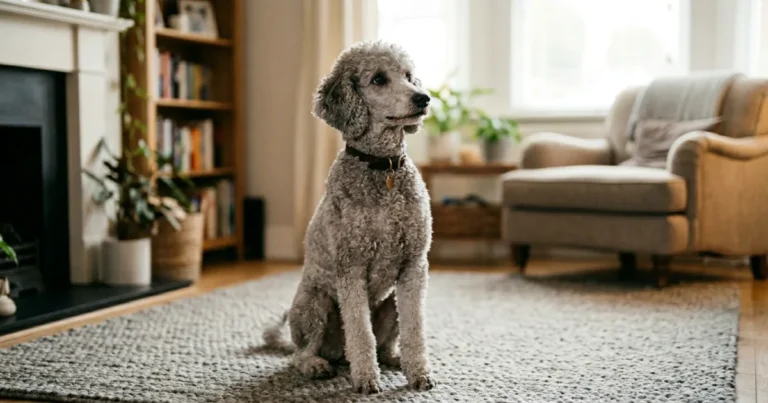
Stop Poodle Jumping on Guests: How to Teach Calm Greetings
Stop Poodle jumping on guests by removing attention when paws lift and rewarding calm, four-paws-on-floor greetings every time. Poodles jump because greetings are exciting — and because many owners accidentally reward the behavior without realizing it. The good news is simple: you can retrain polite greetings with a calm protocol, smart guest management, and daily five-minute practice.
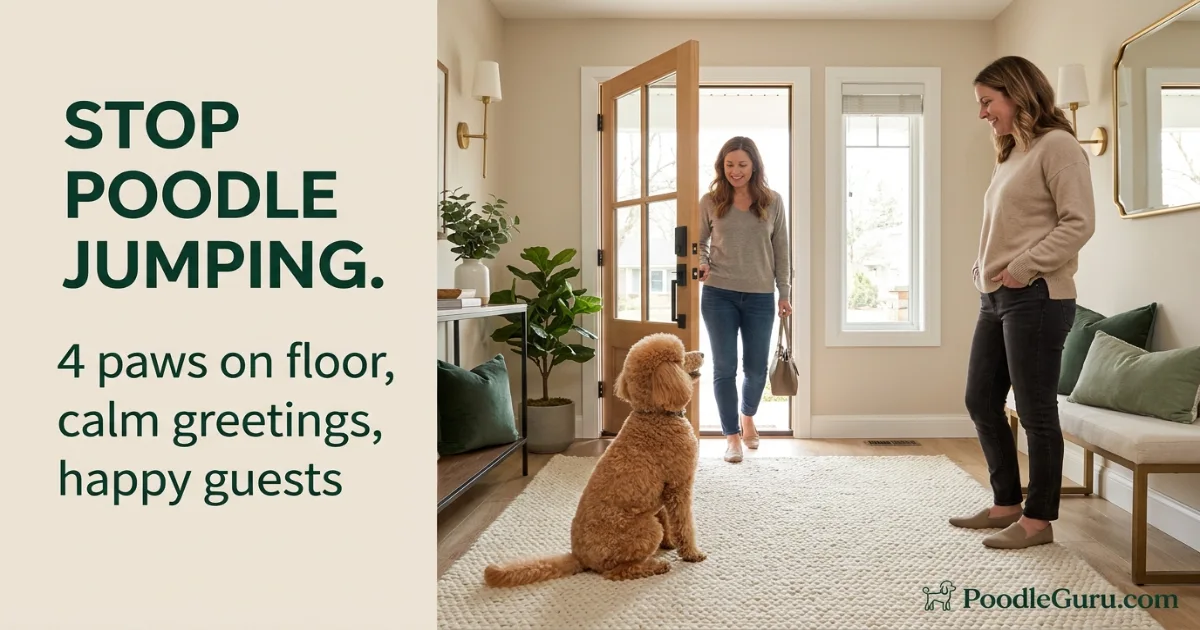
Quick Answer: Stop Poodle Jumping on Guests
To stop Poodle jumping on guests, remove every reward for jumping and heavily reward calm four-paws-on-floor behavior. That means no eye contact, no talking, no touching, and no pushing when your Poodle jumps. The moment their paws return to the floor, mark the behavior and reward it with calm attention or a small treat. Then teach an incompatible greeting behavior, such as sitting, hand targeting, or going to a mat. With daily short sessions and consistent guest rules, many Poodles improve within 2–3 weeks, while full reliability around exciting visitors may take 6–8 weeks.
Quick Facts: Stop Poodle Jumping at a Glance
Why They Jump
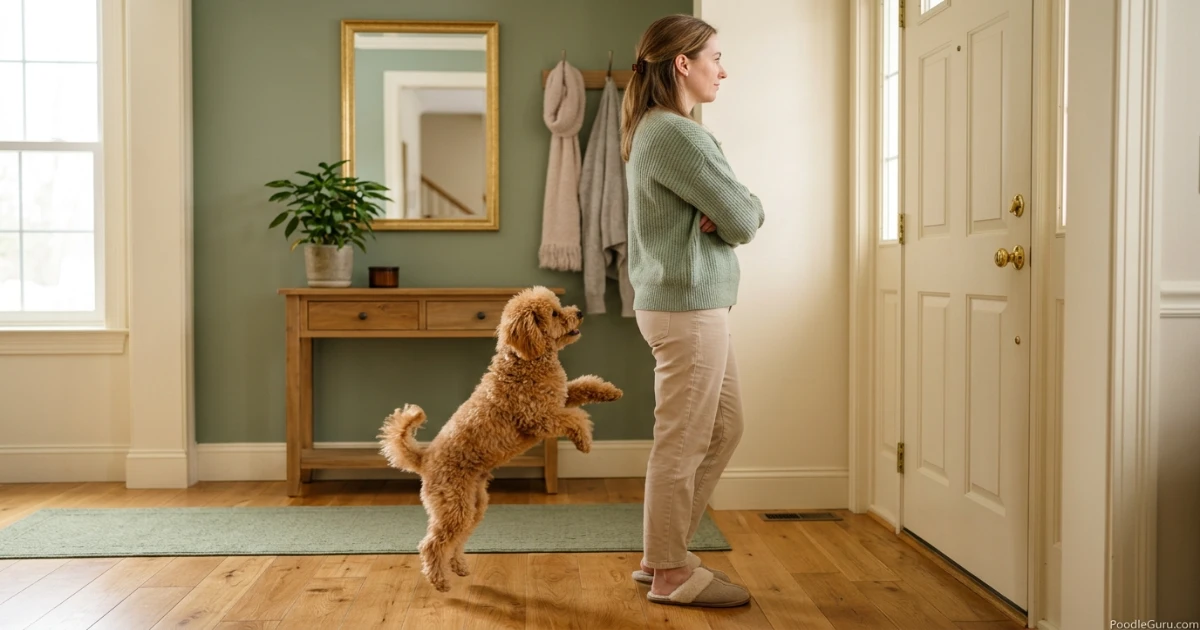
To stop Poodle jumping, first understand that jumping usually starts as a friendly greeting behavior that earns attention. Because Poodles are social and people-focused, even scolding or pushing can accidentally become a reward.
What Actually Works
Reward four paws on the floor before the jump happens. If the jump happens anyway, remove attention calmly, then reward the instant your Poodle lands and settles.
Best Replacement
Teach a greeting job: sit, hand target, or go to mat. A Poodle with a clear job is much easier to guide than a Poodle who is simply told “no.”
Training Time
Most owners see progress in 2–3 weeks with daily practice. Reliable manners around excited guests often need 6–8 weeks of repetition.
Guest Rule
Guests must follow the same script: ignore jumping, reward calm, and keep greetings short. One excited guest can undo several good practice sessions.
Safety First
Use gates, crates, exercise pens, or a leash held by an adult for management. Do not leave a jumping or tethered dog unattended around visitors.
Why Poodles Jump on People
If your goal is to stop Poodle jumping for good, start by understanding the behavior instead of blaming the dog. Jumping is usually not dominance, stubbornness, or “bad manners” in a moral sense. For many dogs, it is a normal social behavior that has been rewarded in the past. Puppies often move toward faces during greetings, and that pattern can transfer to humans if no one teaches a better alternative.
The AKC describes Poodles as active, proud, and very smart. That intelligence is a blessing, but it also means your Poodle quickly learns what gets a response. If jumping earns laughter, excited voices, petting, pushing, or repeated name-calling, the behavior becomes stronger.
Poodles can also be emotionally sensitive. Harsh corrections may stop the behavior in the moment, but they can also create confusion, stress, or avoidance. A positive plan works better because it teaches your Poodle exactly what to do instead: keep paws on the floor, sit, or go to a mat.
What Makes Jumping Worse
The biggest problem is accidental reinforcement. When your Poodle jumps and you touch them, talk to them, look at them, or push them down, they may still experience that as attention. To a social dog, attention is valuable even when the human sounds annoyed.
Inconsistency is the second problem. If jumping is allowed when you are wearing casual clothes but not allowed when guests arrive, the rule becomes unclear. Your Poodle learns that jumping sometimes works, so they keep trying. Behavior that is rewarded only sometimes can become especially persistent.
The third problem is arousal stacking. A Poodle who has been resting all day may explode with excitement when the doorbell rings. At that moment, they are not thinking carefully. Management comes before training: reduce the excitement, create distance, scatter treats, use a gate, or send your Poodle to a mat before the guest fully enters.
Important Safety Note
Do not knee, shout at, grab paws, or physically punish a jumping Poodle. These methods can scare sensitive dogs and may make greeting behavior worse. Also avoid leaving a dog tied or tethered unsupervised. If you use a leash indoors, an adult should hold it calmly, or the dog should be safely separated behind a gate, crate, or exercise pen.
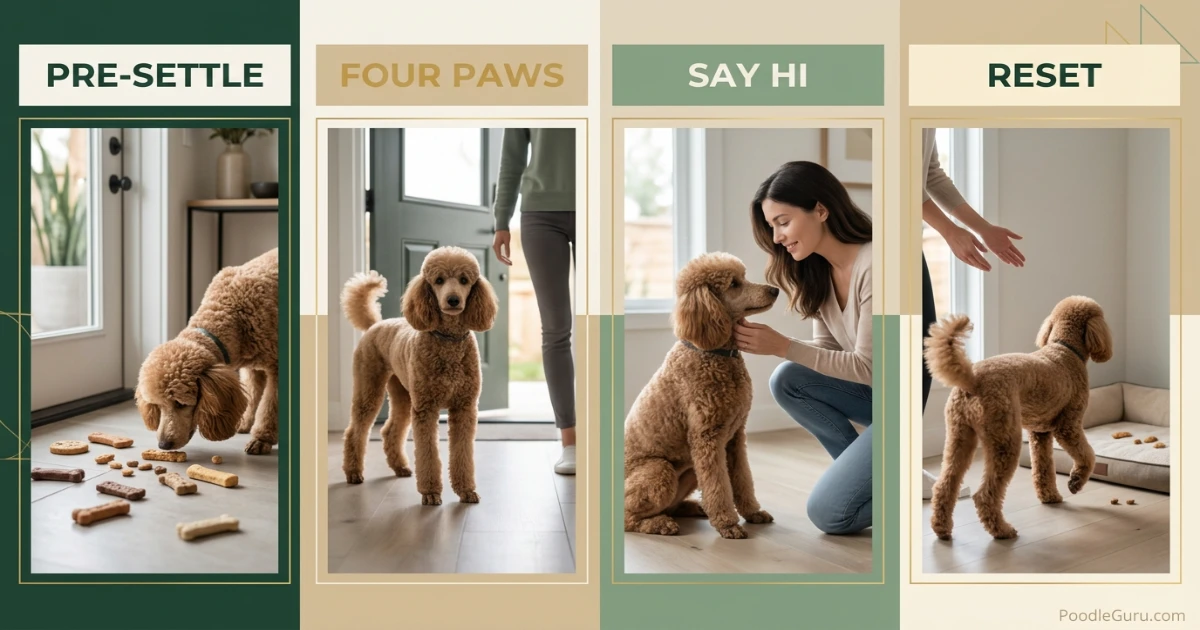
The PoodleGuru 4-Step Greeting Protocol
This protocol replaces jumping with a predictable greeting routine. It works because it gives your Poodle a job before excitement takes over.
Pre-Settle Before the Door Opens
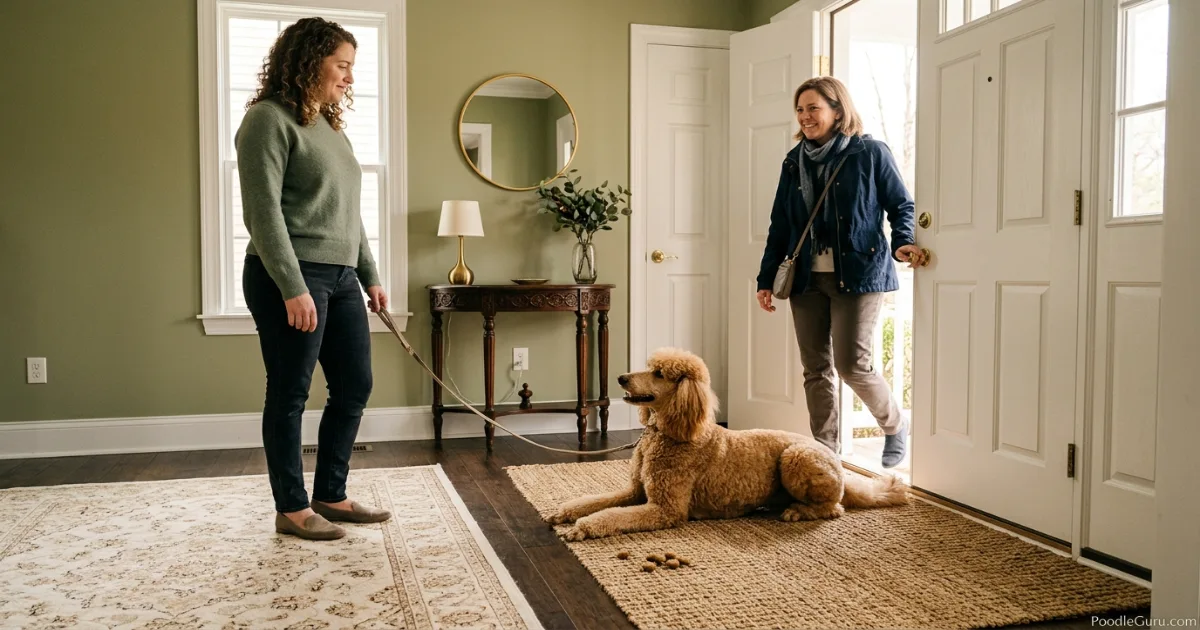
Before a guest enters, scatter a few small treats on the floor, use a snuffle mat, or send your Poodle to a mat away from the door. Sniffing lowers arousal and gives your dog something safe to do with their energy.
Four Paws = Attention
The moment all four paws are on the floor, mark it with “yes” and reward. Use food first, then calm praise and petting. If paws lift, attention stops again. This creates a clear on/off switch.
Teach a “Say Hi” Cue
Once your Poodle can stay grounded as a person approaches, add a cue such as “say hi.” The guest calmly pets for two or three seconds. If your Poodle jumps, the guest turns away and the greeting pauses.
Release and Reset
After the short greeting, call your Poodle back with “all done” and reward disengagement. This prevents the excitement from rebuilding and teaches your Poodle that calm greetings start and end politely.
Training Drills to Stop Poodle Jumping
Start these drills without real guests. Practice with a family member first, then a calm friend, then higher-energy visitors. Each session should be short enough that your Poodle finishes successful, not exhausted.
| Drill | How to Practice | Goal |
|---|---|---|
| Doorbell Desensitization | Play a doorbell sound at low volume, then feed treats before your Poodle reacts. Increase volume gradually over several days. | Break the doorbell-to-frenzy pattern. |
| Sit-for-Greeting Game | Have a helper approach slowly. If your Poodle sits or keeps paws down, the helper steps closer. If paws lift, the helper calmly steps away. | Teach that calm behavior makes people approach. |
| Mat Station Training | Teach “go to mat” with treats. When a visitor arrives, reward your Poodle for staying on the mat while the guest enters. | Create a safe greeting station away from the doorway. |
| Leash-Guided Greeting | An adult calmly holds a lightweight leash so your Poodle cannot rehearse jumping. Reward calm sitting or four paws before greeting. | Prevent jumping while building a new habit. |
| Guest Tosses Treats | Ask the guest to toss treats on the floor instead of leaning over the dog. This keeps your Poodle’s nose down and paws grounded. | Make guests part of the calm-greeting system. |
Mistakes That Undo Your Training
Pushing the Dog Off
Many Poodles interpret pushing as play or attention. Instead, freeze, turn away, and reward when paws return to the floor.
Kneeling Down Too Soon
Kneeling brings your face closer, which can trigger another jump. Stay upright until your Poodle has reliable calm greetings.
Letting Guests Break the Rule
If one visitor says, “I don’t mind,” your Poodle learns jumping still works. The rule must be the same for every person.
Training Only at the Door
Practice in different rooms, outside, and around family members. Poodles need repetition in several contexts before the behavior becomes reliable.
Expecting Too Much Too Fast
A calm family member is easier than a loud visitor carrying food. Build difficulty slowly so your Poodle can keep winning.
Correcting Without Teaching
“Off” tells your Poodle what not to do, but it does not teach the greeting you want. Pair management with a clear replacement behavior.
A Note on Sensitive Poodles
Because many Poodles are highly responsive to human tone and movement, your timing matters. Calmly remove attention from jumping, then warmly reward the behavior you want. The mood should feel boring during the jump and rewarding during calm.
How Guest Management Helps Stop Poodle Jumping
You cannot train a Poodle to stop jumping if guests keep rewarding the jump. Before the door opens, give visitors a simple script: “We’re practicing calm greetings. Please ignore jumping and only pet when all four paws are on the floor.” Most guests will follow the rule if you make it clear and easy.
During the first few weeks, use management tools. A baby gate, crate, exercise pen, closed door, or leash held by an adult can prevent your Poodle from rehearsing the old behavior. Management is not a failure — it is how you protect the new habit while it is still fragile.
If children, elderly guests, or nervous visitors are coming over, separate first and greet later. Bring your Poodle out only when the initial excitement has dropped. Keep the greeting short, reward calm behavior, and end before your Poodle gets overexcited again.
Troubleshooting by Poodle Size and Age
| Poodle | Common Jumping Pattern | Best Fix |
|---|---|---|
| Toy Poodle | Picked up often, so jumping becomes a request for arms and attention. | Reward paws down before lifting. Do not pick up while the dog is jumping. |
| Miniature Poodle | Fast, bouncy greetings that escalate when guests use excited voices. | Use guest scripts, treat scatters, and short greetings before excitement spikes. |
| Standard Poodle | Can knock over children or older adults because of size and enthusiasm. | Use gates or an adult-held leash during arrivals. Teach mat station strongly. |
| Poodle Puppy | Jumping looks cute, so people reward it early. | Start four-paws-on-floor from day one. Reward calm greetings before bad habits form. |
| Adolescent Poodle | Previously trained manners may disappear during high excitement. | Go back to basics, reduce difficulty, and practice daily with predictable routines. |
When to Bring in a Professional Trainer
If you have practiced consistently for four weeks with no improvement, or if jumping includes hard mouthing, growling, guarding, fear, or knocking people over, bring in a certified positive-reinforcement trainer. A good trainer can identify triggers, timing errors, and hidden rewards that are easy for owners to miss.
Seek help sooner if your Poodle appears distressed when guests arrive — for example, trembling, barking that does not settle, lunging, panic, or hiding. In those cases, the jumping may be only one part of a bigger emotional response. For severe fear, aggression, or injury risk, ask your veterinarian about a referral to a qualified veterinary behavior professional.
The ASPCA supports humane training methods that use rewards and minimize stress, and the AKC’s jumping guidance also emphasizes rewarding four paws on the floor. That is the foundation of this plan.
Frequently Asked Questions
Why does my Poodle jump on every guest who comes over?
Most Poodles jump because they have learned that jumping gets attention. Even negative reactions like pushing, talking, or scolding can reinforce the behavior. Teach a clear replacement, such as sitting or going to a mat, and make sure guests only interact when all four paws are on the floor.
Is it okay to push a Poodle off when they jump?
No. Pushing can feel like attention or play, and it does not teach your Poodle what to do instead. Calmly turn away, remove attention, then reward the instant paws return to the floor.
How long does it take to train a Poodle not to jump?
With daily short practice, many Poodles show improvement within 2–3 weeks. Full reliability with exciting visitors can take 6–8 weeks. The biggest factor is consistency from every person who greets the dog.
My Poodle jumps on me when I come home. What should I do?
Enter calmly and keep your greeting boring for the first 30–60 seconds. Avoid eye contact, talking, and touch while your Poodle is jumping. Once paws are down or your Poodle sits, give calm attention. If jumping resumes, turn away again.
Can a Poodle puppy be trained not to jump?
Yes. Puppyhood is the best time to teach the four-paws-on-floor rule. Do not reward “cute” puppy jumping, because the same habit becomes harder to manage when your Poodle is bigger, faster, or more excited.
Should I use a leash indoors to stop jumping?
A lightweight leash held by an adult can help prevent rehearsal during guest arrivals. Use it for calm guidance, not pulling or correction. For safety, do not leave a tethered dog unattended. A gate, crate, or exercise pen is often safer for busy arrivals.
My Poodle only jumps on certain people. Why?
Some guests may have rewarded jumping in the past with excited voices, petting, or playful pushing. Others may move quickly or lean over the dog, which can trigger more excitement. Practice polite greetings with those specific people using the same calm protocol.
When should I get professional help for a jumping Poodle?
Get professional help if there is no improvement after a month of consistent work, or if the jumping includes growling, hard mouthing, fear, lunging, or knocking people over. Choose a certified positive-reinforcement trainer or ask your veterinarian for a behavior referral.
Key Takeaways: Stop Poodle Jumping for Good
A polite Poodle greeting is not about forcing calmness. It is about building a predictable routine where jumping never pays and four paws on the floor always does.
- Poodles usually jump because it earns attention. Remove all attention when paws lift, then reward the instant paws return to the floor.
- Teach a replacement behavior such as sit, hand target, or go to mat. A clear job works better than repeated “off” commands.
- Use doorbell desensitization, sit-for-greeting practice, mat training, and guest treat tosses to build calm habits gradually.
- Manage arrivals with a gate, crate, exercise pen, or an adult-held leash so your Poodle cannot keep rehearsing the old behavior.
- Keep every guest on the same script. Inconsistent greetings are the fastest way to slow progress.
- If jumping includes fear, growling, hard mouthing, or injury risk, consult a humane professional trainer or veterinary behavior expert.
Best next step: Practice the PoodleGuru 4-Step Greeting Protocol for five minutes today without guests. Tomorrow, add one calm family member. Build slowly, reward generously, and let your Poodle’s smart brain learn the new greeting rule.