How to Puppy-Proof Your Home for a Poodle: 9 Must-Do Safety Steps
Learning how to puppy-proof your home for a poodle means thinking like a smart, curious puppy. Poodles chew, climb, carry objects, study patterns, and notice tiny gaps that many other breeds ignore. This room-by-room guide shows you how to protect your puppy before the first accident, shock, swallow risk, or escape attempt happens.
Quick Answer
To how to puppy-proof your home for a poodle correctly, start at puppy eye level in every room. Secure cords, lock chemicals, remove toxic plants, block stairs, protect trash cans, close bathroom access, and create one safe confinement zone. Poodles are clever chewers and escape artists, so use layered protection: gates, cabinet locks, cord covers, safe chew toys, and close supervision.
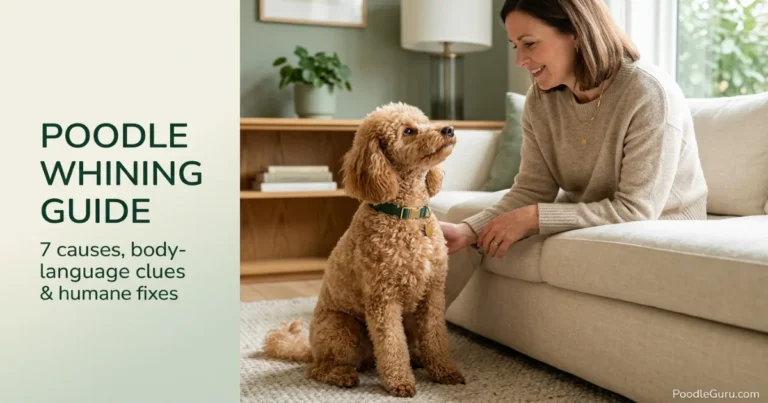
Smart Chewers
Poodles do not just chew randomly. They investigate texture, movement, scent, and hidden access points.
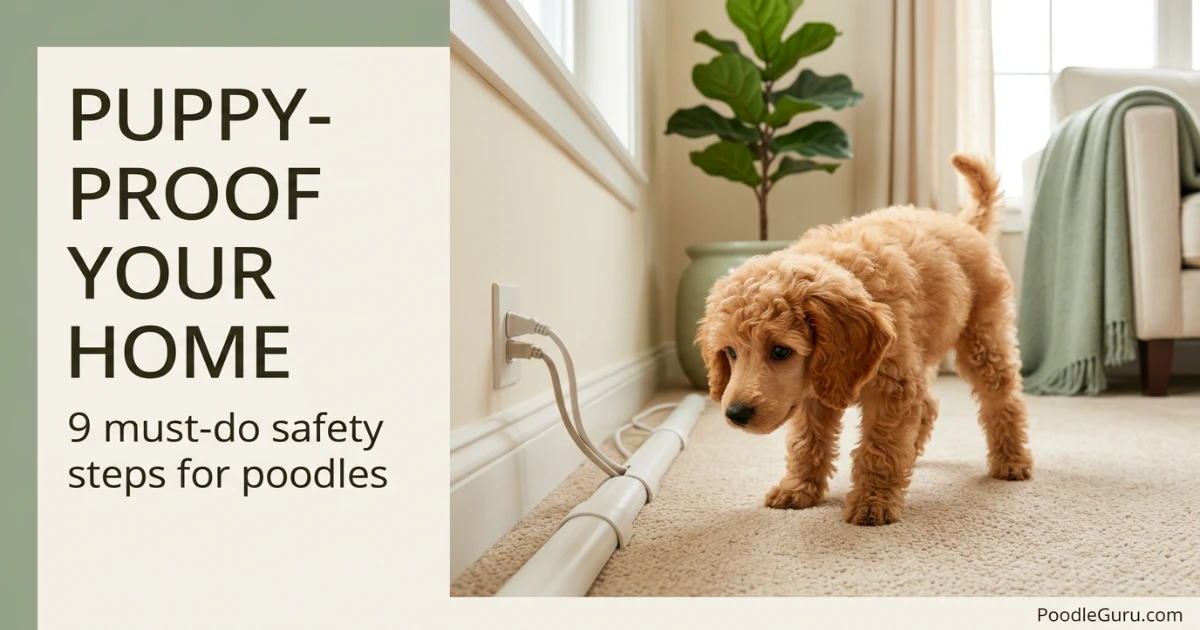
Cord Risk
Dangling charger cables, lamp cords, and power strips should be covered before the puppy arrives.
Toxic Plants
Pothos, philodendron, peace lily, aloe, and sago palm should be moved out of reach or removed.
Why Poodles Need a Different Puppy-Proofing Plan
Generic puppy-proofing advice is not enough for a poodle. This breed is highly intelligent, observant, and physically agile. A poodle puppy can learn where treats are stored, climb furniture to reach a shelf, or pull a dangling cord from behind a table.
That is why how to puppy-proof your home for a poodle is more than hiding shoes. You are building a home system that prevents chewing, swallowing, falling, electrical injuries, toxic exposure, and escape attempts.
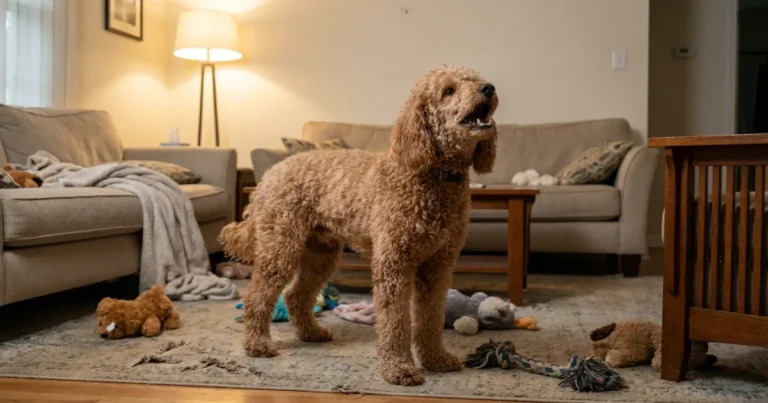
Poodles also carry and retrieve objects naturally. Socks, hair ties, earbuds, children’s toys, and small plastic pieces can become high-value treasures. If those items are swallowed, the risk becomes serious fast.
Expert Insight
The safest poodle home uses prevention before correction. Do not wait for your puppy to chew a cord, steal a pill, or climb the stairs. Set the environment first, then teach boundaries calmly.
How to Puppy-Proof Your Home for a Poodle: 9-Step Checklist
Use this checklist before your puppy comes home and repeat it after the first week. Poodles are excellent at showing you what you missed.
Start at Puppy Eye Level
Get down on your hands and knees. Look under sofas, behind furniture, around baseboards, and near power outlets. Anything you can see from that level is something your puppy can probably reach.
Secure Electrical Cords
Use cord channels, spiral wraps, and furniture placement to remove access. Spray-safe deterrents can help, but physical protection should come first.
Remove Toxic Plants
Move risky plants high enough that a climbing poodle cannot reach them, or replace them with pet-safe options. Falling leaves also matter.
Lock Cabinets and Trash
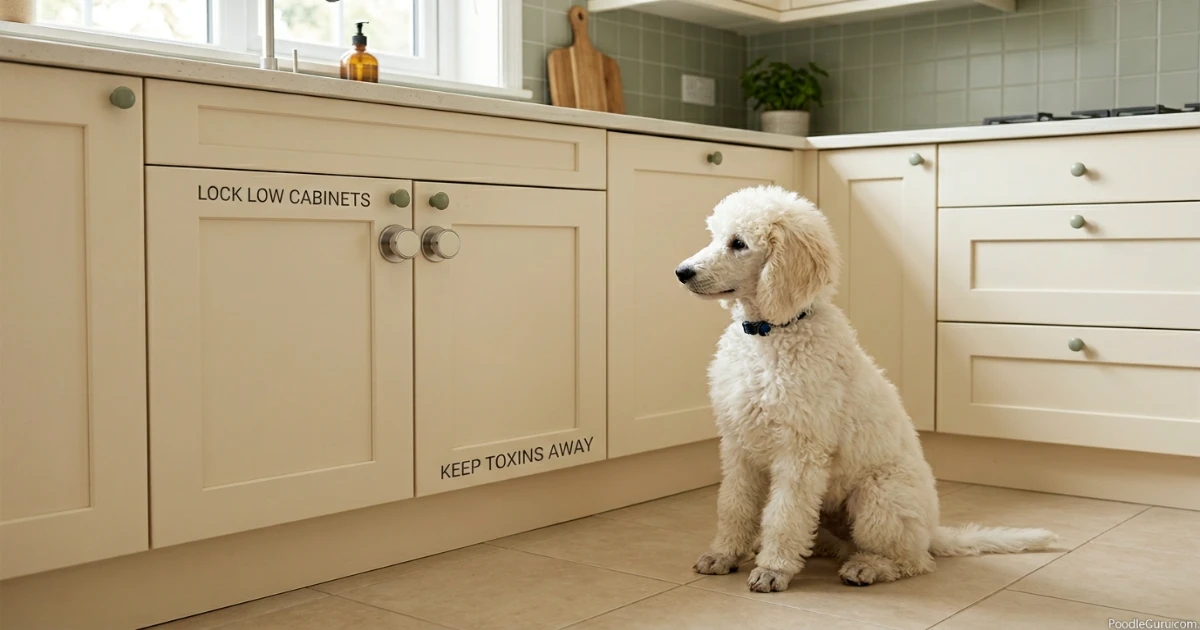
Install magnetic cabinet locks on low cabinets. Use a heavy trash can with a locking lid or store it behind a closed door.
Block Stairs and Unsafe Rooms
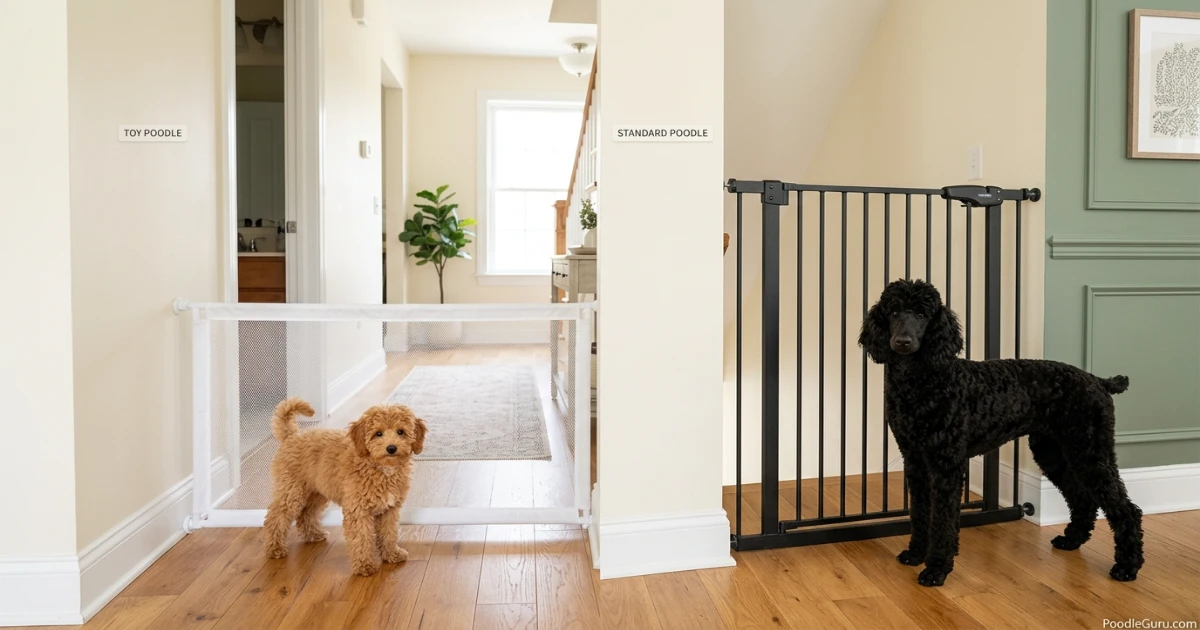
Use gates that match your poodle’s size. For Standard Poodles, choose taller gates that cannot be jumped or climbed.
Protect Small Objects
Hair ties, coins, batteries, earbuds, sewing supplies, and toy parts should be stored in closed drawers or containers.
Create a Safe Zone
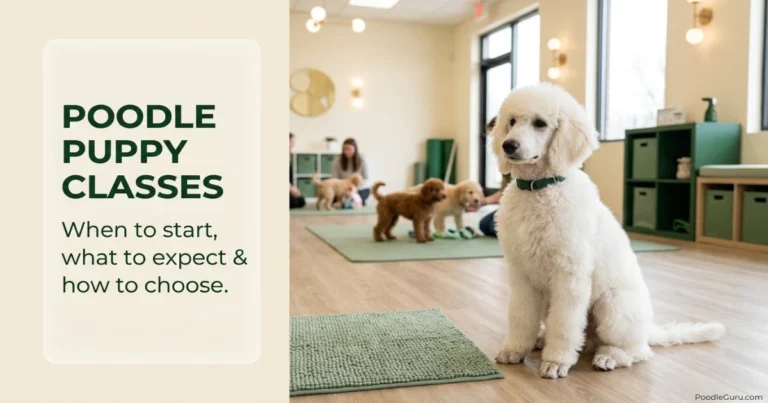
Set up a crate or exercise pen with safe chew toys, water access when appropriate, and no cords, collars, strings, or loose hazards.
Check Outdoor Gaps
Inspect fences, gates, balcony rails, and garden edges. Toy Poodles can slip through small openings; Standards can push weak panels.
Recheck After Week One
Once your puppy explores, new hazards appear. Reassess rugs, corners, cabinets, and objects that your puppy has started targeting.
Room-by-Room Guide to Puppy-Proof a Poodle Home
The easiest way to learn how to puppy-proof your home for a poodle is to walk through the house room by room. Each area has different risks.
Living Room and Family Area
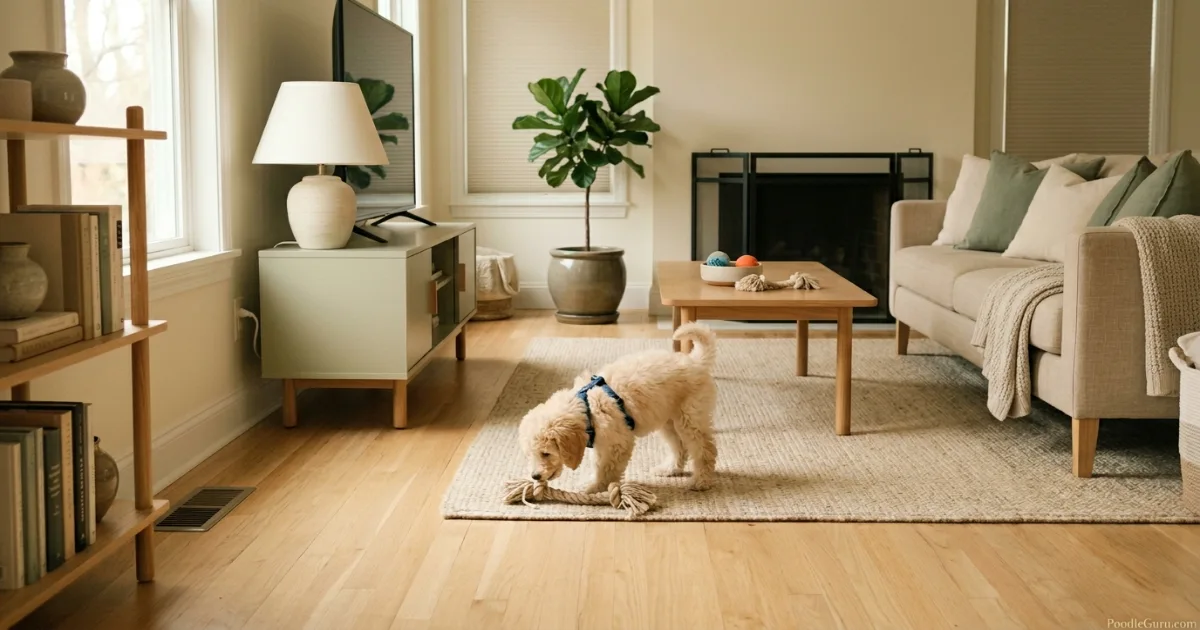
The living room has cords, remotes, blind strings, rugs, books, candles, and low tables. Move remotes into drawers and use cord shorteners for blinds.
Block access behind entertainment centers. That space often hides cable bundles, dust, dropped snacks, and small plastic pieces.
Secure light rugs with non-slip backing. A running poodle puppy can slide, bunch the rug, and crash into furniture.
Kitchen and Dining Area
Kitchens are high-risk areas because they contain food, sharp objects, cleaning products, trash, and dropped items. Lock under-sink cabinets and keep dish pods far out of reach.
Store grapes, raisins, chocolate, onions, garlic, and sugar-free gum securely. A curious poodle puppy can grab dropped food before you notice.
For Standards, counter edges matter. Keep knives, plastic wrap, hot pans, and food away from the edge because a tall puppy may reach earlier than expected.
Bedrooms and Closets
Socks, underwear, slippers, and hair accessories are common swallow risks. Use a hamper with a lid and keep closet doors closed.
Do not leave medications, vitamins, or sleep aids on bedside tables. A poodle’s nose and curiosity make scented bottles especially tempting.
Bathroom and Laundry Room
Keep toilet lids closed, especially for Toy Poodles. Secure razors, dental floss, cleaning tablets, cosmetics, and laundry pods.
In laundry rooms, check behind appliances for lint, wires, and dropped clothing pieces. Puppies can squeeze into spaces that look impossible.
Home Office
Home offices contain chargers, paper clips, staples, batteries, pens, and shredders. Mount power strips under the desk and use cable sleeves for computer wires.
Keep wastebaskets covered. Poodles love shredding paper, but staples and sticky labels can create risks.
Hidden Hazards Poodle Owners Often Miss
Once you understand how to puppy-proof your home for a poodle, the hidden hazards become easier to spot. These are the items many careful owners still forget.
Essential Oils
Some oils can be unsafe for dogs through skin contact, inhalation, or licking residue from the coat. Keep diffusers away from puppy spaces.
Foam Items
Yoga mats, flip-flops, foam toys, and packing pieces are easy to chew and dangerous if swallowed.
Reclining Furniture
Poodle puppies may crawl underneath. Always check before closing footrests or moving heavy furniture.
Banister Gaps
Toy Poodles can slip through railings and stair gaps. Use mesh or acrylic panels if the spacing is wide.
Button Batteries
Remote controls, toys, and small devices can contain batteries that are extremely dangerous if chewed or swallowed.
Loose Threads
Rugs, blankets, rope toys, and towels can unravel. Strings can become a serious intestinal hazard if swallowed.
Toy vs Standard Poodle Puppy-Proofing Needs
The same safety principles apply to all sizes, but the risk zones change. Toy Poodles are vulnerable to gaps, falls, and being stepped on. Standard Poodles create more reach, jump, and tail-sweep risks.
| Safety Area | Toy Poodle | Standard Poodle |
|---|---|---|
| Gate Height | Shorter gates may work, but gaps must be tiny. | Choose tall, sturdy gates that cannot be jumped. |
| Cord Zone | Mostly floor level and under furniture. | Floor level plus counters, appliance cords, and desk edges. |
| Furniture Risk | Falls from sofas, beds, and stairs. | Knocking over lamps, vases, side tables, and trash cans. |
| Escape Risk | Squeezing through railings and small fence gaps. | Opening lever handles, pushing weak doors, jumping barriers. |
| Confinement Setup | Small pen with no climbable mesh and soft landing surfaces. | Heavy-duty x-pen, tall gate, and more floor space. |
Essential Puppy-Proofing Supplies and 2026 Cost Snapshot
You do not need to spend a fortune, but buying the right safety supplies early is cheaper than replacing damaged furniture or facing an emergency vet visit.
Poodle-Safe Setup List
| Item | Typical Cost Range | Why It Matters for Poodles |
|---|---|---|
| Heavy-duty baby gates | $80–$180 | Blocks stairs, kitchens, and unsafe rooms. |
| Cord covers and cable sleeves | $25–$45 | Protects against chewing and electrical injury. |
| Magnetic cabinet locks | $25–$40 | Harder for clever poodles to nose open. |
| Locking trash can | $50–$110 | Prevents food theft and swallowed packaging. |
| Safe chew toy rotation | $35–$70 | Gives the mouth a legal job during teething. |
| Exercise pen or puppy zone | $60–$180 | Creates safe freedom when you cannot supervise. |
How to Create a Safe Confinement Zone
A safe zone is not punishment. It is a protected puppy apartment for moments when you cannot supervise closely.
If you are learning how to puppy-proof your home for a poodle, the safe zone should be your first setup project.
Choose Hard Flooring
A kitchen corner, laundry area, or family-room section with washable flooring works best.
Use a Secure Pen
Choose vertical bars instead of climbable mesh. Standards need a taller, sturdier setup.
Add Safe Enrichment
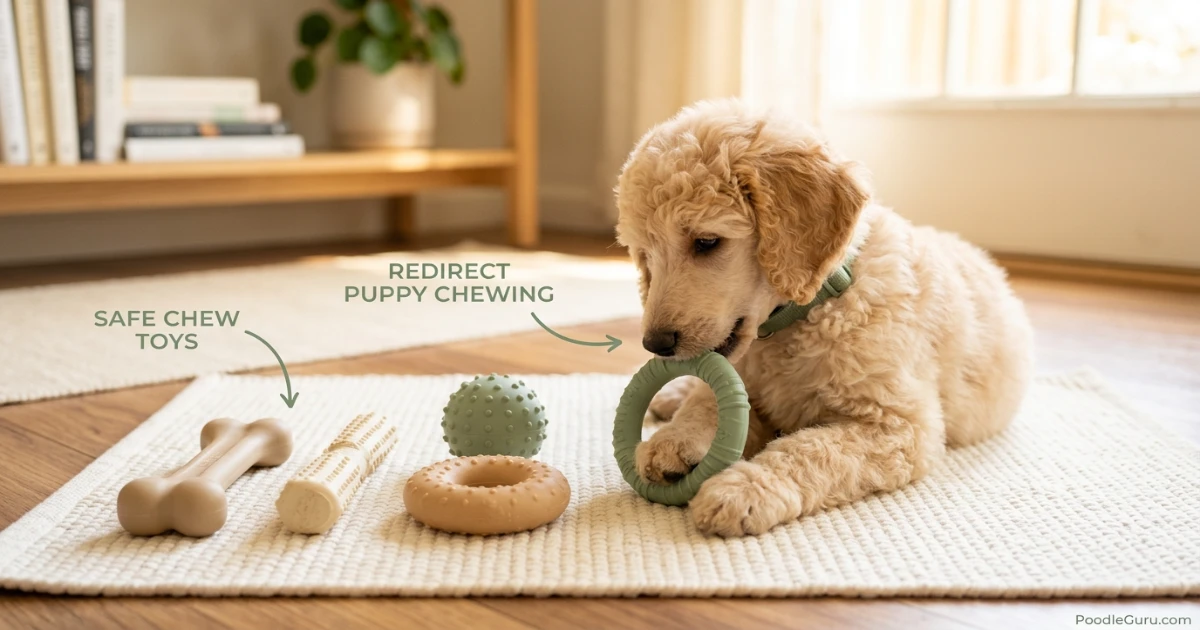
Use a frozen stuffed toy, snuffle mat, and durable puppy-safe chew. Avoid small pieces and loose strings.
Remove Collars Inside
Collars can catch on crate or pen bars. Use a microchip and supervise transitions.
Reassess Daily
Check for lifted mats, chewed edges, moved barriers, and toys that are wearing down.
Mistakes That Make Puppy-Proofing Incomplete
Even loving owners can miss details. The biggest mistake is assuming one setup will work forever.
Puppies grow, teething intensifies, jumping improves, and curiosity expands. A home that was safe on day one may need upgrades by week two.
Too Much Freedom
Letting a puppy roam the whole house before boundaries are learned creates accidents, chewing, and hidden hazards.
Old Socks as Toys
Giving old clothing as chew items teaches your poodle that fabric is fair game.
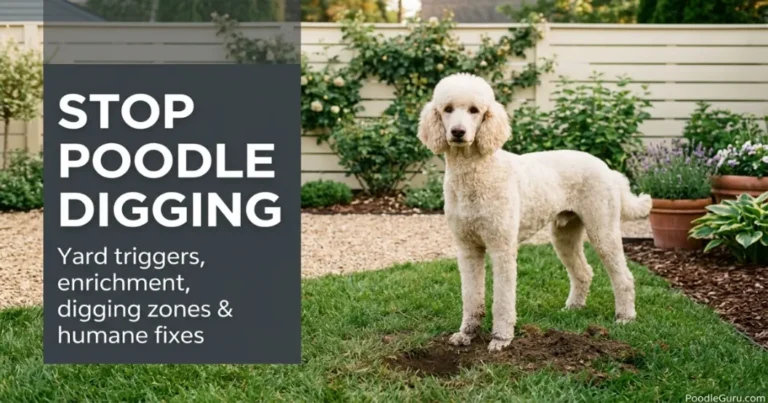
Ignoring the Yard
Fence gaps, mulch, toxic plants, chemicals, and dropped tools can be as risky as indoor hazards.
What to Expect in the First Two Weeks
During the first few days, your puppy will map the space. You may discover a rug corner, chair leg, or cabinet gap you missed.
Keep a quick notes list on your phone. Every time your poodle targets something unsafe, fix the environment instead of only saying “no.”
By the end of week two, you should have a clearer picture of your puppy’s favorite risks: chewing, climbing, stealing, hiding, or squeezing through gaps. Adjust the setup to match your actual dog.
PoodleGuru Safety Tip
The best answer to how to puppy-proof your home for a poodle is not one big setup. It is a weekly habit. Recheck cords, plants, toys, gates, cabinet locks, and confinement zones as your puppy grows.
Frequently Asked Questions About How to Puppy-Proof Your Home for a Poodle
When should I start puppy-proofing for a poodle?
Start at least two weeks before your puppy arrives. Poodles are curious by 8 weeks, so the home should already be safe on arrival day.
What is the most dangerous item for a poodle puppy?
Electrical cords are one of the biggest risks because puppies can chew them quickly. Button batteries, medications, toxic foods, and small swallowable objects are also urgent hazards.
How do I stop my poodle from chewing cords?
Use cord channels or sleeves, move furniture to block access, apply a dog-safe deterrent when appropriate, and offer better chew options nearby. Do not rely on supervision alone.
Are baby gates enough for a Standard Poodle?
Not always. Standard Poodles may jump short pressure gates. Choose tall, sturdy gates without horizontal climb points.
Do Toy Poodles need different puppy-proofing?
Yes. Toy Poodles need extra protection from small gaps, stairs, tall furniture, railings, and being accidentally stepped on. Their size changes the danger zone.
Can poodles outgrow puppy-proofing?
They outgrow some teething behaviors, but poodles remain smart and curious. Gradually reduce barriers only after training is reliable.
What plants should I avoid around a poodle puppy?
Avoid or secure common risky plants such as pothos, philodendron, peace lily, aloe, dieffenbachia, and sago palm. Choose pet-safe plants whenever possible.
Key Takeaways
Learning how to puppy-proof your home for a poodle is about respecting the breed’s intelligence. Poodles are not careless puppies; they are clever explorers.
Start with cords, toxins, plants, gates, trash, small objects, and one safe zone. Then reassess weekly as your puppy grows stronger, taller, and more creative.
- Get down to puppy eye level before your poodle arrives.
- Secure electrical cords, chargers, power strips, and blind cords first.
- Remove toxic plants, medications, chemicals, and dangerous foods from reach.
- Use gates and cabinet locks that match your poodle’s size and problem-solving ability.
- Create a safe confinement zone for moments when direct supervision is impossible.
- Recheck the home after the first week because poodles quickly reveal missed hazards.