Are Poodles Aggressive? 7 Facts Behind the Myth
Some people swear poodles are snappy. Others call them the smartest, most elegant companions alive. If you are asking are poodles aggressive, the real answer is not a simple yes or no — it depends on breeding, socialization, pain, handling, and daily structure.
Quick Answer
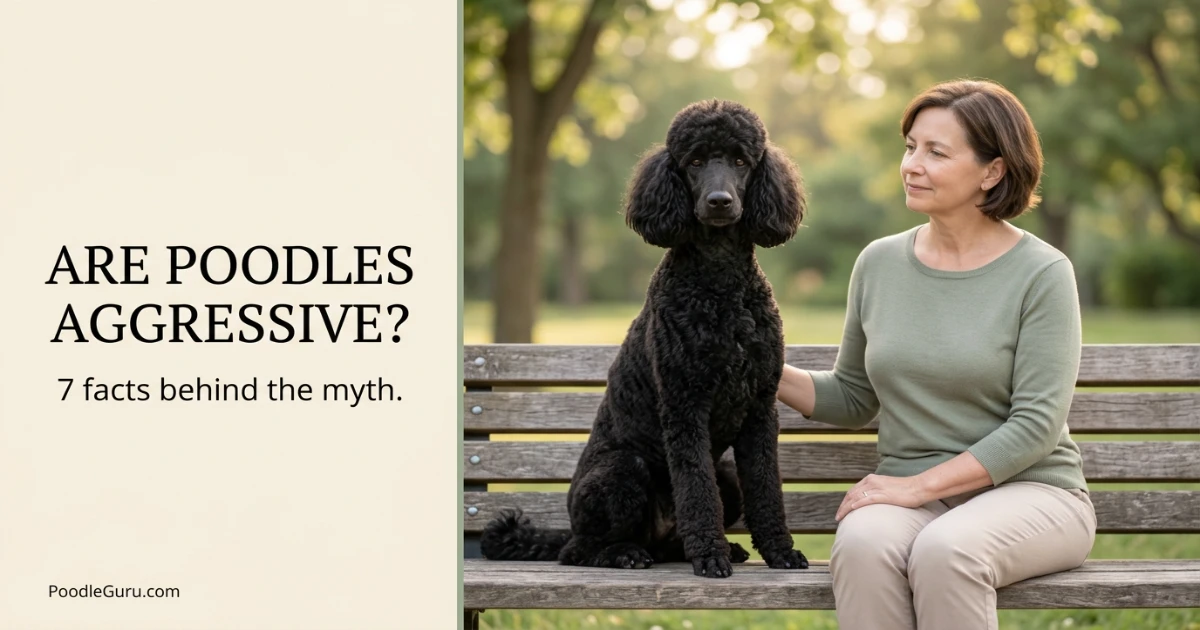
No, poodles are not an inherently aggressive breed. If your main question is are poodles aggressive, the honest answer is no when breeding, health, training, and socialization are handled well. Any poodle can become reactive or defensive when poorly bred, under-socialized, in pain, frightened, or repeatedly overwhelmed. The breed is rarely the problem. The circumstances usually are.
Quick Facts: Are Poodles Aggressive?
Breed Baseline
Poodles are known for intelligence, trainability, alertness, and close human bonding, not breed-wide aggression.
Primary Trigger
Fear and under-socialization drive most poodle reactivity. Dominance is rarely the real explanation.
Size Factor
Toy and Miniature Poodles are often called “snappy” because their warning signals are ignored due to small size.
Pain Link
Dental pain, ear infections, joint issues, and hidden injuries can cause sudden behavior changes in any poodle.
Breeding Quality
Poodles from high-volume or careless breeding sources may show more fear-based reactivity and unstable temperament.
Prevention Works
Early socialization, positive reinforcement, health checks, and respectful handling dramatically reduce aggression risk.
Where the “Are Poodles Aggressive?” Myth Actually Started
Walk into any dog-park conversation and you may hear it: someone’s aunt had a poodle that bit, or a groomer once met a “nasty” Toy Poodle. These stories stick because they are vivid. They are still anecdotes, not a fair picture of the breed.
Three forces built the aggressive-poodle reputation. First, the poodle’s popularity surge created demand that irresponsible breeders rushed to meet. Some dogs from those lines had weak nerves and poor temperament.
Second, the “fancy dog” stereotype caused many owners to skip training. Toy and Miniature Poodles were treated like accessories, not intelligent working dogs who needed structure.
Third, poodles are sensitive. A poodle who is startled, poorly handled, or in pain reacts visibly. People remember the reaction, but they often forget the trigger.
So when people ask are poodles aggressive, the better question is: what happened before the growl, snap, bark, or bite?
Are Poodles Aggressive? What the Breed Standard Actually Says
Aggression is a breed characteristic only when it appears in a breed’s intended job or official description. The poodle was never developed as a guard dog, protection dog, or dog designed to confront threats.
The AKC breed standard describes poodles as active, intelligent, proud, and elegant. There is no expectation that a correct poodle should meet unfamiliar people with hostility.
For owners asking are poodles aggressive, this matters. A poodle showing aggressive behavior is usually reacting to fear, pain, poor socialization, or poor handling — not expressing the normal breed standard.
This does not mean poodles are silent or passive. They are alert dogs. They notice changes, bark to announce visitors, and read their environment quickly. Alert barking is communication, not automatic aggression.
The Real Poodle Temperament: Sensitive, Not Dangerous
Strip away the myths behind are poodles aggressive, and you find a dog built for partnership. Poodles were refined as water retrievers who worked closely with handlers and returned birds with a soft mouth.
That history rewarded cooperation, not confrontation. A poodle who fought the handler or damaged the retrieve would not have been useful in the field.
The modern poodle temperament is usually defined by intelligence, environmental awareness, and strong human bonding. These traits reduce aggression risk when they are supported with training and confidence-building.
High Intelligence
Poodles learn quickly, including what feels safe and what feels threatening. Good early experiences matter.
Environmental Awareness
Poodles notice subtle changes. This can look like nervousness when the dog lacks confidence.
Human Bonding
A poodle who trusts its owner often looks to that person for guidance in uncertain situations.
The flip side is real. Poodles may not bounce back from rough handling as easily as some easygoing breeds. A bad grooming, vet, or child-handling experience can stick in memory and create future tension.
Are Poodles Aggressive by Size? Toy vs Miniature vs Standard
Ask many people are poodles aggressive by size, and they may point to Toy Poodles. The more accurate explanation is that small dogs are handled differently by humans.
Toy and Miniature Poodles get picked up without warning. Strangers reach over them. Children grab at them. Their early warning signals are easy to miss because the dog is small.
When a small poodle finally snaps, people call it aggression. Often, it is the final step in a communication ladder that no one respected.
| Factor | Toy Poodle | Miniature Poodle | Standard Poodle |
|---|---|---|---|
| Common label | “Snappy” or “nervous” | “Yappy” or “clingy” | “Aloof” or “standoffish” |
| Common trigger | Unwanted handling or sudden pickup | Under-stimulation and lack of structure | Poor puppy socialization or fear of strangers |
| Warning signs missed | Whale eye, lip lick, stiff body | Pacing, demand barking, shadowing | Freezing, hard stare, raised hackles |
| Prevention | Respect handling consent | Train daily and enrich the mind | Prioritize early socialization |
Standard Poodles face a different problem. Their size makes a bark, lunge, or warning snap look more serious. The behavior may have the same root as a Toy Poodle’s reaction, but the consequence is higher.
What Owners Often Misread as Aggression
Not everything that looks aggressive is aggression. This is why the question are poodles aggressive needs context before judgment.
Poodles have expressive faces, quick movements, and strong voices. If owners do not understand body language, they may punish warning signs instead of solving the cause.
| Behavior | What It Looks Like | What It Usually Means | Aggression? |
|---|---|---|---|
| Alert barking | Sharp barking at doorbell | “Something changed.” | No, communication |
| Resource guarding | Freezing or growling over food | Anxiety about losing a valued item | Warning behavior |
| Fear reactivity | Barking, lunging, backing away | “I am scared.” | Defensive response |
| Pain response | Snap when touched | Medical discomfort or injury | Medical signal |
| Play growling | Growl during tug with loose body | Excited play vocalization | No |
| Overstimulation nipping | Jumping and mouthing | The puppy has lost emotional brakes | Arousal issue |
Expert Insight
Most poodle “aggression” cases are better described as fear-based reactivity, pain response, poor handling, or lack of socialization. Address the root cause, and the behavior usually improves.
The PoodleGuru Aggression-Risk Filter: 5 Questions That Explain Most Cases
At PoodleGuru, we answer are poodles aggressive by looking at five root-cause questions instead of blaming the breed. In most cases, the answer lives in one of these areas.
What is the breeding source?
Responsible breeders select for stable temperament. High-volume breeding can produce fearful, reactive dogs.
What did early socialization look like?
The 3 to 16 week window shapes how a poodle responds to people, dogs, grooming, children, and new environments.
Is there an undiagnosed pain source?
Ear infections, dental disease, luxating patellas, arthritis, and injuries can all create sudden defensive behavior.
Are warning signs respected?
Growls, stiffening, whale eye, and lip curls are information. Punishing them can create a dog who bites without warning.
Are daily needs being met?
A bored, isolated poodle may become reactive from frustration. Training, exercise, scent games, and companionship matter.
Run these five questions against most “aggressive poodle” stories and the narrative changes. What looked like a bad dog often becomes a dog in a bad situation.
Owner Action Plan: Reduce Reactivity Before It Starts
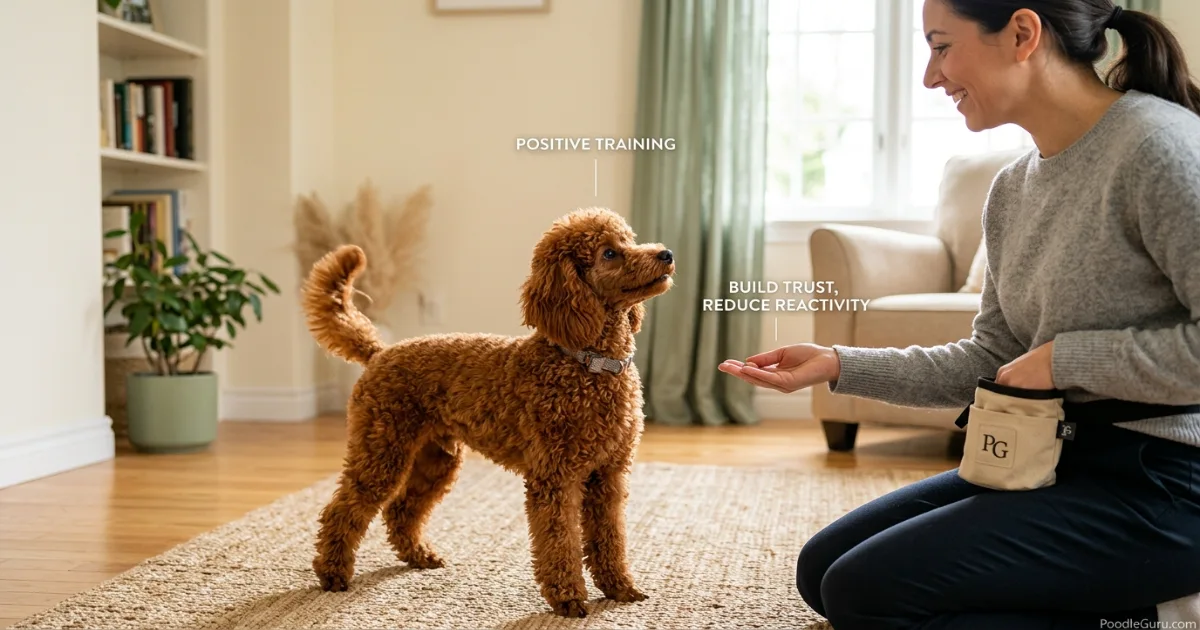
Preventing aggression in a poodle is not complicated, but it does require consistency. If you are worried and asking are poodles aggressive, start with prevention before small issues become habits.
Early Socialization
Expose your puppy to people, places, sounds, grooming, and safe dogs before 16 weeks. Keep it positive and controlled.
Handling Desensitization
Touch paws, ears, mouth, tail, and body daily with treats. Make grooming and vet exams normal.
Respect Warning Signals
Never punish a growl. Step back, reduce pressure, and identify the cause.
Mental Stimulation
Poodles need puzzle toys, scent work, training games, and daily engagement to stay emotionally balanced.
Health Screening
Dental, ear, skin, and joint issues can trigger sudden behavior changes. Rule out pain first.
Professional Help
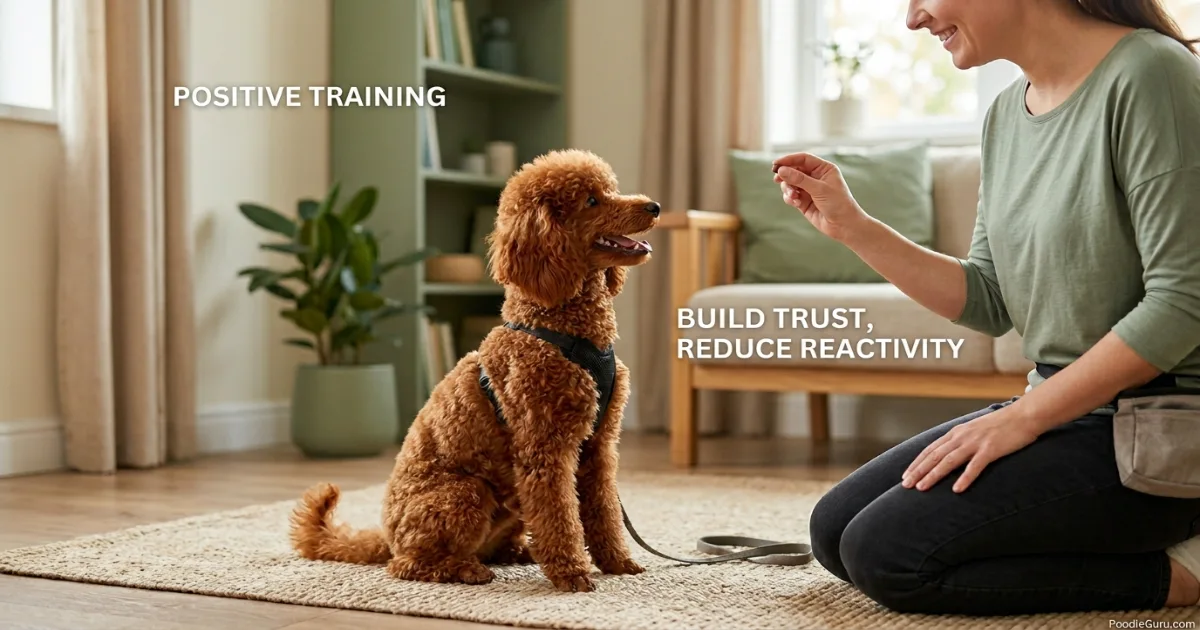
Use a certified positive-reinforcement trainer or veterinary behaviorist for escalating reactivity or any bite history.
When to involve a professional
Seek expert help if your poodle has bitten and broken skin, reactivity is increasing, or you feel afraid of your dog. Early intervention has the best outcome.
Frequently Asked Questions About Are Poodles Aggressive
Are Toy Poodles more aggressive than Standard Poodles?
Not inherently. Toys are labeled aggressive more often because warning signals are frequently ignored and their bodies are handled without consent. Proper handling removes many triggers.
Can a poodle be aggressive toward children?
Any dog can react badly if children are rough, unpredictable, or unsupervised. Poodles are not predisposed to child aggression, but they need gentle handling and protected space.
Why is my poodle suddenly aggressive?
Sudden behavior changes need a veterinary exam first. Pain from teeth, ears, joints, injuries, or illness is one of the most common causes of abrupt defensive behavior.
Are male poodles more aggressive than females?
There is no consistent evidence that sex alone determines aggression in poodles. Socialization, health, handling, hormones, and training matter much more.
Do poodles bite their owners?
Poodles are not known for owner-directed aggression. When biting happens, it is usually linked to pain, fear, resource guarding, or punishment of warning signals.
Are poorly bred poodles more likely to be aggressive?
Yes. Poor breeding can increase fearfulness and unstable temperament. Responsible breeders select for calm, confident, people-friendly dogs.
Can training fix an aggressive poodle?
Most poodle aggression is fear-based reactivity, and it often improves with positive-reinforcement behavior modification. Severe or dangerous cases need a veterinary behaviorist.
Final Summary: Are Poodles Aggressive?
The question are poodles aggressive has a clear answer: no, not as a breed.
Any poodle can become reactive or defensive when poorly bred, under-socialized, in pain, or handled without respect for their sensitivity and intelligence.
The breed’s emotional depth is both its greatest gift and its greatest vulnerability. Poodles who are treated well usually respond with loyalty, cooperation, and confidence.
Key Takeaways
- Poodles are not an inherently aggressive breed; aggression is not a normal breed trait.
- The aggressive poodle myth comes from poor breeding, skipped training, rough handling, and ignored warning signs.
- Toy Poodles are often mislabeled because their body language is dismissed due to small size.
- Pain is one of the most important causes of sudden aggressive behavior in poodles.
- Early socialization, positive training, grooming desensitization, and health care prevent most problems.
- Never punish a growl. It is a warning system, not disobedience.
Best next step: If your poodle shows reactive behavior, start with a veterinary exam to rule out pain. Then work with a certified positive-reinforcement trainer.