Do Poodles Need a Yard? 7 Surprising Truths for Happy Poodles
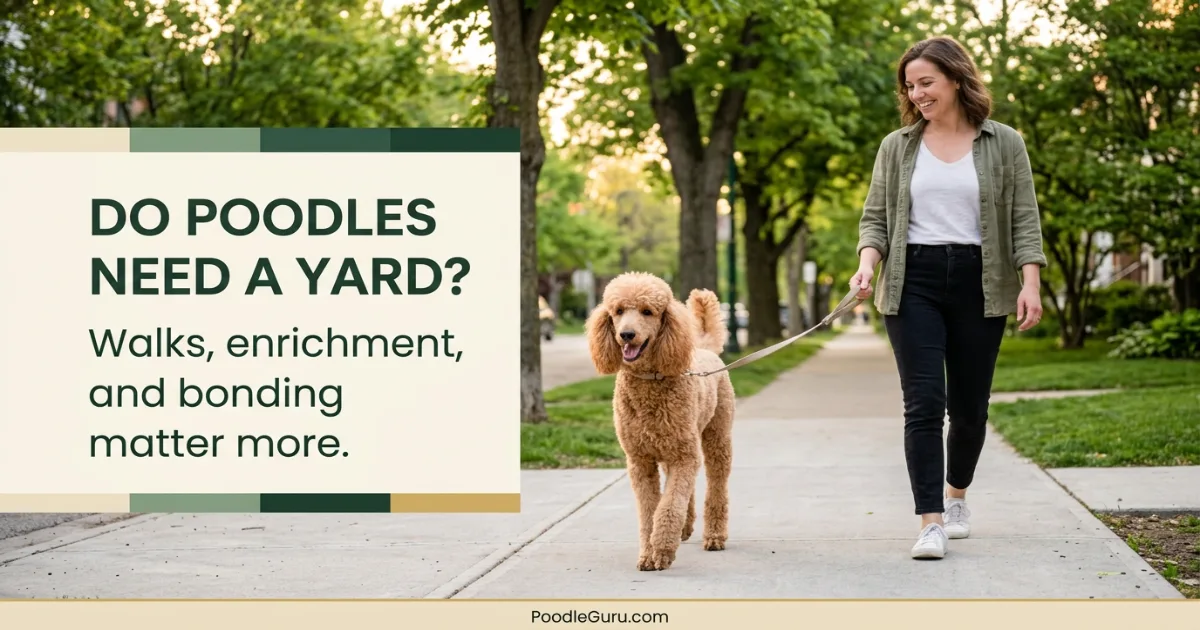
No. A yard can help with potty breaks, but it is not the real happiness shortcut. What a poodle actually needs is daily movement, mental enrichment, and a close relationship with the person on the other end of the leash.
Quick Answer
Do poodles need a yard? No. Poodles do not need a private yard to be happy. They need consistent, engaged exercise, mental stimulation, and close owner connection.
A yard can supplement those things, but it never replaces them. Many poodles in apartments or homes without yards live deeply fulfilled lives because their owners meet their real needs—on purpose, every day.
Do Poodles Need a Yard? The Big Misunderstanding
A yard is an enclosed patch of grass, dirt, or paving attached to a home. For poodle owners, the misunderstanding is assuming the yard does the work. It doesn’t.
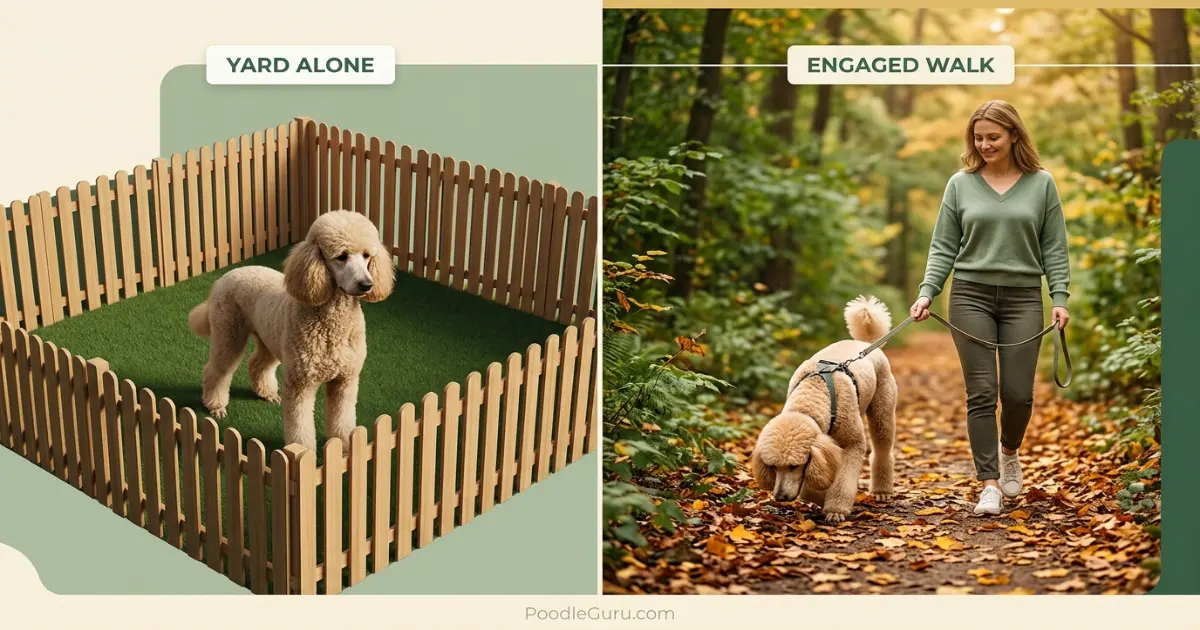
Most people imagine a yard means a dog exercises itself. The poodle trots out, does a few laps, comes back satisfied. That image works for some breeds. It falls apart completely for poodles. These dogs were not developed to patrol territory independently. They were developed to work closely with people—retrieving, performing, reading human cues. A solo yard session doesn’t scratch that itch.
The most important thing to understand is this: a yard is a tool, not a solution. Used well, it adds convenience. Used as a substitute for walks, training, and interaction, it creates a bored, under-stimulated, sometimes neurotic dog—even though the box got checked that said “has a yard.”
Buyers often treat yard access like a moral requirement. Rescue groups sometimes insist on it. But the data that drives those policies is rarely about yards themselves. It’s about what yards tend to correlate with: owners who let the dog out instead of walking it. If you don’t make that trade-off, the yard loses its moral weight.
What Poodles Actually Need to Be Happy
Let’s strip it back. Forget the yard question for a moment and look at what a fulfilled poodle’s life actually contains.
1. Daily Engaged Exercise
Not just physical movement. A poodle needs exercise where the brain is online—sniffing, responding to cues, navigating varied environments. A walk where the dog makes decisions is worth five laps of a familiar yard.
2. Mental Work
Poodles are thinking dogs. Puzzle toys, nose work, trick training, hide-and-seek—these drain energy faster than running. A mentally tired poodle is a calm poodle, with or without grass.
3. Close Owner Connection
This is the non-negotiable. Poodles bond deeply. They want to be near you, work with you, watch you. A yard with a solo poodle in it doesn’t meet this need. A small apartment with an engaged owner does.
Notice what’s missing from that list. Square footage. Fence height. Grass type. Those are infrastructure details, not happiness drivers. The AKC breed standard for poodles emphasizes intelligence, trainability, and proud carriage—not territorial patrolling or independent roaming. The breed’s design tells you what it needs.
In practice, this usually means two solid walks a day—one of them at least 30–45 minutes—plus some kind of brain work. That’s the baseline. A yard can make the potty-break logistics easier. It doesn’t change the baseline.
Yard vs. No-Yard: A Real-World Comparison
To make this concrete, here’s what actually differs between yard and no-yard poodle ownership—beyond the obvious presence of grass.
| Factor | Home With a Yard | Home Without a Yard | What Actually Matters |
|---|---|---|---|
| Potty convenience | High—open the door | Requires leashed trips outside | Convenience, not happiness. The poodle doesn’t care either way if needs are met. |
| Exercise quality | Often lower if yard replaces walks | Usually higher—walks are mandatory | Walks almost always beat yard time for mental and physical engagement. |
| Mental stimulation | Low in a static yard | Higher via varied outdoor routes | Novelty matters. Same yard every day provides almost zero cognitive challenge. |
| Owner engagement | Easy to disengage—”he’s outside” | Naturally higher—you’re on the other end of the leash | This is the single strongest predictor of poodle contentment. |
| Safety risks | Fence gaps, wildlife, unsupervised digging, toxic plants | Traffic, other dogs on lead, pavement heat | Both carry risks. Neither is risk-free. |
| Breeding-appropriate use | Depends entirely on owner habits | Depends entirely on owner habits | The yard is not the variable. The owner is. |
The table tells a clear story. The yard column doesn’t win. It mostly trades one set of owner responsibilities for another—and sometimes makes the more important ones easier to skip.
The PoodleGuru Happiness Framework
At PoodleGuru, we evaluate poodle contentment using a simple three-layer model. It’s designed to separate what’s real from what’s just housing mythology. We call it the PoodleGuru Contentment Triad.
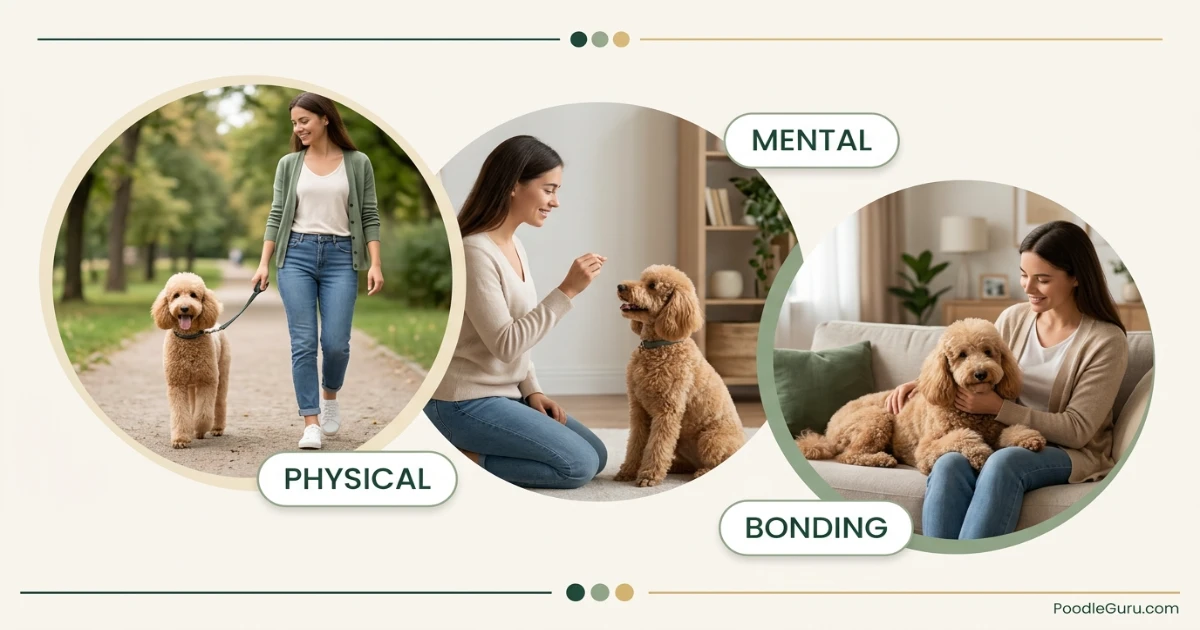
Physical Fulfillment
Does the dog get enough daily movement that raises the heart rate and works the body? Yard or no yard, this requires deliberate exercise—usually walking, running, swimming, or structured play with the owner involved.
Cognitive Fulfillment
Is the dog using its brain daily? Training sessions, scent games, food puzzles, new environments. Poodles were bred to problem-solve. Without this layer, even a physically tired poodle can develop anxious or destructive behaviors.
Relational Fulfillment
Does the dog feel connected to its person? Poodles are unusually attuned to human emotion and presence. Time spent together—not just in the same space but actively interacting—is not optional for this breed.
Here’s the key insight: a yard can support Layer 1 if you actively play with your dog in it. A yard does almost nothing for Layers 2 and 3 unless you’re out there too, engaged. An apartment owner who walks, trains, and plays with their poodle scores higher on all three layers than a yard owner who opens the back door and walks away.
Run your own situation through the Triad. If all three layers are solid, the yard question becomes largely irrelevant.
Does Poodle Size Change the Yard Math?
Sort of. But not in the way most people assume.
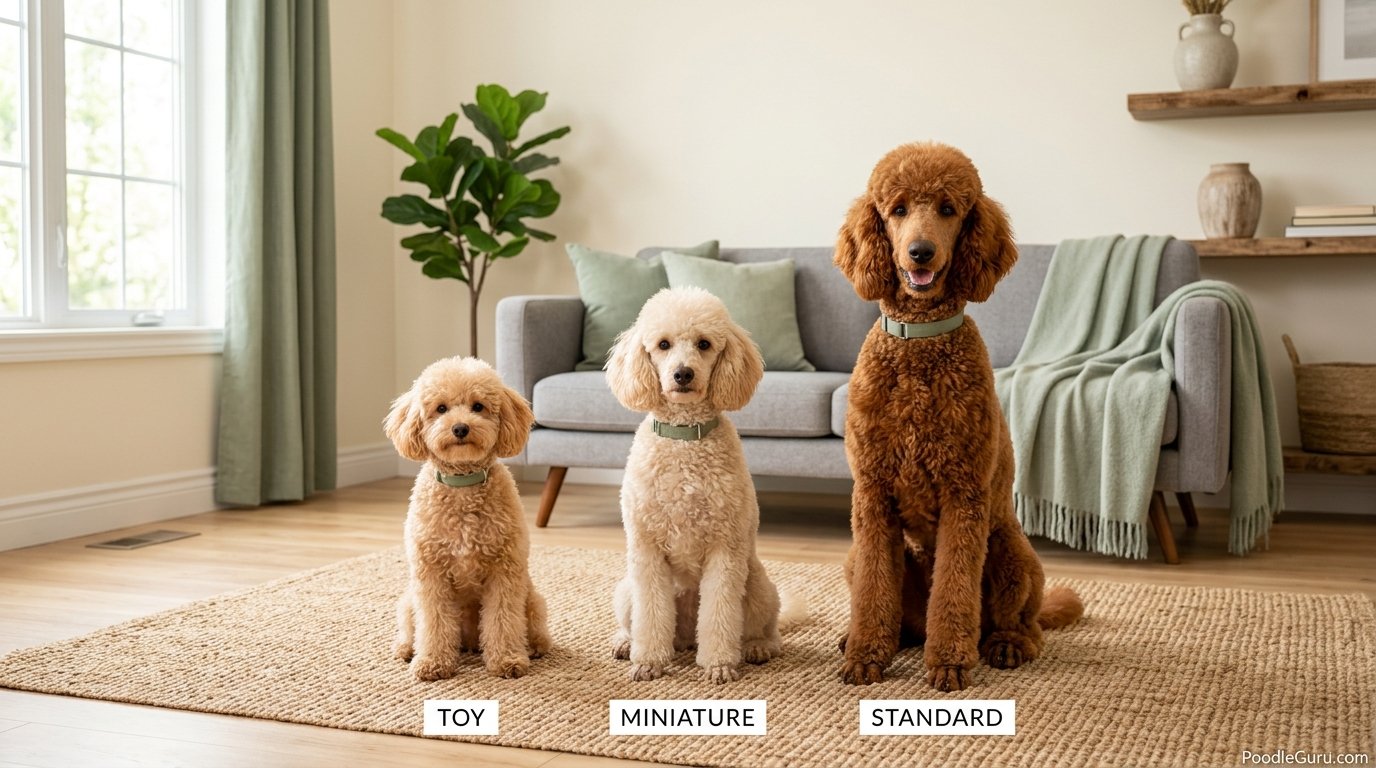
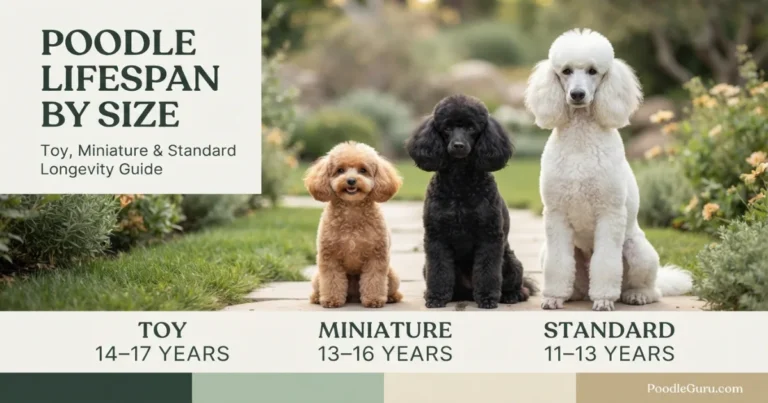
A Standard Poodle’s longer stride means a walk covers more ground. A Toy’s little legs mean the same 30-minute walk is a proper workout. But the core needs—engagement, mental work, connection—do not change with size. Not at all.
Here’s how size actually affects the yard conversation:
- Toy Poodles (4–6 lbs): A yard is almost irrelevant. These dogs are indoor companions by design. A few indoor play sessions plus short walks meet their needs. The yard is a potty convenience, nothing more. Many Toy owners in high-rise apartments report extremely content dogs.
- Miniature Poodles (10–15 lbs): Slightly more physical energy than Toys, but still highly adaptable. A yard is nice for zoomies but not required. A long hallway and a committed owner work just fine.
- Standard Poodles (40–70 lbs): Here’s where people get nervous. A Standard looks like a larger athletic dog that must need a big open area. And yes, a Standard appreciates room to stretch. But Standards also have an off-switch that surprises people. They’ll hike for hours, then curl up on the couch for the rest of the day. A yard is helpful for quick potty trips with a large dog, but a committed apartment-dwelling owner who provides two solid daily outings can absolutely meet a Standard’s needs.
The size question is mostly about owner logistics, not poodle suffering. A Toy in a yard-only home with no walks is worse off than a Standard in a walk-rich apartment. Size doesn’t rewrite the Triad.
When a Yard Creates Problems
It’s worth naming this clearly: yards are not risk-free. Some common yard-related issues that poodle owners should watch for:
Expert Insight: The Hidden Yard Risks
Boredom behaviors: A poodle left alone in a yard for long periods often develops pacing, barking at fence lines, digging, or obsessive shadow-chasing. These are not “bad dog” behaviors. They’re signs of an under-stimulated brain with too much space and too little direction.
Fence reactivity: Yards bordering sidewalks or neighbor dogs can create barrier frustration. The poodle learns to charge the fence, bark, and patrol—behaviors that often spill into walks and indoor life.
Wildlife and toxin exposure: Depending on your region, yards can bring encounters with snakes, toxic plants, mushrooms, or pesticide-treated grass. Poodles are curious dogs. A yard isn’t a sealed safe zone.
Exercise illusion: This is the biggest one. The owner thinks the yard counts as exercise. It doesn’t. A poodle meandering around the same patch of grass burns almost no meaningful energy and receives zero cognitive enrichment. Over months and years, this gap shows up as weight gain, restlessness, and behavior problems.
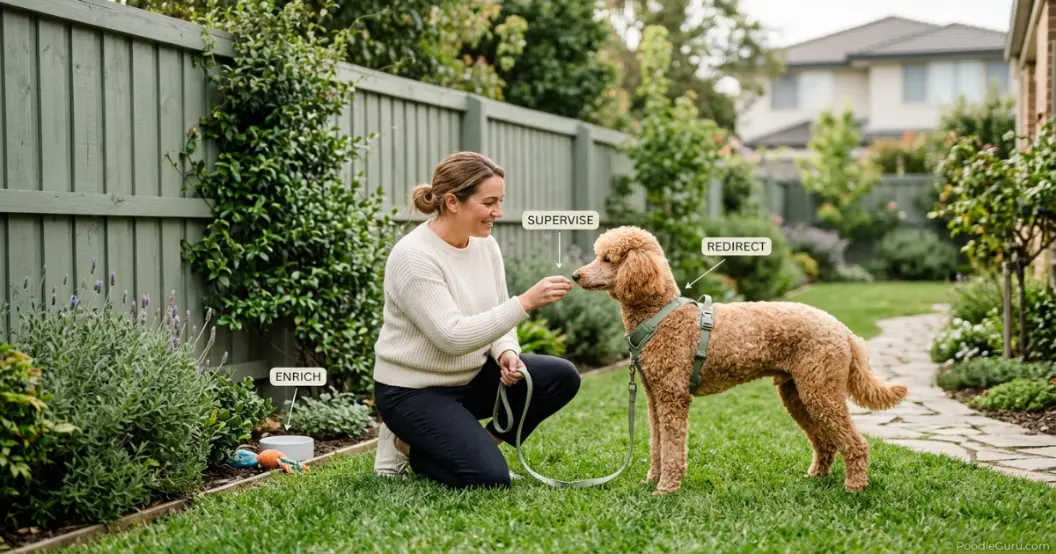
None of this means yards are bad. It means they require the same intentional management as any other part of dog ownership. A yard is only as good as the habits around it.
Making Apartment or No-Yard Living Work Beautifully
Plenty of poodles thrive without private outdoor space. Here’s what the owners who make it work do differently.
The No-Yard Poodle Owner’s Playbook
Two solid walks, minimum. One of them should be long enough that the poodle comes home ready to rest—not wired. For most adult poodles, 30–45 minutes of engaged walking (sniffing, varied pace, some training mixed in) does it.
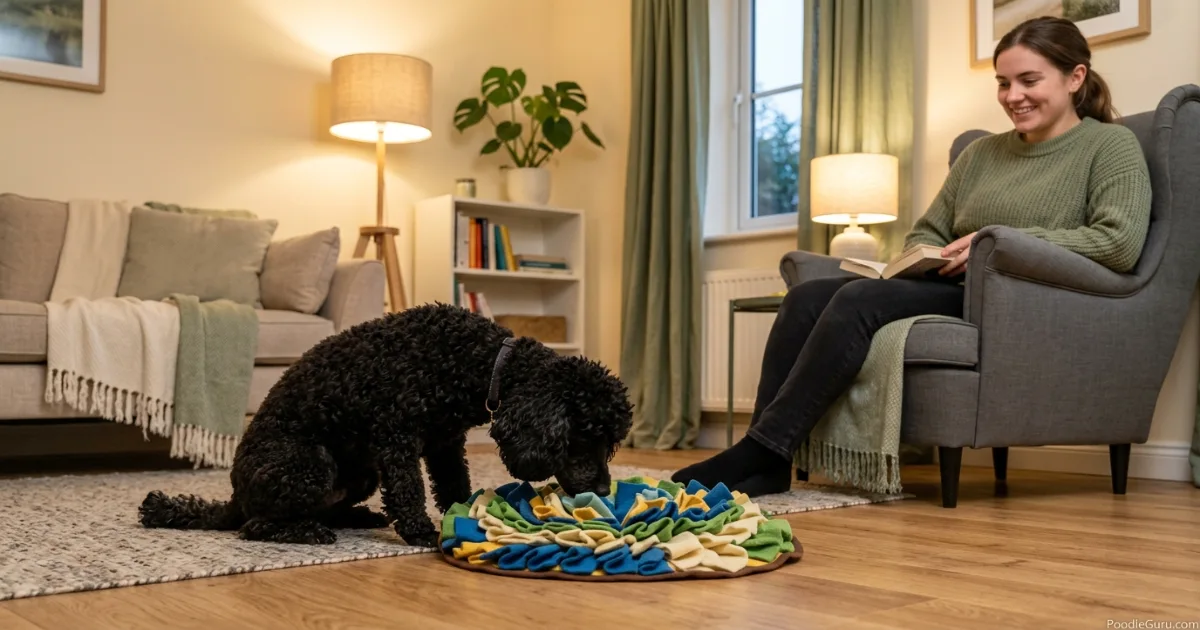
Indoor enrichment is non-negotiable. Puzzle feeders, snuffle mats, frozen Kongs, and short training sessions scattered through the day replace the mental stimulation a yard doesn’t provide. This isn’t extra credit—it’s the core curriculum.
Use public green spaces intentionally. A nearby park, a quiet street with grass strips, even a friend’s fenced yard borrowed once a week for off-leash zoomies. The world is your yard when you treat outdoor time as active, not passive.
Teach a reliable settle. Poodles need to learn that indoors is for calm. This is true whether you have a yard or not, but it becomes essential without one. A poodle who can settle on cue is a poodle who can live anywhere.
Consider doggy daycare or a walker for long days. If you work long hours, a midday break—whether from a professional walker or a reputable daycare—prevents the buildup of restless energy. This applies equally to yard-owning households, by the way.
The common thread is intentionality. No-yard poodle owners can’t coast. And that, counterintuitively, is often why their dogs do so well. The structure is built in.
Owner Mistakes That Matter More Than Yard Access
Forget the yard for a moment. These are the actual happiness killers we see again and again, across all housing types.
| Mistake | Why It Hurts Poodles Specifically | Fix |
|---|---|---|
| Assuming the yard exercises the dog | Poodles don’t self-exercise meaningfully. They wait for you. | Treat the yard as a potty zone, not a gym. Walks are the gym. |
| Skipping mental work | Poodles are in the top tier of canine intelligence. Boredom manifests as “bad behavior.” | Add one 5-minute training session and one food puzzle daily. Minimum. |
| Underestimating the bond need | This breed is not emotionally independent. Isolation creates anxiety. | Prioritize shared activities—walks, training, even just being in the same room intentionally. |
| Over-exercising a puppy | Poodle joints develop slowly. Too much high-impact activity on hard surfaces can cause long-term issues. | Follow the 5-minute-per-month rule for structured walks. Free play is different—let the puppy set the pace. |
| Choosing a poodle based on size instead of lifestyle fit | A Toy is not less important. A Standard is not automatically harder. They’re different expressions of the same breed—and all need real engagement. | Choose the size that fits your daily routine, not your square footage. |
Notice the yard appears only as a footnote—as a vector for one specific mistake. That’s the whole point. The things that actually determine poodle happiness are almost entirely about owner behavior, not property features.
Before You Decide: A Quick Reality Check
If you’re considering a poodle and worried about the yard question, or if you already have a poodle and feel guilty about your housing situation, run through this checklist.
The PoodleGuru Housing Reality Checklist
☐ Can I commit to two daily walks, rain or shine, regardless of yard access?
☐ Am I willing to provide daily mental enrichment—not just physical exercise?
☐ Does my poodle get genuine, focused interaction with me every day?
☐ If I have a yard, am I using it as a supplement rather than a replacement?
☐ If I don’t have a yard, have I built a reliable outdoor routine that works?
☐ Is my poodle calm indoors, able to settle, and free from destructive or anxious behaviors?
If you answered yes to the first three and yes to whichever housing question applies, your poodle is almost certainly fine. The yard is not the missing piece. If something feels off, look at the Triad—physical, cognitive, relational—before you look at real estate listings.
Frequently Asked Questions
Can a Standard Poodle live in an apartment?
Absolutely. Many Standard Poodles thrive in apartments when owners provide two solid daily walks, mental enrichment, and close companionship. The dog’s need is engagement, not acreage. A lazy yard-owner produces a more frustrated Standard than a committed apartment-dweller.
Do poodles get enough exercise just running in a yard?
Almost never. A poodle wandering the same yard burns minimal energy and receives no cognitive challenge. Without deliberate play, training, or walks layered on top, a yard alone does not meet the exercise needs of any poodle size.
Is it cruel to keep a poodle without a yard?
No. Cruelty is defined by unmet needs, not missing grass. A poodle whose physical, cognitive, and relational needs are met daily is not suffering—regardless of housing type. The yard is infrastructure. The owner’s commitment is the real welfare variable.
What’s the minimum walk time for a poodle without a yard?
Most adult poodles do well with a minimum of 60–75 minutes of walking split across two outings, with at least one being 30–45 minutes. Add indoor enrichment—puzzle toys, training, nose games—to round out the picture. Puppies and seniors need adjustments.
Do Toy Poodles need less exercise than Standards?
In total duration, often yes. A Toy Poodle’s little legs cover less distance per minute. But the need for mental engagement, interaction, and daily walks doesn’t disappear. Toys still need outings, just shorter ones. A Toy without walks is as under-served as any other poodle.
What if I have a yard but also work full-time?
A yard helps with potty logistics but doesn’t replace the daily walk or mental work. If you’re gone long hours, a midday dog walker or daycare day is still valuable—whether you have grass or not. The dog needs a break and stimulation, not just a bigger container.
How do I know if my poodle is unhappy with the current setup?
Watch for restlessness, destructive chewing, excessive barking, shadow-chasing, or difficulty settling indoors. These are often signs of unmet cognitive or physical needs, not housing problems. Before moving, try increasing walks and adding daily brain work for two weeks.
Final Summary: The Yard Question, Answered
The answer to “do poodles need a yard to be happy?” is no. They need you—your time, your attention, your commitment to daily walks and mental engagement. A yard is a nice convenience. It’s not a substitute for any of the things that actually fill a poodle’s cup.
If you’re living without a yard and showing up for your poodle every day, drop the guilt. If you have a yard and your poodle seems restless, look at the daily routine before you blame the dog. The problem is almost never the real estate.
Key Takeaways
- A private yard is not a requirement for poodle happiness—it’s a convenience, not a solution.
- The PoodleGuru Contentment Triad—Physical, Cognitive, and Relational Fulfillment—predicts happiness far more accurately than housing type.
- Poodles do not self-exercise; a yard without engaged owner participation provides almost no meaningful enrichment.
- Toy, Miniature, and Standard Poodles all adapt well to apartment living when their daily needs for walks and mental work are met.
- Common mistakes like skipping mental stimulation or assuming the yard counts as exercise hurt poodles more than missing square footage ever will.
- If your poodle seems unhappy, increase walks and add daily brain work before you consider moving—the fix is usually behavioral, not geographical.