
Do Poodles Get Along with Other Dogs? 7 Essential Facts for Safer Socialization
Do poodles get along with other dogs? Yes—most poodles do very well with other dogs when they are socialized early, introduced calmly, and protected from overwhelming situations. The real answer depends on socialization, individual personality, size dynamics, and how you manage each greeting. Poodles are not a breed that defaults to dog-aggression, but they are sensitive dogs who need thoughtful guidance.
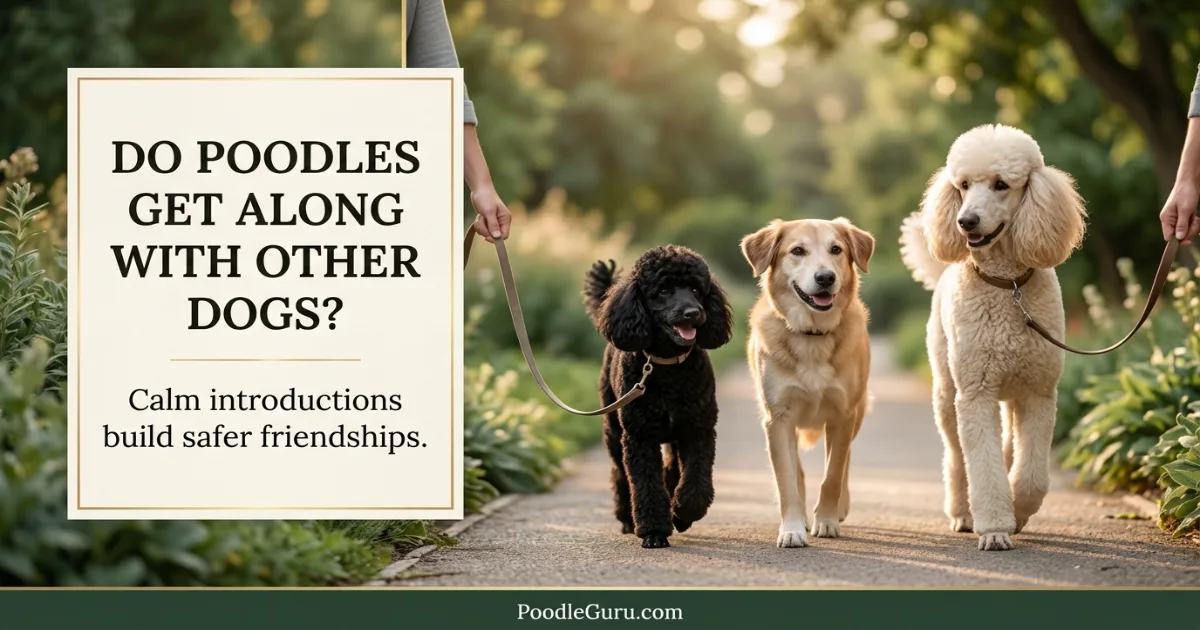
Do Poodles Get Along with Other Dogs? Quick Answer
Poodles are generally sociable with other dogs when properly socialized from puppyhood. The breed standard describes a temperament that is active, proud, and very smart—not inherently dog-reactive or aggressive. However, poodles are sensitive and perceptive. They read social situations carefully. A poorly socialized poodle, or one with negative past experiences, can develop fear-based reactivity that looks like “not getting along.” The good news: this is almost always addressable with the right approach.
What the Poodle Temperament Actually Says About Other Dogs
Dog sociability is a breed’s general tendency to coexist peacefully with other canines outside its immediate household. For poodle owners, this means understanding that the breed wasn’t designed to be a pack-hunting or guardian dog—roles that often come with higher same-species wariness. Poodles were developed as water retrievers and companion dogs. That history shaped a dog that works alongside people and often alongside other dogs without territorial friction.
The most important thing to understand is this: poodles are not hardwired for dog-aggression. The AKC breed standard describes the poodle temperament as “active, proud, very smart” and notes they should not show shyness or sharpness. That’s a good starting point. But temperament is a blueprint, not a guarantee. Individual dogs vary. Socialization fills the gap between potential and outcome.
Many poodle owners describe their dogs as “dog-selective”—meaning they get along beautifully with some dogs and feel indifferent or mildly uneasy around others. That’s not a flaw. It’s actually a sign of a discerning, intelligent dog reading social cues and making choices. The goal isn’t a poodle who loves every dog. It’s a poodle who can navigate dog-filled environments without fear or aggression.
Breed History
Retrievers and water dogs historically worked in multi-dog settings. Poodles weren’t bred to guard territory solo. Cooperative working roots generally predict lower same-species aggression.
Typical Adult Temperament
Adult poodles are often described as “neutral to friendly” with unfamiliar dogs when properly socialized. They tend to be social readers—not instigators—in dog-dog interactions.
Sensitivity Factor
Poodles are emotionally sensitive. A single bad experience—a scary scuffle at the dog park, a rude greeting—can leave a lasting impression. This sensitivity is what owners often mistake for “doesn’t like other dogs.”
How Poodle Size Affects Dog-to-Dog Dynamics
One of the most overlooked factors in poodle sociability is size. A Toy Poodle and a Standard Poodle live in different physical realities. That shapes how they interact with other dogs.
| Poodle Size | Typical Weight | Dog-Social Tendencies | Key Consideration |
|---|---|---|---|
| Toy Poodle | 4–6 lbs | Can be cautious or defensive around much larger dogs; often prefers dogs closer to their own size. Many are confident with small-dog play groups. | Size vulnerability is real. A friendly but clumsy large dog can injure a Toy without meaning to. Supervise cross-size play carefully. |
| Miniature Poodle | 10–15 lbs | Often the most adaptable socially. Sturdy enough for medium-dog play, small enough to enjoy small-dog groups. Generally easygoing with other dogs when socialized. | The “sweet spot” size for multi-dog households with varied breeds. Still needs supervision with very large, high-energy dogs. |
| Standard Poodle | 40–70 lbs | Often quite social with dogs of all sizes when well-socialized. Their size gives them confidence. They’re less likely to feel physically threatened. | Play style matters. Standards can be bouncy and physical. Not all small dogs appreciate this. Teach gentle play with smaller housemates. |

Size isn’t destiny, but it shapes the risk landscape. A Toy Poodle who snaps at a Golden Retriever isn’t “aggressive”—it might be sensibly terrified. Understanding your poodle’s physical reality helps you interpret behavior accurately instead of labeling it unfairly.
Real-World Scenarios: When It Works and When It Doesn’t
Let’s move beyond theory and look at the situations owners actually face.
Expert Insight: The Dog Park Question
Dog parks divide poodle owners. Some poodles thrive in them—sniffing, romping, choosing play partners wisely. Others find the chaos overwhelming. Poodles are sensitive to social pressure. A dog park with too many unfamiliar dogs, unchecked rough play, or tense energy can push a poodle into fear or reactivity. If you use dog parks, go at quieter times. Watch your poodle’s body language obsessively. Leave the moment your dog looks uncomfortable—even slightly. A poodle who learns that dog parks are scary carries that lesson for a long time.
Poodles and small dogs: Generally excellent. Toy and Miniature Poodles often prefer the company of similarly sized dogs. Standards can be gentle with small dogs if taught, but their size requires active management.
Poodles and large dogs: Well-socialized Standards usually hold their own comfortably. Toys and Miniatures need careful introductions. A large dog’s friendly tail-wag can knock a Toy Poodle off its feet. Fear-based reactivity is a common consequence of unmanaged size mismatch.
Poodles and puppies: Adult poodles are often remarkably patient with puppies—of any breed. This is one area where the breed’s temperament consistently shines. Many poodle owners report their adult dogs gently teaching puppies appropriate behavior. But don’t leave any dog unsupervised with a puppy. Patience has limits.
Same-sex dynamics: Some poodles, like many breeds, can show same-sex tension—especially between two unneutered males or two intact females. This isn’t universal, but it’s common enough that breeders and experienced owners often recommend opposite-sex pairings in multi-poodle homes. Spaying and neutering can reduce but not eliminate same-sex friction.
The PoodleGuru Sociability Assessment
At PoodleGuru, we evaluate a poodle’s dog-social skills using a four-factor model. It helps owners understand where their dog stands and what to work on—without judgment.
Early Socialization History
Did your poodle have positive, varied dog-dog experiences between 3 and 16 weeks? If yes, you’re working from a strong foundation. If no, you may be in catch-up mode—but that’s workable. Adult dogs can learn new social skills; it just takes more patience.
Current Body Language Literacy
Can you read when your poodle is comfortable vs. merely tolerating a situation? A relaxed body, soft eyes, loose wagging tail, and play bows signal comfort. A stiff body, tucked tail, whale eye, or lip-licking signals stress. Your ability to read these cues is the single most important skill for managing dog-dog interactions.
Play Style Compatibility
Some poodles love rough-and-tumble chase play. Others prefer quiet sniff-and-wander companionship. Neither is wrong. Matching play styles between dogs prevents most conflicts before they start. A chase-loving Standard and a couch-loving Toy can coexist—they just might not be playmates, and that’s fine.
Owner Management Skill
This is the factor that overrides everything else. A skilled owner manages environments, reads stress signals early, intervenes before tension escalates, and never forces interactions. Even a dog-social poodle benefits from an owner who advocates for their comfort. Even a dog-selective poodle can live a full social life with a skilled handler.
Score each factor honestly. If Factors 1 and 2 are weak, that’s where your work begins. If Factor 4 is strong, you can compensate for a lot. Most poodles can improve their dog-social skills significantly with the right owner guidance.
Owner Mistakes That Undermine Dog Friendships
Even a naturally social poodle can develop problems when owners make these common errors.
| Mistake | Why It Backfires with Poodles | What to Do Instead |
|---|---|---|
| Forcing greetings when the poodle shows hesitation | Poodles remember social pressure. Forced greetings teach them that you won’t protect them—so they must defend themselves. | Let your poodle choose the pace. Parallel walking before face-to-face greetings is almost always better. |
| Punishing growls or warning signals | Growling is communication, not disobedience. Punishing it removes the warning system without fixing the underlying discomfort. | Thank the growl. It’s information. Remove your dog from the situation and assess what caused the discomfort. |
| Assuming all dogs must be friends | Some poodles coexist peacefully without being playmates. Forcing friendship creates tension. | Neutral coexistence is a valid and often ideal outcome. Not every dog needs to be a best friend. |
| Overusing dog parks for socialization | Dog parks are high-stimulus, unpredictable environments. For sensitive poodles, they’re often overwhelming rather than socializing. | Use structured playdates, small play groups, or one-on-one walks with known calm dogs instead. |
| Ignoring resource guarding between dogs | Poodles can guard food, toys, or owner attention from other dogs. This is manageable but doesn’t resolve on its own. | Feed dogs separately. Remove high-value toys in multi-dog settings. Manage attention fairly. Consult a trainer if guarding escalates. |
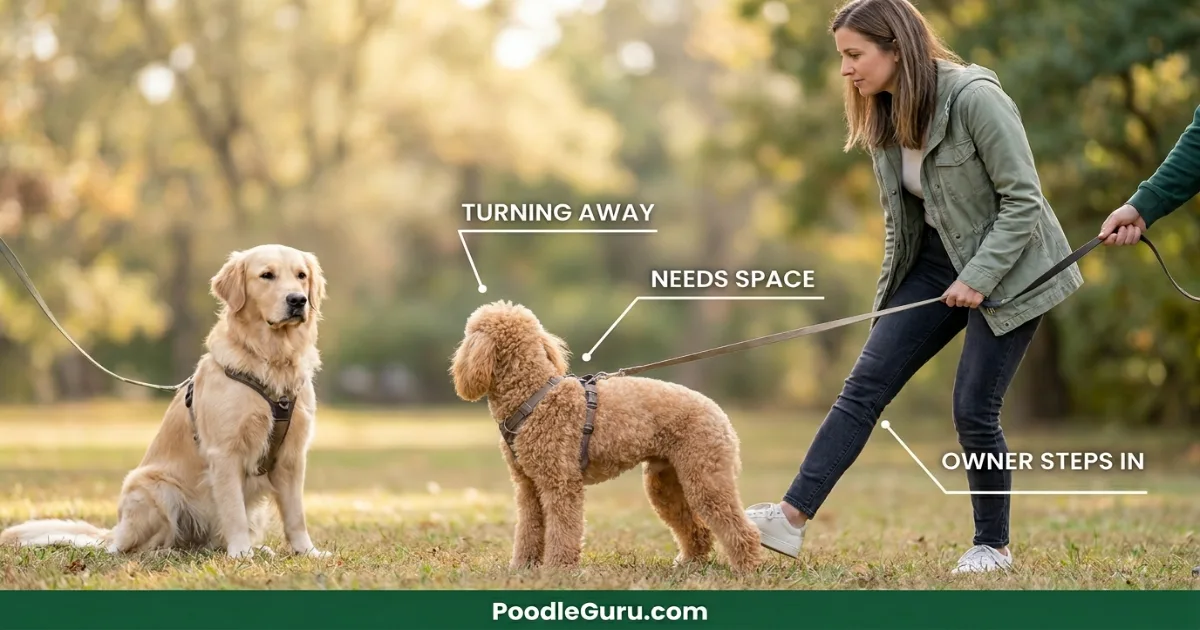
How to Introduce a Poodle to Another Dog
A thoughtful introduction sets the tone for the entire relationship. Here’s the method that works best for most poodles.
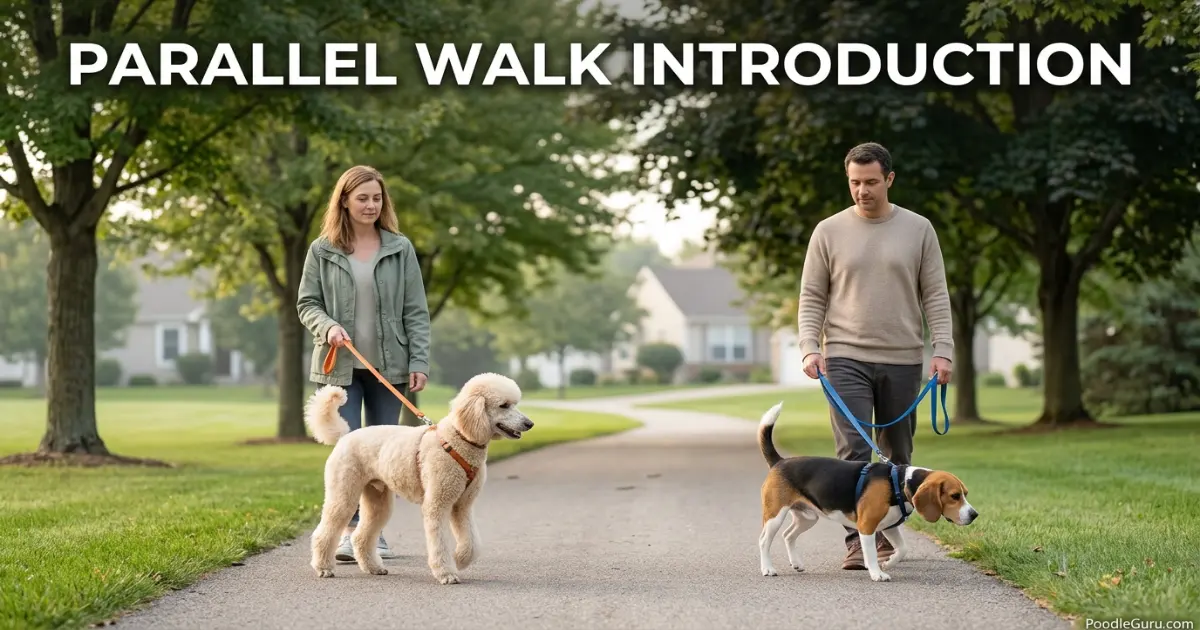
The PoodleGuru Parallel-Walk Introduction Method
Start on neutral ground—not inside either dog’s home. A quiet street, a park at off-hours, or any space neither dog considers “theirs.”
Begin parallel walking at a distance—20 to 30 feet apart, both dogs on leash, walking in the same direction. This lets them sense each other’s presence without direct pressure.
Gradually close the distance over several minutes—but only if both dogs remain relaxed. Watch for soft body language. If either dog stiffens, fixates, or shows stress signals, increase distance again.
Allow a brief sniff when both dogs are calm—3 to 5 seconds, then call your dog away cheerfully and resume walking. Repeat this pattern several times. Short, positive interactions build confidence. Long, intense greetings can tip into tension.
End the first session while it’s still positive—before either dog gets tired or overstimulated. You’re building a track record of good experiences. You can always do more next time.
Living in a Multi-Dog Home: What Actually Works
Poodles can thrive in multi-dog households—and many do. The keys are compatibility, structure, and realistic expectations.
Opposite-sex pairings tend to be most harmonious. Two males or two females can absolutely work, but same-sex tension is real enough that it’s worth factoring into your decision. Breeders and experienced owners commonly recommend opposite-sex when adding a second poodle.
Age gap matters more than most people realize. A puppy and a senior poodle may coexist peacefully but not enjoy each other’s company. A young adult and another young adult might play endlessly—or compete. The ideal pairing often involves at least a 2–3 year age gap, where one dog is settled and the younger learns from the older’s calmness.
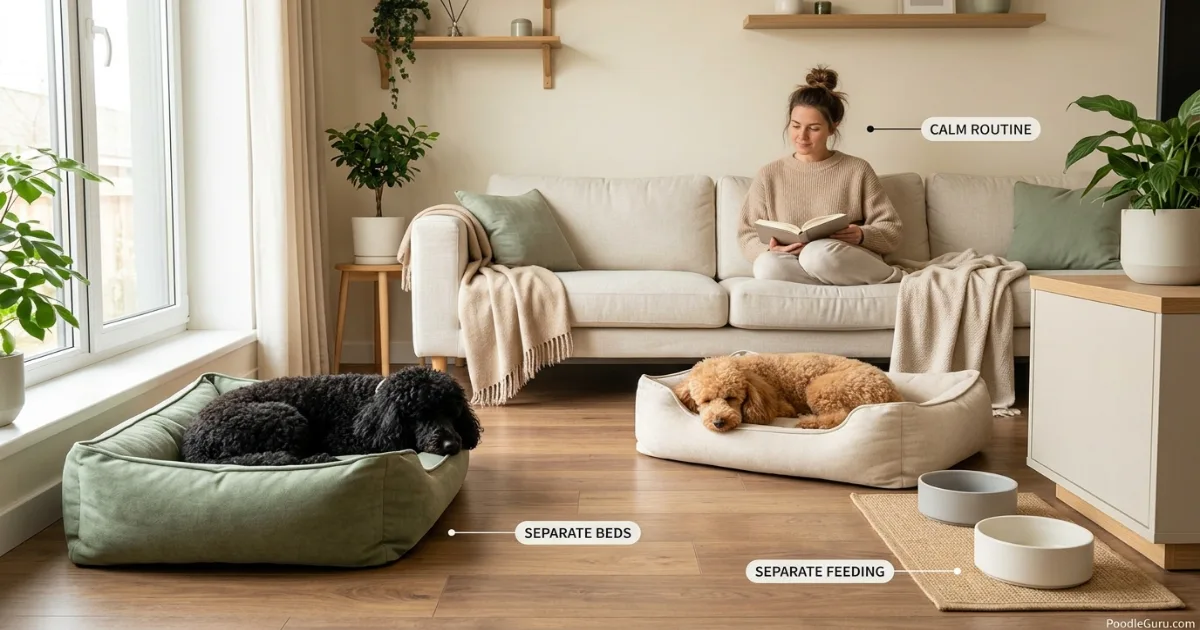
Resource management is non-negotiable. Feed separately. Provide multiple water stations. Have enough high-value resting spots (dog beds, couch corners) that no dog feels they must compete. Poodles are smart enough to notice resource inequality—and sensitive enough to stress about it.
For deeper guidance on multi-poodle dynamics, our poodle temperament guide covers personality matching in detail.
Frequently Asked Questions
Are poodles aggressive toward other dogs?
No, poodles are not an inherently dog-aggressive breed. The breed standard describes a temperament that is active, proud, and smart without sharpness. Aggression in poodles is typically fear-based or rooted in poor socialization, not a breed trait.
Do Toy Poodles get along with big dogs?
Toy Poodles can get along with large dogs when introductions are careful and the large dog is gentle. However, size vulnerability is real. A friendly but clumsy large dog can injure a Toy unintentionally. Supervision during cross-size interactions is essential.
Can two male poodles live together?
Yes, two male poodles can coexist successfully, but same-sex tension is more common than opposite-sex pairings—especially if both are intact. Neutering can help. Clear household structure, separate feeding, and careful management reduce friction.
Why does my poodle growl at other dogs?
Growling is communication—usually fear, discomfort, or a request for space. It’s not disobedience. Poodles are sensitive. A growling poodle is telling you something. Listen to the message, remove your dog from the triggering situation, and assess what’s causing the discomfort.
Are poodles good with small dogs?
Generally yes. Toy and Miniature Poodles often prefer similarly sized playmates. Standard Poodles can be excellent with small dogs if taught gentle play. The breed is not typically predatory toward smaller animals, but individual personality and socialization matter.
Can an older poodle learn to get along with other dogs?
Yes, adult and senior poodles can build new dog-social skills. It takes more patience than with puppies, and progress may be slower. Focus on creating positive, low-pressure experiences. If reactivity is significant, work with a force-free professional trainer.
Do poodles do well at dog parks?
Some do, some don’t. Poodles are sensitive to chaotic, high-stimulus environments. A dog park with too many unfamiliar dogs, rough play, or tense energy can overwhelm a poodle. Quieter times, small playgroups, or structured playdates are often more successful.
Final Summary: Do Poodles Get Along with Other Dogs Safely?
Yes—poodles are generally sociable dogs who get along well with other canines when given proper socialization, thoughtful introductions, and skilled owner management. But that “yes” comes with nuance. Poodles are sensitive. They read social situations carefully. They remember bad experiences. And they rely on their owners to advocate for their comfort.
The single most important variable isn’t your poodle’s size, age, or even past experiences. It’s your willingness to learn canine body language and manage situations before tension builds. A poodle with a body-language-literate owner almost always has good dog relationships. A poodle without that support can struggle—even if the breed temperament is on their side.
Key Takeaways
- Poodles are not a dog-aggressive breed; the AKC standard describes a temperament that is active, proud, and smart without sharpness toward other dogs.
- Early socialization between 3–16 weeks lays the foundation for adult sociability, but adult poodles can still learn new dog-social skills with patient, positive training.
- Size dynamics matter significantly—Toy Poodles face genuine physical risk from large dogs, and cross-size interactions always require supervision.
- The PoodleGuru Sociability Assessment evaluates four factors: socialization history, body language literacy, play style compatibility, and owner management skill.
- Common owner mistakes—like forcing greetings, punishing growls, or assuming all dogs must be playmates—undermine a poodle’s ability to feel safe around other dogs.
- Parallel walking is the single most effective introduction technique for poodles meeting unfamiliar dogs.
The Socialization Window Nobody Warns You About
Poodle puppies go through a critical socialization period between roughly 3 and 16 weeks of age. During this window, positive exposure to other dogs—of different sizes, ages, and play styles—lays the foundation for adult sociability. Miss this window and you’re not doomed. But you will have catch-up work to do.
What effective socialization actually looks like: not just letting a puppy meet every dog it sees. That can backfire. Instead, it’s about controlled, positive experiences where the puppy learns that other dogs are safe and predictable. Puppy classes with structured play, supervised introductions with known calm adult dogs, and lots of neutral observation—watching other dogs from a distance without forced interaction—all count.
Breeders play a role here too. A puppy raised in a home environment with exposure to other well-adjusted adult poodles starts with an advantage. When evaluating a breeder, ask how they socialize puppies with other dogs before they go home. The answer tells you a lot.