What Were Poodles Originally Bred For? 7 Surprising Working Facts
The poodle’s elegant appearance can fool you. Underneath the iconic haircut lies a rugged, versatile water retriever. This guide traces what poodles were originally bred for, why their water-retriever heritage still matters, and how those working instincts show up in modern poodle behavior.
Quick Answer
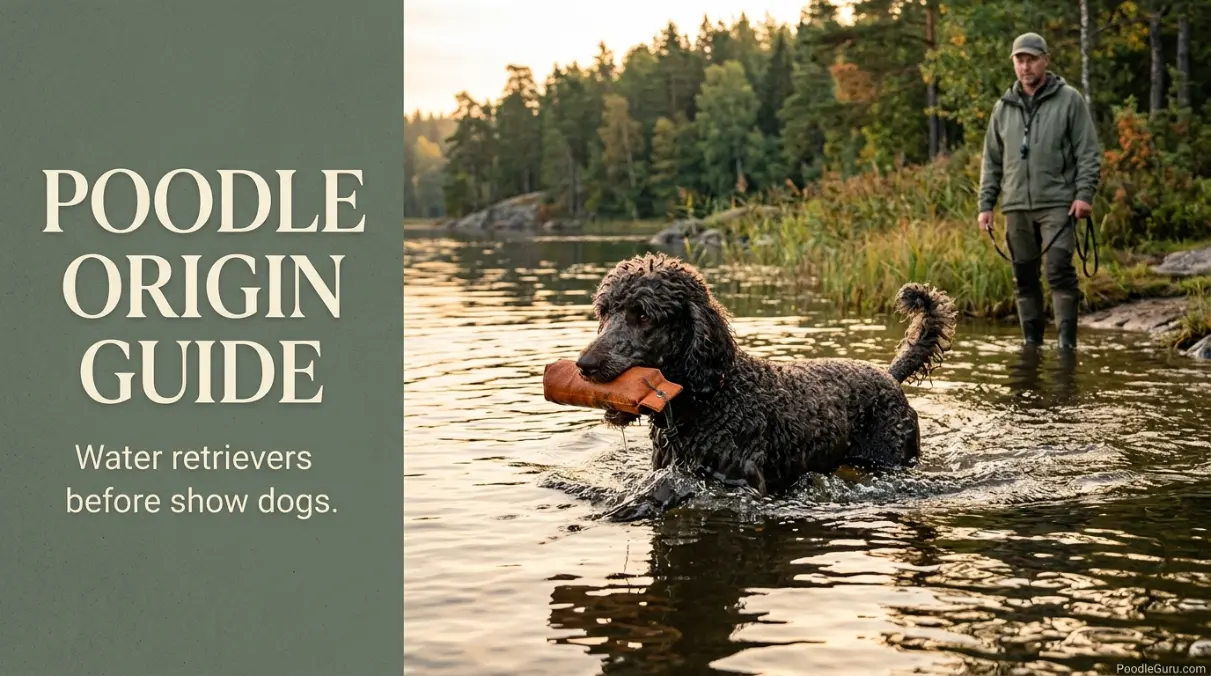
What were poodles originally bred for? Poodles were originally bred as water retrievers — specifically to retrieve waterfowl for hunters in Germany and later France. They are not, and never were, simply decorative companion dogs. The Standard Poodle is the oldest variety, a true working gun dog, and that retrieving drive still lives in every size today.
Origin: Germany & France
The breed likely emerged from German water dogs like the Pudel, then was refined in France as the Caniche.
Original job: waterfowl retriever
Poodles were developed to plunge into cold water and bring back ducks and geese — not sit on laps.
The coat had a purpose
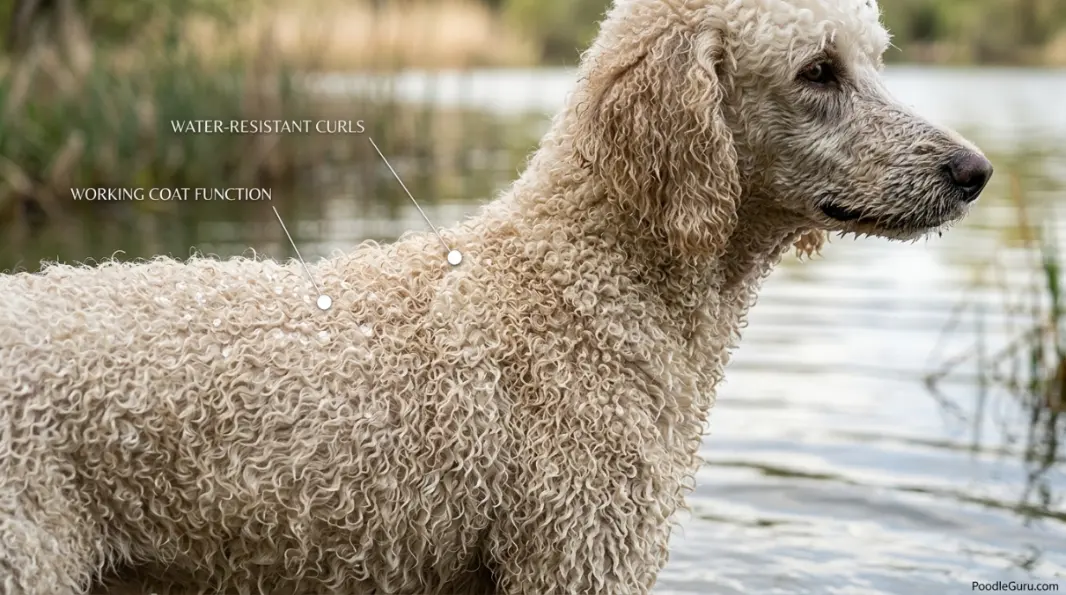
The dense, curly coat protected vital organs and joints from freezing water, while the iconic clips improved mobility and drying time.
What Were Poodles Originally Bred For? A Water Retriever, Not a Lap Dog
The question “what were poodles originally bred for” deserves a clear, no‑nonsense answer. Poodles are water retrievers — a category of gun dog bred to locate and retrieve downed waterfowl for hunters. Their job wasn’t ornamental. It was practical, athletic, and often done in rough conditions. The breed’s intelligence, swimming ability, and soft mouth were all shaped by this exact purpose.
What were poodles originally bred for? In the most precise terms: poodles were bred as a specialized water retriever, designed to work cooperatively with hunters, handle cold water and dense cover, and deliver birds gently enough to avoid damaging the meat. For today’s poodle owner, this means that seemingly quirky behaviors — like pouncing on toys, shaking objects, or obsessively carrying items — are actually hardwired working instincts, not random habits. The most important thing to understand is that your poodle’s brain and body were built for a job, and that working mindset still shapes everything from play style to trainability.
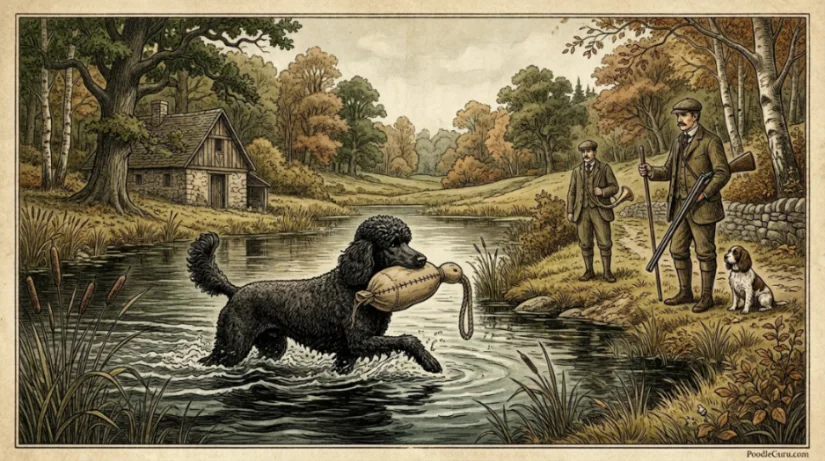
The breed’s name tells the story. “Poodle” comes from the German Pudel, short for Pudelhund, meaning “splashing dog.” The French name, Caniche, derives from canard (duck). Both point directly to the water. Early poodles were larger than today’s Standards and were prized across Europe for their reliability in the field. The AKC’s detailed breed history confirms that the poodle’s association with aristocracy came later — after the working foundations were firmly set.
How the Breed Evolved from Working Dog to Companion
The shift from gun dog to salon star didn’t happen overnight. Even as poodles gained popularity in French courts and circuses, their retrieving skills were never forgotten. Breeders selectively reduced size for the Miniature and Toy varieties, but the core temperament — keen, cooperative, and endlessly trainable — remained intact.
Standard Poodles were still used as military and service dogs well into the 20th century. Their trainability and courage made them natural messengers and medical supply carriers during wars. Meanwhile, the smaller varieties became popular with travelling performers and later with city dwellers. Today, the poodle is often misunderstood as a fragile fashion accessory, but a quick glance at any official AKC breed standard emphasizes a squarely built, athletic dog of “great intelligence” and “steady, confident” temperament. That language isn’t accidental — it’s a direct echo of the original working dog.
Standard, Miniature & Toy: Original Roles Compared
| Variety | When Developed | Original Role | Modern Role | Inherited Working Trait |
|---|---|---|---|---|
| Standard Poodle | 15th–16th century (earliest) | Full‑scale waterfowl retriever; also used for truffle hunting and military work | Active companion, performance dog (agility, obedience, hunt tests), service animal | Strong retrieve drive, excellent swimmer, high endurance |
| Miniature Poodle | 18th–19th century | Smaller retriever for tighter waterways; also truffle hunting | Companion, agility, obedience, alert watchdog | Retrieve instinct often present but with less raw power; clever problem‑solver |
| Toy Poodle | 18th–19th century | Companion and performing dog; also used as a “sleeve dog” to keep aristocrats warm | Devoted companion, highly trainable trick dog | Soft mouth, people‑focused, still enjoys carrying objects |
Even Toy Poodles, bred down for companionship, frequently exhibit fetching behaviors that trace straight back to the retrieving heritage. It’s not unusual to see a Toy Poodle joyfully retrieving a tiny ball with the same instinct as a Standard plunging into a lake.
The PoodleGuru Working Heritage Assessment
At PoodleGuru, we evaluate how strongly a poodle retains its original working instincts using three simple dimensions. This framework helps owners understand their dog’s behavior — and choose activities that fulfill those inborn drives.
Retrieve Tendency
Does your poodle naturally carry objects, bring toys back, or pick up items without prompting? A strong retrieve tendency suggests deep working heritage expression.
Water Affinity
How does your dog react to pools, lakes, or even puddles? A poodle who wades in with enthusiasm is tapping into centuries of selective breeding for water work.
Cooperative Focus
Working retrievers must look to the hunter for direction. A poodle who frequently checks in, makes eye contact, and seeks joint activity is showing the hallmark of a cooperative working dog.
How Retrieving Shaped the Modern Poodle: Coat, Body, and Brain
Everything you recognize about the poodle — the unique coat, the athletic build, the sharp mind — flows directly from its original job. This isn’t coincidence. It’s intentional canine engineering.
The Coat
The dense, single‑layer curls repel water and insulate against cold. The famous “continental clip” wasn’t about fashion: it kept joints and organs warm while reducing drag in the water and drying time.
The Build
A square, balanced body with strong hindquarters gives powerful swimming thrust. The deep chest allows lung capacity for sustained effort, and the high tail carriage acts as a rudder in the water.
The Brain
Poodles rank among the most intelligent breeds. Retrieving required memory, problem‑solving, and impulse control. That brainpower makes them incredibly trainable — and easily bored without purpose.
5 Persistent Myths About What Poodles Were Originally Bred For
Myth 1: Poodles are originally French
While France embraced and refined the breed, the poodle’s working roots trace to Germany. The French did develop the Caniche, but the water dog foundation was established across the border.
Myth 2: They were bred just to be lap warmers
The Toy variety eventually served that role, but even then, they were also performing dogs in circuses — a job that demands athleticism and intelligence, not just lap‑sitting.
Myth 3: The show clip was pure fashion
Every element of the traditional clip had a functional purpose: protecting joints, freeing leg movement, and reducing weight when soaked. Practicality came first; aesthetics followed.
Myth 4: Poodles have no prey drive
A properly bred poodle retains a strong retrieve drive. That’s a form of prey drive — carefully shaped through training to deliver birds, not eat them. It explains chasing squirrels and pouncing on toys.
Myth 5: Modern poodles don’t need to work
They don’t need to retrieve ducks to survive, but they still need mental and physical exercise that mimics that purpose. A bored poodle is a miserable poodle.
How to Spot a True Retriever Instinct in Your Poodle
Even if your poodle has never seen a duck, you can observe the working heritage at play. These signs are often mistaken for “cute quirks,” but they’re actually echoes of a serious job. Use this simple observation process to see what your poodle inherited.
Watch toy play with a fluffy dummy
Offer a soft, duck‑sized plush toy. Does your poodle pick it up, carry it around, and shake it? That’s a “kill” motion from retrieval — not aggression, but instinct.
Introduce water in a shallow basin
Place a floating toy in a few inches of water. A strong retriever will often step right in and attempt to grab it, even without prior training.
Test the “presentation” behavior
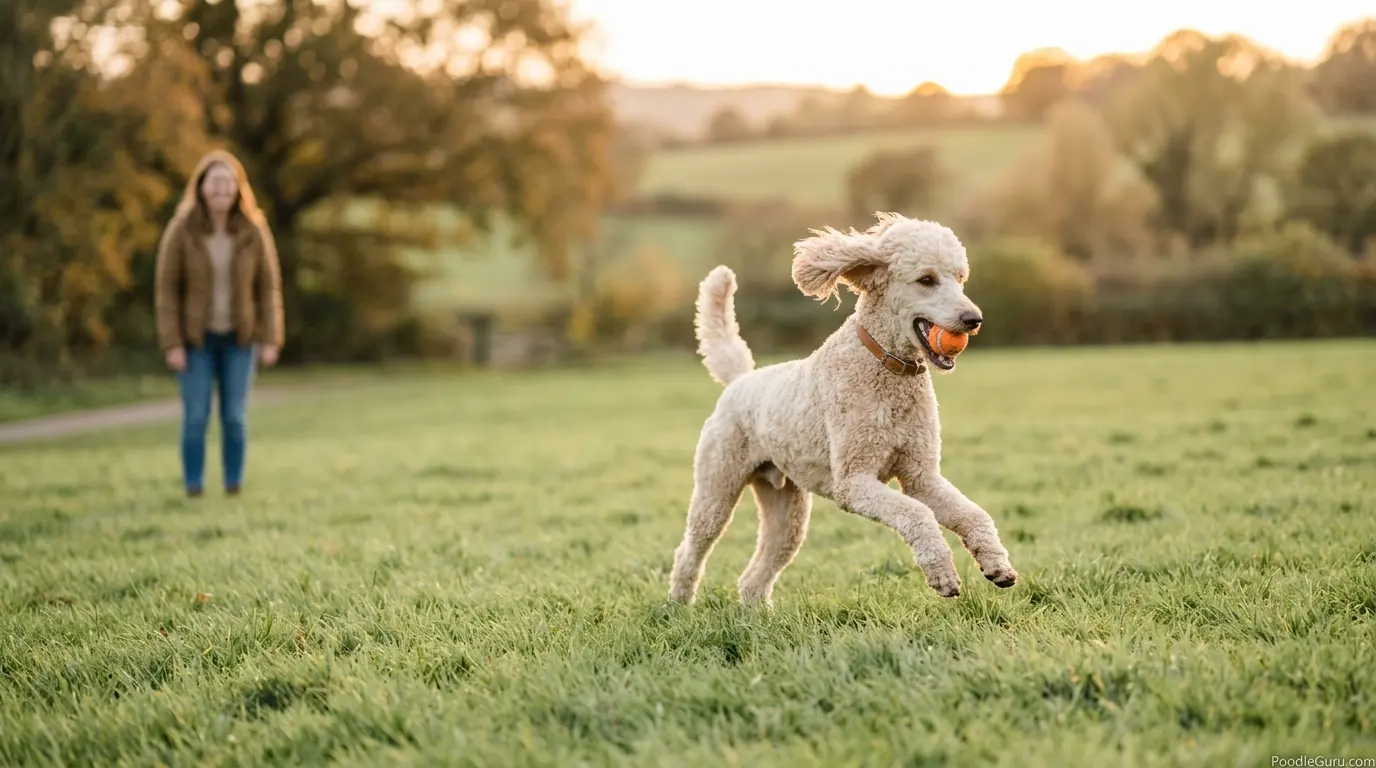
During fetch, note whether your poodle brings the toy back and drops it near your feet or offers it. That delivery is the hallmark of a soft‑mouthed retriever, not just a chaser.
Observe focus on a moving object
Roll a ball past your poodle. A dog with strong working lines will track it, intercept it, and often carry it to a specific place — sometimes even a “nest.” This behaviour mirrors retrieving to hand.
What Were Poodles Originally Bred For Means for Today’s Owner
Understanding the poodle’s original purpose transforms how you approach daily life with your dog. It shifts the lens from “why is my dog so demanding?” to “what job can I give my dog today?”
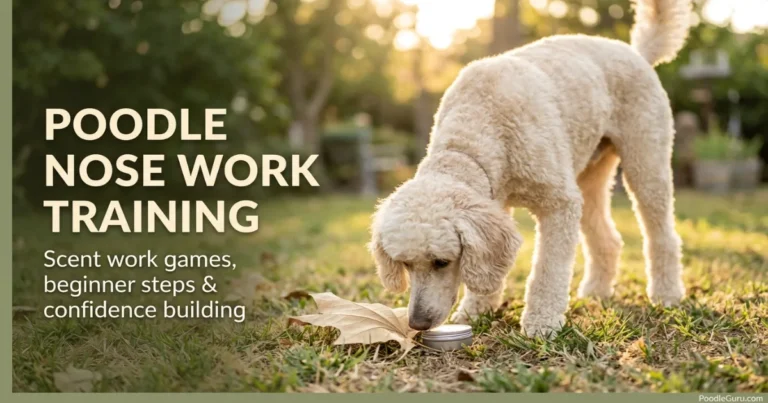
Practical strategies that honour the working heritage include water play, structured fetch, nose work, and trick training that mimics retrieving sequences. A poodle who carries a toy on walks isn’t being difficult — he’s self‑soothing through a deeply ingrained behaviour. Channel it, don’t suppress it. Likewise, the poodle’s intense focus on their human isn’t clinginess — it’s cooperative working instinct. They were bred to look to the handler for direction, and that makes them exceptional training partners.
Owner Action Plan
Even 15 minutes of “working” play — like directed retrieve, hide‑and‑seek with a toy, or a puzzle that dispenses treats — can satisfy your poodle’s heritage needs and prevent destructive boredom.
Buyer Mistakes When the Working Heritage Is Ignored
Many first‑time poodle buyers choose the breed for the “hypoallergenic” coat and elegant look, completely unaware of the dog’s working brain. That mismatch leads to frustration. Here’s what typically goes wrong:
Under‑exercising the mind
Physical walks alone aren’t enough. A poodle needs to think. Without mental work, they invent their own jobs — like dismantling furniture.
Skipping early retrieve training
Channeling the retrieve instinct early creates a polite dog who loves to play cooperatively. Missing that window can lead to possessive guarding of toys.
Treating the poodle like a “no‑work” breed
Even Toy Poodles need a sense of purpose. Trick training, scent games, and short agility sessions keep their minds sharp and their spirits calm.
Frequently Asked Questions
What were poodles originally bred for?
Poodles were originally bred as water retrievers to bring back waterfowl for hunters. The Standard Poodle is the oldest variety and remains a capable gun dog today.
Why do poodles have that fancy haircut?
The traditional continental clip was designed to protect joints and vital organs from cold water while freeing the legs for swimming. It was functional before it became fashionable.
Are poodles still used as hunting dogs?
Yes. While less common than retrievers, many Standard Poodles actively compete in hunt tests and field trials. Some breeders specifically preserve the working lines.
Do Toy and Miniature Poodles have retriever instincts?
Absolutely. Even the small varieties often carry toys, fetch, and display soft‑mouth behaviours, though their intensity may be lower than a Standard’s.
Is it true poodles come from Germany, not France?
The breed’s water‑dog roots are in Germany, where they were called Pudelhund. France refined and popularised the breed, giving it the name Caniche. Both countries contributed to the modern poodle.
How can I satisfy my poodle’s working heritage at home?
Games of fetch, water play, scent work, and interactive puzzles all tap into the retrieving drive. Short, focused training sessions that end with a reward are perfect.
Key Takeaways
- Poodles were originally bred as water retrievers, not companion dogs; the Standard Poodle is the oldest working variety.
- The breed’s name derives from the German “Pudel” (splashing dog) and the French “Caniche” (duck dog), both referencing its aquatic job.
- The iconic coat clip had functional origins, insulating vital organs and freeing legs for efficient swimming.
- Even Toy and Miniature Poodles retain retrieving instincts — carrying, fetching, and soft‑mouthed play are direct working‑heritage expressions.
- Honouring the poodle’s original purpose through water play, fetch, and mental work prevents boredom and strengthens your bond.
- Modern poodles, regardless of size, are athletic, intelligent partners who thrive when given a “job,” not just a sofa.
When you understand what were poodles originally bred for and how that working purpose shaped the breed, you’ll never look at your dog the same way again. Channel that heritage, and you’ll have a fulfilled, balanced companion for life.