Poodle Nail Trimming: A Step-by-Step Guide to Doing It at Home with Confidence
Quick Answer: Poodle nail trimming at home is a skill every owner can learn. The essentials are: the right tools (sharp clippers or a rotary grinder), knowing where the quick ends inside the nail, and a consistent routine that keeps nails from curling into the paw pad. For Poodles, whose nails are often solid black and grow quickly, the secret is trimming a tiny bit every 2–4 weeks rather than waiting until nails are visibly long. With a calm approach, lots of treats, and this step-by-step method, you can turn nail care from a dreaded chore into a calm bonding ritual.
Poodle nail trimming intimidates even otherwise confident owners. The dog squirms. The nails are black. The quick — that tender bundle of blood vessels and nerves inside — feels like a hidden landmine. And because Poodles rarely show discomfort until something is seriously wrong, many owners put off nail care until the problem is too big to ignore. By that point, the quick has elongated with the nail, overgrown claws have begun to torque the toes sideways, and the dog has associated the whole affair with pain and stress.
This guide is built to get you from anxious avoidance to calm competence. We will cover the tools that actually work for Poodle nails, the anatomy you need to understand before you make a single cut, a detailed step-by-step process you can follow tonight, and the common mistakes that turn a simple trim into a traumatic experience — for both of you.
Why Poodle Nail Trimming Matters More Than Many Owners Realize
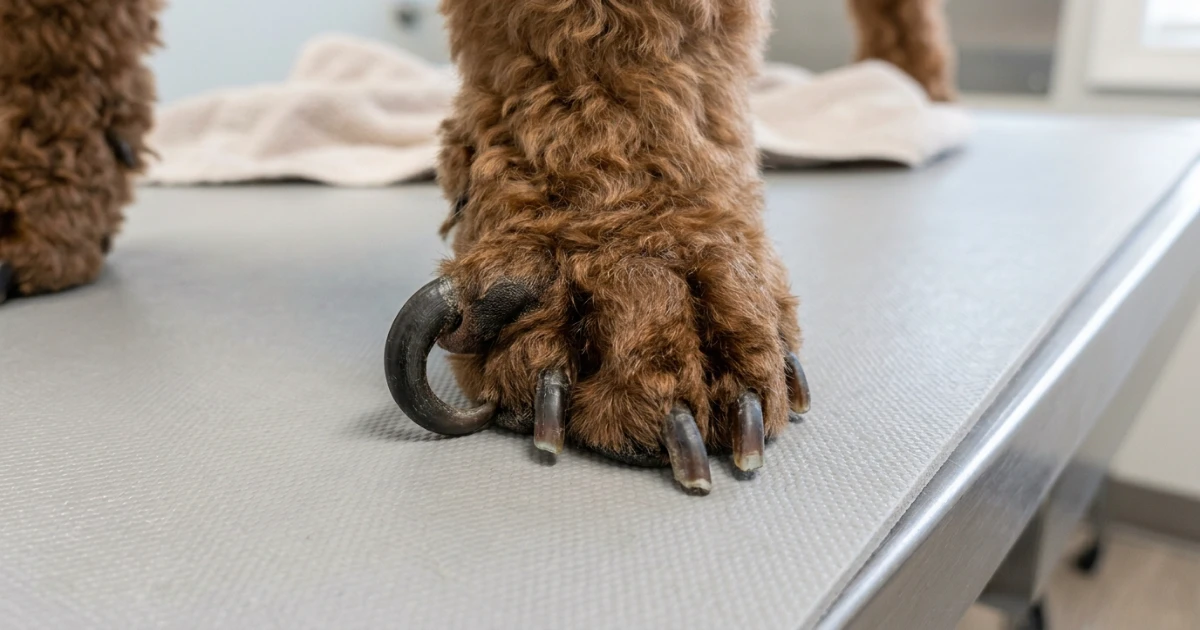
Poodles are not wild canids wearing their nails down on rough terrain. They walk on grass, carpet, and polished floors. Their nails grow continuously, and if left unchecked, they curl under the paw and press into the pad. That pressure alters gait, strains joints, and can lead to permanent changes in the way a dog stands — especially in Toy and Miniature Poodles, whose fine bone structure makes them vulnerable to toe deformation.
Long nails also make the characteristic Poodle prance less elegant. Each too-long nail forces the toe to splay, the pastern to drop slightly, and the whole front assembly to absorb impact less efficiently. Over months and years, this contributes to arthritis and discomfort that owners often attribute to aging rather than a preventable mechanical issue.
There is also a safety concern. A Poodle with long nails can scratch a child, snag a fabric leash and panic, or tear a nail on carpet. Torn nails bleed profusely and almost always require a vet visit, sedation, and antibiotics. A ten-minute trim every few weeks prevents all of that.
🐩 Expert Insight: “I see more Poodles with nail-related lameness than most owners would guess. The dog starts shifting weight forward onto the pads to avoid putting pressure on the overgrown claw, and suddenly they’re moving like a much older dog. I’ve watched 3-year-old Standards get labeled as ‘slowing down’ when all they needed was a proper nail trim and a few weeks to rebalance.” — Dr. Rebecca Tan, DVM, small-animal orthopedic rehabilitation
Understanding Poodle Nail Anatomy: The Quick Is Not a Mystery
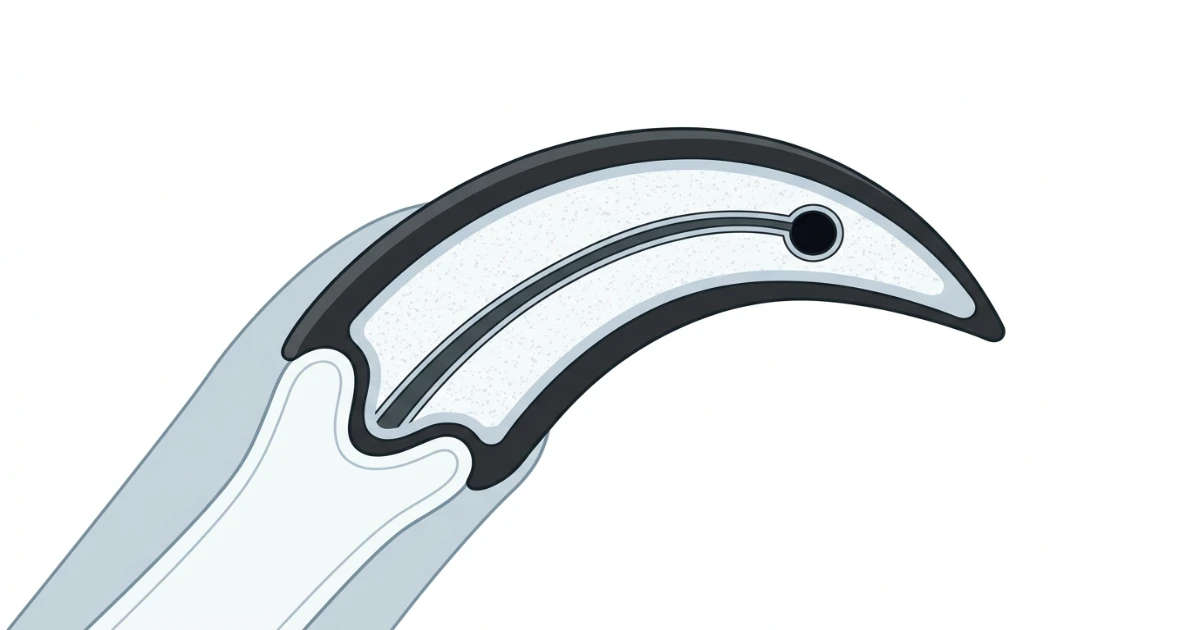
The quick is a living core of blood vessels and nerves that extends from the toe into the nail. It grows outward as the nail grows. When nails are kept short through regular trimming, the quick recedes, allowing you to trim shorter next time. When nails are neglected, the quick elongates, and you cannot shorten the nail as much without hitting it. This is why “just let them grow and then trim a lot” backfires so badly.
On a white nail, the quick is visible as a pinkish core. On a black nail — which most Poodles have — the quick is invisible from the outside. You locate it by looking at the cut surface after each tiny slice. When you trim from the tip, the cross-section of the nail will appear as a white or gray chalky center. As you get closer to the quick, a small dark circle appears in the center. That is the beginning of the quick. Stop there. Do not cut past that point.
Some owners use the “45-degree angle” rule: trim the nail tip at a 45-degree angle, following the natural curve, and stop once the cut surface shows that telltale dark dot. This method is consistent and works on every nail shape.
Tools You Need for Safe Poodle Nail Trimming
The right tools make the difference between a clean, quick trim and a stressful wrestling match. For Poodles, the two main options are high-quality clippers and rotary grinders. Many experienced owners keep both on hand and choose based on the dog’s mood and what needs doing.
| Tool | Best For | Pros | Cons |
|---|---|---|---|
| Scissor-style clippers (e.g., Millers Forge, Safari) | Small to medium nails; clean, quick cuts | Fast, quiet, precise, easy to control | Requires confidence; can crush nail if dull |
| Guillotine-style clippers | Toy and Mini Poodles with thin nails | Inexpensive, simple mechanism | Blades dull quickly; risk of splitting nail |
| Rotary grinder (e.g., Dremel 7300-PT, Casfuy) | All sizes; rounding edges, thick nails, anxious dogs getting used to handling | Smoothes nail edge; harder to quick the dog; lets you sneak up on the quick gradually | Noise and vibration can spook some dogs; takes longer per nail |
| Styptic powder | Emergency bleed control | Stops bleeding in seconds; essential safety net | Stings briefly; do not use without being prepared to comfort the dog |
Do not use human nail clippers. They split the nail and crush the quick. Poodle toenails are thick, round, and require a scissor-style or grinder tool designed for the job. A nail file can work in a pinch for smoothing but is too slow for length reduction.
Step-by-Step Poodle Nail Trimming at Home
This sequence is designed to keep the dog calm, keep you in control, and make nail trimming feel like a predictable routine rather than an ambush. Work through it slowly the first few times. Speed comes later.
Step 1: Set the Scene
Choose a quiet room with good lighting. Have your tools, a pile of high-value treats, and a non-slip surface. For small Poodles, a grooming table or a towel on the counter works. For Standards, sitting on the floor with the dog lying on its side is often easiest. Do not trim nails when the dog is already amped up.
Step 2: Handle Paws Without Trimming First
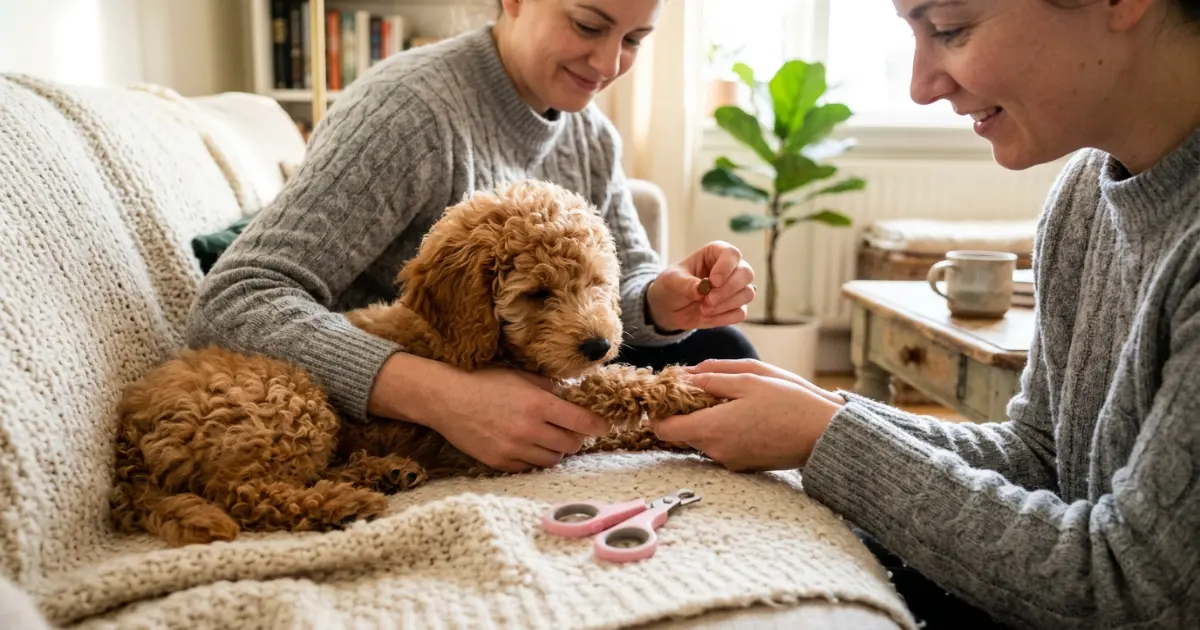
If your Poodle flinches at paw touch, spend a few minutes just massaging the paws, pressing pads gently, and giving treats. Do not rush to the clippers. The dog needs to learn that paw handling predicts good things, not fear.
Step 3: Identify the Trimming Line
Hold the paw firmly but gently. Isolate one toe. Look at the nail’s curve. Visualize a line from the tip of the quick (where the nail stops being hollow) to the tip of the nail. For black nails, take tiny slices off the tip — perhaps 1–2 millimeters each time — and check the cut surface after each cut.
Step 4: Make the First Cut
Position the clippers at a 45-degree angle to the nail, following the natural downward curve. Squeeze decisively — hesitation leads to pinching and splintering. If using a grinder, touch the spinning drum to the nail tip for just a second or two at a time, moving around the nail to avoid heat.
Step 5: Inspect and Stop
Check the cut surface. If you see a solid white or gray center with no dark dot, take one more thin slice. If you see that dark circle appear, stop immediately — you are at the quick’s edge. That nail is done.
Step 6: Smooth and Reward
If using clippers, follow up with a grinder or nail file to round any sharp edges. Then release the paw and give a treat, even if the dog was squirmy. One nail done. Take a breath. Move to the next.
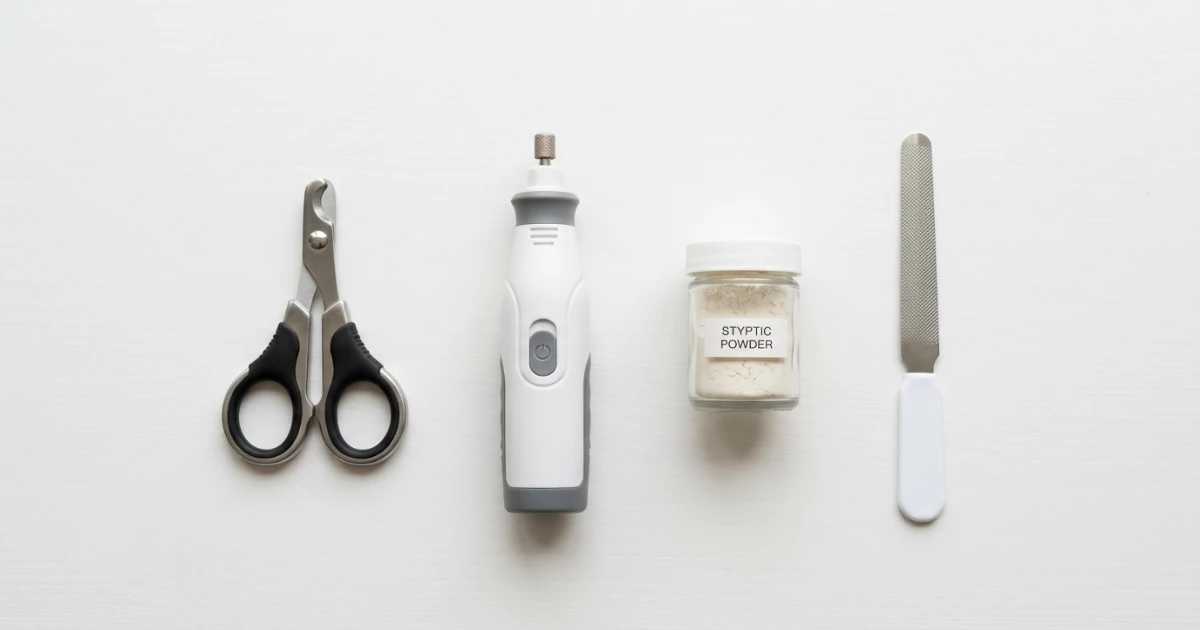
⚠️ If You Hit the Quick: Stay calm. The dog will yelp; you will feel terrible. Apply styptic powder directly to the bleeding tip with gentle pressure for 10–20 seconds. The bleeding will stop. Do not end the session on a bad note — wait a moment, then do one more nail with a safe, conservative cut so the dog’s last memory is a calm one. Then shower them with love and treat it like no big deal.
What Most Owners Get Wrong About Poodle Nail Trimming
Several misconceptions circulate online and in casual owner conversations that turn an already delicate task into something harder than it needs to be.
“If I walk my Poodle enough, the nails will wear down naturally.” For Toy and Miniature Poodles, this almost never works. Their light weight and the soft surfaces they walk on provide negligible abrasion. Even Standards that run on pavement daily may only wear the central two nails, leaving the dewclaws and outer toes long. Road-walking can file nails somewhat, but it nearly always leaves the dewclaws untouched — and Poodle dewclaws are notorious for curling around into the leg if ignored.
“I can cut the nail short in one go just by judging from the outside.” No, you cannot see the quick through a solid black nail. The visual estimate is a guess. The safe method is always slice-and-check, not one brave whack. Veterinarians who trim poodle nails daily still use this approach.
“My groomer handles it, so I don’t need to learn.” Poodle nails grow fast enough that a 6-week grooming interval is frequently too long. Nails that click on hard floors between grooms are too long, and those weeks of overgrowth strain joints. Learn the skill yourself, even if you only do maintenance trims between professional appointments.
🧬 Why Poodle Nails Grow Differently: The Poodle’s upright carriage and springy gait place the dog’s weight predominantly on the pads, not the claws. That means less natural grinding against hard surfaces. Selective breeding for a refined, elegant foot with well-arched toes has also given Poodles a tighter, more upright nail set that tends to curl fast. It’s not a flaw — it’s the shape that makes that pretty foot — but it demands regular human intervention.
Desensitizing a Nervous Poodle: Puppy and Adult Strategies
Many Poodles, especially those adopted as adults, arrive with nail-trimming trauma. Their previous owner may have hurt them, or they endured an assembly-line groomer experience. Undoing that fear takes patience, but it is entirely possible. Poodles are sensitive, smart, and motivated by food and praise — prime candidates for counterconditioning.
Start with zero pressure. For a week, simply sit with your dog, touch a paw briefly, and give a piece of chicken. The next week, hold the paw for a count of three before treating. Introduce the clippers without using them — just let the dog sniff them, then treat. Work up to touching the closed clippers to a nail, treating immediately. Build to a single tap of a grinder (off) against the nail. This process can take two weeks or two months; the timeline belongs to the dog.
Puppies have a massive advantage: if you handle their paws daily from the day they come home, and start tiny, positive nail trims by 10–12 weeks, they will never know that nail trimming was supposed to be scary. The key is not to wait until the nails are visibly long for the first trim — that sets up a negative experience. Trim a sliver when it feels unnecessary, just to teach the routine.
Maintaining a Trimming Routine That Works for Real Life
Pick a day. Every other Sunday morning, right after coffee. Mark it on the calendar. Most owners who struggle with nail trimming have not fallen short on skill — they have fallen short on consistency. The longer you wait, the longer the quick grows, and the more stressful the session becomes. A 5-minute trim every two weeks is infinitely easier than a 30-minute wrestling match every two months.
🐩 Pro Tips for Easier Poodle Nail Trimming
- Do nails right after a walk or play session. A tired Poodle is a cooperative Poodle.
- Use a headlamp or a phone flashlight. Good lighting reveals the quick’s shadow on dark nails.
- Don’t forget the dewclaws and back paws. Front dewclaws, especially, never touch the ground and curl fastest.
- When in doubt, trim less. You can always take more off in a few days. You cannot put nail back on.
- Reward yourself, too. Trim your own nails or pour a second coffee. Making it a ritual for both of you eases the tension.
Frequently Asked Questions
How often should I trim my Poodle’s nails?
Every 2–4 weeks, depending on growth rate and wear. If you hear clicking on hard floors, the nails are too long. Toy and Miniature Poodles often need the shorter end of that window because their nails grow quickly relative to their body size and get less natural wear.
What if my Poodle’s nails are black and I can’t see the quick?
Work in tiny slices. Trim 1–2 millimeters off the tip and examine the cut surface. A chalky white center means you can go a little further. A dark dot appearing in the center means you’ve reached the edge of the quick and should stop. With practice, this becomes second nature.
Can I use a human nail clipper on my Poodle?
No. Human clippers are flat and narrow, designed for thin, flat nails. Poodle nails are round and thick. Human clippers will crush and split the nail, causing pain and increasing the risk of infection. Use scissor-style pet clippers or a rotary grinder.
What’s the best way to trim dewclaws?
Dewclaws require special attention because they never touch the ground and can curl into the leg. Gently lift the dewclaw away from the leg, visualize the quick at the base, and trim conservatively. Use a grinder to round the tip if the nail is thick. Check dewclaws at every trimming session — they are often the longest nails on the dog.
How do I stop the bleeding if I cut the quick?
Apply styptic powder directly to the bleeding nail tip and hold gentle pressure for 10–20 seconds. Cornstarch or flour can work in a pinch but are less effective. The bleeding will stop; the dog may be upset. Stay calm and give treats afterward to restore the dog’s association. If bleeding continues beyond a few minutes, wrap the paw lightly and call your vet.
My Poodle freaks out when I touch its paws. What can I do?
Desensitization is the answer. Start by touching a paw briefly while feeding a high-value treat, and release immediately. Build duration gradually over days and weeks. Introduce the sight of the clippers without using them. The goal is to rewire the dog’s brain so that paw handling reliably predicts food, not fear. Professional help from a fear-free groomer or trainer is worth seeking if the reaction is severe.
Is a grinder better than clippers for Poodle nails?
Neither is strictly better — they suit different dogs and owners. Grinders are less likely to quick the dog, smooth the nail edge beautifully, and allow you to sneak up on the quick gradually. But the noise and vibration can frighten some Poodles. Clippers are fast and silent but require more precision. Many experienced owners use clippers for the bulk and a grinder for finishing.
At what age can I start trimming my Poodle puppy’s nails?
As early as 4 weeks of age, breeders often begin handling and doing tiny trims. For new puppy owners, start within the first few days of bringing the puppy home at 8–10 weeks. Handle paws daily, and do a micro-trim (a sliver off the very tip) weekly. Early positive experiences prevent lifelong nail-trimming phobias.
📋 Summary: Poodle nail trimming at home is not about bravery — it’s about preparation, patience, and a slice-by-slice approach. Understand the quick, invest in quality clippers or a quiet grinder, and handle paws daily whether it’s a trim day or not. If you cut the quick, styptic powder and a calm demeanor put things right. The biggest mistake is waiting until nails are long, loud on the floor, and the quick has grown out. A short ten-minute session every two weeks keeps your Poodle walking comfortably, prevents joint strain and toe deformation, and — over time — transforms nail care from a battlefield into a quiet ritual you both can trust.