Poodle Tear Stains: 7 Safe Fixes That Actually Help
This guide is for education only and does not replace veterinary care. Eye pain, squinting, swelling, green or yellow discharge, a bad smell, pawing at the eye, cloudiness, injury, or one-sided sudden tearing should be checked by a veterinarian. Do not put hydrogen peroxide, bleach, essential oils, boric acid mixtures, colloidal silver, human eye drops, contact lens solution, or homemade salt mixtures near your poodle’s eyes unless your veterinarian specifically directs it.
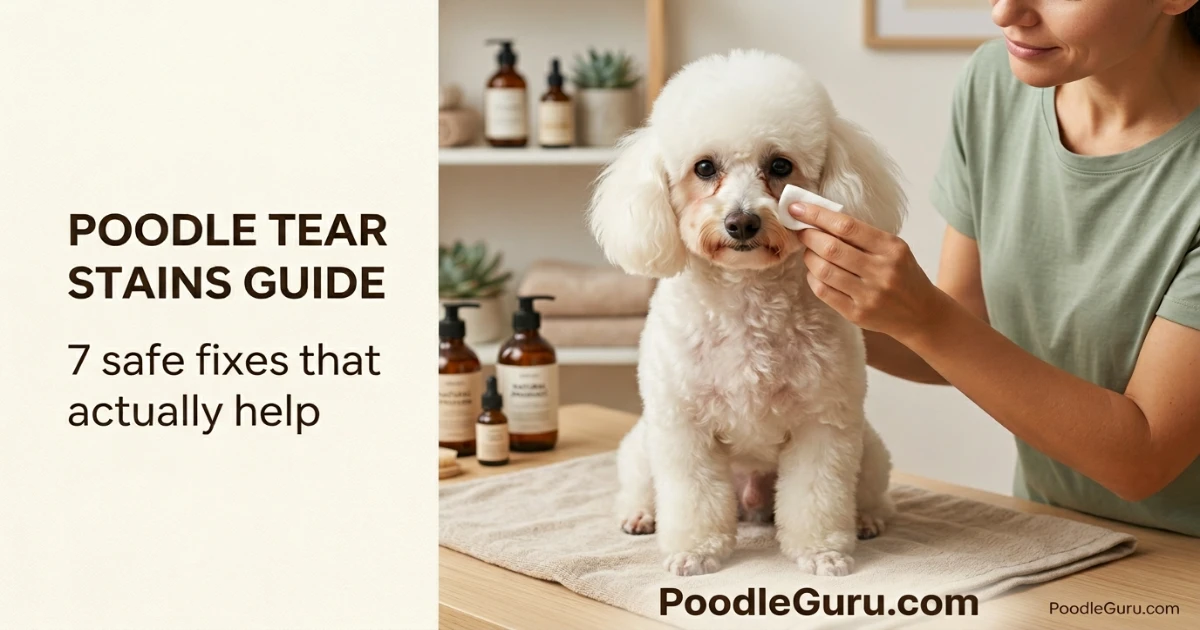
Poodle tear stains are reddish-brown marks under the eyes, usually caused by tear overflow and porphyrins, the iron-containing pigments found in tears and saliva. Mild staining can often be improved with vet-approved eye cleaning, dry facial fur, short hair around the eyes, clean bowls, and better management of allergies or soft diet triggers. However, persistent tearing, colored discharge, odor, squinting, swelling, or pain should be examined by a veterinarian because blocked tear ducts, eyelid problems, infection, or corneal irritation may be involved.
You can groom a poodle beautifully and still feel frustrated when rust-colored tracks keep appearing below the eyes. You wipe the face in the morning, and by evening the stains are back. You try wipes, powders, filtered water, food changes, and every owner forum trick, yet the same brown streaks return.
The problem is that poodle tear stains are not just “dirt.” They are a mix of tear overflow, pigment chemistry, moisture, coat color, facial hair, and sometimes a medical reason the eye is producing or draining tears poorly. The safest solution is not aggressive scrubbing. It is a simple system: rule out eye disease, reduce excess moisture, keep the face dry, and avoid products that can injure the eye.
Porphyrins in tears and saliva can leave reddish-brown marks when moisture stays on light fur.
Overflow tearing, blocked ducts, allergies, eye irritation, wet facial hair, and dirty bowls can all contribute.
Green/yellow discharge, swelling, squinting, odor, pain, or sudden one-eye tearing needs veterinary care.
Use vet-approved wipes or sterile saline, wipe away from the eye, dry fully, and keep facial hair trimmed.
What Exactly Are Poodle Tear Stains?
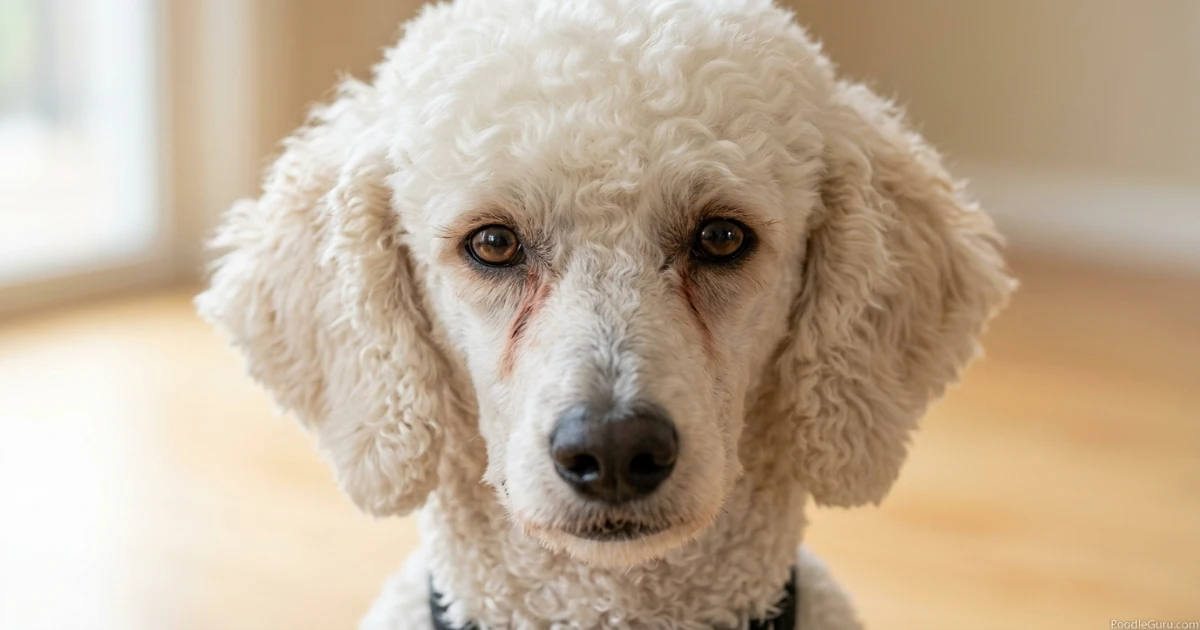
Tear stains are the reddish-brown marks that develop where tears repeatedly wet the coat below the eyes. In light-colored poodles, the contrast makes the stains much more visible, but darker poodles can have the same tear overflow without showing it as clearly. The stain itself is commonly linked to porphyrins, naturally occurring pigments that can be found in tears and saliva.
When tears overflow instead of draining normally through the tear ducts, the fur under the eye stays damp. Over time, pigment, minerals, bacteria, yeast, and oxidized debris can darken the hair shaft. That is why simple soap and water often disappoint. You are not only cleaning a dirty face; you are trying to manage the reason the face stays wet.
Veterinary sources describe epiphora as overflow tearing rather than a disease by itself. Tear overflow can happen when the eye produces too many tears or when the normal tear-drainage pathway does not work properly. For owner-safe background, see VCA’s guide to epiphora in dogs and the MSD Veterinary Manual tear-duct overview.
Why Poodles Get Tear Stains More Often
Poodles are not the only dogs that develop tear stains, but their coat and face make the problem obvious. Their continuously growing hair can wick tears down the muzzle, especially when hair near the inner corner of the eye is long. Light white, cream, apricot, and silver coats show staining quickly. Toy and Miniature Poodles may also have smaller facial structures where tear drainage problems are more noticeable.
Some tearing is harmless and manageable. But repeated staining should never be dismissed automatically as “just cosmetic.” If the eye is irritated, the eyelid turns inward, lashes rub the cornea, the tear duct is blocked, or allergies are active, the stain is only a symptom of a deeper issue.
The Root Causes of Poodle Tear Stains
The fastest way to waste money is to buy tear-stain products before knowing the cause. Start with the common triggers below.
1. Tear Overflow or Poor Drainage
Normally, tears lubricate the eye and drain through small tear ducts near the inner corner. If the ducts are blocked, narrow, inflamed, or malformed, tears spill onto the face instead. Your veterinarian may use a fluorescein dye test to check whether tears are draining properly.
2. Eye Irritation and Eyelid Problems
Hair rubbing the eye, inward-rolling eyelids, extra eyelashes, dust, shampoo irritation, or corneal scratches can make the eye produce more tears. A poodle that squints, blinks rapidly, paws at the eye, or keeps one eye partly closed needs a vet exam, not cosmetic cleaning.
3. Allergies and Skin Inflammation
Food sensitivity, pollen, dust mites, mold, and contact irritation can increase face rubbing, itching, and watery eyes in some dogs. If tear stains appear with paw licking, itchy ears, red skin, seasonal flare-ups, or digestive upset, ask your vet about allergy management rather than guessing with random food changes.
4. Facial Hair and Grooming Pattern
Poodle hair near the eye can act like a wick. Once it gets wet, the moisture travels down the face and stays there. A clean face trim or careful trimming around the inner eye area often reduces staining because there is less hair to hold tears.
5. Moisture Around the Mouth and Beard
The same pigment family that contributes to tear staining can also stain beard hair through saliva. A wet beard from drinking, licking, or chewing can make the whole muzzle look rusty. This is why water bowl hygiene, beard drying, and face trims matter.
6. Puppy Teething and Temporary Changes
Some poodle puppies develop more facial moisture during teething. This does not prove the teeth are the only cause, but if your puppy is otherwise healthy and the timing matches teething, your vet or groomer may suggest gentle maintenance while the adult teeth come in.
7. Infection or Skin Fold Irritation
Moist fur can irritate the skin and create a better environment for yeast or bacteria. A sour smell, sticky discharge, redness, swelling, crusting, or pain means you should stop home treatment and book veterinary care.
| Possible Cause | What You May Notice | Best Next Step |
|---|---|---|
| Blocked or narrow tear duct | Constant wet track from the inner eye, often one side worse | Vet dye test; possible tear-duct flushing if appropriate |
| Hair or eyelid irritation | Squinting, blinking, pawing, rubbing, one-eye tearing | Vet eye exam; do not delay if pain is present |
| Allergies | Watery eyes plus itchy paws, ears, skin redness, or seasonal flares | Vet-guided allergy plan or diet trial |
| Long facial hair | Hair touching the eyes or staying damp below the inner corners | Professional face trim; keep hair short and dry |
| Wet beard and saliva staining | Rusty fur around mouth as well as eyes | Trim beard, wipe after meals/drinking, use clean bowls |
| Skin or eye infection | Green/yellow discharge, odor, swelling, pain, sticky crusts | Veterinary diagnosis and treatment |

Medical vs Cosmetic: When to Call a Vet
Reddish-brown staining on a comfortable, bright-eyed poodle is often a maintenance issue. Colored discharge, pain, and sudden changes are different. Eye problems can worsen quickly, and no cosmetic stain remover is worth risking corneal damage.
- Green, yellow, thick, or pus-like discharge
- Squinting, pawing at the eye, or keeping one eye closed
- Swelling, heat, bleeding, raw skin, or a bad smell
- Cloudy eye surface or suspected scratch/injury
- Sudden heavy tearing from one eye
- Stains that worsen despite clean face care
VCA notes that epiphora is a symptom associated with several conditions, not a single diagnosis. The MSD Veterinary Manual also describes tear-duct obstruction and inflammation as problems that may need professional flushing or treatment. In plain English: stains are common, but your vet is the right person to rule out the dangerous causes before you focus on whitening the fur.
7 Safe Fixes for Poodle Tear Stains
Once urgent eye problems have been ruled out, use this safer, breed-friendly system.
Start with a veterinary eye check
Ask your vet to examine the eyes, eyelids, lashes, cornea, and tear drainage. If staining is one-sided, painful, smelly, or paired with discharge, do this before buying any remover.
Keep the eye area trimmed and dry
Ask your groomer for a safe face trim around the inner corners. Short hair gives tears less surface to cling to and makes daily cleaning easier. Never use scissors close to the eye unless you are trained and confident.
Clean with sterile saline or vet-approved wipes
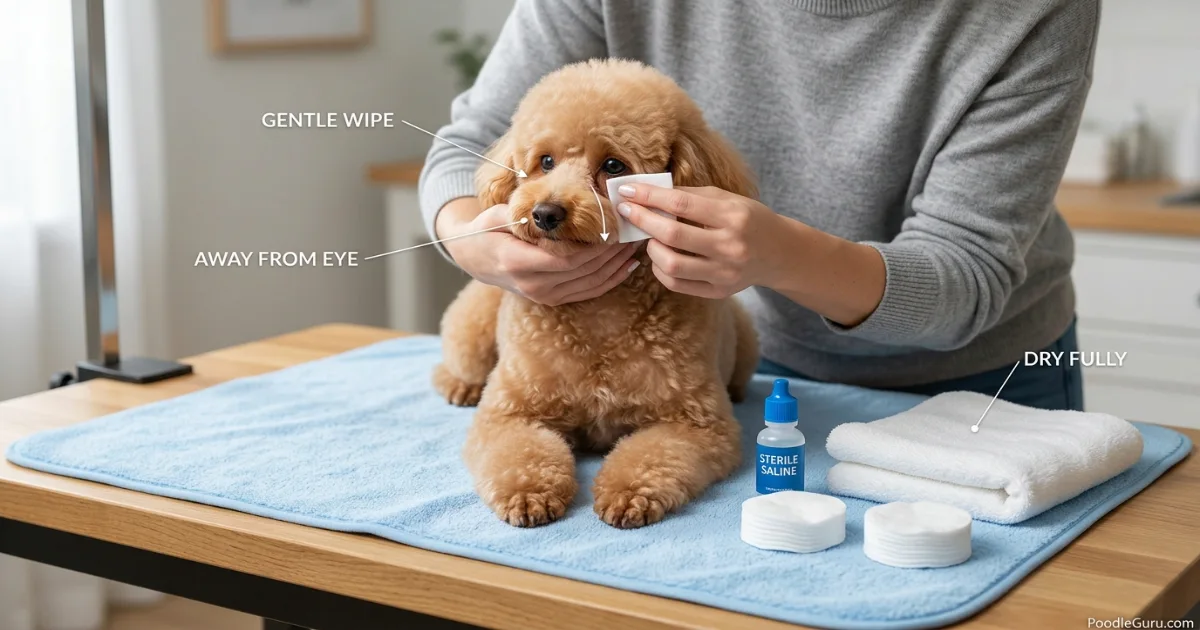
Use sterile saline eye rinse, veterinary eye wash, or wipes made for dogs. Moisten a lint-free pad, soften crust gently, and wipe away from the eye. Use a fresh pad for each eye.
Dry the fur completely
After wiping, blot the area dry with clean gauze or a soft tissue. Moisture is what keeps the stain cycle going and can irritate the skin.
Switch to clean, non-plastic bowls
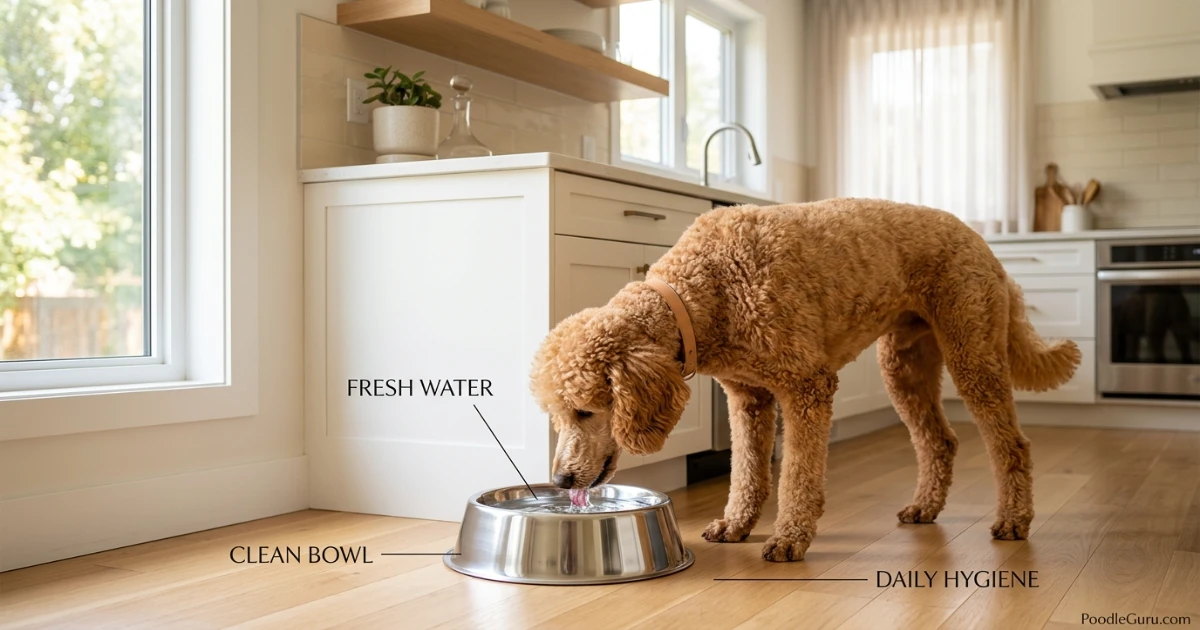
Use stainless steel or ceramic bowls and wash them daily. Scratched plastic can hold grime and bacteria, which may worsen facial irritation in sensitive dogs.
Review food and allergies with your vet
If stains come with itching, paw licking, ear issues, vomiting, loose stool, or seasonal flares, ask about allergies. A proper elimination diet should be planned with a veterinarian, not guessed from online comments.
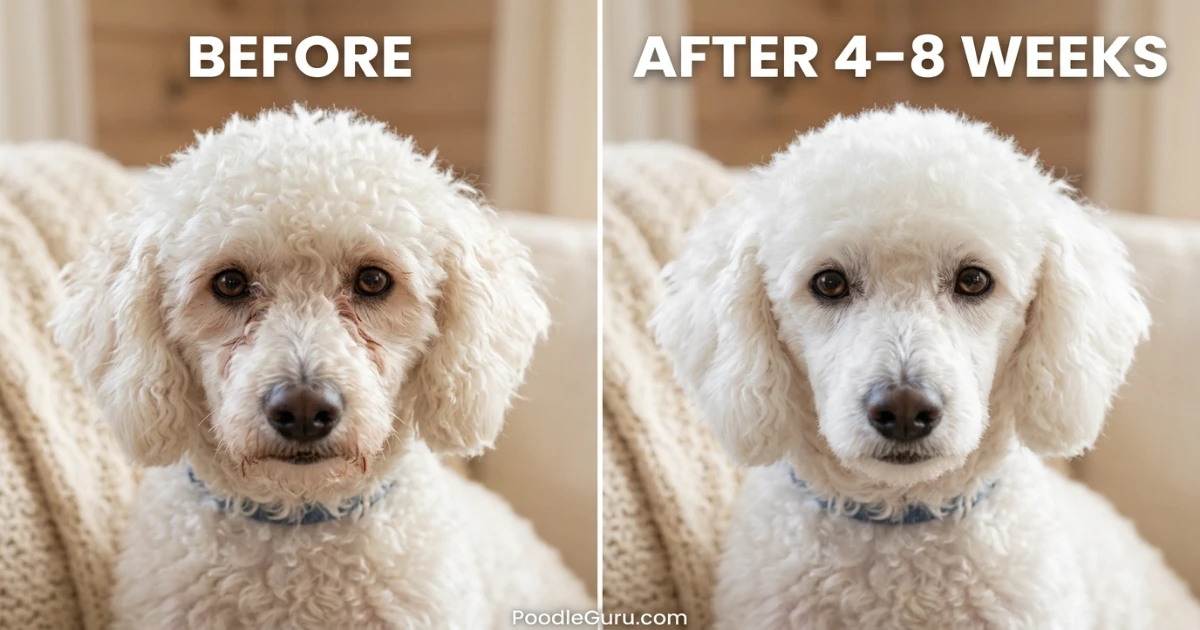
Be consistent for 4–8 weeks
Existing stained hair will not instantly turn white. The goal is to prevent new staining while clean fur grows in or old stained fur is trimmed away.
Product Safety: What to Use and What to Avoid
The tear-stain product market can be confusing because many products promise fast whitening. Your priority is eye safety first and cosmetic results second.
| Product / Method | Safer Use | Risk Level | PoodleGuru Verdict |
|---|---|---|---|
| Sterile saline or veterinary eye wash | Softens crusts and removes debris around the eye | Low when used correctly | Best first-choice cleaning support |
| Dog-safe tear wipes | Useful for daily face cleaning if labeled safe around eyes | Low to moderate | Good if fragrance-free and not irritating |
| Cornstarch or tear-stain powder | May keep fur dry if applied far from the eye on fully dry hair | Moderate if powder drifts into eye | Use carefully or ask your groomer |
| Antibiotic products | Only for diagnosed infection when prescribed | High if used casually | Do not use for routine staining |
| Hydrogen peroxide, bleach, harsh whitening shampoo | Not for the eye area | High | Avoid near the face and eyes |
| Homemade salt water, boric acid, essential oils, colloidal silver | Not recommended near the eyes without veterinary direction | Variable to high | Skip these for home eye-area care |
Do not rely on homemade sea-salt mixtures for routine eye-area cleaning. Salt concentration, cleanliness, and storage can be inconsistent. Sterile saline or a veterinary eye wash is the safer choice for a sensitive area near the eye.
Water, Diet, and Supplements: What Actually Makes Sense?
Filtered water and clean bowls are reasonable low-risk changes, but they are not magic. Some owners see less mouth and face staining after switching away from hard tap water or plastic bowls. Others see no difference because the real issue is tear drainage, allergies, or anatomy.
Diet can matter when allergies or digestive problems are part of the picture. But there is no universal “tear-stain food” that works for every poodle. If your dog has itchy skin, chronic ear issues, loose stool, vomiting, paw licking, or recurring redness, ask your vet about a structured food trial. Randomly switching proteins every week can make the pattern harder to understand.
Be cautious with supplement claims. Probiotics, omega-3s, and skin-support formulas may help some dogs as part of a broader plan, but they should not replace an eye exam when there is pain, discharge, or sudden tearing.
Common Owner Mistakes That Make Tear Stains Worse
Rubbing too hard. The skin near the eye is delicate. Aggressive scrubbing can inflame the skin and make your poodle resist future grooming.
Using face bleach or whitening shampoo too close to the eyes. These products may lighten fur in safer areas, but the eye area is not the place to experiment.
Ignoring one-sided tearing. If one eye suddenly tears much more than the other, assume irritation, injury, or duct trouble until your vet says otherwise.
Only cleaning once stains are dark. Prevention is easier than reversal. Wipe moisture before it dries, then dry the fur fully.
Expecting instant whitening. Old stained hair may need to grow out or be trimmed away. The win is seeing less new staining.
Daily Prevention Routine for a Clearer Poodle Face
This simple routine is safe for most comfortable poodles after your vet has ruled out eye disease:
- Morning: Check for discharge, redness, squinting, or swelling. Wipe moisture gently if needed.
- After meals or drinking: Blot the beard and mouth area if your poodle is prone to saliva stains.
- Evening: Use sterile saline or a dog-safe wipe around the stained area, then dry fully.
- Weekly: Wash bowls thoroughly, check facial hair length, and note whether itching or ear problems are also present.
- Grooming schedule: Keep the face trimmed every 4–6 weeks, or more often for Toy and Miniature Poodles with heavy staining.
Best Practical Rule
If your poodle looks comfortable and the stains are stable, focus on gentle maintenance. If the eye looks painful, wet, swollen, infected, or suddenly worse, stop cosmetic care and call your veterinarian.
Frequently Asked Questions About Poodle Tear Stains
Are poodle tear stains dangerous?
Reddish-brown staining alone is often cosmetic, especially when the eye is bright and comfortable. Staining with squinting, swelling, odor, green or yellow discharge, or pain can signal a medical problem and needs veterinary care.
Can I use hydrogen peroxide on poodle tear stains?
Do not use hydrogen peroxide near your poodle’s eyes unless your veterinarian gives specific directions. The eye area is sensitive, and accidental contact can be painful or dangerous.
Why do white poodles show tear stains more?
White and cream coats show reddish-brown pigment more clearly. Dark poodles can have the same moisture and porphyrin exposure, but the stains are less visible.
Will filtered water remove poodle tear stains?
Filtered water may help some dogs, especially with mouth and beard staining, but it is not a guaranteed cure. If the cause is blocked ducts, irritation, or allergies, water alone will not solve the problem.
Does dog food cause tear stains?
Food can contribute if your poodle has allergies or inflammation, but it is not the cause in every case. Use a vet-guided diet trial if food sensitivity signs are present.
Can poodle puppies grow out of tear stains?
Some puppies improve as teething ends and facial structure matures, but persistent or painful tearing should still be examined by a veterinarian.
What is the safest tear stain remover for poodles?
The safest starting point is vet-approved eye wash, sterile saline, or fragrance-free dog eye wipes used gently around—not inside—the eye. Drying the fur afterward is just as important.
How long does it take to remove poodle tear stains?
New staining may improve within a few weeks if the cause is managed, but old stained fur often needs to grow out or be trimmed. Expect 4–8 weeks of consistent care before judging results.
The Safe Takeaway
Poodle tear stains are common, but they should not be attacked with harsh chemicals or random internet remedies. The smart path is to rule out eye disease, reduce tear overflow where possible, keep facial hair short, clean gently, dry thoroughly, and track patterns like allergies, food changes, or one-sided tearing.
A cleaner poodle face is not just a grooming win. It is a sign that you are watching comfort, moisture, skin health, and eye safety together—the way a careful poodle owner should.