Poodle with babies and toddlers: a complete safety guide for thoughtful parents
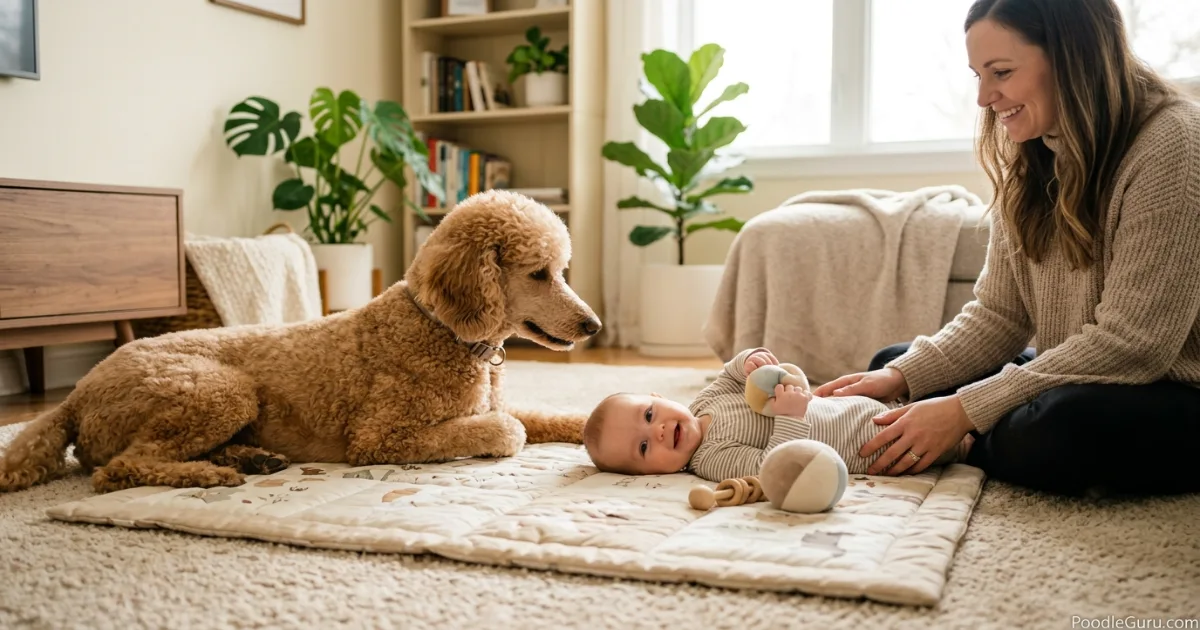
Quick Answer: Yes, a well-trained and properly supervised Poodle can be a remarkably gentle, intuitive companion for babies and toddlers. However, safety depends on size, temperament, early socialization, and parental management. Never leave any dog alone with an infant or toddler, regardless of breed.
Bringing a baby home to a house already ruled by a curly-coated, clever Poodle stirs equal parts joy and worry. The internet is crowded with conflicting warnings and fairy-tale photos. You need a realistic, nuanced guide built on canine behavior science and the lived experience of families who adore their Poodles. This article walks you through every layer of Poodle with babies and toddlers safety — from newborn introductions to toddler body language — so you can protect both the child you love and the dog who already owns a piece of your heart.
The real truth about a Poodle with babies and toddlers
Many parents search “Poodle with babies and toddlers” hoping for a simple yes or no. The answer lives in the details. Poodles, across all sizes, share core traits that can make them outstanding family members: high intelligence, emotional sensitivity, and a desire to please. Those same traits can backfire without thoughtful guidance. A Standard Poodle who leans blissfully against a toddling one-year-old can cause an unintentional tumble. A Toy Poodle who feels cornered by a grabbing hand might snap out of fear, not malice. The breed isn’t the problem; preparation and supervision are everything.
Temperament
Loyal, intuitive, and perceptive. Poodles often mirror the emotional tone of the home, making calm leadership essential.
Intelligence
Ranked among the most trainable breeds. This works in your favor when teaching boundaries around children.
Size Factor
Toy and Miniature Poodles are fragile; Standards are sturdy but can accidentally knock over small children.
Energy Level
Moderate to high. A tired, mentally stimulated Poodle is far safer around active toddlers.
How Poodle temperament shapes safety around babies
A Poodle is not a golden retriever. They read micro-expressions, notice when a routine changes, and can grow anxious if they feel displaced. When a new baby arrives, your Poodle may experience a sudden drop in attention, new smells, and startling cries. How they respond depends heavily on the foundation you built before the birth. Poodles that have practiced “place,” “settle,” and gentle treat-taking are miles ahead. Those that never learned impulse control may jump, whine, or intrude on quiet nursery moments.
Jealousy is a real concern. Not in the human sense, but resource guarding of your lap, the couch, or even a favorite blanket can emerge. You prevent this by gradually shifting attention patterns weeks before the baby comes home and by ensuring the dog never feels punished for the baby’s presence. Always pair the child’s appearance with high-value rewards, so the Poodle forms a positive emotional association.
Why size is the silent safety factor
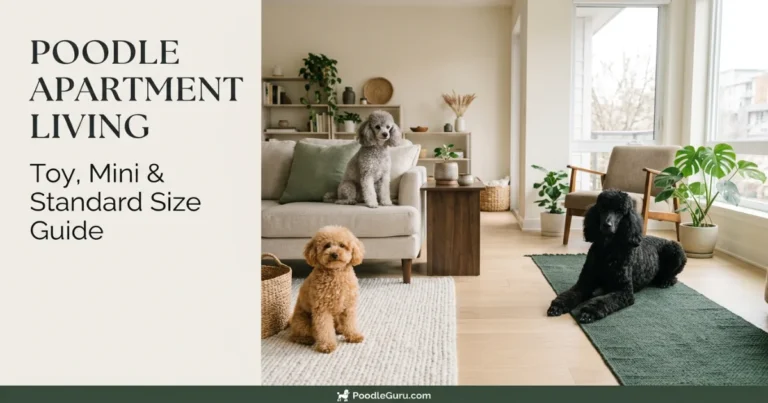
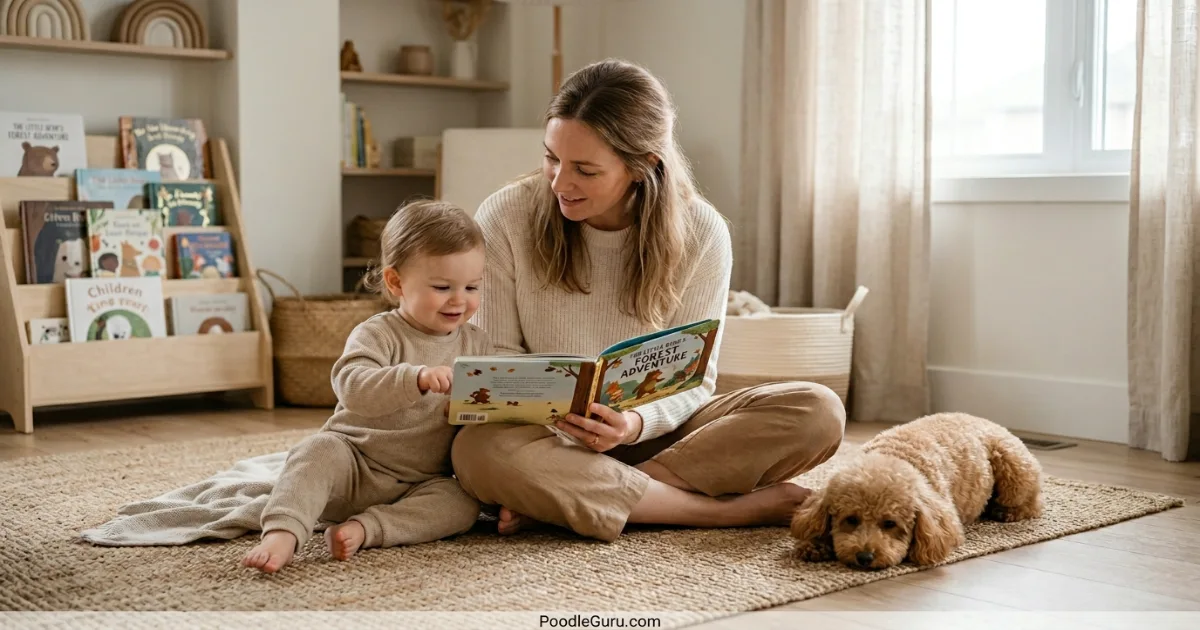
When parents research “Poodle with babies and toddlers,” they often overlook the enormous difference size makes. A Toy Poodle weighs under 6 pounds, has delicate bones, and can be seriously injured by an enthusiastic hug or a clumsy fall. Conversely, a Standard Poodle can reach 70 pounds of lean muscle, and a happy tail wag at toddler face height can sting. Understanding this spectrum is not about dismissing any variety; it’s about choosing realistic management strategies.
| Poodle Size | Weight | Risk with babies/toddlers | Best safety approach |
|---|---|---|---|
| Toy Poodle | 4–6 lbs | High risk of injury to the dog; may bite if frightened | No floor-level access without adult lap supervision; raised safe spaces |
| Miniature Poodle | 10–15 lbs | Moderate risk; still fragile, but slightly sturdier | Always supervise on-ground interaction; teach gentle touch early |
| Standard Poodle | 45–70 lbs | Risk of accidental knocks and overwhelming toddlers | Leash indoors during introductions; train calm greetings; provide child-free zones |
Preparing your Poodle before the baby arrives
Proactive preparation reduces anxiety for everyone. Start these adjustments at least three to four months ahead of your due date.
- Sound desensitization. Play recordings of baby cries, coos, and white noise at a low volume, gradually increasing while pairing with treats or calm praise. Your Poodle learns that infant sounds predict good things.
- New rules, new routine. If the nursery will be off-limits, install a baby gate early and reward the dog for relaxing on the other side. Practice abbreviated walks at times that will match your post-baby schedule.
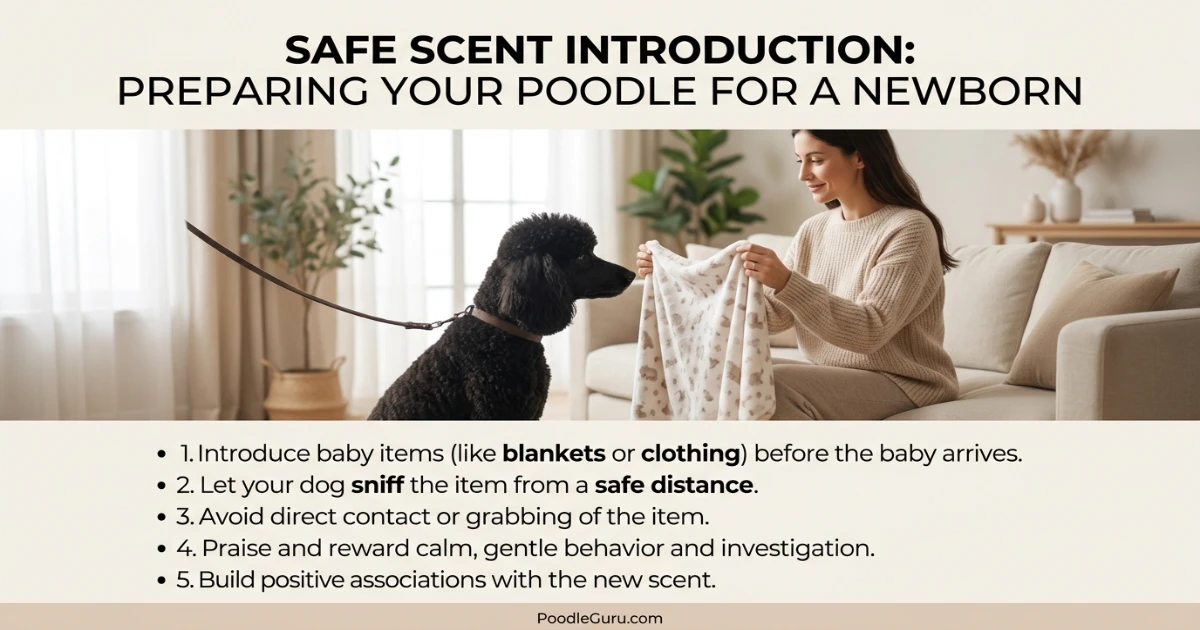
- Scent introduction. Before leaving the hospital, send home a blanket with the baby’s scent. Let the Poodle sniff it in a calm environment, then offer a reward. This bridges the unfamiliar smell with positive experience.
- Refine obedience. A reliable “down-stay,” “go to your mat,” and “leave it” are non-negotiable safety tools.
Expert Insight: The single most dangerous myth is that a dog who “loves” the baby will never bite. Even the gentlest Poodle can react when startled from sleep, injured, or pushed beyond their stress threshold. Bites in infants often occur without warning because parents miss subtle signals.
Step-by-step: How to safely introduce your Poodle to a newborn
The first meeting sets the emotional tone. Rushing it can create lasting anxiety. Follow this deliberate, step-wise process.
1. Create a calm homecoming
Have someone else hold the baby in another room while you greet your Poodle with genuine warmth. You’ve been away; the dog needs to reconnect with you without the baby as an immediate distraction. Take a few minutes to let the dog settle.
2. Distance sniffing first
Bring the dog into the room on a loose leash. Keep the baby in a parent’s arms, at least six feet away. Reward calm looking and any disengagement. If the dog pulls or whines, increase distance and wait for relaxed body language.
3. Parallel walking
Have one parent walk the poodle on leash while the other holds the baby, moving in the same direction at a comfortable distance. This mimics pack movement and builds a low-pressure bond.
4. Brief close contact
Once the dog remains relaxed, allow a few seconds of gentle sniffing near the baby’s feet (not face). Keep the leash loose but short. End the interaction before excitement builds. Repeat over days, not hours.
Teaching toddlers to respect the family Poodle
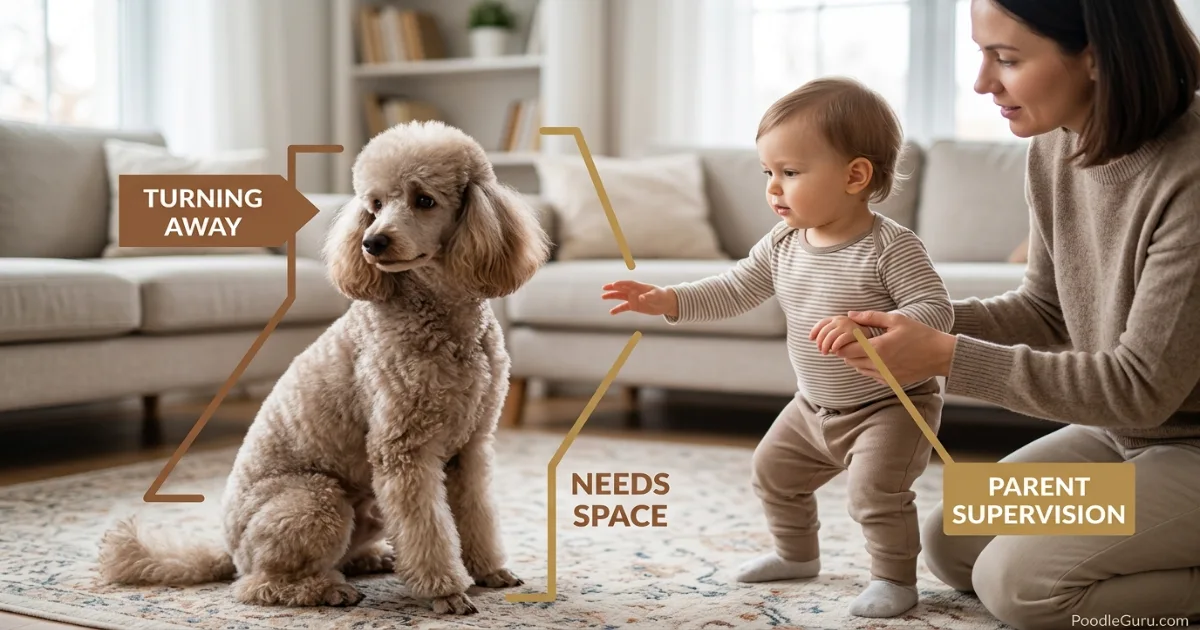
Toddlers are wonderfully chaotic. They grab fur, shriek, and run — all of which can overstimulate a sensitive dog. The child must be taught as intentionally as the dog. Use simple, consistent language: “gentle hands,” “doggy says no thank you when he walks away,” and “we never touch the dog when he’s on his bed.” Model the behavior yourself by showing soft petting on the dog’s side, not head, and by backing off when the dog shows avoidance signals.
Never force a child to pet the dog, and never force a dog to tolerate clumsy hands. Mutual consent is the goal. A Poodle that learns that walking away is respected becomes less likely to escalate to a growl or snap.
10 golden rules for peace and safety
- Active supervision means eyes on both child and dog, always.
- Provide your Poodle with a safe, child-free zone (crate or gated room).
- Never allow face-to-face contact between dog and infant.
- Recognize early stress signals: lip licking, yawn, stiff posture, whale eye.
- Exercise your Poodle before toddler playtime to reduce excitability.
- Keep treats handy to reward calm behavior near the child.
- No hugging the dog — kids can learn to give gentle side rubs instead.
- Put the dog away during chaotic moments like toddler tantrums or mealtime.
- Regular grooming prevents painful mats that could cause defensive biting.
- Respect the dog’s sleep. “Let sleeping dogs lie” is survival wisdom.
Decoding your Poodle’s body language before a warning becomes a bite
Most bites to children happen because adults missed the whispers a dog gave for weeks. Poodles signal discomfort in ways that are easy to misinterpret as cute or sleepy. Watch for these signs when the baby or toddler is nearby:
- Yawning when not tired. A stress yawn often appears when the child comes too close.
- Lip licking or tongue flick. Anxiety indicator, not hunger.
- Whale eye. The dog turns its head away but shows the whites of the eyes. Means “I need space.”
- Tucked tail or stiff posture. Fear or arousal about to tip over threshold.
- Moving away, leaning away. The clearest request for distance. Honor it.
When you see any of these, calmly call the dog away to a safe spot and praise them for leaving. This builds trust and teaches the dog that you will protect them from the child, so they don’t have to escalate.
Common mistakes even thoughtful parents make
Love makes us optimistic. That optimism leads to three recurring errors. First, assuming a bomb-proof temperament in puppyhood: adolescent Poodles often go through a skittish phase between 8 and 18 months, coinciding perfectly with a toddler’s most boisterous era. Second, punishing a growl. A growl is communication. If you scold a dog for growling, you remove the warning system and may get a bite without notice next time. Instead, thank the growl, remove the stressor, and analyze the trigger. Third, over-relying on the dog’s “good nature” and under-managing the environment. Baby gates, exercise pens, and structured downtime are not signs of failure; they are signs of a responsible home.
Buyer/Owner Alert: If you are considering adding a Poodle to a home with a baby or toddler, select a breeder who raises puppies in a household with children and who performs early neurological stimulation. A rescued adult Poodle can also thrive, but always request a history with children and introduce very gradually. For more on Poodle puppy selection, visit our size and grooming guides.
Health and hygiene: the overlooked safety layer
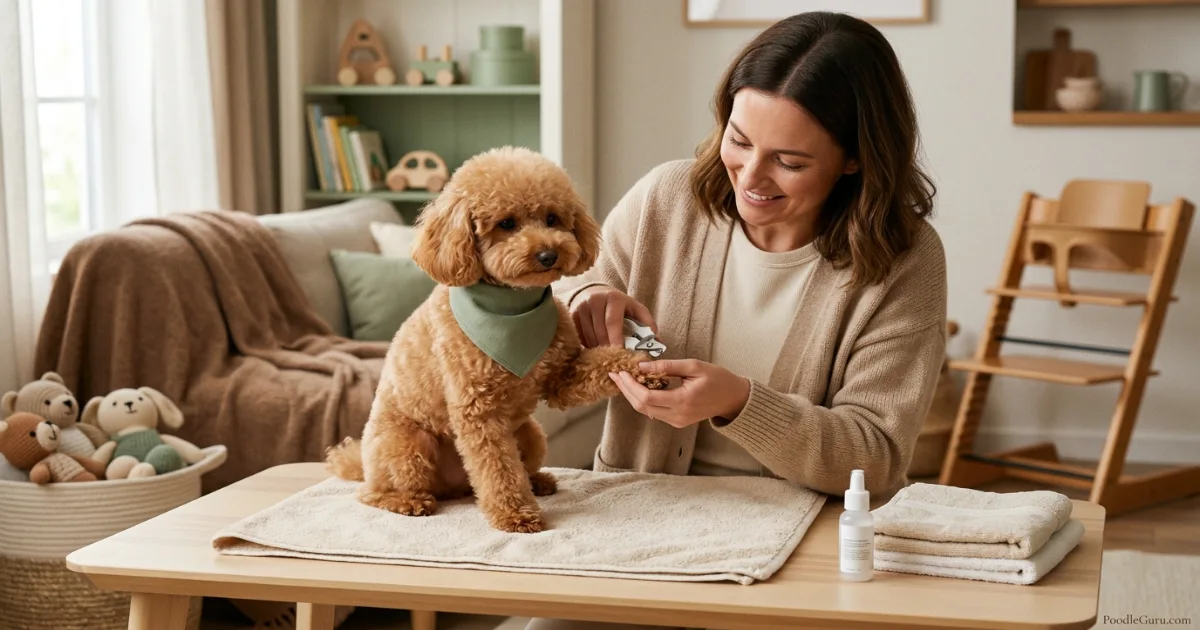
Beyond bites and falls, the intersection of a Poodle and a young child involves hygiene risks that deserve attention. A Poodle’s curly coat can trap food particles or fecal matter after walks. Before any child-dog interaction, quickly check paws and hindquarters. Keep nails smoothly trimmed to prevent scratches on delicate baby skin. Regular grooming is not just aesthetic; a matted coat pulling on the skin can cause chronic pain and lower a dog’s tolerance for touch. If your Poodle suffers from ear infections (common in the breed), pain might make them head-shy and reactive. For detailed coat care, see our Poodle grooming guide.
What to expect as your child grows: a practical timeline
The dynamic shifts dramatically between babyhood and the tornado years. A newborn mostly smells and sleeps; the Poodle can adjust if the introduction is calm. At 6 to 12 months, the baby becomes mobile — pulling up, crawling, and grabbing. This is the highest-risk period for the dog’s stress, because the child is unpredictable and face-level with the dog on the floor. Use management heavily. Between 2 and 4 years, children can begin to learn empathy and gentle behavior, but impulse control is still minimal. The Poodle might start to enjoy respectful play, but cues must always be monitored. By school age, many Poodles become a child’s fiercely loyal shadow — but only if the early years were handled with respect.
“But my Poodle is so sweet, he would never…”
Every dog has a bite threshold. Even the softest temperament can be overwhelmed by pain, fear, or prolonged exposure to chaos. The goal is not to test that threshold; it’s to structure life so the dog never reaches it. The parents who succeed aren’t the ones with the “perfect” dog, but the ones who run a predictable, fair, and safety-first household.
Safety references used for this guide
- AVMA dog bite prevention guidance — child supervision, safe petting, and reading dog body language.
- CDC Healthy Pets: Dogs — hygiene guidance after contact with dog saliva, poop, food, toys, and bowls.
- CDC Capnocytophaga information — why bites, wounds, and saliva exposure need caution around vulnerable people.
- AKC Poodle size and breed overview — Toy, Miniature, and Standard Poodle size context.
Frequently asked questions about Poodles and young children
Are Poodles safe for newborns?
With strict supervision and proper preparation, Poodles can coexist safely with newborns. The key is gradual introduction, never leaving them alone together, and ensuring the dog has a positive association with the baby’s presence.
Can a Toy Poodle live with a toddler?
It’s possible but requires exceptional vigilance. A Toy Poodle’s tiny bones are easily injured, and toddlers lack fine motor control. Many trainers recommend waiting until the child is at least 5 before introducing a Toy Poodle, or strictly managing floor-time access.
How do I stop my Poodle from jumping on my baby?
Teach a solid “four on the floor” greeting. Use a leash indoors when the baby is on a playmat, and reward the dog for sitting calmly. Jumping often stems from excitement; a pre-meeting walk helps drain that excess energy.
Do Poodles get jealous of new babies?
They can show behaviors that look like jealousy—such as attention-seeking, pushing between you and the baby, or guarding. This is usually anxiety about resource loss. Maintain one-on-one time with your Poodle and create predictable routines to ease the transition.
What is the best Poodle size for families with toddlers?
Many families find the Miniature or Standard Poodle works well, depending on lifestyle. Standards are sturdy but can knock over small children; Miniatures are less fragile than Toys but still need careful handling. The real best choice is the individual dog’s temperament.
Should I let my Poodle lick my baby’s face?
No. While the risk is low, dog saliva can carry bacteria like Capnocytophaga. For newborns and infants with developing immune systems, it’s wisest to keep dog licks away from faces, hands, and broken skin.
How can I tell if my Poodle is stressed around my child?
Look for whale eye, excessive yawning, lip licking, tucked tail, stiffening, or moving away. Any of these signals means the dog needs space. Remove the child or the dog from the situation calmly and reward the retreat.
At the heart of it all
Living with a Poodle and a baby or toddler is not about finding a flawless dog. It’s about building a home where both can feel safe, heard, and cherished. When you honor the dog’s needs for quiet, consistency, and respect, you unlock the extraordinary bond so many Poodle families describe—a child who grows up with a wise, curly guardian who steals their socks and their heart. Manage wisely, supervise relentlessly, and let the relationship unfold at the speed of trust.