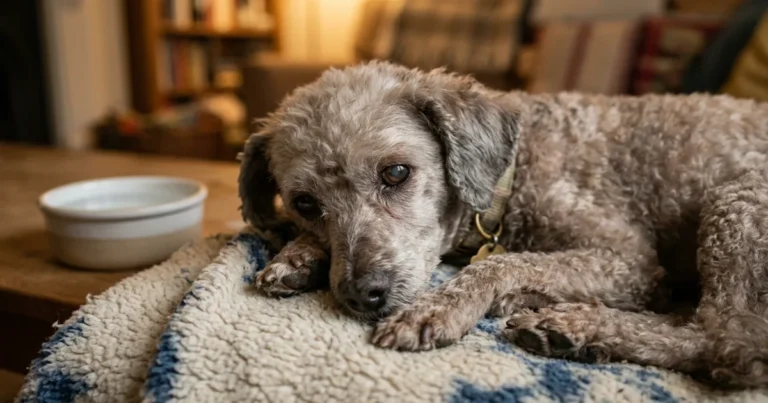
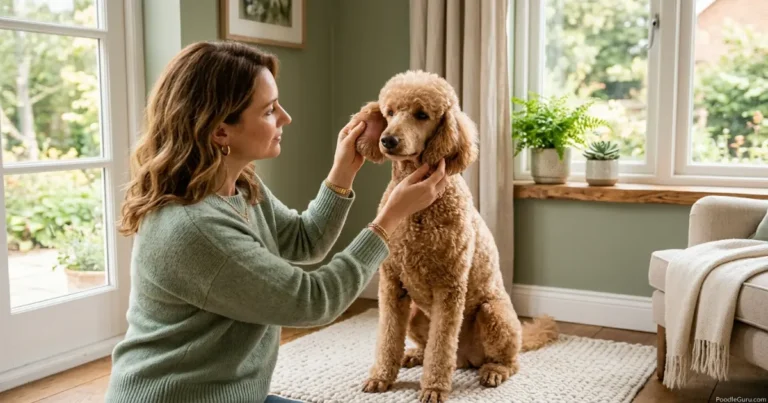
Poodle Weight Loss Plan: Step-by-Step Guide to Safe Slimming
Helping your poodle lose weight isn’t about starving them — it’s about creating a safe calorie deficit with a precise, poodle-specific plan. Our step-by-step guide walks you through calorie targets, smart food swaps, and the gentle exercise that protects their joints while the pounds come off.
Quick Answer
The most effective poodle weight loss plan starts with an honest body condition check, then calculates your dog’s daily energy needs from their ideal weight — not their current overweight number. You’ll use measured portions, choose a high-protein weight-management food when appropriate, remove hidden snack calories, and add consistent low-impact exercise. Many overweight dogs can safely lose about 1–2% of body weight per week under veterinary guidance, while very obese or medically complex dogs may need a slower pace. Never slash calories without professional guidance, as overly rapid weight loss can strain the liver, reduce muscle, and make your poodle feel unwell.
Is Your Poodle Overweight? The PoodleGuru Body Condition Check
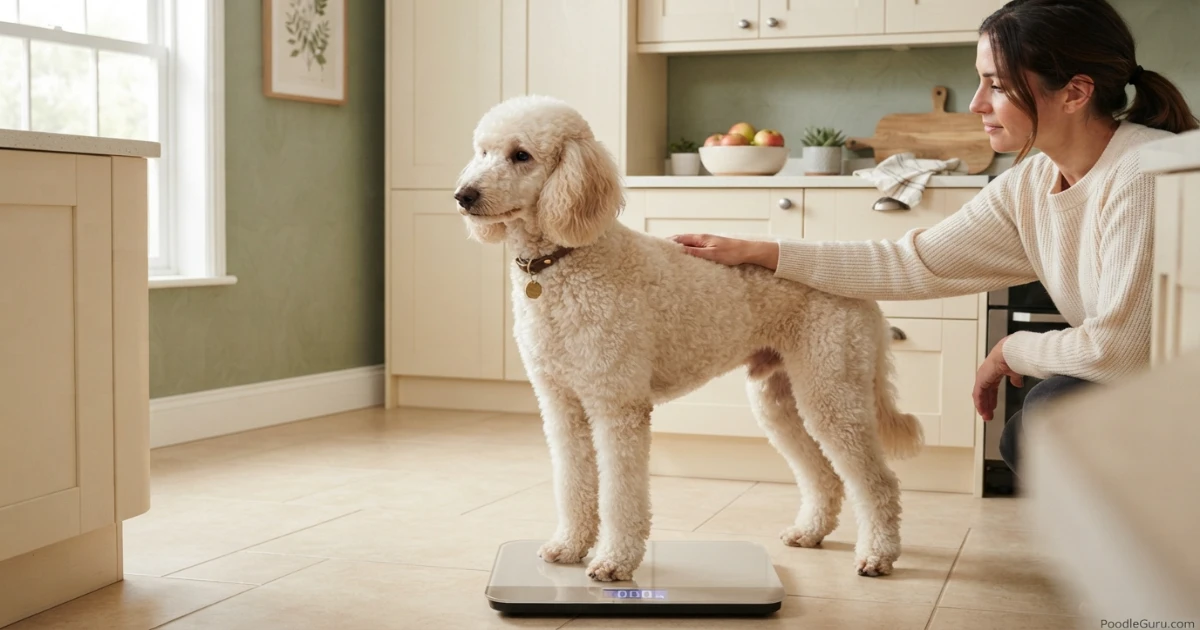
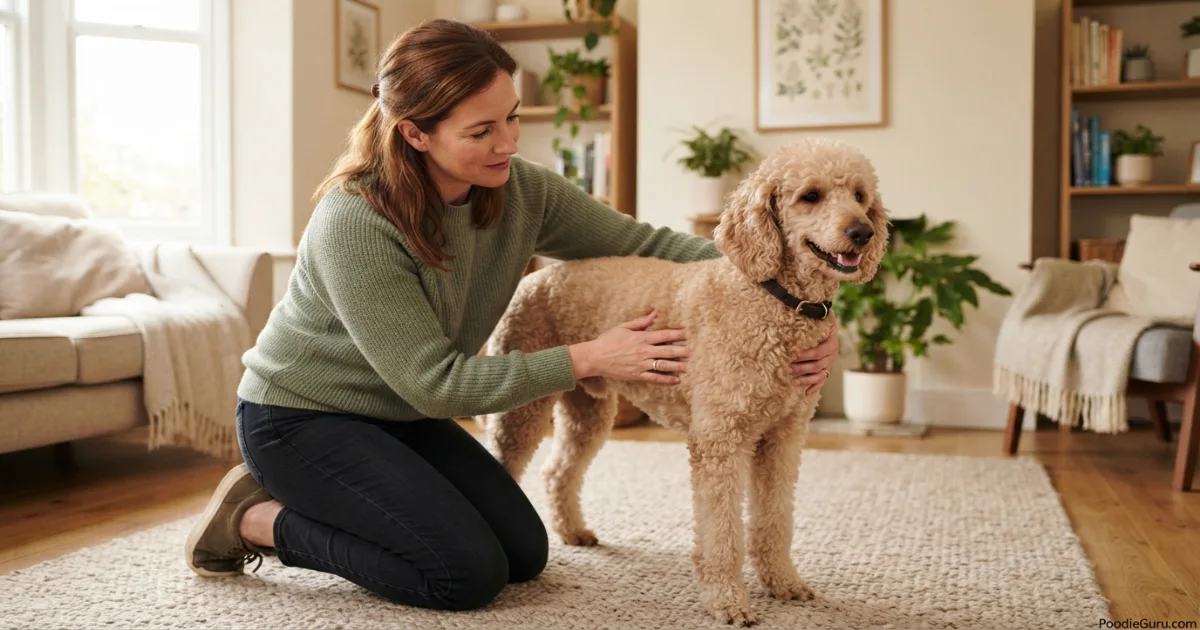
Poodle weight gain can be deceiving. That thick, curly coat hides the waistline far better than a short-haired breed. You can’t rely on the scale alone; you need to feel your dog’s body.
At PoodleGuru, we adapt the veterinary Body Condition Score (BCS) specifically for poodles. Run your hands along your poodle’s ribcage with the coat flattened. You should feel each rib with a thin layer of fat — like the back of your hand. If you have to press to find ribs, your poodle is overweight. From above, a healthy poodle shows a clear waist indentation behind the ribs. From the side, the belly tucks up noticeably.
Veterinary nutrition teams commonly use Body Condition Score together with muscle condition checks because weight loss should reduce fat while protecting lean muscle. That matters for poodles, especially seniors and Standards with joint strain.
| BCS Score | What You Feel & See on a Poodle | Verdict |
|---|---|---|
| 1–3 (Too Thin) | Ribs easily visible, hip bones prominent even through coat, severe waist tuck | Underweight — needs medical attention |
| 4–5 (Ideal) | Ribs felt with light pressure, visible waist from above, belly tucks up when viewed from side | Healthy weight |
| 6–7 (Overweight) | Ribs feel padded, waist barely visible or absent, belly tuck slight or absent | Overweight — time to start a plan |
| 8–9 (Obese) | Ribs cannot be felt, fat deposits over back and tail base, no waist, belly distended | Obese — significantly increased health risks |
A Toy Poodle may only need to lose 0.5–1 lb to get back to ideal, while a Standard Poodle might carry 5–10 lbs of extra weight. Small numbers make a huge difference in tiny dogs — one extra pound on a Toy is equivalent to roughly 10–15% of their body weight.
When in doubt, ask your veterinarian to assign a body condition score. They can also check for underlying medical issues like hypothyroidism that cause weight gain. The VCA explains that obesity shortens lifespan and worsens arthritis — early action prevents years of discomfort.
Why Poodles Gain Weight: Breed-Specific Risks
Poodles aren’t a naturally chubby breed. Their weight gain almost always has an environmental cause. The three most common we see: sneaky overfeeding, too many treats, and under-exercise.
Smaller poodles — Toys and Miniatures — burn fewer calories at rest. A single extra tablespoon of peanut butter for a Toy Poodle is the calorie equivalent of a human eating an extra muffin every day. It adds up fast. Many owners also underestimate how much the poodle coat conceals. A fluffy dog looks the same until they step on the scale. And then there’s the human factor: poodles are masters at training their owners to hand over food. Those intelligent, expressive eyes can guilt-trip even the most disciplined person.
What about spaying or neutering? The procedure does slightly lower metabolic rate, but it doesn’t cause obesity. Overfeeding after the surgery does. Adjust portions by roughly 10–15% after your poodle is sterilized and monitor their weight monthly.
The PoodleGuru LEAN Weight Loss Framework
We designed the PoodleGuru LEAN Framework to give owners a repeatable, four-step system that works with a poodle’s clever nature — not against it. This isn’t a crash diet. It’s a lifestyle reset you can follow until your dog hits their goal, then maintain for life.
Look at Calories Honestly
Write down everything your poodle eats in a typical day — kibble, training treats, table scraps, dental chews, food toppers. Most owners discover an extra 100–200 calories hiding in plain sight. Use the calorie calculator in the next section to find your poodle’s target.
Eliminate Extras, Not Nutrition
Cut out all calorie-dense treats and replace them with low-calorie options: steamed green beans, carrot sticks, or a small portion of your poodle’s measured kibble set aside as “treats.” Your dog cares about the ritual, not the volume. Never drop below 80% of their maintenance calories without vet approval.
Add Movement Gradually
An overweight poodle’s joints are already under stress. Increase exercise by 5–10 minutes per week, focusing on low-impact activities like walking, swimming, or indoor scent games. Short, frequent sessions work better than one exhausting workout.
Note Progress Weekly
Weigh your poodle every Saturday morning and record it. If weight doesn’t drop in two weeks, first confirm that every treat, chew, and topper is being counted; then ask your vet whether a 5–10% adjustment is appropriate. If loss exceeds 2% of body weight per week, add back a small amount of food. Consistency beats intensity every time.
Poodle Calorie Calculator & Daily Targets
Use this formula to estimate your poodle’s weight-loss calorie goal. Start with their ideal weight (not current weight), calculate Resting Energy Requirement (RER), then multiply by a factor for weight loss.
RER = 70 × (ideal weight in kg)0.75
For many supervised weight-loss plans, RER at the ideal weight is used as a cautious starting target, then adjusted from weekly weigh-ins. This is not a prescription; your veterinarian may set a higher or lower target based on age, neuter status, activity level, and medical history. For quick reference, the table below gives approximate RER-based starting targets for common poodle sizes at ideal weight.
| Poodle Size | Ideal Weight Range | Daily kcal for Weight Loss | Equivalent in Common Foods |
|---|---|---|---|
| Toy | 4–6 lbs (1.8–2.7 kg) | 110–145 kcal | Small measured portion of weight-management kibble + a few plain green beans if your vet approves |
| Miniature | 10–15 lbs (4.5–6.8 kg) | 215–290 kcal | Measured weight-management kibble split into 2–3 meals |
| Standard | 45–60 lbs (20.4–27.2 kg) | 675–830 kcal | Measured weight-management kibble based on kcal/cup, not cup size alone |
These numbers are starting points. Spayed or neutered poodles often need 10–15% fewer calories. Senior dogs may need slightly less still. Adjust based on actual weekly weigh-ins. The PoodleGuru size chart can help you pinpoint your dog’s healthy adult weight range.
Choosing the Right Weight-Loss Food
The label “weight management” doesn’t automatically mean a food is ideal for poodles. Look for these specific criteria when selecting a diet during the slimming phase.
| Nutrient Feature | Why It Matters for a Dieting Poodle | What to Look For |
|---|---|---|
| High Protein (>30% dry matter) | Preserves lean muscle during weight loss; keeps your poodle feeling full longer | Named animal protein as first ingredient — chicken, turkey, salmon |
| Moderate to Low Fat (8–12% dry matter) | Reduces calorie density without sacrificing satiety | Avoid foods with animal fat or oil listed in the first three ingredients |
| High Fiber (5–10%) | Adds bulk to meals, promoting fullness on fewer calories | Ingredients like beet pulp, pumpkin, or psyllium |
| Added L-Carnitine | May help shift metabolism toward burning fat | Listed in the guaranteed analysis or ingredient panel |
| Joint Support (Glucosamine, Omega-3s) | Protects joints while your poodle becomes more active | Fish oil, glucosamine HCl, chondroitin sulfate |
You can continue your poodle’s current high-quality food and simply reduce the portion, but weight-management formulas make calorie control easier because you can feed a larger volume. Always transition new food over 5–7 days to avoid digestive upset.
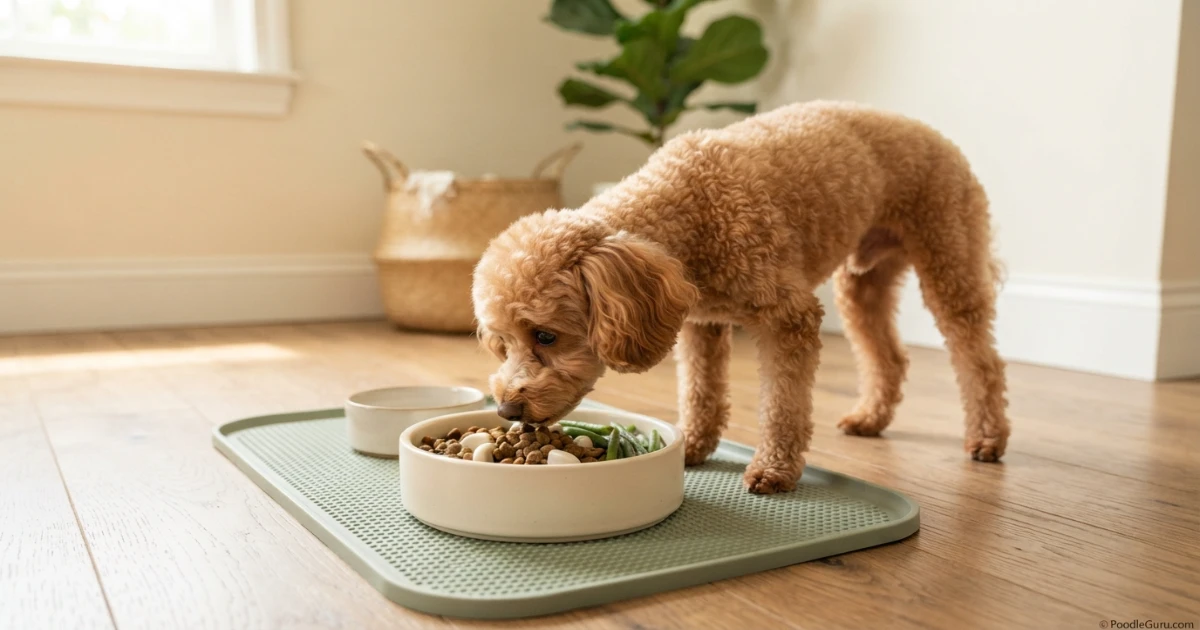
Sample Daily Meal Structure (Not Prescriptive)
This is a template, not a prescription. Your veterinarian should approve the exact calorie target, but here’s how a day might look for a larger Miniature or small Moyen Poodle with a 350 kcal weight-loss goal.
- Morning (7 AM): ¼ cup weight-management kibble + 1 tbsp plain canned pumpkin (not pie filling).
- Midday enrichment: ⅛ cup kibble reserved from daily total, scattered in a snuffle mat for a 10-minute “hunt.”
- Evening (6 PM): ¼ cup kibble + ¼ cup steamed green beans and a small sprinkle of fish oil for joint support.
- Treat allowance: The remaining ⅛ cup kibble used as training rewards throughout the day. No additional food.
Always provide fresh water. If your poodle finishes a meal and acts frantic for more, split the portions into three smaller meals — it tricks the brain into feeling fed without adding calories.
Mistakes That Stall Poodle Weight Loss
Even careful owners fall into these traps. Check your own habits against this list.
| Mistake | Why It Happens | Fix |
|---|---|---|
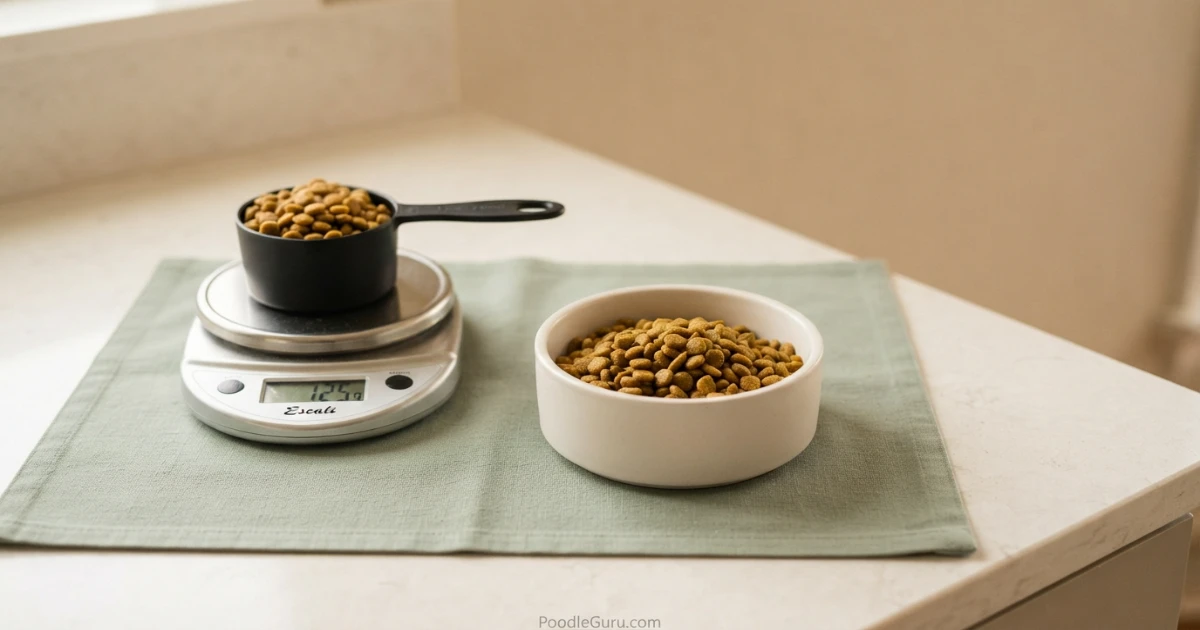
| Using a cup to measure instead of a scale | Kibble density varies; a cup can hold 10–20% more than expected | Weigh food in grams on a kitchen scale for accuracy |
| Counting “just a little” leftovers | Scraps from kids’ plates or licking a yogurt lid add hidden calories | Institute a no-table-scrap rule for all family members |
| Skipping treats but adding dental chews | One large dental chew can have 80–120 kcal — a third of a Toy Poodle’s daily allowance | Check kcal on chews and subtract from daily total |
| Not adjusting for reduced activity | If an injury or bad weather cuts exercise, calorie needs drop | Keep meals measured and subtract any extra treats or chews from the daily budget |
| Relying on “light” food labels without verifying | Some “light” foods have minimal calorie difference from the regular version | Compare kcal/cup on the label; a true weight loss food is usually under 300 kcal/cup |

Safe Exercise for Overweight Poodles
Exercise while overweight requires joint-first thinking. High-impact activities like jumping for frisbees or sprinting on concrete should wait until your poodle is leaner. Start here instead:
- Week 1–2: Two 15-minute leash walks on soft ground (grass, dirt trail). Keep it sniffy and relaxed.
- Week 3–4: Add a 10-minute indoor scent game — hide kibble around a room and let your poodle hunt.
- Week 5+: Introduce gentle hill walking or water wading if your poodle tolerates it. Swimming is ideal.
Watch for fatigue: heavy panting, lagging behind, or lying down mid-walk means you’ve overdone it. Cool down with a slow stroll and always carry water. As weight drops, you’ll notice your poodle’s stamina return quickly.
When to Call a Vet
Important Safety Checkpoints
Contact your veterinarian before starting any weight loss plan if your poodle: is losing weight without an obvious reason (possible illness), has a known medical condition like pancreatitis or kidney disease, shows lethargy or vomiting during diet changes, or hasn’t lost weight after four weeks of strict adherence to the plan. Rapid, unexplained weight loss always warrants immediate investigation.
This guide is educational. A licensed veterinarian should confirm your poodle’s ideal weight, rule out endocrine disorders, and clear them for exercise — especially if your dog is 7 years or older.
Frequently Asked Questions
How fast should my poodle lose weight?
A safe rate is 1–2% of body weight per week. For a 15 lb Miniature, that’s roughly 0.15–0.3 lb weekly. For a 50 lb Standard, about 0.5–1 lb. Faster loss risks muscle wasting and liver stress. If weight drops too quickly, add back a small amount of food immediately.
Can I just feed my poodle less of their regular food?
Yes, if you calculate the precise calorie reduction and the food is nutritionally balanced. However, feeding less volume can increase hunger, leading to begging and counter surfing. A weight-management formula allows a larger meal volume with fewer calories, which helps keep your poodle satisfied.
Are green beans really okay for poodles trying to lose weight?
Plain, steamed green beans are safe and an excellent low-calorie filler. They provide fiber and crunch without adding significant calories. Avoid canned beans with added salt. Introduce them slowly, and never replace more than 10–15% of the daily diet with vegetables to ensure balanced nutrition.
My poodle acts starving all the time on the diet. What can I do?
Split meals into three or four small portions throughout the day. Use puzzle toys and snuffle mats to make eating last longer. Add bulk with green beans or pumpkin. If hunger persists, reassess your calorie target — you may have cut too aggressively. Speak to your vet before significantly increasing food.
Does my poodle need a special weight-loss dog food, or will a “light” food work?
A true weight-management formula is preferable because it is designed with higher protein-to-calorie ratios and often includes L-carnitine. “Light” or “less active” formulas may only have a modest calorie reduction. Always check the kcal per cup and protein percentage to confirm it meets the criteria in our table above.
Can I give my poodle treats while they’re on a diet?
Yes, but they must come out of the daily calorie budget. Single-ingredient treats like freeze-dried chicken (broken into tiny pea-sized pieces) or reserved kibble work best. Avoid biscuits, rawhides, and any treat where the calorie count isn’t listed on the package.
Is it safe for a senior poodle to lose weight?
Yes, but it requires extra veterinary oversight. Senior poodles benefit tremendously from reaching a healthy weight because it eases arthritis pain. However, their calorie needs are lower, and weight loss must be very gradual. A vet should rule out muscle wasting diseases before you start.
Final Summary: Your Poodle Weight Loss Roadmap
Helping your poodle lose weight is one of the kindest decisions you can make. It adds healthy years, eases aching joints, and restores the playful energy you love. Stick to the LEAN framework, measure everything, and celebrate small wins on the scale.
Key Takeaways
- The PoodleGuru LEAN Framework — Look at calories, Eliminate extras, Add movement gradually, Note progress weekly — provides a clear path to safe weight loss.
- Most poodles need a calorie target based on their ideal weight, not current weight, and a high-protein, moderate-fiber diet to preserve muscle while shedding fat.
- Hidden calories from treats, dental chews, and table scraps are the number one reason weight loss stalls. Every calorie must be counted.
- Low-impact exercise like leash walking, swimming, and scent work protects joints while burning calories. Increase activity by only 5–10 minutes per week.
- Weigh your poodle weekly. If no loss occurs in two weeks, recheck measurement accuracy and discuss any 5–10% calorie adjustment with your vet. If loss exceeds 2% of body weight per week, add calories back slightly.
- Always involve your veterinarian before starting, especially for senior poodles or those with health conditions, to rule out medical causes and get a personalized target weight.