This article contains affiliate links. PoodleGuru may earn a small commission if you purchase through our links, at no extra cost to you.
Best Food for Poodles with Sensitive Stomachs
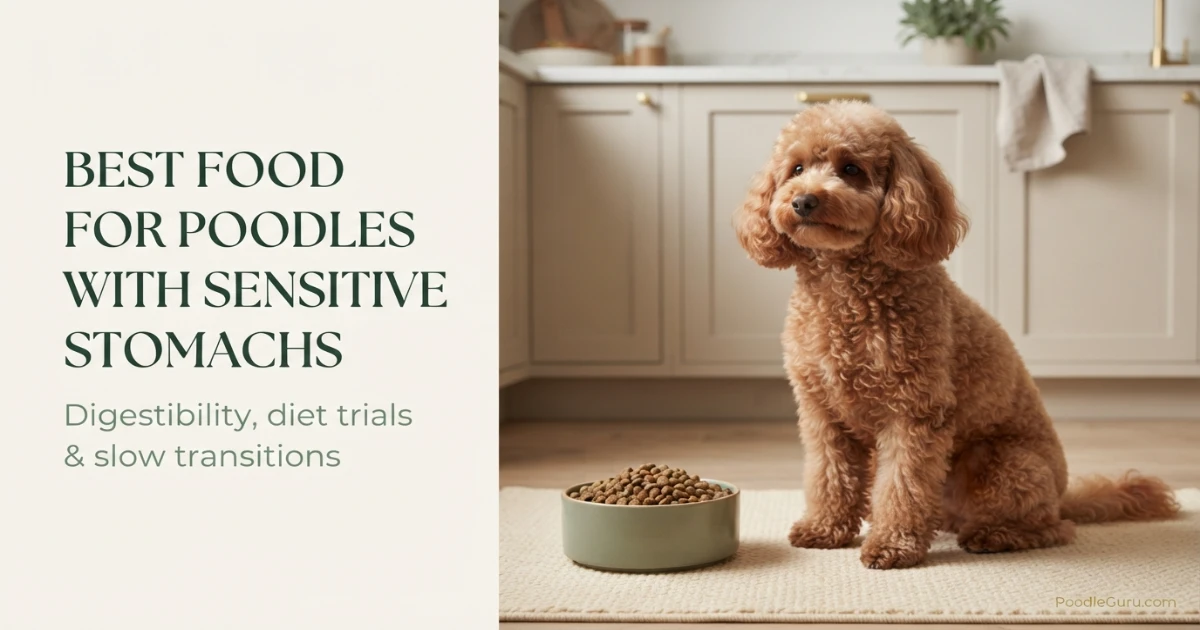
When your poodle’s stomach is upset, mealtime turns into a guessing game. The right sensitive stomach dog food can settle the chaos — but it takes more than a pretty label. Here’s what actually works, how to choose, and the mistakes to avoid.
Quick Answer
The best food for poodles with sensitive stomachs is a complete and balanced diet that your dog can digest consistently without vomiting, loose stools, gas, or appetite swings. For many poodles, that means a single named animal protein, a simple ingredient list, appropriate fat level, and added prebiotic fiber. Some dogs do well on limited ingredient or novel protein diets, while persistent symptoms may require a veterinary gastrointestinal or hydrolyzed protein formula. No single food works for every poodle, so the safest path is vet clearance, a slow transition, and careful stool/appetite tracking.
Quick Facts: Poodles & Sensitive Stomachs
Common Symptoms
Loose stools, vomiting, gas, gurgling stomach, loss of appetite, and occasional regurgitation soon after eating.
Top Triggers
Rich or fatty foods, sudden diet changes, table scraps, specific proteins, stress, parasites, infections, and some additives can all trigger digestive upset.
Size Matters
Toy and Miniature Poodles have small bodies, so vomiting or diarrhea can affect them quickly. Any suspected pancreatitis needs veterinary diagnosis and a vet-directed low-fat plan.
Not Always an Allergy
Many poodles have food intolerances — not true allergies. An elimination diet under vet guidance is the only way to know for sure.
Transition Time
Always switch foods over 7–10 days, gradually mixing old and new. A rushed swap is a top cause of digestive upset.
Vet First
Before changing your poodle’s diet for ongoing symptoms, rule out parasites, infections, pancreatitis, dental pain, medication effects, or inflammatory bowel disease with your veterinarian.
What “Sensitive Stomach” Means in Poodles
A sensitive stomach in dogs is usually a symptom pattern, not a diagnosis by itself. It can show up as intermittent vomiting, soft stools, excessive gas, gurgling, appetite changes, or abdominal discomfort. For poodle owners, this means the goal is not just finding a “gentle” label — it is identifying whether the problem is food intolerance, abrupt diet change, parasites, pancreatitis, stress, dental pain, or another medical issue. The most important thing to understand is that digestive symptoms can mimic food allergies, but a true food allergy requires a structured elimination diet under veterinary guidance.
Many poodle owners report picky eating, soft stools, or sensitivity after rich foods and rapid formula changes. That does not mean every poodle needs a prescription diet. It means your dog needs a calm, evidence-based process: track symptoms, simplify the diet, transition slowly, and involve your veterinarian when symptoms are persistent, severe, or paired with weight loss, lethargy, blood, or repeated vomiting.
Why Poodles Are Prone to Digestive Issues
Poodles can develop digestive problems for many reasons, including individual food intolerance, abrupt diet changes, table scraps, stress, parasites, pancreatitis, and inflammatory bowel disease. Toy and Miniature Poodles deserve extra caution because repeated vomiting or diarrhea can affect small dogs quickly, while Standard Poodles require careful feeding routines because of their deep chest and bloat risk. Any suspected pancreatitis, chronic diarrhea, blood in stool, or weight loss should be handled with a veterinarian before you assume the food is the only cause.
Additionally, many poodles are picky eaters. When they refuse food, owners may switch diets rapidly, add toppers, or offer table scraps — all of which can trigger stomach upset and make tracking symptoms nearly impossible. The solution starts with stability: measured meals, one diet at a time, a slow transition, and a symptom log you can share with your vet.
For more breed-specific health insights, see our comprehensive poodle health guide.
How to Choose a Sensitive Stomach Dog Food for Your Poodle
When you’re standing in the pet store aisle or scrolling through online listings, focus on these five criteria — recommended based on veterinary nutrition guidelines rather than marketing claims.
1. Single, Named Animal Protein
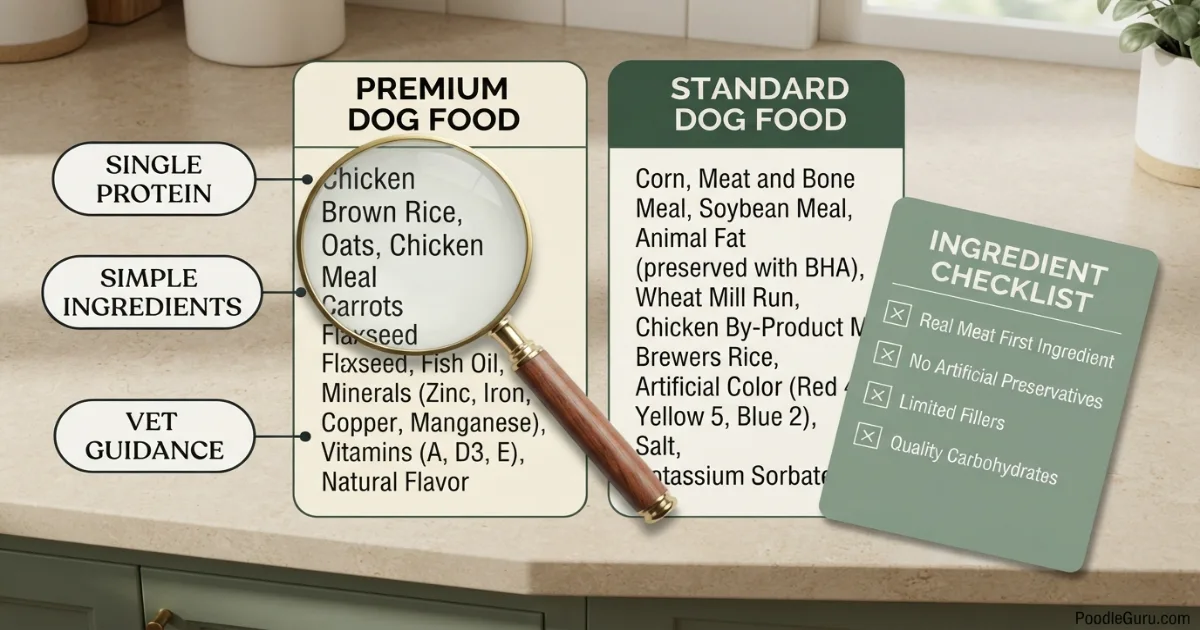
Look for a clearly named protein such as lamb, duck, salmon, turkey, or chicken. A named meal, such as “salmon meal,” can be acceptable because it identifies the source. Avoid vague protein terms that make it hard to know what your poodle is actually eating. A single protein source helps isolate triggers if symptoms flare.
2. Limited Ingredient List
The fewer ingredients, the fewer opportunities for an upset. A true LID formula often contains one protein, one carbohydrate (like sweet potato or rice), and essential fats — nothing more.
3. No Artificial Additives or Fillers
Avoid unnecessary artificial colors, heavy flavoring, and formulas with many extras that make reactions harder to trace. Do not assume grains are the problem unless your vet has evidence for it. A brand that can answer the WSAVA nutrition questions is a stronger starting point than one relying only on “natural” marketing.
4. Added Prebiotics or Digestive Enzymes
Ingredients like beet pulp, chicory root, pumpkin, or dried fermentation products may support stool quality and gut flora. They are not a cure, but they can be useful when the underlying diet is appropriate.
5. Appropriate Fat Level for Your Poodle’s Size
Dogs with a history of pancreatitis or fat-triggered diarrhea may need a lower-fat veterinary plan. Healthy active poodles may tolerate moderate fat, but Toy and Miniature Poodles should not be given rich table scraps or heavy toppers. Always check the guaranteed analysis and ask your vet how to interpret it for your dog.
Diet Types for Sensitive Stomach Poodles: A Comparison
Not all “sensitive stomach dog food” formulas work the same way. The right category depends on what your poodle’s symptoms suggest. Here’s a breakdown of the most common types:
| Diet Type | How It Helps | Best For | What to Look For |
|---|---|---|---|
| Limited Ingredient Diet (LID) | Reduces the number of potential irritants by using one protein and one carb source | Dogs with mild, inconsistent digestive upset; suspected food intolerances | Single animal protein, short ingredient list, no common allergens |
| Novel Protein Diet | Uses a protein the dog has never eaten before to avoid immune reactions | Poodles with suspected food allergies, chronic ear infections, or skin issues | Unusual proteins: venison, rabbit, kangaroo, or duck; no chicken or beef |
| Hydrolyzed Protein Diet | Breaks down proteins into tiny fragments that the immune system doesn’t recognize | Confirmed food allergies or severe IBD; requires a veterinary prescription | Available only through veterinarians; brands like Hill’s z/d or Royal Canin HP |
| Grain-Free Diet | Removes grains, but often replaces them with peas, lentils, or potatoes | Only dogs with a confirmed grain trigger or vet-directed reason | Avoid legume-heavy boutique formulas unless your veterinarian approves the full diet profile |
| Veterinary Gastrointestinal Diet | Formulated for digestibility and specific medical needs | Pancreatitis, severe vomiting/diarrhea, chronic GI disease, or post-illness recovery | Use under veterinary direction; may include adjusted fat, fiber, electrolytes, or hydrolyzed protein |
Many poodles with mild symptoms improve on a carefully chosen limited ingredient or highly digestible diet. Dogs with chronic itching, ear infections, repeated vomiting, bloody diarrhea, weight loss, or suspected pancreatitis need veterinary guidance before diet trial decisions.

The PoodleGuru Sensitive Stomach Food Evaluation Framework
At PoodleGuru, we evaluate sensitive stomach dog food by looking at four layers that matter in real life — not just the marketing. This framework helps you compare any food, whether it’s a vet-recommended brand or an over-the-counter option.
Ingredient Transparency
Does the brand name the exact protein source, such as “deboned lamb” or “salmon meal,” instead of a vague animal source? Does the formula make it easy to identify likely triggers? Outcome: the clearer the label, the easier it is to run a clean diet trial.
Processing & Digestibility
Look for formulas designed for digestibility, stool quality, and consistent nutrient analysis. Check the guaranteed analysis and ask your vet whether the fiber and fat levels make sense for your dog’s symptoms. A food with appropriate prebiotic fiber or tested probiotics gets a bonus point.
Fat-to-Protein Ratio
Review fat level carefully, especially if your poodle has had pancreatitis, greasy stools, or flare-ups after rich foods. For some dogs, a lower-fat diet is medically important; for others, the bigger issue is protein source, fiber, or transition speed. Outcome: the best formula matches your dog’s medical history, not a generic number.
Owner & Veterinary Feedback
Owner reviews can reveal palatability and stool patterns, but they should never outrank veterinary advice, feeding trials, quality-control transparency, and your dog’s response. Outcome: confidence based on evidence plus careful observation, not marketing or panic-switching.
Use this framework every time you consider a new bag or can. It’ll save you from falling for “sensitive stomach” labels that are just marketing.
Common Feeding Mistakes That Worsen Sensitive Stomachs
Even with the perfect food, certain habits can sabotage your poodle’s digestion. These are the missteps we see most often — and what to do instead.
| Mistake | Why It’s a Problem | Fix |
|---|---|---|
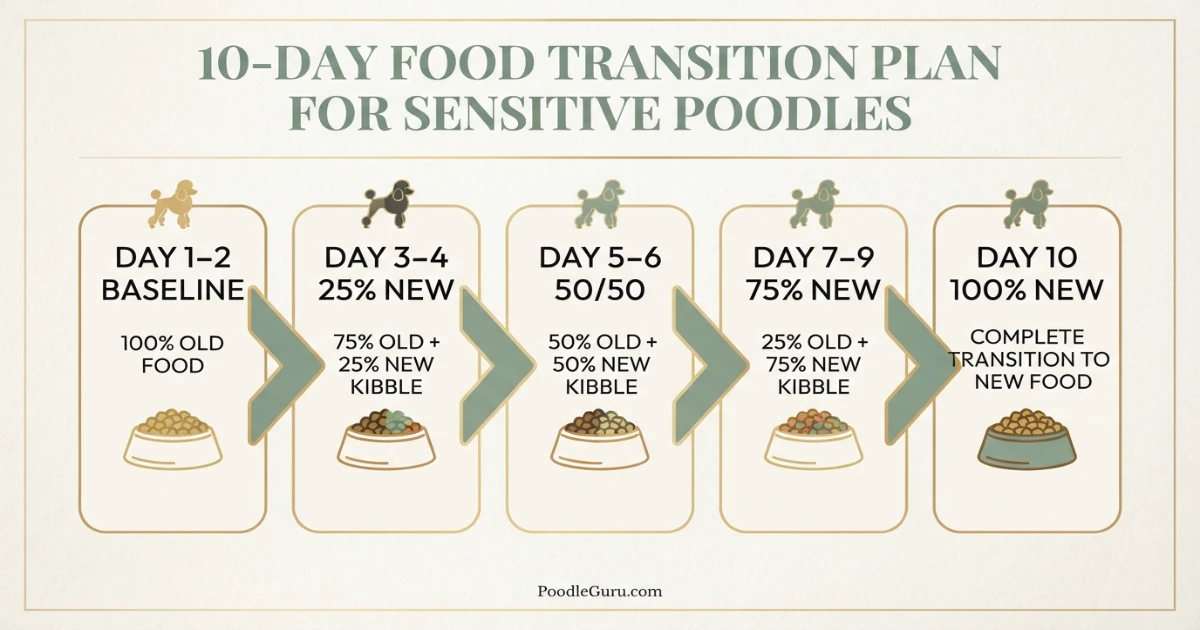
| Switching foods too quickly | Sudden diet changes shock the gut, causing diarrhea even with high-quality food | Transition over 7–10 days: days 1–3: 25% new food, 75% old; days 4–6: 50/50; days 7–9: 75% new; day 10: 100% new |
| Feeding table scraps | Fatty, seasoned, or unfamiliar human foods can trigger pancreatitis or gastritis | Keep human food out of reach; use single-ingredient treats like freeze-dried liver if needed |
| Overfeeding | Even healthy food in excess causes stomach stretching, bloating, and loose stools | Follow the feeding guide on the package, adjusting for your poodle’s activity level and body condition |
| Ignoring concurrent health issues | Parasites, stress, or dental problems can mimic food sensitivity | Always get a vet check before assuming the food is the problem |
| Adding too many supplements at once | Probiotics, pumpkin, and digestive enzymes are helpful, but piling them on confuses the gut | Introduce one supplement at a time, with a week between additions, to gauge effect |
2026 Price Guide: What Sensitive Stomach Dog Food Costs
High-quality sensitive stomach dog food for poodles usually costs more than basic kibble, but the most expensive option is not automatically the best. Prices below are rough 2026 planning ranges, not guarantees.
Sensitive Stomach Dog Food Price Ranges (2026)
| Food Category | Price per lb (Approx.) | Monthly Cost (15-lb dog) | What You’re Paying For |
|---|---|---|---|
| Over-the-Counter LID/Novel Protein | $3.50–$6.00 | $45–$80 | Single protein, no fillers, prebiotic fiber |
| Premium Fresh/Frozen | $6.00–$10.00 | $80–$130 | Gently cooked ingredients, refrigeration, portioned plans |
| Veterinary Prescription Diet | $5.00–$8.00 | $65–$105 | Hydrolyzed protein, ultra-low fat, therapeutic levels of nutrients |
| Grain-Free LID (Select Brands) | $3.00–$5.50 | $40–$75 | No grains, but watch legume content |
The price difference between a budget kibble and a premium sensitive stomach formula might be $20–$40 per month. For a poodle that’s vomiting or having diarrhea twice a week, that’s a small investment in comfort — and fewer vet bills.
Owner Action Plan: Your First 7 Days of Transition
You’ve picked a promising sensitive stomach dog food. Now, roll it out carefully. This step-by-step plan minimizes digestive backlash while giving you clear checkpoints.
Day 1–2: Confirm Baseline
Record your poodle’s current stool quality, energy, and any vomiting or gurgling. Stop all treats and table scraps. Serve the old food at regular times. Tool: a simple notebook or phone notes app.
Day 3–4: 25% New Food
Mix 25% of the new sensitive stomach food with 75% of the old. Feed small, frequent meals (3–4 times a day) to reduce stomach load. Watch for any softening of stools — slight changes are normal; watery diarrhea is not.
Day 5–6: 50/50 Blend
Increase to half new, half old. Continue frequent meals. If your poodle shows any vomiting or refusal to eat, drop back to the previous ratio for two more days. Slow progress is still progress.
Day 7–9: 75% New Food
Ramp up to three-quarters new food. At this point, you should see formed, firm stools and normal energy. If not, pause and consult your vet — the food might not be the right match.
Day 10 and Beyond: 100% New & Monitor
Full transition. Continue monitoring for two weeks. Keep a consistent feeding schedule and avoid adding any new foods or supplements for at least four weeks to truly assess the diet’s effect.
When to Involve Your Vet
If vomiting, diarrhea, or lethargy persists beyond 48 hours during transition, or if you see blood in the stool, contact your veterinarian immediately. A food change can unmask a deeper issue. For ongoing allergic symptoms like itching or ear infections, VCA Hospitals’ guide to food allergies explains why an elimination diet trial is the gold standard.

Frequently Asked Questions
What’s the best protein for a poodle with a sensitive stomach?
There is no single best protein for every sensitive poodle. A novel protein such as duck, venison, rabbit, or fish may help if your dog has reacted to common proteins before. Start with one protein only and track symptoms, but ask your vet about an elimination diet if allergies are suspected.
Can I feed my poodle grain-free sensitive stomach dog food?
Only if grains are a confirmed trigger or your veterinarian recommends it. Grain-free is not automatically easier on digestion, and the FDA has investigated reports of canine dilated cardiomyopathy in dogs eating certain diets, many labeled grain-free and high in peas, lentils, legumes, or potatoes. Discuss the full formula with your vet, especially for Standard Poodles.
How do I know if my poodle has a food allergy or just a sensitive stomach?
Food allergies often include skin or ear signs such as itching, recurrent ear infections, or paw licking, sometimes alongside digestive upset. A sensitive stomach may show mostly gastrointestinal symptoms. The most accurate diagnosis is a strict veterinary elimination diet trial, often using a novel or hydrolyzed protein diet.
Is wet or dry food better for sensitive stomach poodles?
Both can work. Dry food is convenient and can be easier to measure, while wet food adds moisture and may help picky or nauseous dogs. For many poodles, a combination works well — just keep formulas consistent, measure calories, and transition slowly.
Can I make homemade sensitive stomach dog food for my poodle?
Yes, but only with a nutritionally complete recipe formulated by a veterinarian or board-certified veterinary nutritionist. Short-term bland diets may help during a brief flare-up when your vet recommends them, but chicken and rice is not complete for long-term feeding.
What if my poodle refuses to eat the new sensitive stomach food?
Warm the food slightly or mix in a small amount of warm water to release aroma. Do not add rich toppers during the trial, because that makes results harder to interpret. If your poodle refuses all food, seems nauseous, or shows lethargy, vomiting, diarrhea, or weight loss, contact your vet promptly instead of waiting.
How long does it take for sensitive stomach dog food to work?
You may see firmer stools within 3–5 days, but full gut adaptation can take 4–6 weeks. Give the food at least a month before judging its effectiveness, unless symptoms worsen. Track progress with a daily log.
Final Summary: Key Takeaways
Finding the best sensitive stomach dog food for your poodle is a process of elimination, observation, and patience. Here’s what to remember:
- A poodle’s sensitive stomach may stem from food intolerance, abrupt diet changes, stress, parasites, pancreatitis, or another medical issue — do not assume it is always a simple allergy.
- The ideal diet uses a single, easily digestible animal protein, limited ingredients, and no artificial additives; fat content must be appropriate for your poodle’s size.
- Limited ingredient and novel protein diets can help mild cases; hydrolyzed or veterinary gastrointestinal formulas are best used with veterinary direction.
- Use the PoodleGuru Sensitive Stomach Food Evaluation Framework to compare any food: ingredient transparency, digestibility, fat-to-protein ratio, and real-world feedback.
- Always transition new food over 7–10 days to prevent acute digestive upset, and monitor stool quality throughout.
- When in doubt, involve your veterinarian — persistent vomiting, diarrhea, blood, weight loss, appetite changes, or lethargy can indicate conditions that diet alone will not fix.
Next step: Build your poodle’s complete nutrition plan. Start with our Poodle Nutrition Fundamentals guide for macronutrient ratios and portion control.