Stop Poodle Counter Surfing: Complete Training Guide
Poodle counter surfing isn’t about disobedience — it’s about opportunity. Your clever poodle has figured out that kitchen counters sometimes hold food, and one rewarded attempt can strengthen the habit quickly. This guide walks you through poodle-specific strategies that actually work, starting today.
Quick Answer
To stop poodle counter surfing, combine immediate management (clear counters, baby gates, no unsupervised kitchen access) with consistent training that replaces the unwanted behavior with a rewarded alternative like “go to mat.” Poodles thrive on mental work, so adding puzzle toys and short daily training sessions reduces the boredom that often triggers counter cruising. Punishment almost always backfires with this sensitive breed — positive reinforcement and prevention are the real solutions.
What Is Poodle Counter Surfing?
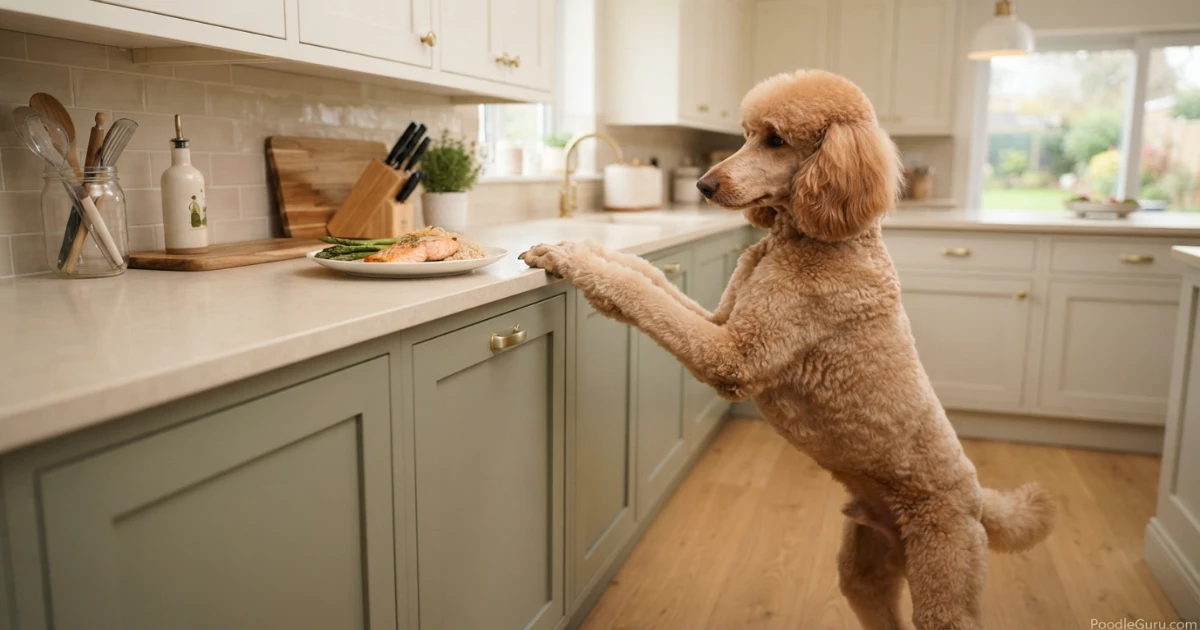
Poodle counter surfing is a common behavior problem where a poodle uses its long legs, athletic jump, and problem-solving intelligence to reach food or objects on kitchen counters and tables. For poodle owners, this means not just lost food but potential toxicity risk from human foods, broken dishes, and a self-reinforcing habit that gets harder to break each time the dog finds a reward. The most important thing to understand is that counter surfing is self-rewarding — every successful raid strengthens the behavior — so management must come before training.
Unlike simple begging, counter surfing happens when you’re not looking. Your poodle waits until the kitchen is empty, then silently rises up on hind legs to scan the surface. Even a crumb can trigger a search pattern that lasts for minutes. Standard Poodles can easily rest their chin on a standard 36-inch countertop. Miniatures need only a nearby chair or a well-timed leap. This isn’t a dog trying to be naughty — it’s an intelligent animal that has learned exactly where good things appear and has the athletic ability to reach them.
The ASPCA describes counter surfing as one of the most common and preventable behavior challenges in dogs, and for poodles, the combination of height, smarts, and food motivation makes the problem feel especially personal.
Why Poodles Are Especially Prone to Counter Surfing
Three things make poodles natural counter surfers. First, their vertical reach. A Standard Poodle standing on hind legs can easily clear 4.5 feet, while a Miniature can climb via chairs or open cabinet doors. Second, their brain. Poodles were bred to problem-solve independently — retrieving ducks from water required spotting, remembering, and navigating obstacles without a handler’s constant instruction. That same cognitive wiring now maps your kitchen counter as a puzzle with a high-value reward. Third, many poodles are genuinely hungry or under-stimulated. A bored poodle will invent its own job, and “counters inspector” is an easy one to create.
Your poodle’s size matters here. A Toy Poodle might never reach a standard counter without help, but a step stool, pushed-out chair, or low coffee table becomes an access point. A Standard Poodle needs no assistance at all — that long muzzle can poke into a butter dish with zero effort. Knowing your dog’s exact physical capabilities lets you set up management that actually works.
The PoodleGuru 4-Step Counter Surfing Reset
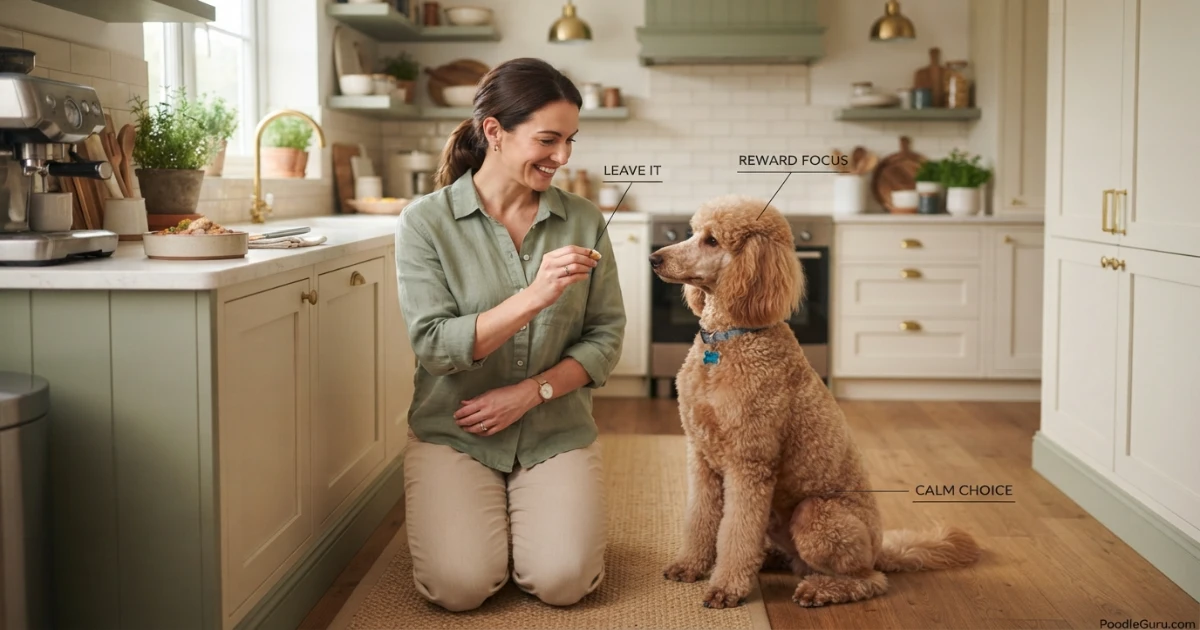
At PoodleGuru, we’ve developed a simple, four-step method that addresses counter surfing at its root — the reward system in your poodle’s brain. This isn’t a quick trick; it’s a reset that builds new kitchen habits. Use it consistently for two weeks, and you’ll see lasting change.
Remove All Counter Food Temptations
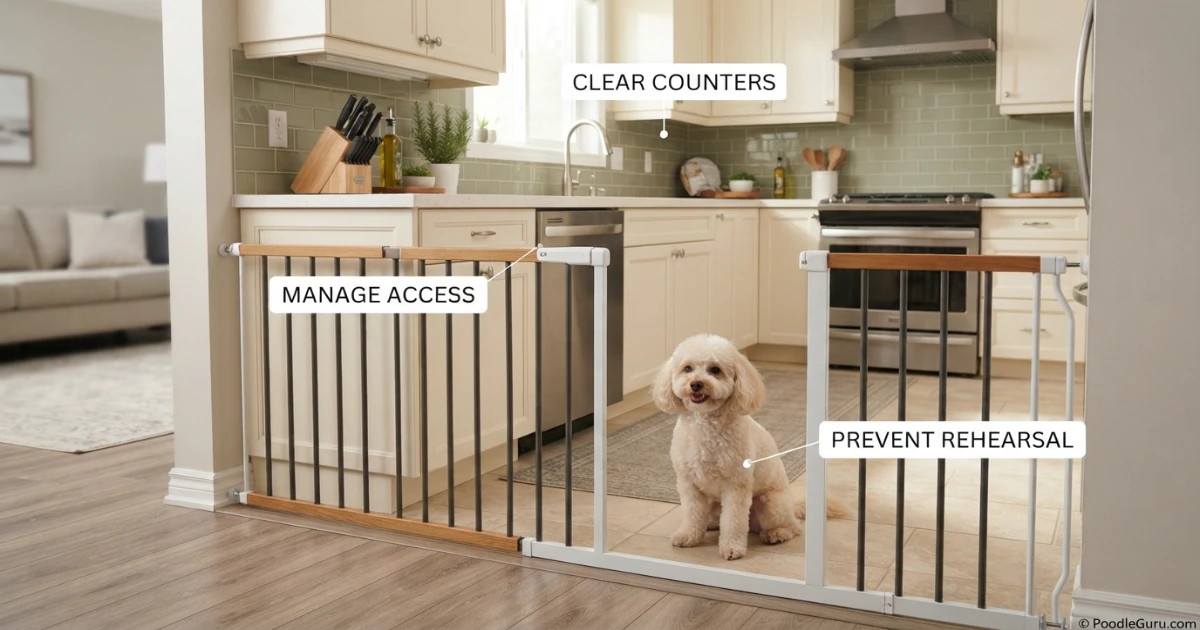
For at least the first week, nothing edible stays on any surface your poodle can reach — not even a fruit bowl or a sealed bread bag. Each time your dog jumps up and finds nothing, the behavior begins to extinguish. This step is non-negotiable. If someone leaves a stick of butter out once, you’ve reset the clock.
Teach “Off” and “Leave It” Separately
Practice these cues away from the kitchen first. “Off” means four paws on the floor. “Leave it” means disengage from the object. Use high-value treats your poodle never gets otherwise — freeze-dried liver works wonders. Train in short 3–5 minute sessions twice a day. Poodles learn fast, but they also get bored fast, so keep it fresh.
Redirect with an Incompatible Behavior
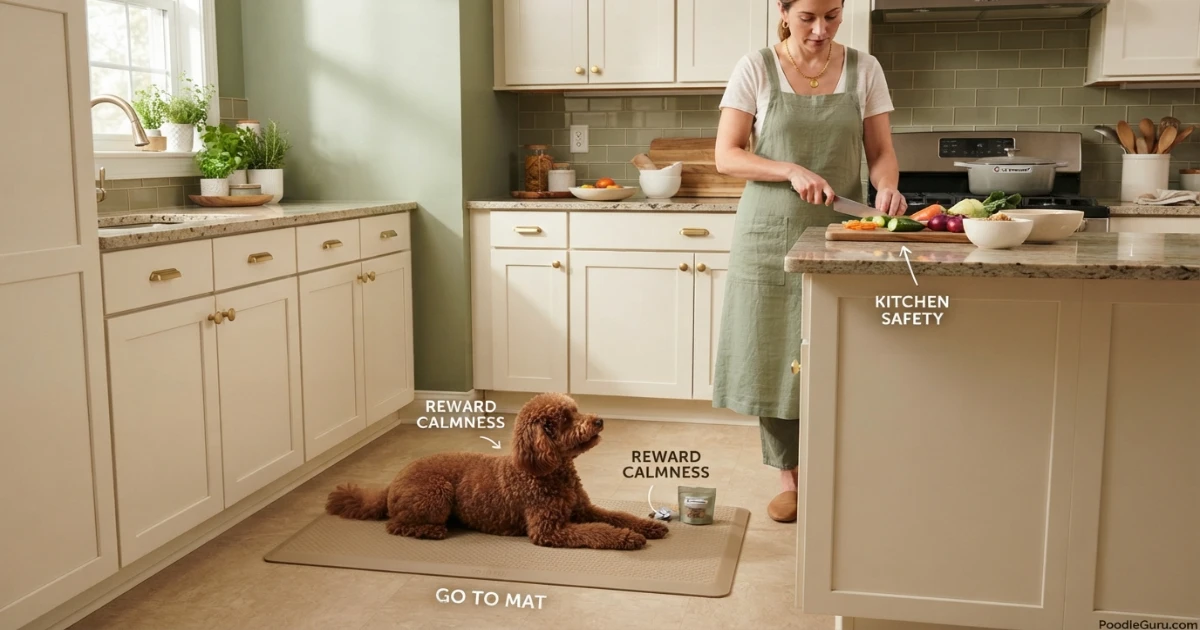
Give your poodle a specific job that makes counter surfing impossible. “Go to your mat” is ideal. Place a non-slip mat six feet from the counter, teach your poodle to settle there on cue, and reward heavily. A poodle lying on a mat cannot simultaneously investigate the counter. Over time, the mat becomes the default kitchen position.
Build Kitchen Calmness Through Gradual Exposure
Once management is solid and the mat cue is reliable, reintroduce low-value items on the counter while you’re present. Practice the mat cue. Reward calmness. Gradually increase the temptation level over days, never correcting for mistakes — just make the desired behavior pay better than the counter ever did. A poodle that chooses the mat over the counter has truly learned the new rule.
For foundational obedience that supports this reset, our complete poodle training guide covers the core cues your poodle needs before tackling counter surfing specifically.
Training Methods That Actually Work for Poodles
Poodles are sensitive to correction and thrive under positive reinforcement. Punishment — yelling, shoving, or startling your poodle off the counter — creates a dog that hides the behavior, not one that stops it. You’ll end up with a poodle who counter surfs when you’re out of the room and then looks guilty when you return. That’s not progress. These methods build trust and lasting habits.
| Tool / Method | How It Helps Counter Surfing | Poodle-Specific Consideration | Best For |
|---|---|---|---|
| “Go to Mat” cue | Teaches an incompatible behavior; a dog on a mat cannot reach counters. | Poodles love having a job. Pair with a specific blanket so the cue travels easily. | All poodle sizes, especially high-energy Standards. |
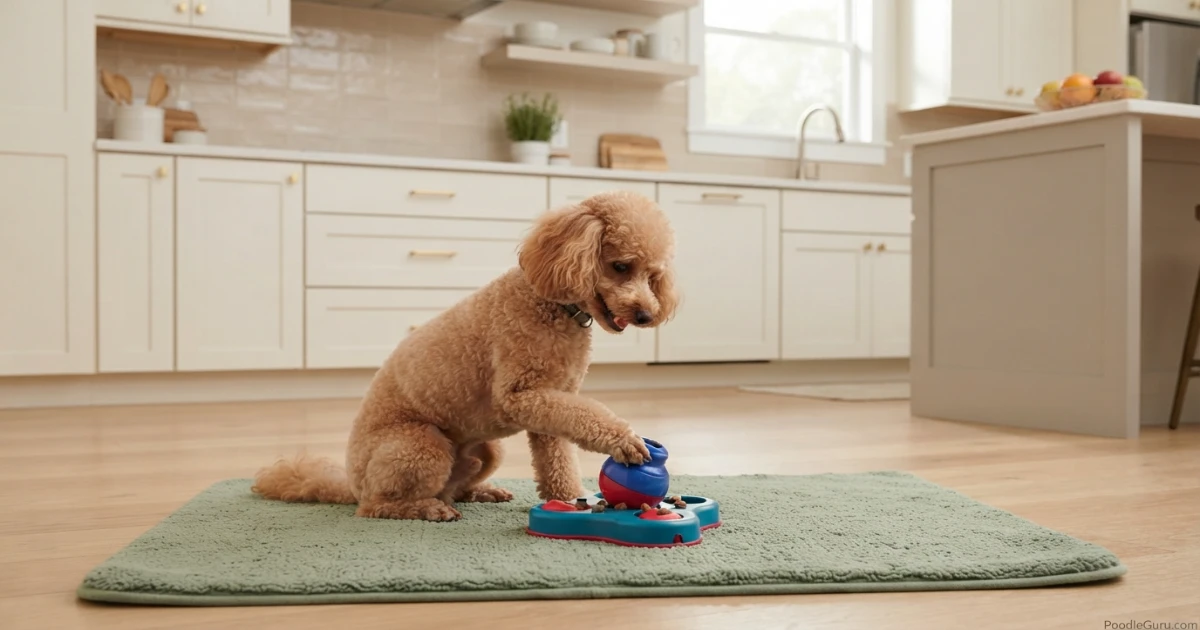
| Treat-dispensing puzzle toys | Provides mental stimulation that reduces boredom-driven surfing. | Poodles solve puzzles quickly; rotate 3–4 different types to prevent boredom. | Intelligent dogs who figure out basic puzzles in one session. |
| Baby gates / playpens | Physically prevents kitchen access during training. | Make sure the gate is tall enough — Standards can jump 4 feet if motivated. | Homes where counters cannot be fully cleared. |
| Management barrier or supervised interrupter | Helps interrupt access during supervised training, but should never replace counter clearing, gates, and rewarded alternative behaviors. | Poodles can be startle-sensitive; avoid anything that creates fear, panic, or avoidance around the kitchen. | Use management first; ask a qualified trainer before using any startling device. |
| “Leave it” with high-value treats | Builds impulse control around food. | Use it proactively — ask for “leave it” before your poodle even considers jumping. | Every poodle, starting from puppyhood. |
All training should use positive reinforcement techniques that strengthen your bond while teaching self-control. Poodles learn fastest when they feel safe and understood.
Common Owner Mistakes That Make Counter Surfing Worse
Even experienced poodle owners accidentally reinforce counter surfing. Spotting these patterns is half the battle.
Expert Insight: The Chase Game Trap
If your poodle snatches something and you chase them across the house, you’ve just turned a food theft into a high-octane game of keep-away. This is wildly reinforcing for a playful poodle. Instead, calmly approach, offer a trade for an even better treat, and practice “drop it.” Every chase you avoid removes one layer of reward from the counter-surfing sequence.
- Leaving food out “just for a moment.” A poodle can clear a turkey sandwich in under three seconds. If it’s on the counter, assume it’s gone the moment you turn your back.
- Yelling or startling after the fact. Punishment delivered even 30 seconds after the act doesn’t connect in the dog’s mind. Your poodle associates your anger with your presence, not the counter.
- Inconsistent rules. If surfing is allowed sometimes — when the food is “safe” or when you’re in a rush — you’ve created a variable reward schedule, the most addictive kind.
- Skipping mental exercise. A tired poodle is less inventive. A bored poodle will create its own entertainment, and counter reconnaissance is a classic choice.
When to Call a Professional Trainer or Behaviorist
Most poodle counter surfing responds well to the reset framework above. But some cases have an underlying layer that requires expert help. Reach out to a certified professional dog trainer or a veterinary behaviorist if:
- Your poodle shows significant anxiety — panting, pacing, whining — specifically around food or kitchen areas, even when no food is present.
- Counter surfing is accompanied by resource guarding (growling, snapping when approached near stolen items).
- You’ve followed a solid management and training plan for four weeks with zero improvement.
- The behavior seems compulsive — your poodle repeatedly checks counters that have been empty for days, unable to settle.
- Your poodle has eaten something dangerous and the risk of repeat ingestion is high.
Ask your veterinarian for a referral to a board-certified veterinary behaviorist or a trainer credentialed through the CCPDT or IAABC. These professionals can rule out medical causes (like constant hunger from endocrine issues) and design a behavior modification plan specific to your poodle’s needs.
Daily Prevention Checklist
Save this routine. It turns counter-surfing prevention into a predictable rhythm.
Morning Reset
Clear all counters before leaving the kitchen — even the fruit bowl. Give your poodle a puzzle toy with a portion of breakfast kibble.
Training Mini-Session
Practice “go to mat” or “leave it” for five minutes during a low-distraction moment. Reward with something special.
Meal Preparation Rule
Poodle stays on the mat or behind a gate while you cook. No exceptions. Consistency builds the habit.
Post-Meal Sweep
Scan counters, tables, and the sink for crumbs, wrappers, or forgotten food before you leave the room.
Evening Enrichment Check
Did your poodle get enough mental work today? If not, a short nose-work game or trick-training session can drain the restless energy that fuels surfing.
Weekly Evaluation
Note any counter-surfing attempts. Are they decreasing? Is a specific surface or time of day a repeat problem? Adjust management accordingly.
Frequently Asked Questions
Why does my poodle only counter surf when I’m not looking?
Your poodle has learned that counter surfing works when you’re absent and that your presence means the behavior gets interrupted or punished. This is classic stealth learning. The fix is management (nothing rewarding stays on counters) plus training that makes the right choice valuable even when you aren’t watching.
Can I use a shock mat or motion-activated alarm to stop counter surfing?
PoodleGuru does not recommend aversive methods for this breed. Poodles are sensitive and can become fearful or anxious with startling deterrents. Physical barriers, management, and positive training are safer and more effective long-term. If a motion-activated pet-safe air spray is considered, monitor your poodle’s stress response carefully and discontinue use at the first sign of fear.
My Toy Poodle can’t reach the counter. Should I still worry about counter surfing?
Yes. Toy Poodles often use chairs, low tables, or even open drawers as stepping stones. They’re also more likely to be accidentally rewarded by food that falls to the floor. The same training principles apply — management and an incompatible behavior will prevent the habit from developing.
How long does it take to stop poodle counter surfing completely?
Many owners notice fewer attempts within a couple of weeks when management is consistent and daily training is short and positive. Full habit change can take several weeks, especially if the dog has been rewarded by counter food many times. The key variable is how reliably food is removed from counters during the reset period.
Does feeding my poodle more food help reduce counter surfing?
Not necessarily. While genuine hunger should be ruled out with your veterinarian, most counter surfing is about opportunity and reinforcement, not insufficient calories. More food without additional mental stimulation will likely just lead to weight gain without changing the behavior.
My poodle counter surfs even after I clear everything. What should I do?
If your poodle still checks empty counters obsessively, the habit may be deeply ingrained or anxiety-driven. Increase mental enrichment — puzzle toys, scent work, trick training — and consult a force-free professional trainer. A veterinary behaviorist can assess whether an underlying anxiety or compulsive component is at play.
Are some poodle colors or sizes more prone to counter surfing?
No. Counter surfing is a learned behavior tied to opportunity, not coat color or size. Standard Poodles may find it easier due to height, but Miniatures and Toys can be equally determined problem-solvers when motivated.
Final Summary: Your Plan to End Counter Surfing
Stopping poodle counter surfing is not about dominance or willpower — it’s about changing the equation in your kitchen. Remove the reward, teach a better option, and stay consistent. Your poodle’s intelligence, which created the problem, will also solve it when you channel it correctly.
Key Takeaways
- Counter surfing is self-rewarding: every successful theft strengthens the behavior, so management (clearing counters, blocking access) must come first.
- Poodles are physically and mentally built for this behavior — their height, athleticism, and problem-solving drive make them especially prone.
- The PoodleGuru 4-Step Reset (remove temptation, teach cues, redirect to mat, build calmness) provides a structured path to lasting change.
- Punishment backfires with poodles; positive reinforcement and an incompatible behavior like “go to mat” are safer, more effective alternatives.
- Daily mental enrichment — puzzle toys, scent work, trick training — reduces the boredom that often triggers counter cruising.
- If the behavior persists despite consistent management and training, or if anxiety or resource guarding appears, consult a certified professional trainer or veterinary behaviorist.