Poodle vs German Shepherd: Size & Family Fit Compared
Poodle vs German Shepherd is a big family-dog decision because both breeds are smart, loyal, and trainable — but they fit very different homes. This guide compares size, temperament, family life, grooming, shedding, exercise, health, and cost so you can decide which breed truly fits your world in 2026.
Quick Answer: Which Breed Is Right for You?
For most families, the poodle offers greater size flexibility — from tiny Toy to large Standard — plus minimal shedding and a playful, people-focused temperament. The German Shepherd is a larger, high-energy guardian that thrives with experienced handlers and sheds heavily. If you want a highly trainable dog that doesn’t leave hair everywhere, a Standard Poodle (or smaller poodle variety) is often the easier family fit. If you need a protective, intense working companion and don’t mind fur tumbleweeds, the German Shepherd may be your match.
In This Guide
- Size & Poodle Variety Breakdown
- Temperament & Family Dynamics
- Grooming & Shedding: A Tale of Two Coats
- Exercise & Mental Stimulation
- Health & Lifespan Considerations
- The PoodleGuru Breed Match Evaluation
- 2026 Cost Guide: Purchase & Lifetime Expenses
- Real-World Living Scenarios
- Myths About Poodles and German Shepherds
- FAQs
Poodle Size Options
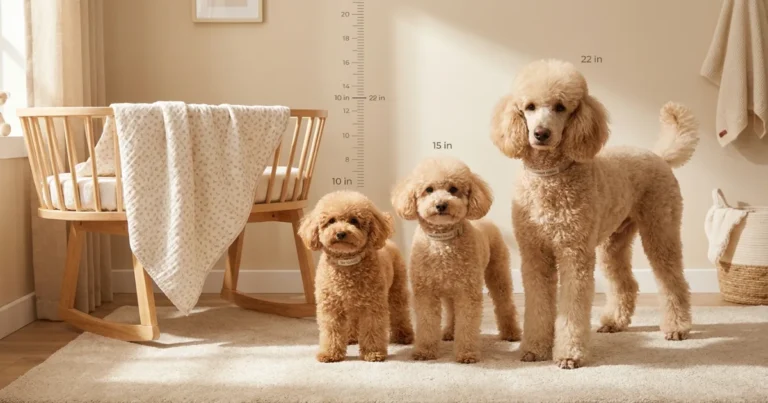
Toy (4–6 lbs), Miniature (10–15 lbs), and Standard (40–70 lbs) give you a weight range almost 20x. A German Shepherd is 50–90 lbs — one size only.
Coat & Shedding
Poodles have hair, not fur. They shed very little, but need regular clipping. German Shepherds shed heavily year-round and “blow” coat twice a year.
Trainability
Both breeds are highly trainable and quick to learn. Poodles usually shine with positive reinforcement; German Shepherds need calm, consistent handling and daily structure.
Size & Poodle Variety Breakdown
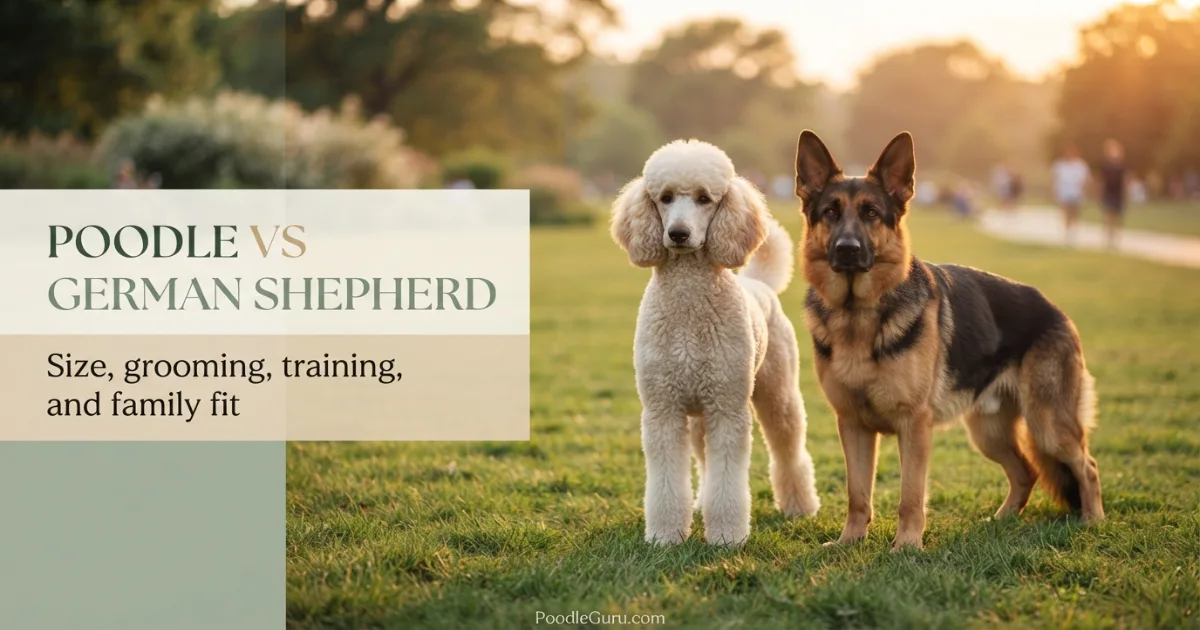
The most immediate difference when comparing a poodle vs German Shepherd is that “poodle” isn’t one size. You can choose a Toy Poodle under 10 inches tall or a Standard Poodle standing over 15 inches at the shoulder. A German Shepherd, by contrast, is always a large, muscular dog — typically 22–26 inches at the shoulder and 50–90 pounds. The AKC breed standard for poodles describes three distinct size varieties, while the German Shepherd Dog standard defines one size with a strong, athletic build.
| Breed | Height at Shoulder | Weight | Space Needs | Good for Apartments? |
|---|---|---|---|---|
| Toy Poodle | Under 10 inches | 4–6 lbs | Minimal; thrives in small spaces | Excellent |
| Miniature Poodle | 10–15 inches | 10–15 lbs | Small home or apartment with daily walks | Very good |
| Standard Poodle | Over 15 inches | 40–70 lbs | Needs room to stretch; daily exercise essential | Possible with sufficient exercise |
| German Shepherd | 22–26 inches | 50–90 lbs | Yard preferred; very active indoors | Not ideal; needs space and outdoor access |
For families in apartments or with young children, a Toy or Miniature Poodle often fits with less risk of knocking over toddlers. The Standard Poodle is comparable in height to a German Shepherd but lighter and more agile. A German Shepherd’s size and protective nature require confident handling; they are not a “starter” large breed.
Temperament & Family Dynamics
Poodles are famously people-oriented, often described as “clownish” and eager to please. They bond deeply with their humans and generally get along well with children and other pets, though smaller poodles can be fragile with rough handling. German Shepherds are loyal and courageous, forming an intense bond with their primary person. They have a natural guarding instinct that, without early socialization, can become overprotective or wary of strangers.
At PoodleGuru, we often see families who want a dog that is affectionate and adaptable — poodles thrive on being included in daily life, whether that’s a lap cuddle or an agility course. German Shepherds need a job; they are happiest with structure, training, and a clear leader. Both breeds are sensitive and do not respond well to harsh corrections, but a German Shepherd’s strong will means training must be consistent from day one.
Grooming & Shedding: A Tale of Two Coats
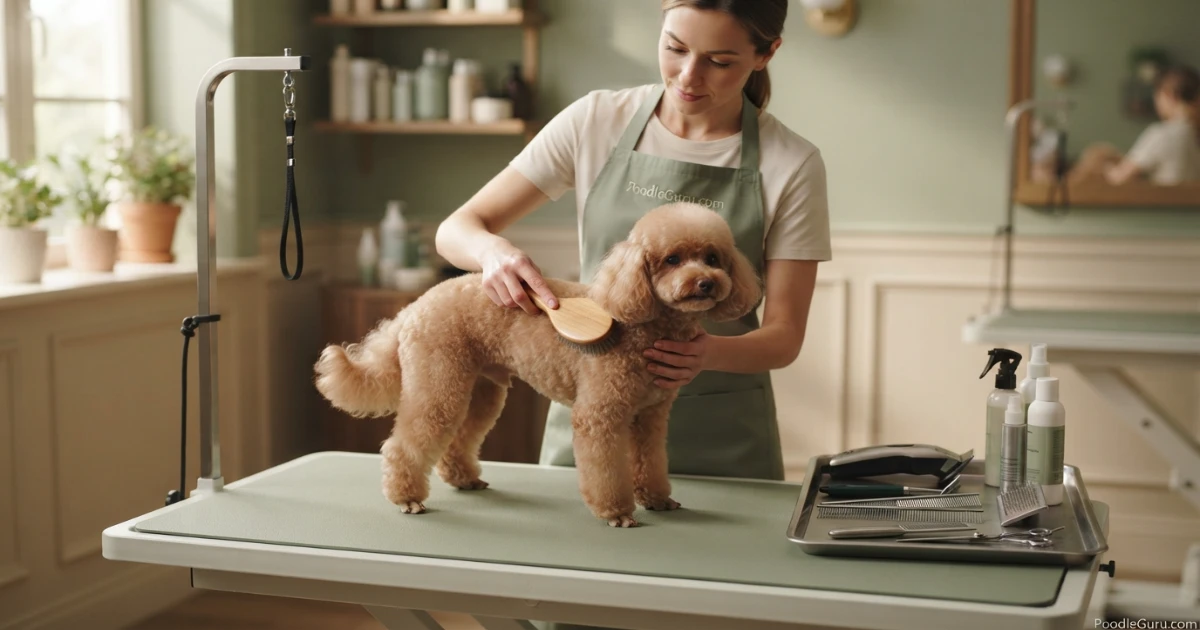
This is where the breeds diverge dramatically. Poodles have a single curly coat that grows continuously and sheds minimally. They require professional grooming every 4–6 weeks, plus regular brushing to prevent mats. German Shepherds have a thick double coat that sheds constantly — heavy year-round shedding with two seasonal “blowouts.” You’ll vacuum often and still find fur on furniture.
For allergy-sensitive homes, a poodle is often the easier choice because the coat sheds less, though no dog is truly hypoallergenic. A German Shepherd’s shedding can be a dealbreaker for families who can’t manage a high-maintenance cleaning routine. On the flip side, poodle grooming costs $75–$150 per session in 2026, while a Shepherd’s home brushing costs mostly tools and time. Our Complete Poodle Grooming Guide breaks down exactly what coat care entails.
Exercise & Mental Stimulation
Both breeds need consistent exercise, but the type differs. A Standard Poodle is an athletic retriever: swimming, fetch, and long walks are ideal. They need 45–60 minutes of activity daily plus mental games. Toy and Miniature Poodles need less physical space — short walks and indoor play often suffice. German Shepherds require vigorous exercise: 60–90 minutes of running, hiking, or focused training. Without it, they can develop anxiety or destructive behaviors.
If you’re a runner or hiker, both breeds can keep up, but the Shepherd’s endurance is higher. For a less demanding exercise routine, a small poodle is the winner. Poodles also excel in dog sports like agility and obedience, which channel their intelligence positively.
Health & Lifespan Considerations
Lifespan varies significantly. Toy and Miniature Poodles often live 12–15 years, sometimes longer. Standard Poodles average 12–13 years. German Shepherds typically live 9–13 years, with many health issues shortening life in poorly bred lines.
| Health Concern | Poodles (Standard) | German Shepherds | Owner Impact |
|---|---|---|---|
| Hip Dysplasia | Moderate risk; responsible breeders screen | High risk; common in many lines | Joint supplements, weight control, possible surgery |
| Bloat (GDV) | High risk in Standards | High risk in deep-chested dogs | Feed small meals, avoid exercise after eating |
| Eye Disorders | Progressive retinal atrophy, cataracts | Pannus, cataracts | Regular ophthalmologist exams |
| Allergies/Skin | Sebaceous adenitis, skin allergies | Atopic dermatitis, hot spots | Specialized diets, medications |
Both breeds benefit from genetic testing and breeder transparency. At PoodleGuru, we emphasize choosing a breeder who provides OFA or PennHIP clearances for hips and elbows, plus eye and cardiac exams. Never buy a puppy without seeing health records.
The PoodleGuru Breed Match Evaluation
We use a straightforward three-step method to help you decide when comparing breeds. Ask yourself these questions honestly — the answers point to your ideal dog.
Define Your Non-Negotiables
Write down three things you absolutely need (e.g., “minimal shedding,” “good with cats,” “fits in an apartment”). Poodles win on shedding and size flexibility; Shepherds often win on protective instinct.
Tool: A simple list on your phone or paper.
Be Honest About Your Daily Routine
How many hours are you away from home? A German Shepherd may develop separation anxiety and destructive chewing if left alone too long. Poodles also need company, but smaller poodles can adapt more easily to apartment life with a dog walker.
Decision point: Can you commit to twice-daily long walks plus training sessions? If not, lean toward a lower-energy poodle variety.
Meet Adult Dogs of Each Breed
Visit a reputable breeder, a poodle rescue, or a German Shepherd rescue. Interact with adult dogs to feel their size, energy, and temperament firsthand. Puppy personalities can change; an adult gives you a realistic preview.
Outcome: A gut check that no article can replace.
2026 Cost Guide: Purchase & Lifetime Expenses
Bringing home either breed is a financial commitment. Here’s a realistic look at 2026 prices.
Price Breakdown
- Toy or Miniature Poodle puppy: $1,800–$3,500 from a health-tested breeder.
- Standard Poodle puppy: $1,500–$3,000.
- German Shepherd puppy: $1,200–$3,000 for well-bred lines; working-line dogs may be less.
- Annual grooming costs: Poodle $900–$1,800 (every 4–6 weeks); German Shepherd $0–$300 (home tools).
- First-year medical & supplies: $1,500–$2,500 for either breed.
Poodles generally cost more in grooming but less in home cleaning (furniture, vacuuming). Shepherds may incur higher orthopedic vet bills over their lifetime.
Real-World Living Scenarios
Scenario A: Suburban Family With Young Kids
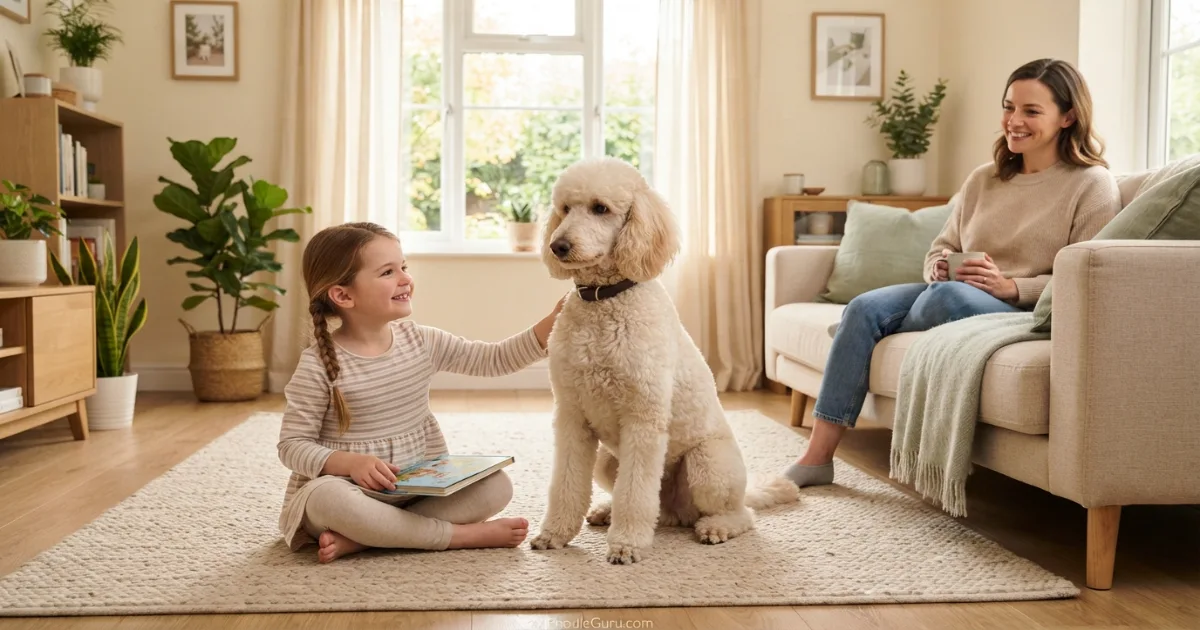
Here, a Standard Poodle often shines. They are sturdy enough to handle gentle roughhousing, don’t shed heavily, and can be trained easily with the whole family involved. A well-socialized German Shepherd can also do well, but parents must supervise carefully and commit to intense early training.
Scenario B: Active Single Owner in a Townhouse
A Miniature or Standard Poodle fits the space without overwhelming it, and you can manage grooming costs. If you’re an experienced dog owner wanting a running partner and guard-dog presence, a German Shepherd can thrive, but the shedding and space needs are real challenges.
Scenario C: Senior Couple Seeking a Companion
A Toy or Miniature Poodle is ideal: portable, affectionate, and low on the exercise demands. A German Shepherd’s strength and exercise needs could overwhelm someone with limited mobility.
Myths About Poodles and German Shepherds
Myth: Poodles are high-strung and snappy.
Reality: Poorly bred poodles can be anxious, but a well-bred poodle from health-tested lines is steady, affectionate, and great with kids.
Myth: German Shepherds are naturally aggressive.
Reality: Aggression stems from poor breeding, lack of socialization, or abuse. A properly raised Shepherd is protective, not aggressive.
Myth: You can’t have a poodle if you’re allergic.
Reality: While no dog is 100% hypoallergenic, poodles produce minimal dander and are often tolerated by mild allergy sufferers.
Myth: German Shepherds are unhealthy by nature.
Reality: Responsible breeding emphasizing health testing produces sound dogs. Avoid puppy mills and backyard breeders at all costs.
Frequently Asked Questions
Which is smarter, a poodle or a German Shepherd?
Both breeds are highly intelligent and very trainable. In practice, a poodle often learns quickly through positive reinforcement, while a German Shepherd excels when given structure, consistency, and meaningful work. The better choice depends on your training style and daily routine.
Can a poodle protect me like a German Shepherd?
Standard Poodles have a strong alert bark and will protect their family if threatened, but they are not natural guard dogs. German Shepherds were bred specifically for protection work and are far more likely to physically intervene. Poodles are better suited as watchdogs, not guard dogs.
Do poodles and German Shepherds get along?
Yes, with proper introduction and early socialization, they can coexist happily. A poodle’s playful nature often meshes well with a Shepherd’s steadiness, though the Shepherd’s herding instinct may need management around smaller poodle varieties.
Which breed is better for first-time dog owners?
Poodles, especially Miniature or Standard, are generally more forgiving for first-time owners. They’re eager to please, less intense, and adapt easily to household routines. German Shepherds require an experienced handler who can provide firm, consistent training and plenty of exercise.
How much does a poodle cost compared to a German Shepherd in 2026?
Purchase prices are similar for well-bred puppies: $1,500–$3,500. However, lifetime poodle grooming costs ($900–$1,800/year) can make poodles more expensive overall. German Shepherds may cost more in orthopedic veterinary care over their lifespan.
Can a Standard Poodle keep up with a German Shepherd in dog sports?
Absolutely. Standard Poodles excel in agility, obedience, rally, and dock diving. They are natural athletes with high endurance, often matching Shepherds in speed and biddability. The poodle’s coat can be clipped for performance, while the Shepherd’s thick coat may overheat in warm climates.
Which breed lives longer?
Poodles, especially Toy and Miniature, often live 12–15 years or more. Standard Poodles average 12–13 years. German Shepherds typically live 9–13 years, with many large-breed health challenges shortening their lifespan.
Key Takeaways: Poodle vs German Shepherd
Your choice should reflect your lifestyle, not just breed admiration. Here’s what matters most:
- Poodles come in Toy (4–6 lbs), Miniature (10–15 lbs), and Standard (40–70 lbs) sizes, offering far more flexibility than a single-size German Shepherd (50–90 lbs).
- Poodles shed very little and need professional grooming every 4–6 weeks; German Shepherds shed heavily year-round but require less professional coat care.
- Both breeds are highly intelligent, but poodles often adapt more easily to varied family structures, while German Shepherds need experienced handling and a job.
- For families with young children, a well-bred Standard Poodle is often a safer, gentler companion than a German Shepherd, though proper socialization benefits either breed.
- Annual grooming costs for a poodle range from $900–$1,800; German Shepherds cost far less at the groomer but more in vacuum bags and fur removal.
- Lifespan: Toy and Miniature Poodles commonly reach 12–15 years; Standard Poodles 12–13; German Shepherds 9–13 years.
The best next step? Contact a reputable breeder for each breed and meet adult dogs in person. Nothing replaces the experience of feeling their energy, size, and temperament firsthand.