Poodle vs Chinese Crested: 7 Expert Care Differences
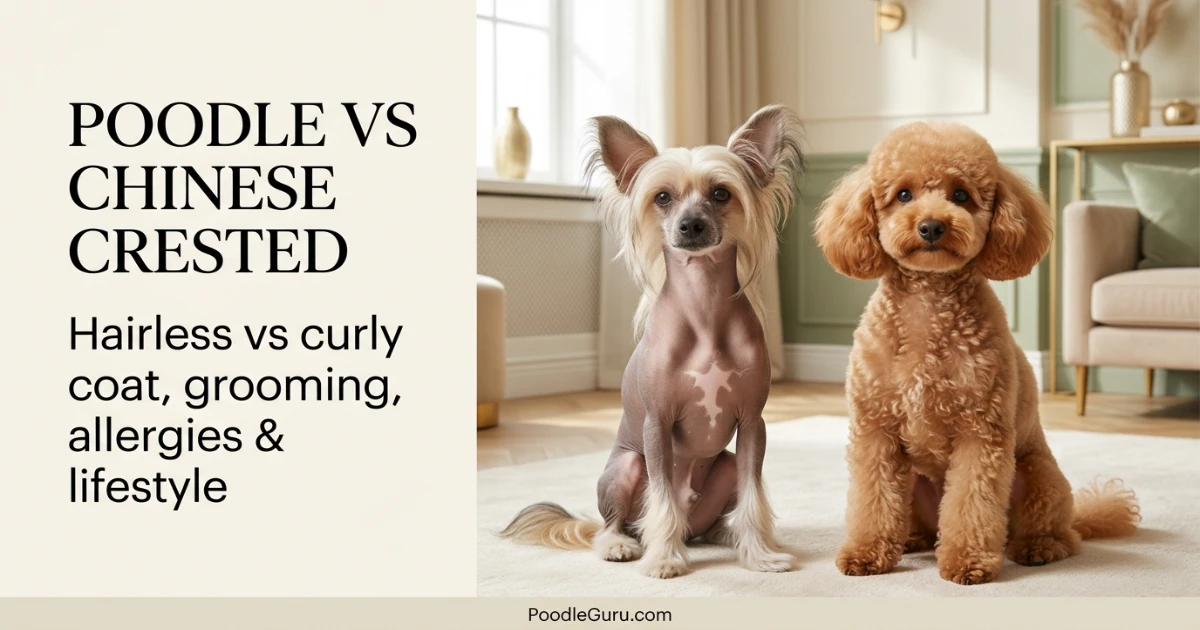
Poodle vs Chinese Crested is one of the most unusual allergy-friendly breed comparisons: one dog is a curly, highly intelligent athlete with a coat that needs professional grooming, while the other is a delicate companion with exposed skin, sun protection needs, and a deeply attached companion personality. If you are choosing between them, this guide helps you compare allergies, grooming, skincare, health, price, training, and family fit before you commit.
Quick Answer
Poodle vs Chinese Crested: choose a Poodle if you want a highly trainable, sturdier companion that excels in training, dog sports, and active family life. Choose a Chinese Crested if you want a devoted lap dog, minimal vigorous exercise, and you are comfortable with routine skincare, sunscreen, clothing, and dental care. Both breeds shed very little, but neither is truly allergen-free; allergy reactions depend on each person and each dog. In 2026, expect to pay $1,500–$3,500 for a well-bred Toy or Miniature Poodle and $1,800–$4,000 for a healthy Chinese Crested from a reputable breeder.
Poodle vs Chinese Crested: 7 Key Differences at a Glance
This comparison is not just fluff versus skin. It is a decision about energy, training, allergy management, grooming tolerance, skincare discipline, health budgeting, and how much dog you want in your daily life.
| Trait | Poodle (Toy/Miniature) | Chinese Crested |
|---|---|---|
| AKC Recognition | 1887 (one of the earliest) | 1991 (Toy Group) |
| Weight | 4–6 lbs (Toy), 10–15 lbs (Miniature) | 5–12 lbs |
| Coat Type | Dense, curly single coat | Hairless (with crest, plume, and bracelets) or fully coated “Powderpuff” variety |
| Shedding Level | Very low — loose hair trapped in curls | Very low — no hair to shed (hairless); Powderpuff sheds minimally |
| Exercise Needs | Moderate to high; thrives on walks, play, and training sessions | Low to moderate; happy with short walks and indoor play |
| Trainability | Exceptionally intelligent and biddable | Intelligent but sensitive; can be stubborn if pushed |
| Best For | Active individuals, families, dog sports, allergy-sensitive homes | Quiet households, seniors, allergy-sensitive homes looking for a calm lapdog |
The AKC Poodle breed page describes poodles as “active, proud, very smart,” while the AKC Chinese Crested breed page notes they are “alert, lively, and affectionate.” Both official descriptions hint at how different these dogs really are under the surface.
Poodle vs Chinese Crested Hypoallergenic Reality
Hypoallergenic is a marketing term, not a medical guarantee. No dog is 100% allergen-free. Allergies are triggered by proteins in dander, saliva, and urine — not just shed fur.
Poodles shed very little because their curly single coat traps dead hair rather than releasing it into the air, which may reduce loose hair and dander spread in the home. Chinese Cresteds, in their hairless variety, have even less hair to trap dander, but their exposed skin sheds dander directly into the environment. For some allergy sufferers, this means a Crested is actually more problematic than a Poodle, especially without frequent bathing. The Powderpuff variety has a soft, silky full coat that sheds minimally, but dander is still present.
The practical takeaway: spend time with adult dogs of both breeds before committing. Allergy reactions are highly individual, and neither breed is a guaranteed solution.
Temperament & Personality Differences
This is where the real fork in the road appears. Both breeds form deep bonds, but they express it very differently.
Poodles are canine intellectuals. They need mental stimulation — puzzle toys, training games, a job to do. A bored Poodle invents its own entertainment, which often involves shredding or barking. They are generally good with children when properly introduced, but Toy Poodles can be fragile and are best suited to homes with gentle, older kids. Poodles are social and tend to be welcoming with strangers once they know their person approves.
Chinese Cresteds are velcro dogs to the extreme. They want to be touching you, preferably inside your sweater. They’re less demanding of structured exercise but more demanding of proximity. Separation anxiety is a genuine risk in this breed — a Crested left alone for long hours may become destructive or self-harming. With strangers, they can be shy or wary, so early socialization matters. They usually do best in a calmer home rather than a noisy household with constant comings and goings.
Grooming & Skincare: Two Totally Different Commitments
This is the practical reality that separates these two breeds more than any other factor.
Poodle Grooming
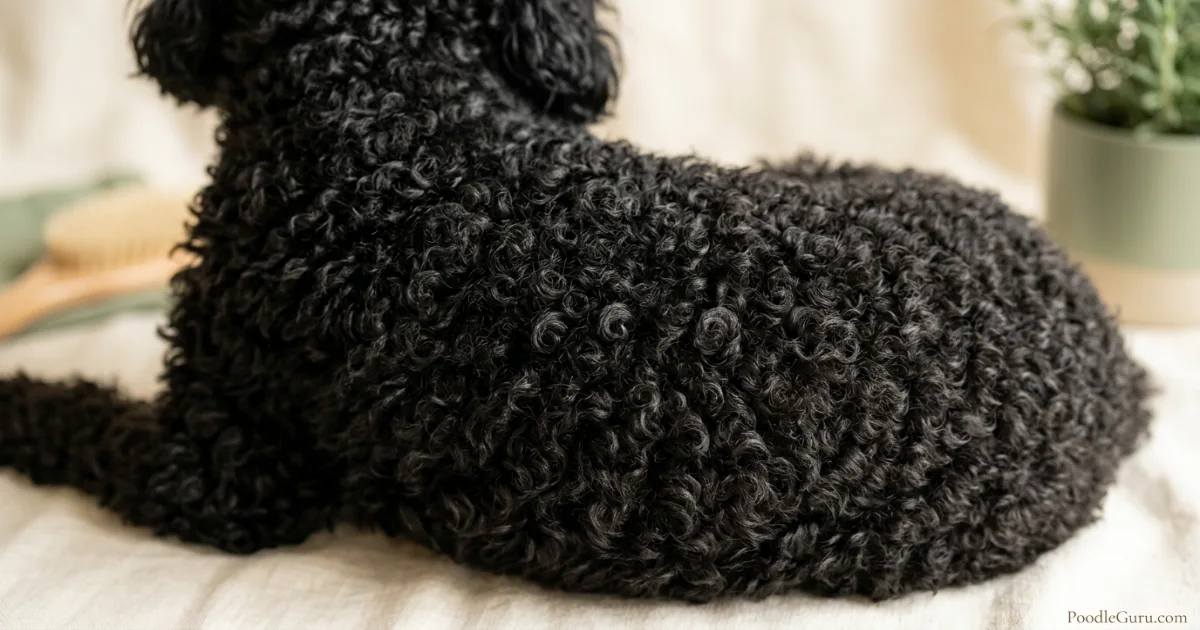
Poodles require regular brushing — at least 3–4 times a week, more if the coat is kept long — to prevent matting down to the skin. Professional grooming every 4–6 weeks is non-negotiable. A Poodle’s coat keeps growing, so if you skip clipping and brushing, mats can form quickly. The good news: skin problems are uncommon when the coat is maintained. The bad news: grooming is a significant ongoing expense. For more on Poodle coat care, see our complete Poodle grooming guide.
Chinese Crested Skincare
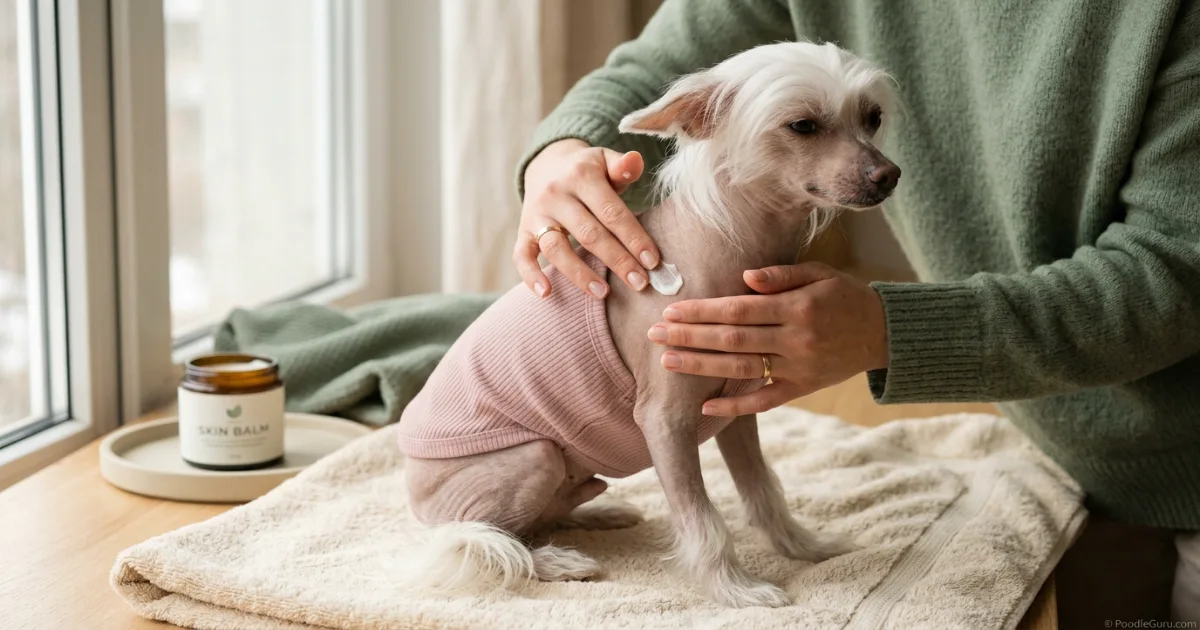
The hairless Crested requires no brushing — but it does require frequent baths (every 1–2 weeks) to prevent acne and blackheads, daily moisturizing with dog-safe lotion, and year-round sunscreen when outdoors. Skin injuries are common; a small scratch can become a hot spot. Many owners keep a wardrobe of soft shirts for their Cresteds to protect against scrapes and sun. The powderpuff variety needs regular brushing to prevent mats, especially if the coat is kept long.
🐩 PoodleGuru Insight
If you dislike constant skin vigilance, a Poodle is usually more forgiving because the coat acts as a natural barrier. A Crested’s bare skin is high-maintenance in a different way: sun protection, gentle bathing, moisturizer, and careful clothing choices become part of the routine.
Health & Longevity: What the Numbers Say
Both breeds can live into their mid-teens. Toy Poodles average 12–15 years, Chinese Cresteds 13–18 years. But they face different health burdens.
Poodles are prone to certain hereditary issues, particularly eye disorders (PRA, cataracts), luxating patellas, and hip dysplasia in Standards. Reputable breeders screen for these. Our Poodle health issues guide breaks down these risks in detail.
Chinese Cresteds have their own concerns: dental problems are rampant (missing teeth, retained baby teeth, early decay) because the hairless gene affects tooth development. Progressive retinal atrophy and patellar luxation also appear. Their exposed skin is vulnerable to sunburn, irritation, and long-term sun damage; dog-safe sunscreen, protective clothing, and limited harsh sun exposure are important.
| Health Concern | Poodle Risk | Chinese Crested Risk |
|---|---|---|
| Dental Disease | Moderate; regular dental care needed | Very high; often requires extensive dental work by middle age |
| Eye Disorders | Cataracts, PRA — screenable | PRA, lens luxation — screenable |
| Skin Issues | Low with proper coat care | Acne, blackheads, sunburn, irritation, injuries |
| Patellar Luxation | Common in Toy and Miniature | Common |
| Lifespan | 12–15 years | 13–18 years |
Buyer Mistakes & Red Flags
When choosing between these breeds, many buyers fall into the same traps. Here’s what to avoid:
- Assuming hairless means no mess. Skin oils, acne, and frequent bathing create their own cleanup demands. Cresteds are not zero-maintenance.
- Underestimating poodle brains. A Toy Poodle isn’t a small lap ornament — it’s a high-drive dog in a tiny body. If you don’t provide enrichment, it will find outlets you won’t like.
- Buying from untested lines. For poodles, demand OFA patella, eye, and DNA testing. For Cresteds, ask for dental health history and skin health in the bloodline. Avoid breeders who dismiss these concerns.
- Choosing on cuteness alone. A Crested’s exposed skin may look adorable in photos, but the daily care is more involved than many buyers expect. Be honest about your tolerance for a routine.
Price Guide: What to Expect in 2026
Both breeds have a wide price range depending on breeder reputation, health clearances, and location.
💲 Poodle Puppy Prices
- Toy Poodle: $2,000–$3,500
- Miniature Poodle: $1,800–$3,000
- Standard Poodle: $1,500–$2,800
💲 Chinese Crested Puppy Prices
- Hairless: $1,800–$4,000
- Powderpuff: $1,800–$3,500
Beyond the purchase price, budget for ongoing costs. Poodles need $500–$1,000 per year in professional grooming. Chinese Cresteds may need dog-safe sunscreen, gentle skincare products, veterinary skin checks, and significant dental care — costs that can add up quickly over the dog’s lifetime. Factor these in before falling in love.
The PoodleGuru Hypoallergenic Match Checklist
At PoodleGuru, we evaluate breed matches by focusing on the daily reality, not the fantasy. Use this checklist to weigh your own lifestyle.
Energy & Engagement Fit
Do you want a dog that joins you on runs, learns tricks, and thrives on activity? Choose a Poodle. If your ideal day involves cuddling on the couch with a warm, portable heater, a Chinese Crested aligns better.
Grooming vs. Skincare Tolerance
Would you rather brush hair or slather lotion? Poodle grooming is a routine many owners learn to enjoy; Crested skincare is a different kind of commitment involving bathing, moisturizing, sun protection, and clothing in cold weather. Decide which type of maintenance you’ll stick with.
Alone-Time Reality
How many hours is the dog alone? A poodle tolerates a workday with proper enrichment and a walker. A Chinese Crested often develops separation anxiety when left more than a few hours. Be brutally honest here.
Health Budget Preparedness
Can you afford regular dental cleanings and potential extractions? Cresteds almost always need significant dental care. Poodles need annual eye exams and periodic grooming. Calculate the 5-year cost, not just the purchase price.
Breeder Vetting
For either breed, visit the breeder when possible, meet the parent dogs or review their records, and ask for health clearances. A good breeder will ask about your lifestyle as carefully as you ask about their dogs. If they do not care where the puppy is going, treat that as a red flag.

Frequently Asked Questions About Poodle vs Chinese Crested
Which breed is better for someone with severe allergies?
There’s no universal answer. A poodle’s dense coat traps dander but can release it during grooming. A hairless Chinese Crested has no coat to trap dander, but its skin sheds dander directly. Spend time with adult dogs of both breeds and monitor your allergy symptoms before deciding.
Do Chinese Cresteds smell more than poodles?
Not necessarily, but their skincare routine affects odor. A well-cared-for Crested bathed regularly has minimal smell. Neglected skin becomes greasy and can develop a yeasty odor. Poodles with proper coat maintenance are virtually odor-free. Both benefit from regular ear cleaning.
Is a Toy Poodle or a Chinese Crested better with children?
Toy Poodles can be wonderful with gentle, respectful children who know not to drop or squeeze them. Chinese Cresteds are more fragile and easily startled, so they are often better suited to homes with older, gentle children. A Miniature Poodle is sturdier and a better fit for active families.
Which breed is easier to house-train?
Poodles are generally far easier to house-train, thanks to their high intelligence and desire to please. Chinese Cresteds can be more challenging to potty train than many owners expect; some owners use indoor potty systems as part of the routine. Patience and consistency are essential with both, but expect to be extra consistent with a Crested.
Can you leave a Chinese Crested alone while you work?
This is a major challenge. Chinese Cresteds bond intensely and are prone to separation anxiety. Being alone for a full workday may lead to stress behaviors unless the dog is carefully trained, enriched, and supported. They thrive in homes where someone is around most of the time. Poodles, with proper mental stimulation and a midday break, handle alone time better.
Are poodles or Chinese Cresteds easier to train?
Poodles are among the most trainable companion breeds, often excelling in obedience and agility. Chinese Cresteds are intelligent but can be independent thinkers; they respond best to positive reinforcement and shut down with harsh corrections. For a novice trainer, a Poodle is the safer bet.
What is the powderpuff Chinese Crested?
The Powderpuff is the fully coated variety of Chinese Crested. It has a soft, silky coat that requires regular brushing to avoid mats. Unlike the hairless, it doesn’t need sunscreen, but it still requires regular grooming. Powderpuffs can appear in the same litter as hairless puppies.
Key Takeaways
Poodle vs Chinese Crested ownership feels radically different in real life, even though both breeds are low-shedding and deeply devoted to their people.
- A poodle is a highly intelligent, energetic, and versatile dog that needs regular grooming and mental work; it suits active households that can provide structure and engagement.
- A Chinese Crested is a devoted lapdog requiring minimal exercise but intensive skincare and constant companionship; it thrives in quiet homes with someone present most of the day.
- Hypoallergenic claims are individual; dander, not just hair, triggers allergies. Meet adult dogs of both breeds before making a decision based on this trait alone.
- Health priorities differ: poodles need eye and patella screening; Cresteds demand proactive dental care and skin cancer prevention.
- Beware of low-quality breeders who prioritize coat color or “rare” sizes over health clearances — for both breeds, health testing is the non-negotiable baseline.
- The best breed for you isn’t the cutest or cheapest — it’s the one whose daily care, energy, and temperament fit your real life, not your imaginary one.
Your immediate next step: spend at least 30 minutes in person with an adult Poodle and an adult Chinese Crested. Watch how they move, how they react to you, and how you feel handling their coat or skin. That experience will tell you more than any article ever could.