Poodle Anal Gland Infection Symptoms: Impaction, Scooting & Care
Poodle anal gland infection symptoms often start with a poodle dragging its bottom across the rug — and it is not funny, it is a clear distress signal. Anal gland problems are common in poodles, and an infection can escalate from mild impaction to a painful abscess faster than many owners expect. This guide covers every stage of the problem, from the earliest signs to treatment and prevention.
Quick Answer
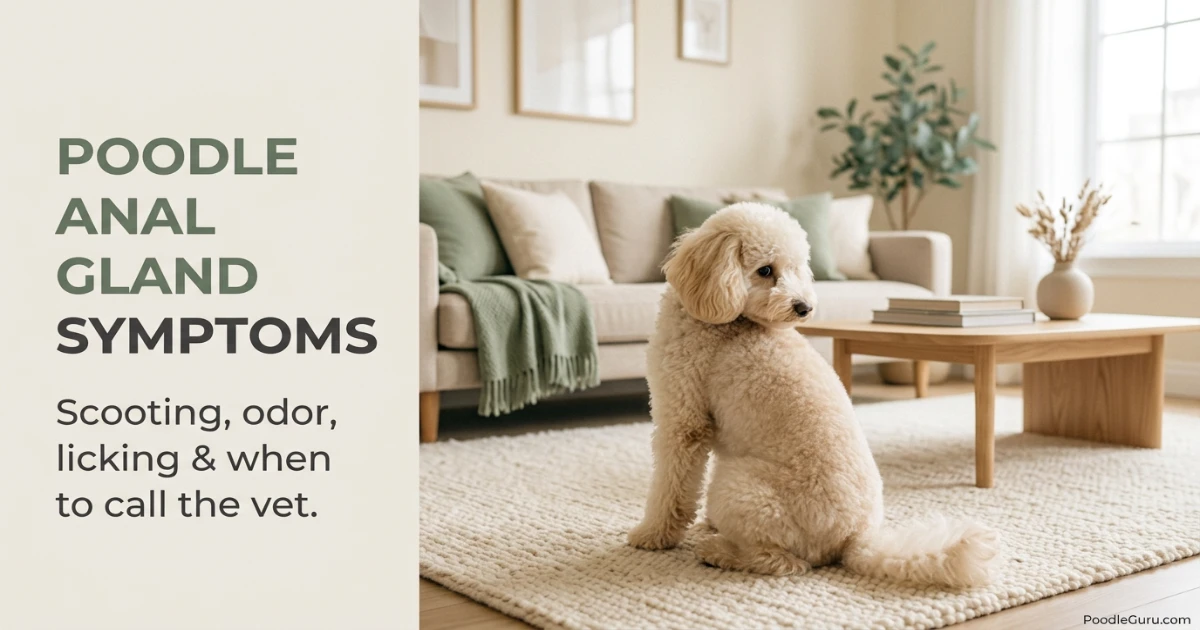
Poodle anal gland infection symptoms include scooting, frantic licking at the rear, a fishy odor, visible swelling beside the anus, and straining to defecate. These small scent glands normally empty during bowel movements, but in poodles they can become impacted, inflamed, infected, or abscessed. A mild impaction can often be relieved by manual expression at the vet or groomer. An active infection requires antibiotics and sometimes lancing. Ignoring the early signs risks a ruptured abscess — an extremely painful, messy, and preventable emergency.
What Are Anal Glands and Why Do Poodles Have Them?
Anal glands are two small sacs located just inside the rectum, roughly at the 4 o’clock and 8 o’clock positions. They produce a foul-smelling, oily fluid that dogs use for scent marking and identification. For poodle owners, this means that every time your dog has a bowel movement, a small amount of that fluid should be squeezed out naturally. The most important thing to understand is that these glands are supposed to empty regularly — when they don’t, the fluid thickens, backs up, and sets the stage for infection.
In wild canids, anal gland secretions mark territory and communicate identity. In our domesticated poodles, the glands are still present and functional but far more prone to trouble. Their function hasn’t adapted to modern diets and lifestyles, which is why impaction and infection occur so frequently in the breed.
🐩 Common Problem
Toy and Miniature Poodles are disproportionately affected, likely due to their smaller gland ducts that can become blocked more easily than those of larger dogs.
👃 Distinct Odor
A strong fishy or metallic smell is the calling card of full or infected glands. If you notice this odor around your poodle, it’s time to investigate.
🔄 Chronic Cycle
Once a poodle has had one anal gland infection, they are more likely to have recurring issues if the underlying cause isn’t addressed.
Poodle Anal Gland Infection Symptoms: Impaction vs. Infection vs. Abscess
The progression from healthy glands to a ruptured abscess follows a fairly predictable path. Recognizing which stage your poodle is in determines the urgency of care.
| Stage | Key Symptoms | Appearance | Urgency |
|---|---|---|---|
| Healthy | No symptoms; fluid expressed with stool | Normal | None |
| Impaction | Scooting, licking, slight fishy odor, discomfort when sitting | May feel a firm pea-sized lump beside the anus | Schedule groomer or vet expression within a few days |
| Infection (Sacculitis) | Persistent licking, stronger odor, visible swelling, pain when touched, sometimes blood or pus | Red, inflamed, tender swelling; may see thick discharge | Vet visit needed for antibiotics and expression |
| Abscess | Severe pain, lethargy, reluctance to sit or defecate, possible fever, sudden burst of pus and blood | A hot, tense, often purplish swelling beside anus that may rupture through the skin | Emergency — requires immediate veterinary attention |
The most common mistake poodle owners make is dismissing early scooting as “just something dogs do.” Occasional scooting after a bowel movement might be normal. Daily scooting, frantic licking, or any odor is not.
🐩 Poodle-Specific Clue
A poodle with a pom-pom tail or a docked tail may be unable to cover their rear. Their discomfort signals — looking back, spinning, pressing their bottom against furniture — might be more exaggerated. Watch for these posture changes, especially if your poodle doesn’t have a full tail to tuck.
Why Poodles Are Prone to Anal Gland Problems
Not every poodle will have anal gland issues, but several breed-specific factors raise the risk:
- Small duct openings. Toy and Miniature Poodles have proportionally smaller gland ducts that can clog more easily, especially if the stool is not bulky enough to press against them during elimination.
- Low-fiber diets. A diet lacking in insoluble fiber produces smaller, softer stools that don’t create enough pressure to express the glands naturally. This is likely the most common trigger.
- Chronic soft stools or diarrhea. Even a few days of loose stool can leave glands unemptied, starting the cycle of thickening fluid and impaction.
- Allergies and skin conditions. Poodles are prone to environmental and food allergies. Inflammation in the anal area can narrow ducts and contribute to gland dysfunction. Our poodle skin allergies guide explains these connections in more detail.
- Obesity. Excess body fat reduces the pressure needed to naturally empty glands during defecation. A lean poodle is less likely to have problems.
- Anatomical variation. Some poodles are simply born with glands positioned in a way that makes spontaneous emptying less reliable.
The PoodleGuru Anal Gland Warning Scale
At PoodleGuru, we developed a simple three-tier scale to help owners gauge what they’re seeing — and what to do about it. Use this when you notice any scooting, licking, or odor.
Yellow Light: Mild Impaction
Your poodle scoots once or twice a day, licks the area briefly, and there’s a faint fishy smell. No visible swelling or pain. Action: Book an anal gland expression with your vet or a skilled groomer within a few days. Start a fiber supplement and increase water intake.
Orange Light: Developing Infection
Redness, a pea-sized firm swelling, persistent licking, a strong odor, and visible discomfort when you touch near the tail base. Your poodle may cry or snap if you try to look. Action: Schedule a vet visit within 24–48 hours. Do not attempt expression yourself — you may rupture an infected gland inward.
Red Light: Abscess or Rupture
A tense, hot, purplish swelling, extreme pain, possible bleeding or pus draining from a small hole near the anus. Your poodle may be lethargic or feverish. Action: This is an emergency. Go to a vet immediately for lancing, flushing, and antibiotics. Untreated, the infection can spread.
When to Call a Vet vs. When to See a Groomer
A routine anal gland expression is a normal part of grooming for many dogs. But when infection is present, a groomer’s external squeeze can do more harm than good. Here’s how to decide:
🛑 Go Straight to the Vet If:
- There is visible swelling, redness, or heat beside the anus.
- You see blood, pus, or any discharge.
- Your poodle cries, snaps, or flinches when the area is gently touched.
- The scooting is intense and constant — not occasional.
- Your poodle is lethargic, not eating, or seems systemically ill.
✂️ A Groomer Can Help If:
- Your poodle has no visible swelling, redness, or pain.
- The fluid expressed is thin and ranges from yellow to brown — not thick, bloody, or gritty.
- Your vet has previously cleared your poodle for routine external expression.
In practice, many professional groomers will refuse to express glands on a dog showing any sign of infection — and that’s a sign of a responsible groomer. The VCA Animal Hospitals guide to anal sac disease provides an excellent veterinary overview of when medical intervention is needed.
Treatment Options: Manual Expression, Antibiotics, and Surgery
The treatment path depends entirely on the stage of the problem.
Manual Expression (External)
For simple impaction, a vet or groomer gently squeezes the gland from the outside to expel the thickened fluid. This provides immediate relief and may be all that’s needed. Some owners learn to do this at home, but improper technique can bruise the gland or push fluid deeper. Veterinary guidance is strongly recommended if you want to learn this skill.
Internal Expression and Flushing
If the fluid is too thick to express externally, the vet may insert a lubricated finger into the rectum and gently milk the gland from the inside. If infection is present, the vet may also flush the gland sac with an antiseptic solution and pack it with antibiotic ointment. Sedation is sometimes required for a poodle in pain.
Oral Antibiotics and Pain Relief
A bacterial infection of the anal gland may require oral antibiotics, pain relief, and sometimes culture-guided medication chosen by your veterinarian. Anti-inflammatory medication can help reduce swelling and discomfort when appropriate. Always complete the full prescribed course and follow your vet’s recheck instructions, even if symptoms improve quickly.
Abscess Lancing
An abscessed gland is an emergency. The vet will make a small incision to drain the pus, flush the cavity, and often place a temporary drain. The wound is left open to heal from the inside out. Antibiotics and pain management follow, along with warm compresses at home. Healing typically takes 1–2 weeks.
Anal Gland Removal (Sacculectomy)
For poodles with chronic, recurrent infections that don’t respond to dietary changes, surgical removal of the anal glands may be recommended. This is a delicate surgery with a risk of temporary or permanent fecal incontinence. It should only be performed by an experienced veterinarian and reserved for cases where quality of life is significantly impacted. The AKC Poodle breed page is useful for breed background, but anal gland decisions should always be guided by your veterinarian because anatomy, diet, allergies, stool quality, and recurrence history all matter.
Home Care and Prevention
The best anal gland infection is the one that never happens. For poodles with a tendency toward impaction, a consistent prevention routine can dramatically reduce vet visits.
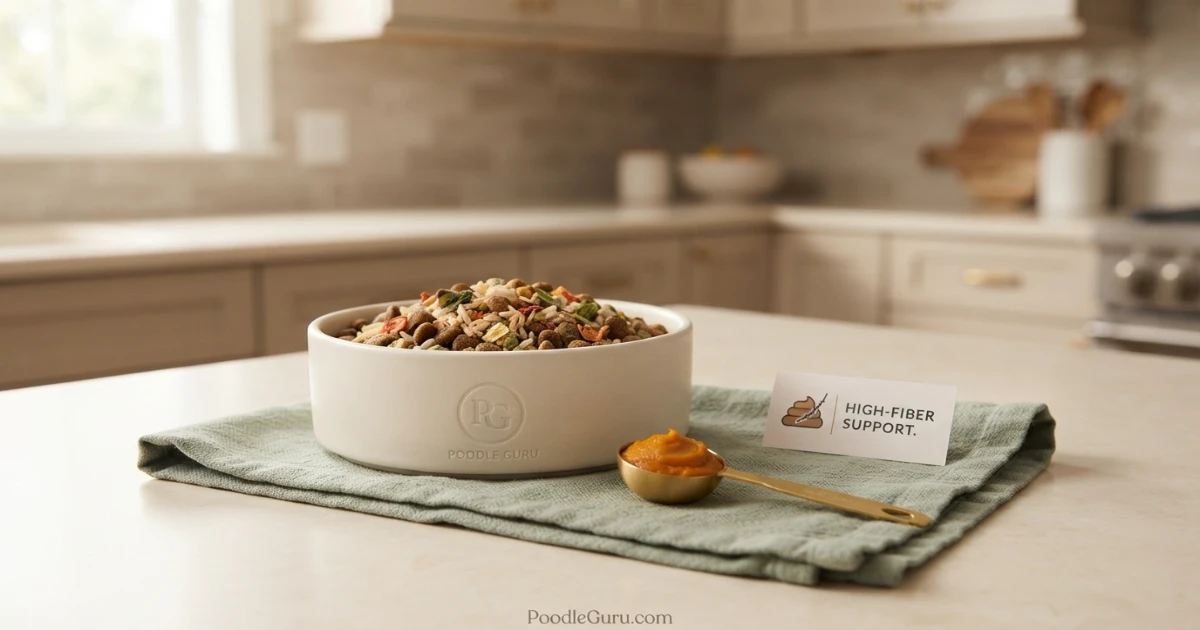
- Fiber, fiber, fiber. The single most effective prevention step. Insoluble fiber adds bulk to the stool, which naturally presses against the glands during elimination. Options include a high-fiber commercial diet, a teaspoon of plain canned pumpkin (not pie filling), psyllium husk powder, or a veterinary fiber supplement. Transition gradually to avoid digestive upset.
- Adequate hydration. Water helps keep stools soft but formed — the ideal consistency for gland expression. Multiple water bowls, a pet fountain, or adding water to kibble all help.
- Regular weight management. Lean poodles have fewer anal gland issues. Even a pound or two of extra weight on a Toy Poodle can make a difference. Our poodle nutrition guide can help you choose the right diet.
- Routine expression schedule. If your poodle needs manual expression, set a regular interval — usually every 4–8 weeks — and stick to it. Don’t wait for symptoms to appear.
- Allergy management. Addressing underlying food or environmental allergies reduces the inflammation that contributes to duct blockage.
📋 Owner Tip
Keep a simple log: note the date of each gland expression, the consistency of the fluid (thick, thin, gritty, bloody), and any symptoms that preceded it. This information is gold for your vet — it reveals patterns and helps tailor a prevention plan specifically for your poodle.
The Diet-Connection: Fiber, Allergies, and Weight
Diet doesn’t just influence anal gland health — it’s often the root cause of chronic problems. A poodle eating a highly digestible, low-residue diet may produce small, firm stools that don’t empty the glands. Conversely, a poodle with a food sensitivity that causes intermittent soft stools will also fail to express glands properly.
Switching to a diet with moderate insoluble fiber and high-quality protein often resolves mild, recurrent impaction within weeks. Pumpkin, sweet potato, green beans, or a veterinary fiber supplement can be added under guidance. If food allergies are suspected, a limited-ingredient diet trial under veterinary supervision is the standard approach.
Frequently Asked Questions About Poodle Anal Gland Infections
What does a poodle anal gland infection smell like?
Infected glands emit a strong, metallic-fishy odor that is noticeably more pungent than normal anal gland secretion. You may smell it on your poodle’s breath (from licking), on bedding, or in the room. If the smell is accompanied by swelling or pain, infection is likely present.
Can I express my poodle’s anal glands at home?
External expression can be learned with veterinary guidance, but internal expression is best left to professionals. If glands are infected, at-home squeezing risks rupturing the sac inward. Never attempt to express a swollen, painful, or red gland — always see a vet first to rule out infection.
How often do poodles need their anal glands expressed?
There’s no set answer. Some poodles go a lifetime without needing manual expression. Others require it every 4–8 weeks. The frequency depends on diet, stool consistency, weight, and anatomy. If your poodle needs it more than once a month, discuss dietary changes and underlying causes with your vet.
Why does my poodle scoot even after glands are expressed?
Scooting can continue for 24–48 hours after expression due to residual irritation. If it persists beyond that, the glands may not have been fully emptied, an infection may be developing, or there could be another cause — such as allergies, tapeworms, or skin irritation. A recheck is warranted.
Does pumpkin really help with anal gland problems?
Plain canned pumpkin adds insoluble fiber that increases stool bulk, which helps press against the glands during defecation. It’s a simple, safe supplement for many poodles. Start with 1–2 teaspoons for Toy/Miniature Poodles and 1–2 tablespoons for Standards, adjusting to achieve formed but not hard stools.
Can a poodle’s anal gland abscess burst on its own?
Yes, and it often does before an owner realizes there’s an infection. When an abscess ruptures, you’ll see a bloody, pus-filled hole next to the anus. While the rupture relieves pressure, the infection still needs veterinary care — antibiotics, flushing, and pain relief are usually required.
Is anal gland removal safe for poodles?
Anal sacculectomy is a valid last resort for chronic, severe infections. However, it carries a risk of damage to the nerves that control fecal continence. It’s only recommended when all other management strategies have failed and the dog’s quality of life is poor. A board-certified surgeon offers the best chance of a complication-free outcome.
Are certain poodle colors more prone to gland issues?
No. Anal gland problems are not linked to coat color. The risk factors are anatomy, diet, weight, and stool quality — not genetics tied to color. Any poodle, regardless of color, can develop impaction or infection.
Key Takeaways
Anal gland problems are messy, painful, and frustrating — but almost always manageable with the right approach. Here’s what to remember:
- Early poodle anal gland infection symptoms include scooting, frequent licking, a fishy odor, and visible swelling beside the anus — don’t dismiss them as normal dog behavior.
- The condition progresses from impaction to infection to abscess if left untreated; a ruptured abscess is a painful emergency requiring immediate veterinary care.
- The most common cause is inadequate stool bulk — a low-fiber diet produces stools that fail to express the glands naturally during defecation.
- Treatment depends on severity: manual expression for impaction, antibiotics for infection, and lancing for abscesses. Recurrent cases may require dietary changes or, rarely, surgery.
- Prevention is built on a high-fiber diet, proper hydration, lean body weight, and a routine expression schedule if needed — these four pillars reduce recurrence significantly.
- Never squeeze a swollen or painful gland at home; a professional assessment ensures that infection isn’t forced deeper into the tissue.
If your poodle is scooting, licking, or emitting a fishy smell, the best next step is to inspect the area gently and schedule a veterinary or professional groomer evaluation within 48 hours. Addressing it at the impaction stage avoids the pain and expense of an abscess.