Poodle Torn ACL Symptoms: Signs, Treatment & Recovery
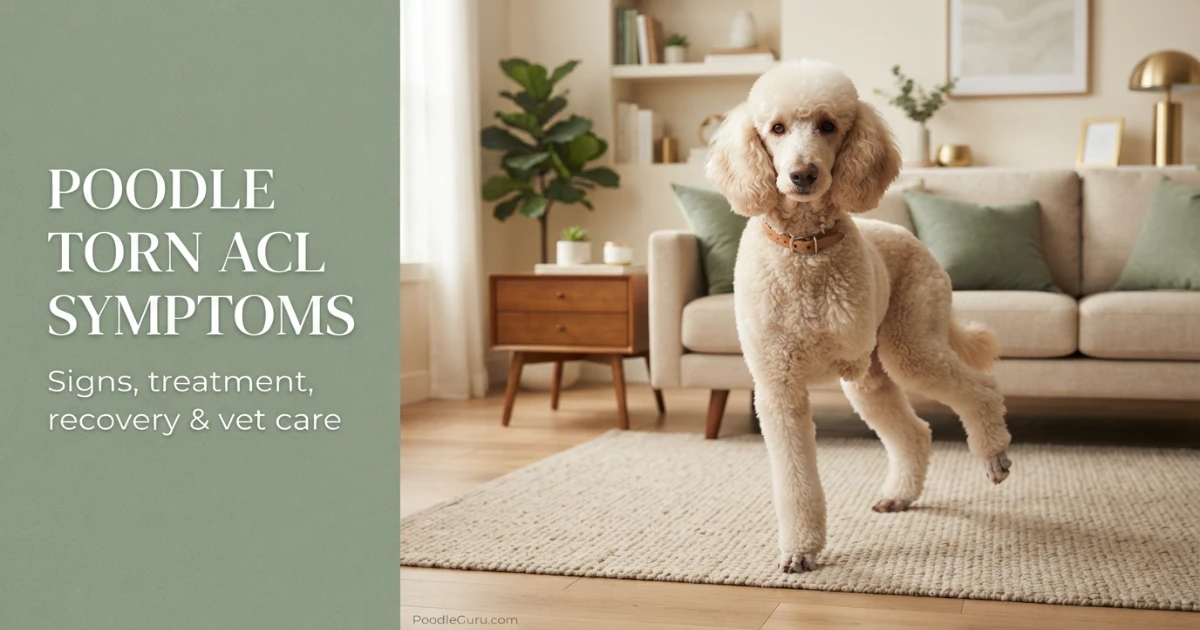
A sudden yelp, a lifted leg, and a poodle who won’t put weight down — a torn ACL is one of the most common orthopedic injuries in dogs. For poodle owners, knowing what to look for early can mean the difference between a straightforward recovery and a lifetime of joint problems.
Quick Answer
A torn ACL — more accurately called a cranial cruciate ligament (CCL) rupture in dogs — is an injury to one of the main stabilizing ligaments inside the knee. The most obvious poodle torn ACL symptoms include sudden non-weight-bearing lameness, holding the hind leg up, knee swelling, toe-touching, and pain around the joint. Treatment may involve strict activity restriction, medication, rehabilitation, or surgery, depending on the tear severity, your poodle’s size, and your veterinarian’s exam findings. With a careful plan, many poodles regain comfortable function, but skipping rehab or rushing activity can delay recovery and worsen arthritis.
What Is a Torn ACL in Poodles?
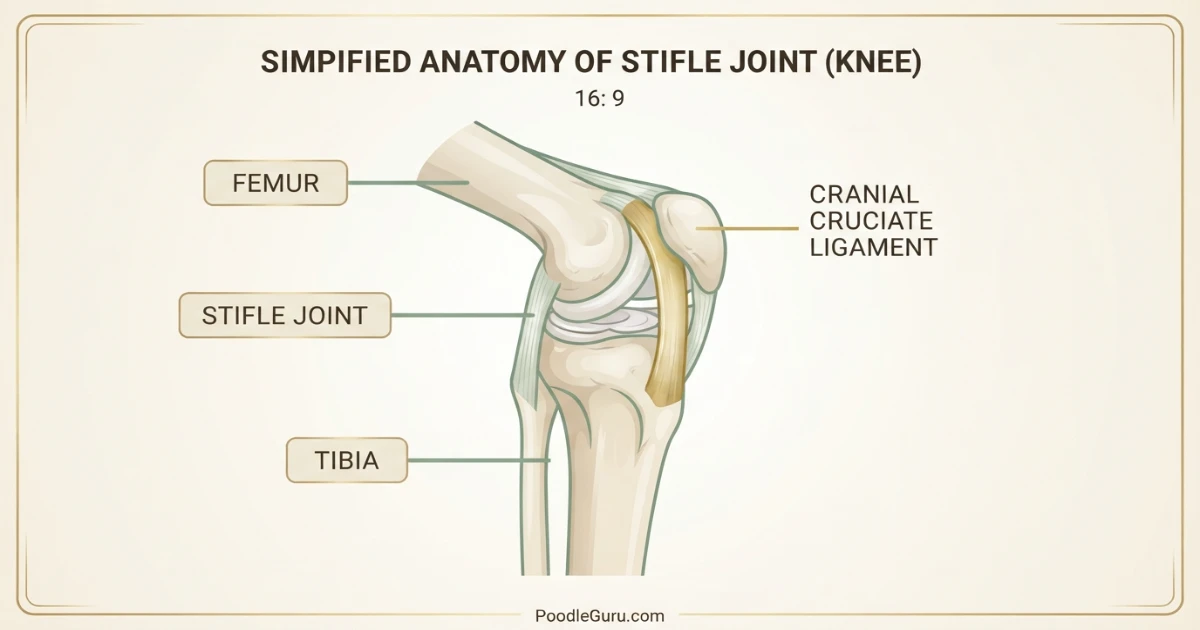
A torn ACL (cranial cruciate ligament rupture) is an injury to the main ligament that stabilizes the knee joint. In dogs, it’s called the cranial cruciate ligament, but owners and vets often use the human term “ACL” interchangeably. For poodle owners, this means the ligament that prevents the tibia from sliding forward under the femur suddenly fails, causing pain, instability, and lameness. The most important thing to understand is that a complete cruciate rupture does not reliably return to normal knee stability on its own. Some small dogs or partial tears may improve with strict veterinary-guided management, but complete tears in active or larger poodles often need surgical stabilization to control instability and pain.
Partial tears are different. They can sometimes be managed with rest and rehabilitation, but they carry a high risk of progressing to a full tear if not protected. The knee joint can develop osteoarthritis faster once stability is lost, which is why early veterinary evaluation and a clear treatment plan matter so much.
Poodle Torn ACL Symptoms: What Owners Notice First
Symptoms can appear suddenly during play or gradually over time as a partial tear worsens. Here are the key signs owners report:
- Sudden non-weight-bearing lameness. Your poodle may yelp during a sprint or awkward landing, then immediately lift the affected hind leg and refuse to put it down.
- “Toe-touching” or intermittent limping. With partial tears, the poodle may touch the toes down gingerly but shift weight to the other leg. The limp may seem to improve after rest, then return with activity.
- Swelling on the inside of the knee. A firm, puffy swelling (medial buttress) often develops within weeks of a complete tear. It’s a sign of joint inflammation and early arthritic change.
- Stiffness after rest. Your poodle may struggle to rise after a nap and seem stiff for the first few steps before loosening up.
- Clicking or popping sounds when the knee moves — a possible sign of meniscal damage, which accompanies about half of cruciate tears.
Poodle-Specific Observation
Because poodles are often light on their feet and carry themselves with a springy gait, a subtle lameness can be easy to miss. Toy and Miniature Poodles may simply stop jumping onto furniture they used to bound onto. Standard Poodles might refuse to chase a ball or hesitate at stairs. Any unexplained change in willingness to engage in normal activity is a red flag.
What Causes ACL Tears in Poodles?
Most cruciate tears aren’t caused by one dramatic fall. They’re the result of chronic degeneration in the ligament that finally gives way. Risk factors include:
- Obesity. Extra weight multiplies the force on the knee joint. A poodle who is even a few pounds overweight faces significantly higher risk.
- Poor conditioning. “Weekend warrior” poodles who go from couch to intense play without regular exercise are vulnerable.
- Conformation. Dogs with a straight stifle (knee angle too upright) place more stress on the ligament. Some poodle lines may have this trait.
- Age. Middle-aged to older poodles experience ligament degeneration that weakens it over time.
- Trauma. A sudden twist while running, a misstep on stairs, or a collision can finish a ligament already compromised by degeneration.
Diagnosis: What to Expect at the Vet
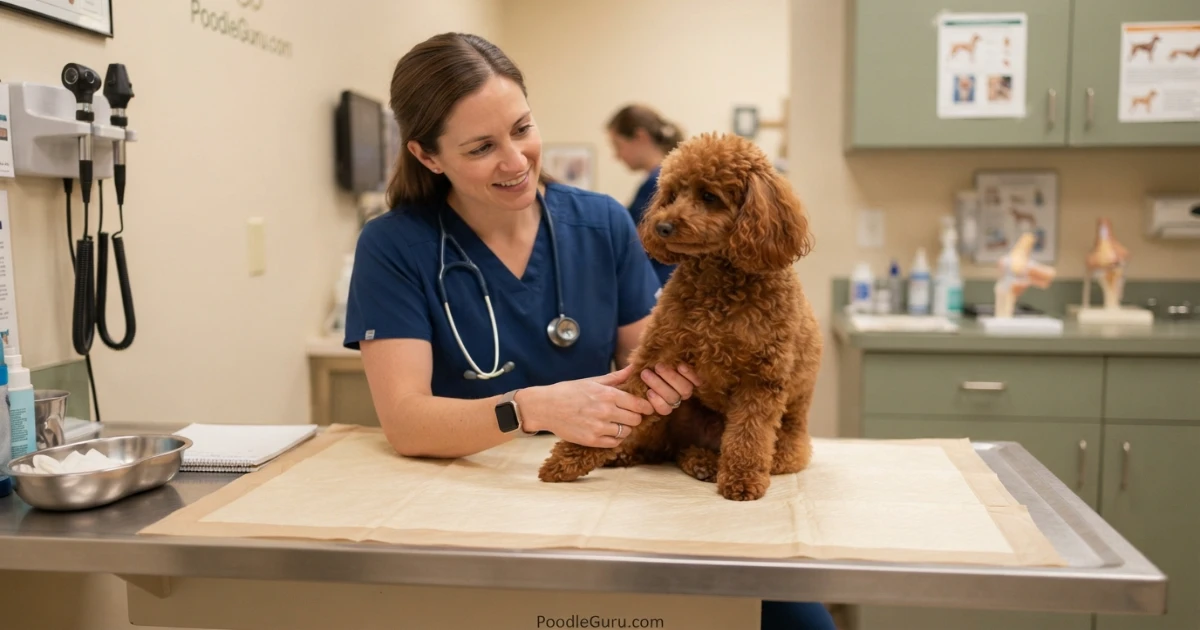
A veterinarian diagnoses a cruciate tear through a combination of physical examination, gait observation, and diagnostic imaging. Two key tests are the cranial drawer test (the vet attempts to slide the tibia forward relative to the femur) and the tibial compression test. These tests reveal joint instability — the hallmark of a full rupture. Because the tests can be painful, sedation may be needed, especially with a tense poodle.
X-rays don’t show the ligament itself (it’s soft tissue), but they reveal the “knee effusion” (fluid), early arthritis, and the forward displacement of the tibia that signals instability. In complex cases, an MRI or arthroscopy may be recommended, but typically the hands-on exam is conclusive. The VCA Animal Hospitals guide to cruciate ligament rupture explains that affected dogs may suddenly be unable to bear weight or may “toe touch,” and that a cranial drawer sign may require sedation to assess properly.
Treatment: Surgery vs. Conservative Care
The right treatment depends on the poodle’s size, activity level, whether the tear is partial or complete, and the owner’s ability to commit to a strict recovery protocol. A common mistake is assuming small poodles don’t need surgery — while small dogs can sometimes succeed with conservative management, they are also at risk for progressive arthritis and meniscal damage if instability persists.
| Factor | Surgical Management | Conservative (Non-Surgical) Management |
|---|---|---|
| Best Candidates | Active Standard Poodles, complete tears, any poodle with meniscal injury | Partial tears, Toy or Miniature Poodles under 10 lbs with strict rest possible |
| Goal | Restore joint stability, prevent arthritis progression | Allow scar tissue to stabilize the joint, manage pain |
| Recovery Time | 8–16 weeks to full activity, with structured rehab | 8–12 weeks of confinement, but arthritis risk remains |
| Success Rate | Often good to excellent function when surgery, pain control, and rehabilitation are followed carefully | Variable; some dogs improve, but persistent instability, lameness, or arthritis can remain |
| Cost (2026) | $3,000–$6,000 per knee | Minimal upfront cost, but long-term arthritis management adds up |
| Biggest Risk | Anesthesia, infection, implant failure (rare) | Complete tear extension, meniscal damage, severe arthritis |
Surgical Procedures for Poodles
The two common osteotomy surgeries are TPLO (tibial plateau leveling osteotomy) and TTA (tibial tuberosity advancement), which change the forces around the knee so the joint is more stable during movement. A third option, lateral suture (extracapsular repair), uses a heavy suture to mimic the ligament and is more common in smaller dogs. Your veterinary surgeon will recommend the best fit based on knee anatomy, body weight, activity level, and the amount of instability. The American College of Veterinary Surgeons notes that treatment choice depends on factors such as activity, size, age, conformation, and degree of knee instability.
Post-surgical pain management, a carefully restricted activity plan, and physical rehabilitation are non-negotiable for success. Even with surgery, the knee still needs long-term joint care, but many poodles regain comfortable, active function. For more on long-term joint care, see our guide to poodle arthritis management.
Recovery Timeline and Home Care
Recovery is a marathon measured in weeks, not days. Rushing it is the single biggest reason for setbacks. A typical post-surgical timeline looks like:
- Weeks 1–2: Strict crate rest, leash walks only for bathroom breaks, ice packing the knee, pain medication.
- Weeks 3–6: Gradual increase in short, controlled leash walks, passive range-of-motion exercises, introduction of gentle rehab.
- Weeks 7–12: Longer walks on even ground, targeted strengthening, careful stair reintroduction.
- Weeks 12–16: Return to off-leash activity in a controlled environment, continued conditioning.
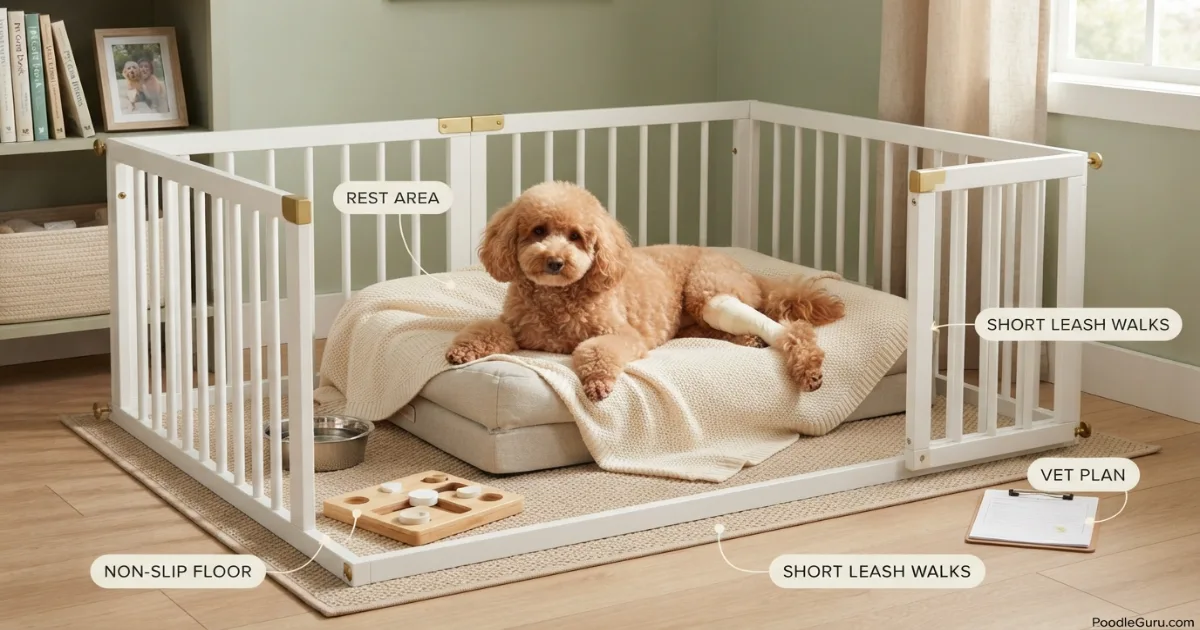
During this period, your poodle must avoid jumping, running, and slippery floors. Confinement in a crate or small room with non-slip mats is essential. Mental enrichment — puzzle toys, scent games, gentle training — helps ease the boredom of restricted activity.
The PoodleGuru ACL Recovery Checklist
At PoodleGuru, we believe that a structured home plan is as important as the surgery itself. Use this checklist daily for the first four weeks, then weekly until your vet clears your poodle for full activity.
Medication Schedule
Give prescribed pain relievers and anti-inflammatories on time, every time. Set phone alarms. Pain slows healing and makes a poodle more likely to move in harmful ways. Never give human pain meds.
Incision Check
Inspect the surgical site twice daily for redness, swelling, discharge, or opening. A small amount of clear fluid is normal initially, but pus or a foul odor needs immediate vet attention.
Ice & Compression
Apply a cold pack (wrapped in a thin towel) to the knee for 10–15 minutes, 2–3 times daily for the first 72 hours to reduce swelling. After that, switch to warm compresses if your vet recommends.
Passive Range-of-Motion (PROM)
Gently flex and extend the knee within the pain-free range, as shown by your vet or rehab therapist. This prevents joint stiffness and maintains cartilage health. Do it 2–3 times daily.
Leash Walk Progression
Follow your vet’s written plan exactly. Usually, this means starting with 5-minute walks on flat ground, increasing by 5 minutes per week. Use a short leash and a harness — never a neck collar — to avoid sudden pulls.
Environmental Safety
Block stairs with baby gates, cover slick floors with non-slip runners, and remove throw rugs that slide. Keep your poodle on a leash even in the house if they’re the type to suddenly dash after a squirrel.
Recovery Mistakes Owners Often Make
Knowing what not to do is just as important as knowing the steps. Here are the most common pitfalls — and how to avoid them.
| Mistake | Why It’s Harmful | Better Approach |
|---|---|---|
| Stopping pain meds early | A painful poodle won’t use the leg correctly and may compensate, straining other joints. | Wean medication only under veterinary guidance; comfort supports healing. |
| Allowing too much freedom too soon | A single jump or slip can rupture the repair or damage the meniscus. | Follow the confinement schedule precisely — even when your poodle seems “fine.” |
| Skipping rehab exercises | Muscle atrophy sets in fast and delays functional recovery; the knee stays weak. | Do the prescribed exercises daily; consider a veterinary rehab therapist for guidance. |
| Not managing weight | Extra weight places excessive load on the healing ligament repair and the opposite knee. | Feed a measured diet; ask your vet about a weight-loss plan during recovery if needed. |
Also, be aware that dogs with cruciate disease in one knee have a meaningful risk of developing the same problem in the opposite knee; ACVS reports that 40–60% may develop a similar issue at some future time. Maintaining a lean body weight, consistent low-impact exercise, and avoiding weekend-warrior bursts of activity after recovery are the best defenses. Our poodle nutrition guide can help you keep your dog at a healthy weight.
When to Call a Veterinarian
During recovery, some signs need immediate veterinary attention:
Call Your Vet Immediately If:
- The incision becomes red, hot, swollen, or drains pus.
- Your poodle suddenly cannot bear any weight on the operated leg after a period of improvement.
- You notice a sudden pop or the knee seems unstable again.
- Your poodle shows signs of severe pain (panting, trembling, whining, hiding) despite medication.
- The leg appears cold, the toes are swollen, or the bandage (if present) is too tight.
Frequently Asked Questions About Poodle Torn ACLs
What is the difference between a partial and complete ACL tear in poodles?
A partial tear involves some ligament fibers remaining intact, but the knee may still be unstable. A complete tear means the ligament is fully ruptured and the knee is grossly unstable. Partial tears can worsen without rest and often require the same level of caution as complete tears.
Can a poodle’s ACL tear heal without surgery?
In some small dogs with partial tears and strict rest, scar tissue may stabilize the joint enough for comfortable function. However, the risk of arthritis and meniscal injury remains high. For active poodles and complete tears, surgery is strongly recommended to restore stability.
How long does ACL surgery recovery take for a poodle?
Most poodles are walking comfortably on a leash by 8 weeks and return to full activity between 12 and 16 weeks post-surgery. Complete healing and maximum strength can take 6 months or longer, and formal rehabilitation speeds the process significantly.
Is my poodle at risk of tearing the other ACL?
Yes. Approximately half of dogs who tear one cruciate ligament will tear the opposite side within 1–2 years. Maintaining a lean body weight and regular, controlled exercise after recovery reduces that risk.
How much does ACL surgery for a poodle cost in 2026?
Costs range from $3,000 to $6,000 per knee, depending on the surgical technique (TPLO, TTA, or lateral suture), your location, and whether a board-certified surgeon performs the procedure. Pre-operative bloodwork and post-operative rehab add to the total.
What happens if a torn ACL is left untreated?
If a torn CCL is left untreated, ongoing instability can lead to painful osteoarthritis, meniscal injury, muscle loss, and overloading of the opposite hind leg. Some dogs compensate temporarily, but persistent lameness or pain should never be ignored.
Can I prevent my poodle from tearing an ACL?
You can’t eliminate all risk, but keeping your poodle lean, providing consistent moderate exercise (not just weekend bursts), and using non-slip surfaces at home reduce the chance. Avoid high-impact twists like sudden direction changes on slick floors.
Why does my poodle click after ACL surgery?
Clicking can be a normal sound from scar tissue or it can signal a meniscal tear that wasn’t addressed. Any clicking accompanied by pain or lameness warrants a recheck — your vet may recommend imaging to rule out a meniscal problem.
Key Takeaways
A torn ACL is a major injury, but with a committed recovery plan, most poodles return to active, happy lives. Here’s what to remember:
- The hallmark poodle torn ACL symptom is sudden non-weight-bearing lameness on a hind leg — often after running, twisting, or jumping — that needs prompt veterinary evaluation.
- Diagnosis requires a veterinary exam with knee palpation and often sedation; X-rays rule out other causes but don’t show the ligament itself.
- Veterinary stabilization — often TPLO, TTA, or lateral suture surgery — is commonly recommended for complete tears, especially in active poodles; conservative care is usually limited to carefully selected partial tears or smaller dogs under close veterinary supervision.
- Recovery takes 12–16 weeks of strict home management, including controlled leash walks, prescribed rehab exercises, and environmental safety modifications.
- The biggest recovery mistakes are stopping pain medication early, giving too much freedom too soon, and neglecting weight management.
- Maintaining a lean body weight and consistent low-impact conditioning are the best preventions for a first tear — and a tear in the opposite knee.
If you suspect your poodle has a torn ACL, your immediate next step is to restrict activity, avoid stairs, and schedule a veterinary evaluation. The sooner a diagnosis is made, the sooner a clear recovery path begins.