Poodle Constipation: Causes, Symptoms & Safe Home Remedies
It’s unsettling when your poodle strains with no result. Constipation in poodles can be occasional or a sign of something deeper — but many mild episodes improve with simple, well-timed support. This guide walks you through what’s normal, what may help safely, and exactly when to call the vet.
Quick Answer
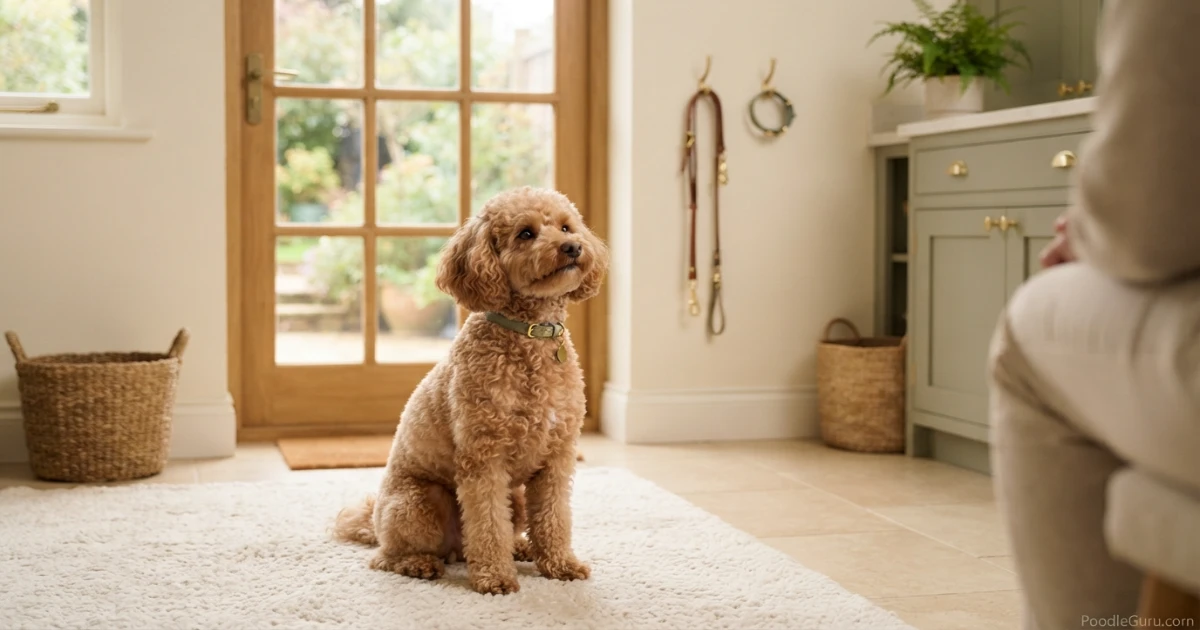
Poodle constipation means infrequent, difficult, or absent bowel movements. If your poodle strains, passes hard dry stools, or has gone about 48 hours without a bowel movement, it should be treated as constipation and monitored closely.
For a single mild episode, increasing water intake, adding a small amount of plain canned pumpkin (not pie filling), and taking a short gentle walk may help within 24 hours. If there is vomiting, lethargy, abdominal pain, repeated unproductive straining, or no stool by 48–72 hours, call your veterinarian promptly because obstruction and obstipation can become dangerous.
Normal Frequency
Most healthy adult poodles have 1–2 bowel movements per day. Going 48 hours without one is a red flag; 72 hours demands a vet call.
Top Cause
Inadequate water intake and low dietary fiber are the most common triggers — especially in poodles who eat only dry kibble and don’t drink enough.
Common Mild-Case Support
Adding water to food and a small amount of plain pumpkin may help within 12–24 hours for mild, uncomplicated cases.
What Is Poodle Constipation?
Poodle constipation is a digestive slowdown where stool becomes hard, dry, and difficult to pass. The colon absorbs too much water from the waste because it is moving too slowly.
For poodle owners, this may look like a dog that squats repeatedly, strains visibly, or produces small rock-like stools instead of a normal soft-formed log. Occasional mild constipation is not always a crisis, but it is also not something to ignore for days. Left unaddressed, it can lead to painful obstipation, which requires veterinary intervention.
VCA Animal Hospitals explains that constipation is defined not just by stool absence but by the effort and discomfort involved. A poodle who strains but passes nothing — or passes tiny hard nuggets with obvious pain — needs help. That help often starts at home, but it must start correctly.
Why Poodles Get Constipated
Constipation in poodles rarely has a single cause. It’s usually a perfect storm of diet, hydration, and sometimes grooming habits.
Dietary Imbalance
Too much dry kibble without enough moisture is the most common dietary trigger. Poodles can be picky drinkers — and a dog eating exclusively dry food needs to drink far more than many actually do. Insufficient fiber (or the wrong type — too much insoluble fiber without water can bulk up stool too much) also slows transit time.
Grooming and Hair Ingestion
Poodles groom themselves like cats. They lick their coats, and that curly hair can accumulate in the digestive tract, forming a felt-like obstruction. This is especially true during shedding season or if mats are present. Many owners don’t realize that a poodle who licks excessively due to skin allergies may swallow enough fur to cause intermittent constipation.
Dehydration
Even slight dehydration causes the colon to draw more water from stool. In summer, after exercise, or when a poodle simply doesn’t drink enough, stools harden rapidly. This is the reason why adding water to meals is such an effective first-line remedy.
Other Medical Factors
Less commonly, underlying issues like anal gland impaction, pelvic injuries, arthritis (making squatting painful so the dog holds it), neurological conditions, or even certain medications can cause constipation. In senior poodles, age-related muscle weakness in the colon wall is a genuine consideration. This is why recurring constipation always warrants a vet check — the cause may not be obvious from diet alone.
Normal Bowel Movements vs. Constipation in Poodles
Knowing what’s normal for your poodle makes spotting trouble easier. Here’s how to compare.
| Feature | Normal, Healthy Stool | Constipated Stool |
|---|---|---|
| Frequency | 1–2 times daily | Less than once every 48 hours; may skip days |
| Consistency | Firm but moist, log-shaped, easy to pick up | Hard, dry, crumbly, or tiny rock-like pellets |
| Straining | Minimal; passes quickly and effortlessly | Obvious straining, circling, squatting repeatedly with little or no result |
| Color | Medium to dark brown | Often darker, sometimes with mucus or a small amount of fresh blood from straining |
| Associated Behavior | Normal activity, good appetite | May seem restless, uncomfortable, or lose appetite; may scoot or lick the rear |
When Constipation Is an Emergency
Most constipation resolves with home care. But certain signs mean you should bypass home remedies entirely and go straight to the vet.
- Your poodle hasn’t passed any stool in 72 hours.
- There is vomiting, especially if vomit looks or smells like stool (a sign of severe obstruction).
- Your poodle is lethargic, refusing food, or showing signs of abdominal pain (hunched posture, whining).
- You see blood in the stool or constant unproductive straining with obvious distress.
- The abdomen feels hard, swollen, or tender to the touch.
- Constipation recurs frequently despite dietary changes — this suggests an underlying medical condition.
The PoodleGuru 3-Step Constipation Relief Framework
At PoodleGuru, we’ve designed a gentle, progressive approach for mild cases. It’s safe to try at home while you monitor closely. If no improvement appears within 24–36 hours, move on to a vet consultation.
Hydrate and Soften
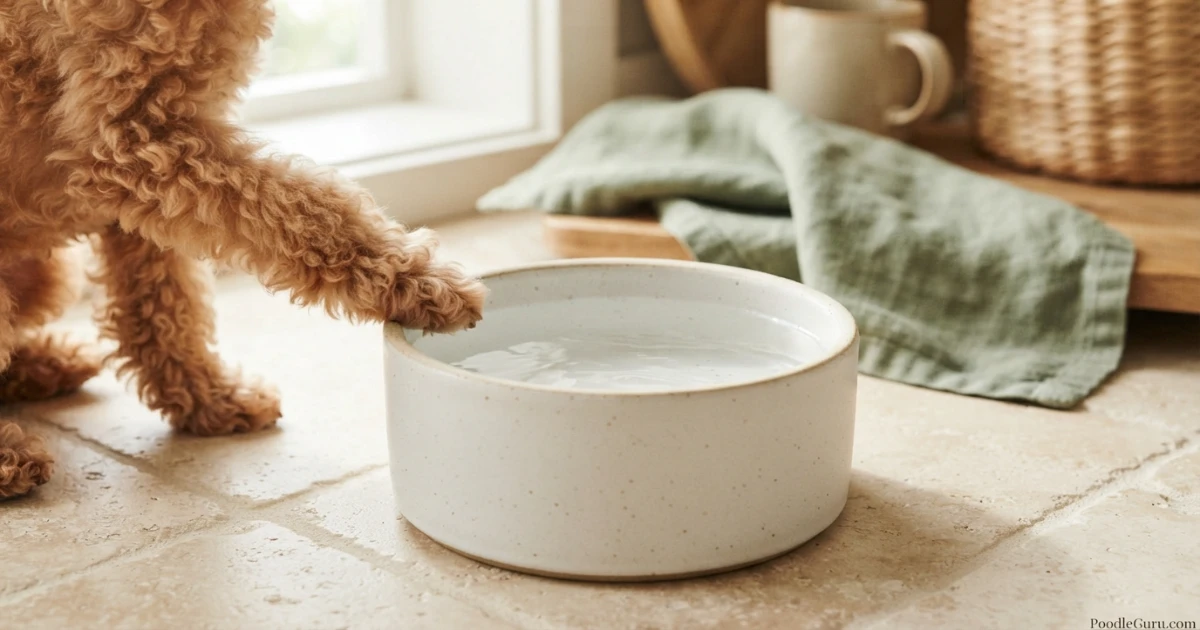
Add warm water to every meal — enough to create an oatmeal-like consistency. Offer fresh water in multiple bowls, or add a small splash of low-sodium chicken broth to encourage drinking if your veterinarian says broth is appropriate.
Do not force water into your poodle’s mouth if they are nauseated, weak, coughing, or resisting. Forced water can be aspirated. If your poodle will not drink or cannot keep water down, call your veterinarian.
Add a Natural Stool Softener
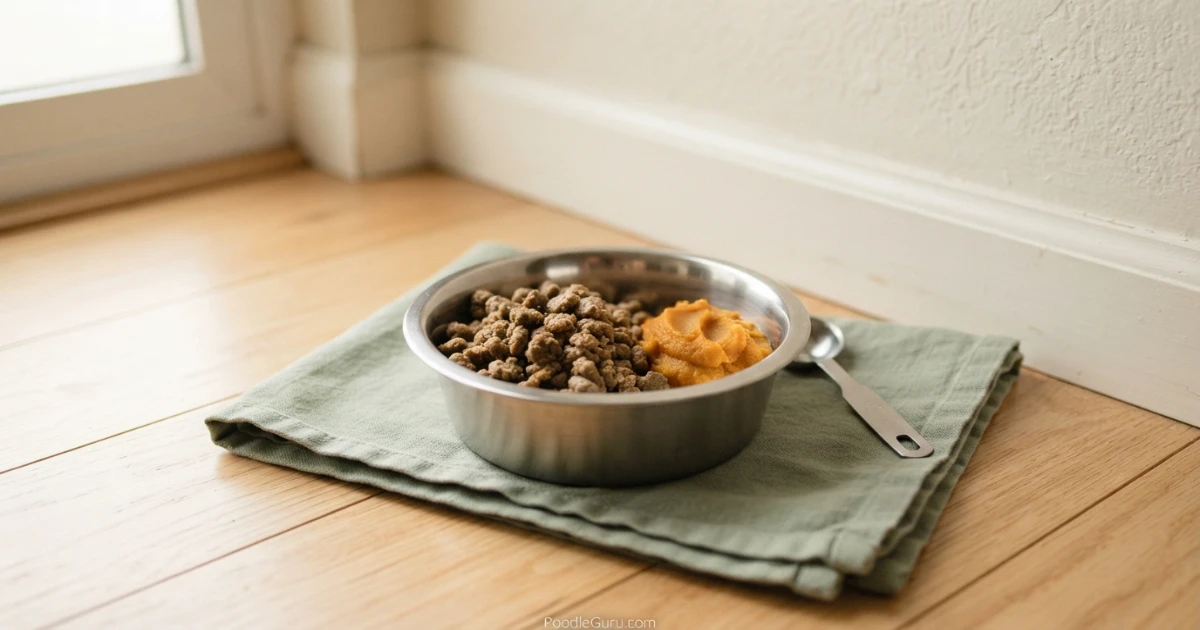
Mix a small amount of plain canned pumpkin into the moistened food — about 1 teaspoon for Toy Poodles, 1–2 teaspoons for Miniatures, and up to 1 tablespoon for Standards unless your vet gives a different amount.
Pumpkin provides soluble fiber and moisture that can support easier stool passage. Never use pumpkin pie filling, and never use any product containing xylitol, added sugar, or spices.
Encourage Gentle Movement
Take your poodle for a calm 10–15 minute walk. Movement stimulates peristalsis — the natural contractions that move stool through the colon. Don’t force exercise if your poodle is clearly uncomfortable. A slow sniff-walk around the yard is often enough to trigger a bowel movement.
Never give human laxatives, stool softeners, or enemas to your poodle without explicit veterinary direction. Many are toxic to dogs. Veterinary formulations exist and are safe, but dosage is weight-specific and must be prescribed. Using a human product can cause dangerous electrolyte imbalances or colon damage.
Safe Home Remedies That Actually Work
Beyond the framework, a few additional remedies have a strong safety profile for poodles with occasional constipation. Pick one to start — don’t combine everything at once.
Canned Pumpkin (Pure, Unsweetened)
This is the gold standard. Its high soluble fiber content absorbs water and softens stool while adding bulk. Start with 1 tsp for Toy Poodles, 2 tsp for Miniatures, and 1 tablespoon for Standards. Give it with a wet meal once daily and always ensure plenty of water is available.
Moisture-Rich Meals
For many mild cases, extra moisture is safer than adding oils or multiple supplements. Mix warm water into kibble, offer a small wet-food meal if your poodle tolerates it, or ask your veterinarian whether a temporary digestive diet is appropriate.
Veterinary Stool Softeners When Needed
If pumpkin, hydration, and gentle walking do not help, your veterinarian may prescribe a dog-safe stool softener such as lactulose or another treatment based on your poodle’s weight and exam findings. Do not use aloe, mineral oil, human enemas, or human laxatives unless your veterinarian specifically instructs you to do so.
Probiotics
A high-quality canine probiotic supports overall gut motility and stool consistency. Look for products containing Bifidobacterium and Lactobacillus strains. While probiotics aren’t a quick fix for acute constipation, they help prevent recurrence by keeping the gut microbiome balanced. Our poodle nutrition guide covers gut health in depth.
Common Mistakes Owners Make — And Better Approaches
Even well-intentioned actions can make constipation worse. These are the most frequent missteps we see.
| Mistake | Why It Backfires | Do This Instead |
|---|---|---|
| Giving dry fiber supplements without extra water | Fiber without water absorbs moisture from the gut, making stool even harder and more compacted. | Always soak any fiber supplement — including pumpkin powder — in ample water before offering. Never sprinkle dry powder over dry kibble. |
| Using mineral oil | Mineral oil is easily aspirated into the lungs if the dog inhales it while swallowing, causing potentially fatal lipid pneumonia. | Avoid entirely. If a lubricant laxative is needed, your vet will prescribe something safe, like lactulose. |
| Waiting too long to see a vet | Prolonged constipation can cause the colon to stretch permanently, leading to a chronic condition called megacolon. | If home remedies produce no stool within 36 hours — or your poodle seems painful — call your vet that day. |
| Over-exercising a constipated dog | Intense exercise can worsen dehydration and stress a dog who’s already uncomfortable. | Keep walks gentle and brief. The goal is gentle colonic stimulation, not a workout. |
Long-Term Prevention Through Diet and Routine
Once the immediate episode passes, shift your focus to making constipation a rare event. Most prevention is built into your daily feeding and grooming routine.
Moisture Is Everything
The single most effective prevention is keeping stool moist from the inside. Feed at least part of your poodle’s diet as wet food, or soak kibble in warm water for 10 minutes before serving. Poodles who drink little — and many do — rely entirely on dietary moisture. A water fountain can also encourage drinking; poodles are often intrigued by running water.
Fiber: The Right Kind, The Right Way
Insoluble fiber (like wheat bran) adds bulk but can be constipating without water. Soluble fiber (pumpkin, psyllium husk, oats) gels with water and softens stool. A daily teaspoon of pumpkin or a vet-recommended fiber supplement can keep things moving. If you feed a high-quality commercial diet, it likely already contains adequate fiber. Avoid adding fiber without reason — excess can ironically cause constipation.
Regular Exercise
A sedentary poodle is a constipated poodle. Daily walks of at least 20 minutes stimulate colonic motility. Even indoor play sessions and mental enrichment can help — stress and boredom slow the gut as much as inactivity does.
Grooming for Gut Health
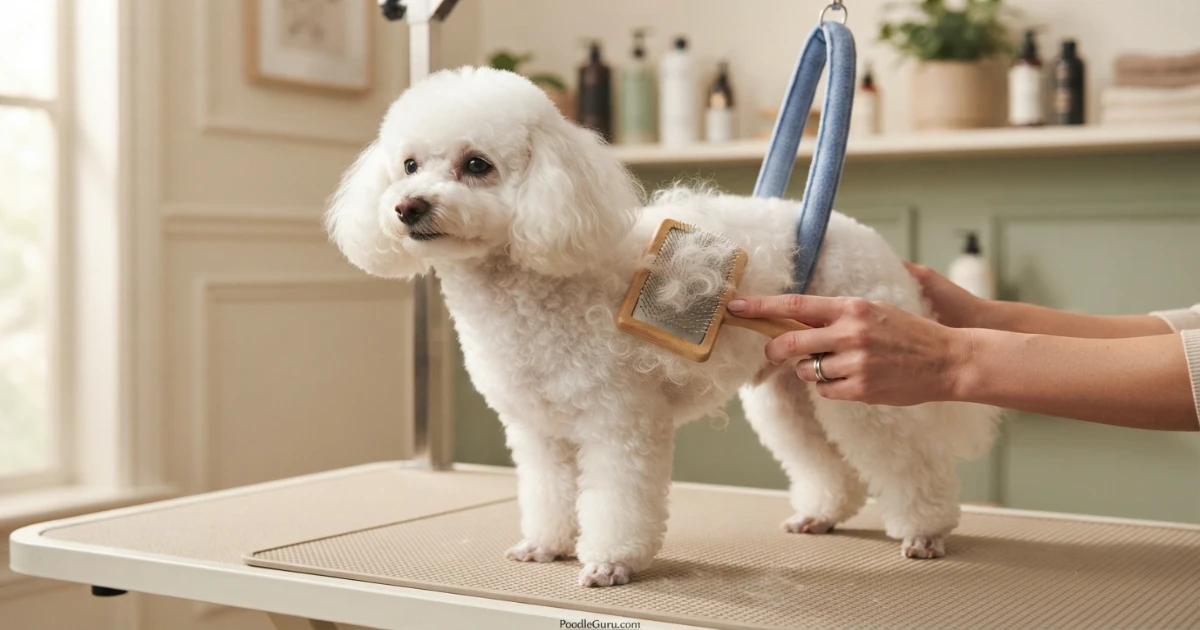
Brushing your poodle thoroughly at least three times a week removes loose hair before it’s swallowed. Pay special attention to the tail, belly, and behind the ears where curls can form hidden mats. This habit alone prevents many cases of hair-related constipation. For the full routine, see our complete poodle grooming guide.
Also, make sure your poodle’s anal glands are expressed regularly if needed. Full anal glands can cause pain during defecation, leading to stool-holding and eventual constipation. Your groomer or vet can check these during routine visits.
Frequently Asked Questions
How long can a poodle go without pooping before it’s dangerous?
48 hours without a bowel movement is a warning to start monitoring closely and begin home remedies. At 72 hours with no stool — especially if your poodle is straining, vomiting, or seems unwell — it’s a veterinary emergency. Prolonged constipation can lead to obstipation or megacolon.
Does dry kibble cause constipation in poodles?
Not inherently, but a kibble-only diet without adequate water intake frequently leads to constipation. Kibble contains only about 10% moisture, while a dog’s natural prey diet is over 70% water. If your poodle eats only dry food, always add warm water to each meal to compensate.
Can I give my poodle milk for constipation?
No. Most adult dogs are lactose intolerant. Milk can cause diarrhea, gas, and abdominal pain, which is not a safe or comfortable way to relieve constipation. Stick to water, pumpkin, or a veterinarian-prescribed stool softener instead.
My poodle is constipated after grooming — why?
After grooming, poodles may lick themselves more due to the sensation of being clipped, ingesting loose clipped hair. If the groomer expressed the anal glands during the appointment, temporary swelling or discomfort might also cause stool-holding. These episodes usually pass quickly, but ensure your poodle drinks plenty of water afterward.
Is pumpkin the only safe home remedy for poodle constipation?
Plain canned pumpkin is the safest starting point for many mild cases, especially when paired with extra water. Some dogs need a veterinarian-prescribed stool softener instead. Avoid mineral oil, aloe products, human laxatives, and enemas unless your veterinarian specifically directs you.
How do I know if my poodle is constipated or has a urinary issue?
Straining to urinate and straining to defecate can look similar. If your poodle squats repeatedly and produces little or no urine, it’s a urinary emergency — not constipation. A constipated poodle will typically pass small hard stools or nothing at all, but urine flows normally. If you’re unsure, a vet visit is critical.
When should I stop home treatment and go to the vet?
If 36 hours of hydration, pumpkin, and gentle walks produce no stool — or if your poodle develops vomiting, lethargy, or pain — stop home treatment and see the vet immediately. Early professional intervention prevents complications.
Key Takeaways
Poodle constipation is common but manageable with the right knowledge. Here’s what matters most:
- True constipation means hard, dry stools, straining, and fewer than one bowel movement per 48 hours — it’s not just skipping a day.
- Inadequate water intake and low dietary moisture are the top causes; adding water to every meal is the single most effective preventive measure.
- The PoodleGuru 3-Step Relief Framework (hydrate and soften, add plain pumpkin, gentle walk) helps many mild cases within 24 hours.
- Avoid human laxatives, mineral oil, aloe products, enemas, and unsoaked fiber supplements — they can cause serious harm.
- Recurring constipation or symptoms like vomiting, lethargy, or abdominal pain demand immediate veterinary evaluation — do not wait.
- Long-term prevention relies on moisture-rich meals, daily exercise, regular brushing to reduce fur ingestion, and prompt attention to anal gland health.