Poodle Ringworm: Symptoms, Treatment & Contagion Risk
Discovering a crusty, circular patch on your poodle’s skin can be alarming — and the word “ringworm” often sends owners into a panic about contagion. This guide gives you a clear, poodle-specific plan for identification, treatment, and home disinfection, without the scare tactics.
Quick Answer
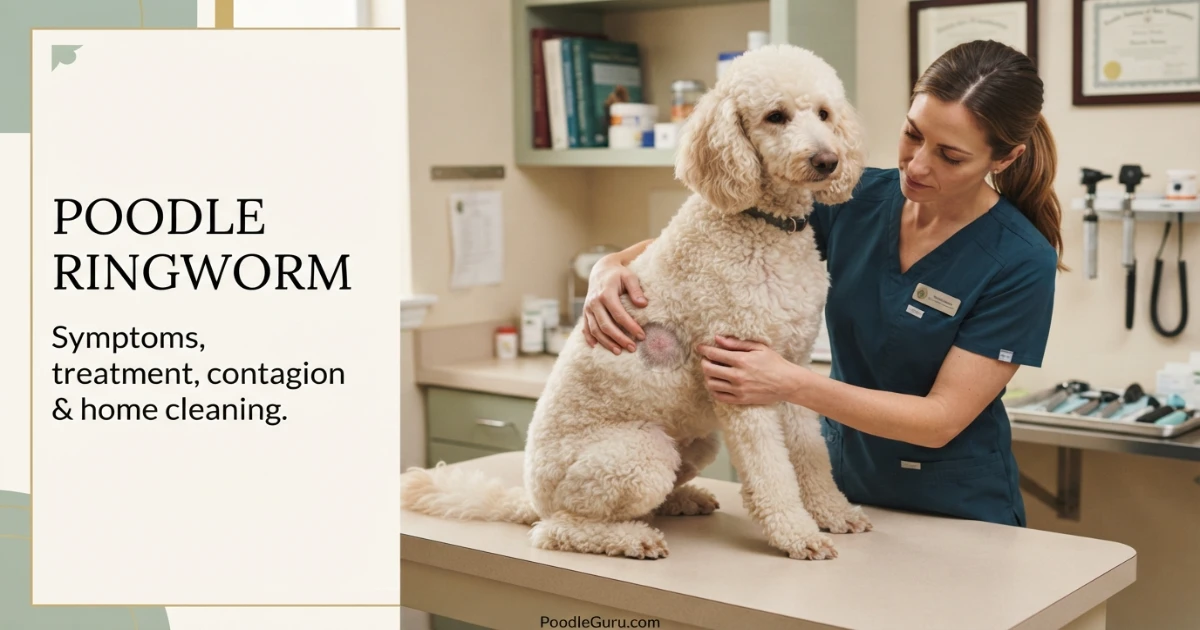
Poodle ringworm is a contagious fungal infection of the skin, hair, and sometimes nails — not a worm. It often appears as circular, scaly patches of hair loss with a reddish border, although lesions can look less obvious under a dense curly coat. The infection can spread between pets, to people, and through contaminated grooming tools, bedding, or shed hairs. Treatment should be confirmed and directed by a veterinarian and may include topical antifungal therapy, oral prescription medication, and environmental cleaning. Most poodles recover well with consistent care, but stopping treatment or cleaning too early can allow spores to keep the infection circulating.
What Is Poodle Ringworm?
Ringworm is a superficial fungal infection caused by dermatophytes — most commonly Microsporum canis, Microsporum gypseum, or Trichophyton mentagrophytes. Despite the name, there is no worm involved. The fungi feed on keratin in the skin, hair follicles, and nails. For poodle owners, this means the infection can hide under that dense curly coat and spread before you ever see a lesion. The most important thing to understand is that ringworm is very treatable — but it requires a coordinated plan for the dog, the home environment, and any exposed pets in the household.
The VCA Animal Hospitals guide to ringworm in dogs explains that the fungi produce spores that can survive in the environment for up to 18 months, which is why environmental decontamination is non-negotiable. You’re not just treating a skin spot; you’re breaking a transmission cycle.
Symptoms of Ringworm in Poodles
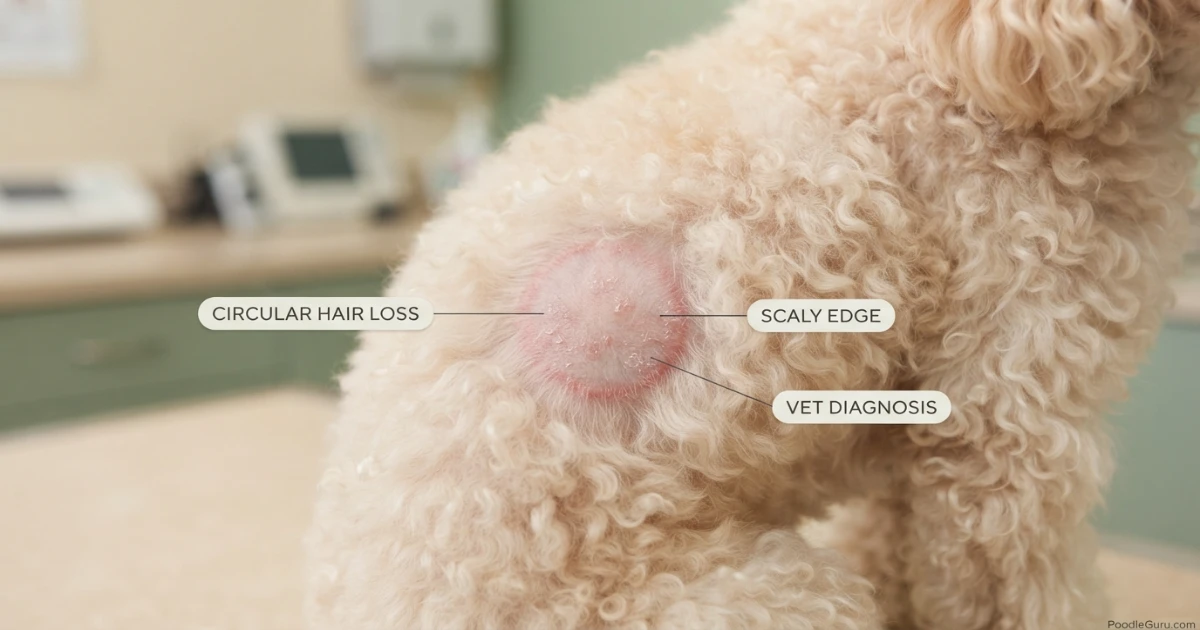
Symptoms can be sneaky. Poodles with their dense, often dark or richly colored coats may hide early lesions for weeks. You might feel a rough, crusty spot while brushing before you ever see it. The classic sign is one or more circular patches of hair loss with scaly, sometimes red skin at the border. The center may look grey or healed while the outer ring remains active — hence “ring.”
Other signs poodle owners commonly notice:
- Brittle, broken hairs around the lesion — the hair snaps off easily at skin level.
- Dandruff-like flakes that don’t improve with moisturizing sprays.
- Itchiness is variable. Some poodles scratch relentlessly; others show no discomfort at all.
- Nail bed infections (onychomycosis) — nails become rough, misshapen, or crumbly. This is less common but possible.
- Multiple lesions appearing over days — the infection can spread across the body, especially if the poodle licks or scratches.
🐩 Poodle-Specific Note
Because poodles have a single coat (no undercoat), lesions may be more visible once you part the hair. But their curly texture can trap scale and debris, making early detection harder. During regular grooming, run your fingertips over the skin — not just the coat — and pause to inspect any rough or gritty-feeling areas.
How Ringworm Spreads — And Why It Matters for Poodle Households
Ringworm is zoonotic, meaning it passes between animals and humans. Direct contact with an infected poodle is the most obvious route, but spores also transfer via contaminated brushes, clippers, bedding, carpets, and even air vents. Poodles who visit groomers, dog parks, or boarding facilities have a higher exposure risk — not because poodles are more susceptible, but because shared equipment can carry spores.
In multi-pet homes, ringworm can circulate silently for months. A cat may be an asymptomatic carrier, infecting your poodle repeatedly. Children, elderly individuals, and anyone with a compromised immune system are more vulnerable to catching ringworm from an infected dog. The typical human lesion is a red, raised, itchy ring — often on the arms or hands after cuddling. If a family member develops such a lesion, mention the poodle to your doctor.
Ringworm vs. Other Poodle Skin Conditions
Not every bald spot is ringworm. Poodles can develop hot spots, allergic dermatitis, sebaceous adenitis, or even post-clipper irritation that mimics fungal infection. Misidentifying the problem leads to wrong treatments — and wasted time. This table breaks down how ringworm compares to the most common look-alikes.
| Condition | Appearance | Itch Level | Contagious to Humans? | Typical Location on Poodle |
|---|---|---|---|---|
| Ringworm | Circular, scaly patches with broken hairs; may have red border | Variable (low to moderate) | Yes | Face, ears, paws, forelegs |
| Hot Spot | Moist, red, weeping, matted hair; often rapidly expanding | Intense | No (bacterial, not directly contagious) | Cheek, neck, hips |
| Allergic Dermatitis | Redness, small bumps, licking stains (paws brownish) | Moderate to severe | No | Paws, belly, inner thighs, ears |
| Sebaceous Adenitis | Symmetrical hair loss, silvery scaling, dull brittle coat | Minimal | No (hereditary) | Along the back, neck, tail base |
| Post-Clipper Irritation | Redness or small bumps shortly after grooming, no broken hairs | Mild | No | Areas that were closely clipped |
This comparison is for owner awareness only — a definitive diagnosis requires a veterinary exam, often with a fungal culture or PCR test. If you’re unsure, isolate your poodle from other pets and call your vet rather than self-treating.
The PoodleGuru Ringworm Action Plan
At PoodleGuru, we developed this three-part framework to help owners move from worry to action without wasting time on half-measures. It’s designed to be completed in order, with each step reinforcing the next.
Confirm the Diagnosis
Don’t guess. Your veterinarian will likely use a Wood’s lamp (some species glow green), a microscopic examination of hairs, or a fungal culture. A PCR test offers faster results. Starting treatment without a confirmed diagnosis can mask symptoms and delay proper care.
Start Dual Treatment
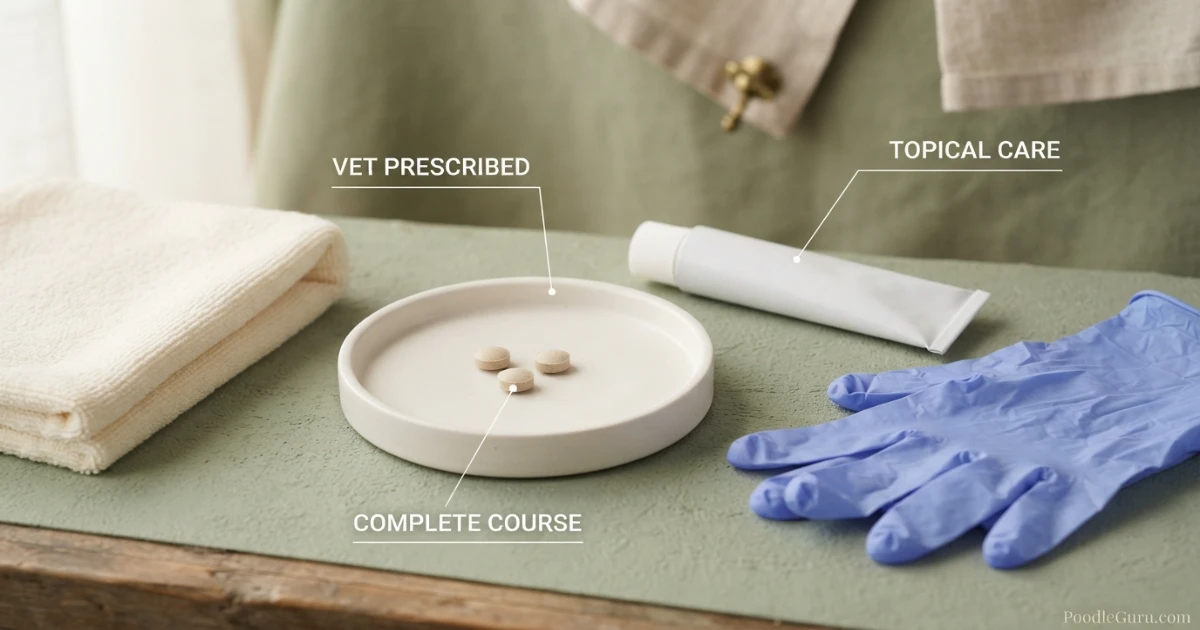
Topical therapy (medicated shampoos, rinses, or creams) helps reduce surface spore shedding and lowers contamination risk. Systemic oral antifungals may be prescribed when infection is extensive, persistent, or involving multiple areas. Your veterinarian will decide whether topical-only or combined therapy is appropriate. Exposed pets may need screening or treatment even if they show no signs.
Decontaminate Relentlessly
This is the step many households stop too early. Spores can linger in hair, dust, and fabrics. Follow the cleaning protocol your veterinarian recommends until your poodle is cleared. Many vets use repeat negative fungal cultures or PCR results to decide when the dog is no longer considered contagious.
When to Call a Veterinarian
Any unexplained hair loss in a poodle justifies a veterinary visit. But certain scenarios require more urgency:
🚨 See Your Vet Within 48 Hours If:
- You see one or more circular, scaly patches of hair loss — especially if new lesions appear daily.
- A family member develops a red, ring-shaped skin lesion after contact with the dog.
- The poodle has been in contact with a known ringworm-positive animal (at a groomer, park, or shelter).
- The lesions are on the face, near the eyes, or involving the nail beds — these areas can be harder to treat.
- You have multiple pets and one already has a confirmed diagnosis; all need screening.
Remember: a poodle can be a carrier even without obvious symptoms. Veterinarians often recommend screening all household animals when ringworm is confirmed in one.
Treatment Options for Poodle Ringworm
Treatment usually involves two fronts: the dog and the environment. The exact plan depends on lesion number, immune status, other pets in the home, and your veterinarian’s test results. Here’s what a veterinary treatment plan may include, tailored for poodle coat considerations.
Topical Therapy
Medicated shampoos containing miconazole, chlorhexidine, or ketoconazole are used to reduce spore shedding. For poodles, the challenge is getting the product through the dense coat to the skin. A groomer or vet may recommend clipping the hair around lesions to improve contact. Lime sulfur dips — while effective — have a strong odor and can temporarily stain a light-colored poodle’s coat yellowish. Your vet will advise if the benefit outweighs the cosmetic inconvenience.
Oral Antifungal Medication
Prescription drugs such as itraconazole, terbinafine, or fluconazole may be used when systemic therapy is needed. These medicines are given for weeks to months depending on test results and clinical response. Veterinarians often continue treatment until follow-up testing confirms clearance, even if the skin looks healed. Stopping too soon can contribute to recurrence. Blood monitoring may be advised to check liver function, especially in older poodles or dogs on longer courses.
Environmental Decontamination (See Section Below)
Without daily or twice-weekly cleaning of the poodle’s living space, treatment will fail. Spores on brushes, bedding, and floors reinfect the dog continuously.
For a broader medical overview of treatment protocols, PetMD’s ringworm resource for dogs details the medications and expected timelines that veterinarians commonly use.

How to Disinfect Your Home After a Poodle Ringworm Diagnosis
Fungal spores are stubborn. They can survive in carpet fibers, on grooming tools, and in dust for long periods, so environmental cleaning matters as much as medication. This step-by-step protocol helps reduce re-exposure while your veterinarian monitors recovery.
Isolate the Infected Poodle
Confine your poodle to one easy-to-clean room (tile or hardwood floor, no carpet) until cleared by the vet. This limits spore spread. Provide washable bedding and toys that can be laundered frequently.
Vacuum with a HEPA Filter Daily
Use a vacuum equipped with a HEPA filter on all floors, furniture, and even walls. Dispose of the vacuum bag or empty the canister outside immediately. This captures hair and spores that would otherwise resettle.
Wash All Fabrics in Hot Water
Bedding, blankets, slipcovers, and washable toys should be laundered in hot water (at least 140°F / 60°C) with detergent and a laundry sanitizer. Dry on high heat. Repeat twice weekly during treatment.
Disinfect Hard Surfaces with a Bleach Solution
Use the disinfectant and dilution your veterinarian recommends. For bleach-safe hard surfaces, a 1:10 household bleach dilution may be used with good ventilation, gloves, and the correct contact time before rinsing or allowing the area to dry. Never mix bleach with other cleaners. For items that cannot be bleached, ask about a veterinary-approved antifungal disinfectant.
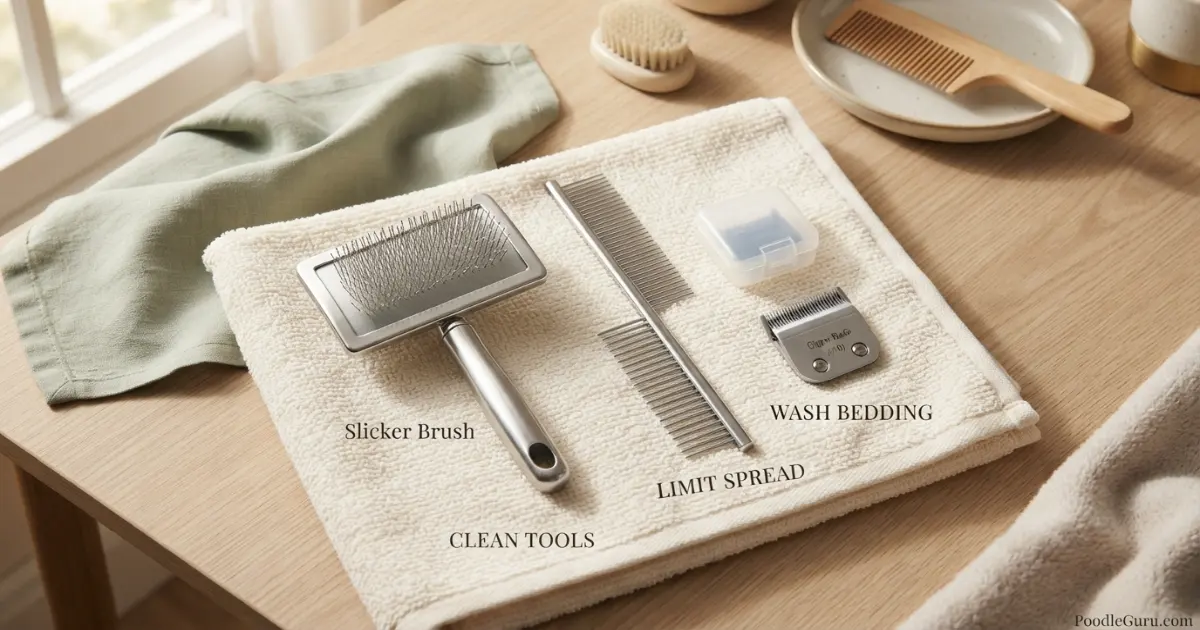
Sterilize Grooming Tools
Soak brushes, combs, and clipper blades in a disinfectant solution appropriate for metal (your vet can recommend one). Replace any porous grooming items like sponges or fabric grooming loops that cannot be fully sterilized.
Continue Until Cleared
Don’t stop cleaning just because the poodle’s skin looks better. Maintain the protocol until your veterinarian confirms two negative fungal cultures. This typically takes 4 to 8 weeks, sometimes longer.
📋 Helpful Reminder
Humans in the household should wash hands after handling the poodle, wear gloves when applying topical treatments, and avoid sharing towels or bedding with the dog during treatment. These simple steps dramatically reduce zoonotic transmission.
Prevention Strategies for Poodle Owners
You can’t reduce the risk to zero — especially if your poodle is a show dog or regularly socializes — but these practices significantly lower the odds of a ringworm outbreak.
- Inspect your poodle’s skin weekly as part of your grooming routine. Early detection stops spread before it explodes.
- Ask your groomer about sanitation protocols. A reputable salon disinfects tools, tables, and tubs between clients. Don’t be shy about asking.
- Quarantine new pets for at least two weeks before introducing them to your resident poodle. A veterinary skin check during that period is ideal.
- Boost overall skin health through a high-quality diet rich in omega-3 fatty acids. Healthy skin is more resistant to fungal invasion. You can learn more about poodle-specific nutrition in our best food guide for poodles.
- Disinfect your home grooming tools after every full groom, not just when you suspect a problem. This simple habit protects your poodle and you.
Frequently Asked Questions About Poodle Ringworm
Can I catch ringworm from my poodle?
Yes. Ringworm is zoonotic and spreads through direct contact with infected skin or contaminated objects. If you develop a red, ring-shaped, itchy patch on your skin, see your doctor and mention your poodle’s diagnosis. Good hand hygiene during treatment minimizes the risk.
How long does ringworm last in poodles?
With proper treatment, mild cases may resolve in 4 to 6 weeks. More extensive infections can take several months. The critical factor is environmental decontamination — spores in the home will keep re-infecting the dog if cleaning isn’t maintained until the vet confirms clearance.
Do I need to shave my poodle’s coat to treat ringworm?
Not always, but it can help. Clipping the hair around lesions improves contact with topical medications and reduces spore shedding into the environment. Your veterinarian will advise whether spot-clipping or a full body clip is appropriate based on the extent of the infection.
Can ringworm go away on its own in dogs?
While some healthy dogs may eventually clear a minor infection, relying on self-resolution is risky. The poodle remains contagious to other pets and humans throughout, and lesions can spread and worsen. Veterinary treatment dramatically shortens the course and reduces transmission.
Is the Wood’s lamp test accurate for diagnosing ringworm in poodles?
Only some species of dermatophyte (particularly Microsporum canis) fluoresce under a Wood’s lamp. A negative result doesn’t rule out ringworm. Veterinarians often use the lamp as a quick screening tool but confirm with fungal culture or PCR for a definitive diagnosis.
Can my poodle go to the groomer if they have ringworm?
No. An infected poodle should not visit a grooming salon until cleared by a veterinarian. Ringworm spores contaminate equipment and surfaces, putting other dogs at risk. Discuss at-home grooming alternatives with your vet during treatment.
What disinfectant kills ringworm spores?
A 1:10 dilution of household bleach is effective, as are accelerated hydrogen peroxide products formulated for veterinary use. Always ensure adequate contact time (at least 10 minutes) and rinse surfaces thoroughly if the poodle will have direct contact afterward.
Key Takeaways
Ringworm is a nuisance — not a catastrophe — when managed correctly. Here’s what poodle owners need to remember:
- Ringworm in poodles is a fungal infection (not a worm) that can cause circular, scaly patches of hair loss and can spread to humans and other animals.
- A definitive veterinary diagnosis with a fungal culture or PCR is essential before starting treatment — guessing wastes time and risks spread.
- Effective treatment often combines topical therapy, prescription oral antifungals when indicated, and rigorous environmental cleaning.
- Poodle coats can hide early lesions; weekly skin checks during brushing are the best early detection tool you have.
- Disinfecting grooming tools, washing bedding in hot water, and using a bleach solution on hard surfaces are non-negotiable until the vet confirms clearance.
- Most poodles recover fully within weeks to a few months; the most common reason for prolonged infection is inconsistent home cleaning.
If you suspect ringworm, your immediate next step is to isolate your poodle from other pets and schedule a veterinary skin exam. Early, methodical action is the difference between a brief inconvenience and a drawn-out battle.