Poodle Kidney Disease: Symptoms & Treatment
Kidney disease is one of the most serious health challenges a poodle owner can face — and also one of the most misunderstood.
This guide walks you through what actually matters: spotting the earliest signals, understanding your options, and giving your poodle the best possible support at every stage.

Quick Answer
Kidney disease in poodles is a condition where the kidneys lose their ability to filter waste from the blood effectively. It can be acute (sudden onset, often triggered by toxins or infection) or chronic (slowly progressive, commonly age-related or genetic).
Early warning signs include increased thirst, more frequent urination, reduced appetite, weight loss, and intermittent vomiting. Treatment ranges from prescription kidney diets and fluid therapy to medications that manage blood pressure and protein loss.
Catching it early makes a meaningful difference — and that starts with knowing what to watch for.
If you’re searching for information about poodle kidney disease, you’re probably worried. Maybe you noticed your poodle drinking more water than usual. Maybe your vet mentioned elevated kidney values during a routine blood panel.
Or maybe you’re a prospective poodle buyer doing thorough research before bringing a puppy home. Whatever brought you here, you’re in the right place.
Poodles — particularly Standard Poodles — have breed-specific considerations when it comes to kidney health. This isn’t just another generic dog-health article with “poodle” swapped into the headline. Every section here was built from the ground up with poodle owners in mind.
The kidneys are remarkably resilient organs. They can function with significant damage before outward symptoms appear. That resilience is both a blessing and a trap: it buys time, but it also means owners can miss the early window when intervention matters most.
Understanding how kidney disease unfolds in poodles specifically gives you a real advantage.
🐩 Breed Relevance
Standard Poodles may carry a higher genetic risk for certain kidney conditions, including familial glomerulonephropathy. Toy and Miniature Poodles are not immune.
⏱️ Early Detection
Routine bloodwork and urinalysis can reveal kidney decline months or even years before visible symptoms appear. Annual screening is recommended for poodles over 7.
🍽️ Diet Is Central
Prescription renal diets are one of the most clinically supported interventions for slowing chronic kidney disease progression in dogs.
What Is Kidney Disease in Poodles?
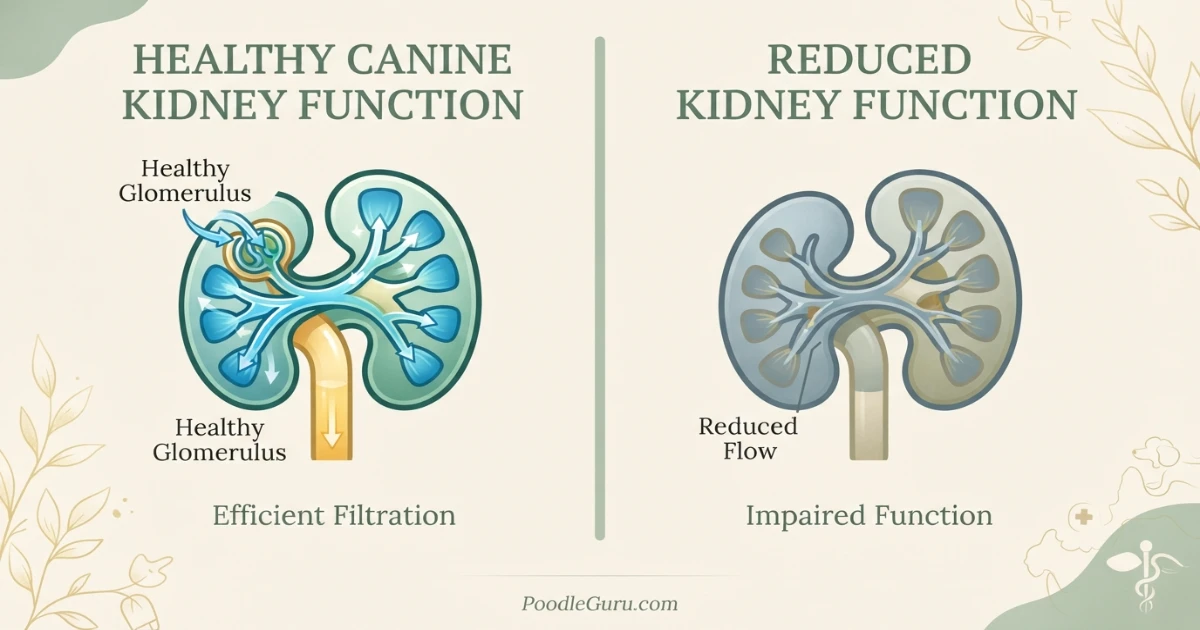
Kidney disease — also called renal disease — is a condition where the kidneys progressively lose their ability to filter metabolic waste, balance electrolytes, and regulate fluid levels in the body.
For poodle owners, this means the organs responsible for cleaning your dog’s blood are gradually working less efficiently.
The most important thing to understand is that kidney tissue doesn’t regenerate; once nephrons (the kidney’s filtering units) are lost, they’re gone for good.
Veterinary professionals distinguish between two broad categories:
Acute kidney injury (AKI) hits suddenly. A toxin — antifreeze, certain medications, grapes or raisins, a severe infection — triggers rapid kidney damage over hours or days. AKI is a medical emergency.
With aggressive treatment, some dogs recover partial or full function, but the window for intervention is narrow.
Chronic kidney disease (CKD) develops slowly, often over months or years. It’s more common in aging poodles and may be linked to genetic predisposition, long-term wear, or undetected low-grade damage that accumulates.
CKD cannot be cured, but its progression can often be slowed significantly with consistent management.
For a deeper understanding of how kidney function declines in dogs, the VCA Animal Hospitals guide to chronic kidney failure provides an excellent veterinary overview of staging, diagnosis, and treatment principles.
Early Symptoms of Poodle Kidney Disease
Here’s the challenge: early kidney disease is quiet. Poodles are stoic, clever dogs. They don’t complain. By the time you notice unmistakable signs, significant function may already be lost. That’s why knowing the subtle signals matters so much.
The two earliest and most reliable owner-observed changes are increased thirst and increased urination. You might notice your poodle draining the water bowl faster, asking to go outside more often, or having accidents overnight when they never did before.
These changes happen because the kidneys can no longer concentrate urine effectively, so the body compensates by drinking more.
Other early signs owners sometimes notice:
- Subtle appetite changes — not outright refusal, but less enthusiasm at mealtime, especially in the morning
- Mild weight loss — a pound or two that you might attribute to age or activity changes
- Occasional nausea — lip-smacking, gulping, or grass-eating without obvious cause
- Slightly dull coat — loss of the characteristic poodle sheen, drier skin
- Low-grade lethargy — still playful but tiring faster than usual
🐩 Poodle-Specific Observation
Poodles are naturally alert, engaged dogs. A poodle who seems “a little off” for more than a few days — even without dramatic symptoms — deserves a veterinary evaluation. Because poodles tend to be emotionally expressive, owners are often very attuned to subtle behavioral shifts.
Trust that instinct. In the context of kidney health, “just not himself” is a valid reason to run bloodwork.
Stages of Kidney Disease in Poodles
Veterinarians stage chronic kidney disease using the International Renal Interest Society (IRIS) guidelines, which consider blood creatinine, SDMA (symmetric dimethylarginine), urine protein, blood pressure, and overall clinical context.
Understanding these stages helps owners grasp where their poodle is on the spectrum — and what that means for care decisions.
| IRIS Stage | Creatinine (mg/dL) | SDMA (µg/dL) | Typical Owner Observations | Management Focus |
|---|---|---|---|---|
| Stage 1 | <1.4 | <18 | No visible symptoms; abnormal lab values only | Identify underlying cause; monitor progression |
| Stage 2 | 1.4–2.0 | 18–35 | Possibly mild increase in thirst; subtle weight changes | Begin renal diet; track blood pressure and proteinuria |
| Stage 3 | 2.1–5.0 | 36–54 | Noticeable thirst, appetite decline, weight loss, occasional vomiting | Aggressive dietary management; fluid therapy; medication for symptoms |
| Stage 4 | >5.0 | >54 | Significant clinical signs; risk of uremic crisis | Intensive supportive care; quality-of-life conversations |
These stages aren’t rigid boxes — a poodle can hover between stages or progress slowly over years. What matters is the trend. A creatinine value that’s rising steadily over multiple visits tells a more important story than any single number.
What Causes Kidney Disease in Poodles?
Kidney disease in poodles doesn’t have one single cause. It’s more accurate to think of it as a destination reached by several possible roads. Understanding which road your poodle may be on helps guide expectations and decisions.
Genetic and Breed-Related Factors
Standard Poodles are recognized within veterinary circles as a breed that may be predisposed to certain kidney conditions, including familial glomerulonephropathy — a condition where the kidney’s filtering units become damaged by protein loss.
This isn’t something that affects every Standard Poodle, but responsible breeders screen for it.
The AKC Poodle breed page notes that Standard Poodles may be affected by several heritable conditions, and kidney health falls within the scope of recommended breed health screening.
Age-Related Decline
All dogs experience some degree of age-related kidney wear. Toy and Miniature Poodles, which often live well into their mid-teens, may simply outlive optimal kidney function. This doesn’t mean kidney disease is inevitable — it means screening becomes increasingly important as poodles age.
Toxin Exposure
Certain substances are directly toxic to canine kidneys. Grapes and raisins top this list — even small amounts can trigger acute kidney injury in susceptible dogs. Some human medications (particularly NSAIDs like ibuprofen), ethylene glycol (antifreeze), and certain plants also pose risks.
Poodles, with their curious and food-motivated nature, may be at practical risk if these items are accessible.
Infection and Obstruction
Untreated urinary tract infections can ascend to the kidneys. Bladder stones that cause chronic partial obstruction may also damage kidney tissue over time. These are often treatable when caught early, which is why any poodle with recurrent UTIs should have kidney function evaluated.
The PoodleGuru 4-Point Kidney Health Check
At PoodleGuru, we developed a simple monitoring framework that helps owners track what matters between veterinary visits. This isn’t a diagnostic tool — it’s an observation system designed to catch changes early and give your vet meaningful data.
Use it monthly for poodles over 7, or immediately if you have any concerns.
Water Intake Tracking
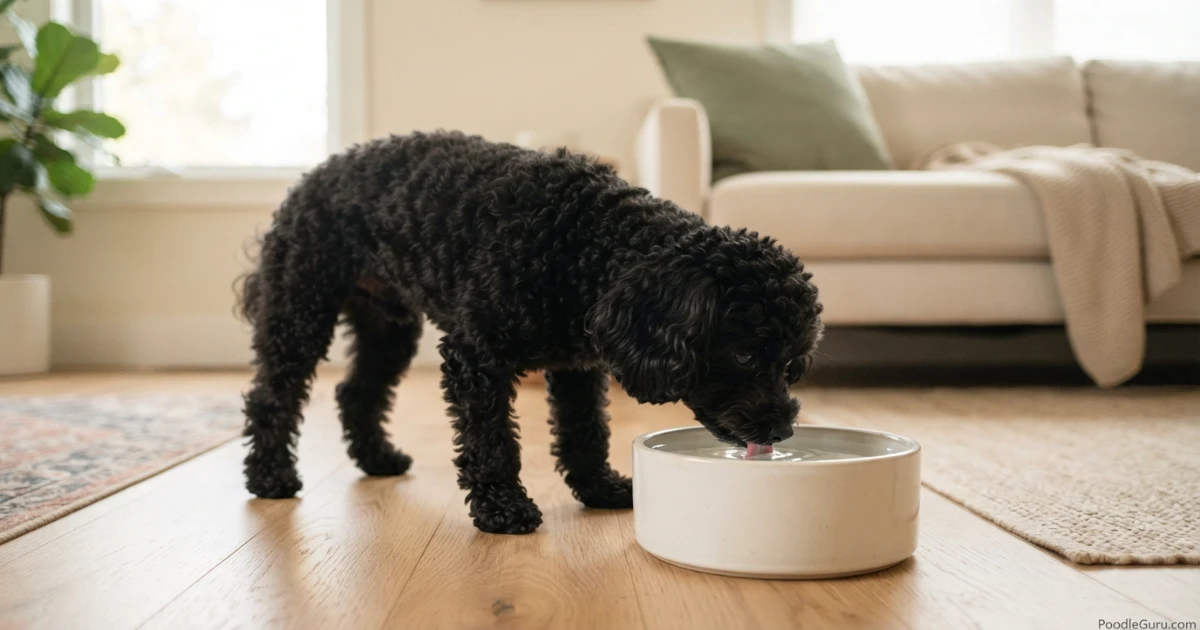
Measure how much water your poodle drinks in a 24-hour period. Normal intake is roughly 1 ounce per pound of body weight daily, though diet (dry vs. wet food) shifts this. A sustained increase without obvious cause — hotter weather, more exercise — warrants a vet conversation.
Write down the number; don’t trust memory.
Urination Pattern Log
Note frequency, volume, and any accidents. A poodle who suddenly can’t make it through the night or produces noticeably larger urine puddles is signaling something.
Color matters too — very pale, almost clear urine that persists for days can indicate dilute urine from reduced kidney concentrating ability.
Appetite & Weight Check
Weigh your poodle every two weeks on the same scale. A loss of even 5% of body weight over a month — without intentional diet changes — is significant. Pair this with appetite observations: is your poodle still excited about meals? Are they leaving food behind?
Are they more selective than usual?
Coat & Energy Scan
Run your hands over your poodle’s coat weekly. Does it feel different — drier, thinner, less springy? Poodle coats often reflect internal health. Combine this with an honest energy assessment: is your dog still enthusiastic about walks, play, and interaction?
Subtle declines in these areas are easy to dismiss but important to track.
📋 Owner Tip
Keep a simple note on your phone or a small notebook near the water bowl. Jot down refill amounts and dates.
When you bring this data to your vet instead of saying “I think he’s drinking more,” you provide actionable information that can prompt earlier testing.
When to Call a Veterinarian
Some situations require immediate veterinary attention — not a wait-and-see approach. Here’s how to distinguish what’s urgent from what can be scheduled.
🚨 Emergency — Seek Immediate Veterinary Care
- Complete loss of appetite lasting more than 24 hours
- Repeated vomiting or diarrhea, especially if accompanied by lethargy
- Sudden collapse, disorientation, or inability to stand
- No urination for 12+ hours despite water intake
- Known or suspected ingestion of toxins (grapes, antifreeze, certain human medications)
- Breath that smells distinctly like ammonia or urine
📅 Schedule a Veterinary Visit Within the Week
- Increased thirst and urination that’s persisted for more than 5–7 days
- Gradual but noticeable weight loss without diet changes
- Mild, intermittent vomiting (once or twice weekly)
- Coat quality decline alongside any other symptom
- Your poodle “just seems off” and the feeling persists
This guidance is not a replacement for professional judgment. If you’re unsure, err on the side of calling your vet. Poodle owners who advocate early for bloodwork and urinalysis often catch kidney disease at more manageable stages.
Treatment Options for Poodle Kidney Disease
Treatment for poodle kidney disease depends entirely on whether you’re dealing with acute injury or chronic disease — and, for CKD, which stage your dog is in. There is no single protocol.
What follows reflects the approaches veterinary professionals commonly recommend, organized by what owners need to understand most.
For Acute Kidney Injury
Acute kidney injury typically requires hospitalization. Intravenous fluid therapy is the cornerstone — it flushes toxins, supports blood flow to the kidneys, and corrects electrolyte imbalances.
Depending on the cause, your vet may also administer specific antidotes (for known toxin exposures), antibiotics (for infection), or medications to manage vomiting and nausea.
The goal is to stabilize kidney function and prevent permanent damage. Some poodles recover fully; others sustain lasting impairment. The speed of intervention is the biggest variable in the outcome.
For Chronic Kidney Disease
Chronic kidney disease management is a marathon, not a sprint. The goals shift from “cure” to “slow progression and maintain quality of life.” The key pillars include:
Prescription renal diets are the single most evidence-backed intervention for CKD. These diets are formulated with reduced phosphorus, controlled high-quality protein, added omega-3 fatty acids, and adjusted mineral levels. They’re designed to reduce the workload on remaining nephrons.
Most veterinary professionals recommend transitioning to a renal diet as soon as CKD is diagnosed — even in early stages.
Blood pressure management matters because hypertension both results from and worsens kidney damage. Medications like angiotensin-converting enzyme (ACE) inhibitors may be prescribed to reduce protein loss through urine and protect remaining kidney function.
Phosphate binders are sometimes added when dietary phosphorus restriction alone isn’t enough to keep blood phosphorus levels in the target range. These are given with meals and work by binding dietary phosphorus in the gut so it passes through without being absorbed.
Subcutaneous fluid therapy — giving fluids under the skin at home — becomes relevant in later stages when a poodle can’t maintain hydration through drinking alone. Many owners learn to do this comfortably with veterinary training. It sounds intimidating; most people adjust quickly.
Anti-nausea medications and appetite stimulants help maintain food intake and quality of life when uremic toxins build up enough to cause gastrointestinal symptoms.
| Feature | Acute Kidney Injury | Chronic Kidney Disease |
|---|---|---|
| Onset | Hours to days | Months to years |
| Common Triggers | Toxins, infection, obstruction, severe dehydration | Age, genetics, long-term wear, underlying conditions |
| Reversibility | Potentially reversible with rapid treatment | Not reversible; progression can be slowed |
| Treatment Setting | Usually inpatient / hospitalized | Mostly outpatient / at-home management |
| Dietary Intervention | Temporary support during recovery | Lifelong prescription renal diet |
| Prognosis | Variable; depends on cause and speed of care | Managed long-term; focus on quality of life |
Diet and Nutrition for Poodles with Kidney Disease
If there’s one intervention that consistently changes the trajectory of chronic kidney disease, it’s diet. Prescription renal diets aren’t marketing — they’re grounded in clinical evidence and are formulated to address the specific metabolic challenges of reduced kidney function.
The Merck Veterinary Manual notes that renal diets for dogs with CKD are typically lower in phosphorus and use modest amounts of high-quality protein.
The core principles of a renal diet include phosphorus restriction (high phosphorus accelerates kidney damage), controlled protein quantity with high biological value (enough to maintain muscle without overloading the kidneys with nitrogenous waste), increased omega-3 fatty acids (anti-inflammatory and potentially renoprotective), and adjusted sodium and potassium levels to support electrolyte balance.
Owners sometimes resist prescription diets because they’ve heard “lower protein is bad for dogs.” This misses the nuance. Renal diets don’t eliminate protein — they carefully control it and ensure every gram counts.
The goal is to meet protein needs without creating excess waste that damaged kidneys struggle to clear.
A poodle who refuses a renal diet creates a real dilemma. Veterinary nutritionists often recommend trying different brands and formats — canned, dry, or fresh-prepared renal formulations. Warming the food slightly, adding a small amount of low-sodium broth, or hand-feeding during the transition period can help.
The most important principle is that eating something appropriate is better than eating nothing at all. Work closely with your vet if your poodle is a picky eater.

Living with a Poodle Who Has Kidney Disease
A CKD diagnosis is heavy. But it’s not the end of good days. Many poodles live comfortably for years after diagnosis with thoughtful management.
The emotional shift for owners is real — you move from “we’ll fix this” to “we’ll manage this together.” That’s a different mindset, and it takes time to settle in.
Practical daily life with a kidney-disease poodle often includes:
- Consistent medication schedules — phosphorus binders with meals, blood pressure medications at set times, possibly anti-nausea drugs as needed
- Fresh water always available — multiple bowls around the house, refreshed frequently
- More frequent potty breaks — increased urination is a reality; adjusting your schedule prevents accidents and frustration
- Gentle exercise maintained — walks and play shouldn’t stop; adjust intensity based on energy levels
- Regular weigh-ins at home — a baby scale works well for Toy and Miniature Poodles; a platform scale for Standards
💛 Quality of Life Perspective
Poodles don’t dwell on diagnosis the way humans do. Your poodle lives in the present — the sunny spot on the rug, the morning walk, the treat after dinner. Protecting those moments, even while managing a serious condition, is what good care looks like.
Grieve the diagnosis if you need to, then focus on what’s still here.
Prevention Strategies for Poodle Owners
You can’t prevent every case of kidney disease. Genetics and age are beyond your control. But you can meaningfully reduce risk and dramatically improve the odds of early detection — which often translates to better outcomes.
Annual Bloodwork and Urinalysis
This is the single most important prevention tool. Starting at age 7 (or earlier for Standard Poodles with a family history of kidney issues), annual senior blood panels that include creatinine, BUN, SDMA, and a urinalysis give your vet a moving picture of kidney health.
VCA explains that urinalysis is essential for interpreting kidney blood values properly. Trends matter more than individual values. An SDMA that rises from 12 to 16 over two years is far more informative than a single reading of 14.
Hydration Habits
Chronic low-grade dehydration stresses the kidneys. Encourage water intake by keeping bowls clean and fresh, placing multiple water stations around your home, and considering wet food or water added to kibble for poodles who don’t drink enthusiastically.
Some poodles prefer running water — a pet fountain can increase intake noticeably.
Dental Health
The link between dental disease and kidney stress is well-documented in veterinary medicine. Bacteria from infected gums enter the bloodstream and are filtered by the kidneys, creating chronic low-level inflammation.
Regular dental care — brushing, professional cleanings, dental chews approved by your vet — protects more than teeth.
Toxin Awareness
Know the common kidney toxins and keep them inaccessible: grapes, raisins, antifreeze, lilies (for cats, but worth noting in multi-pet homes), and human NSAIDs. Poodles are intelligent and curious — childproof locks on low cabinets aren’t excessive if your poodle has a history of investigative snacking.
Responsible Breeding
If you’re buying a poodle puppy, ask breeders about kidney health in their lines. Reputable breeders screen for known heritable conditions and should be willing to discuss health testing results openly.
The AKC Poodle breed information outlines recommended health screenings — kidney-related concerns fall within the scope of responsible breeding practices.

Frequently Asked Questions About Poodle Kidney Disease
What are the very first signs of kidney disease in poodles?
Increased thirst and increased urination are typically the earliest owner-observed signs. You may notice your poodle emptying the water bowl faster, needing more frequent potty breaks, or having nighttime accidents.
These changes happen because damaged kidneys lose their ability to concentrate urine, so the body attempts to compensate by drinking more water.
How long can a poodle live with kidney disease?
Life expectancy varies significantly based on the stage at diagnosis, the underlying cause, and how consistently management protocols are followed. Poodles diagnosed at Stage 1 or 2 CKD can live for years with good quality of life.
Those diagnosed at Stage 4 face a more guarded prognosis, often measured in months. Early detection is the single biggest variable owners can influence.
Is kidney disease more common in Standard Poodles than Toy or Miniature?
Standard Poodles may carry a higher genetic predisposition to certain kidney conditions, including familial glomerulonephropathy. However, Toy and Miniature Poodles are not immune — they can develop kidney disease through age-related decline, toxin exposure, infection, or other pathways. All poodle sizes benefit from regular screening.
Can kidney disease in poodles be reversed?
Acute kidney injury can sometimes be partially or fully reversed with rapid, aggressive treatment — especially when the cause is identified and addressed quickly. Chronic kidney disease, however, involves permanent nephron loss and cannot be reversed.
Treatment for CKD focuses on slowing progression, managing symptoms, and preserving quality of life.
What should I feed my poodle with kidney disease?
Most veterinarians recommend a prescription renal diet formulated specifically for dogs with kidney disease. These diets are low in phosphorus, contain controlled amounts of high-quality protein, and include added omega-3 fatty acids.
Brands like Hill’s Prescription Diet k/d, Royal Canin Renal Support, and Purina Pro Plan Veterinary Diets NF are commonly recommended. Always consult your vet before making dietary changes.
How is kidney disease diagnosed in poodles?
Diagnosis typically involves bloodwork (measuring creatinine, BUN, and SDMA levels), a urinalysis (assessing urine concentration and checking for protein loss), and often blood pressure measurement. Imaging such as ultrasound may be used to evaluate kidney structure.
The SDMA test can detect kidney function decline earlier than creatinine alone, making it a valuable screening tool for poodles at risk.
Does my poodle need subcutaneous fluids at home?
Subcutaneous fluid therapy is typically introduced in later stages of CKD when a poodle can no longer maintain adequate hydration through drinking alone. Your veterinary team will teach you the technique if and when it becomes necessary.
Many owners find it less daunting than expected once they’ve practiced under guidance.
Can a poodle with kidney disease still enjoy a good quality of life?
Yes. With consistent management — appropriate diet, medications when needed, fresh water always available, and regular veterinary monitoring — many poodles with CKD continue to enjoy walks, play, affection, and comfortable days for months or years after diagnosis.
Quality of life should be an ongoing conversation with your veterinarian, not a single decision point.
Key Takeaways
Poodle kidney disease is serious — but it’s also manageable when caught early and approached with a clear, consistent care plan. Here’s what matters most:
- Increased thirst and urination are the earliest and most reliable owner-observed signs of kidney disease in poodles — track them, don’t dismiss them.
- Chronic kidney disease is staged from 1 to 4 using blood creatinine, SDMA, urine protein, and blood pressure measurements; treatment intensity matches the stage.
- Prescription renal diets are the most clinically supported intervention for slowing CKD progression — they’re not optional extras, they’re foundational care.
- Annual bloodwork and urinalysis starting at age 7 (or earlier for at-risk Standard Poodles) provides the best chance of catching kidney decline before symptoms appear.
- Acute kidney injury is a medical emergency — rapid veterinary intervention can mean the difference between recovery and permanent damage.
- Poodles with kidney disease can maintain good quality of life with consistent management; diagnosis is not the end of good days.
If your poodle is showing any of the symptoms described in this guide, the best next step is simple: schedule a veterinary visit and request bloodwork that includes SDMA and a urinalysis. The information you gather today shapes the options you’ll have tomorrow.