Do Poodles Like To Be Held And Carried? Lap Dog Tendencies
You picked a poodle hoping for a cuddly shadow. But now you’re wondering: does my poodle actually enjoy being scooped up, or am I just projecting? The real answer is more nuanced than a simple yes or no — and it matters for your bond.

Quick Answer
Whether a poodle likes being held depends on the individual dog — not the size or coat color. Many poodles enjoy close contact and will seek out laps, while others prefer to sit nearby without being restrained. Early socialization, gentle handling, and respect for their body language are far more predictive than any breed stereotype. If you want a cuddly poodle, you can encourage it, but you cannot force it. The key is learning to read your dog’s consent.
What “Lap Dog Tendency” Means for Poodles
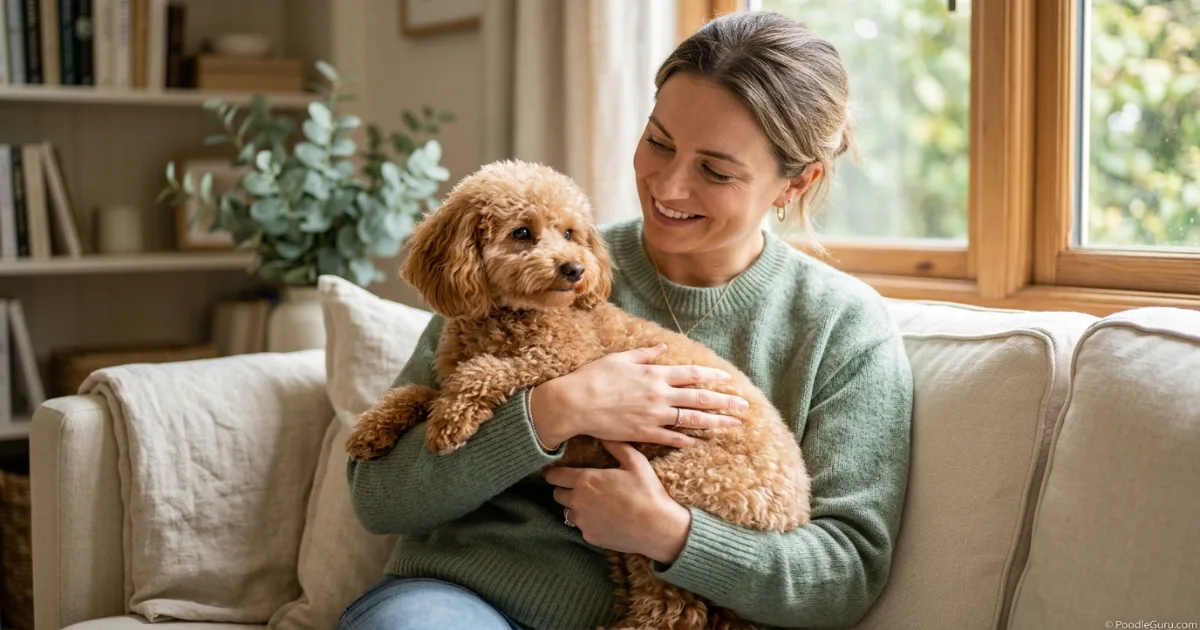
Lap dog tendency is a behavioral trait that describes how much a dog seeks out and enjoys close physical contact with their owner — being held, carried, or curled up on a lap. For poodle owners, this means understanding that their dog’s desire for cuddles isn’t guaranteed by the breed’s reputation for being affectionate. The most important thing to understand is that poodles are highly attuned to human emotion and respond best to physical affection that respects their autonomy. A poodle who leans into your touch is giving genuine consent; one who tolerates it stiffly isn’t.
Do Poodles Like to Be Held? Quick Facts
It’s Individual, Not Breed-Wide
Some poodles demand lap time. Others prefer a spot beside you. Neither one is “wrong” — it’s personality, not a training failure.
Size Doesn’t Dictate Cuddliness
A 50-pound Standard can be a devoted lap dog; a 5-pound Toy can be fiercely independent. Don’t rely on size stereotypes.
Consent Matters
Forcing a poodle into a hold they dislike can erode trust. Reading their signals is more important than your desire for a cuddle.
What Influences a Poodle’s Cuddle Preferences?
Six core factors shape whether your poodle will be a lap dog, a “nearby companion,” or a hands-off friend. None of them are fixed — early experiences and gentle training can shift preferences, but never override the dog’s core temperament.
1. Genetic Predisposition and Breeding Line
Poodles were originally bred as retrievers, not lap warmers. While generations of companionship have softened this, some lines retain more independence. The AKC breed standard describes the poodle as “proud, active, and intelligent,” not necessarily velcro. If a puppy’s parents were aloof, the pup may be too.
2. Early Socialization During the Critical Window
Puppies handled gently and positively between 3 and 16 weeks often grow into adults comfortable with being held. Rough handling, early separation, or lack of human touch during this period can create lasting wariness. Good breeders start this from day one.
3. Individual Personality and Temperament
Some poodles are natural snugglers; others are more cat-like — affectionate on their own terms. This inborn personality is something you can work with, not against. A poodle who dislikes being picked up may still adore chest scratches while keeping all four paws on the ground.
4. Physical Comfort and Health Status
A poodle with joint pain, arthritis, or an injury may flinch from being held because it hurts. Sudden refusal to be picked up in a previously cuddly dog warrants a vet check. Similarly, overheating can make a thick-coated poodle avoid body heat.
5. Past Experiences and Trauma
Rescue poodles or those from neglectful situations may associate being grabbed with fear. Patience and consent-based handling are non-negotiable here.
6. Owner Handling Style
Poodles are sensitive. If you scoop them up abruptly, squeeze tightly, or ignore their squirms, they’ll learn to dread it. Your technique directly shapes their preference.
How to Tell If Your Poodle Enjoys Being Held
Dogs communicate clearly — if you know what to look for. Poodles are particularly expressive. The table below breaks down body language signals so you can read consent instantly.
| Signal | Sign of Enjoyment | Sign of Discomfort |
|---|---|---|
| Body Posture | Loose, relaxed, leaning into you | Stiff, frozen, leaning away or pushing |
| Tail | Soft, mid-level wag or relaxed | Tucked or held rigidly low |
| Ears | Neutral or soft | Pinned back or flicking |
| Eyes | Soft, blinking, or gently closed | Whale eye (showing whites), hard stare, wide open |
| Mouth | Relaxed, slightly open, may lick your hand | Lip licking, yawning, panting when not hot, closed mouth tight |
| Behavior After | Seeks more contact or stays relaxed | Immediately shakes off, moves away, avoids you |
Learning to read canine body language is one of the most important skills a poodle owner can develop.
The PoodleGuru Cuddle Compatibility Assessment
At PoodleGuru, we use a simple five-question checklist to evaluate your poodle’s natural inclination toward being held. Answer honestly — this isn’t about good or bad, it’s about understanding your dog.
1. Does your poodle initiate contact?
They climb onto your lap, nudge your hand, or lean against you without being invited. Yes suggests high cuddle drive.
2. What happens when you sit on the floor?
A cuddly poodle will often immediately come over and press into you. An independent one may stay put or briefly check in.
3. How does your poodle react to being picked up?
If they melt into your arms, they’re comfortable. If they go rigid or squirm, they’re tolerating at best.
4. Does your poodle seek lap time when stressed?
Dogs who jump into your lap during storms or fireworks view you as a safe haven — a strong trust signal.
5. Can you touch paws, ears, and tail without resistance?
Poodles comfortable with handling all over are more likely to accept being held. Sensitivity in any area may predict cuddle refusal.
How to Teach Your Poodle to Enjoy Being Held
If your poodle is reluctant, you can gently build positive associations. Never force it. Use this step-by-step approach to create a poodle who sees your arms as a safe, rewarding place.
Start With Floor-Level Affection
Sit on the floor and offer gentle chest scratches. Don’t reach over their head. Let them lean into your hands. Pair with soft praise.
Lure Into Your Lap Using Treats
Place a trail of small, high-value treats leading onto your lap. Let them decide to step up. Don’t pull them. Reward heavily when they place a paw on your leg.
Keep Early Sessions Extremely Short
10 seconds of lap time, then release before they want to leave. This builds anticipation, not dread. End on a positive note.
Gradually Introduce Light Arm Support
Once they’re happily resting on your lap, gently place one arm around them — no squeezing. Reward with a treat and release within seconds.
Teach a “Consent Cue” Like “Up” or “Cuddle”
Always ask first. Extend your arms and say your cue. If they step toward you, lift gently. If they look away or back up, respect that “no.”
Never Punish Escape
If they squirm, immediately let them down calmly. Scolding or holding tighter teaches them that being held is a trap. Trust dissolves fast.
Owner Mistakes That Make Poodles Dislike Being Held
Even well-intentioned owners can accidentally teach their poodle that human arms are unpleasant. These are the most common pitfalls.
Picking Up Without Warning
Scooping a poodle from behind or while they’re sleeping startles them. Always approach from the front and use a verbal cue first.
Holding Too Tightly or Restricting Movement
A firm grip can feel like restraint to a sensitive dog. Support their body, but don’t clamp down. Let them shift position.
Ignoring “I’m Done” Signals
Lip licking, looking away, and subtle stiffening are polite requests to be put down. Ignoring them teaches your poodle that signals don’t work — next time they’ll growl.
Toy vs Miniature vs Standard: Cuddle Tendencies and Handling Needs
While size doesn’t dictate a poodle’s love of being held, it affects how you hold them and what’s physically comfortable. This table blends size considerations with typical temperament patterns — but remember, individual variation always rules.
| Attribute | Toy Poodle | Miniature Poodle | Standard Poodle |
|---|---|---|---|
| Weight Range | 4–6 lbs | 10–15 lbs | 40–70 lbs |
| Ease of Carrying | Very easy to scoop and carry one-handed | Comfortable to carry in arms, but for shorter distances | Not practical to carry extensively; better to invite onto lap |
| Typical Lap Dog Inclination | Often loves being held and carried; can become velcro | Moderate; many enjoy laps but also independence | Surprisingly many are lap-seeking despite size; will lean, not be lifted |
| Safety Note | Fragile; support chest and hindquarters; avoid drops | Sturdy but still small; teach children gentle handling | Weight can hurt if they jump off; teach “off” cue for laps |
When a Sudden Change in Cuddle Behavior Is a Red Flag
If your previously snuggly poodle suddenly avoids being touched or picked up, don’t assume they’re being stubborn. Pain is the most common cause. Have your veterinarian rule out:
- Ear infections
- Back or joint pain
- Dental disease
- Abdominal discomfort
A clean bill of health is step one before addressing any behavioral change around handling.
Building a Bond Without Forcing Cuddles
Not every poodle is a lap dog. That’s okay. You can still have a deeply connected relationship. Try these alternatives: lying on the floor together during TV time, hand-feeding meals, teaching cooperative care for grooming, and offering massage. A poodle who trusts you with their paws and ears trusts you more than one who tolerates being held out of habit. Focus on that trust — the cuddles often follow, on their terms.
Frequently Asked Questions
Do all poodles like to be held?
No. While many poodles are affectionate and enjoy closeness, individual preference varies widely. Some love being carried and cuddled, others prefer to sit beside you. It’s a personality trait, not a breed failing.
Are toy poodles more cuddly than standard poodles?
Not necessarily. Toy Poodles are small and easy to carry, which can make them seem cuddlier, but many Standard Poodles are devoted lap dogs despite their size. Cuddliness depends on temperament, not measurements.
How can I tell if my poodle doesn’t want to be held?
Look for stiffening, whale eye (showing whites), lip licking, yawning, leaning away, or squirming. If you see these, put your poodle down immediately. Pushing through these signals damages trust.
Can I train my poodle to enjoy being picked up?
Yes, using positive reinforcement. Start with lap invitations, use treats to build happy associations, and always release before they want to leave. Never force it. Progress comes from building trust, not demanding compliance.
Why does my poodle suddenly hate being held?
A sudden change often signals pain. Ear infections, back problems, or dental disease can make handling unbearable. See your vet first. If medically cleared, consider recent negative experiences that may have startled them.
Do poodles get jealous if you hold another dog?
Some do. Poodles can be possessive of their owner’s attention. If your poodle inserts themselves between you and another dog, that’s not “cuddle instinct” — it’s resource guarding. Manage it with training to prevent conflict.
Is it safe to carry a poodle in a bag or sling?
For Toy and small Miniature Poodles, yes, if they enjoy it. Choose a well-ventilated carrier with proper support. Never leave a poodle in a bag unsupervised. A poodle who panics inside a carrier is not a “cuddly accessory” — respect their preference.
Key Takeaways: Do Poodles Like Being Held?
Your poodle’s desire to be held is personal — not a reflection of your bond. Here’s what to remember:
- A poodle’s enjoyment of being held depends on genetics, early socialization, individual temperament, and how respectfully you handle them — not on size or coat color.
- Use the PoodleGuru Cuddle Compatibility Assessment to gauge your poodle’s natural inclination, and never assume every poodle will be a lap dog.
- Consent is everything: read your poodle’s body language for signs of comfort (leaning in, soft eyes) or discomfort (stiffening, whale eye), and always respect their “no.”
- Build a positive association with being held by using short, treat-rewarded sessions that end before your poodle wants to escape — never by force.
- A sudden refusal to be held, especially in a previously affectionate poodle, warrants a veterinary exam to rule out pain before addressing behavior.
- If your poodle isn’t a lap dog, that’s perfectly normal — trust, respect, and shared routines create an equally deep connection without forced cuddles.