Are Poodles Active at Night? Understanding Nighttime Zoomies
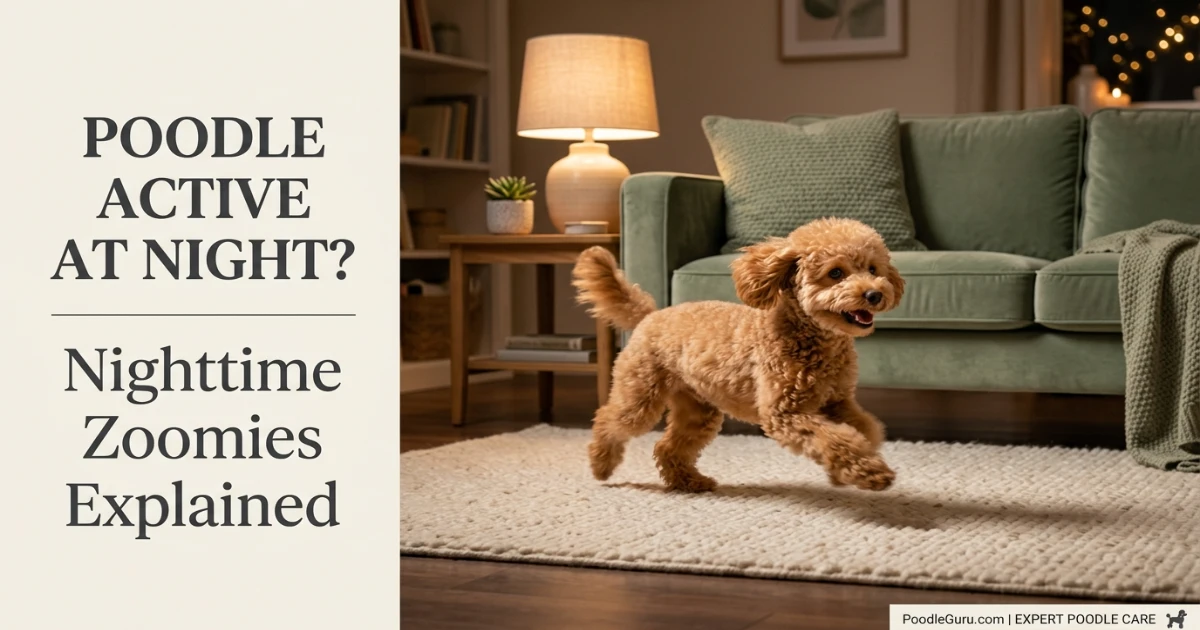
The lights dim. You settle into the sofa. And suddenly your poodle explodes — racing laps around the coffee table, spinning in tight circles, tucking into a play bow before tearing off again. These midnight energy bursts have a name, and they’re telling you something specific about your dog’s daily rhythm.
Quick Answer: Why Is My Poodle So Active at Night?
A poodle active at night is usually experiencing frenetic random activity periods (FRAPs) — commonly called zoomies. These bursts most often signal pent-up daytime energy, insufficient mental stimulation, or an overtired dog who doesn’t know how to settle. In some cases, nighttime restlessness points to discomfort, hunger, or age-related sleep disruption. The fix depends on which pattern you’re seeing.
Normal or Not?
Occasional zoomies are normal. Nightly hour-long episodes that disrupt the household are a sign the daytime routine needs adjusting.
Peak Zoomie Ages
Puppies and adolescents (8 weeks–18 months) zoomie most. Adults do it too, but typically shorter and less intense.
Top Fix
An evening decompression walk with sniffing, paired with a calming chew or lick activity, resolves most routine night zoomies.
What Poodle Nighttime Zoomies Actually Are
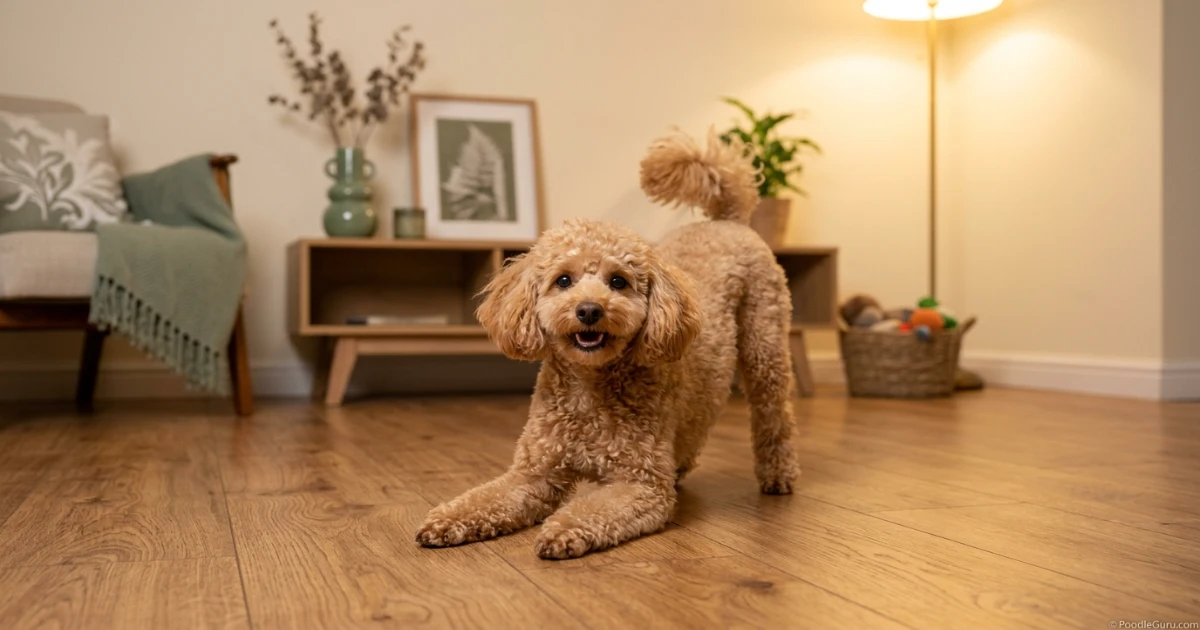
Zoomies is the affectionate term for frenetic random activity periods — FRAPs, in behavioral science shorthand. A dog suddenly tucks their hindquarters, rounds their back, and tears off in what looks like joyful chaos. They bank off furniture. They spin. They grab a toy mid-sprint and shake it. Then, just as suddenly, they stop. Within seconds, they’re panting and calm, as if nothing happened.
A zoomie episode is a rapid energy-discharge event. It’s not a sign of poor training or a hyperactive dog. It’s a biological pressure-release valve. The most important thing to understand is that zoomies are the endpoint of a buildup — not a random explosion. Something accumulated during the hours before: physical energy from insufficient exercise, mental tension from under-stimulation, or nervous system arousal from an exciting or stressful event.
Poodles, as a breed, sit high on the canine intelligence scale. That intelligence comes with a processing engine that runs hot. A poodle who spent the day napping while you worked, with only a brief backyard outing, has a full tank of unspent mental and physical energy by 9 p.m. The zoomies are that tank emptying — fast.
Why Is My Poodle Active at Night?
The timing isn’t random. Nighttime zoomies cluster for predictable reasons. Once you identify which one fits your household, the solution becomes much clearer.
Pent-up daytime energy is the most common driver. A poodle who spent eight hours in a quiet house while the family worked or attended school has been conserving energy all day. A brief evening walk around the block doesn’t come close to meeting their needs. By 8 or 9 p.m., the dam breaks. This is not a dog who needs less energy — it’s a dog who needs better-distributed energy expenditure during daylight hours.
Over-tiredness without off-switch skills looks like zoomies but comes from a different place. Puppies and young poodles are especially prone to this. They’ve been active all day — maybe too active, with back-to-back walks, play sessions, and training — and their nervous system is fried. But they haven’t learned how to self-settle. Instead of lying down, they spin up into a last frantic burst, like a toddler melting down before finally crashing. This is not a dog who needs more exercise. It’s a dog who needs help learning to downshift.
Post-digestion energy release is a lesser-known trigger. Some poodles get a second wind after their evening meal digests, especially if they eat a carbohydrate-heavy diet. The glucose spike can fuel a brief energy surge about 45–90 minutes after eating. This is normal, but it’s more pronounced in dogs who are under-exercised during the day.
Attention-seeking zoomies develop when owners inadvertently reward the behavior. If the household laughs, chases, or engages when the poodle zooms, the dog learns that 9 p.m. chaos equals family interaction. Poodles are smart enough to pattern this quickly. A zoomie that always starts when you sit down to watch TV is often a learned performance.
| Night Zoomie Trigger | What It Looks Like | Key Sign | Primary Fix |
|---|---|---|---|
| Pent-Up Energy | Sustained racing, 3–8 minutes, hard panting | Zoomies happen on days with minimal daytime activity | Add a midday walk or 15-minute training session |
| Over-Tiredness | Frantic but clumsy, short bursts, ends in collapse | Zoomies follow a very active day, not a lazy one | Enforce a late-afternoon nap or quiet time |
| Post-Meal Surge | Predictable, 45–90 min after dinner | Happens almost every night at the same post-meal time | Offer a post-meal chew to redirect the energy calmly |
| Attention-Seeking | Starts when family settles down, dog glances at people while zooming | Stops if everyone leaves the room or ignores completely | Zero reaction during zoomies; proactive attention earlier in the evening |
Puppy Zoomies vs. Adult Night Activity: What Changes With Age
Nighttime activity looks different at each life stage. Knowing what’s normal for your poodle’s age prevents unnecessary worry — and helps you spot patterns that actually need attention.
Puppies (8 Weeks–6 Months)
Poodle puppies zoomie hard and often. Their nervous systems are still developing, which means their arousal brakes barely function. A puppy can tip from playful to frantic in seconds. Evening zoomies are especially common because puppies sleep heavily during the day and wake with accumulated energy just as the household is winding down. The 7–9 p.m. window is peak zoomie hour for most poodle puppies.
Puppies also haven’t learned to self-regulate. They need structured wind-downs — enforced naps in a crate or quiet pen, a calming chew activity, dimmed lights — because their internal off-switch doesn’t exist yet. Expect puppy zoomies to be daily or near-daily. That’s normal. What’s not normal: zoomies that continue for over 30 minutes, or a puppy who seems distressed rather than playful during the episode.
Adolescents (6–18 Months)
Adolescent poodles still get zoomies, but the episodes often become more intense and more targeted. This is the age where attention-seeking zoomies can develop if the behavior has been rewarded. Adolescents also have adult-sized energy with puppy-sized impulse control — a volatile combination. Consistent evening routines become critical during this stage.
Adults (18 Months–7 Years)
Healthy adult poodles with adequate daily exercise rarely zoomie intensely at night. Occasional short bursts — a 30-second victory lap after a bath or a quick spin when you come home — are normal. Nightly extended zoomies in an adult poodle almost always point to insufficient daytime stimulation. For guidance on meeting your adult poodle’s exercise needs, our poodle exercise guide breaks down daily activity targets by size.
Seniors (8+ Years)
A senior poodle who suddenly becomes active at night — pacing, restless, unable to settle — is sending a different signal. This is rarely zoomies in the classic sense. It’s more often sundowning, a form of cognitive dysfunction similar to dementia in humans, where confusion and restlessness increase in the evening hours. It can also signal pain that worsens at night when the dog lies still, or a need to urinate more frequently due to aging kidneys. A senior poodle with new nighttime restlessness needs a veterinary evaluation, not a training plan.
For more on how poodle needs evolve across life stages, our guide on poodle lifespan and aging covers what to expect from puppyhood through the senior years.
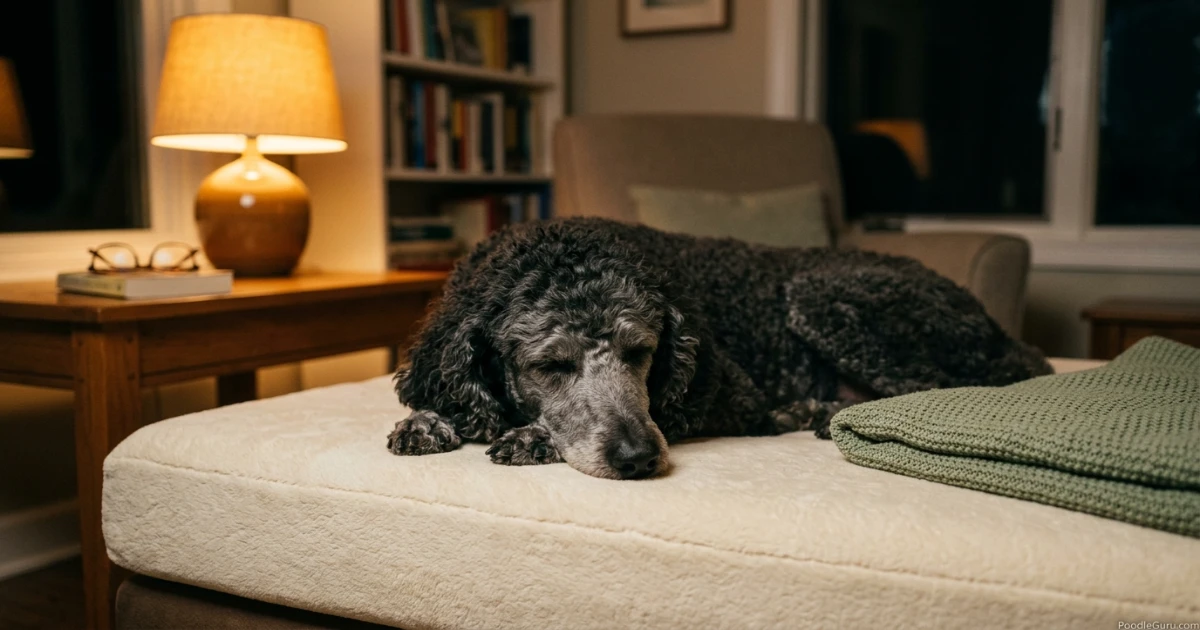
The PoodleGuru Evening Wind-Down Method
At PoodleGuru, we approach nighttime zoomies as a daytime management problem, not an evening discipline problem. The goal isn’t to suppress the energy burst. It’s to prevent the buildup that makes the burst inevitable, then teach the dog how to downshift when arousal rises. This four-step method works across ages, though you’ll adapt intensity for puppies and seniors.
Front-Load the Day
Your poodle needs meaningful energy expenditure before 4 p.m. A 15-minute sniff walk at lunch, a 10-minute training session mid-morning, a frozen Kong while you work — these small deposits prevent the evening energy debt. One long evening walk after a day of nothing is not enough.
Build the Evening Decompression Ritual
About 90 minutes before zoomie hour typically strikes, start a predictable calm-down sequence. A 20-minute sniff-focused walk — not a run, not fetch — where the poodle sets the pace and explores. Then a long-duration chew or lick activity: a bully stick, a lick mat with plain yogurt, or a stuffed Kong. Licking and chewing are biologically calming for dogs.
Teach the Settle Cue Separately
Don’t wait for zoomies to start before asking for calm. Practice “go to mat” or “settle” during the day, when your poodle is already relaxed. Reward heavily. Build the association that calm = good things happen. This creates a neural pathway you can cue when arousal starts climbing in the evening.
Zero Reaction to Zoomies
When zoomies erupt despite your best prevention, do nothing. Don’t laugh, don’t chase, don’t scold, don’t even look. Stand up, leave the room, or become completely still and boring. Any attention — positive or negative — can reinforce the behavior. The zoomies will end faster when they produce no audience reaction.
Quick Evening Routine Checklist for Night-Active Poodles
- Midday activity checkpoint: Did your poodle get at least one 15-minute engaged activity before 3 p.m. today?
- Evening decompression walk: 20 minutes of sniffing, not running — let the nose do the work.
- Calming chew ready: Bully stick, yak chew, frozen Kong, or lick mat within reach by 7 p.m.
- Dim the lights: Lowering light levels 60 minutes before your desired settle time supports natural melatonin release.
- No post-8 p.m. high-arousal play: No fetch, no tug, no chase games in the late evening.
Owner Mistakes That Make a Poodle Active at Night Worse
Good intentions sometimes backfire. These are the most common missteps owners make when their poodle is bouncing off the walls at 10 p.m.
| Mistake | Why It Backfires | What to Do Instead |
|---|---|---|
| Taking the dog for a run when zoomies start | Reinforces the pattern: zoomies = outdoor adventure; the dog learns to zoomie to trigger a walk | Wait for calm, then offer a chew — never reward the zoomie with high-value activity |
| Putting the dog in the crate as punishment | Creates negative association with the crate; the dog may resist going in at actual bedtime | If the dog is overtired, calmly guide to the crate with a treat scatter — frame it as rest, not exile |
| Exercising the dog harder during the day to “tire them out” | Can create an over-tired, over-aroused dog who zoomies harder, not less | Balance physical exercise with mental work and enforced rest — the mix matters more than the total minutes |
| Feeding a large evening meal and expecting immediate calm | Post-meal energy surges are common; a big dinner can fuel zoomies, not prevent them | Feed the last meal at least 2 hours before the expected settle time, or split dinner into two smaller portions |
When Nighttime Restlessness Signals a Deeper Problem
Most poodle night activity is harmless, if inconvenient. But there are patterns that deserve a closer look. The line between “normal zoomies” and “something’s wrong” usually comes down to three things: the dog’s age, the duration and intensity, and whether the dog seems distressed or simply energetic.
Ask Your Vet If Your Poodle Shows Any of These Signs
- Nighttime pacing or circling that continues for more than 30 minutes — this can indicate pain, cognitive decline, or neurological issues.
- Sudden onset of night restlessness in a previously calm adult or senior poodle.
- Panting, whining, or signs of distress during nighttime activity — zoomies should look playful, not panicked.
- Nighttime activity accompanied by accidents in the house, excessive thirst, or weight changes — these can signal metabolic or urinary issues.
- A senior poodle who seems confused, gets stuck in corners, or doesn’t recognize familiar people at night — possible signs of canine cognitive dysfunction.
For more on distinguishing normal behavior from medical concerns, the ASPCA’s guide to common dog behavior issues covers when behavioral changes warrant professional evaluation. VCA Hospitals’ resource on canine cognitive dysfunction provides detailed information on age-related behavioral changes in senior dogs.
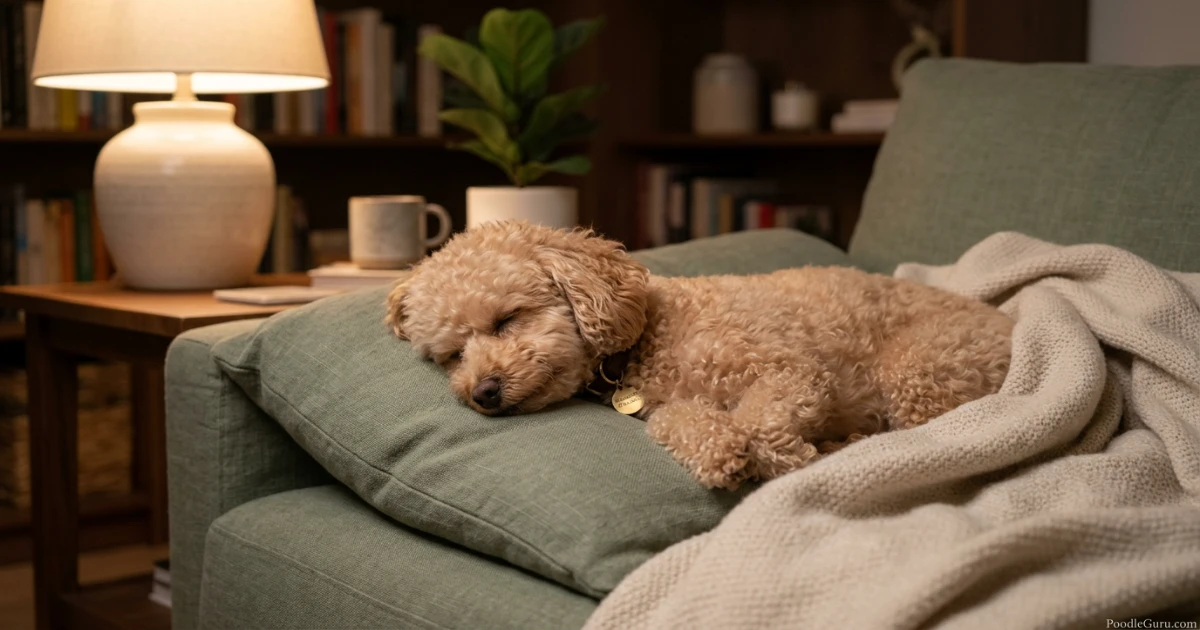
Why Poodles Specifically Struggle with Nighttime Settling
Poodles often settle differently from lower-arousal companion breeds. They were developed as water retrievers — thinking, problem-solving dogs who worked alongside hunters for hours, making independent decisions about where to search and what to retrieve. That history lives in modern poodles as a brain that craves engagement.
A bored poodle doesn’t just sleep. A bored poodle invents activities. Nighttime zoomies are sometimes just a poodle’s DIY enrichment program. The solution isn’t less poodle energy — it’s more poodle-appropriate mental work during the day. Scent games, puzzle toys, trick training, and structured sniff walks all feed the cognitive engine that, left idle, fuels 9 p.m. furniture parkour.
This is also why punishment doesn’t work. You can’t punish the intelligence out of a poodle. You can only channel it. When owners embrace the breed’s cognitive needs rather than fighting the dog’s natural drive, nighttime activity levels tend to settle on their own. For a full exploration of poodle personality and drives, our poodle temperament guide covers the breed’s working roots and what they mean for modern owners.
Frequently Asked Questions
Why does my poodle get the zoomies right before bed?
Right-before-bed zoomies usually signal pent-up daytime energy finally releasing or an overtired dog who hasn’t learned to self-settle. The timing is predictable because the household’s evening stillness removes distractions, and the energy that’s been building all day finally surfaces.
Are nighttime zoomies bad for my poodle?
Occasional zoomies are harmless and normal. Zoomies become problematic when they’re nightly, last over 10–15 minutes, cause the dog to crash into furniture dangerously, or seem driven by distress rather than playful energy release. Frequency and intensity are the measures that matter.
Should I stop my poodle’s zoomies or let them run?
Let a zoomie run its course if the environment is safe — no sharp corners, no slippery floors, nothing to knock over. Interrupting mid-zoomie is usually futile. Instead, focus your energy on prevention: a better daytime routine reduces zoomie frequency without you needing to intervene in the moment.
Why is my senior poodle suddenly restless at night?
New nighttime restlessness in a senior poodle can signal cognitive dysfunction, pain that worsens at rest, or urinary issues. This is not classic zoomies. A veterinary evaluation is appropriate, especially if the restlessness includes pacing, confusion, or changes in housetraining.
Can diet affect my poodle’s night activity?
Yes. High-carbohydrate meals can produce a post-meal glucose surge that fuels evening energy bursts. Feeding dinner at least two hours before settle time, or splitting the meal into smaller portions, can reduce this effect. Some dogs also respond to calming supplements, but consult your veterinarian before adding any.
How much exercise does a poodle need to prevent night zoomies?
It’s not just about minutes — it’s about type and timing. A Toy Poodle may need 30–40 minutes of engaged activity spread across the day, while a Standard may need 60–90 minutes. Mental work matters as much as physical: a 15-minute training or scent session can tire a poodle more than a 30-minute walk.
My poodle zoomies after eating — is that normal?
Post-meal zoomies are common and typically reflect a digestion-related energy surge. If the zoomies happen predictably 45–90 minutes after dinner, offer a calming chew in that window to channel the energy into a settling activity rather than a race track.
When should I see a vet about my poodle’s nighttime activity?
See a vet if the nighttime activity is new in an adult or senior, lasts over 30 minutes, includes signs of distress like panting or whining, or is accompanied by other changes like increased thirst, accidents, or confusion. Zoomies should look playful — not panicked or compulsive.
Key Takeaways: Managing a Poodle Active at Night
- Poodle nighttime zoomies are frenetic random activity periods (FRAPs) — normal energy-release events that become problematic when they’re nightly, prolonged, or distressed.
- The most common drivers are pent-up daytime energy, over-tiredness without settling skills, post-meal surges, and learned attention-seeking patterns.
- The PoodleGuru Evening Wind-Down Method prioritizes daytime energy distribution, an evening decompression ritual, settle-cue training, and zero-reaction to zoomies.
- Punishment, mid-zoomie walks, and cramming all exercise into one evening session are common mistakes that can make nighttime activity worse.
- Senior poodles with new nighttime restlessness need a veterinary evaluation — cognitive decline, pain, and metabolic issues are more likely than simple zoomies.
- Poodles need mental engagement, not just physical exercise — a bored poodle brain invents its own enrichment, and zoomies are often the result.