Why Is My Poodle Digging Holes? Understanding Poodle Digging Behavior
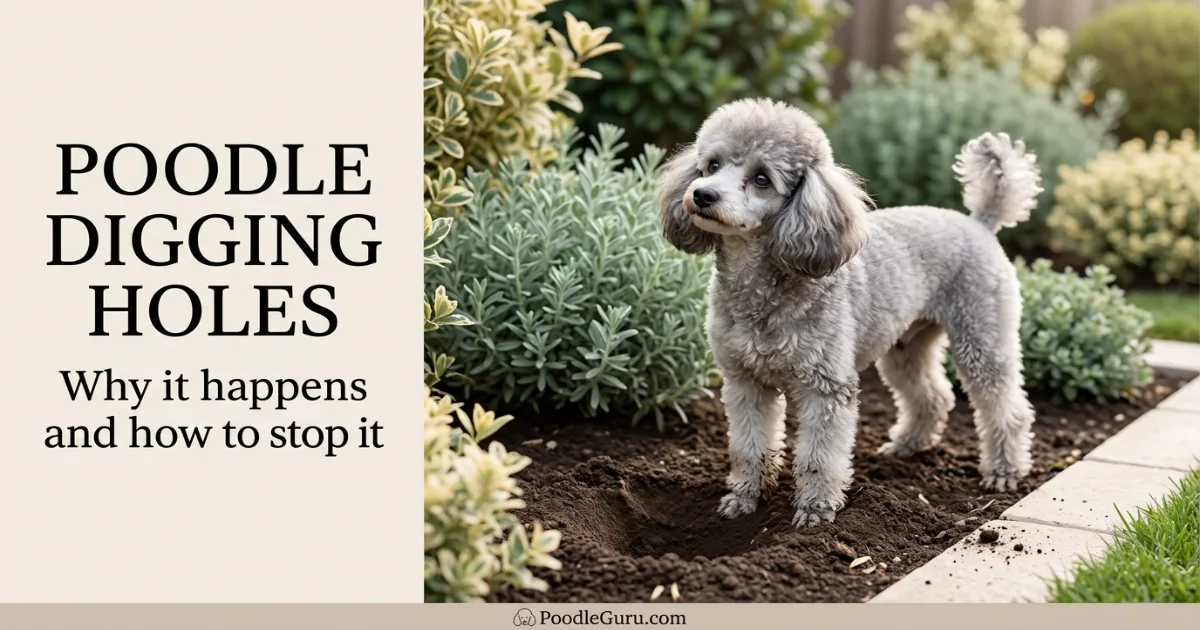
A poodle with dirt on its nose and a fresh crater in your garden can be equal parts confusing and frustrating. Digging isn’t a sign your poodle is misbehaving on purpose — it’s a natural behavior with clear causes, and you can redirect it once you understand what’s driving it.
Quick Answer
Most poodle digging holes stems from boredom, excess energy, prey drive, temperature regulation, or anxiety — not stubbornness. Poodles are highly intelligent dogs, and when their mental and physical needs aren’t fully met, they often create their own entertainment. The fix starts with identifying the root cause, then providing appropriate outlets. Punishment almost always makes digging worse by increasing anxiety or teaching the dog to hide the behavior.
Normal Instinct
Digging is hardwired canine behavior, not a sign of a “bad” dog. Wild canids dig to create dens, cache food, and hunt burrowing prey. Your poodle shares those ancestral blueprints.
Intelligence Factor
Poodles rank among the most intelligent dog breeds. A bored poodle with insufficient mental stimulation will invent its own activities — and digging is deeply satisfying work for a dog’s brain and body.
Fixable Behavior
With the right diagnosis of the underlying cause and a consistent redirection plan, destructive digging can be resolved in most cases within two to three weeks. Professional help is available for anxiety-driven cases.
Why Do Poodles Dig? The Instinct Behind the Holes
Digging is a natural, species-typical behavior. In the wild, canids dig to create safe dens, escape extreme temperatures, bury surplus food, and pursue ground-dwelling prey. Your poodle, whether a Toy, Miniature, or Standard, carries those same instincts — no matter how plush their bed or how full their bowl.
For poodle owners, this means digging isn’t a moral failing or a sign your dog is “acting out.” It’s a behavior that serves a purpose for the dog in the moment. The most important thing to understand is that digging always has a function — your job is to identify which function it’s serving and meet that need in a way your garden can survive.
Poodles add a special layer to this instinct. They’re problem-solvers. A poodle who discovers that digging creates a cool spot on a hot day, or that pawing at the ground near the fence makes the neighbor’s dog react, will repeat the behavior because it works. Intelligence amplifies the digging habit when the environment rewards it.

5 Common Reasons Poodles Dig Holes
Pinpointing why your poodle is digging makes the solution much clearer. Here are the five most common causes we see at PoodleGuru, each with a distinct pattern and fix.
1. Boredom and Under-Stimulation
This is the number one reason poodles dig. A poodle left alone in a yard with nothing to do will create a project. Digging is physically engaging, mentally absorbing, and self-rewarding. If your poodle digs when left outside for extended periods, or the digging stops on days with more walks and play, boredom is likely the driver. Poodles need structured mental enrichment, not just yard access.
2. Prey Drive and Scent Following
Poodles were originally water retrievers, but they have a strong nose and a healthy prey drive. If your poodle digs in focused, single spots — especially near tree roots, fence lines, or where you’ve seen moles or voles — they’re probably tracking a scent. The digging may be frantic and targeted, often accompanied by sniffing and pawing at a specific area. This is hunting behavior, not destruction.
3. Temperature Regulation
On warm days, a poodle may dig a shallow hollow in cool earth to lie in. This is comfort-seeking. You’ll notice the dog lying in the dug spot afterward, often pressing their belly against the cool soil. It’s especially common in summer months with poodles who have thick or dark coats that absorb heat. A shaded, cool resting area can eliminate this type of digging quickly.
4. Anxiety, Stress, or Escape Attempts
Digging along fence lines — especially if it’s persistent and paired with pacing, whining, or barrier frustration — can signal anxiety or a desire to escape. Separation anxiety sometimes manifests as digging at door thresholds or gates. This is a more serious form of digging that requires addressing the underlying emotional state, not just blocking access to the digging zone. A poodle anxiety guide can help you recognize when digging is stress-related.
5. Excess Energy and Zoomies Overflow
A poodle with pent-up physical energy may burst into a digging frenzy during or after a case of the zoomies. This is impulsive, high-energy digging — often in the middle of the yard — and it stops as suddenly as it starts. The dog isn’t focused on a scent or a goal; they’re just burning off steam. More frequent, higher-intensity exercise typically resolves this pattern.
When Digging Becomes a Problem: Normal vs. Excessive
Some digging is just poodle nature. A few exploratory paw scrapes in a loose patch of soil, or a single hole every few months, is not cause for alarm. The concern threshold depends on frequency, intensity, and the context. The table below separates typical digging from digging that warrants intervention.
| Characteristic | Normal / Occasional Digging | Excessive / Problem Digging |
|---|---|---|
| Frequency | A few isolated holes per season; no daily pattern | Multiple holes per week; fresh digging every time the dog is unsupervised outdoors |
| Location | Random spots; often where soil is loose or interesting smells exist | Consistent spots: fence lines, gate thresholds, right outside doors, or the same garden bed repeatedly |
| Dog’s Body Language | Relaxed, exploratory; normal playfulness before and after | Frantic, obsessive, or anxious; may be paired with pacing, whining, or escape attempts |
| Response to Redirection | Easily interrupted; dog responds to being called away | Hard to interrupt; dog ignores cues and returns to digging immediately |
| Impact | Minor; a small hole easily filled | Significant; landscaping destroyed, risk of escape, or injury from digging near structures |
| Likely Cause | Momentary curiosity or a passing scent | Chronic boredom, anxiety, high prey drive, or escape motivation |
| Action | Monitor; provide alternative enrichment | Implement structured redirection plan; consult a trainer if anxiety-driven |
The PoodleGuru D.I.G. Assessment Framework
At PoodleGuru, we use a simple three-step method to evaluate a poodle’s digging behavior before jumping to solutions. It’s called the D.I.G. Framework — and it helps owners move from frustration to clarity in under ten minutes of observation.
Detect the Pattern
Spend two days noting every digging event: time of day, location, what happened right before, and what your poodle did afterward. Use your phone’s notes app. This log replaces guesswork with data. Patterns will emerge — a particular corner at 3 p.m., or only on sunny days, or only when you’re on a work call.
Identify the Function
Look at your log and ask: what need is this digging serving? Is the dog trying to cool off? Chase a scent? Burn energy? Escape? The function is always there. If you’re unsure, compare your notes against the five common causes above. Most cases fit one or two categories clearly.
Give a Better Alternative
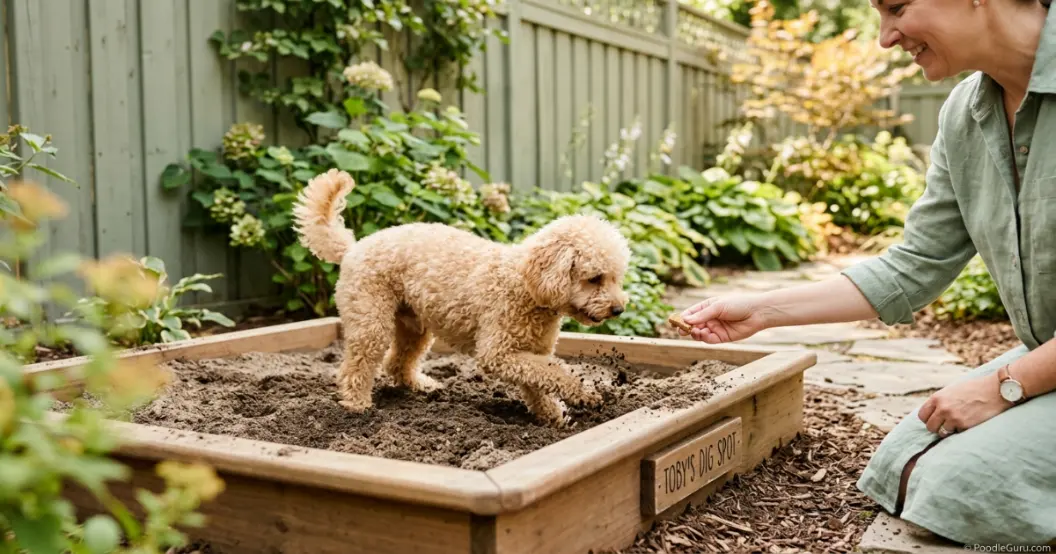
Once you know the function, you can offer a replacement that satisfies the same need — a cooling mat instead of cool dirt, a dig box instead of the flower bed, a puzzle toy instead of excavation for entertainment. Redirecting works because it honors the instinct while protecting your yard. Simply blocking the behavior without an outlet creates frustration and often shifts the digging to a new location.
Myth vs. Reality: What Owners Often Get Wrong About Poodle Digging
Even well-meaning owners carry assumptions that can make digging worse. Let’s clear up the most common ones.
Myth vs. Reality
Myth: “My poodle digs to spite me — they know I hate it.”
Reality: Dogs don’t operate out of spite. Digging is a self-rewarding behavior that meets an immediate need. Your poodle isn’t connecting your frustration with their digging unless you catch them in the act, and even then, they learn to avoid your reaction, not to stop digging.
Myth: “Punishing my poodle for digging will teach them to stop.”
Reality: Punishment after the fact doesn’t work — dogs live in the present. Scolding or physically correcting a poodle for digging usually increases anxiety and teaches the dog to dig only when you’re not watching. Positive redirection is far more effective and preserves trust.
Myth: “Only high-energy breeds dig — poodles shouldn’t do this.”
Reality: All poodles, regardless of size, have working-dog ancestry. They’re retrievers. They have drive. A Standard Poodle who doesn’t get enough exercise will dig just as enthusiastically as any terrier. Intelligence and energy level matter more than breed label.
Myth: “If I fill the holes, my poodle will stop.”
Reality: Filling holes without addressing the cause is like repainting a wall your dog scratches without asking why they’re scratching. The digging will continue — often in a new spot. The environment you create matters more than the soil you replace.
How to Stop the Digging: Solutions by Cause
Once you’ve identified why your poodle is digging, targeted solutions work faster than generic advice. Below is a cause-by-cause plan. Choose the one or two that match your situation.
| If the Cause Is… | Try This | What to Avoid |
|---|---|---|
| Boredom | Increase daily mental enrichment: food puzzles, scent games, training sessions. Add a second walk or a longer sniff walk. Rotate toys every few days to keep novelty high. | Leaving the poodle unsupervised in the yard for hours with nothing to do. A bored poodle is a self-employed excavator. |
| Prey Drive | Redirect with a flirt pole or scent-tracking games that channel the hunting sequence. If moles are the trigger, address the pest issue humanely. Supervise yard time and call the poodle away before they lock onto a scent. | Punishing the dog for following their nose. The drive is instinctual — you’ll need to manage the environment, not suppress the instinct. |
| Temperature | Provide a cooling mat, a shaded resting spot, a kiddie pool, or access to indoors during the hottest hours. Wet a bandana for your poodle’s neck. | Expecting a thick-coated poodle to tolerate direct sun on 85°F+ days without seeking relief. They’ll find relief one way or another. |
| Anxiety / Escape | Work with a certified positive-reinforcement trainer or behaviorist. Address separation anxiety with gradual desensitization. Ensure the yard feels safe, not like a place the dog wants to flee. | Using shock collars, citronella spray barriers, or physical punishment. These escalate fear and erode trust — a resource like ASPCA separation anxiety guidance is a better starting point. |
| Excess Energy | Increase aerobic exercise: off-leash running, fetch, structured playdates, or a longer morning walk before you leave. A tired poodle is a non-digging poodle. | Assuming that yard access equals exercise. Most poodles won’t self-exercise adequately without a human or dog play partner. |
When to Consult a Professional Trainer or Behaviorist
If your poodle’s digging is accompanied by persistent escape attempts, self-injury, extreme panic when left alone, or aggression when interrupted, it’s time to involve a professional. A certified canine behavior consultant or a veterinary behaviorist can assess whether an anxiety disorder or compulsive behavior is present. The AKC offers expert training resources on digging behavior that can help you find qualified support. You don’t have to solve this alone — and early intervention prevents the behavior from becoming entrenched.
Owner Action Plan: 7-Day Digging Reduction Plan
This practical one-week plan gives you a structured starting point. Track your poodle’s digging each day and adjust based on results.
Days 1–2: Observe and Log
Don’t try to stop the digging yet. Simply log every instance — time, location, duration, and what happened right before. You’re gathering the data you’ll need for the D.I.G. Framework. Note weather, your presence, and your poodle’s energy level.
Day 3: Identify the Primary Cause
Review your log and assign the most likely cause from the five categories. If two causes seem equally likely, pick the one that appears earliest in the sequence. This becomes your working hypothesis.
Day 4: Implement the Right Solution
Apply the cause-matched solution from the table above. For boredom, introduce a stuffed Kong and a 20-minute training session. For prey drive, start a flirt pole session. Make the alternative more appealing than the dirt.
Day 5: Create a Digging Zone (Optional but Powerful)
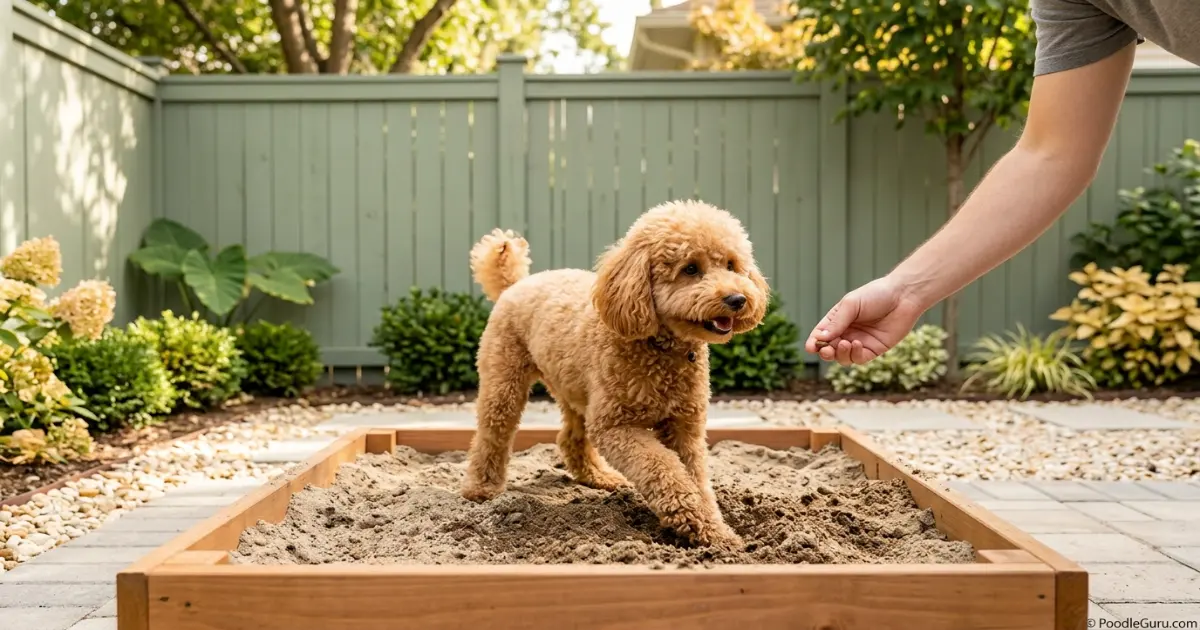
If appropriate, set up a designated dig box — a sandbox or a corner of the yard with loose soil where digging is allowed. Bury toys or treats there to make it attractive. Redirect your poodle to this zone whenever they start digging elsewhere. This approach works especially well for instinct-driven diggers.
Days 6–7: Evaluate and Adjust
Compare your digging log from the first two days to the last two days. Has frequency dropped? If yes, continue the plan. If not, revisit your cause hypothesis — you may be addressing the wrong function. Persistence with the right intervention pays off.
Frequently Asked Questions About Poodle Digging
Is it normal for poodles to dig holes?
Yes — digging is a normal canine behavior present in all dog breeds, including poodles. It becomes a concern only when it’s excessive, destructive, or driven by anxiety. Occasional digging, especially in response to interesting scents or warm weather, is typical and not a sign of a behavioral problem.
Why does my poodle dig at the carpet or their bed indoors?
Indoor digging at soft surfaces is usually a nesting or comfort-seeking behavior. Poodles may circle and paw at bedding to create a comfortable resting spot, much like wild dogs flatten grass. It can also be a sign of boredom or excess energy if it becomes obsessive. Providing a cozy, enclosed bed often satisfies this instinct.
Can I train my poodle to stop digging completely?
You can significantly reduce unwanted digging by addressing the underlying cause and providing appropriate alternatives, but expecting a dog to never express an instinctual behavior is unrealistic. The goal is to redirect digging to acceptable locations — like a dig box — and eliminate the triggers that make your garden the most appealing target.
Should I punish my poodle for digging holes?
No. Punishment after the fact is ineffective because dogs don’t connect past actions with present consequences. Scolding or physical correction can increase anxiety and damage your relationship. Positive redirection — interrupting the digging gently and offering a better activity — is far more effective and preserves trust.
Do certain poodle sizes dig more than others?
There’s no strong evidence that Toy, Miniature, or Standard Poodles dig at different rates. Digging is more closely tied to individual temperament, energy level, and environmental factors than to size. A bored Toy Poodle will dig with as much enthusiasm as a bored Standard.
My poodle only digs when I’m not home. What does that mean?
Digging that occurs exclusively when you’re away often points to separation anxiety or boredom. The dog may be trying to escape to find you, or simply filling the time with a self-soothing activity. Recording your poodle’s behavior while you’re out — with a pet camera — can provide valuable clues about the emotional state driving the digging.
Will filling the holes with rocks or deterrent sprays stop my poodle?
Physical deterrents alone rarely solve digging because they don’t address the underlying motivation. A poodle who wants to cool off or hunt a scent will simply move to a new spot. Deterrents can be used as a temporary management tool while you implement the real solution — meeting the need that’s driving the behavior.
Key Takeaways: What Every Poodle Owner Should Know About Digging
Digging is a solvable behavior when you approach it with curiosity instead of frustration. Your poodle isn’t giving you a hard time — they’re having a hard time meeting a need. Here’s what to remember:
- Poodle digging holes is almost always driven by boredom, prey drive, temperature regulation, anxiety, or excess energy — not spite or disobedience.
- The PoodleGuru D.I.G. Framework (Detect, Identify, Give an alternative) moves owners from guesswork to a clear, effective response in under ten minutes of observation.
- Punishment doesn’t work for digging; it teaches avoidance, not behavior change. Positive redirection to a legal digging outlet is far more successful.
- A designated dig box, increased mental enrichment, and cause-specific solutions resolve most cases within two to three weeks.
- Anxiety-driven digging along fence lines or thresholds requires professional support — not DIY fixes — especially if escape risks or self-injury are present.
- Your poodle’s intelligence is an asset in solving digging: once you offer a better option, they’ll often choose it eagerly.
Start with observation. The first two days of just watching and logging will tell you more than any generic advice. You’ve got this — and your poodle is ready for a better outlet.