Poodle Topknot: 7 Easy Steps to Style It Safely
A poodle topknot keeps crown hair lifted away from the eyes while giving your dog that clean, polished Poodle expression. This step-by-step guide shows you how to section, band, shape, and maintain a topknot without pulling the skin or damaging the coat.
Quick Answer: What Is a Poodle Topknot?
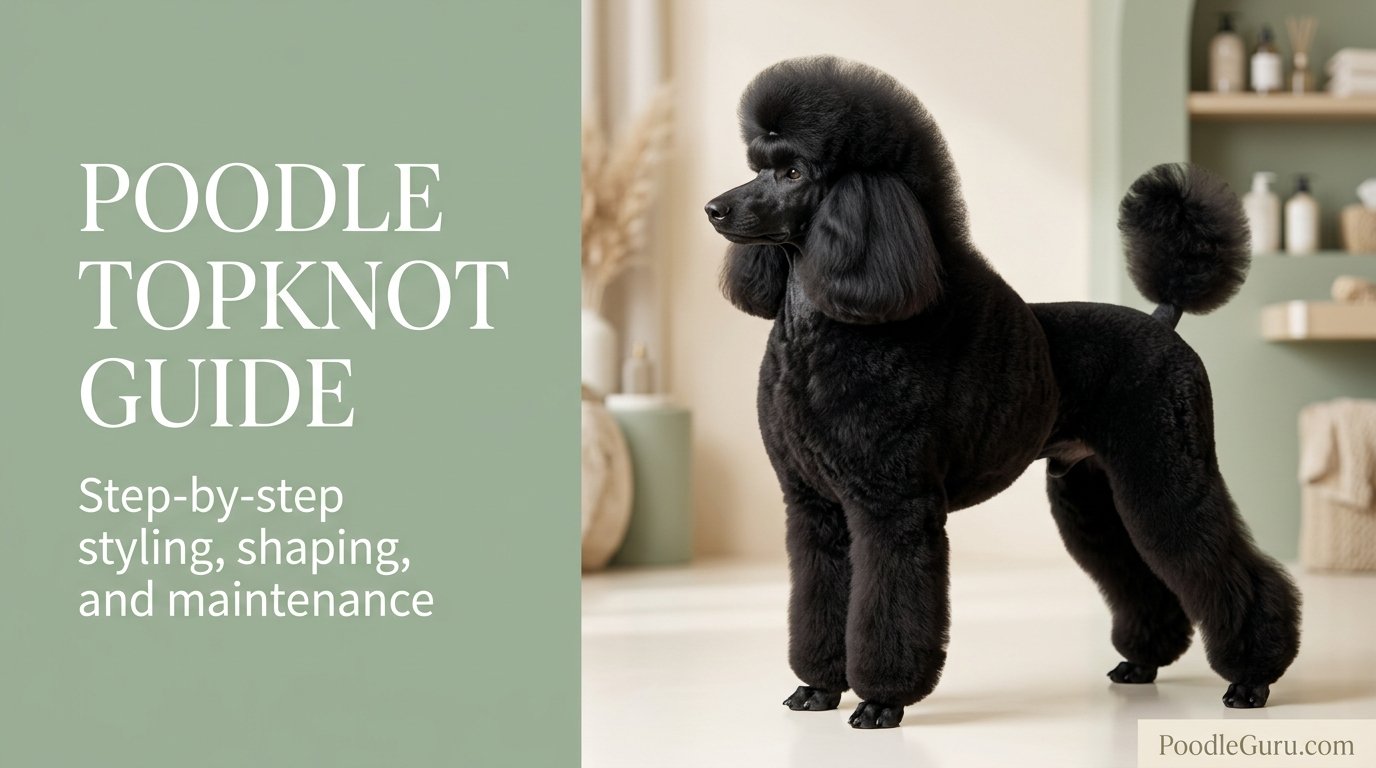
A poodle topknot is the gathered and shaped hair on the crown of a Poodle’s head, styled to keep the face tidy and the eyes clear. A classic pet topknot usually uses a small grooming band placed gently into a central ponytail, then shaped into a rounded puff or bell. The goal is not tightness — it is clean sectioning, light tension, balanced shape, and a comfort check after banding. Below, we break down the complete process from coat prep to the final set.
In This Guide
- Quick Facts: Poodle Topknot Essentials
- Why the Topknot Matters
- Tools You’ll Need for a Perfect Topknot
- The PoodleGuru Topknot Stability Method: 5 Steps
- Detailed Step-by-Step: From Sectioning to Final Shape
- Band Type Comparison: Which One Holds Best?
- Common Topknot Mistakes and How to Fix Them
- Daily and Weekly Topknot Maintenance
- When to Ask a Professional Groomer
- Frequently Asked Questions
Quick Facts: Poodle Topknot Essentials
Purpose
The topknot keeps long facial hair out of the eyes, prevents food debris from catching in the muzzle, and maintains the iconic poodle silhouette. It’s functional first, stylish second.
Ideal Length
Hair on the crown should be at least 2–3 inches to gather into a secure ponytail. If it’s shorter, you can still create a mini puff, but it won’t hold as neatly.
Essential Tools
Latex bands (or silicone), a fine-tooth metal comb, a slicker brush, a small scissor (blunt-tip safety scissors), and a finishing spray or water mister.
Why a Poodle Topknot Matters — and Why It’s More Than Just a Pretty Puff
The poodle topknot is a styling technique that gathers the long hair on the top of the skull into a secured, elevated shape — typically a rounded puff or a bell. For poodle owners, this means keeping hair out of the dog’s eyes, preventing tear staining, and reducing the chance of eye irritation. The most important thing to understand is that the topknot isn’t just a cosmetic choice — it’s a functional part of poodle grooming that directly affects your dog’s comfort and vision.
Poodle head styling is closely connected to the breed’s long grooming history and working-dog background. For show purposes, the AKC/Poodle Club of America breed standard allows topknot hair to be left free or held with elastic bands in the recognized clips. For everyday pet owners, the practical goal is simpler: a comfortable topknot keeps the face cleaner between grooms and gives your Poodle that instantly recognizable, polished look.
Tools You’ll Need for a Perfect Topknot
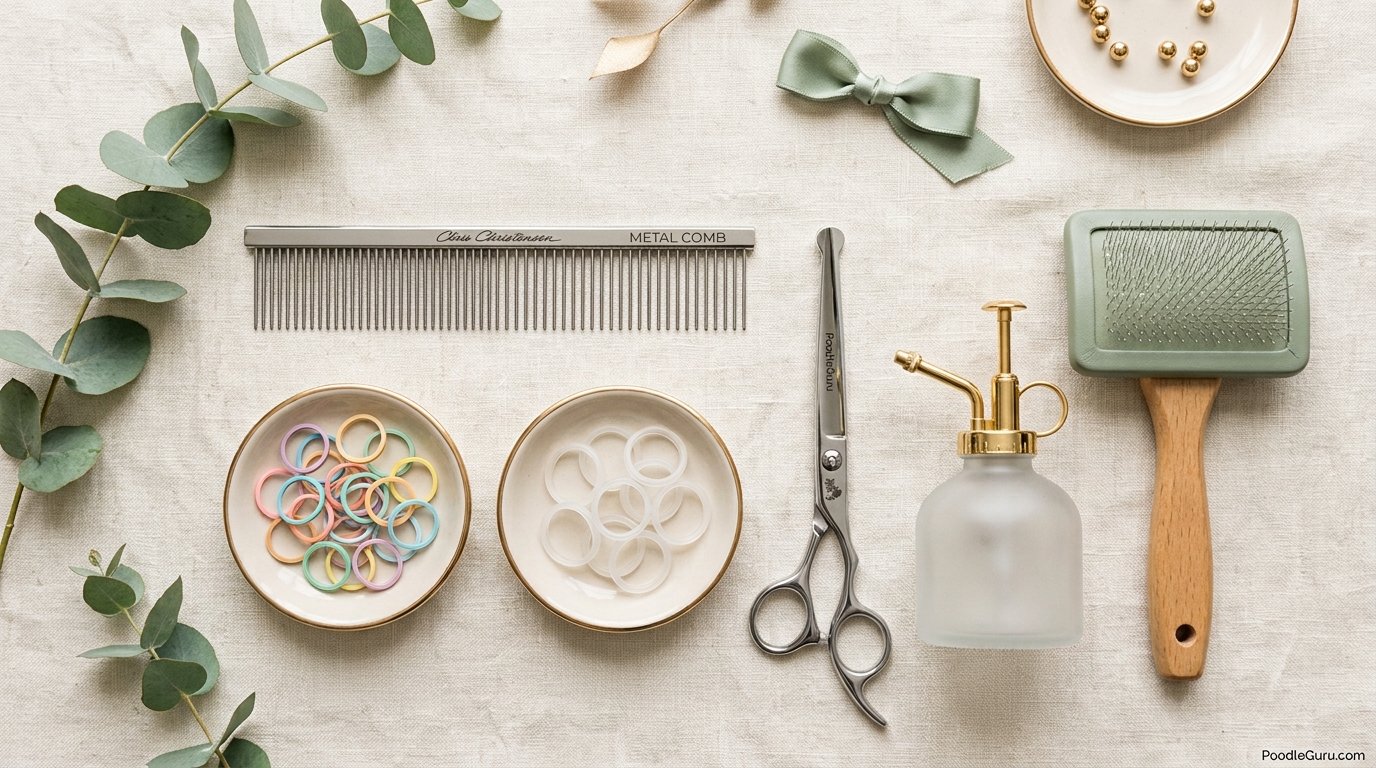
You don’t need a professional grooming table to style a solid topknot, but using the right tools makes the difference between a puff that lasts all day and one that slides sideways by lunchtime. Here’s what to gather:
- Fine-tooth metal comb – to section clean parts.
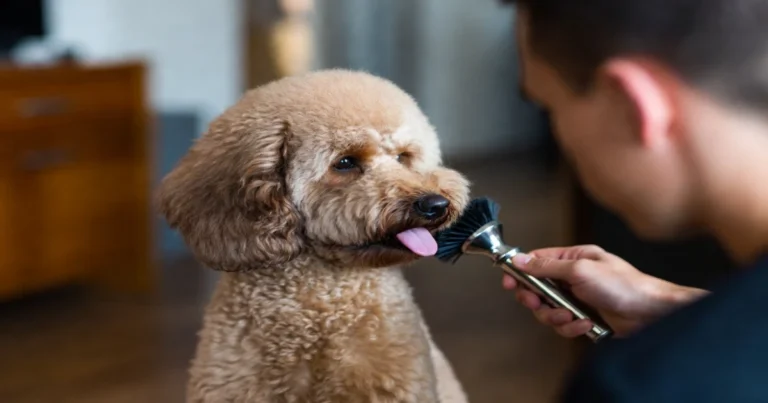
- Slicker brush – to smooth and fluff the hair before banding.
- Small grooming bands – latex-free or silicone bands made for pet grooming; avoid thick office rubber bands because they can pull and break coat.
- Blunt-tip safety scissors – for trimming stray ends, never pointed scissors near the face.
- Water mister or light leave-in spray – to dampen hair for easier control.
- Optional: detangling spray – if the coat is dry or static-prone.
- Optional: a second band for reinforcement – for active dogs.
The PoodleGuru Topknot Stability Method: 5 Steps to a Secure, Comfortable Topknot
At PoodleGuru, we developed this approach after noticing that most topknot fails — sagging, slipping, or pulling — come down to three things: sectioning angle, band tension, and crown shape. The Stability Method addresses all three so the topknot stays put without causing discomfort.
Prep the Hair
Lightly mist the crown with water or leave-in spray, then line-brush with a slicker brush to remove tangles. Smooth the coat upward and forward so it falls naturally toward the muzzle.
Section the Topknot Base
With a fine-tooth comb, part a circle around the crown — from the outside corner of one eye, up over the skull, to the outside corner of the other eye. This “halo” section should contain all the hair that will go into the topknot.
Gather and Band
Hold the sectioned hair between your index and middle fingers, lifting it gently upward and slightly forward. Slide a small grooming band over the hair, twist, and loop again — usually no more than 2–3 loops. The band should hold the hair without sitting tight against the skin; if the skin puckers, the eyes look stretched, or your dog paws at the head, remove it and redo it looser.
Shape the Puff
Use the tail of a comb to backcomb lightly at the base of the ponytail for volume, then smooth the outer layer forward. Trim any long strays with blunt-tip scissors, creating a clean, rounded silhouette. The hair should fan out like a fountain, not fall forward into the eyes.
Set and Check Comfort
Mist lightly with water or a very light hold spray (avoid anything sticky). Watch your dog for a few minutes — if they paw at the band or shake their head repeatedly, the band may be too tight or too close to the skin. Remove and redo with slightly less tension.
Detailed Step-by-Step: From Sectioning to Final Shape
Let’s walk through each stage in more detail, with the small technique points that separate an okay topknot from one that looks like it was done by a professional.
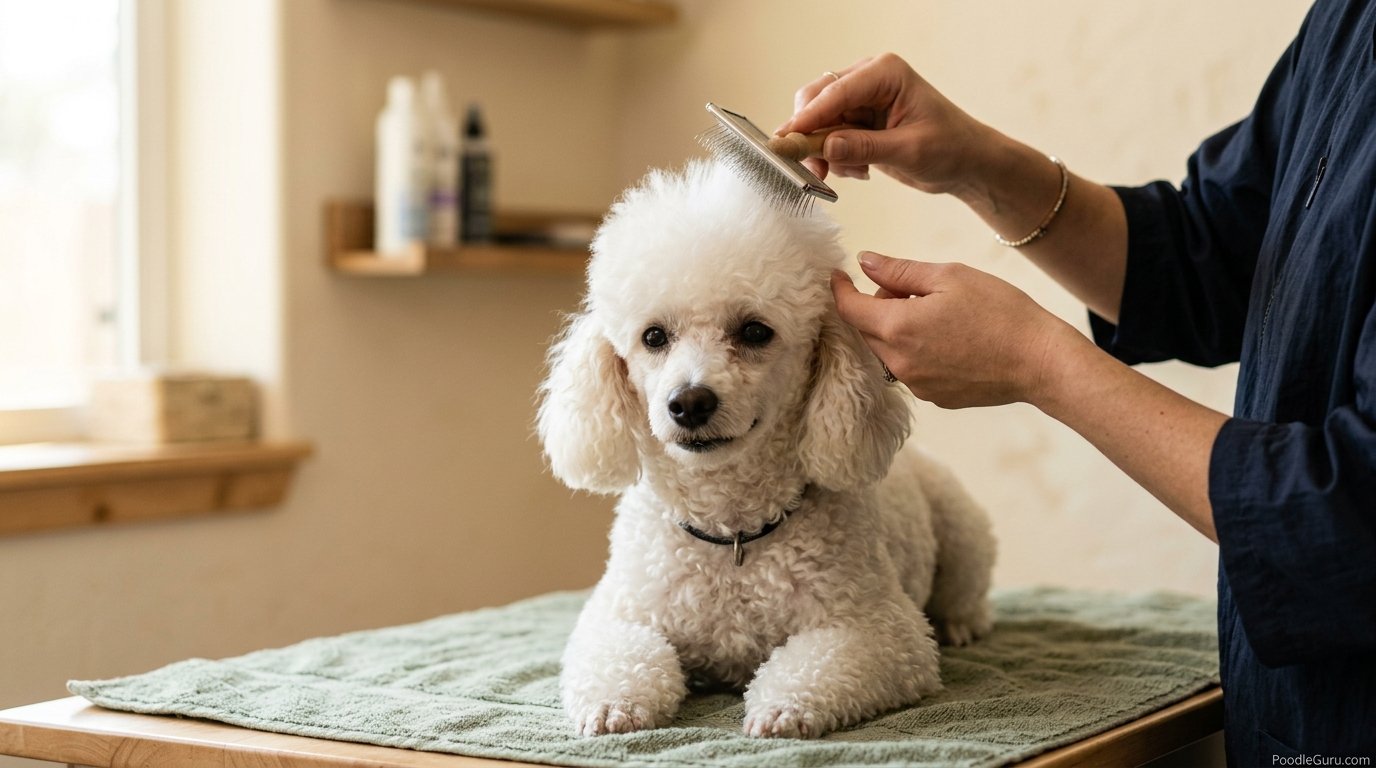
Step 1: Prepare the Coat
Never band dry, tangled hair. Start by misting the entire crown area with a light water spray or a diluted leave-in conditioner. Use your slicker brush in small, gentle strokes to lift the coat away from the skin. If you hit a snag, hold the hair above the tangle and work the brush from the ends upward. A matted coat under a band can cause discomfort and breakage.
Step 2: Create the Cleanest Part
With a metal comb, draw an imaginary line from the outer corner of the left eye, curving upward and over the skull, and ending at the outer corner of the right eye. This arc should sit just behind the brow line. All hair inside this arc becomes the topknot. Hair outside it — along the sides of the face and the ears — stays down or gets styled separately.
Use the comb to comb that outside hair flat against the head so it doesn’t get caught in the band. If your poodle has longer ear hair, you might tuck it behind the ears temporarily.
Step 3: Band Placement and Tension
Hold the sectioned hair at a gentle forward angle — not straight up and not pulled backward. This helps the topknot sit naturally without dragging at the brow. Slide a small grooming band over the hair, twist it into a figure-eight, and loop again. Two to three loops are usually enough for a secure pet topknot.
Check your dog’s expression before moving on: relaxed eyes, no skin tenting, no squinting, and no repeated pawing at the head. If the outer corners of the eyes look stretched, loosen the band immediately.
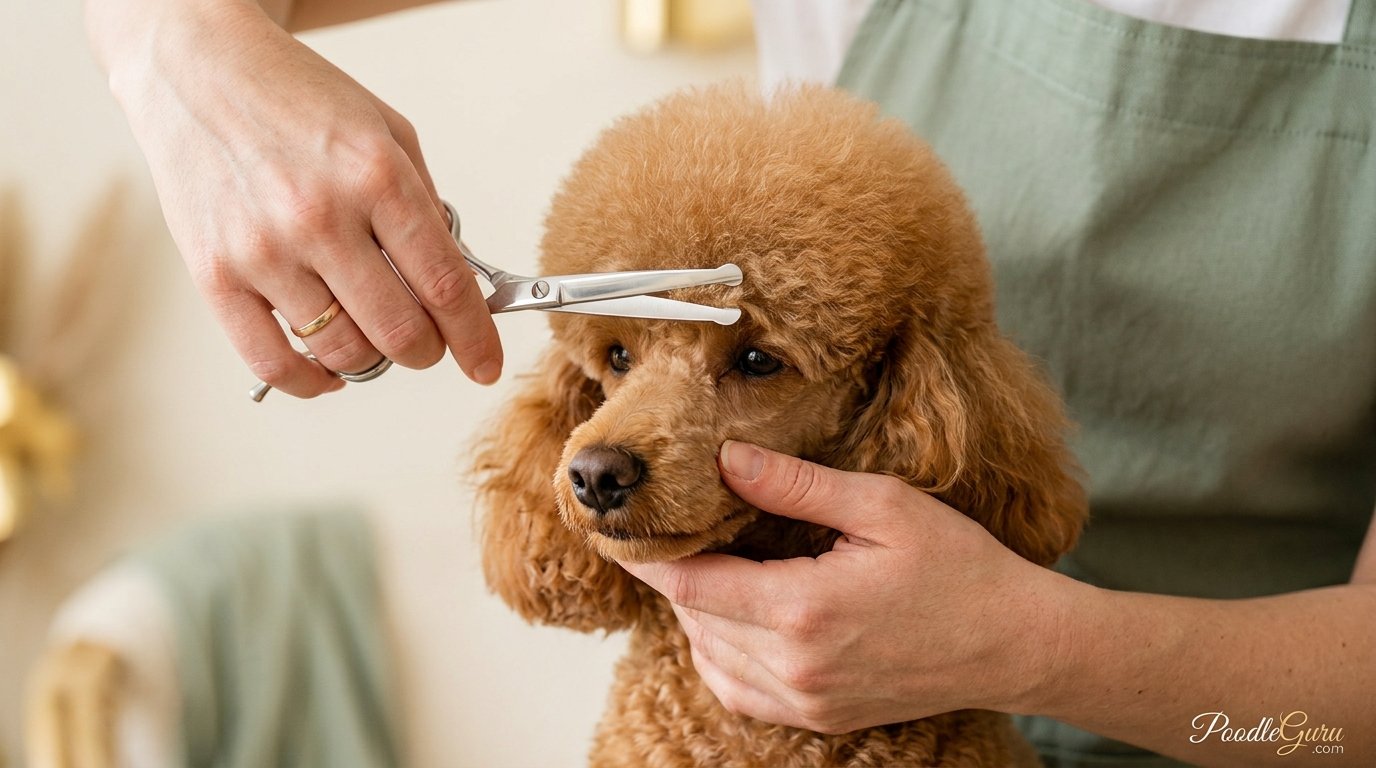
Step 4: Shaping and Trimming
Once the ponytail is secured, use the tail of your metal comb to gently backcomb the underside of the ponytail. This adds volume and helps the hair fan out instead of flopping. Then, smooth the top layer with the comb, directing the hair forward over the forehead. Use blunt-tip scissors to trim any long, irregular strands so the silhouette is a clean dome or bell shape. Never cut the hair too short — the topknot should still be full enough to hold its shape.
Step 5: Final Set and Comfort Check
Lightly mist the finished topknot with water or a diluted leave-in conditioner. Avoid alcohol-based sprays that dry out the hair. Let your dog shake and move around; a well-set topknot will bounce but not slip. If the band slides down within an hour, the section was too small or the hair too fine — add a second band or use a small ribbon-wrapped band for grip.
Band Type Comparison: Which One Holds Best?
| Band Type | Hold Strength | Hair Breakage Risk | Best For | Typical Use |
|---|---|---|---|---|
| Latex-free grooming bands (small, clear) | Firm | Low (when removed gently) | Everyday topknots, active dogs | Single or double loop, cut out with scissors |
| Silicone bands (tiny, elastic) | Moderate | Very low | Fine or silky coat types | Wraps without pulling, easy to slide off |
| Ribbon-wrapped bands | Gentle hold | Minimal | Sensitive dogs, show coats | Wrapped around a ponytail base, tied, not looped |
| Standard rubber bands | Very firm | High — can snap hair | Not recommended | Avoid; can cause breakage and discomfort |
Small grooming bands are the go-to for many Poodle owners because they hold securely without slipping, especially on dense curly coats. Silicone bands are gentler but may slide on very fine hair. Avoid thick office rubber bands — they grip too aggressively and can snap the coat or pull painfully.
Common Topknot Mistakes and How to Fix Them
Band Too Tight
Sign: Skin puckering, squinting, pawing at the head. Fix: Remove immediately. Re-band with a looser loop, using only 2 twists. The band should not indent the skin.
Hair Pulling at Eyes
Sign: The topknot flops forward, covering the eyes. Fix: The band is placed too far back. Reposition the section to start directly above the brow line, not behind it, and angle the hair slightly forward when banding.
Topknot Slides Sideways
Sign: After an hour, the puff has migrated left or right. Fix: The base section wasn’t centered. Use the outer eye corners as landmarks to create a symmetrical part, and double-check from above before banding.
The Comfort-First Rule
After banding, look for skin puckering, squinting, repeated pawing, or head shaking. A topknot should hold the hair, not pull the face. If your dog seems bothered, remove the band and redo it with less tension.
Daily and Weekly Topknot Maintenance
A topknot isn’t a set-it-and-forget-it style. Between full baths and groomer visits, you’ll need to refresh it regularly.
- Daily: Remove the band at night to let the hair and skin breathe. Leaving a band in 24/7 can cause hair breakage and skin irritation.
- Every 1–2 days: Take out the old band, mist the hair, brush through with a slicker, and re-band fresh. This prevents matting and keeps the puff looking plush.
- Weekly: Trim any split ends from the ponytail and check the skin under the topknot for redness or irritation.
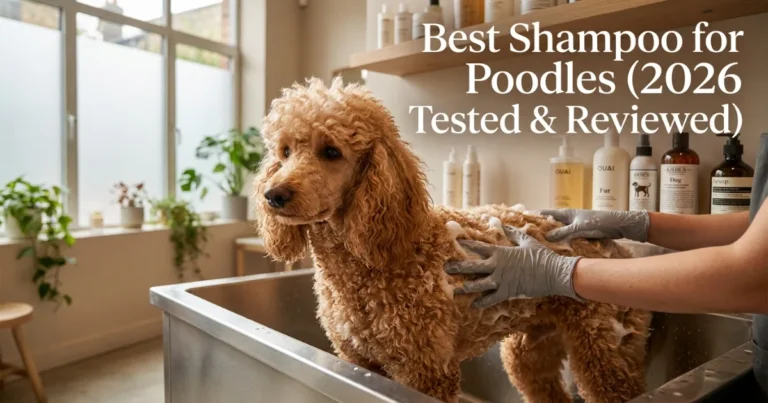
- Bath days: Always condition the crown hair thoroughly; banding damp, unconditioned hair leads to breakage.
For poodles with particularly dry hair, a drop of argan oil or a light coat serum rubbed between your palms and smoothed over the finished topknot adds shine without greasiness. Use sparingly.
When to Ask a Professional Groomer
If you notice persistent redness, hair thinning, or skin irritation at the band site, consult a professional groomer. They can assess whether your technique, band type, or coat condition is contributing to the issue. Also, if your poodle’s crown hair is too short to gather or you’re struggling to shape a symmetrical puff, a groomer can demonstrate the correct sectioning for your dog’s unique head shape. For help with full-body grooming routines, see our Complete Poodle Grooming Guide.
Frequently Asked Questions
How long does poodle topknot hair need to be?
At least 2–3 inches. Hair shorter than that won’t gather securely into a ponytail. You can still create a tiny puff with a clip, but a band won’t hold. Wait a few weeks for growth if necessary.
Can I leave a topknot in overnight?
It’s not recommended. Removing the band at night gives the hair and skin a break. Continuous banding can lead to breakage, matting, and skin irritation. Re-band fresh each morning.
Why does my poodle keep pawing at the topknot?
Usually the band is too tight, placed too close to the skin, or the hair is pulling. Remove it, check for redness, and re-band with less tension and a band placed slightly farther from the scalp.
What is the best band for a poodle topknot?
Small clear latex bands or silicone bands designed for hairstyling. Avoid standard rubber bands, which grip too aggressively and can snap hair or hurt the scalp. Latex offers the firmest hold for active dogs.
How do I get a fuller, rounder topknot?
Backcomb lightly at the base of the ponytail with a metal comb, then smooth the top layer. Using a leave-in conditioner before banding also adds volume and reduces static.
My poodle’s topknot flops forward into the eyes. What am I doing wrong?
The band is probably placed too far back on the head. Gather the hair starting directly above the brow line and angle it slightly forward as you band. That forward lean keeps the puff off the eyes.
Should I cut the topknot hair myself?
Only if you’re comfortable with blunt-tip scissors and can maintain a steady hand. Trim only the strays to keep the shape clean. For major reshaping, have a professional groomer show you the correct angles first.
Can a poodle have a topknot without a band?
Yes, a modified topknot can be styled using a small claw clip or ribbon, especially for dogs with shorter crown hair. However, for the classic rounded puff that holds through play, a latex band is the most reliable.
Key Takeaways for a Perfect Poodle Topknot
You don’t need a grooming table and years of experience. You need the right tools, gentle hands, and a method that prioritizes comfort.
- The poodle topknot is functional: it keeps hair out of the eyes and maintains the breed’s clean expression.
- Always prep the coat with a light mist and brushing; never band dry, tangled hair.
- Section using the outer eye corners as landmarks, and gather hair at a 45-degree forward angle for optimal placement.
- Use small grooming or silicone bands — never thick office rubber bands — and apply the comfort-first check to avoid pulling.
- Remove the band nightly to prevent breakage, and re-style every 1–2 days to keep the puff fresh and mat-free.
- A professional groomer can help if you notice skin irritation, asymmetrical shaping, or if the hair is too short to gather safely.
Best next step: Gather your tools and practice the PoodleGuru Topknot Stability Method on a calm, brushed coat. Aim for comfort first — the perfect poodle topknot will come with repetition.