Are Poodles High Maintenance? The Honest Answer
Yes—in specific, predictable ways. And no—not in the ways most people assume. Poodles need more coat care and mental engagement than the average breed. They don’t need you to be a professional groomer, a full-time dog trainer, or wealthy. They need consistency, not perfection.
Quick Answer
Poodles are high maintenance in two areas: coat care and mental stimulation. Their curly coat requires regular brushing, professional grooming every 4–8 weeks, and consistent home maintenance. Their intelligence demands daily mental engagement—without it, they develop anxious or destructive behaviors. In other areas—exercise flexibility, adaptability to different homes, low shedding, trainability—they’re surprisingly manageable. The maintenance is real, but it’s concentrated, predictable, and absolutely doable for committed owners.
What “High Maintenance” Actually Means for Poodles
“High maintenance” in dog ownership is the ongoing investment of time, money, and attention a breed requires beyond basic feeding and vet care. For poodle owners, this means the label gets applied broadly—often by people who’ve never lived with one. The most important thing to understand is that poodle maintenance is not evenly distributed. It clusters heavily in two areas: coat management and cognitive engagement. Everything else—exercise, space needs, shedding cleanup, general hardiness—is average to easy.
Why does the reputation stick? Because the coat is visible. A matted poodle looks neglected in a way a matted Labrador doesn’t. And because poodles are smart enough that boredom shows—in barking, chewing, restlessness. People notice. They assume the dog is difficult. Really, the dog is understimulated. That’s a maintenance failure, not a breed failure.
If you’re comparing poodles to breeds with wash-and-wear coats and lower cognitive demands—say, a Basset Hound or a Bulldog—yes, poodles require more. If you’re comparing them to other intelligent, coated breeds like a Border Collie or a Cocker Spaniel, the gap shrinks considerably. The AKC poodle breed page notes the coat requires regular professional grooming, but the breed’s trainability and adaptability are also emphasized. The maintenance exists. It’s just not the whole story.
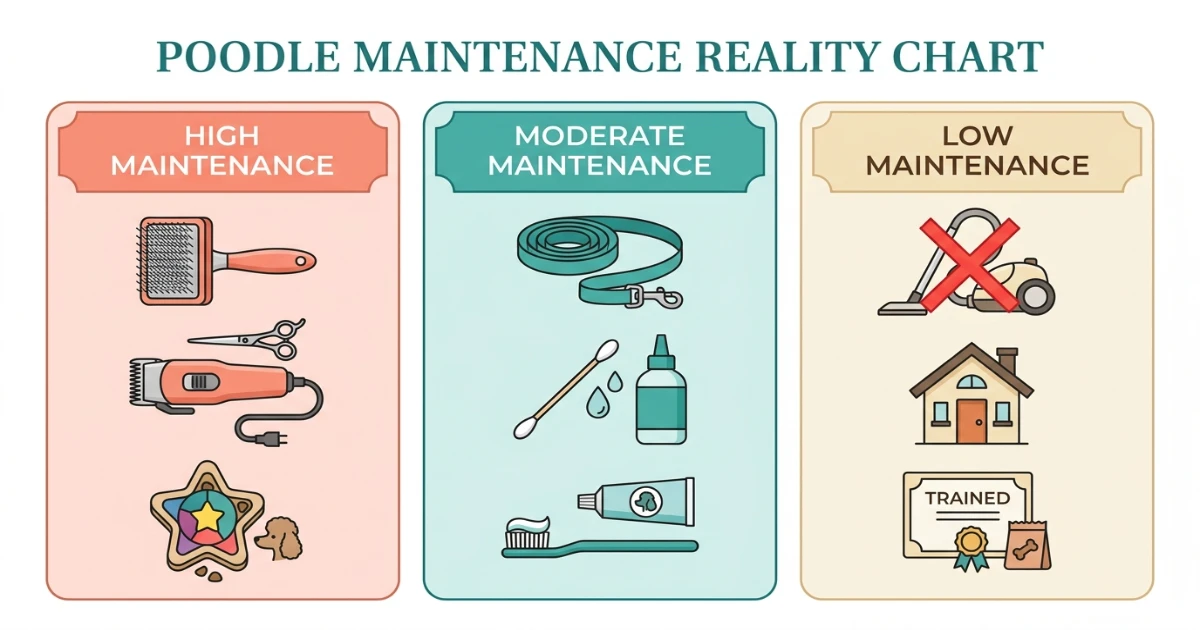
High Maintenance Zone
Coat care, professional grooming, daily mental engagement, early and ongoing socialization.
Moderate Maintenance Zone
Exercise needs, ear cleaning, dental care, training consistency.
Low Maintenance Zone
Shedding cleanup, space requirements, weather tolerance (with proper coat), adaptability to different lifestyles.
The Coat: Where the Real Work Lives
Let’s be direct. If you’re not ready for coat care, a poodle is not your dog. This is the non-negotiable piece of poodle ownership, and it’s the primary reason the breed earns the high-maintenance label.
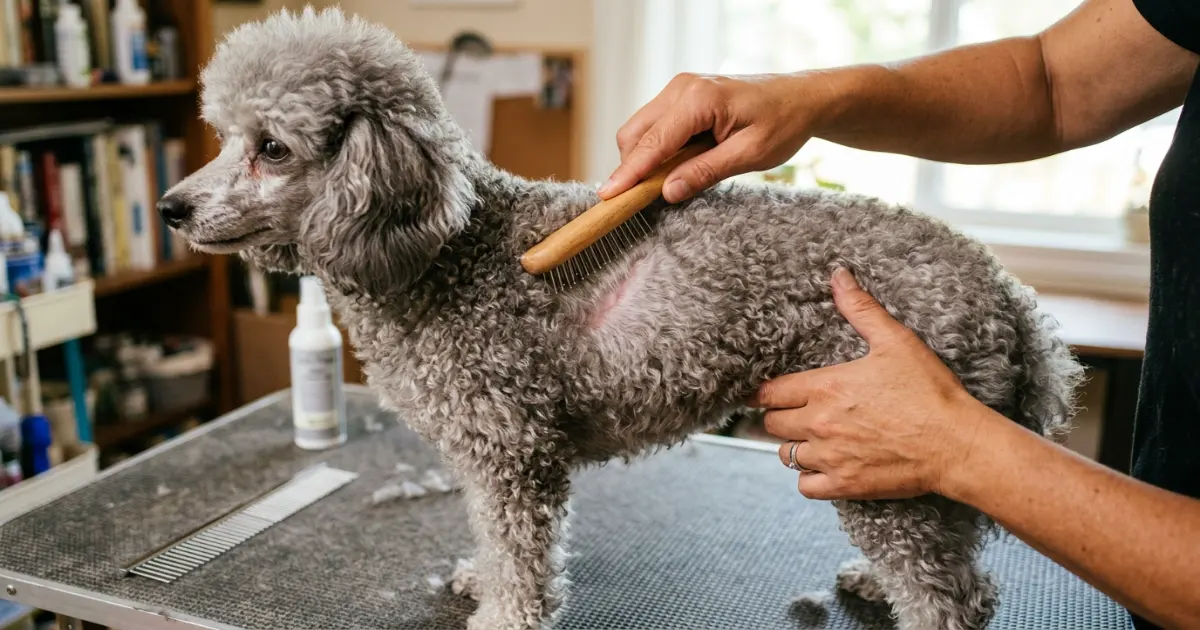
Poodle coat is hair, not fur. It grows continuously, curls tightly, and sheds minimally—trapping loose hairs within the coat instead of dropping them on your floor. That’s the good news: no tumbleweeds of fur. The trade-off: those trapped hairs form mats if not brushed out regularly. Mats tighten against the skin, cause pain, trap moisture, and create skin infections. This isn’t cosmetic. It’s a welfare issue.
| Coat Care Task | Frequency | Time Required | Skill Level |
|---|---|---|---|
| Line brushing at home | Every 2–3 days minimum | 15–30 min per session | Learnable—takes practice |
| Professional grooming | Every 4–8 weeks | 2–4 hours at the groomer | Professional required |
| Bathing and drying at home | Between grooms as needed | 30–60 min | Moderate—needs proper dryer |
| Sanitary trim maintenance | Every 1–2 weeks | 5–10 min | Basic clipper skill needed |
| Ear cleaning and plucking | Weekly | 5–10 min | Easy—groomer can teach |
That table looks intimidating. But here’s what experienced owners know: the routine becomes automatic. Fifteen minutes of brushing every other evening while watching TV stops feeling like a chore. It becomes part of the rhythm. The bigger decision is whether you’ll maintain a longer coat—which requires more frequent attention—or keep your poodle in a shorter clip that buys you more days between brushing sessions.
Mental Stimulation: The Maintenance Nobody Warns You About
Coat care gets all the attention. But ask experienced poodle owners what surprised them most, and many will say the mental needs. Poodles are one of the most intelligent dog breeds. Intelligence isn’t a decorative trait. It’s a demand for engagement.
A bored poodle creates work. They’ll bark, chew, pace, shadow-chase, or develop obsessive behaviors. These aren’t “bad dog” problems. They’re unmet cognitive needs expressing themselves through whatever outlet is available. The fix isn’t punishment. It’s more brain work.
Expert Insight: What “Mental Work” Actually Means
You don’t need to run a poodle for hours. Physical exercise matters, but mental exercise tires them faster. Ten minutes of focused training—learning a new trick, practicing impulse control, working a puzzle toy—exhausts a poodle more than thirty minutes of mindless fetch. Daily training sessions, food puzzles instead of bowls, scent games, and novel experiences all count. This is maintenance. But it’s the kind many owners find genuinely rewarding once they understand it.
If coat care is the visible maintenance, mental stimulation is the invisible one. Skip it and the dog seems “difficult.” Meet it consistently and you get a calm, focused, deeply bonded companion. The work is real. So is the payoff.
Maintenance by Poodle Size: Where the Differences Actually Land
Buyers often assume Toy Poodles are “less work” than Standards. That’s only partly true—and it depends entirely on which maintenance category you’re measuring.
| Maintenance Factor | Toy Poodle (4–6 lbs) | Miniature Poodle (10–15 lbs) | Standard Poodle (40–70 lbs) |
|---|---|---|---|
| Grooming time per session | Less surface area—faster home brushing and grooming | Mid-range | More surface area—longer sessions, higher grooming costs |
| Grooming cost per visit | $50–$70 typical | $60–$85 typical | $90–$150+ typical |
| Mental stimulation needs | High—same brain, smaller body | High—same brain, smaller body | High—same brain, bigger body |
| Exercise logistics | Indoor play and short walks often sufficient | Moderate walks plus indoor enrichment | Longer walks needed—size demands more physical outlet |
| Housing flexibility | Excellent—thrives in apartments | Excellent—adaptable to most homes | Good—needs indoor space to move, but adaptable |
| Overall maintenance rating | Medium-High | Medium-High | High |
The takeaway: no poodle size escapes the coat and brain requirements. The brain is the same across sizes. A Toy Poodle isn’t a lower-maintenance dog in the ways that matter most—just a smaller one with a slightly easier grooming burden and different exercise needs.
Where Poodles Are Surprisingly Low Maintenance
The maintenance conversation becomes unbalanced when we only talk about the hard parts. Poodles are genuinely easy in several areas where other breeds demand constant attention.
The Poodle Easy List
Minimal shedding. You won’t spend weekends vacuuming dog hair off furniture or clothes. For allergy-sensitive households, this alone offsets a lot of grooming work.
Trainability. Poodles learn fast—faster than most breeds. That means training sessions are shorter, more efficient, and more rewarding. A highly trainable dog is lower maintenance in the long run because communication is clearer.
Off-switch potential. Well-exercised and mentally satisfied poodles are calm indoors. They’re not a breed that paces restlessly when needs are met. Teaching a settle is straightforward with consistency.
Adaptability. Poodles don’t need a yard, a specific climate, or a rigid schedule. They flex to apartment living, suburban homes, active lifestyles, and quieter ones. That adaptability reduces maintenance in the “lifestyle restructuring” category.
Low odor and dander. The coat that needs brushing also traps dander and odor. A clean, well-groomed poodle is one of the least “doggy-smelling” breeds. This matters in homes where that’s a priority.
The PoodleGuru Maintenance Reality Check
At PoodleGuru, we evaluate whether a poodle is right for you using a simple framework. It separates the genuine requirements from the exaggerated fears.
Can You Commit to the Coat?
Be honest. Will you brush every 2–3 days? Can you budget for professional grooming every 4–8 weeks? If the answer is no, a poodle is not your dog right now—and that’s okay. Better to know before than to create a matted, uncomfortable dog. A shorter clip reduces the home burden but doesn’t eliminate it.
Can You Feed the Brain?
Are you willing to incorporate daily training, puzzle toys, or scent games? This isn’t optional for poodles. It’s as essential as walking. If the idea of teaching tricks or hiding treats for your dog to find sounds like fun, you’re a strong poodle candidate. If it sounds exhausting, reconsider.
Do You Appreciate a Dog Who Reads You?
Poodles are emotionally perceptive. They notice your mood. They respond to tension in the household. This is a feature for many owners—and a maintenance burden for people who want a more independent, less attuned dog. There’s no right answer, just self-awareness.
Two “yes” answers and one honest hesitation? You can probably make it work with adjustments. Three enthusiastic yeses? A poodle will thrive with you. Any hard no on the coat or brain questions? That’s worth sitting with before committing.
Real Costs of Poodle Maintenance in 2026
Money is part of maintenance. Here’s what to expect—not as a guarantee, but as realistic ranges for informed budgeting.
Estimated Annual Poodle Maintenance Costs
Professional grooming: $600–$1,800 per year (varies by size, location, and frequency). Standards at the high end, Toys at the lower end.
Home grooming supplies: $100–$250 initial investment (slicker brush, metal comb, clippers if maintaining short clips, dryer). Ongoing replacement costs are modest.
Training and enrichment: $100–$500+ per year. Puppy classes, puzzle toys, treat budgets for training, possibly ongoing classes for mental stimulation.
Veterinary care: $500–$1,500+ per year for routine care, plus emergency savings. Poodles are generally healthy but not immune to breed-related conditions. Our poodle health issues guide covers what to watch for.
Are poodles more expensive than the average dog? In grooming, yes—significantly. In other categories, they’re comparable to any well-cared-for purebred dog. The grooming line item is the one that surprises unprepared buyers. Budget for it honestly.
Maintenance Myths That Scare People Away
Some of what circulates about poodle maintenance is exaggerated or misattributed. Let’s clear a few up.
Myth: Poodles need hours of exercise daily. Reality: Most adult poodles do well with 45–75 minutes of walking split across two outings, plus mental work. That’s active but not extreme. They’re not Border Collies or Huskies.
Myth: Poodles are delicate and fragile. Reality: Standards are athletic, sturdy dogs bred for water retrieving. Toys and Miniatures are small but not unusually fragile for their size categories. The “delicate” myth comes from show dogs in full coat—that’s a styling choice, not a physical reality.
Myth: You must learn professional grooming to own a poodle. Reality: You need to learn basic home maintenance—brushing, comb-checking, sanitary upkeep. You don’t need to learn full grooming unless you want to. Most poodle owners use a professional groomer and maintain between appointments. That’s a completely valid approach.
Myth: Poodles are neurotic and anxious by nature. Reality: Understimulated poodles develop anxious behaviors. Properly engaged poodles are calm and steady. The “neurotic” reputation is mostly a reflection of unmet needs, not inherent temperament. The AKC notes that poodles are generally good family dogs when their intelligence is channeled productively.
Frequently Asked Questions
Are poodles harder to care for than other dogs?
In coat care and mental stimulation, yes—poodles require more consistent attention than many breeds. In exercise needs, shedding management, trainability, and adaptability, they’re often easier. The difficulty is concentrated, not universal.
How often do poodles need professional grooming?
Every 4–8 weeks for most poodles, depending on coat length and home maintenance. Shorter clips can stretch to 8 weeks. Longer coats or poodles who swim frequently may need appointments every 4–6 weeks.
Can I groom my poodle at home to save money?
Yes, with investment in equipment and skills. Quality clippers, a high-velocity dryer, shears, and proper education are required. Many owners learn basic maintenance while relying on a pro for full grooming. Full DIY grooming is a significant skill commitment.
Are Toy Poodles lower maintenance than Standard Poodles?
Marginally. Toy Poodles cost less to groom and need less physical exercise, but their mental needs are identical to Standards. The brain doesn’t scale down with body size. Coat care is still required—just on a smaller surface area.
What happens if I don’t brush my poodle regularly?
Mats form quickly—sometimes within a week without brushing. Mats tighten against the skin, causing pain, trapping moisture, and leading to skin infections. Severe matting often requires shaving the coat down completely. This is a welfare issue, not just a cosmetic one.
Are poodles good for first-time dog owners?
They can be—if the owner is genuinely ready for the grooming commitment and the mental engagement. Poodles are trainable and adaptable, which helps first-timers. But someone unwilling to brush regularly or provide daily mental stimulation will struggle regardless of experience level.
Do poodles need more attention than other dogs?
Yes, in terms of focused interaction. Poodles bond closely with their people and don’t do well with long periods of isolation or neglect. They need active engagement—training, play, companionship—not just passive presence. An owner who works long hours without dog care support will find this challenging.
Final Summary: Are Poodles High Maintenance?
The honest answer is yes—in the ways that matter for this breed. The coat demands consistent, non-negotiable care. The brain demands daily engagement. Neither can be skipped without consequences for the dog’s wellbeing. But the maintenance is specific, predictable, and manageable for owners who understand what they’re signing up for.
Outside those two zones, poodles are surprisingly easy. They don’t shed everywhere. They train quickly. They adapt to different homes and lifestyles. They’re calm indoors when their needs are met. For the right owner—someone who enjoys grooming routines and finds joy in a smart, engaged dog—the maintenance feels less like a burden and more like the price of admission to a deeply rewarding relationship.
Key Takeaways
- Poodles are genuinely high maintenance in two specific areas: coat care (brushing every 2–3 days, professional grooming every 4–8 weeks) and daily mental stimulation.
- The poodle coat grows continuously and mats without regular brushing—this is a welfare requirement, not optional aesthetics.
- Mental needs are identical across Toy, Miniature, and Standard sizes—the brain doesn’t scale down with the body.
- Poodles are surprisingly low maintenance in shedding, trainability, adaptability, and indoor calmness when properly exercised and mentally satisfied.
- Professional grooming costs range from approximately $600–$1,800 annually depending on size and frequency—budget for this before committing.
- If you are genuinely willing to brush consistently and engage your dog’s brain daily, the rest of poodle ownership is manageable and deeply rewarding.