This article contains affiliate links. PoodleGuru may earn a small commission if you purchase through our links, at no extra cost to you.
Maltipoo vs Toy Poodle: Key Differences & Decision Guide
You love the idea of a small, devoted companion. But when it’s Maltipoo vs Toy Poodle, the differences aren’t just about pedigree — they shape everything from grooming to temperament and long‑term costs. Here’s how to choose with confidence.
Quick Answer
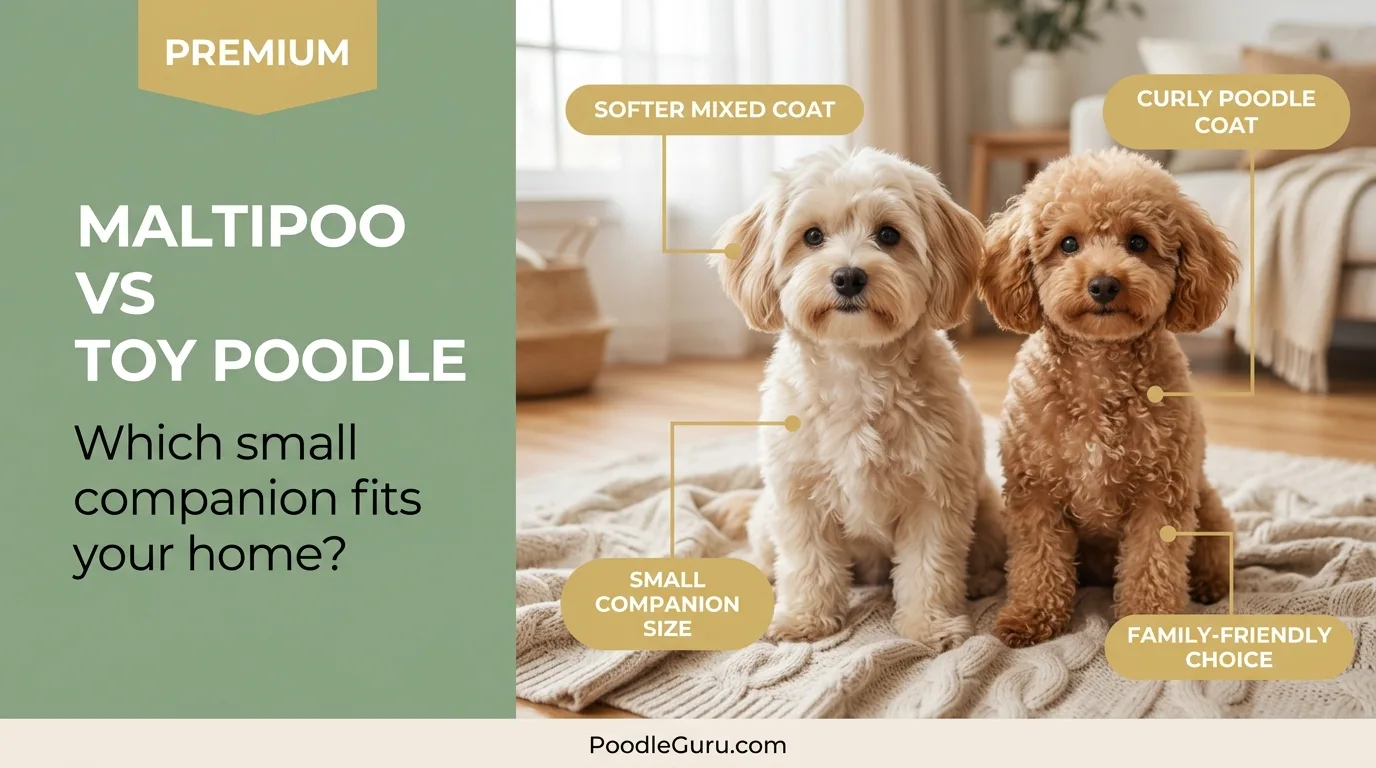
Both the Maltipoo and the Toy Poodle are small, affectionate, people‑focused dogs, but the Toy Poodle is a purebred with predictable traits, while the Maltipoo is a crossbreed with more variability in coat, size, and temperament. The Toy Poodle gives you a breed‑standard benchmark; the Maltipoo offers hybrid charm — but less certainty. Your final decision depends on how much predictability you value, your grooming bandwidth, and whether you want a registered purebred or a designer mix.
Maltipoo vs Toy Poodle: Quick Facts
Origins
Toy Poodle: Purebred, descended from standard poodles, refined over centuries. Recognized by the AKC. Maltipoo: A designer cross of Maltese and Toy or Miniature Poodle, first popularized in the 1990s–2000s.
Size
Toy Poodle: Up to 10 inches at the shoulder, 4–6 lbs. Maltipoo: Typically 8–14 inches, 5–20 lbs — variation depends on whether the poodle parent was Toy or Miniature.
Coat Type
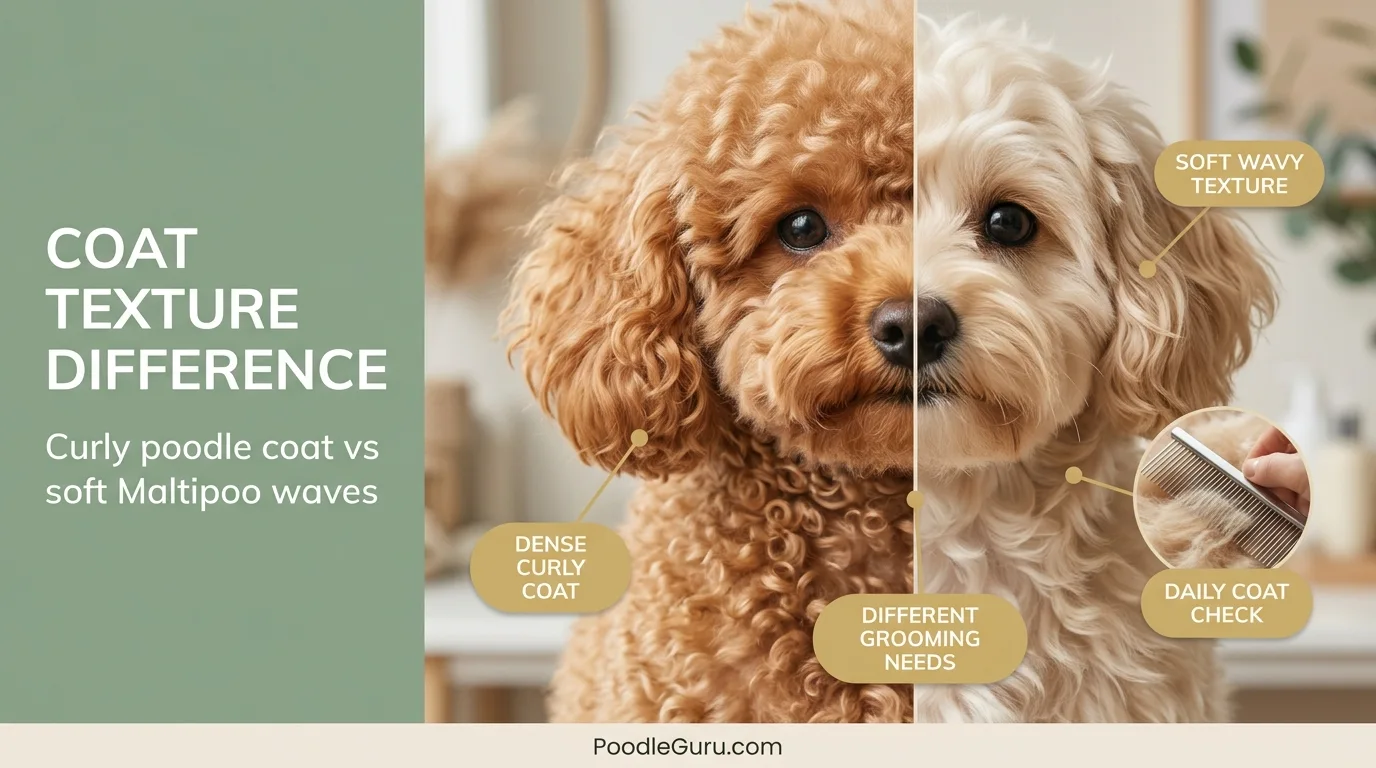
Toy Poodle: Dense, curly single coat; very low shedding. Maltipoo: Ranges from wavy to curly; shedding varies. Not always allergy‑safe despite “hypoallergenic” marketing.
The Core Difference: Purebred Predictability vs. Designer Blend
A Toy Poodle is a purebred dog whose traits — from coat texture to temperament — are shaped by a consistent breed standard. When you buy a well‑bred Toy Poodle, you can anticipate adult size, coat type, and general personality with reasonable accuracy.
A Maltipoo is a first‑generation cross between a Maltese and a Toy (or Miniature) Poodle. Because it blends two distinct gene pools, every litter produces a wider range of outcomes. One puppy may inherit more Poodle‑like curls and drive, while its sibling leans heavily toward the softer, silkier Maltese side. Neither outcome is wrong — but it’s less predictable.
For potential owners who want the emotional ease of a known entity, the Toy Poodle delivers. If you enjoy a little surprise and are comfortable managing a dog whose adult coat and size won’t be 100% guaranteed, the Maltipoo can be equally wonderful. The AKC Toy Poodle breed standard gives you a precise blueprint — something no crossbreed can match.
Expert Insight: The F1 Factor
Most Maltipoos are F1 crosses (first generation). While there’s often talk of “hybrid vigor,” responsible breeding matters far more than hybrid status alone. A well‑bred Toy Poodle from health‑tested lines typically carries fewer unknowns than a casually bred Maltipoo. Always ask about parent health clearances regardless of which you choose.
Side‑by‑Side Comparison: Maltipoo vs Toy Poodle
| Factor | Toy Poodle | Maltipoo |
|---|---|---|
| Breed Recognition | AKC recognized, predictable breed standard | Not a recognized breed; designer cross |
| Adult Weight | 4–6 lbs (very consistent) | 5–20 lbs (highly variable) |
| Coat Predictability | Dense, curly single coat; reliably low‑shedding | Wavy to curly; shedding can be light to moderate |
| Grooming Commitment | High: professional grooming every 4–6 weeks | Moderate to high: depends on coat inheritance |
| Allergy Friendliness | Often better for allergy sufferers | Not guaranteed; Maltese shedding genes can appear |
| Temperament Range | Intelligent, alert, can be reserved with strangers | Affectionate, social, may inherit Maltese sensitivity |
| Common Health Concerns | Patellar luxation, dental issues, PRA, Addison’s | White shaker syndrome, dental problems, patellar luxation, eye issues |
| 2026 Price Range (well‑bred) | $2,000–$4,500+ | $1,500–$3,500+ (depends on location and demand) |
| Exercise Needs | Moderate; enjoys learning and short walks | Light–moderate; playful but less drive |
| Lifespan Expectation | 12–15+ years with good care | 10–15 years, depending on size and parent lines |
Temperament & Everyday Life
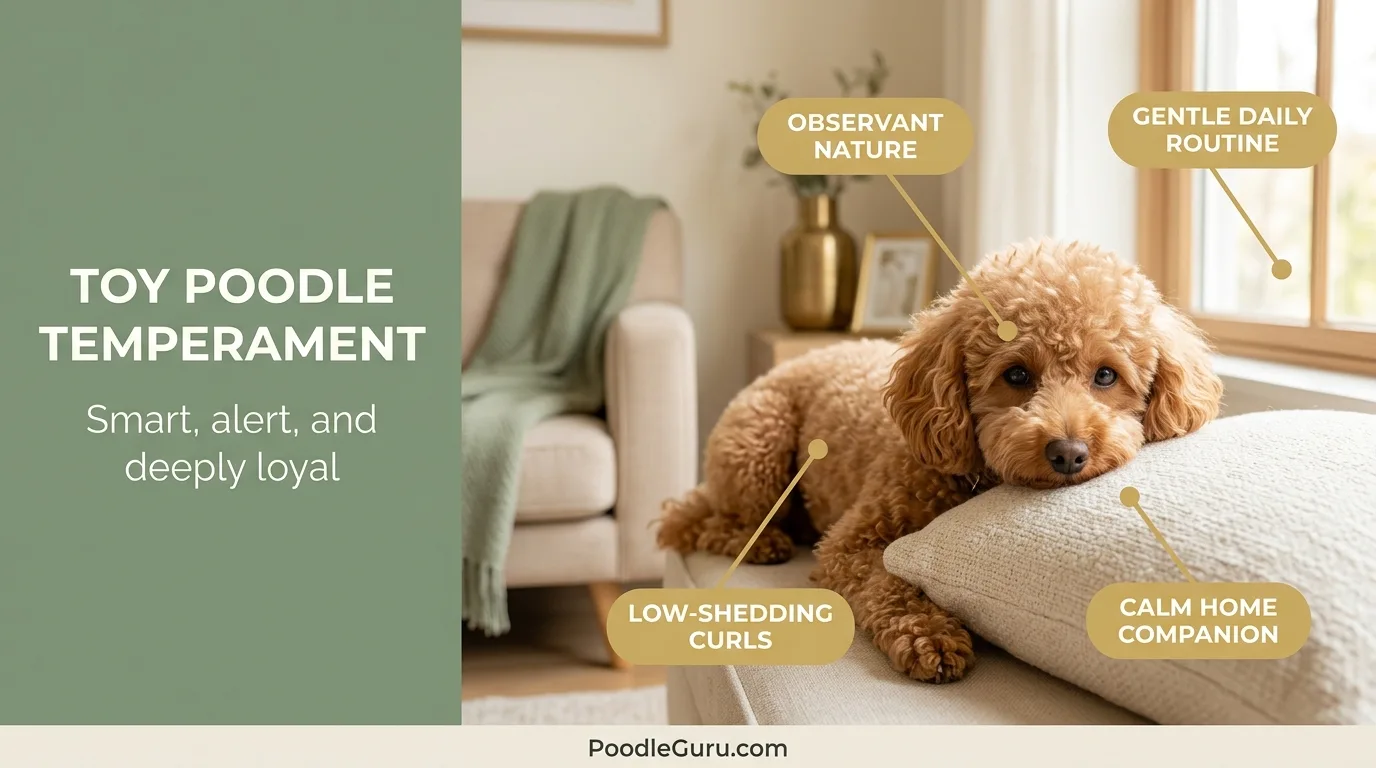
A Toy Poodle is often described as “a big dog in a small body.” They’re quick to learn, observant, and can be wonderfully tuned in to their owner. That intelligence means they need mental engagement — puzzle toys, short training sessions, and clear routines. Without it, a Toy Poodle may become vocal or develop attention‑seeking behaviours. They can be cautious around new people, which makes early socialization especially valuable.
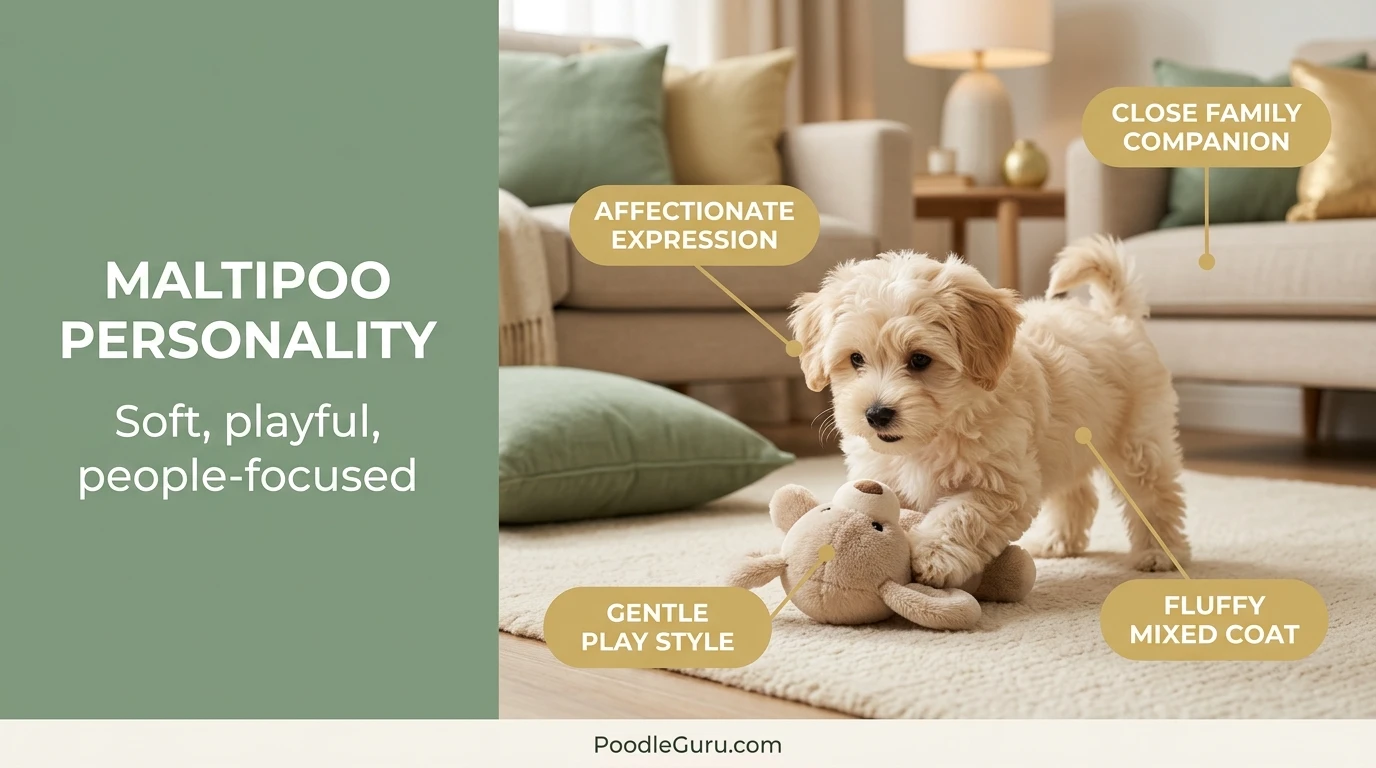
The Maltipoo’s temperament leans into the affectionate, people‑pleasing nature of both parent breeds. Many owners report a dog that’s less intense than a pure Poodle and more easygoing in new situations. However, the Maltese influence can bring a softer sensitivity; some Maltipoos become anxious if left alone for long stretches. The overall energy is often lower than a Toy Poodle’s, but playfulness remains high.
Practical takeaway: If you want a highly trainable, quick‑witted companion and have time for daily enrichment, the Toy Poodle shines. If a slightly more laid‑back, cuddly companion fits your rhythm — and you’re okay with a little variation — a Maltipoo often delivers.
Coat & Grooming Reality Check
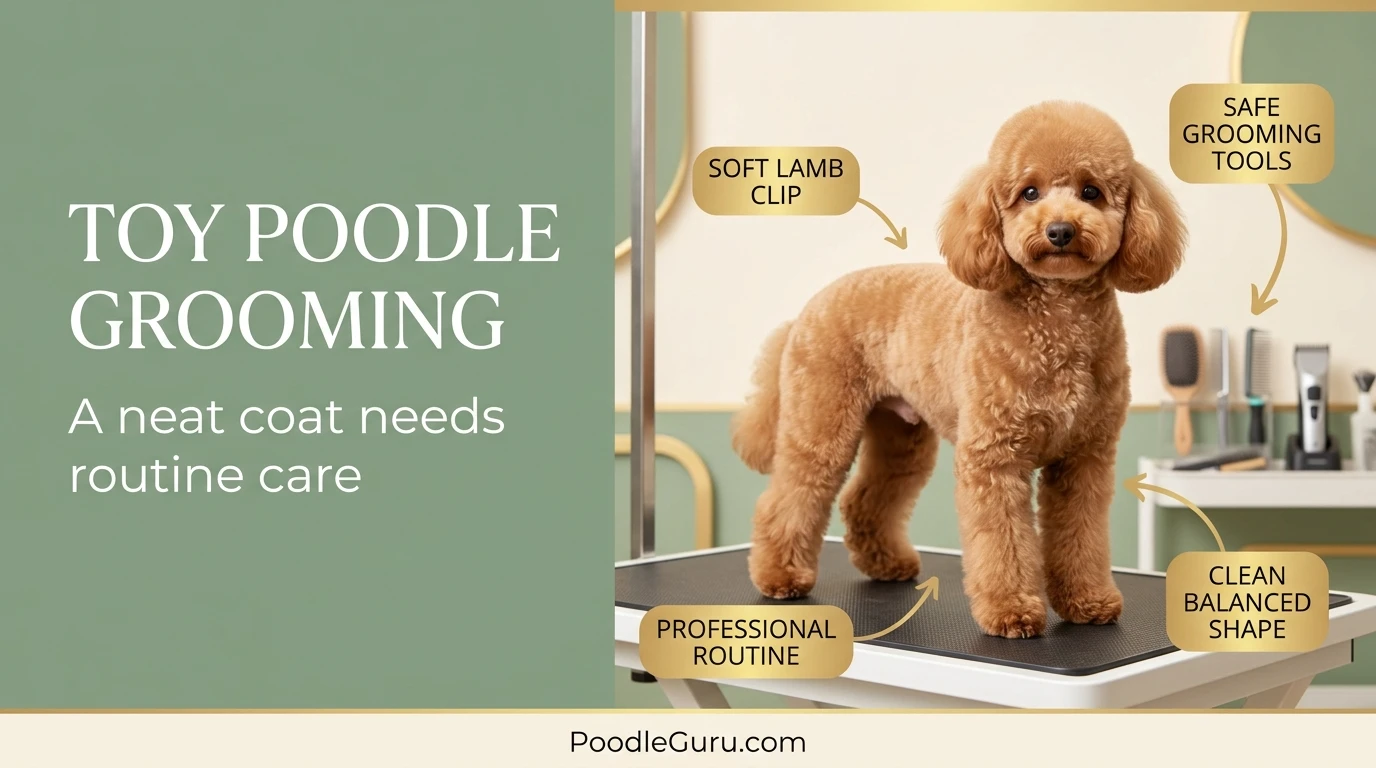
Both dogs demand grooming, but the effort differs. The Toy Poodle’s single, tightly curled coat mats quickly if not brushed daily and clipped every 4–6 weeks. In exchange, it truly sheds very little — a genuine advantage for tidy homes and many allergy sufferers. Our complete Poodle grooming guide walks through the full at‑home and professional routine.
A Maltipoo’s coat sits on a spectrum. Those with tighter curls behave more like a Poodle coat. Those with straighter, silkier hair — more Maltese‑like — can tangle just as readily but may shed more. Because you can’t be certain what you’ll get, it’s safer to budget for professional grooming every 5–6 weeks and to invest in a good slicker brush and metal comb from day one.
When to Call a Professional Groomer
If you notice matting close to the skin, discomfort when brushing, or skin irritation that doesn’t resolve with gentle care, a professional groomer can help. Never attempt to cut out severe mats with scissors at home — the risk of cutting delicate skin is high.
Health Profiles & Lifespan
Both small companions share overlapping concerns, but the approach differs. Toy Poodles benefit from generations of health testing — responsible breeders screen for patellar luxation, progressive retinal atrophy (PRA), von Willebrand’s disease, and more. When you buy from an AKC‑registered breeder who shares those results, you lower your risk significantly. Designer crossbreeds like the Maltipoo can still be robust, but the lack of a unified breed club means health testing is inconsistent. Both dogs need regular dental care, as small mouths crowd teeth easily.
At PoodleGuru, we evaluate long‑term health by looking at parental testing, not just breed labels. A Toy Poodle from fully health‑tested parents tends to have the clearest long‑term picture. A Maltipoo with one tested Poodle parent and an untested Maltese parent introduces more unknowns. Ask directly: “Can I see the parent’s OFA or equivalent certificates?” If the answer isn’t straightforward, walk away — from either breed.
Realistic 2026 Price Ranges
How Much Should You Expect to Pay?
Well‑bred Toy Poodle: $2,000–$4,500+, depending on breeder reputation, health testing, and pedigree. Show‑potential puppies can exceed $5,000. Maltipoo: $1,500–$3,500+, with popular colours and smaller sizes often priced higher. Beware of unusually low prices — they frequently skip health screening.
Both may require transportation costs, early vet checks, and a solid first‑year supply budget. The initial price is just the beginning; grooming, high‑quality food, and preventive veterinary care add up quickly for both.
The PoodleGuru Companion Match Method
At PoodleGuru, we use a simple six‑step framework to help future owners decide between these two small companions. Work through each step honestly.
Clarify Your Lifestyle
Do you want a dog that thrives on training and puzzle‑style engagement, or one that’s happier with gentle companionship and shorter play bursts? Toy Poodles often need more daily mental work; Maltipoos can be slightly more relaxed.
Assess Allergy & Shedding Needs
If a low‑shedding coat is a dealbreaker, the Toy Poodle’s predictable single coat gives you more certainty. With a Maltipoo, you’ll need to spend time with the specific puppy’s parents and littermates to gauge likely shedding.
Evaluate Grooming Commitment
Both need regular professional grooming. However, a Maltipoo with a silkier coat may need slightly less frequent clipping but more at‑home brushing to prevent tangles. Be honest about your weekly grooming time.
Consider Health Predictability
Request parent health clearances. A Toy Poodle from a breeder who tests for breed‑specific issues offers a more transparent health forecast. Maltipoo breeders who test both parents fully are rarer but essential.
Meet Breeding Standards
A Toy Poodle’s breeder should be able to discuss the AKC standard and show evidence of responsible practices. For a Maltipoo, ask why the breeder chose that cross and what health and temperament goals they aim for — not just “cute puppies.”
Budget Realistically
Look beyond the sticker price. Grooming, wellness care, dental cleanings, and potential small‑dog injuries all cost money. Use our Cost of Ownership guide to map out your first year.
Buyer Mistakes & Red Flags
- Assuming “hypoallergenic” means zero reaction: Both dogs produce dander and saliva proteins. A Maltipoo may still trigger allergies. Always spend time with adult dogs of similar coat type before committing.
- Focusing only on puppy price: A low upfront cost can hide missing health tests. Long‑term veterinary bills quickly erase any initial saving.
- Skipping parent temperament checks: Shy, anxious, or overly timid parents tend to produce similar puppies. Meet at least the mother, and ideally the father too.
- Believing “teacup” marketing: Neither Toy Poodles nor Maltipoos should be bred for extremely tiny size — it often increases health risk. Run from anyone promoting “micro” or “teacup” as a selling point.
Buyer Red‑Flag Checklist
If a breeder cannot show health clearances, refuses a visit, or pressures you to pay a deposit immediately, stop. Trustworthy breeders welcome questions and want the right fit, not a fast sale.
Frequently Asked Questions
Is a Maltipoo truly hypoallergenic like a Toy Poodle?
Not necessarily. Toy Poodles have a single, low‑shedding coat that produces less dander overall. Maltipoos can inherit a shedding undercoat from the Maltese side, so their hypoallergenic status isn’t guaranteed. Allergy sufferers should meet adult dogs of similar coat type before bringing a puppy home.
Do Maltipoos shed more than Toy Poodles?
Most Maltipoos shed lightly to moderately, while Toy Poodles shed very little. The exact amount depends on which parent the coat takes after. A Maltipoo with a curlier Poodle coat will shed less; one with silkier Maltese hair may drop noticeable hair on furniture.
Which breed is better for first‑time owners?
Both can work, but the decision hinges on routine. Toy Poodles need mental stimulation and consistent training; they’re brilliant and can become demanding without it. Maltipoos often have a softer temperament that may be easier for a first‑time owner, but their coat unpredictability and potential for separation anxiety require careful management.
Are Toy Poodles healthier than Maltipoos?
A Toy Poodle from fully health‑tested lines generally offers more predictable long‑term health. Maltipoo health depends heavily on whether both parents are screened for breed‑typical issues. Neither is automatically healthier; it comes down to breeder practices.
How much do Maltipoos and Toy Poodles cost in 2026?
Expect to pay $2,000–$4,500+ for a well‑bred Toy Poodle and $1,500–$3,500+ for a responsibly bred Maltipoo. Lower prices often mean corners were cut on health testing or socialization. Plan for grooming, veterinary care, and high‑quality food as part of your total budget.
Which is easier to train: Maltipoo or Toy Poodle?
Toy Poodles are often among the easiest small dogs to train due to their sharp intelligence and eagerness to work. Maltipoos are also trainable but may be slightly more sensitive; positive reinforcement works best for both.
Do Toy Poodles bark more than Maltipoos?
Individual personality plays a large role, but Toy Poodles can be more alert and vocal, especially when under‑stimulated. Maltipoos may bark to express excitement or anxiety, but early training and sufficient exercise help manage barking in either.
What’s the lifespan of a Maltipoo compared to a Toy Poodle?
Toy Poodles often live 12–15+ years with excellent care. Maltipoos typically live 10–15 years, though many reach their mid‑teens. Smaller size and responsible breeding are the biggest factors for longevity.
Final Key Takeaways
Choosing between a Maltipoo and a Toy Poodle isn’t about which is “better” — it’s about which fits your life and your comfort with predictability. Keep these points in mind:
- Toy Poodles are purebred, AKC‑recognized dogs with a consistent coat, size, and temperament blueprint when purchased from a reputable breeder.
- Maltipoos are designer crossbreeds that blend Maltese and Poodle traits — they bring warmth and charm but wider variation in coat, shedding, and adult size.
- Grooming is non‑negotiable for both. Budget for professional trims every 4–6 weeks and daily brushing to prevent painful mats.
- Health predictability depends on parent testing, not breed label. Always ask for verifiable health clearances regardless of which dog you pursue.
- Price isn’t a guarantee of quality. Look for breeder transparency, not the lowest or highest number.
- Your next step: Visit potential breeders or meet adult dogs of both types to see which small companion truly fits your home rhythm.