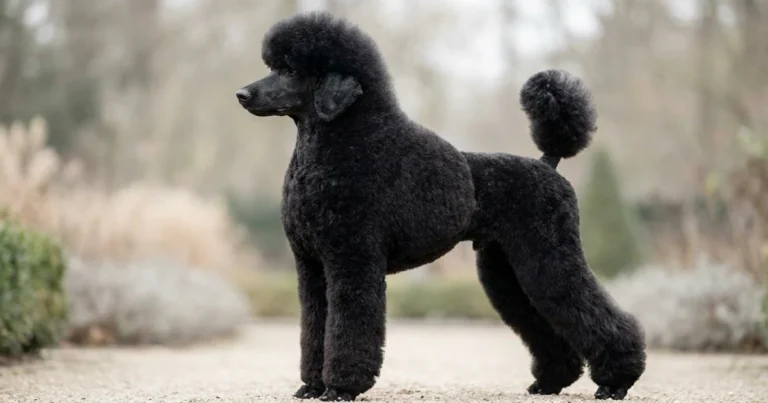
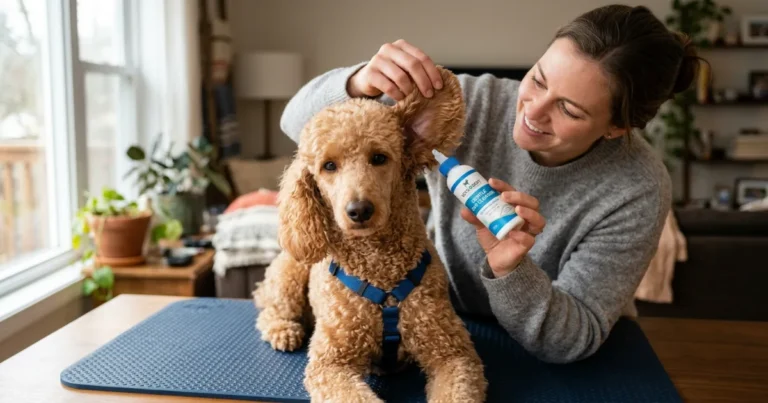
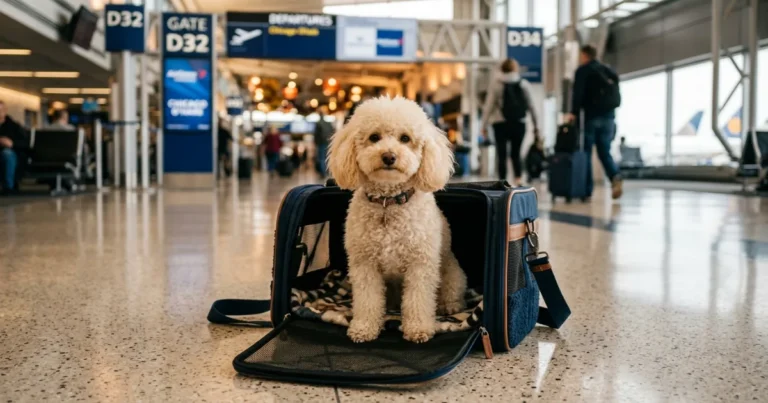
Poodle Separation Anxiety: A Step-by-Step Treatment Plan
Quick Answer: Poodle separation anxiety is a genuine panic disorder—not stubbornness or spite—where a poodle experiences extreme distress when left alone. The gold-standard treatment is a gradual, systematic desensitization protocol that teaches the dog that alone time is safe. Quick fixes like another dog, punishment, or leaving the TV on rarely work. With a structured plan, most poodles can learn to tolerate absences of several hours, though treatment requires patience, consistency, and often professional guidance.
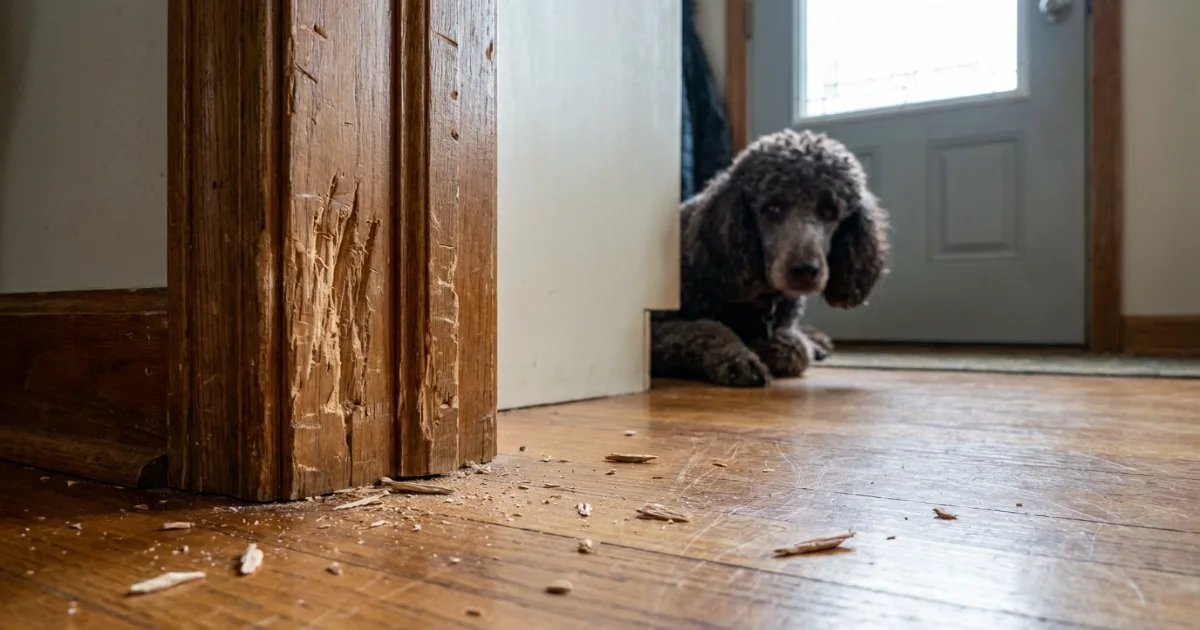
You step out the door and the howling begins before you reach the driveway. A neighbor texts: your poodle has been barking nonstop. You return to find shredded baseboards, a puddle by the door, and a dog so frantic it takes ten minutes to calm down. Poodle separation anxiety is not a little missing-you whimper—it’s a full-throttle panic response that can make leaving the house feel impossible, and coming home heartbreaking.
The breed we love for its intelligence, attunement, and devotion is, by that very wiring, predisposed to struggle when those bonds feel broken. But here is what I want you to hold onto: separation anxiety is treatable. It is not a life sentence of never eating out or accepting a job outside the home. The process is slow, occasionally messy, and demands a level of precision that generic “leave a Kong” advice fails to address. But with a plan built for the poodle brain—highly sensitive, highly trainable—you can rebuild your dog’s sense of safety, one carefully timed minute at a time.
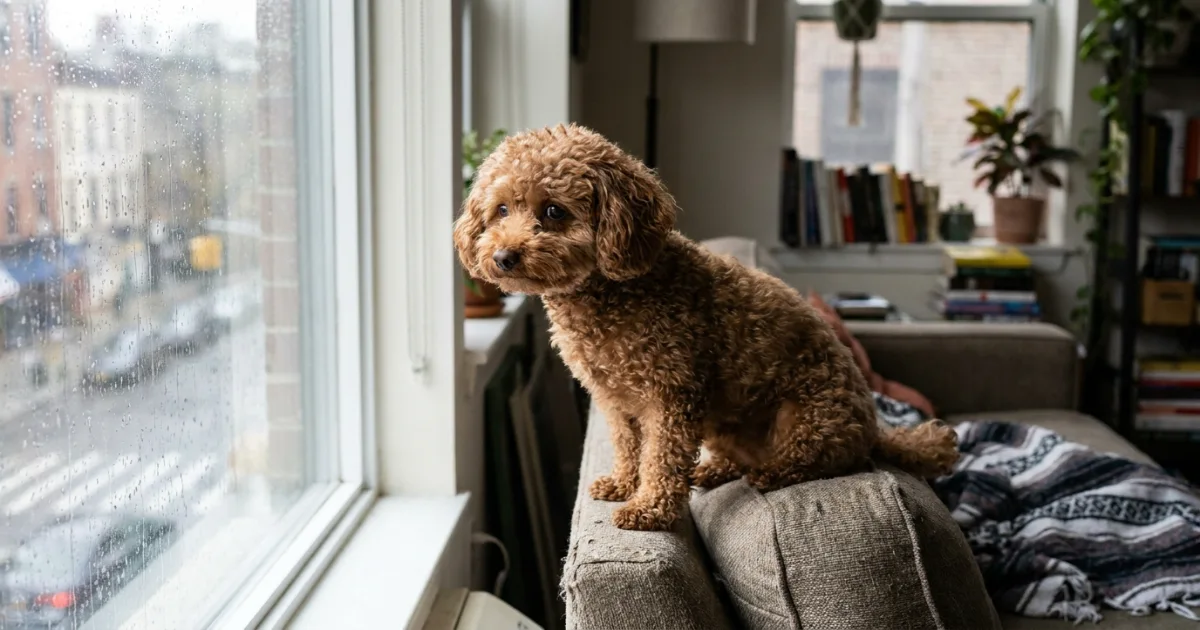
What Poodle Separation Anxiety Actually Is—and Isn’t
Separation anxiety is a panic condition triggered by the absence of a specific attachment figure. It is not a training deficit, a revenge plot, or a phase your poodle will simply outgrow. Biologically, the poodle’s brain registers the owner’s departure as a genuine threat, flooding the body with stress hormones. The dog is not choosing to destroy the doorframe; the dog is in survival mode.
This distinction matters because it changes everything about how you respond. Punishment—even a stern “no”—worsens the underlying fear. The poodle does not connect the correction to the behaviour that happened hours earlier; it connects the correction to your return, which makes future departures even more terrifying. Poodle separation anxiety is, at root, a phobia of being alone, and you treat phobias with safety, not discipline.
Why Poodles, of All Breeds?
Poodles occupy a unique spot on the canine vulnerability map for separation distress. Their breed story—developed as close-working water retrievers and later as aristocratic companions—selected for dogs exquisitely responsive to human cues and deeply bonded to their people. In a home where someone is around most of the day, those traits are pure gold. In a quiet apartment with an eight-hour workday, the same wiring can short-circuit.
Three breed-specific factors converge: intense social attunement, high environmental awareness (they notice every departure cue you barely register yourself), and a sensitivity that amplifies stress responses. A Miniature Poodle who perfectly learns a dozen tricks can simultaneously be unraveling emotionally when the house falls silent. This is not weakness; it’s a trade-off built into the breed’s brilliance.
Early experiences also layer on top of genetics. Poodles acquired during the pandemic’s remote-work era, when constant proximity was the norm for months or years, often had zero practice being alone during critical developmental windows. Even a well-socialized poodle from an excellent breeder can develop separation anxiety if the first year of life never included gradual alone-time training.
Recognizing the Signs: More Than a Little Whine
Poodle separation anxiety manifests on a spectrum, and not every dog will check every box. The key diagnostic feature is that signs occur exclusively or predominantly in the owner’s absence—not when the owner is home but in another room, and not simply because the dog is bored.
| Symptom | Separation Anxiety | Boredom / Understimulation | Medical Issue (e.g., UTI, GI) |
|---|---|---|---|
| House soiling | Only when left alone; often near the door | Can happen anytime if not house-trained | Increased frequency, straining, blood |
| Destruction | Targets exit points (doors, windows, crates) | Scattered, playful chewing of objects | Not usually destructive |
| Vocalization | High-pitched, repetitive howling/barking; recorded when alone | Occasional barking at stimuli | Rarely |
| Pacing / restlessness | Stereotyped path, often near exits; visible on camera | Zoomies, general restlessness even when owner home | Lethargy more common |
| Excessive salivation | Puddles of drool found on return; stress response | Not typical | Possible nausea from other causes |
Self-injury—broken teeth from chewing the crate, bloody paw pads from digging at the door—is a red flag that the panic is severe and that a management-only approach is insufficient. If you see these signs, involve a veterinary behaviorist promptly.
The Step-by-Step Treatment Plan for Poodle Separation Anxiety
The protocol below follows the evidence-based model used by veterinary behaviorists and certified separation anxiety trainers. It does not rely on gadgets, bark collars, or “cry it out” approaches—those strategies backfire with a sensitive poodle. Instead, it systematically reshapes the dog’s emotional response to alone time. Each phase builds on the previous one; do not rush.
Before You Begin: The Non-Negotiable Foundation
- Suspend all absences longer than your poodle can handle. This may mean daycares, sitters, or working from home temporarily. Every panic attack resets your progress and deepens the fear.
- Set up a camera to observe your dog’s behaviour when you practice short departures. You need to see the very first signs of anxiety—lip licks, yawns, a lifted paw—long before howling starts.
- Never punish. Not the destruction, not the barking. Punishment after the fact is both cruel and counterproductive.
Phase 1: Independence Foundations at Home
Before you practice leaving, teach your poodle that being apart from you inside the house is safe and rewarding. Use a tether, baby gate, or closed door to create brief separations of a few seconds while you remain in sight, then out of sight. Reward calm behaviour with a high-value treat tossed calmly. Gradually increase duration only when your poodle remains relaxed. This phase alone can take two to four weeks.
Phase 2: Taming Departure Cues
Poodles are masters of pattern recognition. The jingle of keys, the rustle of a coat, the particular way you pick up your bag—these cues trigger the anxiety cascade before you’ve even touched the doorknob. Systematically desensitize these triggers by performing them multiple times daily without leaving. Pick up your keys, then sit down. Put on your shoes, then make coffee. The goal is to divorce the cue from the scary outcome so the cue no longer predicts abandonment.
Phase 3: Sub-Threshold Departures
Now the core work begins. Step out the door for a duration you are confident your poodle can handle—this may be five seconds, or even just touching the door handle and returning. You must return before any signs of distress appear. Watch the camera. If your poodle remains relaxed, gradually increase by a few seconds at a time across many sessions. If you see a stress signal, you’ve gone too fast; return to an easier level.
Phase 4: Building Real-Life Duration
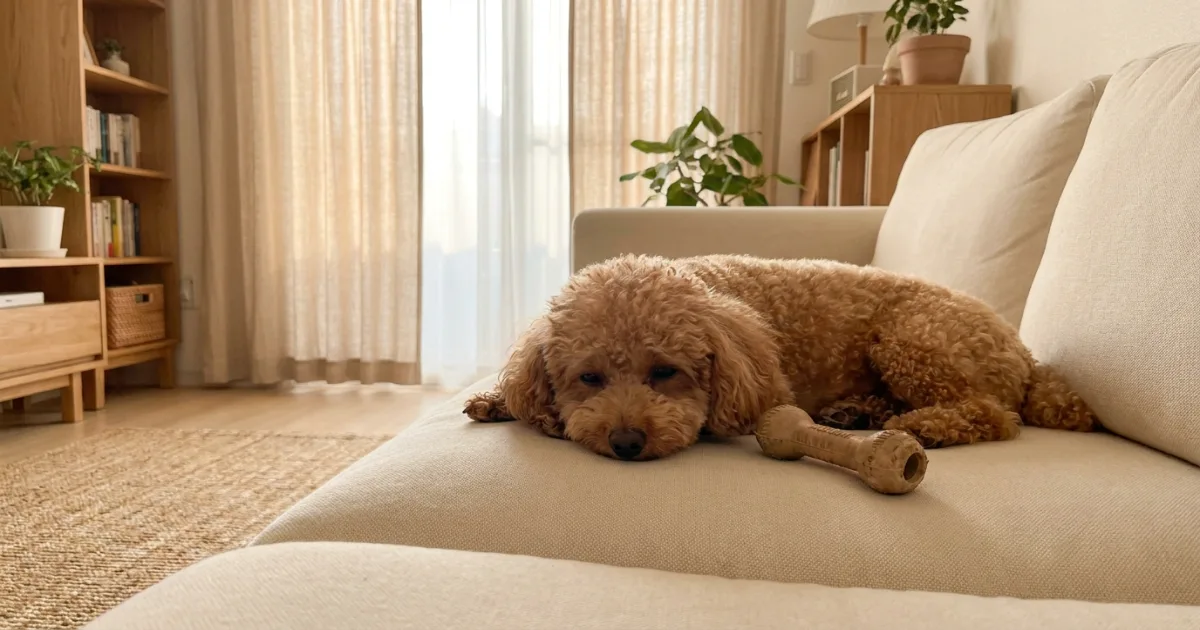
Once your poodle can handle 20–30 minutes alone calmly, you can begin to extend duration more rapidly, but always intersperse short departures with longer ones so the pattern remains unpredictable and safe. Many poodles plateau around the one-to-two-hour mark and need additional support—environmental enrichment, a carefully timed long-lasting chew given only during absences, or medication.
Phase 5: When to Bring in Medication
If your poodle’s anxiety is severe—panic within seconds, self-injury, failure to progress after weeks of consistent desensitization—anti-anxiety medication can be a humane bridge that makes the training possible. Drugs like fluoxetine or clomipramine, prescribed by a veterinarian, do not sedate the dog but reduce the baseline anxiety enough that the behavioural protocol can actually take effect. This is not a failure; it is recognizing a neurochemical component that willpower alone cannot fix. A board-certified veterinary behaviorist is the ideal prescriber.
What Most Owners (and Even Some Trainers) Get Wrong
The internet is packed with poodle separation anxiety advice that ranges from useless to harmful. Some of the most pervasive myths:
“Get another dog.” Separation anxiety is about the absence of a specific person, not loneliness. A second dog often becomes an anxious witness to the first dog’s panic, and sometimes the anxiety transfers. There are cases where a calm companion dog helps, but it’s a gamble, not a treatment plan.
“Crate training will fix it.” A crate can be a safe den—or a panic chamber. Many poodles with true separation anxiety injure themselves trying to escape a crate. Confinement does not treat the underlying phobia; it simply contains the damage while the dog suffers.
“Leave a stuffed Kong and they’ll be fine.” Food toys work for some boredom cases. For a genuinely panicking poodle, the toy lies untouched until the owner returns, because the dog is too distressed to eat. The presence of food does not override the terror of abandonment.
“Just ignore them when you leave and return.” The “no big deal” departure has merit—keeping emotions low-key can help—but it does not treat the core phobia. For many dogs, ignoring them when they are already distressed adds to the fear, because they’ve learned that calm behaviour goes unacknowledged while panic brings no relief either.
Breeder Transparency Alert: If you are researching a poodle puppy, ask breeders how they raise their litters regarding alone-time exposure. Puppies who spend their first eight to twelve weeks with gradual, positive separations from littermates and humans are better equipped for alone time later. A breeder who mentions early crate games, independent play, and not carrying puppies constantly is proactively reducing separation risk.
Separation Anxiety vs. Similar Conditions in Poodles
Misdiagnosis is common—even among professionals—and leads to the wrong treatment. Poodles can display distress when left alone for reasons other than true separation anxiety.
| Condition | Key Feature | How It Differs in Poodles |
|---|---|---|
| Separation Anxiety | Panic when separated from a specific attachment figure | Often hyper-attached to one person; distress begins before departure and persists throughout absence |
| Confinement Distress | Anxiety only when confined (crate, small room) | Poodle may be fine loose in the house but panics in a crate; common misdiagnosis |
| Isolation Distress | Distress when left completely alone, but fine with any person or even another dog | Poodle may settle with a pet sitter or dog buddy; true separation anxiety is person-specific |
| Boredom / Lack of Enrichment | Destruction or nuisance barking even when owner is home | A poodle who chews the remote while you’re watching TV needs more stimulation, not separation training |
| Noise Phobia (e.g., storms) | Panic triggered by specific sounds, not departure | May destroy exit points to escape the scary noise, not because owner left |
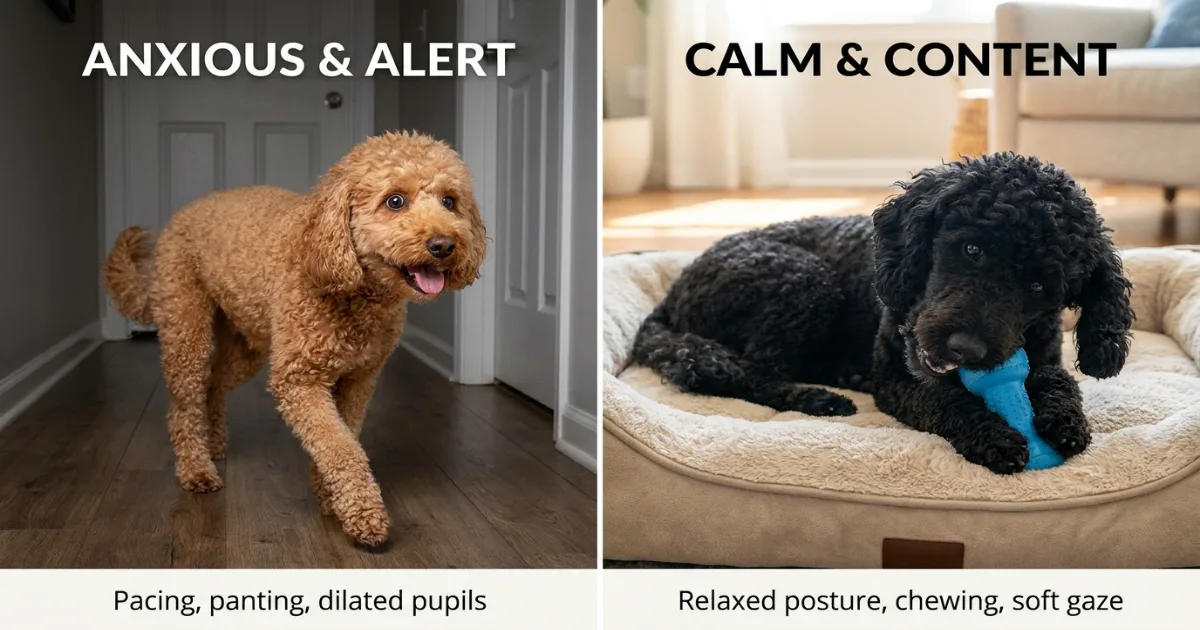
Practical Owner Insight: Real Life With a Velcro Poodle
Living with a poodle who cannot be left alone reshapes your world. You map out your life in three-hour windows. You skip social events. Vacations feel impossible. The emotional weight—frustration, guilt, the sense that you must have done something wrong—is as real as the chewed baseboards. If this is your reality, please hear this: it is not your fault. The most devoted, responsible owners can find themselves with a panicking poodle, because the combination of genetic predisposition and life circumstance is powerful and not fully within anyone’s control.
Financially, treatment can range from a few hundred dollars for a self-guided online course and consultation with a certified separation anxiety trainer, to several thousand if you need ongoing professional support and medication management. Budget for the initial investment of a camera setup ($30–$100), possible daycare or sitter costs during treatment ($25–$60/day), and medication if prescribed ($15–$60/month). The biggest cost is often the loss of income if someone must stay home; planning for this reality upfront helps you avoid crisis decisions.
Emotionally, connecting with a community of owners facing the same challenge is invaluable. The loneliness of managing this condition is real, and hearing from someone who gets it can be the difference between burning out and staying the course.
Prevention for New Puppy Owners: Building Resilience Early
If you haven’t yet brought your poodle home, you have a window of opportunity. Puppies are not born with separation anxiety; it develops through a combination of genetics and early experience. Here are concrete steps to stack the deck in your favor:
- From day one, practice brief separations. Step out of sight for three seconds, return calmly. Repeat many times daily, gradually stretching duration. Do this before the puppy cries.
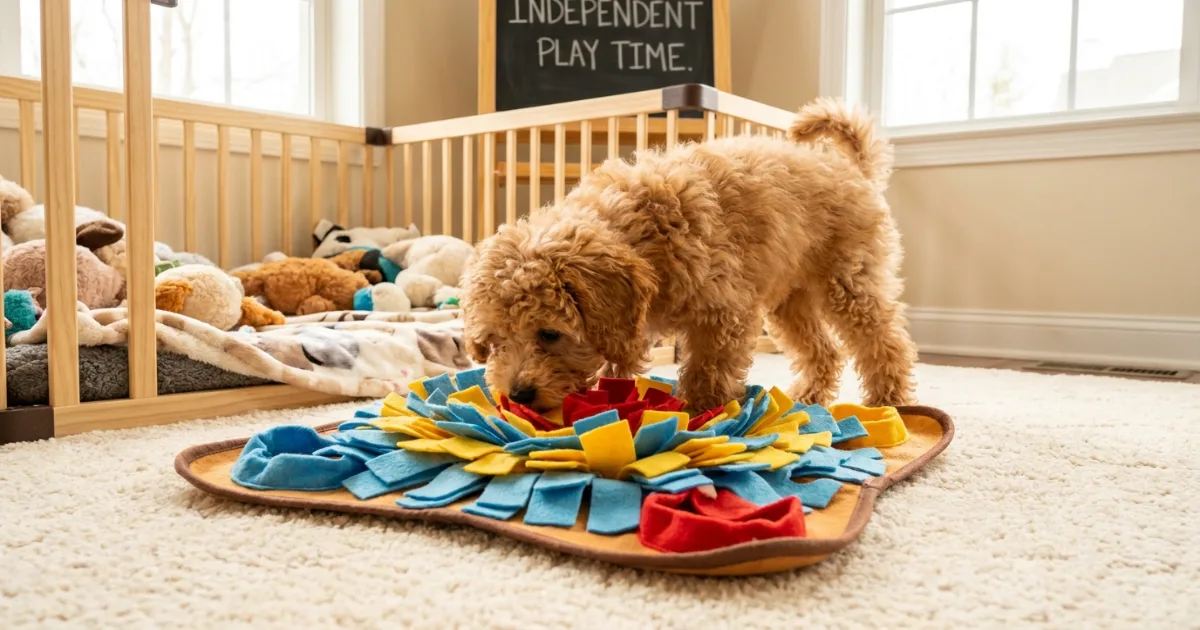
- Independent play. Place treat puzzles or snuffle mats in a safe, confined area and allow your puppy to engage with them without you hovering.
- Vary your routines. Don’t always pick up keys only before leaving; don’t let your departure ritual become a clear, scary pattern.
- Avoid over-carrying. Poodles, especially Toys and Miniatures, are small enough to live in a handbag. Carrying them constantly breeds dependency. Let them walk beside you often.
- Teach a solid “settle” cue that means rest calmly on a mat, even when you move around the room.
Frequently Asked Questions About Poodle Separation Anxiety
Can poodles grow out of separation anxiety without treatment?
Rarely. True panic-based separation anxiety does not spontaneously resolve; it typically worsens over time as the dog’s fear is repeatedly confirmed by being left. Mild isolation distress in a puppy may improve with maturity, but consistent training is still the safest path.
Does getting another dog help a poodle with separation anxiety?
For most cases of person-specific separation anxiety, no—another dog does not replace the missing attachment figure and may simply become a second stressed animal. In cases of isolation distress (any company will do), a compatible canine companion can help, but it’s never a guaranteed solution.
How long does treatment for poodle separation anxiety take?
Every dog progresses differently. With consistent, daily training, some poodles achieve a few hours of alone time in 6–8 weeks. Severe cases can take 6–12 months or longer to reach functional duration. The process cannot be rushed without risking setbacks.
Should I use a crate for a poodle with separation anxiety?
Only if the poodle already loves the crate and shows zero distress being confined alone. Many separation-anxious poodles panic in a crate, injuring themselves. If you’re uncertain, use a camera to observe your dog’s behaviour in the crate when alone before committing to that management tool.
Can anti-anxiety medication cure separation anxiety?
Medication alone rarely resolves the behaviour; it reduces the dog’s baseline anxiety so that the training protocol can be effective. For many poodles, medication is a temporary tool used during the treatment period, tapered off once independence is established.
Is it normal for my poodle to follow me from room to room?
Following you around the house—often called “Velcro” behaviour—is common and breed-typical. It becomes a clinical concern only when your poodle cannot tolerate any barrier or distance, even when you’re home, and panics when deprived of visual contact. That’s worth addressing before it escalates into separation anxiety at departure.
How do I find a qualified separation anxiety trainer for my poodle?
Look for a trainer with the Certified Separation Anxiety Trainer credential or equivalent specialization who uses only positive reinforcement and systematic desensitization methods. Avoid anyone promising quick fixes or using punishment-based techniques. Consult your veterinarian for referrals.
What is the difference between FOMO (fear of missing out) and separation anxiety in poodles?
FOMO dogs are frustrated by being excluded while activity continues elsewhere in the house—they hear fun and want to join. True separation anxiety is a panic response to being left completely alone, regardless of activity. A FOMO poodle may settle if the house is quiet; a separation-anxious poodle will not.
Living Beyond the Doorframe
Poodle separation anxiety can feel like a cage around your life, but it is a cage with a key—one turned by patience, precision, and compassion. Your poodle’s panic is not a verdict on your ownership. It is a clinical condition, responsive to a methodical plan that respects the intensity of the bond while gently teaching the brain that alone time is survivable. You will make mistakes. You will have days when the camera shows regression. But the trajectory of a well-executed desensitization protocol is upward—not a straight line, but an upward one. And the first time you return home to a calm, softly wagging poodle who barely registered your absence, you will know that every carefully timed second was worth it.