Poodle Dutch Trim Guide (with Photos)
Quick Answer: The Poodle Dutch trim is a classic, elegant grooming style that leaves a full, sculpted jacket over the body while the face, throat, feet, and base of the tail are clipped clean. The legs remain full and shaped into soft columns, giving a balanced, functional look that is less extreme than the Continental clip but still unmistakably poodle. It’s a favorite among pet owners who want a beautiful, manageable cut that honors the breed’s heritage without demanding daily maintenance.
Walk into any grooming salon and ask for a “Poodle trim” and you’ll be met with a puzzled pause. There are so many variations—Continental, English saddle, puppy, kennel, Dutch—that even seasoned poodle people sometimes mix them up. The Poodle Dutch trim sits in a lovely middle ground: it’s a recognizable, breed-standard silhouette that’s genuinely livable. I’ve helped countless poodle owners land on this style after trying others, and it often becomes a permanent fixture.
This guide unpacks everything you need to know about the Dutch trim—how it looks, why it works, how it compares to other clips, what it costs, and how to talk to your groomer so you both walk away happy. And because I know you’re a visual learner, I’ve included detailed photo descriptions at every key point.
✂️ Also Called
Dutch clip, Dutch cut, or sometimes the “Lion trim lite” (though not officially). It’s recognized by many kennel clubs.
🐩 Best For
Poodle owners who want a beautiful, breed-specific look that’s less high-maintenance than the Continental or English saddle.
⏱️ Grooming Frequency
Full groom every 4–6 weeks; weekly brushing and line maintenance at home.
💰 Average Cost (2026)
$75–$130 for a professional Dutch trim, depending on size and location. Maintenance between full grooms adds to this.
What Exactly Is a Poodle Dutch Trim?
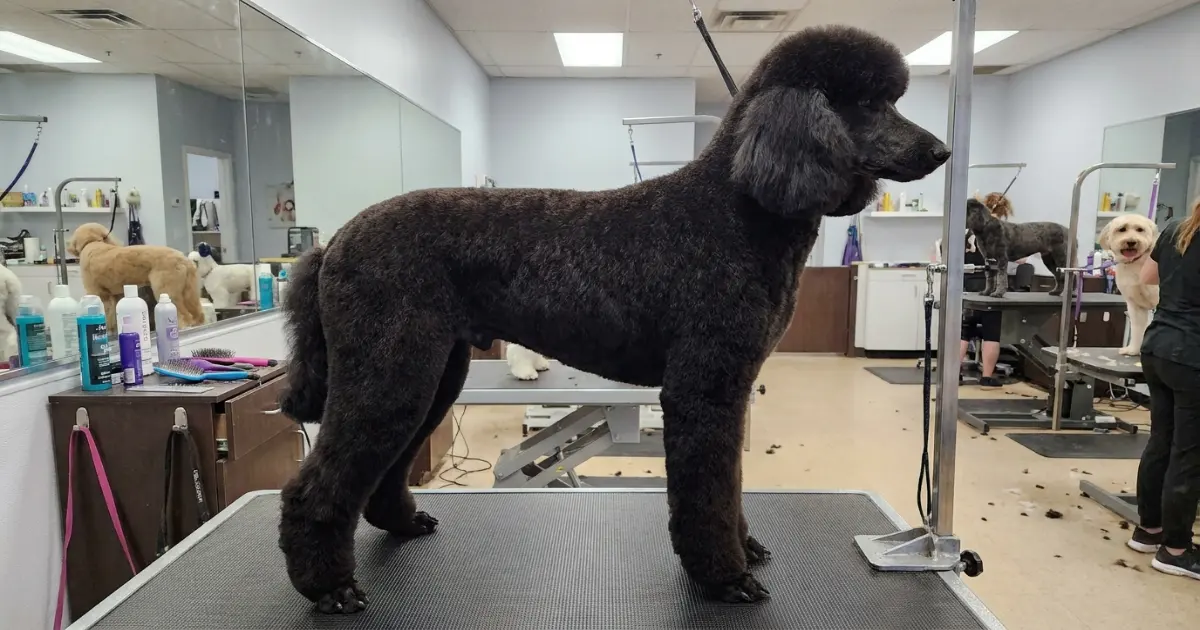
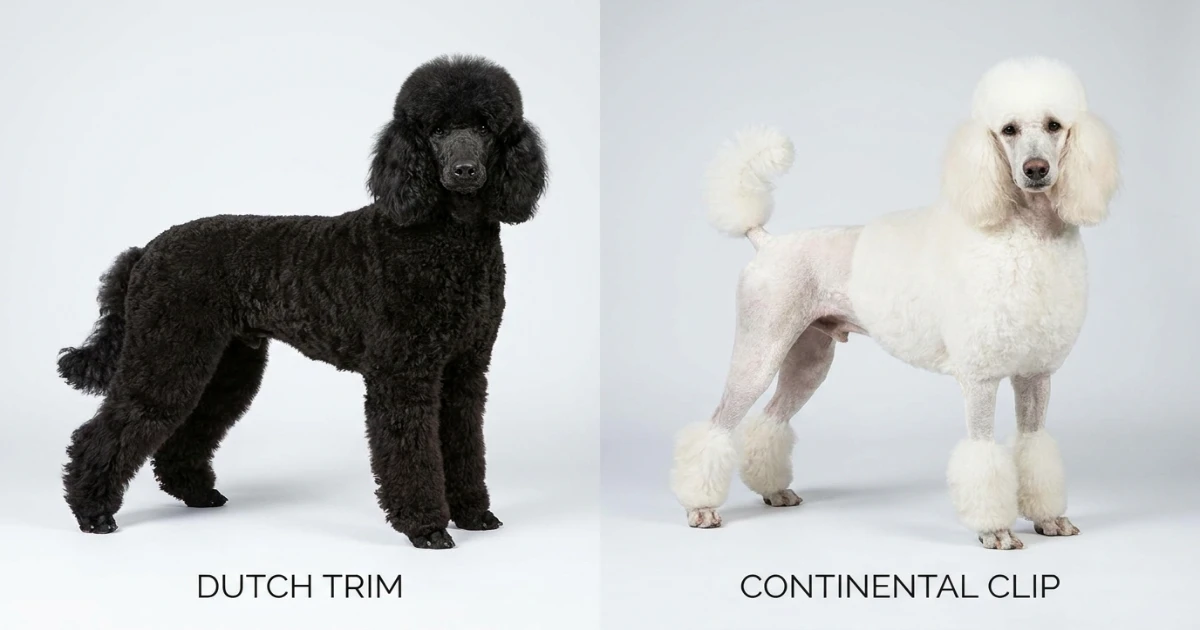
The Poodle Dutch trim is a pattern cut defined by a full coat over the body (called the “jacket”), cleanly shaved face, throat, and feet, and long, scissored hair on all four legs without the shaved hindquarters you’d see in a Continental cut. The tail ends in a round pom, and the head is shaped into a neat topknot. The effect is a tidy, breed-typical outline that looks polished but not theatrical. Unlike the Continental’s dramatic bare rump with bracelets, the Dutch keeps the rear covered in soft curls, making it much easier to maintain and more comfortable for dogs who live on sofas rather than show rings.
The History Behind the Dutch Trim (It’s Not as Ancient as You Think)
Many people assume the Dutch trim is a centuries-old working style, but its roots are less romantic. While poodles have been clipped in various patterns for hundreds of years—originally to protect joints and vital organs while swimming—the modern Dutch trim gained popularity in mid-20th-century Europe as a sensible alternative to the more labor-intensive Continental. It became strongly associated with Dutch kennels, hence the name, though it was never exclusive to the Netherlands. Pet owners loved it because it kept the signature poodle look without the weekly touch-ups that a shaved hind end demands. Today, it’s a favored style for poodles who are beloved family members first, show dogs second.
Dutch Trim vs. Other Poodle Clips: A Comparison Table
One of the fastest ways to understand the Dutch trim is to see it alongside the other common poodle cuts. This table clarifies what sets each apart.
| Clip Style | Face/Feet | Body (Jacket) | Hindquarters | Legs |
|---|---|---|---|---|
| Dutch Trim | Clean face, clean feet | Full jacket | Full, shaped coat (no shaving) | Long, scissored columns |
| Continental | Clean face, clean feet | Full jacket | Shaved bare, leaving bracelets | Shaved with bracelets on back |
| English Saddle | Clean face, clean feet | Short jacket | Partial shave, rosettes | Shaved fronts, back bracelets |
| Puppy Clip | Can be clean or full | One length all over | One length | One length with trimming |
| Kennel/Retriever Cut | Often left natural | Short all over | Short all over | Short, blended |
Where the Dutch trim truly shines is in everyday practicality. It preserves enough coat to protect from sun and cold, yet the clean face and feet keep food and mud at bay. Owners often describe it as the “forgiving” poodle clip—if you miss a week of brushing, you won’t necessarily face a shave-down.

How the Dutch Trim Is Achieved: A Step-by-Step Overview
While most owners will visit a professional groomer, understanding the process helps you appreciate the artistry—and spot a job well done. Here’s how a skilled groomer builds a Dutch trim from start to finish.
1. Prep Work: Bath, Blow-Dry, and Brush
The coat must be spotlessly clean and completely brushed out, free of mats, before a single clipper touches it. A high-velocity dryer is used to straighten the curls, revealing the poodle’s true body lines. This stage is crucial; any matting will throw off the symmetry of the jacket.
2. Setting the Clean Areas
Using a close blade—typically a #10 or #15—the face, throat, feet, and the base of the tail are shaved clean. The line around the throat is critical; if it’s set too high, the dog looks chopped off. Too low, and it resembles a messy bib. The boundaries of the jacket are then scissored or clipper-blended to create a smooth transition.
3. Sculpting the Jacket
The body coat is left long—anywhere from an inch to several inches depending on preference—and then scissored into an even, flowing shape. The goal is a smooth contour that follows the natural curve of the ribs and loin. Some owners prefer a shorter, more manageable jacket; others keep it plush. Either way, it should appear hand-sculpted, not shaggy.
4. Shaping the Legs
All four legs are left in full coat and scissored to create a straight, column-like appearance or a subtly tapered silhouette. The hair from the front of the shoulder down to the foot should look continuous, not disjointed. On the back legs, the angulation is carefully preserved so the dog looks balanced from any angle.
5. Topknot and Tail Pom
The topknot is shaped to complement the dog’s head—not so large it overpowers, not so small it looks pinched. The tail pom is trimmed into a soft sphere or oval, proportional to the dog’s build. Both are finished with shears for a polished look.
What Owners Usually Get Wrong About the Dutch Trim
I’ve lost count of how many times a new poodle owner has walked into a salon, said “Dutch trim, please,” and left with something entirely different. Here’s where the wires cross most often.
- Assuming it’s the same as a “puppy cut.” A puppy cut is one even length all over, while the Dutch trim has distinct clean areas and a differentiated jacket.
- Not specifying clean face and feet. Some groomers default to a fuzzy face unless explicitly told otherwise, resulting in a poodle that looks like a doodle. A Dutch trim without a clean face simply isn’t a Dutch trim.
- Believing it’s maintenance-free. The full legs and jacket still need regular brushing to prevent matting, especially behind the ears and elbows.
- Confusing it with the Miami clip. The Miami clip is a summer cut that leaves pompons on the head, tail, and lower legs; the body is relatively short. The Dutch keeps the full body coat.
- Misjudging coat texture changes. Adolescent coat change can make a beautiful Dutch trim look ragged temporarily. Patience and good conditioning products get you through it.
🐩 Pro Tips for Maintaining a Dutch Trim at Home
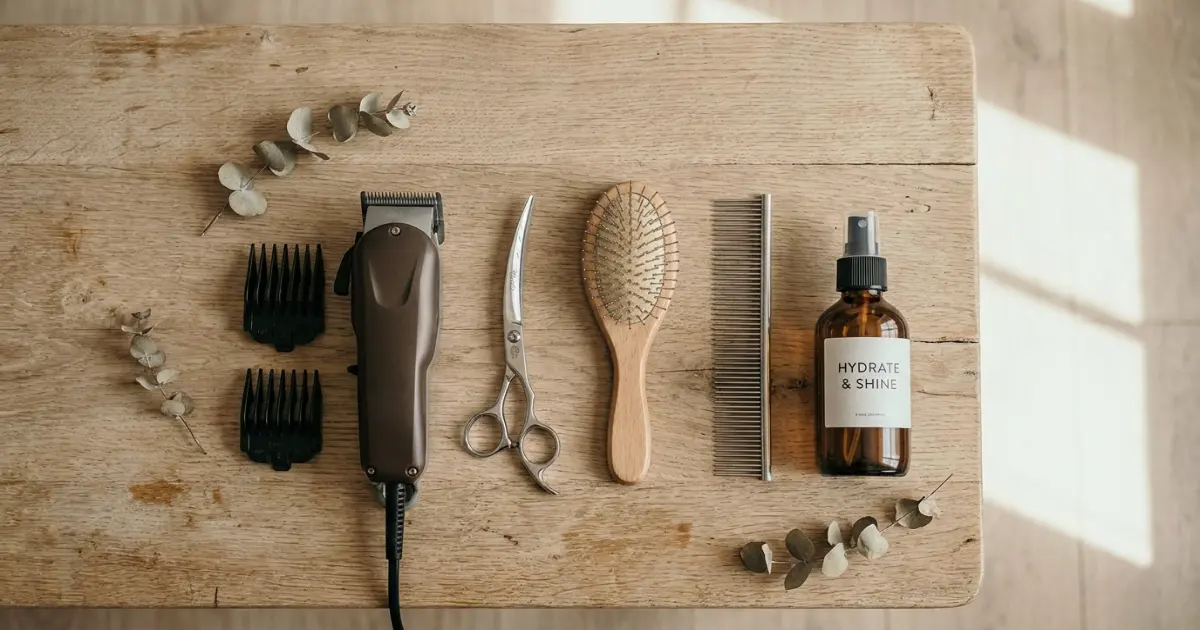
- Invest in a good pin brush and greyhound comb. Poodle coats must be brushed to the skin, not just surface-fluffed. A comb checks your work.
- Line-brush weekly. Lift sections of coat and brush from the root outwards. This takes 15–20 minutes once you get the rhythm.
- Keep clean feet touched up every 2–3 weeks. A small cordless trimmer with a #10 blade will maintain those crisp lines between full grooms.
- Wipe face folds daily. The clean face exposes skin folds that trap moisture; a quick wipe with a damp cloth prevents irritation.
- Use a leave-in conditioning spray. This keeps the jacket elastic and prevents static, which helps the coat hold its shape longer.
Price Guide 2026: What a Poodle Dutch Trim Costs
Grooming pricing varies dramatically, but I’ve gathered realistic ranges so you don’t walk in blind. These numbers reflect a full Dutch trim, not just a tidy-up.
Poodle Dutch Trim: Professional Grooming Costs
| Poodle Size | Average Cost Per Session | Frequency | Annual Maintenance Estimate |
|---|---|---|---|
| Toy Poodle | $60–$85 | Every 4–6 weeks | $650–$1,100 |
| Miniature Poodle | $70–$100 | Every 4–6 weeks | $780–$1,300 |
| Standard Poodle | $90–$140 | Every 4–6 weeks | $1,040–$1,820 |
Prices are typical for U.S. metropolitan areas in 2026. Mobile grooming often adds $20–$40 per visit. Show-quality scissoring by a breed specialist can exceed these ranges.
Costs are influenced by coat condition, the dog’s cooperation, and your groomer’s experience. A poodle who arrives matted will incur extra dematting fees—avoid this by committing to home brushing.
Is the Dutch Trim Right for Your Poodle? Practical Decision Factors
This clip suits most poodles, but your lifestyle and your dog’s daily activities tip the scales one way or another.
A Dutch trim works especially well if:
- Your poodle lives inside and you want a beautiful appearance without hourly upkeep.
- You enjoy the poodle breed standard look but find the Continental too revealing or high-maintenance.
- You live in a temperate climate where a full jacket provides warmth without overheating.
- Your dog is active outdoors; the full legs protect against brush but need post-walk checks for burrs and debris.
Consider alternatives if:
- Your poodle swims daily or rolls in mud—constant leg washing and drying becomes a chore.
- You prefer a one-length-all-over, low-key style (in which case a kennel cut or short puppy clip might be a better fit).
- Your dog has joint supplements or medications that require regular application to the skin on the hind legs; a shorter clip makes access easier.
Common Myths About the Poodle Dutch Trim
Some myths just won’t die. Let’s put a few to rest.
Myth: The Dutch trim is a “lazy” Continental. Not at all. The legs and hindquarters are sculpted differently and require their own skill set. It’s a distinct style, not a watered-down version of anything.
Myth: Only show poodles get Dutch trims. In reality, most show poodles are in Continental or English saddle for the breed ring. The Dutch trim is overwhelmingly a pet trim, chosen for its beauty and manageability.
Myth: A Dutch trim makes your poodle look fat. Bad scissoring can create a dumpy silhouette, but a well-executed trim accentuates the dog’s natural tuck-up and elegant lines. The key is in the groomer’s artistry.
How to Talk to Your Groomer and Get the Trim You Actually Want
The best insurance against a grooming miscommunication is a crystal-clear conversation. I recommend saying the following, verbatim, at your first appointment:
“I’d like a traditional Poodle Dutch trim. Please clean the face, clean the feet, and set a full jacket on the body. Leave the legs long and sculpt them into columns—no shaving on the hindquarters. A round tail pom and a balanced topknot, nothing oversized.”
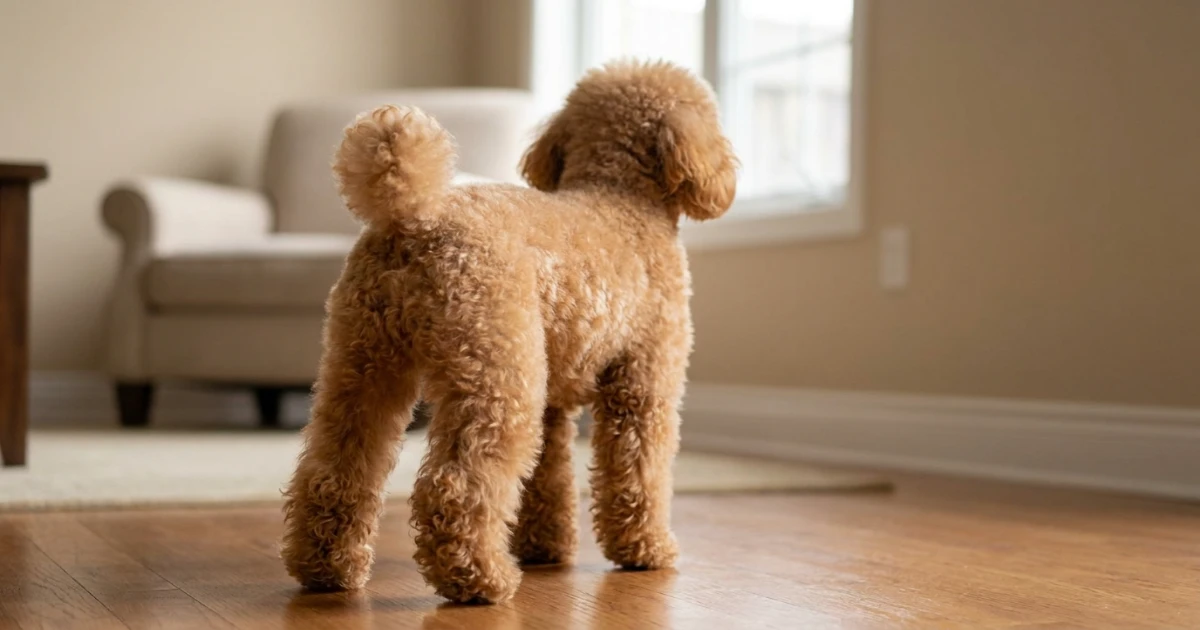
Then show two photos. One from the side, one from the rear. Pictures erase ambiguity. If your groomer hesitates or says “I don’t really do breed clips,” it’s okay to ask if they have experience specifically with poodle pattern trims. Many groomers are excellent all-around stylists but rarely practice traditional clips; asking respectfully helps you decide whether to proceed or book with a breed specialist.
Frequently Asked Questions About the Poodle Dutch Trim
- What is a Poodle Dutch trim?
- The Dutch trim is a classic poodle clip with a clean face, clean feet, a full body jacket, and long, scissored hair on all four legs. The tail ends in a pom, and no part of the hindquarters is shaved.
- How is the Dutch trim different from a puppy cut?
- A puppy cut is one uniform length all over the body, legs, and usually the face. The Dutch trim keeps distinct clean areas on the face, throat, and feet, and maintains a full, sculpted jacket rather than an even overall clip.
- Is the Poodle Dutch trim high maintenance?
- It’s moderate maintenance. You’ll need to brush the jacket and legs thoroughly once a week, keep the clean feet touched up every few weeks, and schedule a full groom every 4–6 weeks. It’s easier than a Continental but requires more care than a short kennel cut.
- Can I do a Dutch trim at home?
- If you’re experienced with clippers and shears, you can maintain one. Setting the jacket line and scissoring the legs symmetrically is challenging, so most owners use a professional for the full trim and do upkeep at home.
- What tools do I need to maintain a Dutch trim between grooms?
- A pin brush, greyhound comb, cordless trimmer with a #10 blade for face and feet touch-ups, curved shears for tidying the legs, and a good leave-in conditioning spray.
- Does the Dutch trim work for all poodle sizes?
- Yes. It’s beautiful on Toy, Miniature, and Standard poodles. The proportions are simply scaled to the dog’s build, and a skilled groomer will adjust the jacket length to flatter each individual.
- Will my poodle overheat in a Dutch trim during summer?
- The Dutch trim is moderate in coat length. If your poodle is very active in hot weather, you can ask your groomer for a slightly shorter jacket (still within the style) to provide comfort without losing the silhouette. Always provide shade and cool water.
- Why does my groomer call it a “Dutch clip” instead?
- “Dutch clip” and “Dutch trim” are used interchangeably. Both refer to the same pattern. The term “clip” originates from the historical wording in breed standards.
The Dutch Trim: A Livable Poodle Elegance
When people think “poodle,” the image that leaps to mind is often the sculpted, proud dog with a clean face and a flowing coat. The Poodle Dutch trim delivers precisely that—without the constant upkeep of the showier clips. It stops passersby in their tracks, honors the breed’s heritage, and lets your poodle be a dog, not a display piece. Bring a photo, build a relationship with a poodle- knowledgeable groomer, and enjoy seeing your companion in one of the most dignified trims the breed has to offer.