Poodle Hypothyroidism: What to Watch For and Why It Often Goes Unnoticed
Poodle hypothyroidism is a condition where the thyroid gland doesn’t produce enough thyroid hormone, slowing your dog’s metabolism. The earliest signs are often subtle: unexplained weight gain, low energy, a dull, thinning coat, or recurrent ear and skin infections. Poodles, particularly Standard Poodles, are genetically predisposed. Because symptoms mimic normal aging or allergies, the disease frequently goes undiagnosed for months. Diagnosis requires a simple blood panel (total T4, free T4, TSH), and lifelong daily medication — synthetic levothyroxine — can restore a normal, active life. The key is recognizing the quiet signals and acting before the secondary effects on heart health and quality of life set in.
Your poodle used to meet you at the door with a bouncy happy dance. Now they lift their head from the couch, tail giving a few lazy thumps before the eyes close again. You chalk it up to getting older, or maybe a long walk yesterday. But what if it’s not age or laziness, but a quiet disorder stealing your dog’s spark? Poodle hypothyroidism is one of the most common endocrine diseases in the breed, yet one of the most missed. Its symptoms are masters of disguise, hiding behind “just slowing down” or “probably allergies.” And because poodles are intelligent and graceful even when ill, they often keep going until the hormone deficit has been going on for a year or longer.
This article will help you recognize the often-overlooked signs, understand why poodles are at higher risk, know exactly what blood tests to request, and learn what life looks like after diagnosis. It is not meant to alarm but to empower — because when you catch hypothyroidism early, treatment is straightforward, affordable, and gives your dog their personality back.
Common First Sign
Unexplained weight gain despite normal appetite; lethargy and disinterest in play.
Poodle Risk Level
Standard Poodles are among the breeds with higher genetic predisposition; Toys and Miniatures are also affected.
Diagnosis
Simple blood tests: total T4, free T4, TSH. Often checked during a routine senior panel.
Treatment
Lifelong daily pill (levothyroxine). Inexpensive, with dramatic improvement in weeks.

What Is Poodle Hypothyroidism, Exactly?
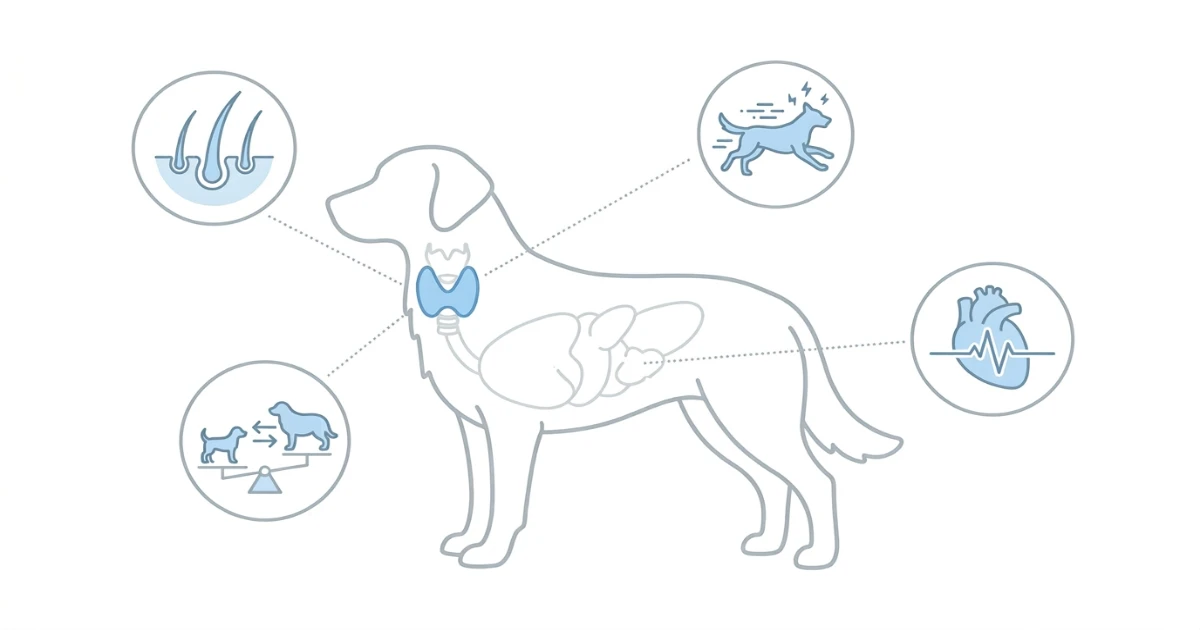
The thyroid gland, located in your dog’s neck near the windpipe, produces hormones — primarily thyroxine (T4) — that regulate the body’s metabolic engine. Think of these hormones as the throttle governing how fast every cell turns fuel into energy. When the gland fails to produce enough, everything slows down: heart rate, mental sharpness, hair growth, skin renewal, immune response. The result isn’t a single dramatic crash but a creeping deceleration that owners often misread as normal aging.
In poodles, the overwhelming majority of cases — over 90% — are primary hypothyroidism, caused by autoimmune destruction of the thyroid tissue itself. This is called lymphocytic thyroiditis. The body’s immune system, for reasons still being studied, begins to attack and gradually destroy the gland. Because the gland has significant reserve capacity, clinical signs don’t emerge until around 70-80% of the tissue is gone, which means the disease has been silently active for months or even years before you see any outward symptoms.
Hypothyroidism is often confused with Cushing’s disease or simply “old dog syndrome.” But there’s a critical difference: hypothyroidism is usually very manageable with inexpensive medication, and once regulated, a poodle often returns to full vitality. Delaying diagnosis because the signs are subtle robs your dog of months they could be feeling well.
Why Poodles Are More Prone to Thyroid Problems
Genetics plays an unmistakable role. Studies and veterinary insurance data consistently place Standard Poodles among the breeds with a higher incidence of hypothyroidism. A hereditary component has been identified, and responsible breeders screen breeding stock with thyroid panels. However, the disease can still appear even in well-bred lines, as the mode of inheritance is not fully understood. Toy and Miniature Poodles are not immune; they are diagnosed less frequently than Standards but still above the average for all breeds. Poodles share a genetic susceptibility with other breeds like Golden Retrievers, Dobermans, and Cocker Spaniels, but their particular presentation often includes pronounced coat and skin changes that owners mistake for grooming or allergy issues.
Early Warning Signs: What to Watch for in Your Poodle
This is the heart of the matter. The signs can be so gradual that you accommodate them without realizing. Here is a breakdown of what to look for, organized from most common to less obvious.
1. Weight Gain Without Increased Food
You haven’t changed their meals or treats, yet the ribs are getting harder to feel. The metabolism has slowed so dramatically that even a maintenance diet leads to weight gain. Your poodle may look “thicker” but not necessarily obese — just heavier, softer, and less defined.
2. Lethargy and Mental Dullness
The bright-eyed problem solver who used to learn a new trick in three tries now naps most of the day. They may still enjoy walks but tire faster. Often the emotional spark dims — less interest in toys, slower to greet you, generally “flat.”
3. Coat and Skin Changes
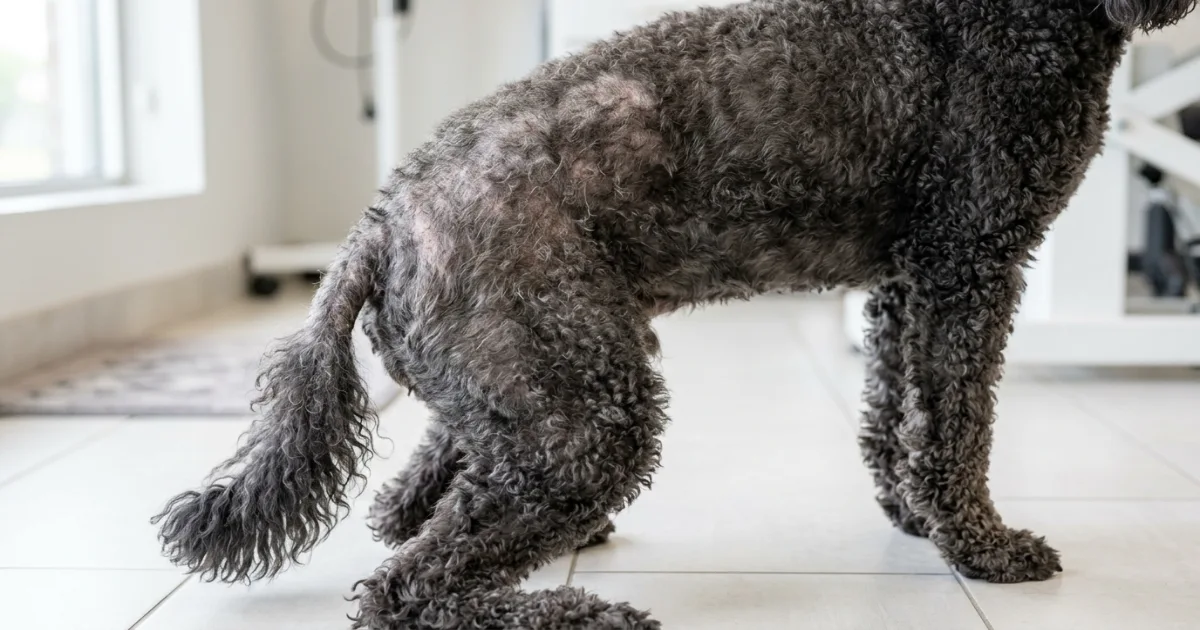
Poodle coat changes are often the first physical sign. Watch for excessive shedding (poodles shouldn’t shed heavily), dry, brittle hair, symmetrical hair loss on the flanks and tail base (“rat tail”), and hyperpigmentation — darkening of the skin, especially on the belly and inner thighs. The skin may become thickened or greasy, and you might see chronic ear infections or yeast problems that don’t fully resolve with treatment.
4. Cold Intolerance
A hypothyroid poodle might seek out warmth — curling tightly near the heater, burrowing under blankets — because the slowed metabolism generates less body heat.
5. Reproductive Issues
In intact dogs, irregular heat cycles, infertility, or miscarriage can signal hypothyroidism. In breeding poodles, thyroid function is often checked as part of pre-breeding panels.
Symptoms Comparison: Hypothyroidism vs. Other Common Poodle Conditions
| Symptom | Hypothyroidism | Allergies/Atopy | Cushing’s Disease | Normal Aging |
|---|---|---|---|---|
| Weight gain | Yes, with normal or decreased appetite | Rare | Yes, with pot-belly, often increased appetite | Variable |
| Hair loss | Symmetrical, non-itchy, “rat tail” | Patchy, itchy, often from licking | Symmetrical, thin skin, fragile | Thinning, but not typically symmetric baldness |
| Skin infections | Recurrent yeast or bacterial, secondary to altered immunity | Skin infections driven by scratching | Skin thinning, bruising, calcinosis cutis | Less frequent |
| Energy level | Marked lethargy, mental dullness | Normal unless severe discomfort | Often restless, panting, muscle weakness | Gradual slowing |
| Bloodwork clues | Low T4, high TSH | Often normal or elevated eosinophils | High alkaline phosphatase (ALP), abnormal urine cortisol | Age-related changes |
Diagnosis: The Blood Tests You Need (and Those You Don’t)
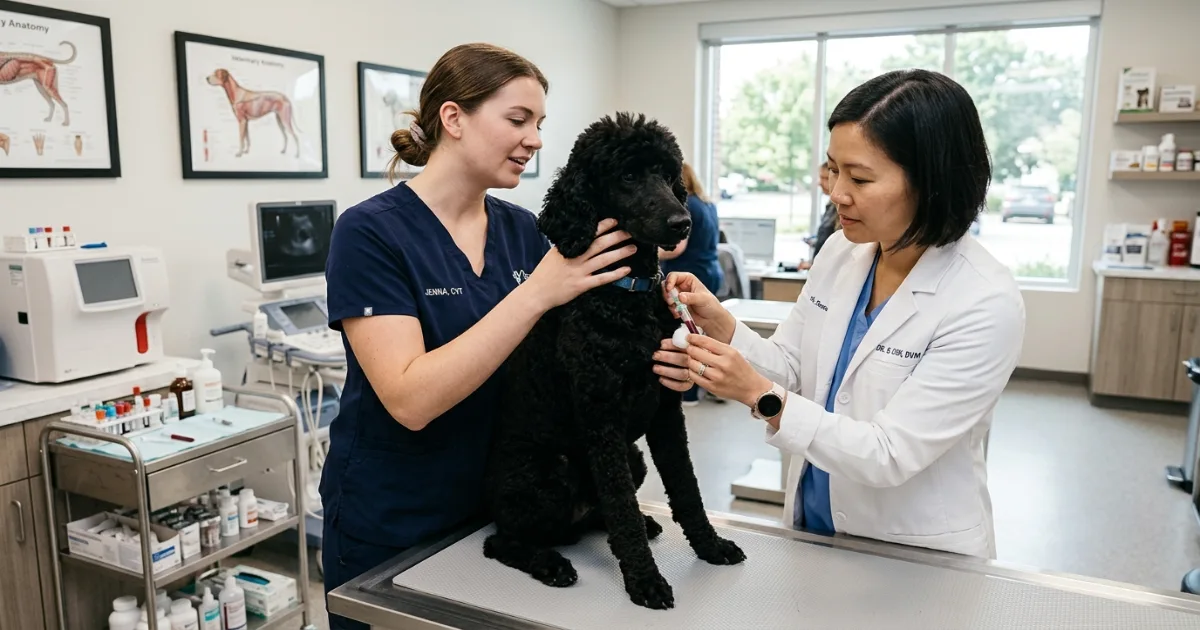
A routine wellness panel often includes a total T4. If that value is low, it raises suspicion but doesn’t confirm hypothyroidism. Many non-thyroid illnesses (called “sick euthyroid syndrome”) can transiently lower T4. To confirm the diagnosis, your veterinarian will run a free T4 (by equilibrium dialysis) and TSH level. In primary hypothyroidism, free T4 is low and TSH is high — the pituitary is shouting at the thyroid to work harder, but the gland can’t respond. A full thyroid panel, including thyroglobulin autoantibodies, can identify the autoimmune form.
Avoid diagnosing and treating based on a single low T4 alone. Misdiagnosis is common and leads to unnecessary life-long medication. If your poodle has other illnesses (such as a serious infection, Cushing’s, or even severe dental disease), wait until those are resolved before running definitive thyroid tests.
When discussing thyroid testing with your vet, ask specifically for a “full thyroid profile” including free T4 by equilibrium dialysis, TSH, and TgAA. This gives the most accurate picture, especially in Standard Poodles where autoimmune thyroiditis is prevalent. The cost is modest — typically $120–$180.
Treatment and Daily Management: What Life Looks Like After Diagnosis
Once confirmed, treatment is straightforward: oral levothyroxine (synthetic T4), given twice daily initially, often consolidated to once daily after stabilization. The medication is given on an empty stomach for best absorption. Within 2–4 weeks, you’ll notice your poodle becoming more alert, coat quality starting to improve, and energy levels rising. Weight loss may take a few months with appropriate diet. The dog will need blood retesting 4–6 weeks after starting, then every 6–12 months to ensure the dosage remains correct.
Medication is typically less than $20–$40 per month, making it one of the most affordable endocrine treatments in veterinary medicine. Lifelong compliance is essential, but the quality-of-life improvement is profound. Many owners describe it as “getting their old dog back.”
What Owners Often Get Wrong About Poodle Hypothyroidism
Misconceptions abound. Some owners think the medication “cures” the disease and stop after the dog looks better. It doesn’t; the gland is permanently damaged. Stopping medication will allow symptoms to return. Others assume that a low thyroid reading on a routine blood test means definite hypothyroidism without investigating further. Some believe that dietary iodine or kelp supplements can replace hormone therapy — they cannot, and unsupervised supplementation can actually worsen autoimmune thyroiditis in genetically predisposed dogs. And finally, many owners delay testing because the dog “seems fine except for gaining a little weight.” That “little weight” is a red flag, not an age-related inevitability.
Practical Owner Insight: Living With a Hypothyroid Poodle
The daily reality is manageable. Medication is given with a small treat in the morning, and most poodles take it willingly hidden in a piece of cheese or a pill pocket. You’ll schedule a blood test twice a year, which also serves as a general wellness check. You’ll watch the skin rebound: the coat may need a few months to fully regrow, and you might want to supplement with omega-3 fatty acids to support skin health. Weight control is easier now that the metabolism is normalized, but you may need to adjust food portions downward, as the body becomes more efficient.
One emotional aspect: you may experience guilt for not noticing earlier. Set that aside. Hypothyroidism is designed by nature to fly under the radar. What matters is you’re here now, and your dog is about to feel so much better.
Frequently Asked Questions About Poodle Hypothyroidism
What are the first signs of hypothyroidism in poodles?
Is poodle hypothyroidism genetic?
Can a poodle live a normal life with hypothyroidism?
How much does thyroid medication cost for a poodle?
Are certain poodle sizes more at risk?
Can diet alone treat poodle hypothyroidism?
How is hypothyroidism different from Cushing’s disease in poodles?
You Know Your Poodle Best — Trust What You See
Poodle hypothyroidism is not a failure on your part; it’s a biological reality of the breed. The signs are there, quiet but consistent: the coat that loses its shine, the weight that creeps on, the sparkle that dims. When you learn to recognize them, you reclaim months — sometimes years — of good health that would otherwise slip away untreated. The diagnosis requires a simple blood test. The treatment is a pill each day. And the reward is your bright, clever, engaged poodle returning to form, ready for the next walk, the next puzzle, the next snuggle on the couch. Watch for the signs. Speak up at the vet visit. Your poodle is counting on you to notice.