The Ultimate Road Trip with Dog Checklist for Poodles
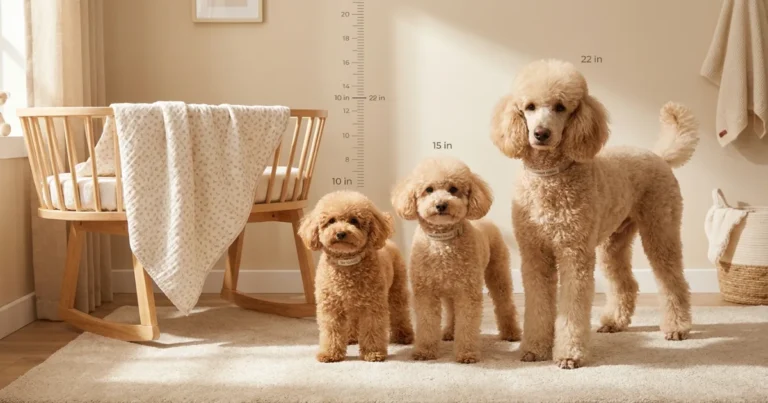
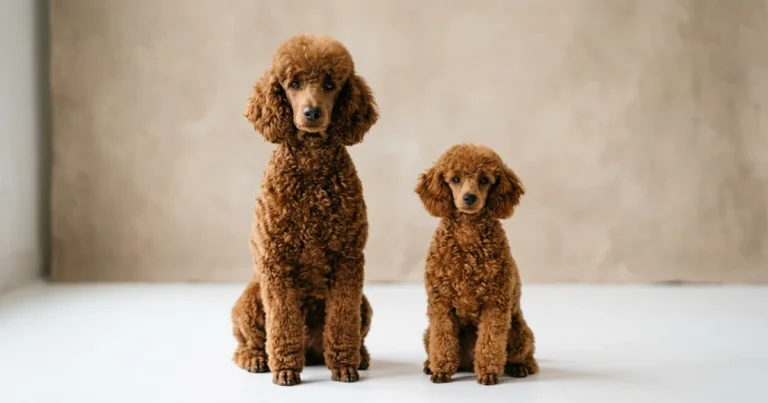
A road trip with dog checklist for poodles should never be generic. Whether you are traveling with a Toy Poodle in a carrier, a Miniature Poodle in a secured rear-seat setup, or a Standard Poodle in a roomy crate, this guide shows exactly what to pack, prep, and plan before the drive.
Quick Answer
A road trip with dog checklist is a pre-departure packing and preparation list that makes sure your dog has everything needed for safe, comfortable travel. For poodle owners, the checklist should also account for the breed’s wide size range, curly coat care, sensitive temperament, motion sickness risk, and the extra space Standard Poodles need to stand and turn comfortably. The most important rule is simple: do not treat a Toy Poodle, Miniature Poodle, and Standard Poodle as the same traveler.
Road Trip with Dog Checklist for Poodles: Why It Is Different
Poodles are adaptable, but they are also sensitive, routine-aware dogs that can become stressed when travel feels chaotic. Generic dog travel lists often miss the details that matter most for this breed: coat friction under a harness, long-leg comfort in a crate, ear moisture after wet rest stops, and the different safety needs of Toy, Miniature, and Standard Poodles.
Toy and Miniature Poodles are small enough to be seriously injured by sudden stops if they are loose in the cabin. Their fine curly coat can mat quickly against rough seat fabric or carrier edges. Standard Poodles are tall and deep-chested, so they need enough room to stand, turn, and stretch during breaks, and owners should avoid heavy meals close to departure. These are not small details; they shape whether your poodle arrives calm, clean, and healthy.
Toy Poodle
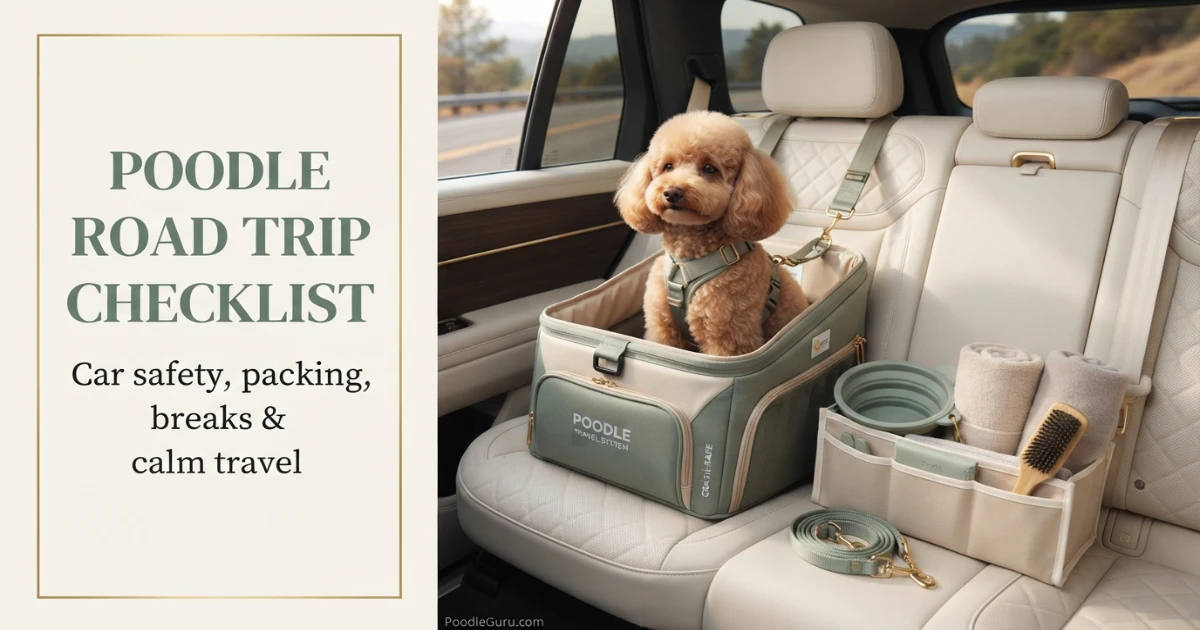
Needs a small, well-ventilated carrier with a non-slip pad and secure seat-belt attachment. Temperature control matters because small dogs can chill quickly in strong air conditioning and overheat fast in direct sun.
Miniature Poodle
Can travel well in a hard-sided carrier or a properly fitted travel harness. Do not guess the fit; check that the restraint does not press into the neck, rub behind the elbows, or leave space for slipping out.
Standard Poodle
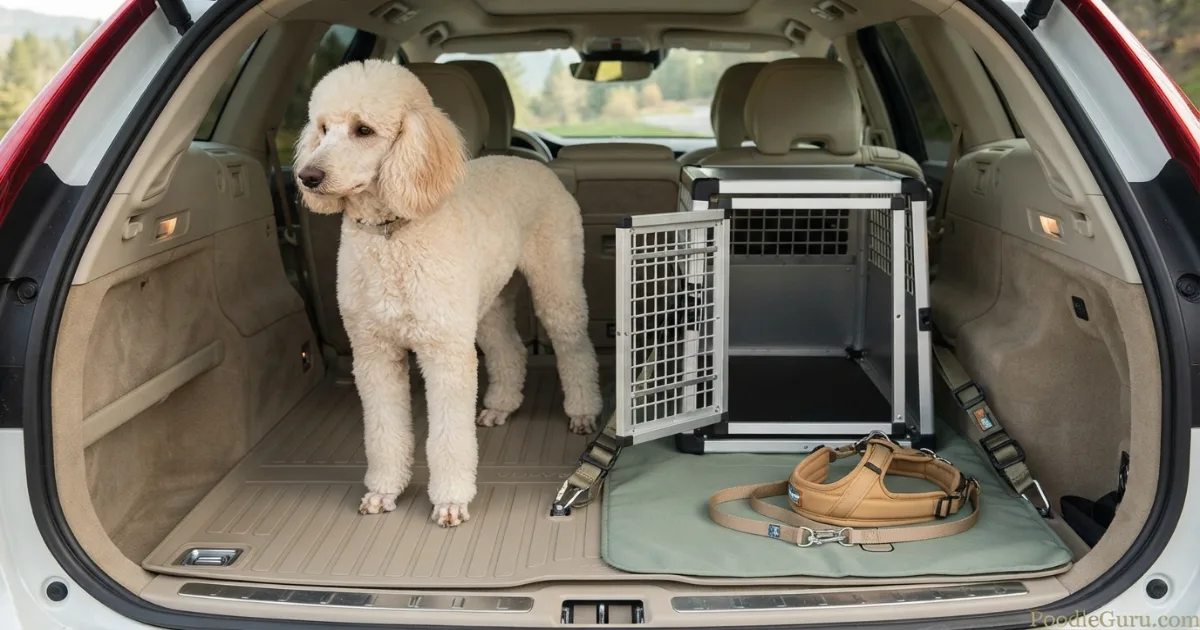
Needs a roomy secured crate or independently tested travel harness. Their height and long legs make SUV cargo-area setup, crate height, and planned stretch breaks more important than they are for many smaller breeds.
Pre-Trip Preparation: Vet, Grooming, Documents
A smooth trip starts before travel day. Do these four things in the week before departure, especially if the drive is long, crosses state lines, or includes hotel stays.
Vet Check & Records
If your poodle has anxiety, vomiting, heart issues, seizure history, or age-related weakness, speak with your veterinarian before a long drive. Ask whether your destination requires health records, and keep vaccination records, medication names, microchip details, and your regular vet’s phone number in one travel folder.
Grooming Before the Trip
Book a sanitary trim and paw-pad cleanup a few days before departure. Long paw hair collects dirt and road-stop debris, while tangles behind the ears and under the harness can worsen during hours of car friction. A pre-trip bath and brush-out also helps keep the car cleaner.
Microchip & ID Verification
Confirm that your microchip registration uses your current phone number. Add a temporary travel tag with your mobile number and destination information. If your poodle slips away at a fuel station or hotel, fast identification can make the difference.
Acclimation Drives
If your poodle has not been in the car recently, take several short practice drives before the trip. Start with 10 to 15 minutes, reward calm behavior, and slowly build duration. This turns the car into a familiar routine rather than a surprise.
The PoodleGuru Road Trip Packing Method
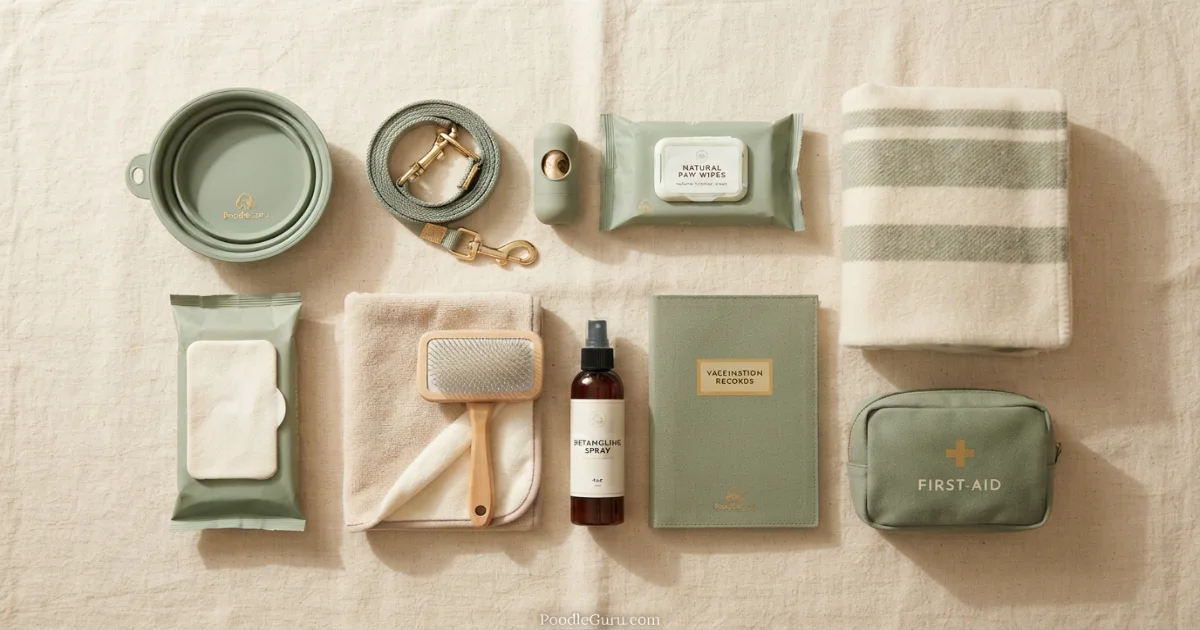
At PoodleGuru, we organize poodle road trip packing into five simple categories. This keeps the checklist practical instead of overwhelming and prevents the classic last-minute panic: brush packed, records packed, water packed, but no towel after a muddy rest stop.
| Category | Must-Have Items | Why It Matters for Poodles |
|---|---|---|
| Safety & Restraint | Secured carrier, crate, or independently tested travel harness; short traffic leash; window shades | Toy Poodles need stable carriers, while Standard Poodles need secure restraint that fits a taller, deep-chested body. |
| Food & Hydration | Regular food, familiar water for the first day, treats, collapsible bowls, spill-resistant bottle | Sudden food and water changes can upset sensitive stomachs, especially when stress and motion are added. |
| Comfort & Calm | Familiar blanket, worn t-shirt with your scent, quiet toy, vet-approved calming aid if needed | Poodles bond closely with their people. Familiar scent can help them settle during unfamiliar stops and hotel nights. |
| Grooming On-the-Go | Slicker brush, detangling spray, paw wipes, towel, ear-care supplies | Curly coats mat under friction points, and drop ears can trap moisture after rain, spills, or humid stops. |
| Health & Emergency | First-aid kit, medications, vet records, microchip info, recent photo, emergency clinic address | Travel stress can trigger stomach upset or anxiety. Prepared owners solve problems faster and with less panic. |
Car Safety Setup: Crates, Harnesses, Temperature
Unrestrained dogs can distract the driver and can be injured during sudden braking. The ASPCA recommends securing pets in hard-sided, ventilated carriers that are large enough for the pet to stand, lie down, and turn around. The Center for Pet Safety lists independently certified travel products, which is helpful because “crash-tested” marketing language is not always the same as independent certification.
For Toy and Miniature Poodles, a hard-sided carrier secured in the rear seat or cargo area is usually the cleanest setup. Avoid the front seat because airbags can be dangerous for small dogs. For Standard Poodles, use a properly anchored crate with enough height and floor space, or choose a tested travel harness and attach it exactly as the manufacturer instructs. Never attach a car tether to a collar.
Temperature control is just as important as restraint. The AVMA warns that cars can overheat quickly to deadly temperatures even when the weather does not feel severe. Never leave your poodle unattended in a parked car, even with cracked windows. In winter, Toy and Miniature Poodles may need a light sweater if the cabin is cold, but they still need ventilation and room to rest comfortably.
Important Safety Warning
Do not let your poodle ride with their head out the window. It may look cute, but wind, debris, insects, and sudden braking can injure eyes, ears, and neck. Keep windows cracked for airflow only if your poodle cannot put their head through the opening.
On the Road: Breaks, Hydration, Motion Sickness
Plan a stop every 2 to 3 hours. Use a short leash at rest stops because unfamiliar traffic sounds, new smells, and crowds can spook even a normally confident poodle. Offer small amounts of water at each stop instead of one large bowl after several hours.
Motion sickness can look subtle before vomiting starts. Watch for lip licking, repeated yawning, drooling, sudden stillness, whining, or refusal to take treats. If your poodle has been carsick before, ask your veterinarian about prevention options. DailyMed lists maropitant tablets as indicated for prevention of vomiting due to motion sickness in dogs 4 months and older, but your vet should decide whether it is appropriate for your dog.
Pro Tip: The Partial Blanket Trick
If your poodle becomes overstimulated by passing traffic, drape a light blanket over part of the carrier while leaving plenty of airflow. This reduces visual movement without making the carrier hot, dark, or stuffy.
Poodle-Specific Comfort & Coat Care
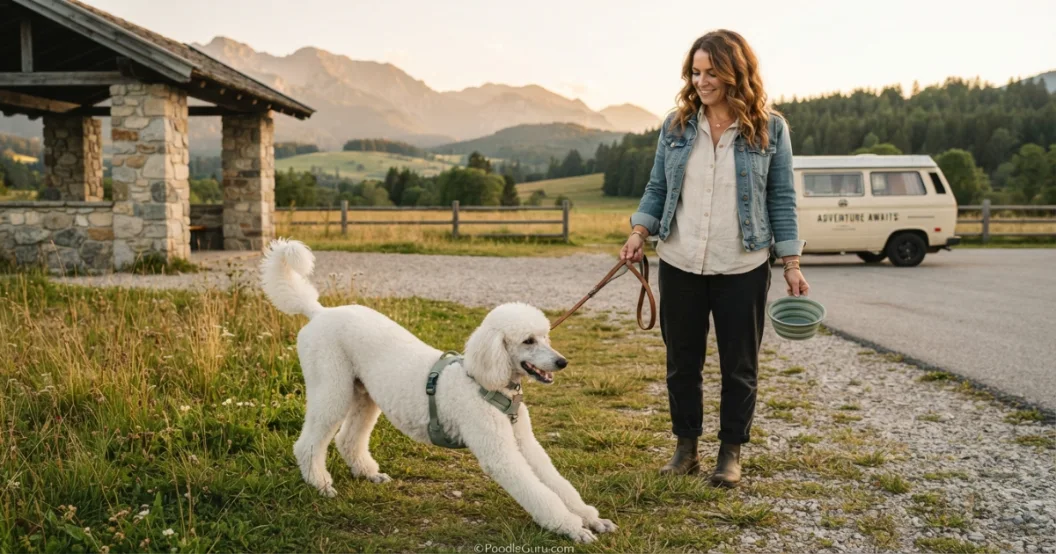
A long car ride can undo weeks of careful grooming if friction is ignored. Harness straps, crate mats, seat fabric, and blankets can all create tangles behind the ears, under the elbows, across the chest, and near the tail. Before departure, lightly mist friction-prone areas with a dog-safe detangling spray and brush through the coat.
Ear care deserves special attention. Poodles have drop ears that can trap humidity, and travel days often include spilled water, rain, dew, lake stops, or damp towels. After wet stops, dry the inside of the ear flap with a soft cloth. Do not push cotton swabs into the ear canal. If your poodle has a history of ear infections, ask your vet what ear-care products to pack before travel.
Emergency Kit Checklist
Keep one small emergency bag in the car and do not unpack it at hotels. Your poodle travel emergency kit should include:
- Gauze pads and self-adhesive bandage wrap
- Antiseptic wipes recommended for pets
- Tweezers for splinters or ticks
- Saline eye rinse
- Styptic powder for broken nails
- A soft muzzle or emergency restraint, because even gentle dogs may snap when injured
- Your regular veterinarian’s phone number
- The nearest emergency clinic at your destination
- Medication names, doses, and refill information
- A recent clear photo of your poodle in case they go missing
Common Road Trip Mistakes with Poodles
1. Feeding a Full Meal Right Before Departure
This can increase nausea risk and discomfort. Feed a light meal 3 to 4 hours before leaving and use small treats only when your poodle is settled.
2. Forgetting Familiar Water
Bring enough water from home for the first day, then transition gradually if needed. Stress, heat, and unfamiliar water can all affect digestion.
3. Trusting “Pet-Friendly” Without Details
Some hotels allow pets but limit weight, number of dogs, unattended stays, or crate rules. Confirm fees, size limits, floor access, and green-space availability before booking.
4. Skipping Crate Acclimation
If the crate only appears on trip day, your poodle may associate it with stress. Leave it open at home, add treats, and let your dog rest inside before the journey.
5. Packing Too Many Toys, Not Enough Comfort
One familiar blanket often calms a poodle more than several new toys. Scent, routine, and predictable handling matter more than novelty.
6. Ignoring Bathroom Emergencies
Traffic jams happen. Pack puppy pads, waste bags, paper towels, enzymatic cleaner, and a sealable bag so accidents can be handled quickly and calmly.
Frequently Asked Questions About Poodle Road Trips
How long can a poodle ride in a car?
Many healthy adult poodles can handle a full travel day if they get calm breaks every 2 to 3 hours for water, elimination, and gentle movement. Puppies, senior poodles, anxious dogs, and dogs with medical conditions may need shorter driving blocks.
Should I feed my poodle before a road trip?
Feed a light meal 3 to 4 hours before departure rather than a full meal right before driving. This can reduce nausea risk and is especially important for deep-chested Standard Poodles.
What is the safest way to transport a poodle in a car?
A properly secured carrier or crate is usually the safest setup. Toy and Miniature Poodles often travel best in a hard-sided carrier, while Standard Poodles need a roomy secured crate or an independently tested travel harness.
Can my Toy Poodle sit on my lap during the drive?
No. A Toy Poodle should not sit on a driver’s or passenger’s lap during travel. A loose dog can distract the driver and can be badly injured during sudden braking or airbag deployment.
How do I prevent my poodle from getting car sick?
Use short practice drives, keep the car cool and well ventilated, avoid feeding right before departure, and keep the carrier stable. If your poodle drools, yawns, lip-licks, or vomits in the car, ask your veterinarian about motion sickness options.
What should I do if my poodle gets anxious in the car?
Begin with short positive drives, use a familiar blanket, avoid loud music, and keep the dog safely restrained. For severe anxiety, talk to a veterinarian or veterinary behavior professional before a long trip.
Do I need a special travel harness for my Standard Poodle?
Yes, a regular walking harness is not designed for crash forces. If you use a harness instead of a crate, choose an independently tested travel harness and attach it to the seat belt according to the manufacturer instructions.
Can I leave my poodle alone in a hotel room?
Only if the hotel allows it and your poodle is calm and crate trained. Many hotels require dogs to be crated when unattended. Keep absences short and never leave your poodle in a parked car.
Key Takeaways
- A poodle-specific road trip with dog checklist should cover restraint, familiar food and water, comfort items, grooming supplies, and emergency documents.
- Toy Poodles usually need a secured carrier, Miniature Poodles need careful harness or carrier fit, and Standard Poodles need a roomy crate or tested travel harness.
- Stop every 2 to 3 hours for water, bathroom breaks, stretching, and a calm reset before driving again.
- Brush friction-prone coat areas before and during travel, and keep ears dry after wet stops to reduce irritation risk.
- Never leave your poodle unattended in a parked car, even when windows are cracked or the weather feels mild.
- Confirm hotel pet rules before booking, keep records easy to access, and save the nearest emergency vet contact before you arrive.
Best next step: Use the PoodleGuru Road Trip Packing Method table as your night-before checklist. Pack the car, test the restraint setup, take one short practice drive, and then read our Common Poodle Health Issues guide before leaving.