Best Dog Leash for Poodles: Length, Material & Fit Guide
The best dog leash for Poodles is the one that gives you comfortable, predictable control without adding unnecessary bulk to your dog. For most everyday walks, a fixed 5-to-6-foot leash with reliable hardware is the simplest place to start. This guide compares materials, lengths, leash styles, Poodle sizes, and training use so you can choose gear that actually fits your routine.
This article contains affiliate links. PoodleGuru may earn a small commission if you purchase through our links, at no extra cost to you.
Quick Answer: What’s the Best Dog Leash for a Poodle?
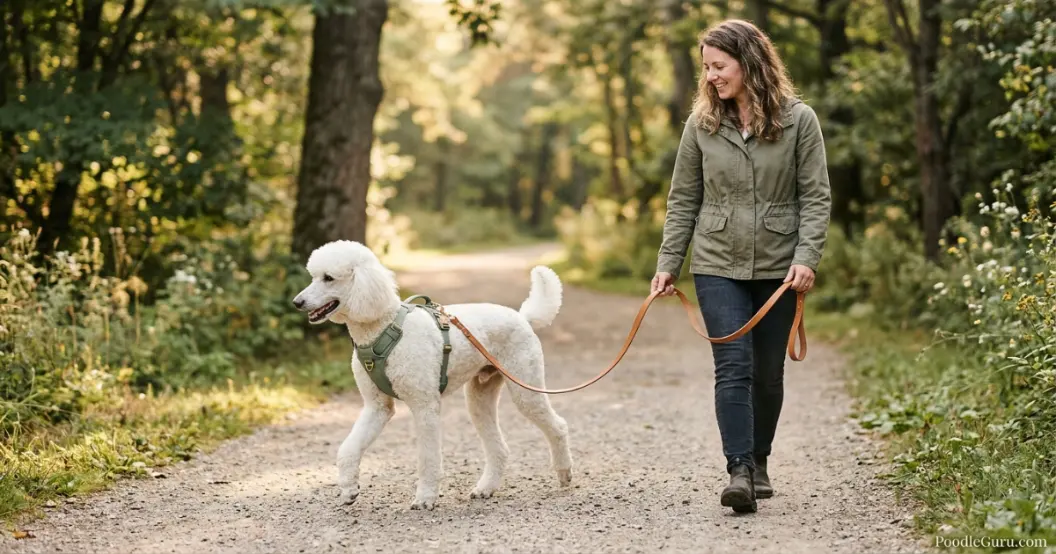
For most Poodles, a fixed 5-to-6-foot leash is the best everyday starting point. Choose a width and clip weight that suit your dog, and prioritize a handle that feels secure in your hand. Leather, coated webbing such as BioThane-style material, and smooth flat nylon can all work well when the stitching and hardware are strong.
Retractable leashes are not automatically unsafe, but they are a poor fit for crowded sidewalks, close-control walking, or dogs that have not yet learned polite leash skills. Long lines are better reserved for training and open-space sniffing. Pair any leash with a comfortable, properly fitted collar or harness that matches your dog’s needs.
Best Everyday Setup
A fixed 5–6 foot leash with dependable hardware and a comfortable handle works for most neighborhood walks and basic training.
Material Choice
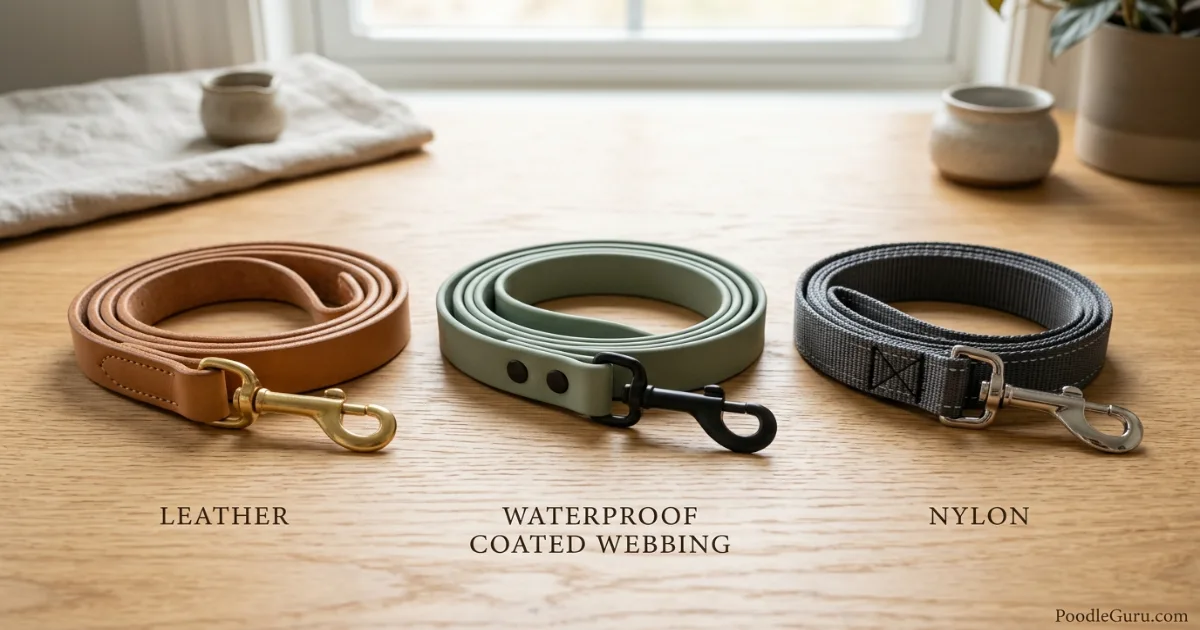
Leather, coated webbing, and smooth flat nylon can all be good choices. Pick for grip, weather, weight, cleaning, and hardware quality.
Use Retractables Selectively
They can provide extra freedom in suitable open spaces, but they are harder to manage around traffic, crowds, other dogs, and close-control situations.
What Makes the Best Dog Leash for Poodles?
A good Poodle leash should feel predictable in your hand, connect securely to the dog’s walking gear, and suit the places where you actually walk. Length, handle comfort, clip size, line weight, visibility, and weather resistance matter more than fashion or brand name.
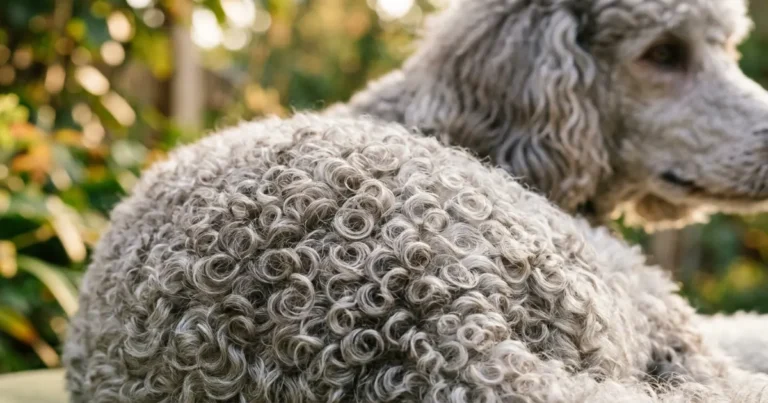
Poodle coats are dense and curly, so it is sensible to check any leash, connector, or harness hardware for rough edges that repeatedly rub the coat. There is not strong evidence that one common leash material universally prevents coat tangling, so inspect the real contact points on your own dog rather than assuming leather, nylon, or rope is automatically best or worst.
Temperament and training matter too. Poodles are intelligent, active dogs, but equipment should not be expected to teach loose-leash walking by itself. A simple fixed leash makes the consequences of slack and tension easier for both handler and dog to understand while you reinforce the walking behavior you want.
Leash Types Compared for Poodles
Different leash styles solve different problems. The best option depends on whether you are walking on sidewalks, training in open space, hiking, or simply taking quick neighborhood walks.
| Leash Type | Best For | Main Consideration | Everyday Use |
|---|---|---|---|
| Fixed leash (5–6 ft) | Daily walks, city use, basic training | Predictable distance and simple handling | Excellent for most owners |
| Coated webbing / BioThane-style | Rain, mud, beach, easy-clean routines | Water-resistant and easy to wipe clean | Excellent |
| Smooth flat nylon | Budget use, backups, travel | Lightweight; quality and edge finish vary | Good |
| Retractable leash | Suitable open spaces after leash training | More distance; harder close control and entanglement risk | Situational |
| Long line (15–30+ ft) | Recall practice, sniff walks, controlled exploration | Requires space and active line management | Training / enrichment |
Evidence-Based Note on Retractable Leashes
Retractable leashes can be useful in the right environment, but they are not ideal when you need the dog close beside you. The American Kennel Club notes that they can reward pulling because pulling releases more line, and that dogs should first learn polite walking on a standard leash. Use them only where extra distance is genuinely safe and manageable.
Leash Material Breakdown for Poodle Owners
Leather
Leather is popular because many handlers like its grip and the way good leather softens with use. Quality varies widely, and leather needs more care than synthetic materials. After a wet walk, let it air-dry away from direct heat and condition it according to the maker’s instructions.
Coated Webbing / BioThane-Style Material
Polymer-coated webbing is a practical option for wet, muddy, or sandy walks because it does not absorb water the way untreated leather can and is easy to wipe clean. Some versions feel stiffer or heavier than others, so check flexibility and clip weight before buying for a Toy or small Miniature Poodle.
Flat Nylon
Flat nylon is affordable, lightweight, and widely available. A smooth, well-finished nylon leash can be perfectly serviceable for daily use. Check the edges, stitching, handle comfort, and hardware rather than rejecting nylon as a category.
Rope / Climbing-Cord Style
Rope leashes can be durable and comfortable, but diameter and texture vary. A thick rope may feel unnecessarily heavy on a Toy Poodle, while a thin cord can be uncomfortable if it slides rapidly through your hand. Choose by handling comfort and dog size, and never wrap any leash around your hand or fingers.
The PoodleGuru Leash Fit Method
At PoodleGuru, we compare leash suitability through four practical filters: contact quality, handler control, environment, and daily convenience. This is a shopping framework, not a veterinary test or laboratory product ranking.
Check the Contact Points
Inspect the leash edges, stitching, clip, and connector for burrs or rough surfaces. Pay special attention to anything that repeatedly touches the harness, collar, or coat.
Test Handle Comfort
Grip the leash securely and imagine a sudden change of direction. The handle should feel stable without forcing you to wrap the line around your hand.
Match the Walking Environment
Choose a short, predictable setup for sidewalks and busy areas. Consider a long line or carefully managed retractable leash only in open environments where extra distance is appropriate.
Choose What You’ll Use Consistently
A leash that is too heavy, awkward to clip, difficult to clean, or uncomfortable in your hand will rarely become your everyday favorite. Practicality matters.
Best Leash Setup by Poodle Size
Poodle variety changes the practical weight and hardware you may want in a leash, but do not choose by breed label alone. The American Kennel Club defines the three Poodle varieties by height at the shoulder, not by a fixed weight range, so always size the actual leash and clip to your individual dog.
| Poodle Variety | AKC Height Definition | Practical Leash Starting Point | What to Watch |
|---|---|---|---|
| Toy | 10 inches or under | Lightweight fixed leash, often around 3/8–1/2 inch wide | Avoid unnecessarily heavy clips or bulky handles |
| Miniature | Over 10 inches and up to 15 inches | Light-to-medium fixed leash, commonly around 1/2–5/8 inch | Balance handling strength with total hardware weight |
| Standard | Over 15 inches | Medium-to-sturdy fixed leash, commonly around 5/8–1 inch | Prioritize secure stitching, dependable hardware, and hand comfort |
These widths are practical starting points rather than breed standards. Hardware strength and manufacturer ratings matter more than width alone. A swivel-style connector can reduce line twisting, but a strong, correctly sized non-swivel clip can also work well.
About “Moyen” or “Klein”: These terms are used in some countries and breeding communities, but the AKC Poodle standard recognizes Toy, Miniature, and Standard varieties.
Common Poodle Leash Buying Mistakes
Most disappointing leash purchases are mismatches between the product, the dog, and the walking environment rather than proof that one material or brand is universally bad.
Ignoring Clip Weight
A clip that feels normal on a Standard Poodle can be unnecessarily heavy on a Toy. Check the whole setup, not just leash width.
Using Too Much Length in Busy Areas
Extra distance can reduce control near roads, crowds, bikes, and other dogs. Use a standard fixed leash when you need your Poodle close.
Ignoring Hardware Wear
Inspect clips, stitching, rivets, and attachment points regularly. Any damaged safety-critical part is a reason to retire the leash.
Buyer Tip
Look for the failure point before you buy. Check how the handle is stitched, how the clip is attached, whether the gate closes cleanly, and whether the hardware feels appropriately sized for your dog.
How to Walk a Poodle on Leash
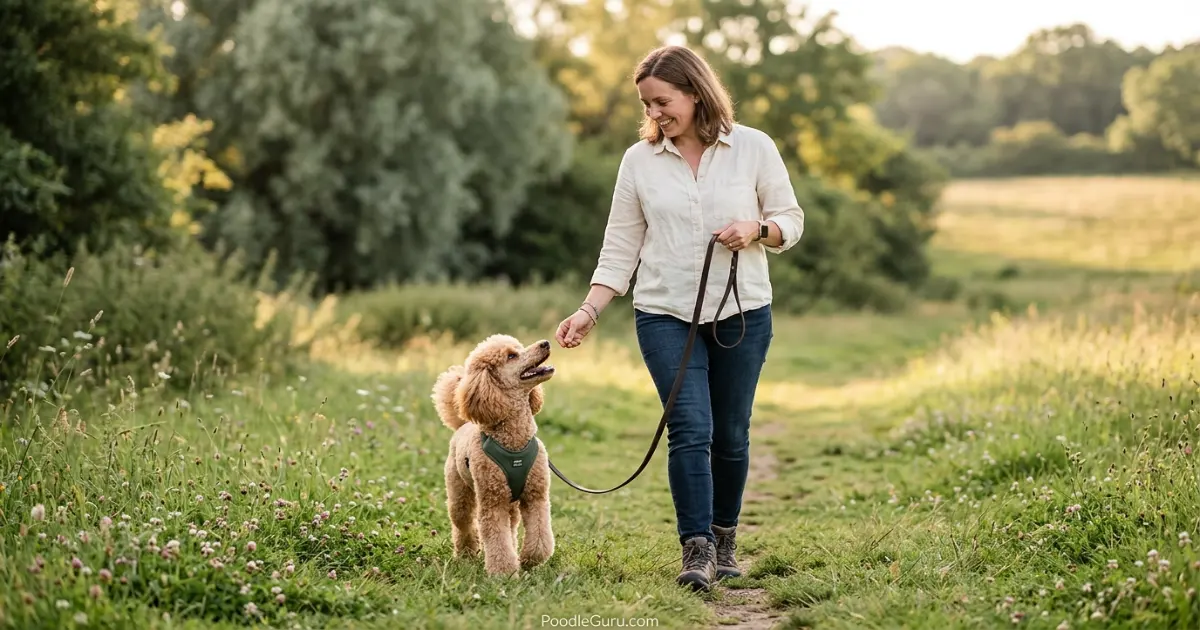
A good leash supports training, but it does not replace it. VCA recommends positive-reinforcement training for walking without excessive pulling and advises against snapping or jerking the leash.
Start Calmly
Clip the leash on in a quiet moment. If your Poodle is highly excited, wait for a brief pause before opening the door so rushing is not the only behavior that gets the walk started.
Keep the Line Manageable
Hold enough leash for natural movement without letting large loops drag near feet. Keep your elbow relaxed and avoid wrapping the line around your hand.
Respond to Tension Without Jerking
When the leash becomes tight, slow or pause instead of snapping the line. Resume movement when your dog returns to a manageable position or the leash softens.
Reward the Walking You Want
Reinforce check-ins, comfortable proximity, and slack-leash moments with food, praise, or forward movement. Consistency matters more than leash brand.
For broader equipment guidance, see VCA Animal Hospitals on collar and harness options and the AKC guide to using retractable leashes safely.
Leash Care and Coat Checks
Regular maintenance protects the leash and gives you a chance to catch rough hardware, worn stitching, or repeated rubbing before it becomes a bigger problem.
Cleaning by Material
- Leather: Follow the manufacturer’s care instructions. Wipe off dirt, let wet leather air-dry away from direct heat, and condition only with a product suitable for that leather.
- Coated webbing: Usually wipes or rinses clean with mild soap and water. Check the maker’s instructions for hardware care.
- Nylon: Many nylon leashes can be hand-washed with mild soap and air-dried. Do not machine-wash unless the manufacturer specifically permits it.
When to Ask a Groomer or Veterinarian
If you repeatedly find mats, broken coat, redness, or tenderness where walking gear contacts your Poodle, reassess the entire setup. A groomer can help identify coat-management problems, while persistent skin irritation, pain, coughing, or gait changes deserve veterinary advice.
2026 Poodle Leash Budget Guide
Prices vary by material, length, hardware, maker, and country, so treat these as shopping-budget bands rather than guaranteed live prices.
| Budget Band | Typical Planning Range | What to Prioritize | Best Use |
|---|---|---|---|
| Budget | About $10–$25 | Secure stitching, smooth edges, reliable clip | Basic daily use or backup |
| Mid-Range | About $25–$50 | Better hardware, comfortable handle, weather-friendly materials | Strong value for frequent walkers |
| Premium | About $50–$120+ | Higher-grade leather or specialty materials, premium hardware, finishing | Owners who value feel, craftsmanship, or long-term use |
Do not assume price guarantees safety or fit. A simple leash with strong construction and appropriately sized hardware can be a better choice than an expensive fashion design.
Is It Worth Investing in a Premium Leash?
Sometimes. If you walk daily and care about hand feel, craftsmanship, replaceable hardware, or weather resistance, a higher-quality leash can be worth the extra cost. But “premium” is not a safety certification, and an expensive leash still needs regular inspection.
For wet climates or easy cleaning, a well-made coated-webbing leash may be more practical than leather. For occasional use, a smooth, sturdy nylon leash may be all you need.
Owner Action Plan: What to Do Next
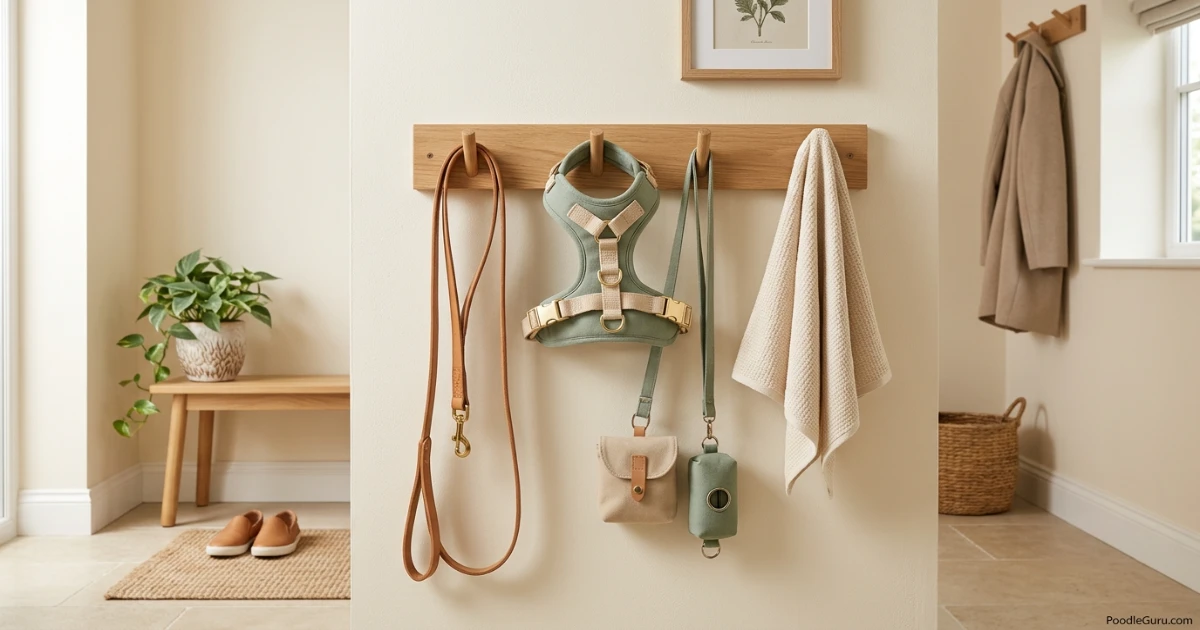
- Inspect your current leash. Check the clip gate, stitching, handle, rivets, and material for damage before the next walk.
- Choose the right length. Start with 5–6 feet for everyday walking; use extra length only where the environment safely allows it.
- Match hardware to your Poodle. Small dogs need lighter clips; larger dogs need hardware rated for their size and activity.
- Pair it with comfortable walking gear. The collar or harness should fit securely without rubbing or restricting normal movement.
- Practice reward-based loose-leash walking. Reinforce slack and calm check-ins instead of relying on leash corrections.
Sources & Further Reading
- American Kennel Club — Official Standard of the Poodle
- American Kennel Club — Retractable Dog Leashes: When and How to Use Them Safely
- VCA Animal Hospitals — Collar and Harness Options for Dogs
- VCA Animal Hospitals — Dog Behavior and Training: Play and Exercise
These references support the breed-size definitions, equipment-safety guidance, and reward-based walking recommendations used in this article.
Poodle Leash FAQs
What length leash is best for a Standard Poodle?
A 5-to-6-foot fixed leash is a practical everyday starting point for most Standard Poodles. It gives room for normal walking and sniffing while remaining manageable on sidewalks and around other people.
Are retractable leashes bad for Poodles?
Not automatically. They are best reserved for suitable open spaces after the dog has learned polite leash skills. A standard fixed leash is easier to manage around traffic, crowds, veterinary clinics, other dogs, and close-control situations.
What width leash should I buy for a Toy Poodle?
Many Toy Poodle owners prefer a lightweight leash around 3/8 to 1/2 inch wide, but clip weight and manufacturer strength ratings matter as much as width. Avoid hardware that feels unnecessarily heavy on the dog.
Is nylon bad for a Poodle coat?
No common leash material is automatically bad for every Poodle coat. Smooth, well-finished nylon can work well. Check any leash and hardware for rough edges or repeated rubbing and brush areas where walking gear contacts the coat.
How do I stop my Poodle from pulling on the leash?
Use reward-based training: reinforce slack-leash walking and calm check-ins, slow or pause when the leash becomes tight, and avoid jerking the leash. A qualified positive-reinforcement trainer can help if pulling is difficult to manage.
Can I use a rope leash for a Poodle?
Yes, if the rope diameter, weight, hardware, and handle feel suit your dog and your hands. Avoid very heavy setups on small Poodles and never let any thin line slide rapidly through your fingers.
How often should I replace my Poodle’s leash?
There is no universal replacement schedule. Inspect the leash regularly and replace it whenever the clip, stitching, rivets, handle, or line shows damage that could affect safety.
Final Summary
For most owners, the best dog leash for Poodles is a fixed 5-to-6-foot leash with comfortable handling, reliable hardware, and a clip weight that suits the individual dog. Leather, coated webbing, and smooth flat nylon can all work well. Retractable leashes and long lines are useful tools in specific environments, but they are not the easiest choice when close control is required.
- Start with a fixed 5–6 foot leash for everyday neighborhood walking.
- Choose material for grip, weight, weather resistance, cleaning, and comfort—not marketing claims.
- Match clip size and total leash weight to the individual Poodle.
- AKC Poodle varieties are defined by height, so do not rely on a generic breed-weight chart alone.
- Use retractable leashes selectively in suitable open spaces after polite leash skills are established.
- Inspect hardware and stitching regularly and replace damaged walking gear promptly.