This article contains affiliate links. PoodleGuru may earn a small commission if you purchase through our links, at no extra cost to you.
Best Harness for Poodles: 9 Safe, Comfortable Styles
A well-fitted harness can reduce direct leash pressure on a Poodle’s neck, limit coat friction, and make everyday walks more comfortable and controlled. Here’s how to choose a style that fits your Poodle’s body, coat, and walking habits.
Quick Answer
For most Poodles, the best harness is one that fits securely, keeps leash pressure away from the neck, clears the armpits, and allows the dog to walk naturally. Y-front, H-style, and well-fitted vest harnesses can all work depending on the individual Poodle’s build, coat, walking habits, and size. Toy Poodles usually benefit from lightweight, low-bulk designs, while many Standard Poodles need more adjustment range and durable hardware.
What Is the Best Harness for a Poodle?
A Poodle harness is a body-worn walking tool designed to distribute leash tension across the torso rather than concentrating it at the neck. For Poodles, the practical goal is comfortable control with enough adjustment for their chest depth, narrow waist, coat volume, and active movement.
The most important thing to understand is that no single harness works perfectly for every poodle size. Toy Poodles need minimal bulk. Miniatures need a balance of softness and structure. Standards need durability and chest coverage that doesn’t rub behind the elbows.
Quick Facts
- Common starting point: a well-adjusted Y-front, H-style, or vest harness
- Vest harnesses suit calm Toy and Miniature Poodles
- Standard Poodles often need wider adjustment range and durable hardware
- Avoid narrow straps directly behind the front legs
- Fit changes after grooming, growth, or weight shifts
Top Fit Priorities
- Routine leash pressure kept away from the neck
- Clearance behind the armpits
- No coat pinching or matting hotspots
- Snug enough to prevent escape, loose enough for two fingers
Best Use Cases
- Daily neighborhood walks
- Loose-leash training
- Travel use only when the harness is specifically designed and tested for vehicle restraint
- Puppies and seniors with delicate necks
Why Harness Fit Matters for Poodles
Poodles carry themselves with an upright, springy gait. Harness design and strap placement can influence how a dog moves, so fit should be judged while the Poodle is walking—not only while standing still. If a strap consistently rubs, shifts, or appears to interfere with normal movement, adjust the harness or try a different shape.
For Poodles that cough with neck pressure, pull strongly on leash, or have a diagnosed airway or neck condition, a veterinarian may recommend reducing pressure around the neck. A well-fitted harness can move normal leash tension onto the chest and torso, but it does not prevent or treat structural airway disease. Coughing, honking, breathing difficulty, or exercise intolerance deserves veterinary attention rather than a gear change alone.
Grooming adds another layer. Poodle coats hold friction. A harness with rough edges, tight mesh, or bulky padding can create matting behind the front legs and along the chest. Professional groomers commonly watch for harness lines in clipped areas.
Harness Types Compared for Poodles
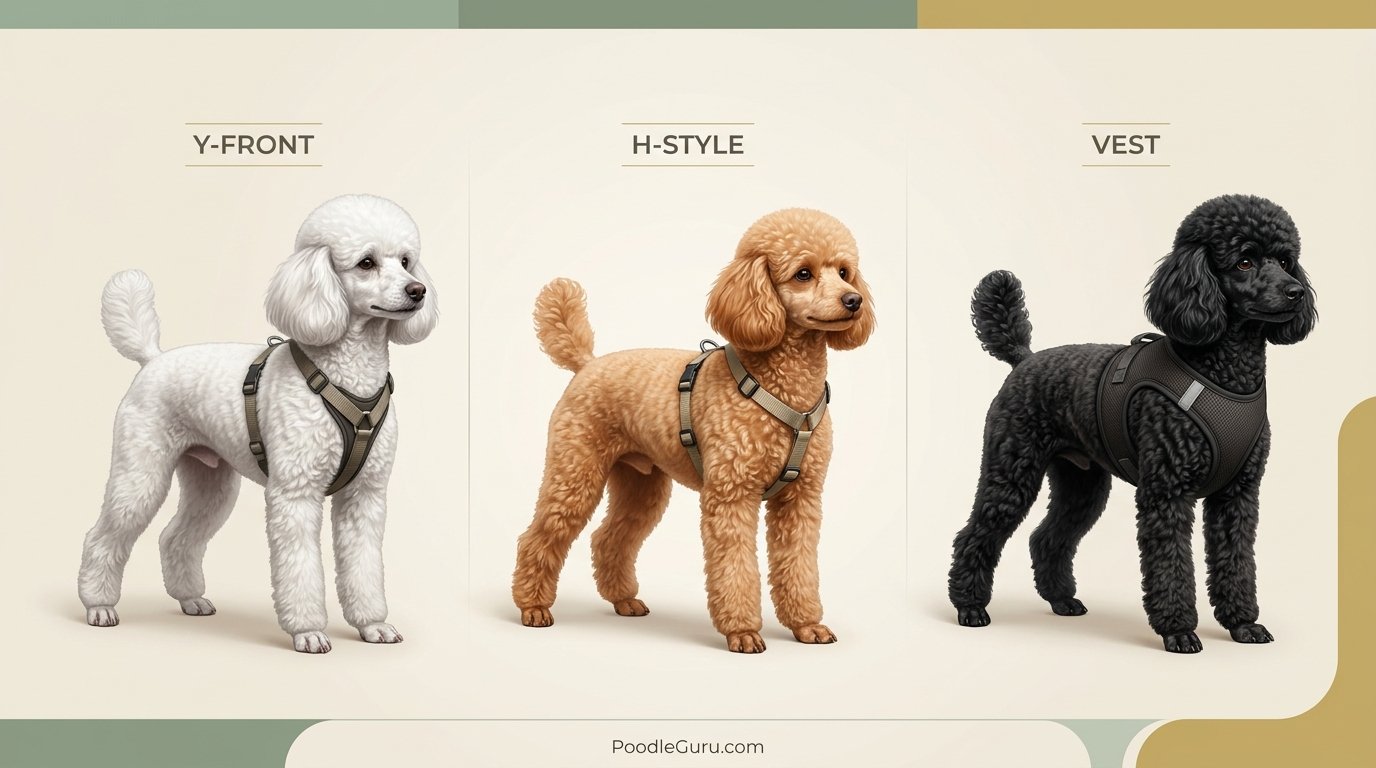
Most harnesses fall into four categories. Each behaves differently on a Poodle’s body.
| Harness Type | Best For | Poodle-Specific Pros | Poodle-Specific Cons |
|---|---|---|---|
| Y-Front | Standards, active Minis | Keeps direct leash pressure away from the throat when properly fitted | Requires careful chest adjustment |
| Step-In Vest | Toys, calm Minis | Soft, easy to put on, distributes pressure widely | Can rub behind elbows if too long |
| H-Style | Toys, seniors, short walks | Minimal coverage, lightweight, less heat retention | Less control for pullers |
| Dual-Clip Sports | Standards, training scenarios | Front clip redirects pulling, back clip for relaxed walks | Bulkier; not always suitable for petite Toys |
At PoodleGuru, we evaluate harnesses by looking first at neck-pressure reduction, coat friction, shoulder clearance, escape resistance, and day-to-day usability before considering style or brand popularity. That order usually matters more than marketing labels.
9 Harness Styles to Consider for Poodles
These are practical style recommendations based on Poodle anatomy, coat-management concerns, common fit problems, and everyday owner usability. They are not medical recommendations, and measurements should always be checked against the manufacturer’s current size chart before purchasing.
| Harness Style | Ideal Poodle Size | Key Advantage | Typical Price Range* |
|---|---|---|---|
| Padded Y-Front Daily Harness | Miniature, Standard | Best balance of control and freedom | $28–$55 |
| Soft Step-In Vest Harness | Toy, Miniature | Gentle pressure distribution | $18–$38 |
| Lightweight H-Style Harness | Toy, senior Mini | Minimal coat contact | $14–$30 |
| Dual-Clip No-Pull Harness | Standard, strong Minis | Front clip can help redirect pulling when fitted correctly | $32–$65 |
| Fleece-Lined Strap Harness | Toy, Miniature | Soft lining can reduce edge friction for some dogs | $22–$45 |
| Escape-Resistant Vest | Toy, slender Minis | Useful for dogs that back out of harnesses | $30–$58 |
| Minimalist Trail Harness | Standard | Durable, low-coat-friction outdoor option | $35–$70 |
| Breathable Summer Harness | All sizes | Lightweight option for warm-weather walks | $16–$34 |
| Puppy Growth Harness | Poodle puppies | Adjustable through growth phases | $15–$32 |
*Price ranges are approximate and can change by size, retailer, material, and promotion.
How to Fit a Poodle Harness Properly
Fit is more important than brand. A great harness in the wrong size will cause more harm than a basic harness in the right size.
Measure the Chest First
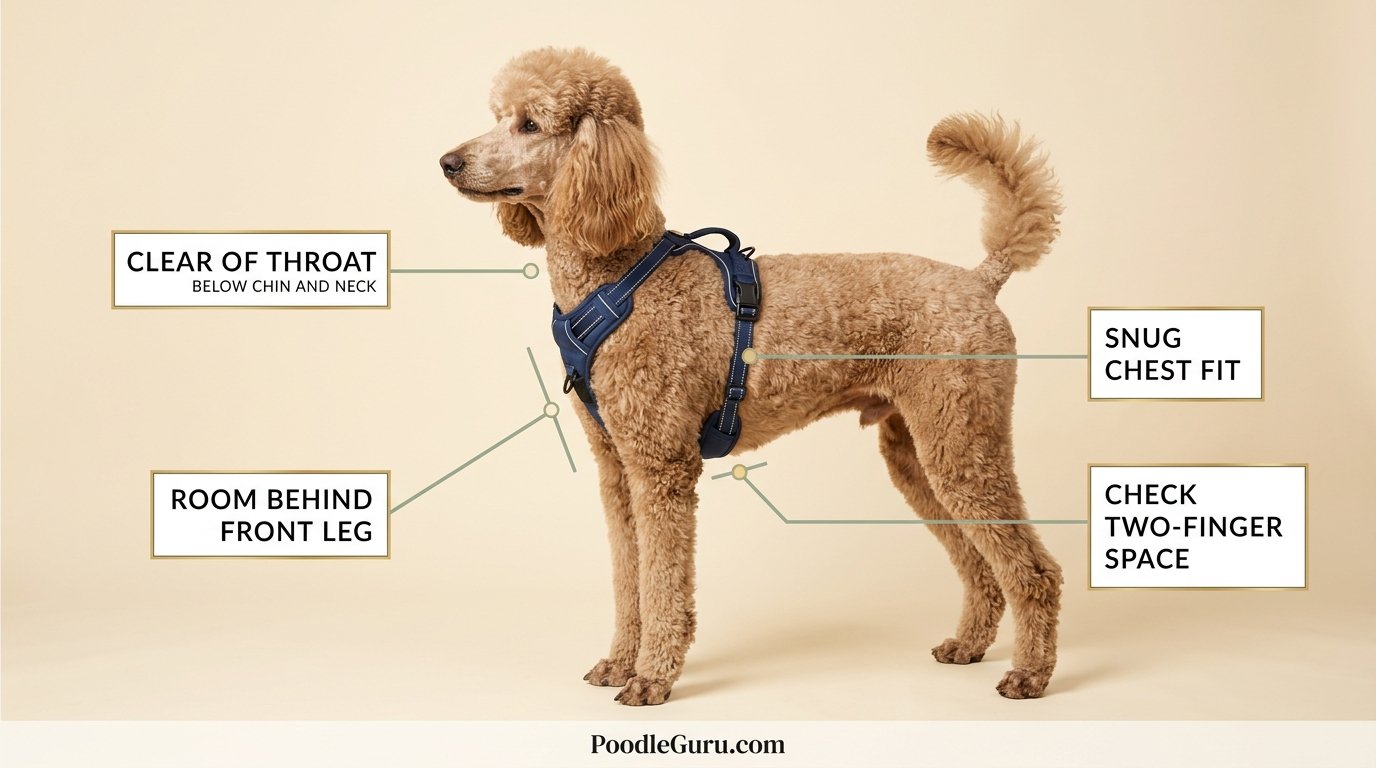
Use a soft tape measure around the deepest part of the chest, just behind the front legs. Never rely on weight charts alone. Poodles of the same weight often have different chest depth.
Check the Two-Finger Rule
After tightening, use the two-finger check as a practical starting point. You should be able to slide two fingers under the main straps without forcing them, while the harness remains secure enough that the Poodle cannot back out. Manufacturer fit instructions take priority because designs vary.
Test the Armpit Clearance
Look for comfortable clearance behind the front leg according to the harness design and manufacturer guidance. If the strap repeatedly lands in the skinfold or rubs during walking, adjust the harness or try a different shape.
Watch the Walk
Let the poodle walk for a minute. If the harness shifts sideways, rubs, or bunches behind the elbows, the shape is wrong. Adjust or swap styles.
Recheck After Grooming
A poodle with a full coat and the same poodle with a short clip may need different strap adjustments. Recheck fit after every major groom.
Mistakes Poodle Owners Often Make
Most harness problems are not product failures. They are fit failures. These are the patterns owners commonly discover after weeks of frustration.
| Mistake | Why It Happens | How to Fix It |
|---|---|---|
| Choosing by weight only | Brand size charts feel more certain than measuring | Measure chest girth and neck depth before buying |
| Leaving the harness on at home | Convenience | Remove after walks to prevent coat damage and skin irritation |
| Using a collar for leash walks | Habit or aesthetic preference | Switch to a well-fitted harness for all leash pressure |
| Ignoring strap movement | Assuming any shift is normal | Reassess fit if the harness rotates or rides into the armpits |
| Not adjusting after grooming | Forgetting coat volume changes strap tension | Recheck fit after every clip or bath and blowout |
The PoodleGuru Harness Fit Framework
At PoodleGuru, we use a simple five-point framework when evaluating any harness for Poodle owners.
The PoodleGuru Harness Fit Framework is a structured owner checklist that ranks neck and throat clearance, shoulder clearance, coat friction, escape risk, and ease of use. For Poodle owners, this means spending less time guessing and more time walking comfortably. The most important thing to understand is that a harness can look beautiful and still fail all five points on your specific dog.
1. Neck & Throat Clearance
No strap should press across the throat during normal walking. Check that leash tension is distributed across the chest rather than concentrated on the neck.
2. Shoulder Freedom
Straps must not cut across the point of shoulder. A Poodle’s gait should look unchanged.
3. Coat Friction
Smooth edges, sensible surface area, and fabric that does not repeatedly snag or compress fine Poodle coat.
4. Escape Resistance
Snug enough that a backing-up poodle cannot slip out, especially on slender Toys.
5. Owner Usability
If it takes more than 30 seconds to put on, owners will avoid using it. Simplicity matters.
When to Ask a Professional
Most harness decisions are owner-level choices. But some situations need a second opinion.
Ask a Veterinarian If:
- Your poodle coughs, gags, or makes a honking sound after walks
- You notice hair loss, scabs, or thickened skin along the chest
- Your poodle limps or changes gait after wearing a harness
- You suspect a neck or trachea issue even without visible symptoms
These are not normal harness reactions and should not be managed with fit adjustments alone.
Professional groomers can also help identify early harness rub patterns. They often see coat changes before owners notice skin changes. If your groomer mentions thinning hair behind the elbows, take it seriously.
Harness Price Guide: What to Expect
Harness prices vary by size, materials, hardware, adjustability, and brand. The ranges below are practical shopping estimates rather than live prices, so always check the current listing before buying.
Typical Shopping Ranges
- Budget: $14–$24 — simple H-style or basic step-in harnesses; fine for supervised short walks
- Mid-range: $25–$45 — soft vests, well-padded Y-fronts, better stitching and hardware
- Premium: $46–$70 — dual-clip sports harnesses, fleece-lined options, durable outdoor designs
Higher price does not automatically mean better poodle fit. It often reflects material durability, hardware quality, or added features like reflective trim.
Should You Buy Multiple Harnesses?
Some Poodle owners keep two harnesses: one for daily walks and another purpose-built restraint for vehicle travel. That can be reasonable, but a normal walking harness should not be assumed to provide crash protection unless the manufacturer specifically designs and tests it for that purpose.
A Toy Poodle who walks 20 minutes a day may only need one well-fitted vest harness. A Standard Poodle who hikes, trains, or rides in the car regularly may benefit from two different styles with different pressure points.
If you groom frequently or live in a hot climate, a second breathable harness helps reduce repeated friction on the same spots.
What Online Listings Often Get Wrong
Listing photos rarely show Poodles. More importantly, size charts often use weight instead of chest girth. That leads to returns and dangerous fits.
Some brands market “no-pull” harnesses with strong front-clip designs. Those can work, but on a Toy Poodle, a front clip may sit too low and pull the harness sideways. What works for a Standard may not work for a Toy.
Another common issue: product descriptions that claim the harness prevents tracheal collapse. No harness can prevent a structural airway condition. It can only reduce leash-related pressure. If a listing makes that claim, read cautiously.
Frequently Asked Questions
Do Poodles need a harness or is a collar fine?
A properly fitted harness can be a useful walking choice for Poodles that pull, cough with neck pressure, or need leash tension distributed away from the neck. A collar can still carry identification tags. For dogs with known airway, neck, orthopedic, or mobility concerns, ask your veterinarian which walking setup is most appropriate.
What type of harness is best for a Toy Poodle?
Many Toy Poodles do well in a lightweight step-in vest or H-style harness with minimal bulk, comfortable armpit clearance, and enough adjustment to prevent backing out. The individual dog’s body shape and the manufacturer’s fit instructions matter more than the style name alone.
How tight should a Poodle harness be?
Use the two-finger check as a practical starting point, then confirm that the harness stays secure without pinching, shifting sideways, or riding into the armpits. Recheck after grooming because coat volume can change how the straps sit.
Can a harness cause matting in poodle coats?
Yes. Harnesses with rough edges, mesh fabric, or tight straps can create friction mats behind the elbows and along the chest. Remove the harness after walks and brush those areas regularly.
Is a front-clip harness better for Poodles?
A front clip can help redirect some dogs that pull, but it is not automatically better for every Poodle. The attachment point should sit correctly on the individual dog’s chest without twisting the harness or interfering with normal movement.
When should I replace a Poodle harness?
Replace it when straps lose structure, buckles loosen, fabric frays, or fit can no longer be adjusted correctly. Visible wear near the chest is a sign of repeated friction.
Can poodle puppies wear harnesses?
Yes, once they are large enough for a secure fit. Choose an adjustable growth harness and recheck fit weekly. Puppies change shape quickly during the first six months.
Key Takeaways
- The best harness for a Poodle is the style that stays secure, keeps routine leash tension away from the neck, clears the armpits, and allows comfortable movement.
- Toy Poodles often benefit from lightweight, low-bulk designs, while Standards commonly need more adjustment range and durable hardware.
- Fit must be rechecked after grooming, growth, weight changes, or coat clipping.
- Harness rubbing behind the front legs can cause matting, hair loss, and skin irritation in Poodles.
- No harness prevents or treats tracheal collapse; the practical benefit is reducing direct leash pressure around the neck when the harness fits correctly.
- Multiple harnesses can be useful for Poodles that hike, train, travel, or live in hot climates.
Next step: Measure your Poodle’s chest girth, then choose the simplest harness style that meets the PoodleGuru five-point fit framework.