Poodle Pool Safety: Can Poodles Swim Safely?
Poodle pool safety starts with one simple rule: never assume water confidence equals water safety. Standard Poodles often enjoy swimming because the breed has a water-retriever history, but Toy, Miniature, and even athletic Standards still need supervision, a safe exit, gradual training, and the right life jacket before pool time becomes routine.
Quick Answer: Poodle Pool Safety Rules
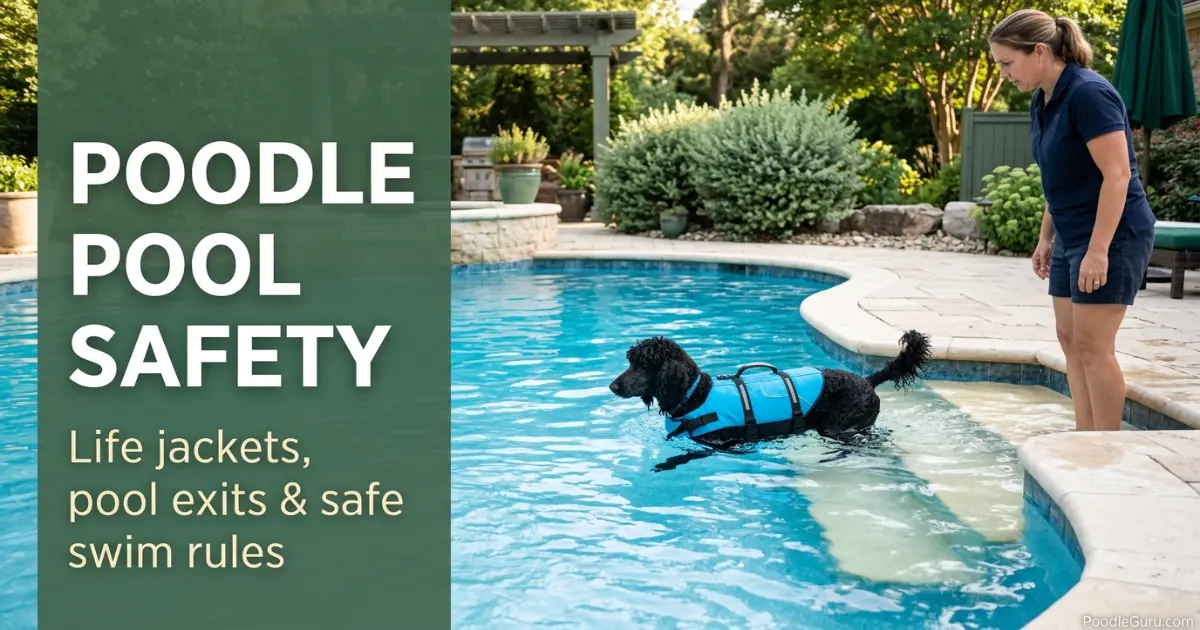
Poodle pool safety means using a properly fitted dog life jacket, introducing water gradually, supervising every second, teaching the pool exit first, and preventing unsupervised pool access with a secure barrier. Many Standard Poodles can become strong swimmers, but breed history does not make every poodle automatically safe in water. Toy and Miniature Poodles need extra caution because small dogs can fatigue quickly, panic silently, or struggle to reach pool steps. Treat every poodle as a beginner swimmer until they are comfortable, supervised, and trained to exit the pool reliably.
What Is Poodle Pool Safety?
Poodle pool safety is the set of habits, equipment, training steps, and supervision rules that protect a poodle from drowning, near-drowning, heat stress, ear problems, slippery surfaces, pool-water ingestion, and panic around water. It is not just “can my poodle swim?” It is “can my poodle enter safely, stay calm, avoid exhaustion, find the exit, and get help fast if something goes wrong?”
Poodles have a real water-retriever background, and many Standards especially enjoy swimming. The American Kennel Club describes Poodles as water retrievers and notes that many enjoy water work. That history is useful context, but it does not remove the need for modern pool safety: gates, supervision, life jackets, gradual exposure, and a taught exit route still matter for every size.
For pool owners, the most dangerous assumption is that a dog will bark or splash loudly when in trouble. Many pets in water distress are quiet, focused on staying afloat, and can tire quickly. Your safest plan is prevention: block unsupervised access, use proper flotation, and practice the pool exit until your poodle can find it from different points in the pool.
Quick Facts About Poodle Pool Safety
Water History Helps, But Does Not Guarantee Safety
The Poodle’s water-retriever history explains why many poodles enjoy swimming. It does not mean every Toy, Miniature, or Standard Poodle is automatically confident or safe in a pool.
Life Jackets Add Time and Visibility
A bright, snug dog life jacket with a sturdy top handle helps your poodle float, stay visible, and be lifted more safely if they tire or panic.
Pool Exit Training Is Non-Negotiable
Many dogs swim along the wall without locating the steps. Teach the exit first, then practice from multiple pool angles before allowing longer swims.
Can All Poodles Swim? The Size Reality
Many Poodles can learn to swim, but ability varies by size, body condition, age, fear level, water temperature, coat length, and prior experience. A Standard Poodle who retrieves toys happily in shallow water is very different from a nervous Toy Poodle stepping into a full-size pool for the first time.
| Poodle Size | Swimming Potential | Main Pool Risks | Best Safety Rule |
|---|---|---|---|
| Standard Poodle | Often strong and enthusiastic swimmers with training. | Overexertion, jumping from height, slipping on wet decking, drinking too much pool water. | Life jacket recommended; teach exit before longer swim sessions. |
| Miniature Poodle | Can swim well, but confidence and stamina vary widely. | Fatigue in large pools, trouble climbing out, panic if splashed or crowded. | Life jacket strongly recommended; short sessions only. |
| Toy Poodle | May paddle, but small size makes pool errors less forgiving. | Fast fatigue, cold stress, being unable to reach or climb the exit. | Life jacket required; consider shallow supervised wading instead of full pool swimming. |
Age and health matter too. A senior poodle with arthritis, heart disease, vision loss, or recent illness needs a veterinarian’s clearance before swimming. Puppies should be introduced slowly after your vet confirms they are healthy enough for supervised water exposure.
The PoodleGuru Pool Safety Check
Before every swim, use this three-part PoodleGuru check. It takes less than two minutes and catches the risks owners most often overlook.
Secure the barrier
Check that the pool area is fenced or otherwise blocked from unsupervised access. Gates should close and latch reliably, and openings should be narrow enough that a small poodle cannot squeeze through. Follow local pool-safety codes and inspect the gate before each session.
Verify the exit path
Make sure pool steps, a ramp, or a dog-safe ladder are open and easy to reach. Do not begin swim play until your poodle has practiced returning to that exit from several spots in the pool.
Assign a supervisor
One adult should be responsible for watching the dog only. Phone scrolling, grilling, talking across the yard, or watching children at the same time is not enough supervision for a dog in or near a pool.
How to Introduce a Poodle to the Pool Safely
A rushed first swim can make a poodle fearful for life. A calm first experience teaches that water is predictable, optional, and rewarding.
Start on dry land near the pool
Walk your poodle near the pool on leash while the gate is secure and the session is low-pressure. Reward calm sniffing and voluntary curiosity. Do not drag your dog toward the water.
Fit the life jacket before water
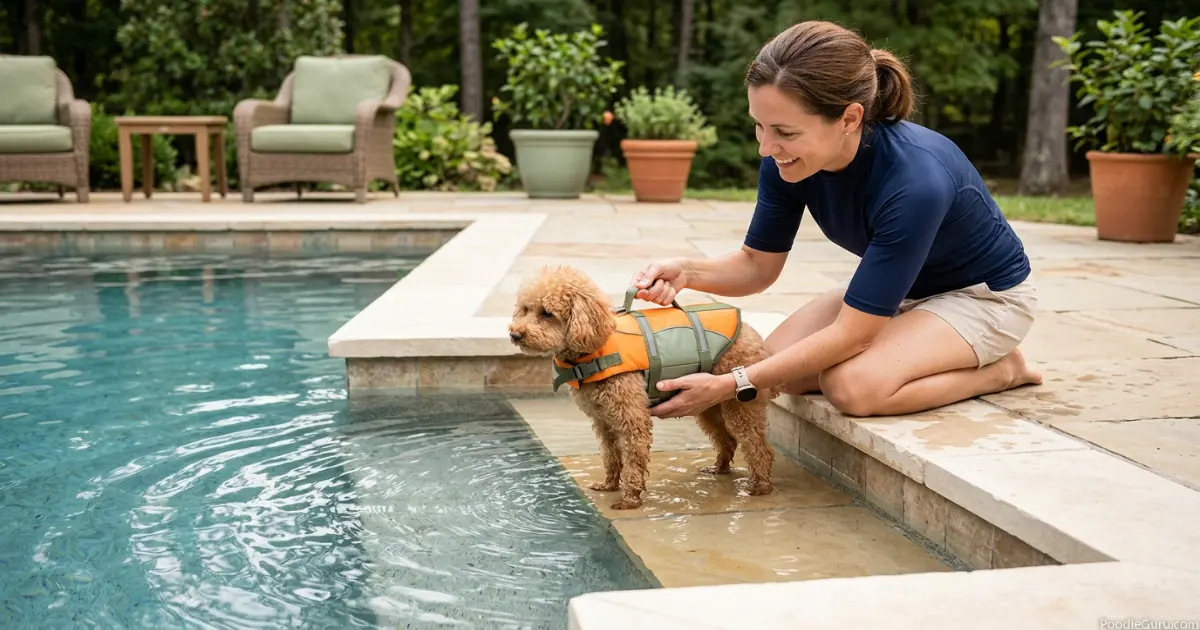
Let your poodle wear the life jacket indoors or on the patio first. It should be snug enough not to twist, but loose enough for normal breathing and shoulder movement.
Introduce the steps or ramp
Guide your dog to the shallow entry and let them step down voluntarily. Reward standing calmly in ankle-deep water before asking for any swimming.
Support the first short swim
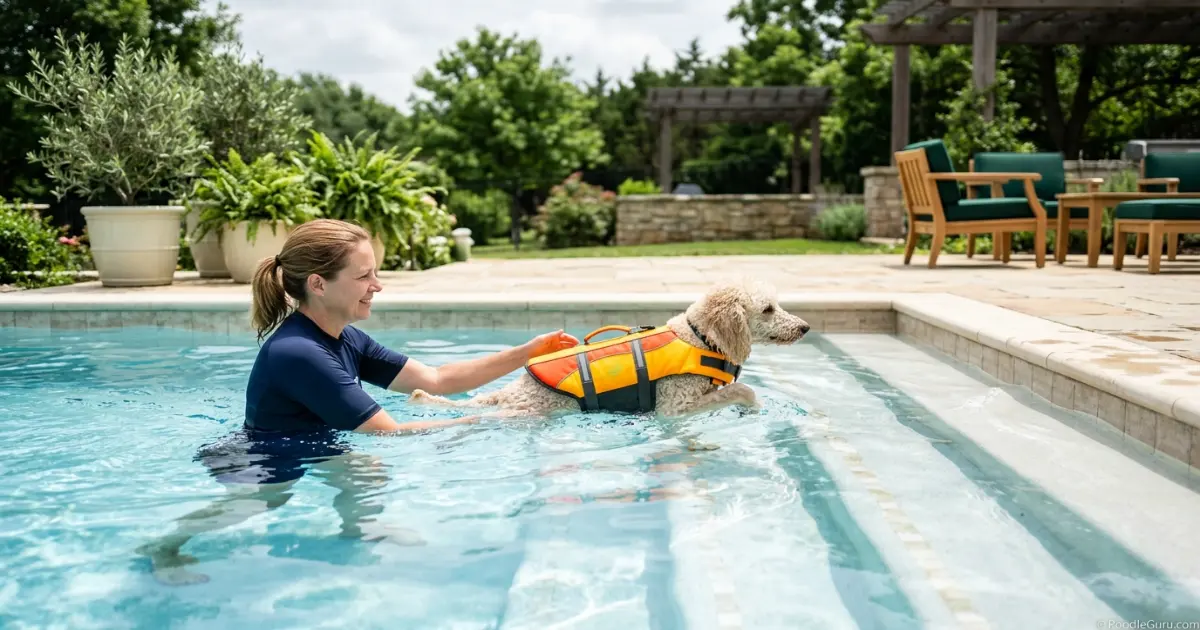
When your poodle is ready, keep the first swim brief. Support the chest and body as needed, then guide the dog directly back to the steps. End while your poodle is still relaxed.
Practice the exit repeatedly
From different angles, gently guide your poodle back to the exit. This skill is more important than distance swimming because many pool accidents happen when a dog cannot find a way out.
Hidden Pool Hazards for Poodles
Poodle pool safety is bigger than swimming ability. These hidden hazards create many avoidable emergencies.
- Pool covers: Some covers look solid but may sag, trap a dog, or hide the water surface. Keep dogs away from covered pools unless a secure barrier is closed.
- Pool-water drinking: Small amounts of properly maintained pool water are usually not the issue; repeated gulping can cause stomach upset, and large intake can become dangerous. Keep fresh water nearby and interrupt water-chasing games.
- Ear moisture: Poodles have drop ears that can hold moisture. Dry the outer ear gently after swimming, and ask your vet about safe ear-drying products if your poodle has recurring infections.
- Skin and eye irritation: Chlorine and other pool chemicals can irritate sensitive skin and eyes. Rinse your poodle with fresh water after swimming and dry the coat thoroughly.
- Hot pool decking: Concrete, stone, and dark decking can burn paw pads. Touch the surface with your hand; if it feels too hot for your skin, it is too hot for your poodle.
- Slippery edges: Wet paws on smooth coping can cause falls. Use non-slip mats where your dog enters and exits.
Safety Equipment Worth Having
| Equipment | Purpose | Poodle-Specific Selection Tip |
|---|---|---|
| Dog life jacket | Buoyancy, visibility, and emergency grab handle. | Choose a bright color, sturdy top handle, snug girth fit, and a shape that does not ride up around a poodle’s neck. |
| Pool ramp or dog ladder | Helps dogs exit when stairs are hard to reach. | Use a non-slip surface wide enough for your poodle’s body and rated for your dog’s weight. |
| Secure fence and self-latching gate | Prevents unsupervised access. | Check gaps, latch function, and climbing points often. Follow local pool barrier requirements. |
| Pool alarm | Backup alert if something enters the water. | Use as a backup only. It never replaces barriers or an attentive adult supervisor. |
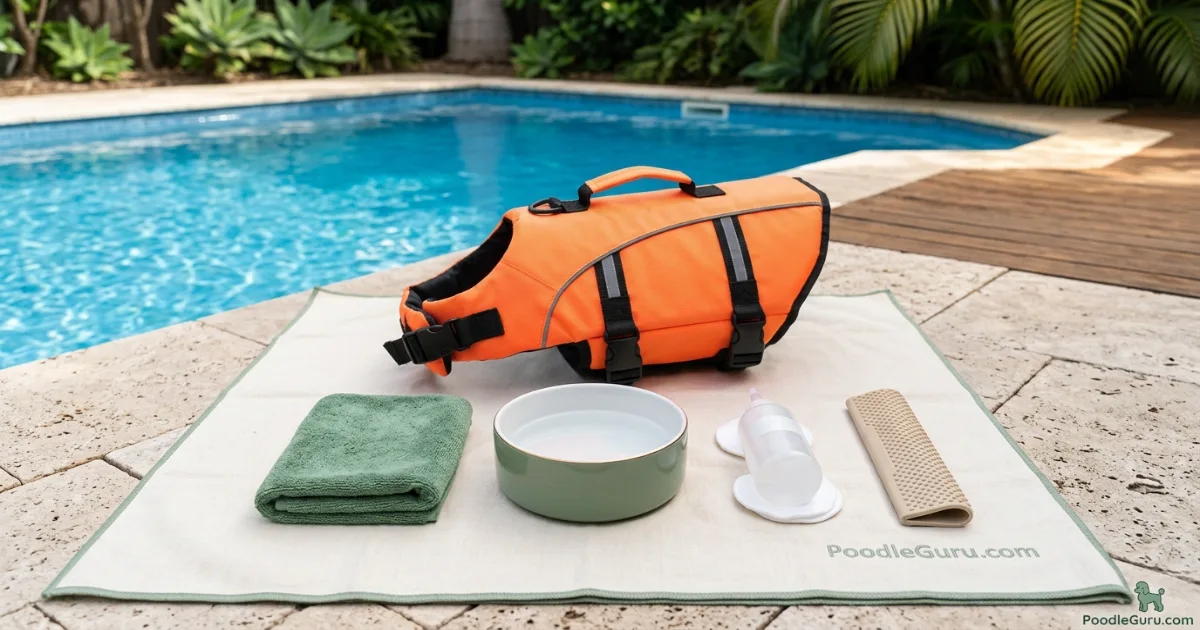
| Post-swim towel and ear supplies | Dry coat, paws, and outer ears after swimming. | Keep supplies next to the pool so drying happens immediately after every swim. |
Common Poodle Pool Safety Mistakes
| Mistake | Why It Happens | Safer Practice |
|---|---|---|
| Assuming “poodles are water dogs” means every poodle can swim | Breed history gets mistaken for individual skill. | Test every dog slowly in shallow water with a life jacket and supervision. |
| Skipping the pool-exit lesson | Owners assume dogs naturally find the steps. | Practice exit training from multiple pool points before relaxed swim play. |
| Buying a life jacket by weight only | Poodles have unique chest and body proportions. | Measure girth, back length, and neck fit; test the jacket on dry land first. |
| Letting pool play become a water-chasing game | Some dogs bite, gulp, and obsess over splashes. | Use calm swim sessions, floating toys in moderation, and frequent fresh-water breaks. |
| Forgetting ear and coat care after swimming | The dog looks dry outside, but moisture remains in ears and curls. | Rinse, towel dry, check ears, and fully dry dense coat areas to reduce irritation and matting. |
What to Do in a Pool Emergency
If Your Poodle Is Distressed, Submerged, or Coughing After Water
- Remove your poodle from the water immediately. Use the life jacket handle if present, and support the body as you lift.
- Check breathing and responsiveness. If your dog is not breathing or is unresponsive, begin pet CPR only if you are trained or can follow emergency guidance while another person calls for help.
- Do not shake, swing, or roughly invert a small dog. Rough handling can cause injury and wastes critical time.
- Call an emergency veterinarian immediately. Any dog that was submerged, inhaled water, is coughing, breathing hard, weak, pale, vomiting, or acting abnormal needs urgent veterinary assessment.
- Go to the vet even if your poodle seems to recover. Breathing complications can appear after the incident, and early oxygen support or monitoring can be lifesaving.
Pre-Swim Poodle Pool Safety Checklist
- Pool gate is closed, latched, and inspected for gaps.
- Life jacket is fitted snugly and does not twist or ride up.
- Fresh drinking water is available near the pool.
- Pool steps, ramp, or dog ladder are open and easy to see.
- Your poodle has practiced reaching the exit from multiple angles.
- One adult supervisor is assigned to watch the dog only.
- Pool cover is fully removed for planned swim time or the dog is kept behind a barrier.
- Post-swim towel and ear-drying supplies are ready.
- The session will be short, calm, and ended before fatigue.
Frequently Asked Questions
Can Toy Poodles swim in a pool?
Toy Poodles can paddle, but they are small, tire quickly, and may struggle to reach or climb pool steps. Use a properly fitted life jacket, keep sessions very short, stay within arm’s reach, and consider shallow supervised wading instead of full pool swimming.
Do poodles naturally know how to swim?
Some poodles take to water quickly because of the breed’s water-retriever history, but not all poodles are confident swimmers. Introduce water gradually and never throw or push a poodle into a pool to “teach” them.
What kind of life jacket is best for poodle pool safety?
Choose a bright, snug dog life jacket with adjustable straps, strong buckles, and a sturdy top handle. The jacket should not twist, ride up near the throat, or gap under the belly when your poodle moves.
How do I stop my poodle from drinking pool water?
Offer fresh water before and during pool time, interrupt water-biting games, use calm floating toys instead of splash-heavy play, and end the session if your poodle keeps gulping pool water.
Can poodles get ear infections from swimming?
Yes. Moisture can remain in a poodle’s drop ears and contribute to irritation or infection, especially in dogs with a history of ear problems. Dry the outer ears gently after swimming and ask your vet about safe drying solutions.
Is chlorine dangerous for poodles?
Properly maintained pool water is usually tolerated for occasional supervised swimming, but chlorine can irritate skin and eyes. Rinse your poodle with fresh water after each swim and limit pool time if your dog has sensitive skin.
What should I do if my poodle falls in the pool unexpectedly?
Call your poodle toward the steps if they are responsive, use the life jacket handle or pool edge to guide them out, and call an emergency vet if your dog coughed, inhaled water, struggled, became weak, or acted abnormal afterward.
At what age can a poodle puppy start swimming?
Ask your veterinarian first. Many healthy puppies can be introduced to warm, shallow water after age-appropriate vaccines have started, but first sessions should be brief, positive, and fully supervised with a puppy-sized life jacket.
Key Takeaways: Poodle Pool Safety
- Poodle pool safety begins with supervision, secure barriers, a life jacket, and a taught exit route—not breed assumptions.
- Standard Poodles often enjoy water, but Toy and Miniature Poodles need extra caution because fatigue, panic, and exit difficulty happen faster in small dogs.
- A bright, well-fitted life jacket with a grab handle is valuable for every poodle around pools, especially beginners, puppies, seniors, and small dogs.
- Teach your poodle to find the pool steps, ramp, or dog ladder from multiple points before allowing relaxed swim play.
- Prevent pool-water gulping, rinse the coat after swimming, and dry the ears carefully to reduce skin and ear irritation.
- If your poodle is submerged, coughs after water, struggles to breathe, becomes weak, or acts abnormal after a pool incident, contact an emergency veterinarian immediately.
Today’s action: check your pool gate, fit your poodle’s life jacket, and practice the exit route from a new spot. Ten calm minutes now can prevent a serious emergency later.