This article contains affiliate links. PoodleGuru may earn a small commission if you purchase through our links, at no extra cost to you.
Best Dog Car Seat for Poodles: Safe Travel Guide
The best dog car seat for poodles is not chosen by looks alone. Toy, Miniature, and Standard Poodles need different travel setups because size, neck safety, crash testing, escape risk, and car anxiety all matter. This guide shows you how to choose a safer restraint without falling for padded-but-untested products.
Quick Answer: Best Dog Car Seat for Poodles
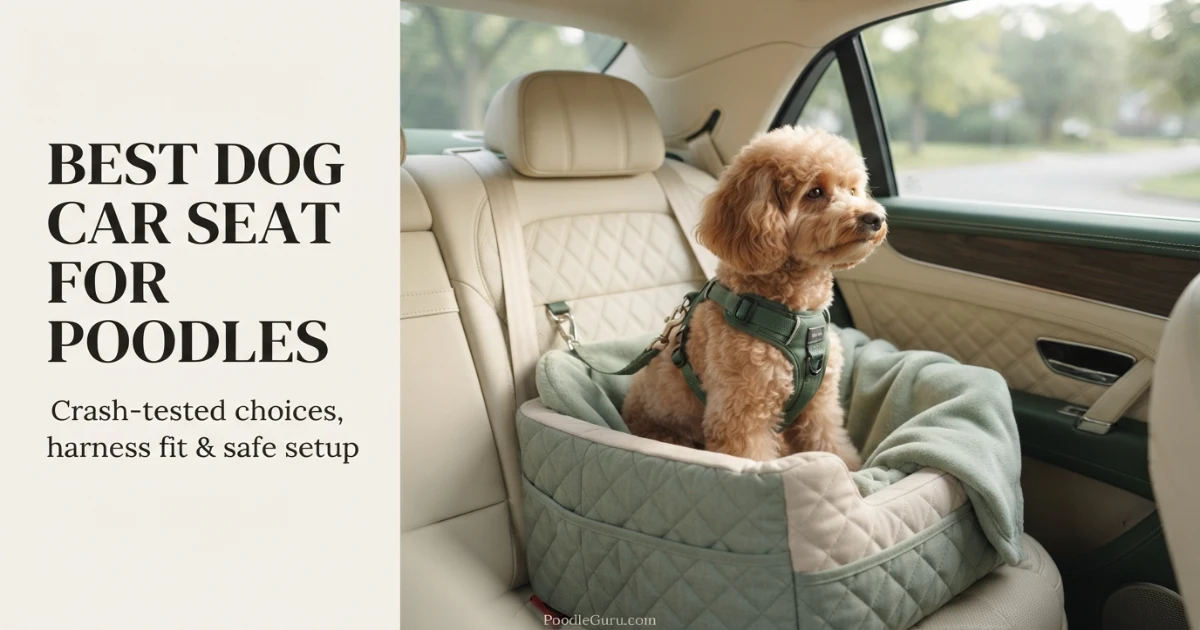
The best dog car seat for poodles depends on size. Toy Poodles are usually safest in a crash-tested travel carrier secured according to the manufacturer’s instructions. Miniature Poodles may use a sturdy booster-style seat for comfort and visibility, but it should be paired with a properly fitted harness and should not be treated as crash protection unless that exact product has independent crash-test certification. Standard Poodles generally need a crash-tested harness or travel crate, not a booster. Across every size, avoid collar attachments, long extension tethers, and products that only claim “car safe” without published testing.
Size Dictates Gear
Toy Poodles usually need a small carrier or carefully fitted booster. Miniatures may use boosters or harness systems. Standards need harnesses or crates, not car seats.
Crash Testing Matters
The Center for Pet Safety lists certified harnesses, carriers, and crates. Certification applies to specific products, not every item from a brand.
No Collar Tethers
Toy and Miniature Poodles are small-necked dogs. Any car attachment should connect to a well-fitted harness or approved carrier system, never a collar.
Back Seat First
The safest routine is rear-seat travel using a restraint installed exactly as the manufacturer and vehicle manual specify.
Budget Range
Plan roughly $50–$150 for quality booster-style seats, $90–$250+ for better carriers, and $80–$150 for crash-tested harnesses.
Train Before Trips
Poodles remember stressful travel. Introduce the restraint slowly at home and in a parked car before expecting calm highway rides.
Why Poodle-Specific Car Safety Matters
Poodle car safety needs more thought than generic dog travel advice. Toy Poodles are tiny, Miniatures are narrow and agile, and Standards are tall enough to become difficult to control if loose in a vehicle. The goal is not simply to “put the dog somewhere.” The goal is to reduce distraction, prevent escape, protect the neck, and choose gear that has evidence behind its safety claims.
The American Kennel Club warns that unrestrained dogs can distract drivers and be injured by airbags or thrown during sudden stops. The AKC also recommends crash-tested and Center for Pet Safety-certified equipment when possible. For poodles, that advice is especially important because many are alert window-watchers and clever enough to wiggle out of loose, soft-sided restraints.
Expert Insight: The Neck and Trachea Factor
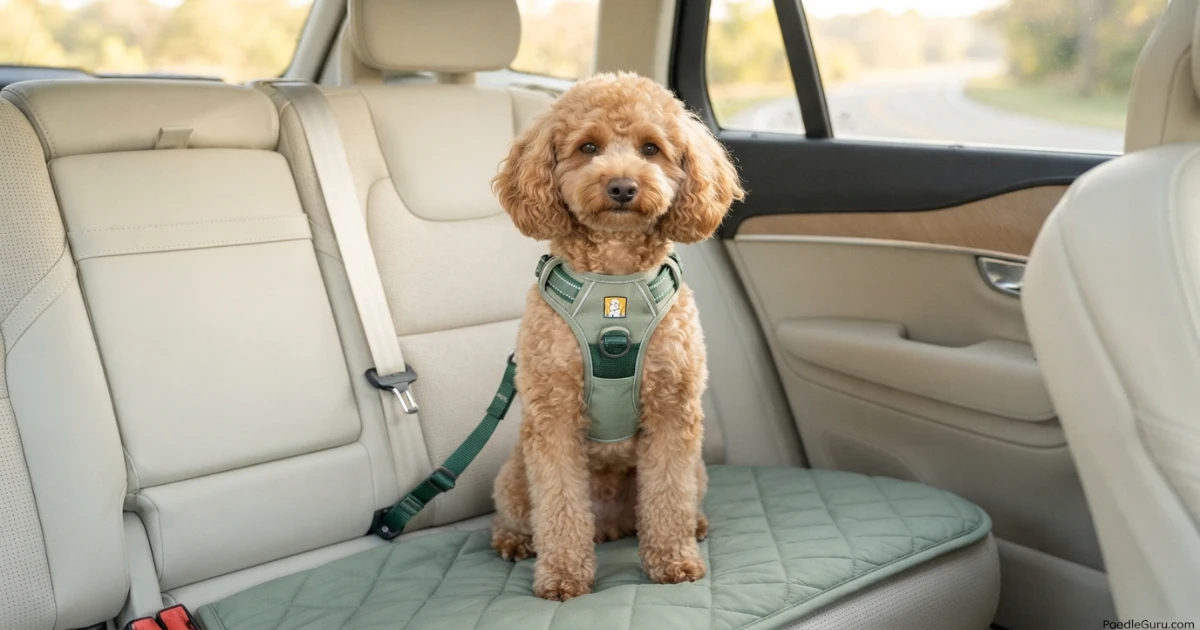
Small dogs, including Toy Poodles, are among breeds discussed by veterinary sources for tracheal collapse risk. VCA and Cornell guidance also support using a harness rather than placing pressure on the neck for dogs with tracheal sensitivity. In the car, that means no seatbelt clip, leash, or tether should ever attach to a collar. Use a body harness or a properly secured carrier system instead.
The PoodleGuru Car Safety Evaluation Method
At PoodleGuru, we evaluate every travel product with four poodle-specific checks. This keeps the decision focused on safety, comfort, and honest product evidence instead of marketing language.
Match the restraint to your poodle’s size
A Toy Poodle, Miniature Poodle, and Standard Poodle should not use the same travel system. Measure height, weight, chest girth, and body length before shopping. If your dog falls between sizes, choose the product that fits the body safely—not the one that looks more comfortable online.
Check the crash-test evidence
Look for Center for Pet Safety certification or published independent crash-test details for the exact product. Phrases like “safety tested,” “car friendly,” and “heavy duty” are not the same as independent crash-test certification.
Avoid neck pressure and long tethers
Never clip a vehicle restraint to a collar. Also be careful with long extension tethers and zipline-style add-ons. The Center for Pet Safety warns that these accessories can increase injury risk and may undermine crashworthiness claims.
Test comfort and escape prevention
Poodles are smart problem-solvers. After installing the gear, practice in the driveway and watch whether your dog can climb out, twist around, chew a strap, or panic. Safer gear should keep the dog contained without restricting normal breathing or posture.
Types of Car Seats and Restraints Compared for Poodles
Many owners search for the best dog car seat for poodles, but “car seat” is only one category. Depending on your poodle’s size, the safer answer may be a carrier, harness, or crate instead.
| Restraint Type | Best For | Typical Price Range | Crash-Safety Note | Poodle-Specific Guidance |
|---|---|---|---|---|
| Booster-Style Car Seat | Toy and Miniature Poodles who need visibility | $50–$150 | Many boosters are comfort/containment products, not crash-certified systems. Verify the exact model. | Use only with a fitted harness system approved by the product instructions. Never attach to a collar. |
| Crash-Tested Travel Carrier | Toy Poodles and small Miniatures | $90–$250+ | CPS-certified carriers exist and can provide stronger protection for small dogs when installed correctly. | Choose a size that lets your poodle stand, turn, and lie down without excess sliding space. |
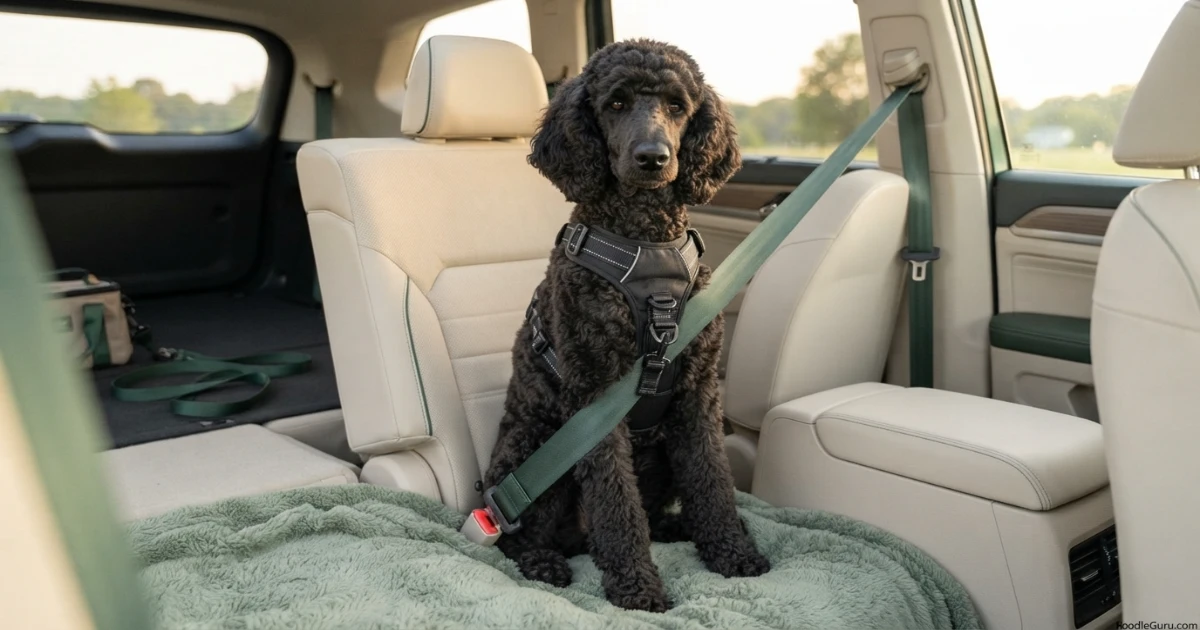
| Crash-Tested Harness | Standard Poodles and some Miniatures | $80–$150 | Use the manufacturer’s integrated seatbelt routing. Avoid aftermarket extension tethers unless specifically approved. | Fit matters. The harness should distribute force across the chest and shoulders, not the throat. |
| Travel Crate / Kennel | Standards in larger vehicles, anxious dogs, long trips | $150–$500+ | Crash-tested crates are usually more expensive but may be the strongest setup when correctly anchored. | Best for poodles who settle better in a den-like space and owners with enough vehicle room. |
| Backseat Hammock | Seat protection and fall prevention | $30–$90 | Not a primary restraint. It should be paired with a harness or crate system. | Useful for Standards to prevent slipping into the footwell, but not enough by itself. |
Choosing the Right Restraint by Poodle Size
Toy Poodle
For most Toy Poodles, the strongest starting point is a small crash-tested travel carrier installed in the rear seat. A booster-style seat can help a Toy Poodle see out and feel calmer, but do not assume a padded booster is crash protective unless that specific model has verified testing. Make sure the restraint does not let the dog slip under, climb out, or place pressure on the throat.
Miniature Poodle
Miniature Poodles sit in the middle. Some fit well in a high-sided booster-style car seat; others do better in a harness or carrier, especially if they are anxious or long-bodied. The best choice is the one that lets your Miniature sit or lie naturally while keeping the harness away from the neck and limiting escape movement. If the seat depends only on a headrest strap or long tether, keep looking.
Standard Poodle
Standard Poodles are too large for ordinary dog car seats. Look for a crash-tested harness routed through the vehicle seatbelt as instructed, or a properly anchored travel crate if your vehicle allows it. A backseat hammock can protect upholstery and reduce footwell falls, but it is not a restraint. Pair it with an approved harness or crate system.
Buyer Red Flags to Avoid
Some products look premium but fail the practical safety test. Use this table before buying any poodle car seat or restraint.
| Red Flag | Why It Matters | Smarter Choice |
|---|---|---|
| No crash-test evidence | Soft padding does not prove the product can protect a dog during a sudden stop or crash. | Check CPS certification or independent crash-test details for the exact model. |
| Collar attachment shown in product photos | Neck pressure is risky, especially for small poodles and dogs with tracheal sensitivity. | Choose harness or carrier systems that keep force off the throat. |
| Long extension tether or zipline-style restraint | More movement can mean more excursion, tangling, distraction, and injury risk. | Use the product’s approved integrated routing and avoid aftermarket tether add-ons. |
| One-size-fits-all promise | Poodles range from tiny Toys to tall Standards. One product cannot fit every body safely. | Buy by girth, weight, length, and vehicle setup—not just breed name. |
| Front-seat installation as the default | Airbags and driver distraction make front-seat travel risky for dogs. | Use the rear seat whenever possible and follow the vehicle manual. |
| Non-washable fabric | Travel seats collect dander, saliva, dirt, and occasional motion-sickness mess. | Choose removable covers or wipe-clean interiors. |
2026 Price Guide: What to Expect to Pay
Prices change by brand, retailer, sales, and certification level, so treat these as planning ranges. Safety value comes from fit, tested construction, and correct installation—not just a high price tag.
Planning Budget for Poodle Car Restraints
- Basic booster-style seat: about $35–$70. Helpful for visibility and containment, but often not independently crash certified.
- Higher-quality booster or travel seat: about $70–$150. Look for strong base structure, clear installation instructions, and washable covers.
- Crash-tested carrier for Toy Poodles: about $90–$250+. Often the better safety-first option for very small dogs.
- Crash-tested harness for Standards: about $80–$150. Fit and seatbelt routing are more important than styling.
- Travel crate or kennel: about $150–$500+. Best for some larger poodles and long trips when the vehicle has room.
- Backseat hammock: about $30–$90. Useful as a supplemental barrier, not a replacement for restraint.
How to Install and Acclimate Your Poodle
A safe product can still fail if it is installed incorrectly or if your poodle panics. Introduce the gear slowly and make each stage rewarding.
Install exactly as instructed
Read both the product manual and your vehicle manual. Route seatbelts through every required path, secure carriers or crates as instructed, and avoid the front passenger airbag zone. If the product shifts more than the manual allows, adjust before driving.
Introduce the gear at home
Place the carrier, seat, or harness in the living room. Toss treats near it, then inside it. Let your poodle investigate without pressure. This turns the gear into a familiar object before the car adds motion and noise.
Practice in a parked car
Secure your poodle for one to two minutes with the engine off. Reward calm behavior, then end the session. Watch for lip licking, yawning, shaking, freezing, or escape attempts. Shorter sessions are better than forcing it.
Start with tiny drives
Drive around the block, come home, and reward. Build up gradually. For anxious poodles, make early trips end in something pleasant, like a quiet sniff walk, not only the vet or groomer.
Travel Safety Reminder
No car restraint can guarantee complete protection in every crash. The goal is risk reduction: less driver distraction, less free movement, less neck pressure, and a better chance that your poodle stays contained during sudden stops.
Frequently Asked Questions
What is the best dog car seat for poodles?
The best dog car seat for poodles is the restraint that fits your poodle’s size and has credible safety evidence. Toy Poodles often do best in crash-tested carriers, Miniature Poodles may use high-sided booster-style seats or harness systems, and Standard Poodles usually need a crash-tested harness or travel crate.
Do poodles need a car seat or harness?
Yes, poodles should be restrained during car travel. The exact setup depends on size. Small poodles may need a carrier or booster-style seat, while Standard Poodles usually need a harness or crate system.
Can I attach a dog seatbelt to my poodle’s collar?
No. A car restraint should never attach to a collar because sudden pressure on the neck can injure the throat. Use a properly fitted body harness or secured carrier system instead.
Are dog car seats for poodles crash tested?
Some carriers, crates, and harnesses are independently crash tested, but many decorative booster seats are not. Check the Center for Pet Safety certified list or published crash-test details for the exact product.
Can my Standard Poodle ride in the front seat?
The back seat is the safer default because front passenger airbags and driver distraction can create serious risks. Use the rear seat with a crash-tested harness or properly anchored crate whenever possible.
Will a car seat help my poodle’s motion sickness?
It may help some dogs by creating stability or allowing a clearer view, but motion sickness can also require gradual travel conditioning or veterinary advice. Avoid feeding a large meal right before travel, and ask your vet if nausea continues.
Can one restraint fit both a Toy and Standard Poodle?
No. A 5-pound Toy Poodle and a 60-pound Standard Poodle need different equipment. A multi-poodle household usually needs separate restraint systems matched to each dog’s weight, girth, and travel style.
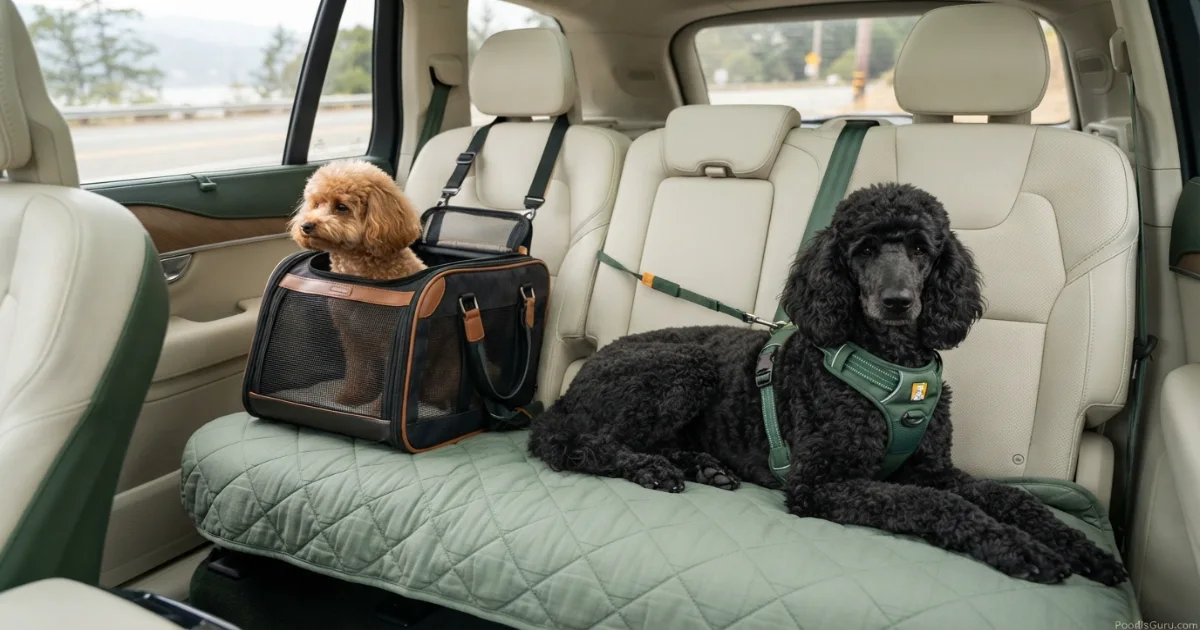
Key Takeaways: Best Dog Car Seat for Poodles
The best dog car seat for poodles is really the best size-matched restraint system. Choose by body size, crash-test evidence, harness fit, escape prevention, and your poodle’s comfort in the car.
- Toy Poodles often do best in small crash-tested carriers; booster-style seats are only appropriate when the exact product fits safely and is installed correctly.
- Miniature Poodles may use high-sided booster seats, carriers, or harness systems depending on girth, anxiety level, and travel style.
- Standard Poodles are usually better served by crash-tested harnesses or anchored crates, not booster seats.
- Never attach a vehicle restraint to a collar. Use a body harness or carrier system that keeps force off the throat.
- Check Center for Pet Safety certification or independent crash-test data for the exact product, not just the brand name.
- Avoid long extension tethers, zipline-style add-ons, front-seat airbag zones, and one-size-fits-all products.
Your next step: Measure your poodle’s weight, chest girth, body length, and shoulder height. Then choose the safest restraint category first—carrier, harness, crate, or booster-style seat—before comparing colors, padding, or price.