This article contains affiliate links. PoodleGuru may earn a small commission if you purchase through our links, at no extra cost to you.
Hiking with a Poodle: Best Practices & Essential Gear
Hiking with a poodle can be safe, healthy, and deeply rewarding when you match the trail to your dog’s size, fitness, coat, paws, and weather tolerance. With the right preparation, gear, and trail smarts, your poodle can become a confident adventure partner.
Hiking with a Poodle: Quick Answer
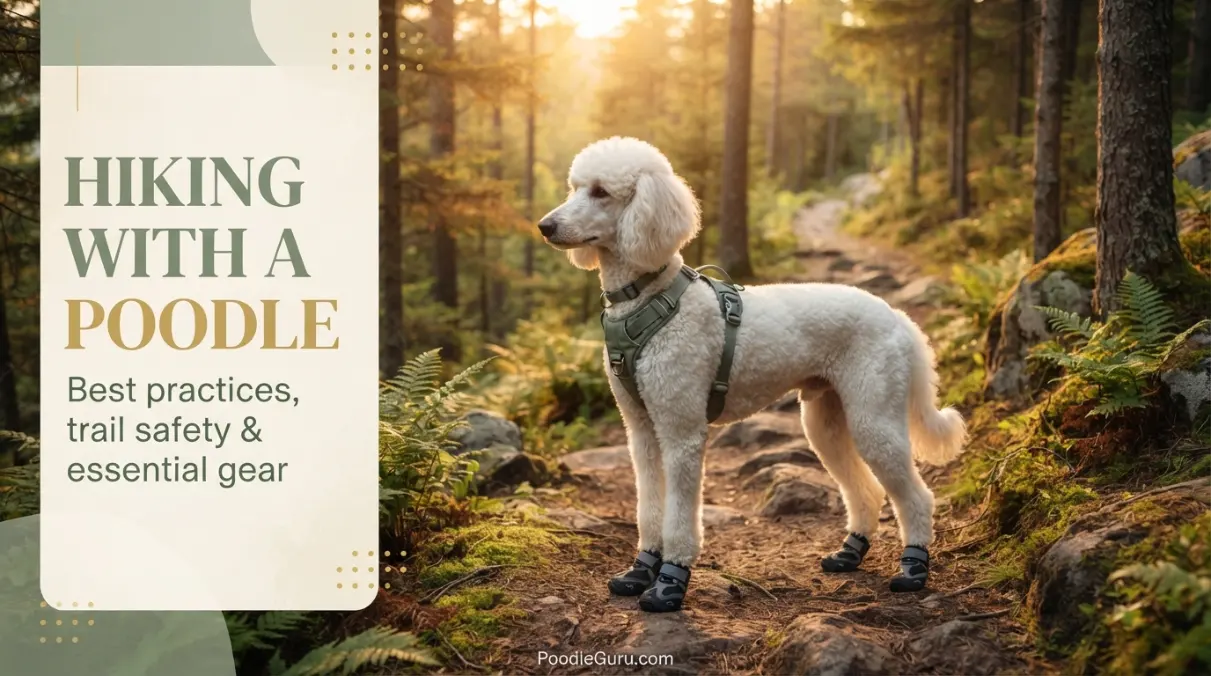
Hiking with a poodle is absolutely possible — and deeply rewarding — when you match the trail to your dog’s size and fitness. Standard Poodles can handle several miles of moderate terrain. Miniatures thrive on shorter, easier loops. Toy Poodles often ride in a backpack after a mile or two. Every poodle needs a secure harness, fresh water, paw protection, and a slow, conditioned start. The most important rule: let your poodle set the pace, and never push through signs of fatigue.
Quick Facts About Hiking with a Poodle
Best Size for Distance
Standard Poodles easily handle 5–8 mile hikes; Miniatures excel at 2–5 miles; Toys are backpack adventurers after 1–2 miles.
Poodle Coat Protection
A shorter “sporting clip” prevents burrs and mud from matting the coat. Full show coats are a nightmare on the trail.
Paw Pad Awareness
Hot rocks, sharp gravel, and ice can injure paw pads. Boots are essential for rough terrain; check paws every mile.
Hydration Rule
Poodles need about 1 ounce of water per pound of body weight per day, more on the trail. Carry a collapsible bowl and extra water.
Bloat Awareness
Never feed a large meal right before or after vigorous exercise. Wait at least an hour on either side for Standard Poodles.
Trail Etiquette
Keep your poodle leashed unless in a designated off-leash area. Poodles’ alertness can startle other hikers or wildlife.
Why Hiking with a Poodle Works So Well
Don’t let the elegant reputation fool you. Beneath the groomed curls is an athletic, agile dog bred originally for water retrieval and hunting. The same intelligence that makes poodles excel in obedience means they read the trail ahead — watching your line, responding to cues, and rarely pulling out of sheer distraction. Hiking with a poodle often feels less like managing a pet and more like walking with a tuned-in partner.
Poodles are also remarkably adaptable, which is one reason hiking with a poodle can work for many owners when expectations are realistic. A Standard Poodle can power up a mountain pass. A Toy Poodle can enjoy the same adventure from the safety of a well-ventilated backpack, sniffing the air and watching the world go by. The key is to respect the body you’re hiking with. Not every poodle is built for every trail, but almost every poodle can join the journey in some way.
Is Your Poodle Ready to Hike? Fitness by Size
Not every poodle is trail-ready at the same pace. Age, size, and conditioning matter more than enthusiasm. Here’s how the three poodle sizes differ when it comes to hiking ability.
| Factor | Toy Poodle | Miniature Poodle | Standard Poodle |
|---|---|---|---|
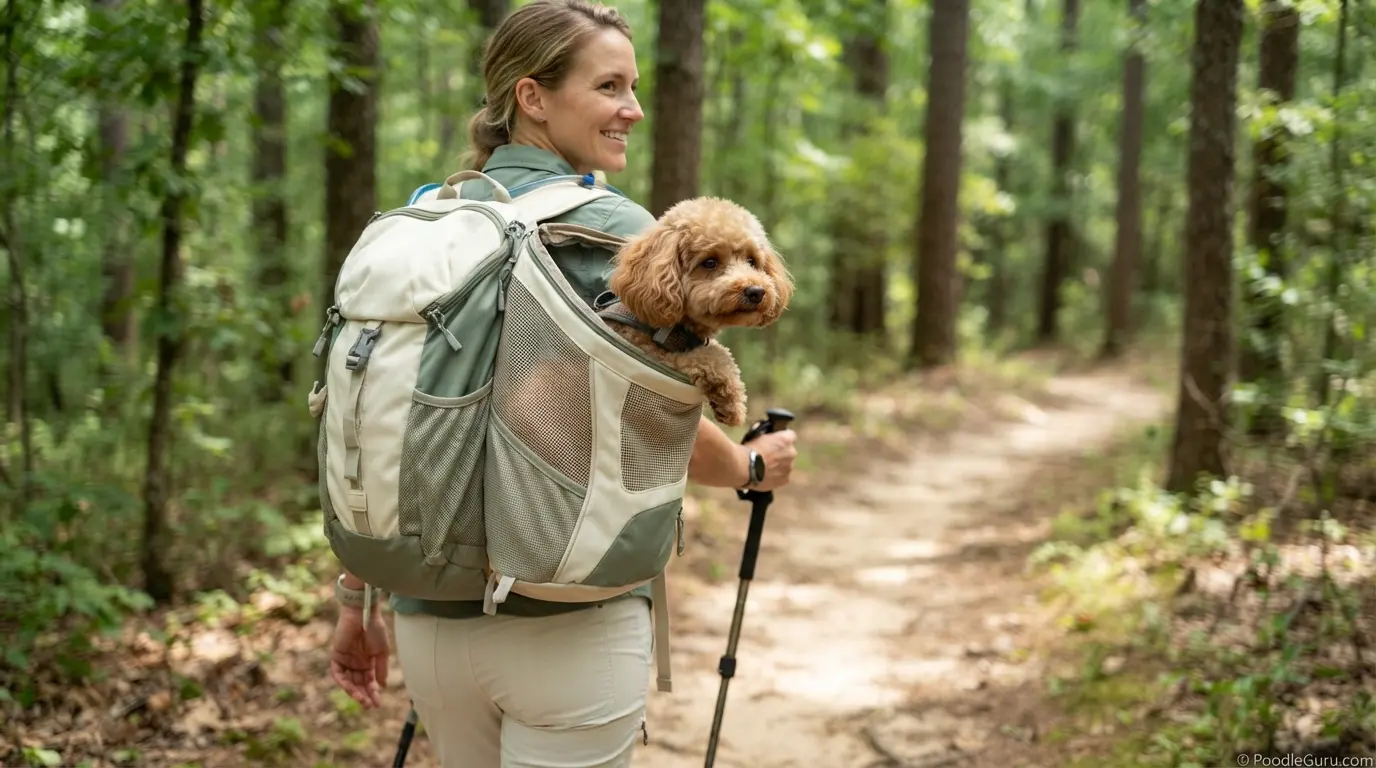
| Max Distance (fit adult) | 1–2 miles on foot; more in backpack | 3–5 miles | 5–10 miles |
| Terrain | Smooth, flat trails only | Moderate trails, gentle hills | Technical terrain, steep inclines |
| Paw Sensitivity | High — boots recommended on gravel | Moderate — boots for rocky trails | Moderate — boots for long descents |
| Heat Tolerance | Low; avoid temps above 75°F | Moderate; avoid midday heat | Moderate; watch for overheating on steep climbs |
| Backpack Carry? | Highly recommended for most hikes | Not usually needed | No — but carry a rescue sling for emergencies |
Before any hike, your poodle should be cleared by a veterinarian — especially if they are a senior, a puppy, overweight, recovering from injury, or have a history of joint, heart, breathing, or heat-sensitivity issues. Start slow. A 15-minute neighborhood walk this week is not the same as a 3-mile trail loop.
Pre-Hike Conditioning Plan: Build Trail Fitness Safely
Even naturally athletic poodles need a gradual build-up to avoid injury. Follow this 4-week plan to prepare your dog for longer trail adventures.
Week 1: Foundation Walks
Take three 20–30 minute walks on flat pavement or grass. Focus on a loose-leash walk and checking paw pads for tenderness afterward. Goal: establish baseline endurance and paw toughness.
Week 2: Introduce Inclines
Add short hills or stairs. Increase walk time to 30–40 minutes. Begin using your hiking harness and practice “leave it” and “watch me” on the move. Goal: build muscle for climbing without overdoing it.
Week 3: Trail Simulation
Visit an easy local trail with varied surfaces. Walk 45–60 minutes. Bring water and a collapsible bowl for mid-walk hydration breaks. Goal: test gear and build mental stamina for new environments.
Week 4: Dress Rehearsal
Complete a shorter version of your target hike. Pack everything you’ll bring, including first aid and extra water. Assess your poodle’s energy at the end — if they’re still bouncy, you’re ready for the real thing.
Conditioning Red Flag
If your poodle shows stiffness, limping, or excessive panting after any conditioning walk, scale back and rest an extra day. Poodles won’t always communicate their limits — you have to read their body.
The PoodleGuru Trail-Ready Checklist
At PoodleGuru, we evaluate readiness for every hike with five non-negotiable checks. Run through these before you load up the car.
Health & Mobility Check
No limping, no digestive upset within the last 48 hours, nails trimmed, paws free of cracks. Vet clearance for any dog with a previous injury or over 7 years old.
Gear Fit Test
Harness fits snugly (two fingers under straps). Boots stay on during a shake-off. ID tag is attached, and microchip info is current. Pack is loaded and balanced.
Weather & Terrain Match
Check temperature, humidity, and trail conditions. Postpone if it’s over 80°F for Toys, or if the trail is icy, muddy, or has known hazards like broken glass.
Emergency Prep
Carry a canine first-aid kit (self-adhesive bandage, antiseptic wipe, tweezers, vet wrap). Know the location of the nearest emergency vet to the trailhead.
Hydration & Fuel Ready
Carry enough clean water for the full outing, plus extra for heat, delays, and rinsing paws. Pack high-value, low-fat treats for energy and recall rewards.
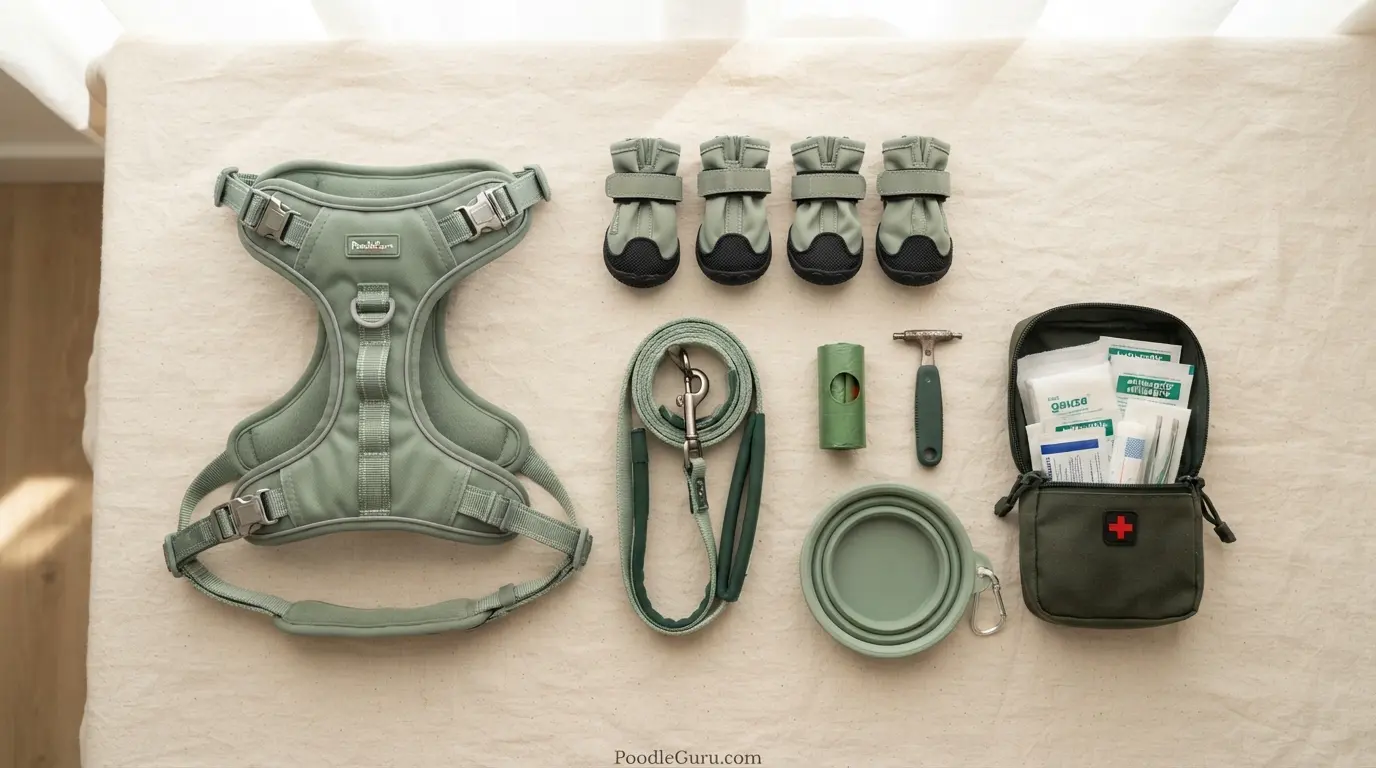
Essential Gear for Hiking with a Poodle
You don’t need a closet full of equipment, but the right tools make the difference between a joyful trek and a stressful one. Below are the must-haves, plus what to look for when choosing.
| Gear Item | Why Your Poodle Needs It | Recommended Criteria |
|---|---|---|
| Hiking Harness | Distributes pressure across the chest, not the neck. Provides a handle for lifting over obstacles. | Padded chest plate, reflective trim, sturdy D-ring, escape-proof design. |
| Dog Boots | Protects paw pads from hot surfaces, sharp rocks, ice, and trail salt. | Non-slip sole, breathable upper, secure Velcro straps, true to poodle’s narrow paws. |
| Collapsible Water Bowl | Lightweight, easy to pack, encourages frequent drinking. | Durable silicone, clip-on carabiner, holds at least 24 oz. |
| Hands-Free Leash | Keeps your hands free for trekking poles while maintaining control. | Bungee section to absorb pulls, waist belt, traffic handle for close passes. |
| Tick Removal Tool | Quick, safe tick removal without squeezing the body. | Fine-tipped tick twister or keychain tool; packed in first-aid kit. |
| Cooling Vest (for hot hikes) | Evaporative cooling helps prevent heat exhaustion in poodles with thick coats. | Lightweight, machine-washable, covers core without restricting movement. |
Choose gear that fits your poodle’s specific build. Toy Poodles need ultra-light options. Standard Poodles can handle sturdier materials. Prioritize safety and comfort over fashion.
Trail Safety: Hazards to Watch For
The trail is full of invisible risks for a dog. Here are the top concerns when hiking with a poodle, and how to handle each one.
- Overheating: Poodles can overheat quickly, especially dark-colored or thick-coated dogs in direct sun. Watch for heavy panting, bright red gums, and wobbliness. Stop, find shade, offer water, and wet the belly and paw pads.
- Paw injuries: Cuts from sharp rocks or glass, torn nails, and burns from hot surfaces are common. Carry a self-adhesive bandage and a boot to protect an injured paw until you can get to a vet. The VCA’s guide on paw pad injuries is a helpful reference.
- Wildlife & plants: Foxtails can burrow into ears and between toes. Snakes, skunks, and porcupines pose defensive risks. Keep your poodle on a leash and practice a solid “leave it” cue.
- Ticks & parasites: Check your poodle thoroughly after every hike — especially around the ears, collar, and between toes. Use a vet-recommended preventative.
- Water safety: Not every stream is safe to drink. Carry enough water for both of you, and don’t let your poodle drink from stagnant puddles. The AKC’s hiking tips remind owners to avoid blue-green algae in lakes.
Trail Emergency Kit Essentials
Pack these in a small waterproof bag: vet wrap, gauze pads, antiseptic wipes, tick remover, a vet-approved antihistamine only if your veterinarian recommends it, styptic powder for torn nails, and your vet’s phone number. It weighs less than a pound and can save a trip.
Post-Hike Care & Grooming
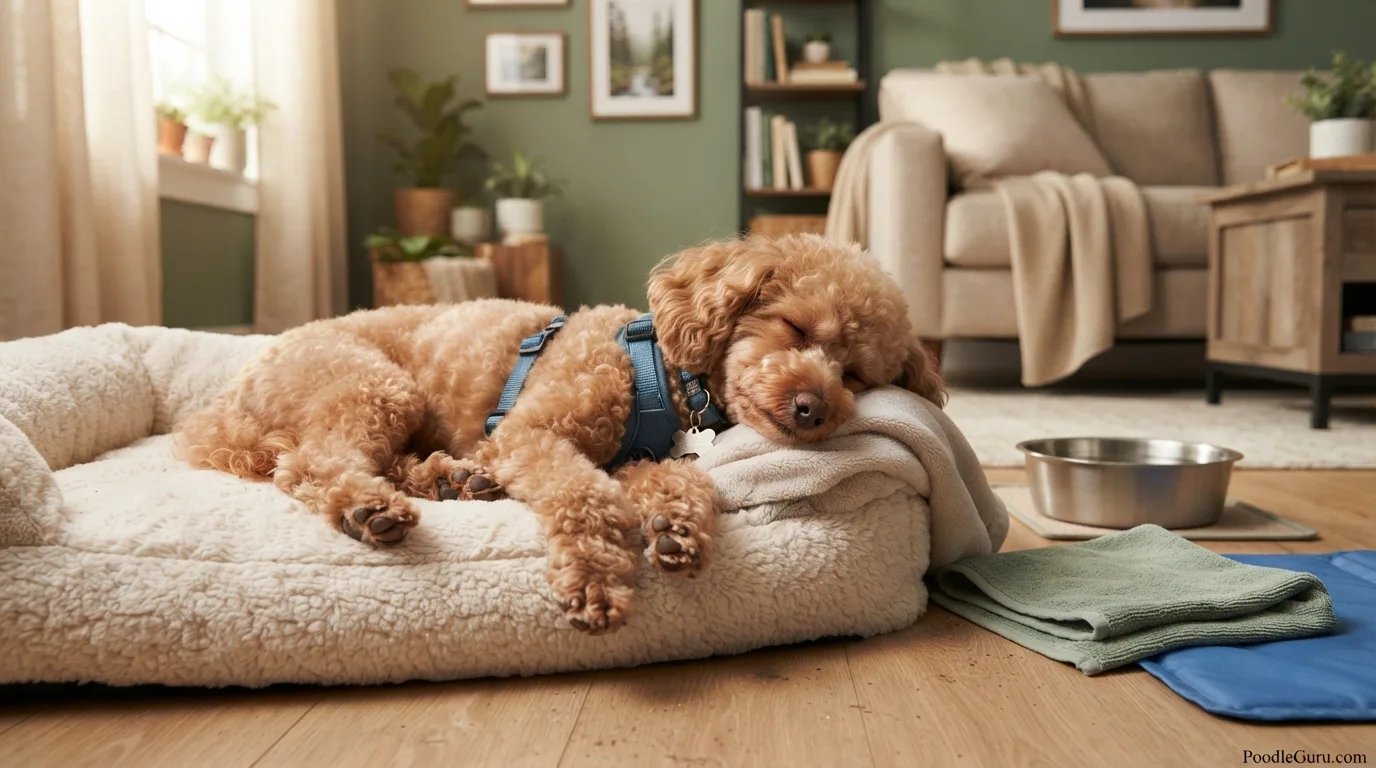
The work isn’t done when you reach the car. Poodles require immediate attention after a hike to prevent matting, hidden injuries, and discomfort.
Paw check: Inspect between toes and pads for foxtails, thorns, or cuts. Wipe paws with a damp cloth to remove trail salt and irritants.
Coat detangling: Run a wide-tooth comb through your poodle’s coat, especially behind the ears and under the legs where burrs and twigs collect. If your poodle got wet or muddy, rinse thoroughly and dry completely to avoid hot spots. Consider a sporting trim before hiking season to minimize this work.
Hydrate and rest: Offer small amounts of water frequently for the first hour, not a full bowl all at once. Feed a full meal only after your poodle has cooled down and rested; ask your veterinarian for specific timing if your Standard Poodle is at higher risk for bloat. Let your dog sleep; their muscles need recovery just like yours.
Common Mistakes to Avoid on the Trail
Even experienced owners make these missteps. Learn from them before you’re miles from the car.
| Mistake | Risk to Your Poodle | Better Approach |
|---|---|---|
| Skipping the warm-up | Strained muscles, reluctance to move, increased injury risk | Start with 10 minutes of easy walking on flat ground before climbing |
| Pushing too far, too soon | Exhaustion, heatstroke, soreness that lasts for days | Turn around when you’ve used half your water, not when the poodle is already dragging |
| Ignoring paw discomfort | Blisters, cuts, aversions to boots in the future | Check paws every mile; stop immediately if limping or licking occurs |
| Not bringing enough water | Dehydration, lethargy, dark urine, kidney strain | Carry at least 1 oz per pound of body weight for the planned hike length; then add 20% more |
| Letting the poodle drink from unknown water | Giardia, leptospirosis, toxin exposure | Pack all drinking water; use a portable water filter if you must refill from a natural source |
Owner Action Plan: Your First Hike with a Poodle
Ready to go? Follow this step-by-step plan for a safe, successful first hike.
Choose the Right Trail
Pick a trail under 3 miles, with minimal elevation gain and shaded sections. Check that dogs are allowed and the surface is poodle-paw-friendly (dirt or pine needle, not sharp gravel).
Pack the Night Before
Water, bowl, harness, leash, boots (just in case), first-aid kit, treats, poop bags, and your phone. Charge everything. A packed bag reduces morning stress.
Start Early
Hit the trail in the morning to avoid midday heat. Give your poodle a light bathroom break but no heavy meal for an hour before starting.
Monitor and Adjust
Stop for water every 20–30 minutes. Watch for excessive panting or slowing down. It’s okay to turn back early — the goal is a positive experience, not a distance record.
Celebrate and Recover
After the hike, praise your poodle, do a full body check, and provide a quiet, cool place to rest. A great first hike builds trust for a lifetime of trail adventures.
Frequently Asked Questions
Can Toy Poodles go hiking?
Yes, but usually for short, easy trails of 1–2 miles. Beyond that, most Toy Poodles do best in a well-ventilated dog backpack. Their tiny legs and sensitive paws tire quickly. Always carry water and watch for overheating.
How far can a Standard Poodle hike?
A fit, conditioned adult Standard Poodle can hike 5–10 miles on moderate terrain. Some can go further with proper training. Build distance gradually and watch for signs of fatigue, especially on rocky or steep descents.
Do poodles need boots for hiking?
Not on every trail, but boots protect paws from hot rocks, sharp gravel, ice, and trail salt. If you hike regularly on rough surfaces, boots are a worthwhile investment. Get your poodle used to them at home first.
What’s the best haircut for a hiking poodle?
A short, even “sporting clip” or “kennel clip” minimizes burrs, mud, and matting. Leave the coat about half an inch long for sun protection. Avoid fluffy cuts that collect debris and require detangling after every hike.
How do I keep my poodle cool on a hot hike?
Hike early in the morning, choose shaded trails, and use a cooling vest. Offer water every 20 minutes, and wet your poodle’s belly and paw pads if they start panting heavily. Above 80°F, keep Toy Poodles home.
Should I feed my poodle before a hike?
Avoid a full meal within an hour of starting. A small snack is fine. For Standard Poodles, large meals right before or immediately after vigorous exercise may increase bloat risk. Let your dog cool down first, and ask your veterinarian for a feeding schedule if your poodle is deep-chested or has previous digestive issues.
What should I do if my poodle gets injured on the trail?
Stop, assess the injury, and provide basic first aid. Carry a compact canine first-aid kit. For cuts, apply a self-adhesive bandage and protect the paw with a boot. If the dog can’t walk, use a rescue sling or carry them out. Know the nearest emergency vet.
Final Summary: Key Takeaways
Hiking with a poodle transforms a simple walk into a partnership. Keep these essentials in mind for every adventure:
- Match the trail to your poodle’s size: Standards can tackle miles of technical terrain; Toys thrive as backpack companions on longer hikes.
- Condition slowly: a 4-week ramp-up prevents injury and builds the muscles and paw toughness needed for real trails.
- The PoodleGuru Trail-Ready Checklist — health check, gear fit, weather match, emergency prep, hydration — should be completed before every hike.
- Essential gear includes a secure hiking harness, boots for rough terrain, a collapsible water bowl, and a hands-free leash; a first-aid kit is non-negotiable.
- Post-hike care prevents hidden problems: inspect paws, detangle the coat, and give plenty of rest and water.
- Listen to your poodle. Any sign of exhaustion, limping, or distress means it’s time to stop, rest, or turn back.
Next step: Get your poodle trail-ready with our complete grooming guide to choose the perfect active clip, and explore our nutrition fundamentals to fuel those long miles.