Poodle Ear Hematoma: Causes, Treatment & Recovery
Poodle ear hematoma swelling can appear suddenly as a puffy, warm lump on your dog’s ear flap. It is usually an aural hematoma — a blood-filled pocket that needs prompt veterinary attention. This guide covers what causes it, how vets treat it, and exactly what to expect during healing so you can help your poodle recover comfortably.
Quick Answer
A poodle ear hematoma is a collection of blood between the skin and cartilage of the ear flap, usually caused when repeated head shaking or scratching ruptures small blood vessels. It appears as a warm, soft, fluid-filled swelling that can make the ear feel thick and heavy. It is not usually a same-minute emergency, but it is painful and should be checked by a veterinarian promptly. Treatment may involve needle drainage, a temporary drain, or surgical repair, plus treatment for the underlying ear infection, allergy, mites, or irritation that triggered the shaking. Left untreated, the ear can heal with a thickened cauliflower-like deformity.
Medical Name
Aural hematoma — “aural” refers to the ear. It’s essentially a blood blister between the skin and cartilage of the pinna (ear flap).
Poodle Risk
Poodles with chronic ear infections, allergies, excess ear-canal hair, or trapped moisture are more prone because they shake and scratch more. Long, heavy ear hair can make shaking more forceful.
Pain Level
Moderate to severe. The pressure from the blood build-up is uncomfortable. Most poodles will hold the ear oddly and may shy away from touch.
What Is a Poodle Ear Hematoma?
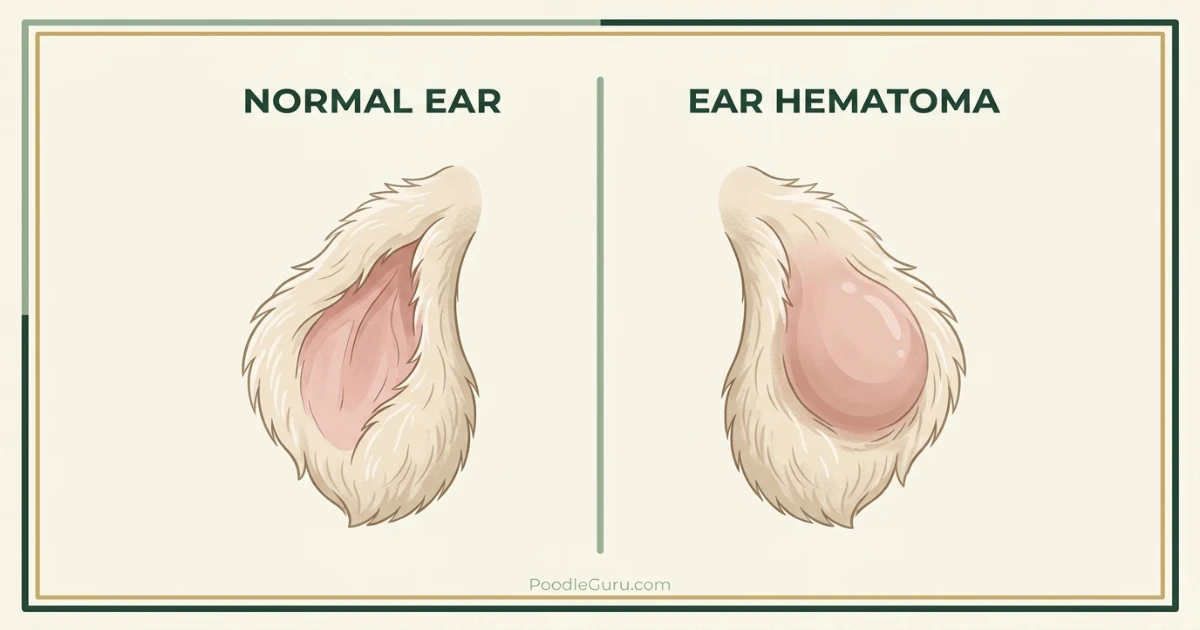
A poodle ear hematoma is a collection of blood that pools between the skin and the underlying cartilage of the ear flap after small blood vessels are damaged. For poodle owners, it appears as a soft, often rounded swelling that can develop within hours. The most important thing to understand is that the hematoma itself is rarely a stand-alone problem — it is usually a secondary result of head shaking or ear scratching, which points to a deeper ear issue that must also be diagnosed and treated. Without fixing the root cause, the hematoma can recur even after successful drainage.
Veterinary sources like VCA Animal Hospitals’ explanation of ear hematomas describe how head shaking or scratching can damage small blood vessels in the ear flap. The ear flap anatomy — tight skin over cartilage with little space for swelling — allows blood to collect as a tight, painful pocket.
Why Poodles Develop Ear Hematomas
Poodle ears are built for elegance, not for easy air circulation. Their drop ears, combined with hair that may grow inside the ear canal, can create a dark, moist environment where bacteria and yeast thrive. When infections, allergies, mites, moisture, or foreign material irritate the canal, the dog may shake its head hard enough to damage blood vessels in the ear flap. That shaking force is the biggest trigger.
Underlying Triggers
- Otitis externa (ear infection): Bacterial or yeast overgrowth is the most common cause. Redness, discharge, and odor are classic signs.
- Allergies: Both food and environmental allergies can cause intense itching inside the ears, leading to head shaking and scratching.
- Ear mites: More common in puppies or multi-pet households, mites cause severe itching.
- Foreign bodies: Foxtails or grass seeds can lodge in the ear canal and trigger frantic head shaking.
- Water in the ear: After swimming or baths, trapped moisture can macerate the skin and start an infection, especially in poodles with heavy hair in the ear canal.
Poodles who wear a longer ear style may be at slightly higher risk because the weight of the hair can add a minor traction force on the ear flap during shaking, but the underlying reason is almost always an irritated ear. If your poodle has been shaking its head more than normal for a few days, even without a visible hematoma, a vet check is wise. For more on routine ear hygiene, see our complete poodle grooming guide.
Poodle Ear Hematoma Signs: What It Looks and Feels Like
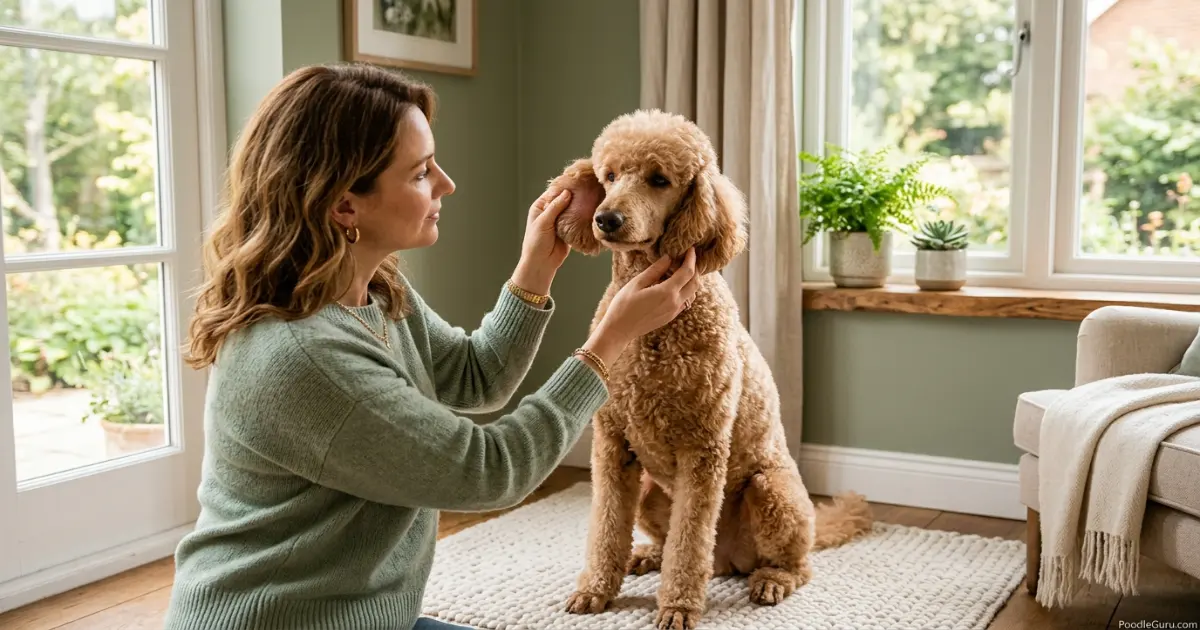
Most owners first notice the ear “looks thicker” or “feels like a water balloon.” The swelling might be at the tip of the ear or cover a large portion of the flap. It often feels warm and fluctuant — you can feel fluid shift when you gently press. The skin may be pink or slightly red, but it’s not an open wound. Over days, the blood starts to clot, and the swelling may become firmer. If left untreated for weeks, the body reabsorbs the blood unevenly, often leaving a crumpled, thickened “cauliflower ear” deformity.
- The swelling is growing rapidly (over hours).
- Your poodle is crying, yelping, or guarding the ear aggressively.
- You see any discharge, bad odor, or the ear flap is dark purple (possible blood supply issue).
- Your poodle suddenly seems lethargic, won’t eat, or has a fever.
- The hematoma has burst — though rare, an open wound needs immediate cleaning and antibiotics.
Poodle Ear Hematoma Diagnosis and Treatment Options
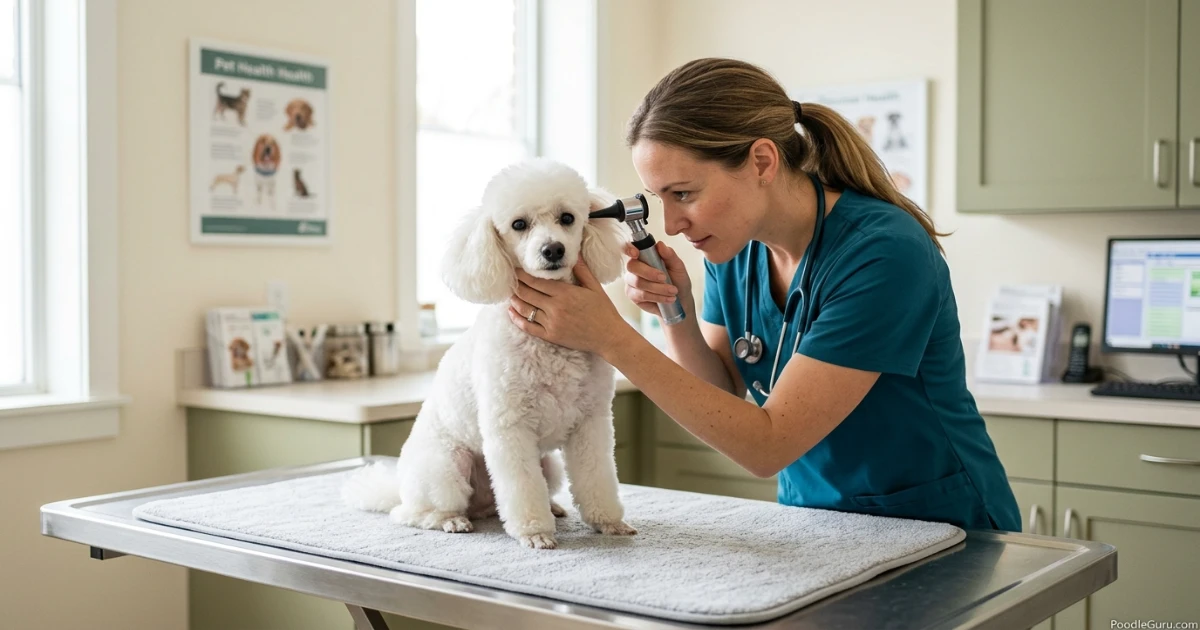
Your vet will examine the ear flap and also use an otoscope to look deep into the ear canal. They’ll likely take a sample of any debris to check for bacteria, yeast, or mites. The hematoma itself is usually diagnosed just by appearance and feel. The vet will then recommend one of three paths based on the size, age, and discomfort level.
1. Needle Aspiration
A needle is inserted to draw out the fluid. This provides immediate relief but has a high chance of refilling within 24–48 hours because the space remains and bleeding can continue. It may be paired with a steroid injection into the pocket to reduce inflammation. This option is sometimes used for very small, fresh hematomas or in dogs where anesthesia is risky.
2. Surgical Drainage or Drain Placement
The most definitive treatment. Under sedation or anesthesia, the vet makes a small incision, drains the blood, removes clots, and often places a temporary drain (a small rubber tube) to allow ongoing fluid to escape while the ear heals from the inside out. The incision is left open to heal by granulation. Surgery significantly reduces the chance of refilling and the risk of cauliflower ear deformity. It’s the preferred method for large, painful hematomas.
3. Medical Management Alone
If the hematoma is small and the poodle is not in significant pain, some vets will treat the underlying ear infection aggressively and allow the hematoma to slowly reabsorb on its own. This takes weeks and carries the highest risk of permanent ear deformity, but avoids anesthesia. It’s rarely recommended for poodles because the curled ear cartilage often heals lumpy.
Surgery vs. Drainage vs. Natural Healing: A Comparison
| Treatment | Procedure | Pros | Cons | Recovery Time |
|---|---|---|---|---|
| Needle Aspiration | Fluid withdrawn with a needle, +/- steroid injection | Quick relief, no sedation needed | Often refills because the pocket remains; repeated needle attempts can increase infection risk | Days if successful, but often requires re-treatment |
| Surgical Drainage | Small incision, drain placed, clots removed under sedation | Lowest recurrence, best cosmetic outcome | Requires anesthesia; post-op bandaging and e-collar needed | 2–4 weeks for full skin healing, drain removed in 1–2 weeks |
| Natural Reabsorption | Treat ear infection, no direct intervention on hematoma | Avoids anesthesia and procedure cost | Longer discomfort; higher risk of thickened or cauliflower-like ear; may still need later vet treatment | Weeks to months; deformity is permanent |
Needle aspiration may cost about $50–$150 per attempt. Surgical repair with anesthesia often runs about $350–$800, depending on location, hematoma size, anesthesia needs, clinic pricing, and follow-up care. Treating the underlying ear infection, allergy, or mites adds additional expense.
Poodle Ear Hematoma Recovery and Home Care After Treatment
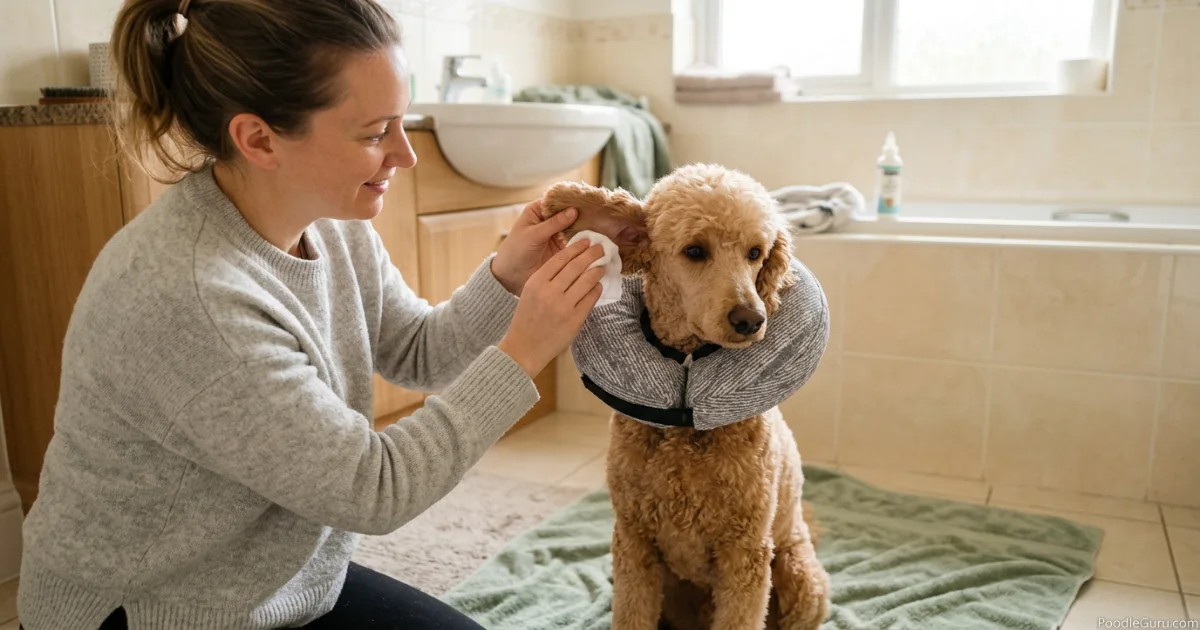
Healing a poodle ear hematoma takes patience. The goal is to let the ear flap drain and dry while preventing reinjury. Most dogs go home with an Elizabethan collar (e-collar) that must stay on until the ear is fully healed — usually 10–14 days. Poodles are clever about removing cones, so make sure it’s fitted snugly. Use a soft e-collar for comfort if your vet approves.
Daily Wound Care
- Keep the incision open: You may be instructed to gently clean around the drain or incision site with a damp, clean cloth or vet-recommended antiseptic solution. Do not scrub.
- Prevent head shaking: The e-collar helps, but make sure your poodle is also on medication for the underlying ear problem. If the infection isn’t controlled, the urge to shake will persist and disrupt healing.
- Check for signs of infection: Watch for increased redness, pus, foul smell, or the ear flap feeling hotter than before. These warrant a recheck.
Pain Management
Your vet will prescribe dog-safe pain relief and possibly anti-inflammatories. Never give human painkillers — ibuprofen and acetaminophen can be dangerous for dogs. The first 48 hours after treatment are often the most uncomfortable; after that, comfort usually improves as pressure is relieved and the ear begins to heal.
The PoodleGuru Ear Health Monitoring Framework
At PoodleGuru, we recommend a simple weekly ear check for all poodles — especially those with drop ears or a history of ear issues. Catching an ear infection early can prevent the head shaking that leads to a hematoma.
Look Inside Once a Week
Gently lift the ear flap and look at the opening of the ear canal. Healthy ears are pale pink, dry, and odorless. Redness, dark debris, or a yeasty smell signals an early infection. Use a flashlight if needed. This check takes 10 seconds.
Touch the Ear Flap Gently
Feel both ear flaps. They should be thin, supple, and cool. Any thickening, warmth, or squishiness — even subtle — should prompt a closer look. Early hematomas can feel like a tiny puffy spot before expanding.
Monitor Head Shaking
Occasional head shakes are normal. More than 3–4 shakes in a row or frequent shaking throughout the day is not. If you notice increased head shaking, pair it with an ear examination. Early intervention with a vet-prescribed ear cleaner can prevent escalation.
Keep a Grooming Log
Note when ears were last plucked, cleaned, or when you noticed any redness. Poodles with chronic ear problems benefit from tracking these events. If infections recur more than twice in six months, ask your vet about allergy testing or a food trial.
Preventing Recurrence: Fix the Root Problem
A hematoma will return if the underlying ear disease isn’t managed. After your poodle has healed, commit to an ear care routine that keeps the canals dry and free of excess hair.
Regular Ear Cleaning
Use a veterinarian-recommended ear cleaner — never rubbing alcohol or hydrogen peroxide. Follow your vet’s label directions, gently massage the base of the ear if instructed, then let your poodle shake out loosened debris. Wipe the outer flap and canal opening with cotton or gauze. For poodles prone to infections, your vet may recommend weekly cleaning; for others, cleaning after baths or swimming may be enough.
Ear Plucking: Yes or No?
Some groomers routinely pluck hair from the ear canal. This can be appropriate for poodles with very hairy ear canals that trap moisture, but over-plucking can cause inflammation that mimics infection. Discuss with your vet whether your poodle’s ears need plucking and how often. In many cases, keeping the hair trimmed around the ear opening is enough.
Allergy Management
If allergies are the root cause, long-term strategies like hypoallergenic diets, fatty acid supplements, or allergy immunotherapy can dramatically reduce ear problems. Our poodle health guide explores breed-specific allergies in more detail.
After every bath or swim, dry your poodle’s ears thoroughly. Use a cotton ball to absorb any visible moisture at the canal opening. You can also ask your vet about a drying ear solution to use after water exposure.

Frequently Asked Questions
Will a poodle ear hematoma go away on its own?
Small hematomas may slowly reabsorb over weeks, but the ear cartilage often heals with a thickened, cauliflower-like deformity. Larger hematomas rarely resolve without intervention and cause prolonged pain. Veterinary treatment leads to better cosmetic and comfort outcomes.
Is an ear hematoma an emergency?
Not typically a midnight emergency, but it should be seen within 24–48 hours. If the swelling is rapidly expanding, the ear is dark purple, or your poodle is in severe pain, seek emergency care. Delaying treatment can lead to permanent ear disfigurement.
Can I drain my poodle’s ear hematoma at home?
No. Needle drainage without sterile technique can introduce infection. The fluid will almost certainly refill because the space and bleeding vessel remain. Only a veterinarian should drain a hematoma, and surgical intervention is often needed for lasting results.
How long does it take for a poodle’s ear hematoma to heal after surgery?
The ear flap incision heals in 2–4 weeks. The drain is usually removed after 1–2 weeks. During this time, an e-collar must stay on to prevent pawing. The ear may feel slightly thicker permanently, but normal shape returns in most cases.
Why did my poodle get an ear hematoma after grooming?
If the groomer plucked ear hair or cleaned the ears, it may have caused temporary irritation, triggering head shaking. If an underlying mild infection was already present, the manipulation could have exacerbated it. Discuss ear plucking frequency with your vet.
How much does ear hematoma surgery cost for a poodle?
In 2026, surgical repair often ranges from about $350 to $800, depending on geographic location, hematoma size, anesthesia needs, clinic pricing, and whether a specialist performs the procedure. Ear infection treatment, medications, and extra follow-up may increase the total.
Can a poodle ear hematoma lead to deafness?
The hematoma itself does not cause deafness because it affects the ear flap, not the middle or inner ear. However, untreated ear infections that triggered the hematoma can potentially damage the eardrum and lead to hearing loss over time. Prompt treatment protects hearing.
Key Takeaways
A poodle ear hematoma is painful but treatable when the swelling and the root ear problem are managed together. Here’s what matters most:
- A hematoma is a blood-filled pocket on the ear flap caused by head shaking or scratching — the shaking itself is usually from an underlying ear infection or allergies.
- Surgical drainage with a drain or incision provides the best long-term cosmetic outcome and lowest risk of refilling; needle aspiration alone often fails.
- An e-collar is non-negotiable during recovery to prevent the poodle from re-injuring the healing ear.
- The PoodleGuru Ear Health Monitoring Framework (weekly ear checks, palpation, tracking head shaking) helps catch early infections before they cause hematomas.
- Addressing the root cause — whether infection, allergies, or ear canal hair — is the only way to prevent recurrence.
- Even after successful treatment, some ear thickening may remain; with proper care, poodles adapt well and pain resolves completely.