Poodle Heartworm Symptoms: Signs, Prevention & Vet Care
Heartworm disease can be silent in early stages, can become life-threatening, and is strongly preventable with consistent vet-prescribed protection. Yet too many poodle owners underestimate the risk — assuming small indoor dogs are automatically safe. They are not. Mosquitoes can get indoors, and symptoms often appear only after damage has begun. This guide explains exactly what poodle heartworm symptoms look like, why annual testing matters, and how to build a prevention routine that protects your poodle for life.
Quick Answer: What Are Poodle Heartworm Symptoms?
In the early stages, poodle heartworm symptoms are often absent — that is what makes this disease so dangerous. As infection progresses, you may notice a soft dry cough, reduced exercise tolerance, faster breathing, tiredness after mild activity, or subtle weight loss. Advanced disease can cause labored breathing, a swollen belly from fluid accumulation, fainting, pale or bluish gums, collapse, or dark urine in life-threatening caval syndrome. Because symptoms can be delayed or mistaken for other conditions, annual heartworm testing and consistent prevention matter far more than “waiting to see signs.”
🦟 Mosquito Transmission
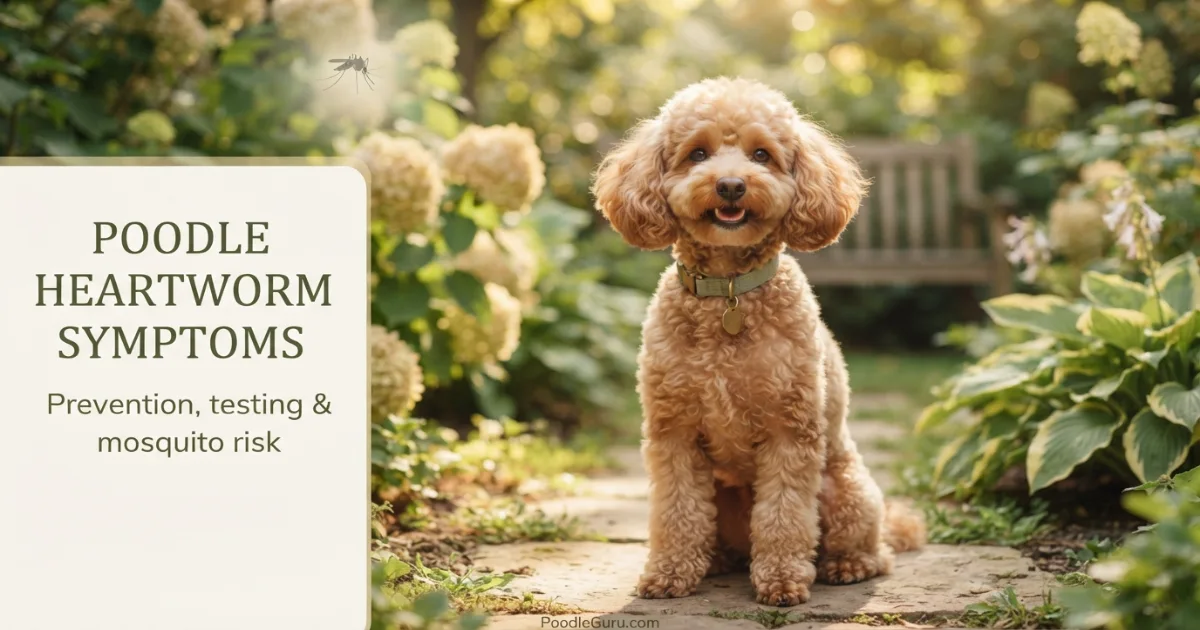
Heartworm spreads exclusively through infected mosquito bites. One bite is all it takes. Even indoor poodles are vulnerable — mosquitoes get inside.
⏳ Silent Progression
It takes about 6 months after infection for heartworms to mature and show up on tests. During that time, your poodle may show zero symptoms.
✅ Highly Preventable
Vet-prescribed preventives are highly effective when given correctly and on schedule. They are not a replacement for annual testing, because missed, late, vomited, or rubbed-off doses can leave a gap.
What Is Heartworm Disease in Poodles?
Heartworm disease is a serious parasitic condition caused by Dirofilaria immitis, a roundworm transmitted through infected mosquito bites. For poodle owners, this means even a Toy Poodle living mostly indoors can still face risk if mosquitoes enter the home. The most important thing to understand is that heartworm prevention is usually simple when prescribed by a veterinarian, while treating an established infection is far more difficult, costly, and physically demanding for the dog.
Once inside a dog’s body, heartworm larvae migrate through tissues and eventually mature into adult worms that live mainly in the pulmonary arteries and can affect the heart and surrounding blood vessels. The damage accumulates silently. By the time a poodle shows heartworm disease symptoms, the infection may already be advanced.
Poodles are not genetically predisposed to heartworm in the way some breeds are to other conditions, but size still matters clinically. Toy and Miniature Poodles have smaller blood vessels and heart chambers, so they may tolerate fewer worms before serious vessel damage, breathing difficulty, or blockage develops.
How Poodles Get Heartworm
The transmission chain is simple: mosquito bites an infected dog (or coyote, fox, or wolf), picks up microscopic baby heartworms, then bites your poodle, depositing larvae onto the skin. The larvae enter through the bite wound and begin their journey.
Your poodle does not need to wrestle with wildlife or roam in the woods. A few minutes on a patio at dusk, an unscreened window, or a walk through a park where infected mosquitoes are present can create exposure. Risk varies by region and season, but mosquito seasons are changing, warm spells happen, and some mosquitoes can survive indoors. Your veterinarian is the best person to advise whether year-round prevention is needed in your area.
No poodle lifestyle is completely zero-risk. Owners often assume “indoor only” means safe, but mosquitoes can enter through doors, windows, vents, and screens. A late or missed preventive dose can create a vulnerability window, so prevention needs a reliable calendar habit rather than guesswork.

Poodle Heartworm Symptoms: Early vs. Late Signs
Poodle heartworm symptoms follow a predictable progression — but the early stage is often completely symptom-free. Understanding what to watch for (and when to stop watching and start testing) is critical.
Early Stage (Often Missed)
In the initial months after infection, your poodle will likely seem perfectly normal. The larvae are migrating but haven’t yet reached the heart or lungs. Some dogs develop a very mild, occasional cough that owners brush off as allergies or a collar tug. Others show slightly reduced stamina during play. For a poodle that normally zooms around the house, a subtle drop in energy can be the only clue — and it’s easy to miss entirely.
Moderate Stage (The First Noticeable Signs)
As worms mature and occupy heart chambers and pulmonary vessels, symptoms become more distinct. A persistent dry cough — especially after mild activity or at night — is a common first reliable sign. Your poodle may tire more quickly on walks. Some dogs lose weight despite a normal appetite. You might notice slightly faster or more labored breathing. These poodle heartworm symptoms overlap with many other conditions, which is why diagnostics are essential.
Advanced Stage (Medical Emergency)
Severe infections cause profound damage. The cough worsens and may produce blood-tinged sputum. Breathing becomes labored even at rest. Fluid accumulates in the abdomen, creating a swollen, pot-bellied appearance. Some poodles experience fainting spells (syncope) due to blocked blood flow. In the most critical cases — caval syndrome — worms physically obstruct the heart’s chambers, causing sudden collapse, pale gums, and dark-colored urine. This is a surgical emergency with a guarded prognosis.
Stages of Heartworm Disease in Poodles
| Stage | Symptoms | Internal Damage | Veterinary Action |
|---|---|---|---|
| Stage 1 (Mild) | No visible signs or very mild, occasional cough | Worms present but minimal arterial changes | Confirm with testing; begin treatment protocol |
| Stage 2 (Moderate) | Persistent cough, exercise intolerance, subtle weight loss | Pulmonary artery inflammation, early lung tissue changes | Chest X-rays; stabilize then start adulticide treatment |
| Stage 3 (Severe) | Labored breathing, visible weight loss, fainting possible, pot-bellied appearance | Significant heart and lung damage, reduced organ perfusion | Hospitalization, careful stabilization, extended treatment |
| Stage 4 (Caval Syndrome) | Sudden collapse, pale gums, dark urine, weak pulse | Worms physically blocking heart chambers — life-threatening | Emergency surgical removal of worms; high risk |
Why Prevention Matters More for Poodles
All dogs need heartworm prevention, but poodles face specific considerations that make consistent protection especially important. Their compact cardiopulmonary anatomy leaves less room for error. And because poodles are notoriously stoic about discomfort, they often mask symptoms until the disease is well advanced.
Toy and Miniature Poodles have relatively small heart chambers and pulmonary vessels. A worm burden that would cause only moderate symptoms in a Standard Poodle or larger breed can create significant obstruction in a 6-pound Toy. The math is simple: smaller plumbing, bigger consequences from the same number of worms.
Additionally, poodles’ thick, curly coats can make subtle body condition changes harder to spot. Weight loss that would be obvious on a short-coated breed can hide under that beautiful fluff. By the time you feel the difference, the infection may have progressed. Routine screening picks up what the eye can’t see — and what the poodle won’t show.
Heartworm Prevention Methods: What Poodle Owners Need to Know
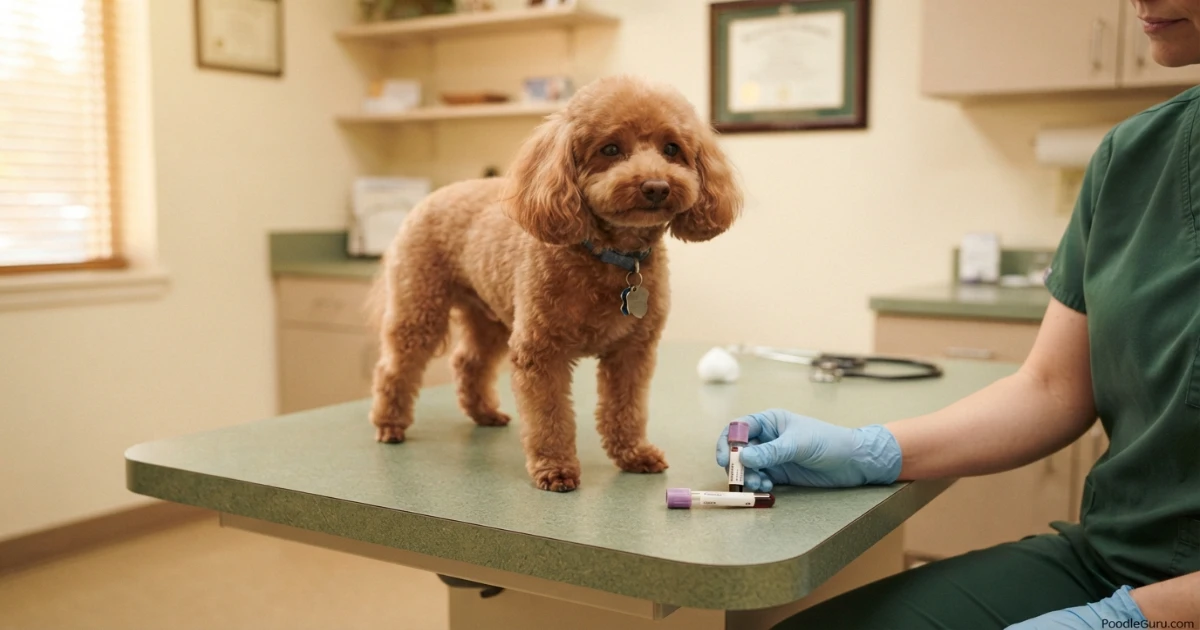
Modern heartworm preventives are highly effective and available in several forms. The right choice depends on your poodle’s size, health history, regional exposure risk, and your ability to stick to a schedule. The American Heartworm Society emphasizes annual testing even for dogs on year-round prevention, because products are highly effective but not perfect. Below is a practical comparison of the main options for poodle owners.
| Method | How Often | Best Suited Poodle Sizes | Key Advantage | Key Drawback | Avg Monthly Cost (2026) |
|---|---|---|---|---|---|
| Oral Chewable | Monthly | All sizes — dosing by weight | Easy to give; many poodles take it as a treat | Must be given on schedule; missing a dose leaves gap | $8–$18 |
| Topical Liquid | Monthly | All sizes — applied to skin | Good for poodles who refuse oral meds | Can be messy; must ensure full absorption before bathing | $10–$22 |
| Injectable (ProHeart) | Every 6 or 12 months | Standard, Miniature; sometimes Toy (vet decision) | No monthly doses to remember — excellent for busy owners | Requires vet visit; injection site reactions possible | $50–$120 per injection |
Cost ranges reflect general market prices and will vary by region and veterinary practice. For Toy Poodles especially, accurate weight measurement at the vet’s office is essential — dosing errors from guessing weight can compromise protection.
The PoodleGuru Heartworm Prevention Consistency Framework
At PoodleGuru, we evaluate heartworm protection not by which product you choose, but by how reliably you use it. This three-part framework helps poodle owners build a sustainable prevention habit.
1. System Reliability
Choose the method you’re most likely to use on time, every time. If you travel frequently, a 6-month injectable might be more reliable than monthly chews. If your poodle spits out pills, topical may work better. Honest self-assessment matters more than product features.
2. Reminder Redundancy
Use at least two reminder systems. A phone calendar alert paired with a physical sticker on your fridge or a recurring delivery subscription makes missing a dose far less likely. Single reminders fail; dual systems stick.
3. Testing Cadence
Test annually as the standard routine. Even with consistent prevention, annual testing confirms the prevention plan is working. No preventive is 100% effective, and missed, late, vomited, or rubbed-off doses can happen. Testing catches problems before symptoms become obvious.
What Happens If a Poodle Tests Positive
A positive heartworm test is frightening, but it is not an automatic death sentence — especially if caught early. Your veterinarian will confirm the diagnosis and stage the disease before choosing a treatment plan. Standard adult heartworm treatment commonly involves melarsomine, an arsenical medication given by deep injection to kill adult worms. The protocol can span several months and requires strict exercise restriction because dying worms can trigger dangerous lung complications.
For poodles, the exercise restriction piece can be especially challenging. A bored Toy or Miniature Poodle confined for weeks may become anxious, vocal, or restless, so enrichment must be calm and vet-approved. Your vet may also prescribe anti-inflammatory medication and doxycycline to reduce complications linked to Wolbachia, a bacterial organism associated with heartworms.
Treatment cost varies widely depending on your poodle’s size, disease stage, and geographic location, but a full adulticide protocol often ranges from $1,200 to $3,000 or more when diagnostics, hospitalization, and follow-up care are included. For perspective, a year of monthly preventive usually costs between $96 and $264. The math speaks for itself.
Owner Mistakes That Increase Heartworm Risk
| Mistake | Why It’s a Problem | Correct Approach |
|---|---|---|
| Skipping winter doses | Mosquitoes survive indoors; warm spells reactivate outdoor activity | Maintain year-round prevention regardless of season |
| Assuming indoor poodles are safe | Mosquitoes enter through doors, windows, and screens | Treat all poodles — indoor and outdoor — equally |
| Relying on natural remedies | Garlic, essential oils, and herbal “preventives” have zero proven efficacy | Use only FDA-approved preventives prescribed by your vet |
| Testing only when symptoms appear | By then, the disease is advanced and harder to treat | Schedule annual testing on a fixed date, like a birthday month |
| Guessing weight for dosing | An underdosed poodle isn’t protected; an overdosed one may have side effects | Weigh your poodle accurately at the vet when obtaining preventives |
🩺 When to Call Your Veterinarian Immediately
- Your poodle develops a persistent cough that lasts more than a few days
- You notice labored breathing, especially at rest
- Your poodle faints, collapses, or seems suddenly weak
- Gums appear pale, gray, or bluish
- Belly appears distended or swollen without weight gain elsewhere
Even if you’ve been giving prevention consistently, don’t ignore these signs. Breakthrough infections are rare but possible, and other serious conditions can mimic heartworm symptoms. A veterinarian evaluation is the only way to be sure.
Your Poodle’s Heartworm Prevention Action Plan
Use this simple 5-step plan to lock in protection for your poodle starting today. It’s designed to be realistic — not aspirational — so you can actually follow through.
Get Tested First
If your poodle is 7 months or older and has not had a heartworm test in the last 12 months, schedule one before starting or resuming prevention. Preventives do not kill adult heartworms, and giving prevention without testing after a lapse can be unsafe if adult infection or microfilariae are present.
Choose Your Prevention Method With Your Vet
Discuss the oral, topical, or injectable options based on your poodle’s size, health history, and your lifestyle. Let your vet confirm the correct weight-based dose — don’t estimate.
Set Two Reminders
Add a recurring monthly calendar alert on your phone. Place a visible note on your refrigerator or bathroom mirror. If your poodle visits a groomer regularly, coordinate the prevention schedule with grooming appointments so one triggers the other.
Keep a Simple Dose Log
Record each dose — date, product used, and any observations. A dedicated notebook page or a notes app entry works fine. This log is invaluable if you ever need to prove protection history or if a dose is questioned.
Schedule Next Year’s Test Now
Book your poodle’s next annual heartworm test before leaving the vet’s office. Treat it like your own annual physical — it’s a fixed date, not a maybe. Pair it with a wellness exam for efficiency.
Frequently Asked Questions About Poodle Heartworm
What are the first signs of heartworm in poodles?
Early poodle heartworm symptoms are often absent. When signs do appear, a mild dry cough — especially after exercise or at night — is most common. Some dogs show slightly reduced energy or subtle weight loss. Because these signs are easy to dismiss, annual testing is essential even for symptom-free poodles.
Can indoor Toy Poodles get heartworm?
Absolutely. Mosquitoes easily enter homes through open doors, unscreened windows, and small gaps. An indoor-only lifestyle significantly reduces but does not eliminate risk. Veterinary organizations universally recommend heartworm prevention for all dogs, regardless of indoor/outdoor status.
How often should my poodle be tested for heartworm?
Annual testing is the standard recommendation. Even if you never miss a preventive dose, yearly testing confirms the prevention is working and catches any breakthrough infection early. Puppies under 7 months can start prevention without an initial test, but should be tested 6 months later.
Are heartworm preventives safe for poodles?
Yes, FDA-approved heartworm preventives have an excellent safety record when used at the correct weight-based dose. Poodles, including Toy varieties, tolerate them well. Side effects, when they occur, are typically mild and short-lived — gastrointestinal upset or temporary lethargy. Serious adverse reactions are rare.
What happens if I miss a monthly heartworm dose?
Give the missed dose immediately and resume your normal schedule. Contact your veterinarian — they may recommend a heartworm test 6 months later to check for infection during the gap. A single missed dose creates a window of vulnerability, so treat it seriously and don’t let it become a pattern.
Can heartworm disease be cured in poodles?
Yes, but treatment is intensive. It involves injections to kill adult worms, strict exercise restriction, and sometimes additional medications. The earlier it’s caught, the safer and more successful treatment is. Severe cases with caval syndrome require emergency surgery and carry a significantly higher risk.
How much does heartworm prevention cost vs. treatment?
Monthly oral or topical preventives typically cost $96–$264 per year, depending on product and size. Treatment for an established infection often ranges from $1,200 to over $3,000, not including the stress and risk to your poodle’s health. Prevention is overwhelmingly the better financial and medical choice.
Key Takeaways: Protecting Your Poodle From Heartworm
Heartworm disease is a preventable tragedy. Here’s what every poodle owner needs to remember:
- Poodle heartworm symptoms often remain hidden until the disease is advanced — persistent cough, exercise intolerance, and weight loss are red flags, but screening catches infection earlier.
- Heartworm is transmitted only by mosquito bites, and even indoor Toy and Miniature Poodles are at risk year-round in most regions.
- Vet-prescribed preventives — oral, topical, or injectable — are highly effective when used correctly and consistently. The best method is the one you can follow reliably under your veterinarian’s guidance.
- Annual heartworm testing is non-negotiable, even if you’ve never missed a dose. It’s the only way to confirm protection and catch breakthrough infections.
- Treatment for heartworm disease is expensive, lengthy, and physically hard on your poodle — costing 10 to 20 times more than a year of prevention.
Next step: If your poodle isn’t currently on heartworm prevention, schedule a vet visit this week for testing and a prescription. If you’re already preventing, double-check your dose schedule and confirm your next annual test is booked. A few minutes of planning now can save your poodle months of suffering later. For more on keeping your poodle healthy, see our complete poodle health issues guide.