Poodle Lifetime Cost Calculator
Poodle lifetime cost calculator: estimate what a Toy, Miniature, Moyen, or Standard Poodle may cost in the first year, per month, per year, and across its full life. Adjust the estimate by size, location, breeder vs adoption, grooming style, food tier, and pet insurance.
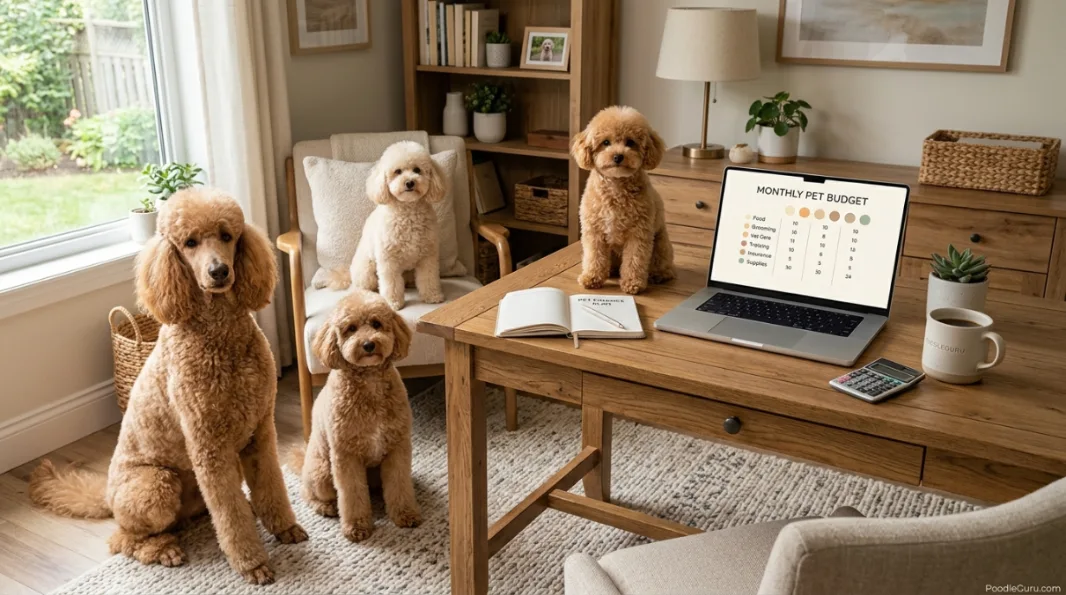
Estimate Your Poodle’s First-Year, Monthly, Yearly, and Lifetime Cost
This calculator is built for realistic planning. It separates one-time startup costs from recurring care, then adjusts the total for poodle size, local pricing, grooming, food quality, and insurance. Use it as a budgeting range, not a fixed quote.
Choose your poodle plan
Change any option and press calculate. The result updates with a line-by-line breakdown.
Calculator methodology uses planning ranges from dog ownership cost resources, poodle size/lifespan guidance, grooming assumptions, and current dog insurance averages. Always confirm breeder, rescue, groomer, clinic, and insurer pricing in your area.
How Much Does a Poodle Cost?
A poodle can cost about $1,800–$5,000+ in the first year and roughly $1,200–$3,200 per year afterward, depending on size, grooming, food, location, vet care, and insurance. Across a full lifetime, many owners should plan for approximately $18,000–$45,000+. A low-cost adoption plus DIY grooming can keep the total lower, while a Standard Poodle from a breeder with professional grooming and full insurance can sit near the higher end.
The purchase price is only the beginning. Poodles need regular coat care, preventive vet visits, parasite prevention, dental care, training, food, toys, supplies, and either pet insurance or a serious emergency fund. This is why the best way to budget is to split the total into three buckets: first-year costs, ongoing yearly costs, and unexpected emergency costs.
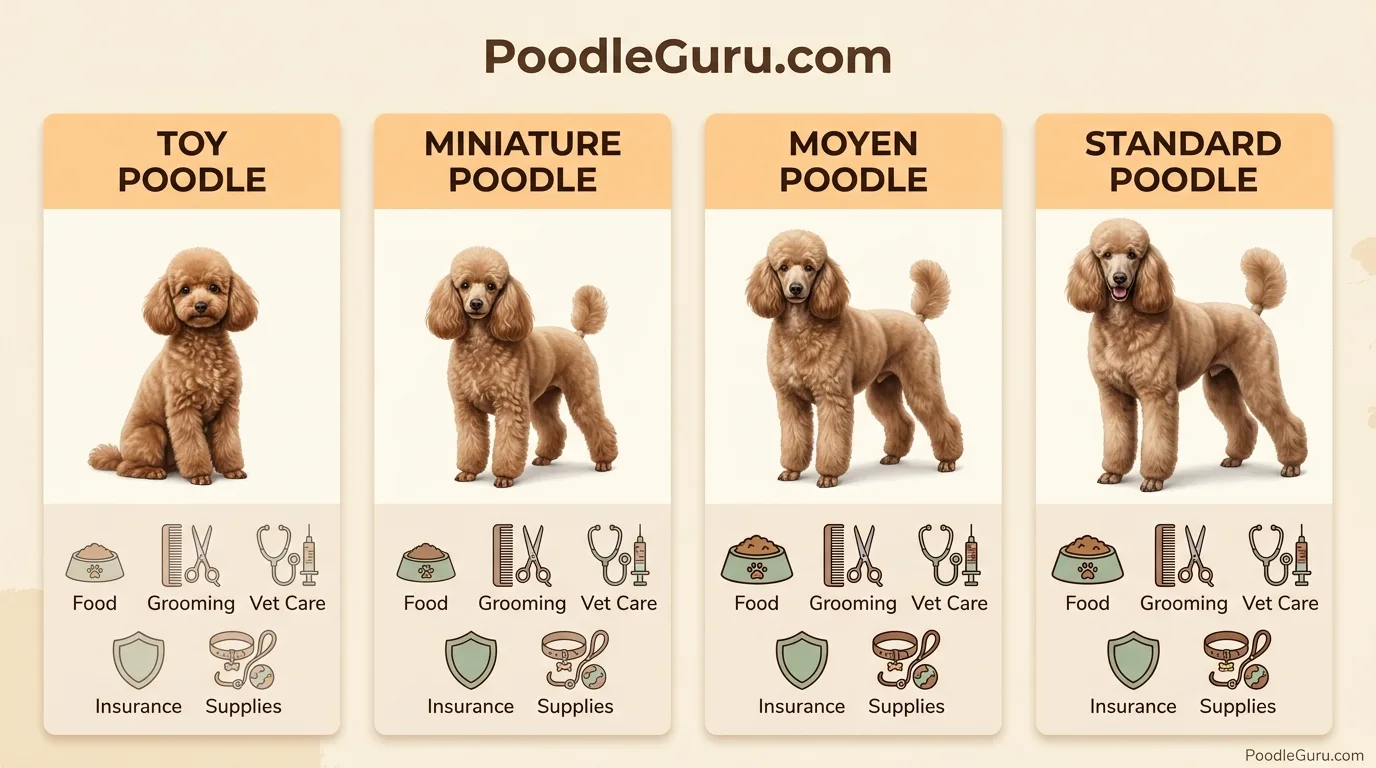
Poodle Cost by Size: Toy vs Miniature vs Moyen vs Standard
Size changes nearly every part of the budget. Larger poodles usually cost more to feed, groom, insure, board, and medicate. Smaller poodles usually cost less per month, but they often live longer, so the lifetime total can be closer than the yearly number suggests.
| Poodle size | Typical cost pattern | Biggest expense drivers | Best budgeting note |
|---|---|---|---|
| Toy Poodle | Lower monthly cost, longer lifetime planning window | Dental care, grooming frequency, small-dog vet needs | Low food cost helps, but long lifespan means many years of care. |
| Miniature Poodle | Moderate monthly cost and usually a balanced budget | Grooming, preventive vet care, training, insurance | Often the easiest size to budget for families and apartment owners. |
| Moyen Poodle | Mid-to-high cost depending on breeder and grooming | Purchase price, grooming, food, exercise needs | Moyen/Klein availability can affect breeder price and travel cost. |
| Standard Poodle | Highest yearly cost because of body size and coat volume | Food, grooming, insurance, boarding, large-dog medication doses | Plan a bigger emergency fund because large-dog procedures often cost more. |
Budget rule: do not compare poodle sizes by purchase price only. A Standard Poodle may cost more every month, while a Toy Poodle may cost less monthly but require a longer lifetime budget.
What Makes the First Year So Expensive?
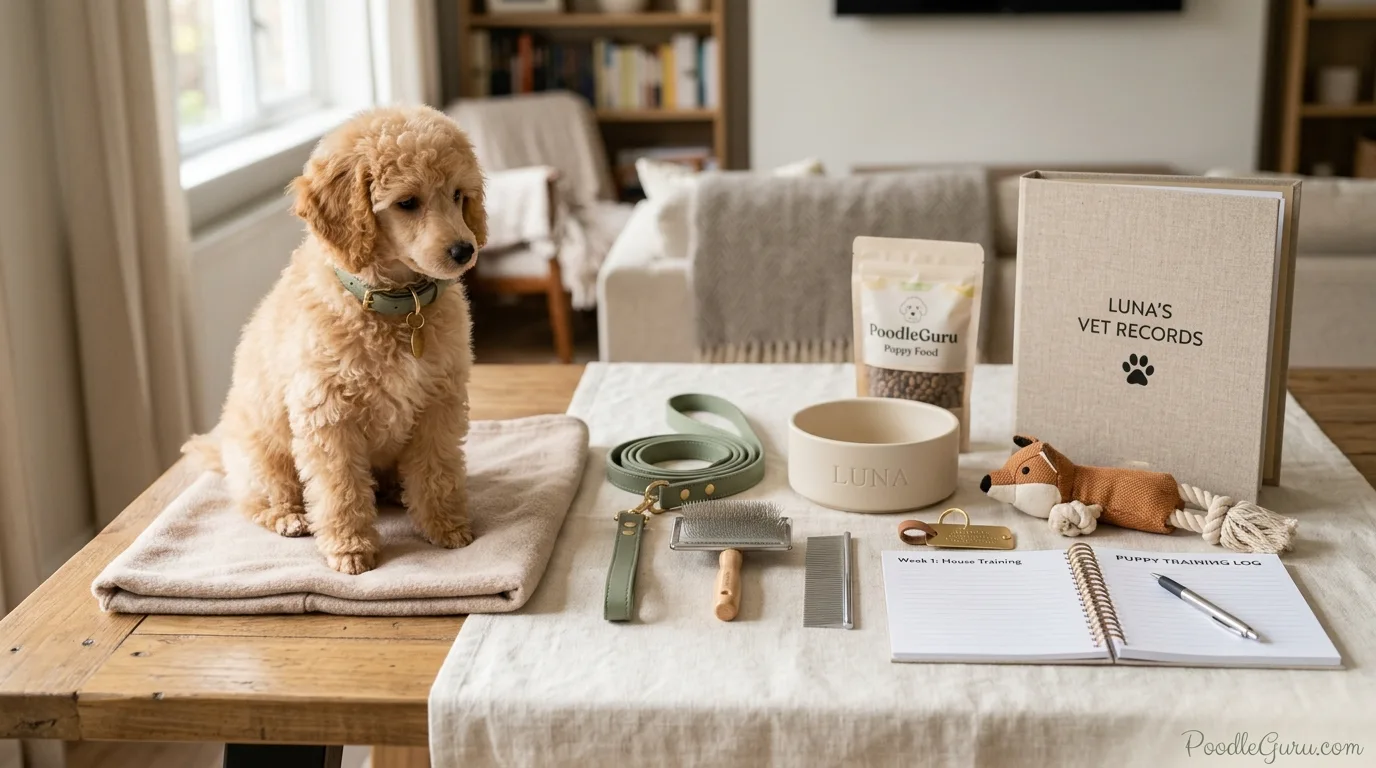
The first year combines normal care with startup costs. Even if you adopt, you still need supplies, vet visits, training, grooming tools, parasite prevention, and a home setup. If you buy from a responsible breeder, the acquisition cost becomes the largest first-year line item.
Acquisition
Breeder puppies usually cost more upfront than rescue poodles, but adoption fees may include basic vetting, microchipping, or spay/neuter depending on the rescue.
Setup
Crate, bed, bowls, harness, leash, ID tag, toys, grooming brush, shampoo, cleaning supplies, and safe chews can add up quickly.
Vet + training
Puppy vaccines, wellness exams, parasite prevention, spay/neuter timing, microchip, and early training classes are common first-year expenses.
| First-year item | Why it matters | Budget tip |
|---|---|---|
| Breeder or adoption fee | Usually the biggest difference between a budget and premium first year. | Ask what is included: vaccines, health testing, microchip, early socialization, contract support. |
| Starter supplies | Creates a safe home setup and prevents emergency purchases. | Buy quality basics once instead of replacing cheap items repeatedly. |
| Initial vet care | Confirms health, starts prevention, and catches early issues. | Book the first wellness exam soon after bringing your poodle home. |
| Training | Poodles are intelligent and need structure, manners, and mental work. | Group puppy classes are often more affordable than private sessions. |
| Grooming start | Poodles need coat maintenance early so grooming does not become stressful. | Start gentle brushing, handling, and face/feet practice from week one. |
Typical Monthly Poodle Costs After the First Year
After the first year, the budget becomes more predictable. Most owners spend money every month on food, grooming, preventive health, insurance or savings, treats, enrichment, and replacement items. Some expenses are not monthly in real life, but converting them into a monthly amount makes budgeting easier.
Food
Food depends heavily on body size and calorie needs. Standards cost the most, while Toys cost the least.
Grooming
Professional grooming every 6–8 weeks is often the largest recurring poodle-specific expense.
Vet care
Routine exams, vaccines, dental care, parasite prevention, and age-related screening should be planned before problems appear.
Insurance or savings
Insurance creates a predictable premium; self-insuring means keeping a dedicated emergency fund ready.
Professional Grooming vs DIY Grooming
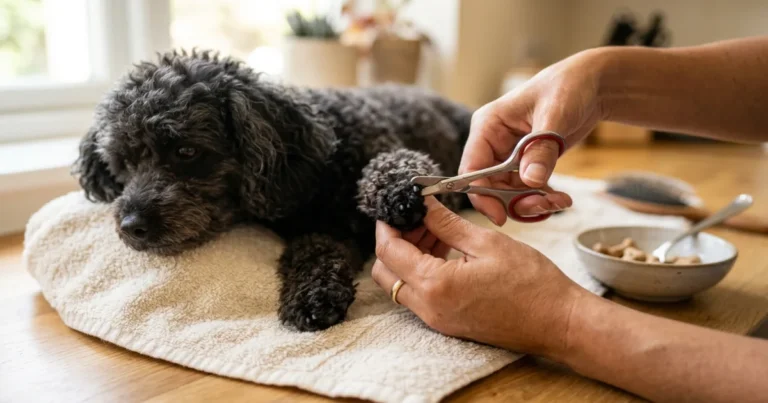
For many poodle owners, grooming is the most important cost decision. Poodles have a curly, continuously growing coat that mats easily if it is not brushed, clipped, and maintained. A simple short pet trim is usually cheaper than a highly styled show trim, but the size of the poodle still affects the price because larger dogs take more time, more shampoo, and more drying.
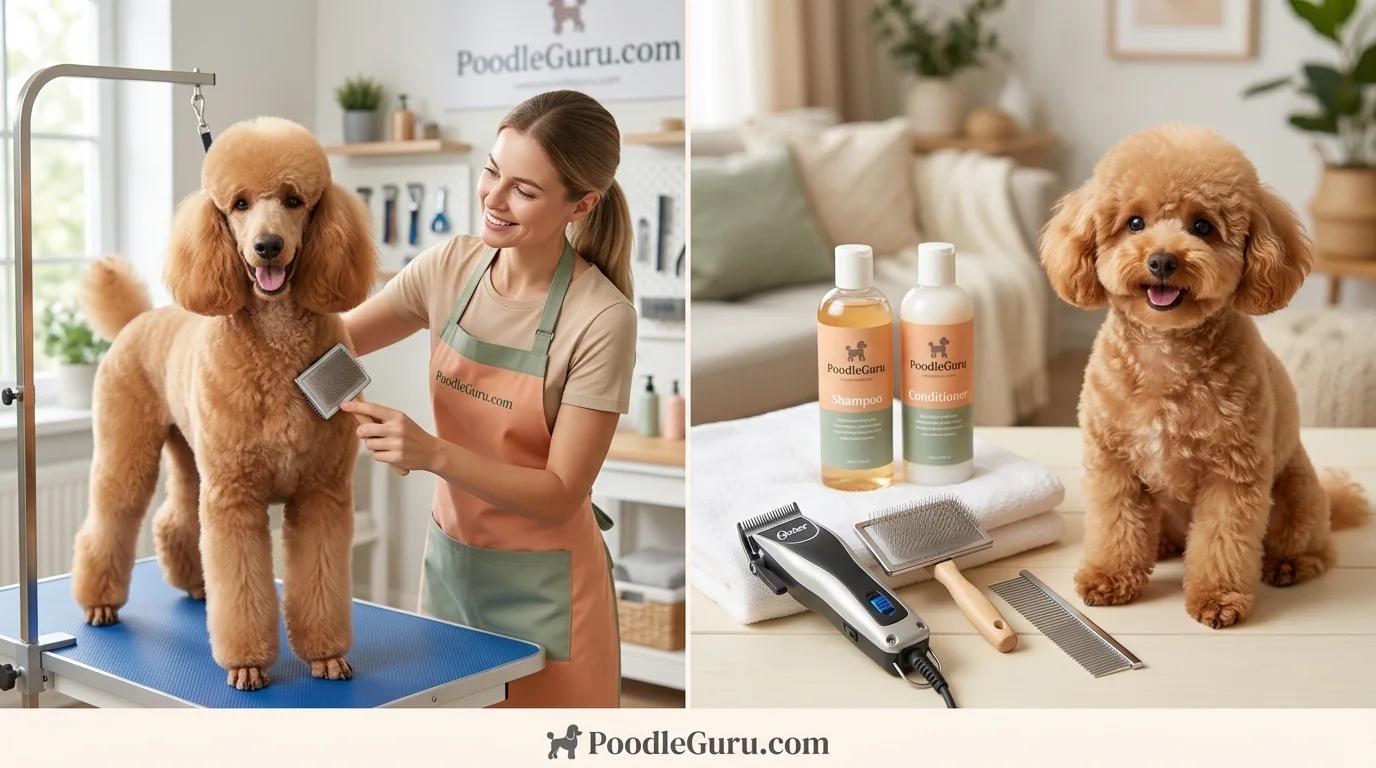

Professional grooming is easier
It saves time and gives a clean finish, especially for face, feet, sanitary trim, nails, ears, and coat shaping. It is the best choice if you are not confident using clippers or your poodle has a high-maintenance coat.
DIY grooming can save thousands
At-home grooming requires a one-time tool investment and practice, but it can reduce lifetime costs dramatically. Many owners still use a professional groomer a few times a year for reset trims.
Practical compromise: keep your poodle in a short, simple pet clip, brush consistently, and use a professional groomer for difficult trims while doing baths, brushing, and small maintenance at home.
Pet Insurance vs Emergency Fund for a Poodle
Poodles are generally long-lived dogs, but long life also means more years for dental disease, injuries, chronic conditions, and age-related care. Standards also need special attention around large-dog risks such as bloat. Insurance does not remove cost, but it can protect your cash flow when a large bill arrives unexpectedly.
Choose insurance if…
- You would struggle to pay a large emergency vet bill today.
- You want predictable monthly budgeting.
- You are bringing home a puppy and can enroll before pre-existing conditions appear.
- You prefer lower financial shock over the dog’s lifetime.
Choose self-insurance if…
- You can keep a dedicated emergency fund untouched.
- You understand that major surgery or hospitalization can be expensive.
- You are comfortable accepting more financial risk.
- You review your fund as your poodle ages.
How to Build a Smart Poodle Budget
- Run the calculator twice. First, choose your realistic plan. Then choose a “high-cost” plan so you know your upper range.
- Separate monthly and annual bills. Food and insurance may be monthly, while vet visits, grooming, vaccines, and dental care may be less frequent.
- Start an emergency fund immediately. Even with insurance, deductibles, exclusions, and non-covered care can still happen.
- Keep the coat simple. A practical pet clip is usually cheaper and easier to maintain than complex styling.
- Invest in early training. Training reduces destructive behavior, grooming stress, leash problems, and future private-training costs.
How to Reduce Poodle Ownership Costs Without Cutting Care
The goal is not to buy the cheapest everything. The goal is to spend money where it prevents bigger problems later. Good grooming, preventive vet care, quality food, and early training usually cost less than fixing matting, dental disease, behavioral problems, or preventable emergencies.
Adopt when possible
Adoption can reduce first-year cost, especially if basic vetting is included. Breed-specific poodle rescues may also help match temperament and size.
Use a simple clip
A short pet clip is practical, comfortable, and usually cheaper than high-maintenance styles.
Brush before mats form
Mat removal can be uncomfortable and expensive. Consistent brushing protects both the coat and your wallet.
Prevent dental disease
Tooth brushing, dental chews, and vet guidance can reduce the risk of expensive dental procedures later.
Buy durable basics
A good crate, harness, brush, and clippers often cost less than replacing weak products again and again.
Compare insurance early
Premiums are usually more favorable before age-related and pre-existing conditions appear.
How This Calculator Estimates Poodle Costs
The calculator combines poodle-specific assumptions with common dog ownership cost categories: acquisition, supplies, routine vet care, grooming, food, training, insurance, and miscellaneous care. It then adjusts the recurring yearly number by poodle size and region. The output is intentionally shown as a planning estimate because breeder prices, rescue fees, clinic pricing, insurance quotes, and groomer rates vary widely by city and by dog.
For stronger accuracy, run the estimate, then replace the calculator numbers with real quotes from your local breeder or rescue, your vet clinic, your groomer, and two or three insurance providers.
Helpful reference points: AKC lists Poodles as Toy, Miniature, and Standard sizes with a broad 10–18 year life expectancy range; ASPCA’s dog-cost guide separates food, routine medical care, spay/neuter, supplies, grooming, dental, and first-year totals; and NAPHIA’s 2025 industry report lists the average U.S. dog accident-and-illness insurance premium at about $62.44/month.
- AKC poodle size and lifespan guidance
- ASPCA dog ownership cost categories
- NAPHIA 2025 pet insurance premium report
Poodle Lifetime Cost Calculator FAQs
After the first year, many poodle owners should plan for roughly $1,200–$3,200 per year depending on size, grooming, food, location, insurance, and vet care. Standard Poodles usually cost more per year than Toy and Miniature Poodles.
A realistic lifetime planning range is often around $18,000–$45,000+. DIY grooming, adoption, and a lower-cost area can reduce the total. Professional grooming, premium food, higher-cost cities, and insurance can raise the total.
A Toy Poodle is usually cheaper per month because food, grooming, medication, boarding, and supplies often cost less. However, Toy Poodles may live longer, so lifetime cost can still be significant.
For many owners, the largest poodle-specific recurring cost is grooming. Poodles need regular coat maintenance, and professional grooming every 6–8 weeks can become a major yearly expense.
Pet insurance can be worth it if a large emergency bill would be difficult to pay out of pocket. It is especially useful when started early, before pre-existing conditions appear. If you skip insurance, keep a dedicated emergency fund.
Many poodles need professional grooming about every 6–8 weeks, plus regular brushing at home. The exact schedule depends on coat length, lifestyle, clip style, and how quickly the coat mats.
Yes. DIY grooming can save thousands across a poodle’s lifetime, but it requires quality clippers, blades, brushes, shampoo, patience, and safe handling. Many owners use a hybrid approach: home maintenance plus occasional professional trims.
Adoption usually costs less upfront and can be a wonderful option. A responsible breeder may cost more but should provide health testing, temperament guidance, early care, and support. Avoid cheap, unclear sources because poor breeding can create higher vet and behavior costs later.
Ready to Plan Your Poodle Budget?
Run the calculator once for your expected plan, then run it again with higher-cost options. That gives you a safer budget range before you choose a breeder, rescue, groomer, insurance provider, or food plan.