Poodle vs Bedlington Terrier: 9 Key Differences
Poodle vs Bedlington Terrier is a smart comparison for anyone who loves curly, low-shedding dogs but wants the right temperament at home. One is a biddable retriever at heart. The other is a tenacious terrier disguised in lamb’s clothing. Here’s what you actually need to know before choosing.
Quick Answer: Poodle vs Bedlington Terrier
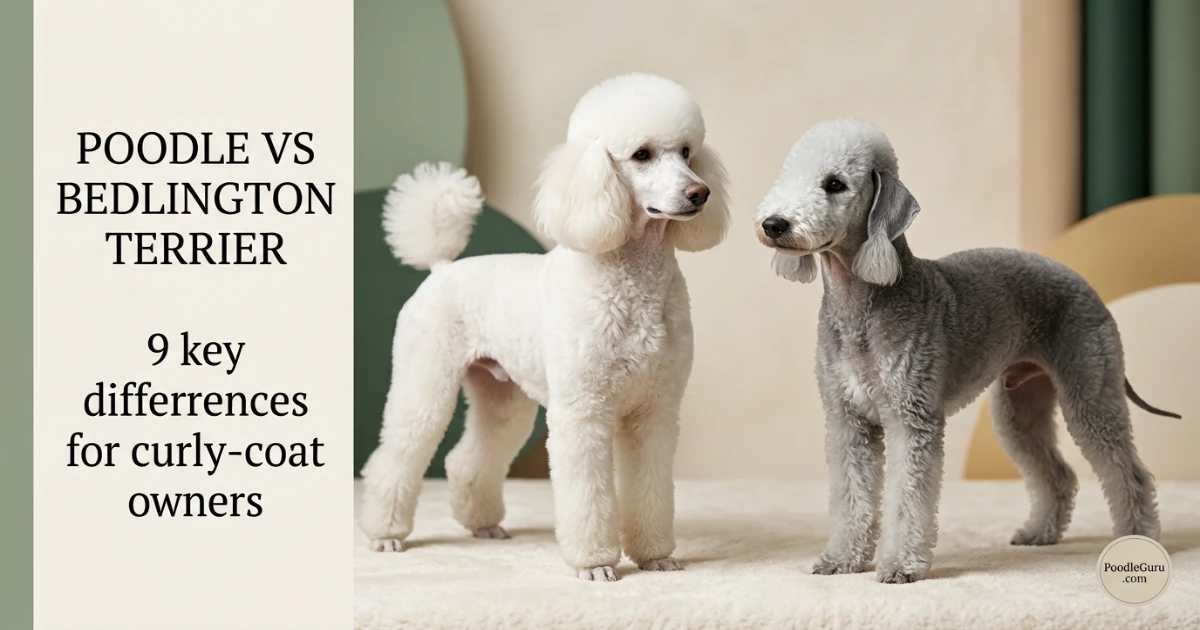
Poodle vs Bedlington Terrier comes down to trainability, prey drive, grooming rhythm, and family lifestyle. The Poodle and Bedlington Terrier share a curly, low-shedding coat, but their temperament, grooming needs, and exercise demands split in very different directions. Poodles (Standard or Miniature) are highly trainable retrievers that thrive on mental work and close partnership. Bedlington Terriers are quick, sometimes stubborn, terriers with surprising speed and a strong chase instinct. Both need regular professional grooming every 4–8 weeks, but the Poodle’s coat is denser and requires more frequent clipping. If you want a sharp, eager-to-please companion, lean Poodle. If you enjoy a dog with independent terrier spirit and a softer coat feel, the Bedlington might capture your heart.
In This Guide
- Quick Facts: Poodle vs Bedlington Terrier
- Poodle vs Bedlington Terrier Coat Comparison
- Poodle vs Bedlington Terrier Size & Build
- Poodle vs Bedlington Terrier Temperament & Personality
- Poodle vs Bedlington Terrier Grooming Requirements
- Poodle vs Bedlington Terrier Health & Lifespan
- The PoodleGuru Curly Coat Decision Framework
- Common Poodle vs Bedlington Terrier Buyer Mistakes
- How to Choose Between a Poodle and Bedlington Terrier
- Frequently Asked Questions
Quick Facts: Poodle vs Bedlington Terrier
Poodle (Standard / Miniature)
Weight: 40–70 lbs (Standard), 10–15 lbs (Miniature)
Height: 15+ inches (Standard), 10–15 inches (Miniature)
Coat: Dense, curly, single coat
Shedding: Very minimal
Lifespan: 10–18 years
Trainability: Exceptionally high
Energy: Moderate to high
Bedlington Terrier
Weight: 17–23 lbs
Height: 15–17.5 inches
Coat: Crisp, linty, curly coat (mix of soft and harsh hair)
Shedding: Very minimal
Lifespan: 11–16 years
Trainability: Moderate (independent streak)
Energy: Moderate to high with bursts
Key Difference
About 80% of the practical difference comes down to working background. The Poodle was bred to retrieve from water and work closely with humans. The Bedlington was bred to pursue vermin and later race. That history shapes everything: trainability, off-leash reliability, and how each dog fits into a family’s rhythm.
People gravitate toward both breeds because of the curls. That iconic coat promises less shedding, fewer allergies, and a look that stands out at the dog park. But living with a Poodle is not the same as living with a Bedlington Terrier — not even close. The Poodle’s eagerness to learn can feel like having a furry co-worker who anticipates your next move. The Bedlington’s independent mind can feel more like a witty roommate with their own agenda. This guide unpacks the side-by-side reality that matters for daily life, grooming bills, and long-term happiness with either breed.
Poodle vs Bedlington Terrier Coat Comparison
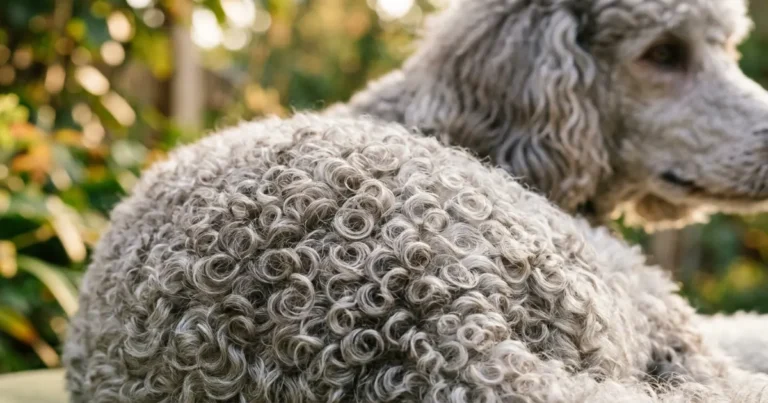
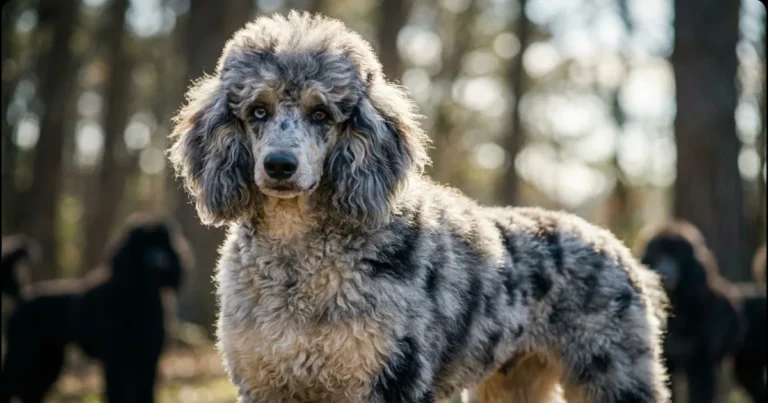
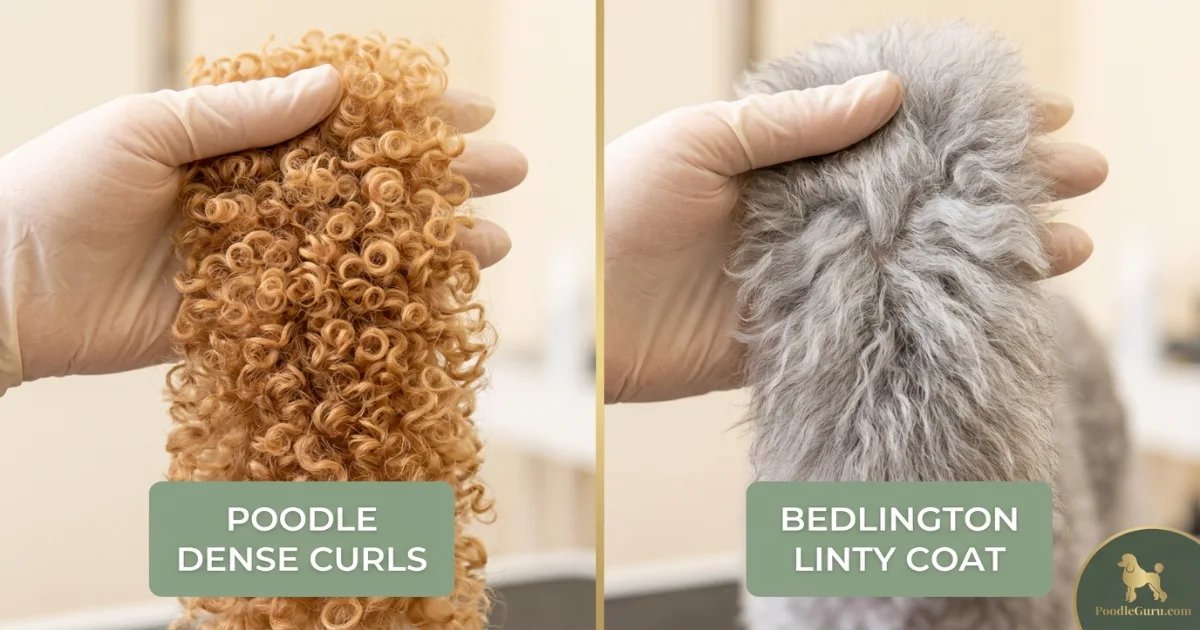
A Poodle’s coat is a dense, springy, single-layer coat that grows continuously. The curls form tight, even spirals that trap loose hair against the skin — which is why Poodles shed so little visibly and why mats form fast without thorough brushing and clipping. The texture is woolly, soft but substantial.
A Bedlington Terrier’s coat is entirely different in hand. It’s described as “linty” — a mix of soft undercoat and harsher guard hairs that create a crisp, slightly springy feel. The curl is looser, more of a gentle wave or crimp than a tight ringlet. The coat stands out from the body, especially when properly groomed, giving the Bedlington its distinctive lamb-like silhouette. This coat also grows continuously and needs regular clipping or expert hand-stripping to maintain texture.
| Coat Attribute | Poodle (Standard/Miniature) | Bedlington Terrier |
|---|---|---|
| Coat type | Dense, tightly curled, single coat | Linty mixture of soft and harsh hair, looser curl |
| Shedding level | Very minimal (hair trapped in curls) | Very minimal (loose hairs caught in coat) |
| Brushing frequency | 2–3 times per week minimum | 1–2 times per week; daily if in longer trim |
| Professional grooming | Every 4–6 weeks (clipping required) | Every 6–8 weeks (clipping or hand-stripping) |
| Matting risk | High; mats form close to skin in tight curls | Moderate; tangles more than mats, but can mat behind ears |
| Coat grows continuously? | Yes | Yes |
| Common owner complaint | “The clipping schedule runs my calendar.” | “I didn’t realize the topknot and ear tassels need constant attention.” |
What “Hypoallergenic” Means for These Two
Neither breed is allergen-free. Both produce dander and saliva proteins that trigger reactions. Because they shed very little, airborne allergens are greatly reduced compared with heavy-shedding breeds. The Poodle’s dense curls trap dander closer to the skin, so regular bathing is essential to wash allergens away. The Bedlington’s coat releases dander a bit more easily, but still far less than a double-coated dog. For many allergy sufferers, either breed can work — but always spend time with adults of the breed before committing.
Poodle vs Bedlington Terrier Size & Build
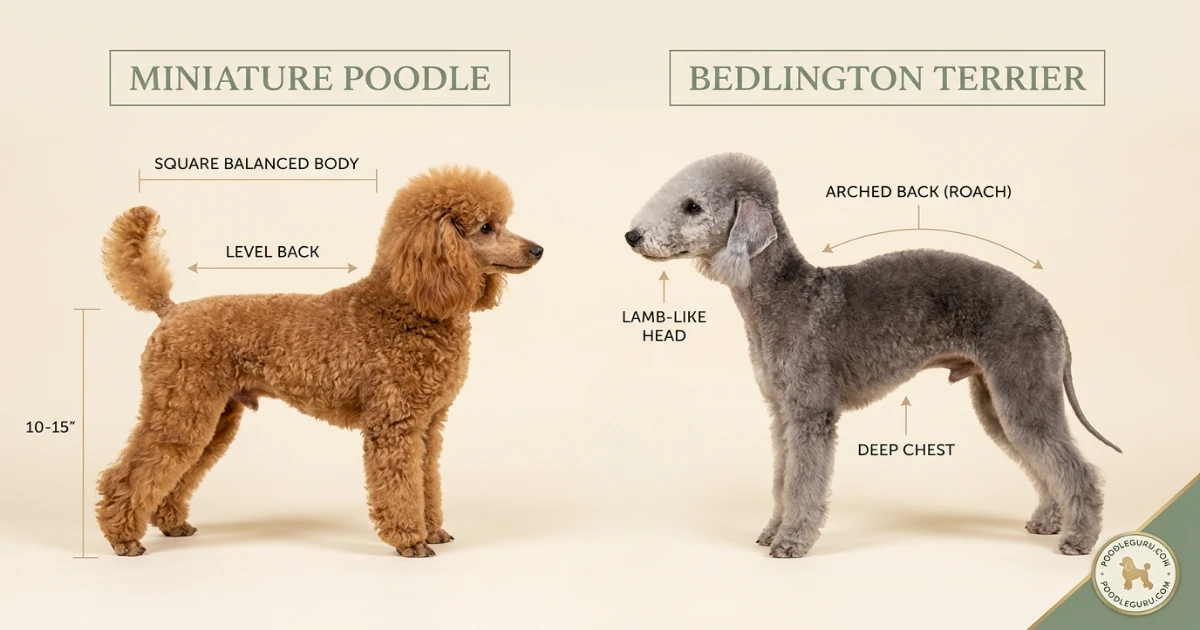
Poodles come in three sizes recognized by the AKC: Standard, Miniature, and Toy. For this comparison, the Miniature Poodle (10–15 inches, 10–15 lbs) comes closest to the Bedlington Terrier (15–17.5 inches, 17–23 lbs). A Standard Poodle stands significantly taller and heavier. The Bedlington’s build is unique: a gracefully arched back, a deep chest, and a light, springy gait that hints at its whippet heritage. The Poodle’s build is squarely proportioned and balanced, built for endurance in water.
In practice, a Bedlington feels sturdier than a Miniature Poodle but more lightly built than a Standard. The arched topline and tasseled ears give it an almost delicate appearance, but don’t be fooled — these dogs are fast. A fenced yard matters more for the Bedlington due to a stronger chase instinct.
Poodle vs Bedlington Terrier Poodle vs Bedlington Terrier Temperament & Personality
This is where the breed origins scream the loudest. Poodles were developed as water retrievers — they’re hardwired to work with people, take direction, and solve problems cooperatively. A Poodle that isn’t mentally engaged will create its own puzzles, often at the expense of your shoes. They’re sensitive, alert, and extremely quick to pick up on patterns. Training a Poodle can feel like having a conversation.
The Bedlington Terrier was bred to hunt vermin and later to race. That produces a dog with speed, determination, and an independent decision-making style. They’re often described as “a big dog in a medium body” — courageous, playful, and affectionate with their family, but not blindly obedient. A Bedlington may weigh a command against its own interest before complying, especially if something small and fast is moving nearby. They can be clowns at home and focused hunters outdoors.
Owner Insight: The Off-Leash Question
A well-trained Poodle often earns reliable off-leash privileges. A Bedlington’s terrier drive makes off-leash reliability a project — and for some individuals, never a guarantee. If you dream of off-leash hikes with a dog that checks in constantly, the Poodle is the safer bet.
Poodle vs Bedlington Terrier Grooming Requirements
Both breeds demand a professional grooming schedule and at-home maintenance. If you’re searching for a “low-maintenance curly coat,” neither qualifies.
For a Poodle, a full clip every 4–6 weeks is the norm. Between appointments, line brushing with a slicker brush and metal comb 2–3 times weekly prevents mats from forming at the skin. Many Poodle owners learn to do maintenance clips at home — it’s a real investment in tools and time. Our Complete Poodle Grooming Guide walks through the process.
For a Bedlington, grooming frequency depends on whether the coat is clipped or hand-stripped. Most pet owners choose clipping every 6–8 weeks, which softens the coat over time. Hand-stripping preserves the crisp texture but requires skill and is typically done by a professional. The characteristic topknot, ear tassels, and tidy feet need regular scissoring to keep the breed’s silhouette. At home, brushing once or twice a week with a pin brush and comb keeps tangles away, though the softer the coat becomes from clipping, the more it may tangle.
When to Ask a Professional Groomer
If you feel tight mats forming near the skin — especially behind the ears or on the belly of either breed — stop. Brushing over mats hurts and tightens them. A professional groomer can safely shave them out and help you reset a manageable home care routine. For Bedlington owners, ask a groomer about hand-stripping demonstrations if you want to keep that crisp coat texture alive.
Poodle vs Bedlington Terrier Health & Lifespan
Both breeds can live well into their teens with responsible care. Poodles (Miniature and Standard) may face breed-specific conditions like hip dysplasia (especially Standards), progressive retinal atrophy (PRA), von Willebrand’s disease, and epilepsy. Reputable breeders screen for these. Bedlington Terriers have a unique health concern: copper toxicosis, a genetic liver disease that prevents proper copper metabolism. DNA testing is available, and responsible breeders will share results. They can also be prone to patellar luxation and eye disorders. VCA Animal Hospitals provides a useful Bedlington Terrier health overview that can help owners understand copper toxicosis and other breed risks to discuss with a veterinarian.
Dental care is non-negotiable for both breeds. Crowded teeth in smaller mouths accelerate plaque buildup. Daily brushing and annual veterinary dental check-ups are baseline, not optional extras.
PoodleGuru Curly Coat Decision Framework
At PoodleGuru, we evaluate breed comparisons through three practical lenses: trainability needs, grooming bandwidth, and activity compatibility. This framework helps you avoid choosing a dog you admire on screen but struggle to live with in reality.
1. Training Style Fit
You love training as a hobby: The Poodle thrives on complex commands, trick routines, and sports like agility or rally. You’ll have an enthusiastic student.
You prefer a dog that’s naturally well-behaved with basic training: A Bedlington can learn those basics, but it may question them when distraction appears. You’ll need patience and consistency without taking it personally.
2. Grooming Investment Tolerance
You accept a 4–6 week clipping cycle as routine: The Poodle’s schedule fits you.
You’d prefer slightly longer stretches between grooms and don’t mind a softer coat: A clipped Bedlington may work. But the topknot and ear tassels still need regular trims. If you want the crisp breed look, hand-stripping adds cost and time.
3. Activity & Prey Drive Management
You want a dog that can hike, swim, and stay close off-leash: The Poodle is built for this. You have a securely fenced yard and prefer play in controlled spaces: The Bedlington’s speed and chase drive make a fence essential. Without one, expect a dog that can bolt after a squirrel before you finish the word “come.”
Common Poodle vs Bedlington Terrier Buyer Mistakes
These two breeds get confused more often than you’d think, usually because a groomed Bedlington with a full topknot and tassels can look vaguely “poodle-like” to the untrained eye. But the mistakes go deeper than appearance.
Mistake 1: Thinking “curly coat = same dog.” The texture, density, and care routines differ. A Bedlington’s coat feels crisper and stands off the body; a Poodle’s curls are denser and hug the frame unless sculpted. They also demand different grooming tools.
Mistake 2: Underestimating the terrier brain. Bedlingtons are not just soft-looking lap dogs. They’re problem-solvers with a high prey drive. A home with small pets like rabbits or guinea pigs requires careful management.
Mistake 3: Forgetting size overlap. A Miniature Poodle and a Bedlington can be very similar in height, but the Poodle is often lighter-boned. A Standard Poodle towers over a Bedlington. Buyers sometimes assume “Bedlingtons are smaller” and end up surprised by a leggy, athletic medium-sized dog.
Mistake 4: Choosing based on a viral video. Social media clips don’t show the 6:00 a.m. zoomies, the grooming invoices, or the moment your Bedlington decides the cat is more interesting than your recall cue. Spend time with adult dogs of both breeds before deciding.
How to Choose Between a Poodle and Bedlington Terrier
List Your Non-Negotiables
Write down the three things you absolutely need in a dog. If “off-leash reliability” or “eager to learn tricks” tops your list, the Poodle is the clear answer. If “a bit of independence” and “a dog that makes me laugh” feel right, the Bedlington belongs in the running.
Audit Your Fencing
A secure, escape-proof fence is non-negotiable for a Bedlington. Even a Poodle will appreciate a fenced area, but the Bedlington’s chase instinct makes containment a serious safety matter. Walk your yard and check for gaps.
Meet Adults, Not Just Puppies
Puppy energy and coat texture can shift dramatically with age. Visit a responsible breeder or a breed-specific event. Run your fingers through an adult Poodle’s coat and an adult Bedlington’s coat. Ask about daily life. No video can replicate that.
Project First-Year Grooming Costs
Plan $50–$100 per grooming session for either breed, every 4–8 weeks depending on trim. That’s $400–$1,200+ annually just for professional care. Add at-home tools (slicker brush, metal comb, pin brush, detangler). Budget realistically before the puppy arrives.
Test Your Training Style
If you’ve never worked with a terrier, find a positive reinforcement class and observe a session. Notice how instructors handle independent-minded dogs. A Poodle will reward your consistency quickly. A Bedlington will test it, and you’ll need to stay patient without frustration.
Frequently Asked Questions
Are Bedlington Terriers hypoallergenic like Poodles?
Both are low-shedding, single-coated breeds that produce fewer airborne allergens than double-coated dogs. The Poodle’s dense curls trap dander closer to the skin, while the Bedlington’s looser coat releases dander slightly more readily. Neither is allergen-free. Spend time with adults of each breed to gauge personal sensitivity.
Which breed is easier to train?
Poodles are significantly easier to train for most people. They’re eager to please and quick to learn complex commands. Bedlington Terriers are intelligent but have a terrier’s independent streak; they may understand a command perfectly and still choose a different path if something more interesting appears.
Do Bedlington Terriers get along with other dogs?
Generally, yes, especially when properly socialized from puppyhood. They can be playful and friendly, but some individuals may be scrappy with unfamiliar dogs, particularly if provoked. Early, positive exposure to many dogs helps build good habits.
Which breed needs more grooming?
The Poodle requires more frequent professional clipping (every 4–6 weeks) due to the dense, tight curls that mat quickly. The Bedlington can often go 6–8 weeks between clippings, but the distinctive topknot, ear tassels, and feet need regular trimming. Both require consistent at-home brushing.
Are Poodles or Bedlingtons better for families with children?
Both can do well with children when raised together and properly supervised. Poodles are often gentler and more patient if socialized early. Bedlingtons are playful but may be less tolerant of rough handling; their quick movements can also knock over a toddler. Teach respectful interaction with either breed.
Can a Bedlington Terrier live in an apartment?
Yes, if given adequate daily exercise and mental stimulation. They’re medium-energy dogs that enjoy walks and play. However, their alert nature can lead to barking at noises, which may be a challenge in close quarters. A Poodle can also adapt to apartment life with similar considerations.
Which breed is more expensive to own?
Annual grooming costs are comparable, ranging $400–$1,200+ yearly. Purchase price from a reputable breeder can be similar, often $1,500–$3,000. Long-term, potential breed-specific health conditions (like copper toxicosis screening for Bedlingtons) may influence vet costs. Budget $1,500–$3,000+ annually for quality care with either breed.
Do Bedlington Terriers and Poodles have similar lifespans?
Yes, both breeds typically live 11–18 years. Miniature Poodles often reach the upper range. Bedlingtons commonly live 12–16 years. Good nutrition, preventive vet care, and dental health play a larger role than breed averages alone.
Poodle vs Bedlington Terrier: The Bottom Line
Curly coats may draw you in, but temperament, trainability, and prey drive will define your daily life. Pick the breed that matches your reality, not your imagination.
- Poodles (Miniature or Standard) are highly trainable retrievers; Bedlington Terriers are independent, quick terriers with a strong chase instinct.
- Both breeds have low-shedding, continuously growing curly coats that require professional grooming every 4–8 weeks and regular at-home brushing.
- A Poodle’s dense, woolly curls mat quickly and need clipping every 4–6 weeks; a Bedlington’s linty, crisper coat can go 6–8 weeks between clips, with ear and topknot maintenance.
- Off-leash reliability is a realistic goal with a well-trained Poodle; a Bedlington’s prey drive makes a secure fence essential.
- Early socialization and positive training are crucial for both, but a Bedlington’s independent nature requires extra patience and consistency.
- Spend time with adult dogs of both breeds before choosing — coat texture, energy level, and personality are impossible to fully capture in photos or videos.
Best next step: Visit a Poodle in person and a Bedlington in person — not just puppies, but adult dogs. Touch their coats. Ask owners about daily routines. Then run your observations through the PoodleGuru Curly Coat Decision Framework above, and be honest about what your typical week can actually hold.