Poodle vs Portuguese Water Dog: Working Breeds Compared
Poodle vs Portuguese Water Dog is a close-looking but very different working-breed comparison. Both are curly-coated water retrievers with deep working roots. One has been refined for centuries across three distinct sizes. The other nearly vanished before a dedicated revival saved it. They look similar at a glance, but the daily experience of living with them is anything but interchangeable.

Quick Answer: Poodle vs Portuguese Water Dog
Poodle vs Portuguese Water Dog comes down to adaptability versus working intensity. The Poodle is a purebred water retriever available in Toy, Miniature, and Standard sizes, with a predictable single-layer curly coat, an intensely smart mind, and a written breed standard governing everything from height to temperament. The Portuguese Water Dog (PWD) is a medium, powerfully built working breed with a single-layer coat that can be either curly or wavy, a strong-willed but deeply loyal personality, and a history of helping fishermen work from boats. Both are low-shedding, high-grooming, high-intelligence dogs — but a Poodle is usually the more adaptable choice, while a Portie demands a job and a confident handler who will stay consistent.
Quick Facts at a Glance
Poodle
Origin: Germany/France
Sizes: Toy, Miniature, Standard
Coat: Single-layer, dense curls
Shedding: Extremely low
Lifespan: 12–15+ years
Breed standard: AKC recognized
Portuguese Water Dog
Origin: Portugal
Size: Medium; males 20–23 in and 42–60 lbs, females 17–21 in and 35–50 lbs
Coat: Single-layer, curly or wavy
Shedding: Very low
Lifespan: 11–13 years, with individual variation
Breed standard: AKC recognized
Key Difference
Versatility vs intensity. Poodles excel in almost any role — from lap companion to agility champion — and come in three manageable sizes. Portuguese Water Dogs are built for driven work and need an equally driven owner; they are a full-time commitment in a way many Poodles are not.
What Is a Poodle?
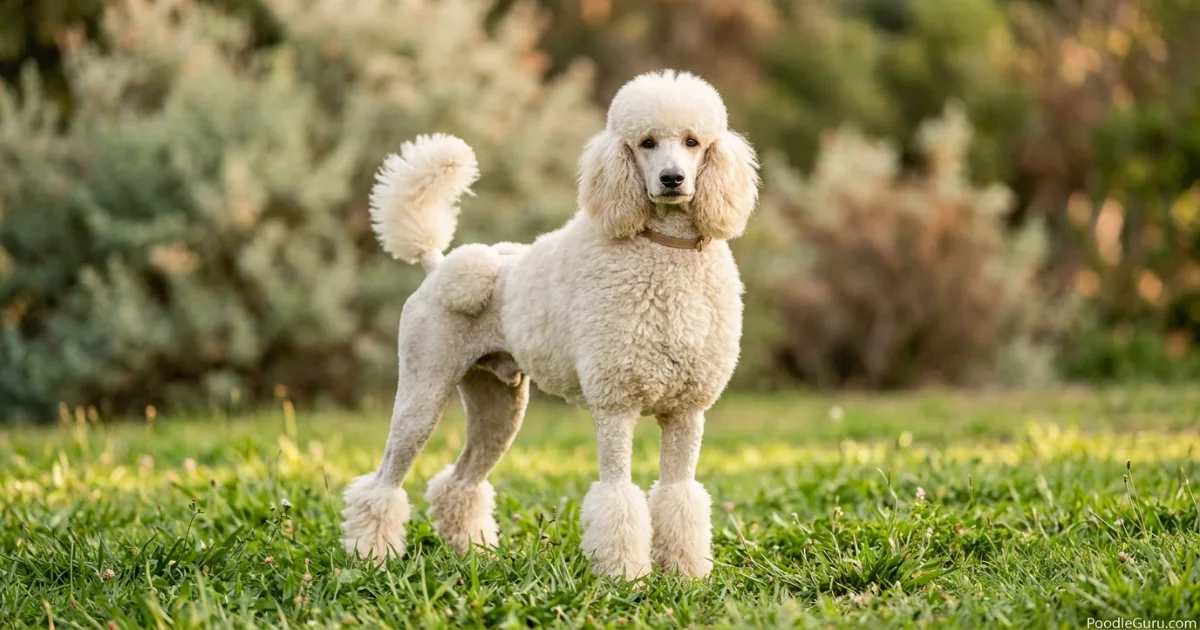
A Poodle is a purebred dog whose breed standard has been carefully preserved for centuries, resulting in a highly predictable water-retrieving companion. For poodle owners, this means every well-bred Poodle — regardless of size — carries the same dense, single-layer curly coat, the same keen intelligence, and the same athletic silhouette described in the AKC Poodle breed standard. The most important thing to understand is that the Poodle’s versatility is not an accident: Toy, Miniature, and Standard varieties were developed to fit different roles while keeping the core working temperament intact.
What Is a Portuguese Water Dog?
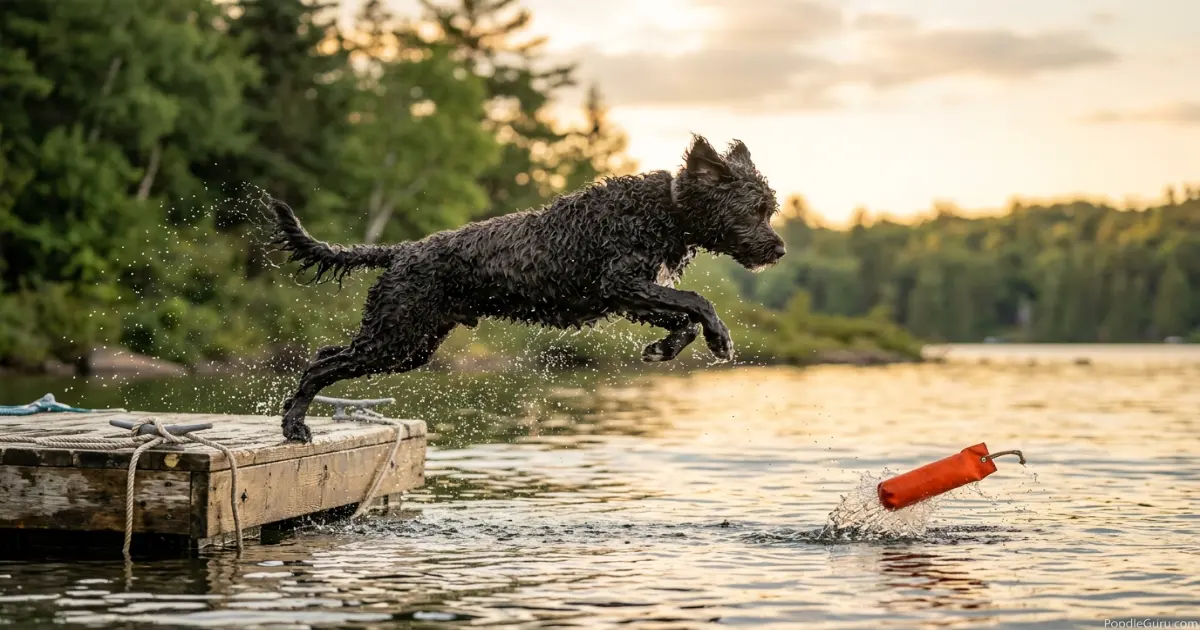
A Portuguese Water Dog is a robust, medium-sized working breed originally developed to assist Portuguese fishermen — herding fish, retrieving lost gear, and carrying messages between boats. For poodle-curious owners, this means you’re looking at a dog that shares the Poodle’s water-repellent coat but channels its energy into a more rugged, less refined package. The most important thing to understand is that the Portuguese Water Dog breed standard describes a “spirited” dog that is “obedient by nature” but also “resistant to boredom” — a diplomatic way of saying this breed will invent its own job if you don’t provide one.
Working Water Dog Trait Matrix
| Trait | Poodle | Portuguese Water Dog |
|---|---|---|
| Breed type | Purebred, three size varieties | Purebred, single size |
| Coat type | Single-layer, dense, harsh-textured curls | Single-layer, profuse — either tight curls or loose waves |
| Shedding level | Extremely low — hair trapped in coat | Very low — hair tends to mat rather than shed |
| Grooming frequency | Professional groom every 4–6 weeks; daily brushing in longer clips | Professional groom every 4–8 weeks; frequent brushing — mats form quickly |
| Size predictability | High — Toy (4–6 lbs), Mini (10–15 lbs), Standard (40–70 lbs) | High — males 20–23 in / 42–60 lbs; females 17–21 in / 35–50 lbs |
| Temperament structure | Intelligent, alert, adaptable, sometimes reserved with strangers | Intelligent, strong-willed, loyal, can be aloof with strangers |
| Exercise requirement | High — 45–90+ minutes daily, enjoys mental challenges | Very high — needs 60–120 minutes of vigorous activity plus mental work |
| Trainability | Extremely high; learns quickly but bores with repetition | High; learns quickly but can be independent and stubborn |
| Common health screening | Hips, eyes, von Willebrand’s, PRA, sebaceous adenitis | Hips, eyes, GM1 storage disease, juvenile dilated cardiomyopathy |
| 2026 puppy price range | $2,000–$4,500 | $3,000–$5,500+ |
| Lifespan | 12–15+ years | 11–13 years |
All traits reflect well-bred, health-tested dogs. Poorly bred examples can deviate significantly in health and temperament.
Coat, Grooming & the “Hypoallergenic” Myth
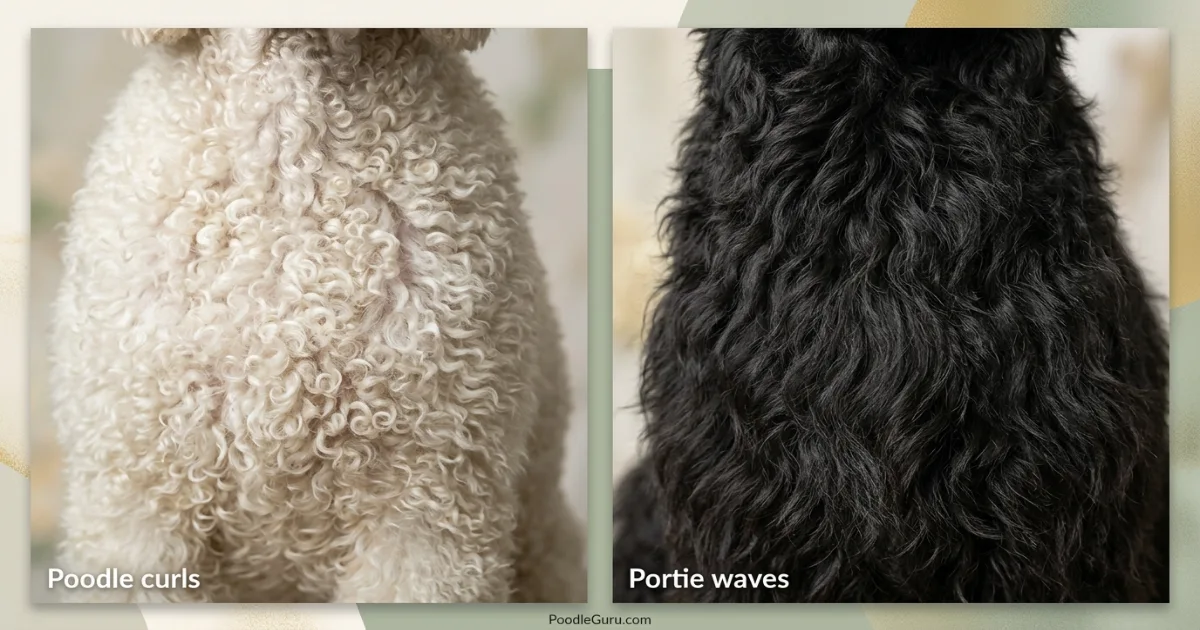
Both breeds wear a single-layer coat that doesn’t shed in the typical canine sense — instead, loose hair tangles within the curls. That’s great for your furniture. It’s demanding for you. A Poodle’s coat is dense and harsh-textured; when left in a longer trim, it requires daily line brushing down to the skin, or it mats. A Portuguese Water Dog’s coat is equally dense but often softer. Whether it comes in tight curls or loose waves, it compacts against the body rapidly — professional groomers commonly report that PWDs mat more aggressively than many Poodles, especially behind the ears and in the armpits.
Expert Insight: The Hypoallergenic Reality
Neither breed is truly hypoallergenic. Both produce dander and saliva proteins that trigger allergies. Because they shed minimally, those allergens stay in the coat rather than floating around the home. That can help some allergy sufferers. It does not help others. Spend substantial time with adult dogs of the specific breed before assuming you won’t react. And remember: a dog that mats is a dog that needs regular grooming — budget $100–$180 every 4–6 weeks for either breed.
Temperament & Trainability: Subtle Wiring, Huge Difference
Poodles are thinkers. They read your patterns, anticipate commands, and sometimes outsmart you before you realize you’ve been played. Training a Poodle is a conversation — keep it interesting, and they’ll learn almost anything. Get repetitive, and they’ll find their own entertainment. Portuguese Water Dogs are equally smart but wired differently. They are workers — not necessarily looking to please for the sake of pleasing, but driven by a need to do a job. That can come across as stubbornness if the job isn’t clear. A Portie doesn’t just enjoy having a task; it needs one.
Both breeds bond deeply and can develop separation anxiety if isolated for long hours. Both need early, thorough socialization to prevent wariness of strangers from tipping into reactivity. The difference is in how they handle downtime. A well-exercised Standard Poodle will happily curl up beside you and observe the household quietly. A Portuguese Water Dog is more likely to pace, nudge your hand with a toy, or reorganize the shoe rack — the engine idles higher.
Owner Reality Check
Choose a Poodle if you want a dog that adapts to your life — provided you deliver daily exercise and mental engagement. Choose a Portuguese Water Dog if your life already includes vigorous daily activity and you want a partner who will push you to do even more. A bored Portie is not a quiet Portie.
Size, Build & Life Expectancy
Poodles offer a remarkable range: Toy Poodles weigh 4–6 lbs and stand under 10 inches. Miniatures reach 10–15 lbs and 10–15 inches. Standards start at 15 inches and generally weigh 40–70 lbs — with some lines producing larger males up to 80+ lbs. This variety means almost any living situation can accommodate a Poodle of the right size.
Portuguese Water Dogs sit squarely in the medium to medium-large category with no Toy or Miniature option. According to the breed standard, males usually stand 20–23 inches and weigh 42–60 lbs, while females usually stand 17–21 inches and weigh 35–50 lbs — roughly comparable to a smaller-framed Standard Poodle but built with more bone and substance. Life expectancy reflects the breed’s different genetic foundations: Poodles often live 12–15+ years, with Toys and Miniatures frequently reaching the upper end. Portuguese Water Dogs are commonly expected to live around 11–13 years, though individual health, breeding, and care quality matter greatly.
Health & Screening Norms
Both breeds have established health concerns that responsible breeders screen for. The difference lies in how transparent and accessible that testing is to buyers. Responsible Poodle breeders commonly use OFA/PennHIP evaluations, CAER eye exams, and DNA or elective screening based on variety-specific recommendations. Depending on size, relevant concerns may include hip dysplasia, patellar luxation, progressive retinal atrophy (PRA), von Willebrand’s disease, thyroid disease, cardiac screening, and sebaceous adenitis. You can verify many results in public databases before choosing a puppy.
Portuguese Water Dog breeders should screen for hip dysplasia, eye disorders, and breed-specific conditions including GM1 storage disease and juvenile dilated cardiomyopathy. The Orthopedic Foundation for Animals maintains records for both breeds, and the Portuguese Water Dog parent-club recommendations are specific enough that buyers should ask for exact database entries or official lab documentation — not just a breeder’s verbal assurance.
When to Consult a Veterinarian
Schedule a wellness exam within the first week of bringing either breed home. Discuss breed-specific screening timelines — Poodles and Porties should both have regular hip evaluations and ophthalmologist exams. This guide is educational, not diagnostic. Always defer to your veterinarian for health decisions.
The PoodleGuru Working Water Dog Decision Framework
At PoodleGuru, we evaluate working-breed decisions by walking through a structured assessment that cuts through surface similarities and gets to the daily reality of living with each dog. Use these five questions to find your answer.
How much “off switch” do you need?
Poodles, especially well-exercised Standards, settle indoors. Portuguese Water Dogs settle less readily — they are wired for constant activity. If your household thrives on calm evenings, the Poodle is the more compatible choice.
Do you want size options?
Poodles give you three distinct sizes. If you live in an apartment or have physical limitations, a Toy or Miniature Poodle might be perfect. Portuguese Water Dogs come in one size — medium-large, powerful, and demanding of space to move.
Are you prepared for a dog that may out-stubborn you?
Poodles are biddable and quick to comply once trained. Porties respect confidence but will test inconsistent handlers. If you’re a first-time owner or someone who prefers a more compliant partner, the Poodle is easier. Porties reward strong, consistent leadership with fierce loyalty — but they don’t hand it out freely.
Can you verify health testing for both breeds?
Both require documented hip, eye, and genetic screening. Poodle testing is more transparent and widespread. Portie testing requires more diligence from the buyer — fewer breeders participate in OFA public databases. Don’t compromise on this step for either breed.
Have you met adult dogs of both breeds?
Puppies are deceptive. An 8-week-old Poodle and an 8-week-old Portie look like balls of fluff. Meet grown dogs. Watch how they move, react, and rest. What you see at 3 years old is what you’ll live with for a decade or more.
Buyer Red Flags & Common Mistakes
Red Flag: No Water-Work Instinct Mentioned
Breeders who don’t discuss the working heritage of either breed are marketing pets without context. A Poodle or Portie without a job — even a job as simple as daily fetch, puzzle games, or nose work — can become anxious and destructive. Quality breeders prepare you for the dog’s needs, not just the dog’s looks.
Red Flag: “Rare” Portuguese Water Dog Colors
The breed standard allows black, white, brown, and combinations — with no color considered “rare” or premium. Breeders charging extra for color are prioritizing marketing over health. The same applies to Poodle breeders who push “exotic” colors without documented health clearances.
Mistake: Choosing by Coat Alone
Both have appealing non-shedding coats. But the coat is the daily maintenance bill. Choose the dog whose temperament and energy level match your reality. A beautiful coat on a mismatched dog makes nobody happy.
2026 Cost & Ownership Value
Well-bred Poodle puppies in 2026 often fall in the $2,000–$4,500 range depending on breeder reputation, region, health testing, pedigree, and size variety. Portuguese Water Dog puppies from health-tested parents often sit higher, commonly around $3,000–$5,500+, reflecting demand, breeder investment, and a smaller specialist breeder pool. The overlap means neither breed is automatically cheap, but the Portie’s starting price is often higher.
Annual Ownership Estimate (Both Breeds)
Professional grooming (every 5 weeks): $1,040–$1,870
Quality nutrition: $480–$900
Routine veterinary care: $300–$700
Training, enrichment, insurance: $600–$1,200
These are estimates. Grooming costs vary by region and coat condition. Both breeds carry higher lifetime maintenance costs than short-coated dogs — factor this into your decision.
For a deeper look at Poodle coat care costs, see our Complete Poodle Grooming Guide. The same principles apply to Porties, with even heavier matting potential.
Frequently Asked Questions
Are Portuguese Water Dogs just Poodles with different names?
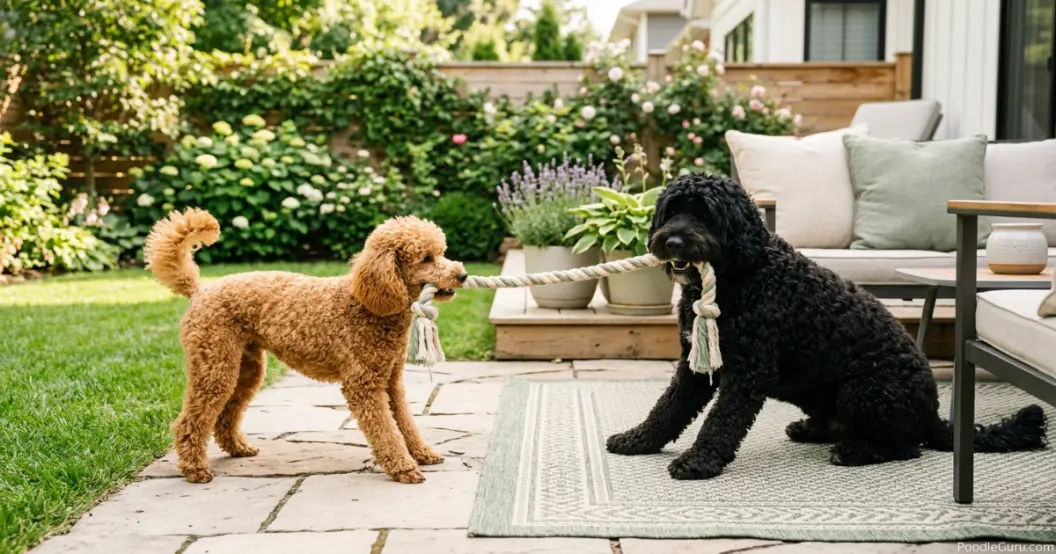
No. They share water-retrieving origins and curly coats, but they are genetically distinct breeds with separate histories, body structures, and temperament profiles. The Portuguese Water Dog is stockier, more driven, and not available in multiple sizes — a completely different ownership experience despite surface similarities.
Which breed is better for first-time dog owners?
The Poodle — particularly the Miniature or Standard variety — is generally more forgiving for first-time owners. Poodles are highly trainable, adaptable, and offer calmer off-switches. Portuguese Water Dogs demand experienced handling and a high-activity lifestyle that can overwhelm novice owners.
Do Poodles and Portuguese Water Dogs get along with other pets?
Both can coexist well with other dogs and even cats when properly socialized from puppyhood. However, a Portie’s strong prey drive and intensity may not suit households with small, skittish pets. Poodles tend to be more socially flexible when introduced correctly.
How much exercise does a Portuguese Water Dog need compared to a Poodle?
A Standard Poodle needs 45–90 minutes of daily activity. A Portuguese Water Dog typically needs 60–120 minutes of vigorous exercise — plus mental work. Without it, Porties develop destructive behaviors faster than most Poodles, channeling pent-up energy into creative mischief.
Which breed is easier to groom?
Neither is easy, but the Poodle coat is generally more predictable once you learn it. Portuguese Water Dog coats — whether curly or wavy — tend to mat more aggressively. Both require professional grooming every 4–8 weeks and diligent home brushing between appointments.
Can Portuguese Water Dogs live in apartments?
Possible, but challenging. A Portie needs vigorous daily exercise and mental stimulation that goes beyond short walks. Apartments can work if the owner is committed to extensive outdoor activity. Poodles, especially Toy and Miniature sizes, are naturally better suited to apartment life.
Are Poodles or Porties more protective?
Both are alert and will bark to announce strangers. Portuguese Water Dogs tend to be more naturally watchful and can develop protective behaviors without proper socialization. Poodles are typically more reserved than aggressive — early socialization shapes both breeds’ responses significantly.
Final Summary: Poodle vs Portuguese Water Dog
Both are exceptional, intelligent water dogs. Your choice hinges on how much “dog” you want in your daily life — in drive, in grooming, in intensity. Here are the facts that matter most:
- Poodles come in three predictable sizes (Toy, Miniature, Standard) with a consistent curly coat. Portuguese Water Dogs are a single, medium-large, powerfully built variety.
- Poodle coats are dense and harsh; PWD coats are dense and softer — both mat aggressively and require professional grooming every 4–8 weeks.
- Poodles are highly trainable, adaptable, and settle indoors with adequate exercise. Portuguese Water Dogs need more vigorous activity and a clear job — they do not idle happily.
- Health testing infrastructure is stronger and more transparent in Poodles. Portie buyers must work harder to verify hip, eye, and genetic clearances through OFA.
- Annual grooming costs for either breed can exceed $1,800 in many regions — plan accordingly.
- The PoodleGuru Working Water Dog Decision Framework (5 questions above) will lead you to the right choice. Meet adult dogs of both breeds. You’ll feel the difference the moment you interact.
Next step: If you’re leaning Poodle, start with our Poodle Size Chart to match a size to your lifestyle. If the Portie’s drive excites you, contact breeders and ask to meet their adult dogs — then apply the buyer red flags from this guide before committing.