Poodle Addison’s Disease: Symptoms, Treatment, and What Every Owner Should Know
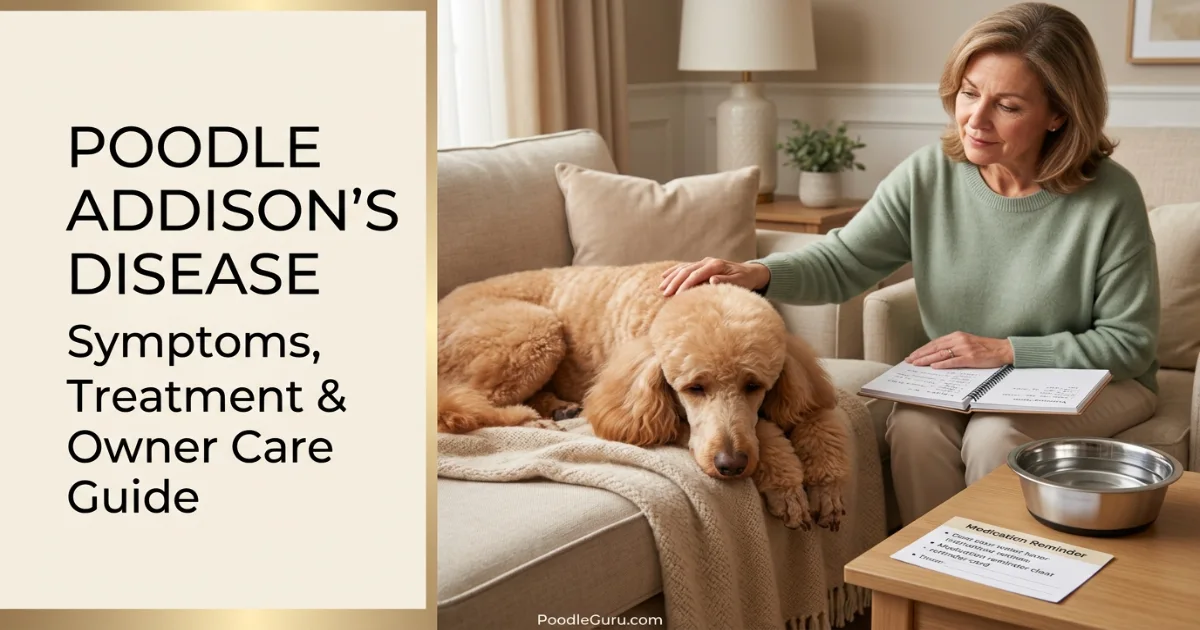
Quick Answer: Poodle Addison’s disease — also called hypoadrenocorticism — happens when the adrenal glands do not make enough essential hormones, especially cortisol and, in many cases, aldosterone. Untreated Addison’s can become life-threatening, but with veterinary diagnosis, hormone replacement medication, and regular monitoring, many affected Poodles live active, happy lives. Standard Poodles are one of the breeds most often discussed in Addison’s research, and the warning signs can be subtle: recurring vomiting, diarrhea, tiredness, poor appetite, shaking, weight loss, or sudden collapse during an Addisonian crisis.
Addison’s disease in Poodles is the condition that makes experienced breeders and veterinarians pay close attention to vague, on-and-off illness. It can hide behind what looks like a sensitive stomach, a bad food day, stress, or a mild stomach bug. A Poodle may vomit, improve, seem normal for a while, then become weak again. That confusing pattern is one reason Addison’s disease is often called “the Great Pretender.”
This article walks you through what Poodle Addison’s disease does inside the body, which symptoms deserve urgent attention, how veterinarians diagnose it, what treatment usually looks like, how costs can vary, and what responsible owners and puppy buyers should understand before the disease becomes an emergency.
What Exactly Is Addison’s Disease in Poodles?
Addison’s disease, or hypoadrenocorticism, occurs when the adrenal glands do not produce enough hormones for normal body function. The adrenal glands sit near the kidneys and help regulate the body’s response to stress, blood pressure, hydration, and sodium-potassium balance.
The two key hormones owners usually hear about are cortisol and aldosterone. Cortisol helps the body respond to stress. Aldosterone helps regulate sodium, potassium, and fluid balance. When these hormones are too low, a dog may become weak, dehydrated, nauseous, shaky, or unable to cope with even normal stressors such as travel, grooming, illness, surgery, boarding, or a major change in routine.
The classic form of Addison’s affects both cortisol and aldosterone. Some dogs have atypical Addison’s, where cortisol is low but electrolytes may look normal at first. That can make the disease harder to spot without the right test.
Why Standard Poodles Are an Important Addison’s Breed
Standard Poodles are repeatedly discussed in veterinary research because the breed has a recognized predisposition to primary hypoadrenocorticism. That does not mean every Standard Poodle will develop Addison’s, and it does not mean Toy or Miniature Poodles are impossible cases. It means Standard Poodle owners should be more alert to recurring, unexplained symptoms.
Research suggests a hereditary component, but Addison’s in Standard Poodles is not managed by one simple commercial DNA test. Breeders cannot honestly promise that a puppy has zero risk. What they can do is track pedigrees, disclose known affected relatives, support health research, and avoid dismissing the disease when buyers ask about it.
🧬 Breeder question to ask: “Has Addison’s disease appeared in your Standard Poodle lines, close relatives, or puppies you have produced?” A responsible breeder should answer calmly and clearly. A defensive or vague answer is a reason to slow down and ask for more health transparency.
Symptoms of Addison’s Disease in Poodles
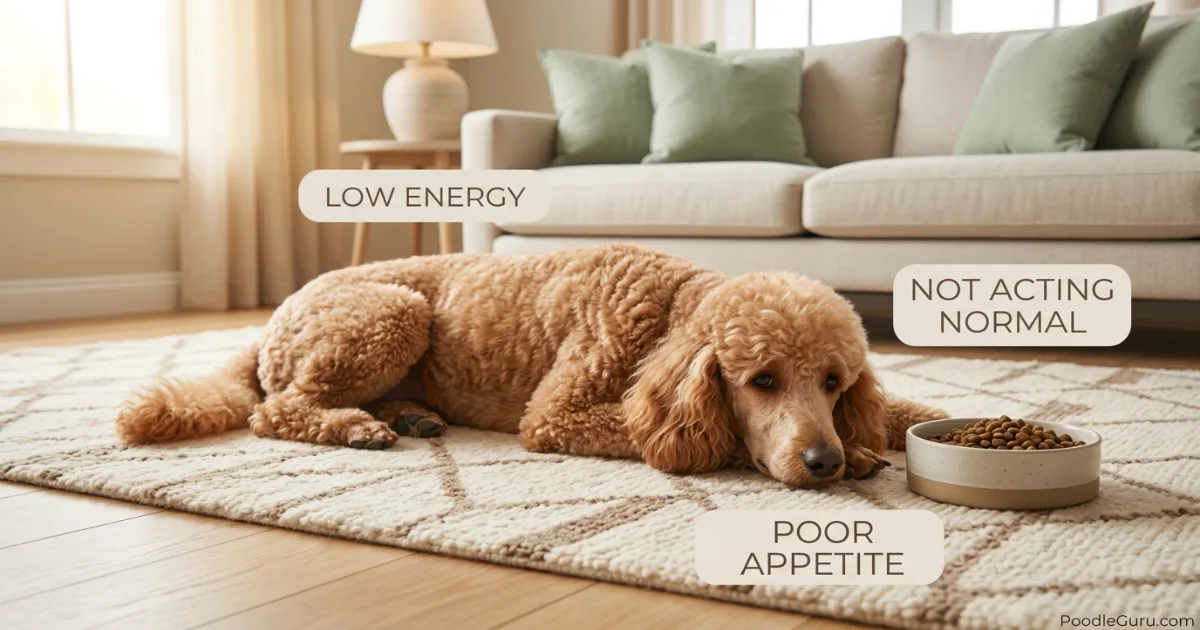
Poodle Addison’s disease can look mild at first. The key pattern is often repetition: symptoms come, go, and return. One single upset stomach does not mean Addison’s, but recurring vague illness should not be ignored, especially in a Standard Poodle.
Early or Chronic Signs Often Missed
- Intermittent vomiting or diarrhea
- Lethargy or unusual tiredness
- Reduced appetite or picky eating that is new for your dog
- Weight loss or poor body condition
- Shaking, trembling, or muscle weakness
- Drinking or urinating more than usual in some cases
- Slow recovery after exercise, grooming, travel, or stress
- A general sense that your Poodle is “off” without a clear reason
Addisonian Crisis Signs: Veterinary Emergency
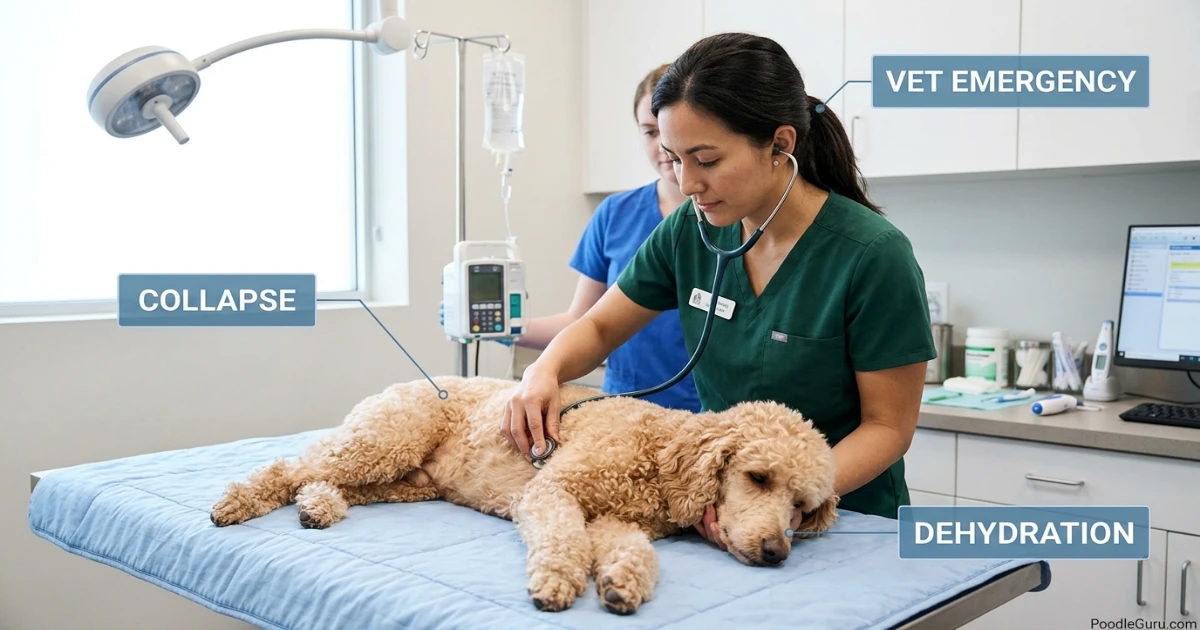
- Sudden collapse or inability to stand
- Severe weakness or extreme lethargy
- Repeated vomiting or diarrhea
- Severe dehydration, sunken eyes, or tacky gums
- Pale gums, cold limbs, or signs of shock
- Low body temperature or abnormal heart rhythm noted by a vet
- Loss of consciousness
Emergency rule: If your Poodle collapses, becomes severely weak, or cannot keep water down, do not wait to “see if it passes.” Addisonian crisis can be fatal without urgent veterinary treatment.
How Veterinarians Diagnose Poodle Addison’s Disease
Veterinarians usually begin with a physical exam, history, and bloodwork. In classic Addison’s, bloodwork may show low sodium, high potassium, dehydration-related kidney value changes, or other clues. However, not every Addisonian dog has textbook electrolytes, especially in atypical cases.
The most important confirmatory test is the ACTH stimulation test. Your vet measures cortisol before and after giving synthetic ACTH. A healthy adrenal gland should respond by making more cortisol. In a dog with Addison’s, the cortisol response is low or flat.
Depending on the case, your vet may also recommend urine testing, an ECG if potassium is high, abdominal ultrasound, baseline cortisol screening, or additional hormone testing to clarify whether the problem is primary or secondary Addison’s.
| Test | What It May Show | Why It Matters |
|---|---|---|
| Electrolyte panel | Low sodium, high potassium, or abnormal sodium:potassium ratio | Common clue in classic Addison’s, but not always abnormal in atypical cases |
| ACTH stimulation test | Low baseline cortisol and little-to-no rise after ACTH | Commonly used confirmatory test for Addison’s disease |
| Baseline cortisol | Very low cortisol may raise suspicion | Useful screening tool, but not the same as a full confirmation |
| ECG / heart monitoring | Heart rhythm changes if potassium is dangerously high | Important in emergency or crisis cases |
| Ultrasound | Sometimes small adrenal glands or other supportive findings | Helpful in some cases, but not usually definitive alone |
Treatment: Crisis Stabilization, Then Lifelong Management
An Addisonian crisis is treated by a veterinarian with emergency support such as IV fluids, glucocorticoid therapy, electrolyte correction, and monitoring. The exact plan depends on the dog’s condition, potassium level, blood pressure, hydration, and other test results.
Once stable, long-term management usually means replacing the hormones the adrenal glands are not making properly. Many dogs need a mineralocorticoid replacement for aldosterone support and a glucocorticoid replacement for cortisol support.
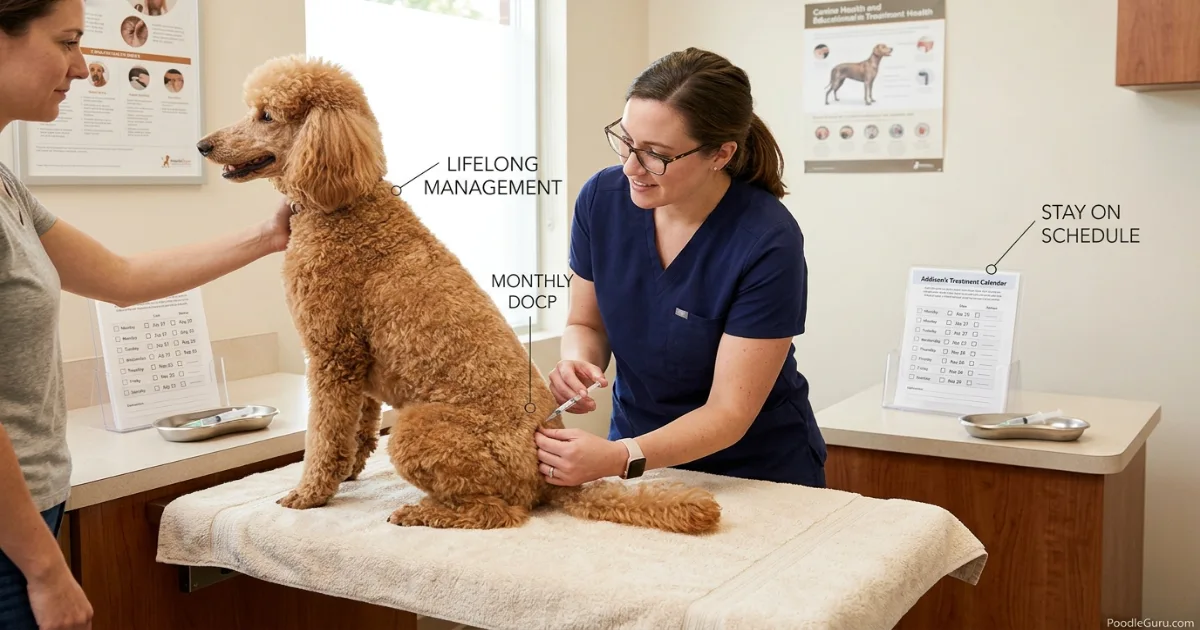
- DOCP injections: Desoxycorticosterone pivalate is commonly given by injection on a schedule set by the veterinarian. Many owners eventually learn to give injections at home if their vet approves.
- Fludrocortisone tablets: Some dogs are managed with daily oral fludrocortisone instead of DOCP. Your vet chooses based on the dog, availability, response, and cost.
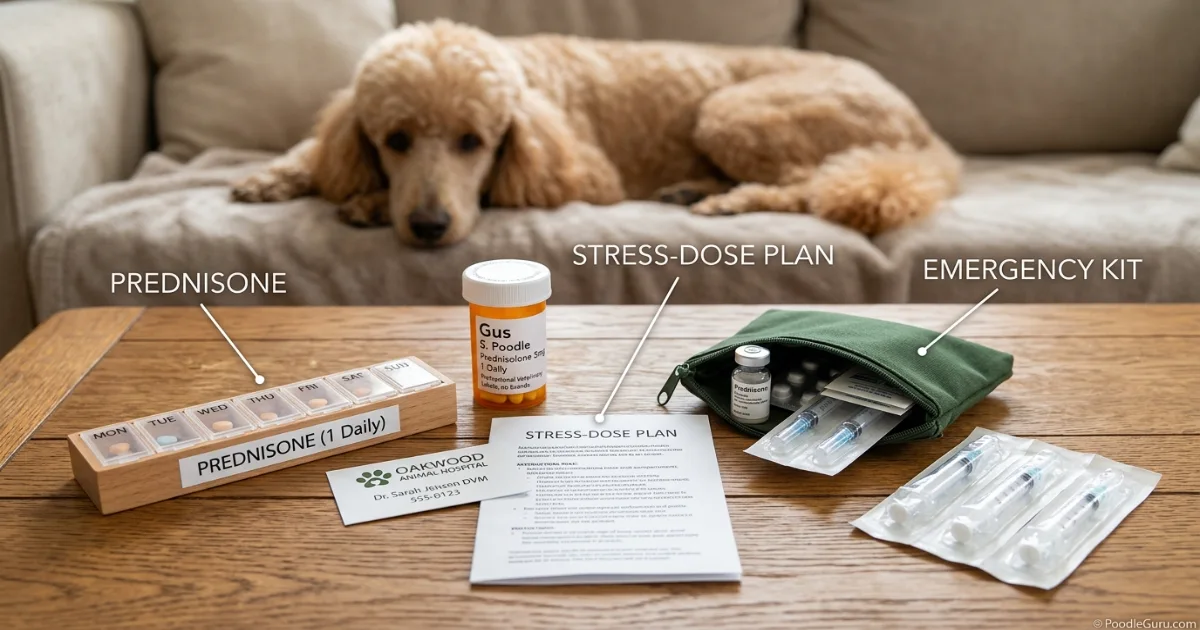
- Prednisone or prednisolone: A low dose may be used for cortisol replacement. Dosing should be individualized because too much steroid can cause side effects.
- Stress dosing: During illness, surgery, travel, boarding, grooming stress, or major events, your vet may instruct you to temporarily increase glucocorticoid support.
Never change, stop, or “naturalize” Addison’s medication without your vet. Diet, supplements, or salt changes cannot replace missing adrenal hormones.
Monitoring a Poodle with Addison’s Disease
Good monitoring is what turns Addison’s from a frightening diagnosis into a manageable condition. Your veterinarian will set the schedule, but stable dogs often need periodic electrolyte checks, medication adjustments, weight checks, and review of symptoms. Newly diagnosed dogs usually need closer monitoring until the right medication dose and timing are clear.
Owners should keep a simple health log. Record appetite, vomiting, stool changes, energy, water intake, medication dates, stressful events, and any extra steroid dose given under veterinary instructions. This log makes vet visits more useful and helps catch small changes before they become urgent.
🐩 Practical Management Tips for Owners
- Use calendar reminders for injection days, tablet refills, and bloodwork appointments.
- Keep an emergency card in your wallet or phone that says your dog has Addison’s disease.
- Teach sitters and groomers what symptoms are urgent and who to call.
- Do not skip monitoring just because your Poodle looks normal; electrolytes can change quietly.
- Ask your vet for a written stress-dose plan before travel, surgery, boarding, or major routine changes.
The Real Cost of Treating Poodle Addison’s Disease
💰 Financial Reality of Addison’s Management
Costs vary widely by country, clinic, dog size, medication dose, emergency severity, and whether specialty or overnight care is needed.
Initial diagnosis or crisis care: Emergency stabilization and diagnostic testing can be expensive, especially if hospitalization, IV fluids, ECG monitoring, or repeated bloodwork are needed.
Ongoing medication: Monthly injections or daily tablets plus steroid replacement create a recurring cost. Standard Poodles usually cost more to medicate than smaller dogs because dose often depends on body weight.
Monitoring: Electrolyte checks and follow-up visits are part of responsible care. Your vet will decide how often they are needed after your dog becomes stable.
Owner takeaway: Addison’s is manageable, but it is not a casual condition. Prospective Standard Poodle owners should understand that lifelong medication and monitoring may be part of the breed’s health reality.
What Buyers and Owners Often Get Wrong
“The breeder tested the parents, so my puppy cannot get Addison’s.” There is no simple widely used commercial DNA test that guarantees a Standard Poodle will never develop Addison’s. Good breeders reduce risk through transparency and pedigree awareness, not impossible promises.
“If my Poodle has Addison’s, I will never manage the injections.” Many owners feel nervous at first. With veterinary training, some learn to give injections calmly at home. Others prefer clinic visits. Both approaches can work if the schedule is consistent.
“My dog vomited once, so it must be Addison’s.” One isolated vomiting episode is not enough to diagnose anything. The concern rises when signs repeat, stack together, or come with weakness, weight loss, dehydration, electrolyte changes, or collapse.
“Once my Poodle looks better, we can stop medication.” Addison’s usually requires lifelong management. Stopping medication without veterinary direction can trigger a crisis.
Living a Full Life with Addison’s Disease
Addison’s disease is serious, but it is not automatically a poor-quality-life diagnosis. Once properly stabilized, many Poodles return to normal routines: walks, training, play, cuddling, travel, and even sports with veterinary guidance. The disease becomes part of the calendar rather than the whole story.
The owners who do best are the ones who respect the condition without living in panic. They know their dog’s baseline. They keep medication on schedule. They plan ahead for stress. They communicate clearly with their vet. With that routine, a Poodle with Addison’s disease can still be the same clever, affectionate, funny companion you loved before diagnosis.
Frequently Asked Questions
What is Addison’s disease in Poodles?
Addison’s disease, or hypoadrenocorticism, happens when a Poodle’s adrenal glands do not produce enough essential hormones, especially cortisol and sometimes aldosterone. This can affect stress response, hydration, blood pressure, and electrolytes.
What are the first signs of Addison’s disease in a Poodle?
Early signs can include recurring vomiting, diarrhea, tiredness, poor appetite, weight loss, shaking, weakness, or a general “not right” pattern that comes and goes. These signs overlap with many other illnesses, so veterinary testing is needed.
How is Addison’s disease diagnosed in Poodles?
Veterinarians may suspect Addison’s from symptoms and bloodwork, especially electrolyte changes. The ACTH stimulation test is commonly used to confirm that the adrenal glands are not producing enough cortisol.
How is Addison’s disease treated in Poodles?
Treatment usually involves lifelong hormone replacement, such as DOCP injections or fludrocortisone for mineralocorticoid support, plus a low-dose glucocorticoid such as prednisone or prednisolone when prescribed. The exact plan must come from a veterinarian.
Can a Poodle with Addison’s disease live a normal life?
Many properly treated Poodles live active, happy lives. They need consistent medication, stress planning, and regular monitoring, but diagnosis does not mean the end of a good quality of life.
Is there a genetic test for Addison’s in Standard Poodles?
Research continues, but owners should not rely on a simple guarantee-style DNA test. Responsible breeding depends on pedigree tracking, disclosure of affected relatives, and participation in health research where possible.
How much does treating a Poodle with Addison’s cost?
Costs vary greatly by country, clinic, dog size, medication type, and whether emergency care is needed. Standard Poodles may cost more than smaller dogs because medication dose often relates to body weight.
Can diet alone manage Addison’s disease?
No. Diet cannot replace missing adrenal hormones. Food quality matters for overall health, but Addison’s disease requires veterinary diagnosis and medication management.
📋 Summary: Poodle Addison’s disease is a serious but often manageable endocrine condition. It can mimic stomach upset, stress, or vague illness before becoming an emergency. Standard Poodle owners should be especially alert to recurring vomiting, diarrhea, weakness, shaking, weight loss, or collapse. Veterinary diagnosis usually centers on bloodwork and ACTH stimulation testing. With consistent medication, stress-dose planning, and monitoring, many affected Poodles continue to live joyful, active lives.
Medical Sources Reviewed
- Merck Veterinary Manual: Addison Disease in Animals
- VCA Animal Hospitals: Addison’s Disease in Dogs
- VCA Animal Hospitals: Testing and Monitoring in Addison’s Disease
- Cornell Riney Canine Health Center: Addison’s Disease
- University of Minnesota Canine Genetics Lab: Addison’s Disease Genetics Study in Standard Poodles