Is Teacup Poodle AKC Recognized? Honest Buyer Warning
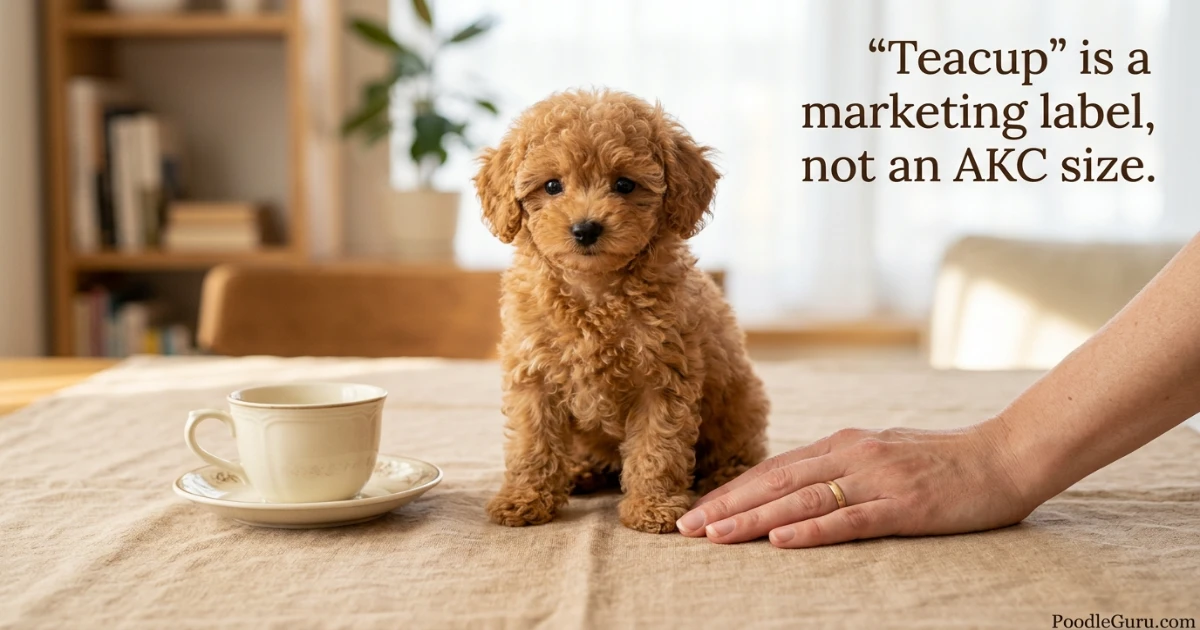
No. The American Kennel Club does not recognize “teacup poodle” as an official Poodle variety, size class, or breed designation. AKC-recognized Poodles are classified as Toy, Miniature, or Standard by height. A very small Poodle may be AKC registered as a Toy Poodle if its pedigree qualifies, but its papers will not say “teacup.” The word “teacup” is a marketing label, and buyers should treat it as a red flag until the breeder proves health testing, ethical breeding, and transparent records.
Few phrases create as much confusion in the poodle world as “teacup.” Online listings promise palm-sized companions with luxury pricing, tiny-bag photos, and phrases that make the puppy sound rare. The label feels exclusive, but it is not an official breed term. That is why the question “is teacup poodle AKC recognized?” matters so much. It separates real registry language from sales language.
This guide explains what “teacup” really means, what the AKC actually recognizes, why AKC registration is not the same as breeder quality, and how to avoid paying premium money for a fragile or poorly bred puppy. If you are considering a very small Poodle, read this before sending a deposit.
Marketing, Not Breed
“Teacup” is not an official Poodle variety. It is usually used to describe an unusually small Toy Poodle.
AKC Reality
The AKC standard recognizes Toy, Miniature, and Standard Poodles. It does not add a teacup category.
Buyer Warning
“AKC teacup poodle” often means a Toy Poodle is being advertised with a nonstandard sales label.
Health First
Extreme smallness can increase risk in daily life. A sturdy Toy Poodle is usually the safer small-poodle choice.
What Does “Teacup Poodle” Actually Mean?
In puppy ads, “teacup poodle” usually means a Toy Poodle expected to remain smaller than the typical Toy Poodle sold as a pet. Some sellers use the term for puppies expected to mature around 3 to 4 pounds. Others use it loosely for the smallest puppy in a litter, even when adult size is uncertain. Because there is no official standard for the word, the definition changes from one seller to the next.
That lack of consistency is the problem. One breeder may mean “small but healthy Toy Poodle.” Another may mean “runt marketed at a premium.” A third may be intentionally breeding the smallest dogs together and ignoring structure, teeth, patellas, temperament, or long-term health. Since no registry certifies the teacup label, the word functions mostly as a sales tool.
Do not confuse “small” with “well bred.” A tiny puppy can still come from poor breeding, broker networks, or parents that were never health tested. The safer question is not “how tiny will it stay?” It is “are the parents healthy, appropriately built, tested, and raised by a responsible breeder?”
Is Teacup Poodle AKC Recognized?
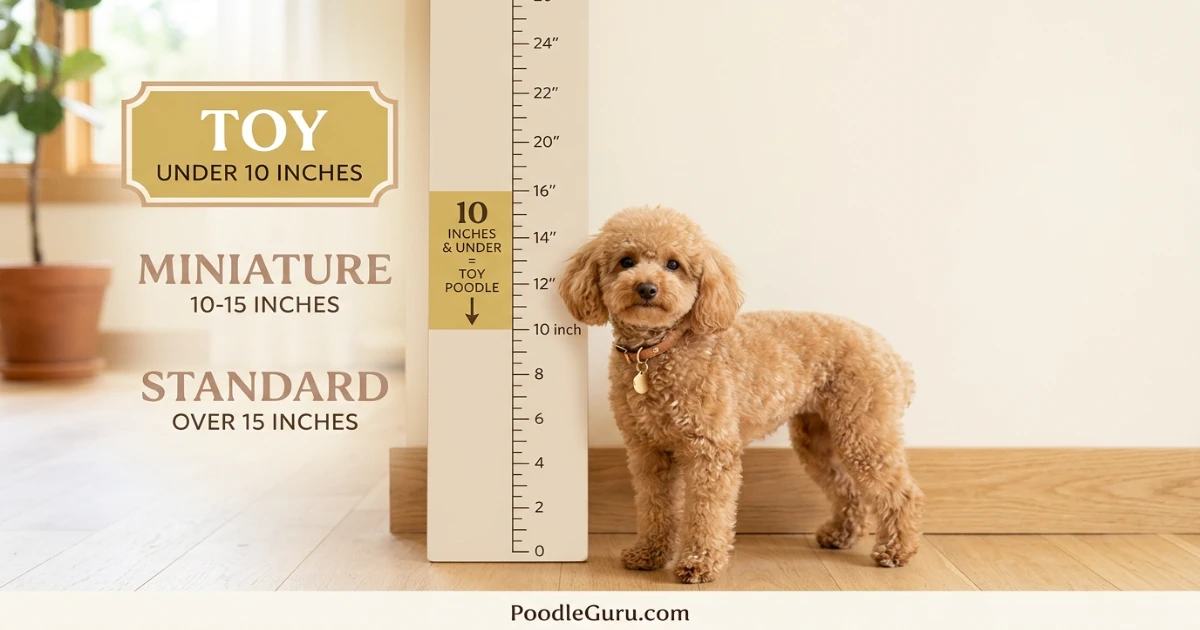
No. The AKC Poodle standard recognizes three varieties based on height: Standard, Miniature, and Toy. Toy Poodles stand 10 inches or under at the shoulder. Miniature Poodles are over 10 inches and up to 15 inches. Standard Poodles are over 15 inches. There is no AKC teacup variety, no teacup class, and no “teacup poodle” title on registration paperwork.
This is where many buyers get trapped. A seller may advertise an “AKC registered teacup poodle.” That wording can sound official, but it is usually a mix of two different ideas. The puppy may be eligible for AKC registration as a Toy Poodle, while “teacup” remains only the seller’s description. AKC registration tracks purebred lineage; it does not automatically prove that a breeder is ethical, that the puppy is healthy, or that the marketing label is recognized.
The AKC recognizes Poodles by Toy, Miniature, and Standard size classes, not as a separate “teacup” variety. For official reference, see the AKC Toy Poodle breed page and the Poodle Club of America size guide. PCA educational material also warns that terms such as “Tea Cup Toy” and “Tiny Toy” are marketing terminology, not separate official varieties.
AKC Papers Do Not Make “Teacup” Official
This is the point that lowers buyer risk the most: AKC registration and “teacup” advertising are not the same thing. A puppy can come from AKC-registered parents and still be marketed with an unofficial label. The registration may confirm that the dog belongs to the Poodle breed, but the document will not create a fourth AKC size category. If someone says “AKC teacup poodle,” ask them to show the actual registered variety. The honest answer should be Toy Poodle, Miniature Poodle, or Standard Poodle.
AKC papers also do not replace breeder due diligence. They do not guarantee that the parents were health tested, that the puppy was raised in a clean home, that the smallest puppy was safe to sell, or that the breeder will support you after purchase. For buyers asking is teacup poodle AKC recognized, the safest answer is simple: the Poodle may be AKC registered as a Toy, but “teacup” is still only marketing language. Choose the breeder’s health records, transparency, and puppy-raising practices over the smallest advertised size.
The Real AKC Size Classification for Poodles
Here is the simple breakdown buyers should memorize before comparing listings.
| AKC Variety | Official Height Language | Common Pet-Owner Expectation | What Buyers Should Know |
|---|---|---|---|
| Toy Poodle | 10 inches or under at the shoulder | Small companion size | This is the smallest AKC Poodle variety. “Teacup” is not added below it. |
| Miniature Poodle | Over 10 inches and up to 15 inches | Small-to-medium companion size | Often sturdier than very tiny Toys while still compact. |
| Standard Poodle | Over 15 inches at the shoulder | Medium-to-large athletic companion | Height, build, and soundness matter more than marketing labels. |
| “Teacup Poodle” | Not an AKC variety | Usually advertised as an extremely small Toy Poodle | Treat as marketing language until the breeder proves ethics and health testing. |
How “Teacup” Listings Mislead Buyers
Teacup marketing works because it leans on emotion. Listings often show tiny puppies in cups, handbags, or cupped hands. Some photos use forced perspective, young puppy age, or carefully chosen props to make the dog look smaller than it will be as an adult. By the time a buyer asks practical questions, the cuteness has already done the selling.
Another common phrase is “AKC teacup poodle with papers.” Papers can matter, but they do not transform an unofficial term into an official one. If the puppy is registered, the variety should be Toy, Miniature, or Standard. If a breeder cannot clearly explain that distinction, or keeps using “teacup” as proof of special status, step back.
Champion-line claims also deserve caution. A responsible breeder can have excellent lines and still produce pet puppies, but ethical Poodle breeders do not build their reputation around shrinking dogs below sound structure. They talk about temperament, health testing, conformation, socialization, and lifetime support. Sellers who talk only about tiny size are telling you what they value most.
Health Risks When Extreme Smallness Becomes the Goal
Not every tiny Toy Poodle is unhealthy, and not every small breeder is irresponsible. Still, deliberately chasing the smallest possible size can narrow the safety margin for a dog. Very small puppies have less body reserve, less room for normal dental alignment, and more vulnerability to everyday accidents. Buyers should understand these risks before choosing a puppy primarily because it is tiny.
- Hypoglycemia risk: Very small puppies can be more vulnerable to blood sugar drops, especially during stress, missed meals, illness, or the transition to a new home.
- Fragile bones: Extremely tiny dogs may be more easily injured by falls, rough handling, or jumping from furniture.
- Dental crowding: Small jaws can make retained baby teeth, crowding, tartar, and gum disease more likely.
- Breathing concerns: Some toy-sized dogs may be prone to tracheal or airway issues, especially if structure is poor.
- Open fontanelle or skull concerns: Some very tiny puppies may have delayed skull closure or other developmental issues that need veterinary assessment.
- Higher management needs: Extra-small dogs may need more careful feeding schedules, safer household setup, gentle handling, and closer monitoring.
If a seller brushes off hypoglycemia, fragile bones, dental crowding, or developmental concerns as “normal teacup things,” that is not reassuring. A responsible breeder should be able to explain health testing, early feeding routines, puppy-proofing, and when to call a veterinarian.
What Buyers Usually Get Wrong About Teacup Poodles
The first mistake is believing “teacup” means official rarity. It does not. It means a seller has chosen a word that attracts buyers who want the smallest possible puppy. Sometimes the dog is simply a small Toy Poodle. Sometimes it is the smallest puppy in a litter. Sometimes it comes from breeding choices that prioritize size over soundness.
The second mistake is assuming a higher price means better breeding. A teacup-labeled puppy may cost more than a responsibly bred Toy Poodle, but the extra money often reflects demand and branding, not better genetics. Real value comes from health-tested parents, careful puppy raising, clear contracts, appropriate socialization, honest adult-size expectations, and breeder support after the sale.
The third mistake is assuming AKC registration protects the buyer from poor practices. AKC registration can confirm pedigree eligibility, but it is not a health guarantee. The buyer still needs to ask for health testing, meet the breeder, review the contract, see where the puppies are raised, and understand what support exists if problems appear later.
2026 Price Guide: What You May Pay
Prices vary by region, breeder reputation, pedigree, health testing, grooming before pickup, training, and demand. The ranges below are general market expectations, not guarantees.
| Listing Type | Typical 2026 Price Range | What to Check Before Paying |
|---|---|---|
| “Teacup” Poodle listing | $2,800–$6,500+ | Confirm whether the dog is actually registered as Toy, what health testing exists, and whether size is being used to inflate price. |
| Ethically bred Toy Poodle | $2,000–$4,000+ | Look for health-tested parents, written contract, breeder support, age-appropriate placement, and honest size expectations. |
| Broker or pet-store “teacup” puppy | $3,000–$7,000+ | Be cautious if the breeder is hidden, parents are unavailable, health records are vague, or pickup is rushed. |
| Poodle rescue or rehome | Varies widely | Ask for vet records, temperament notes, size, age, dental status, and known medical needs. |
How to Spot a Responsible Small Poodle Breeder
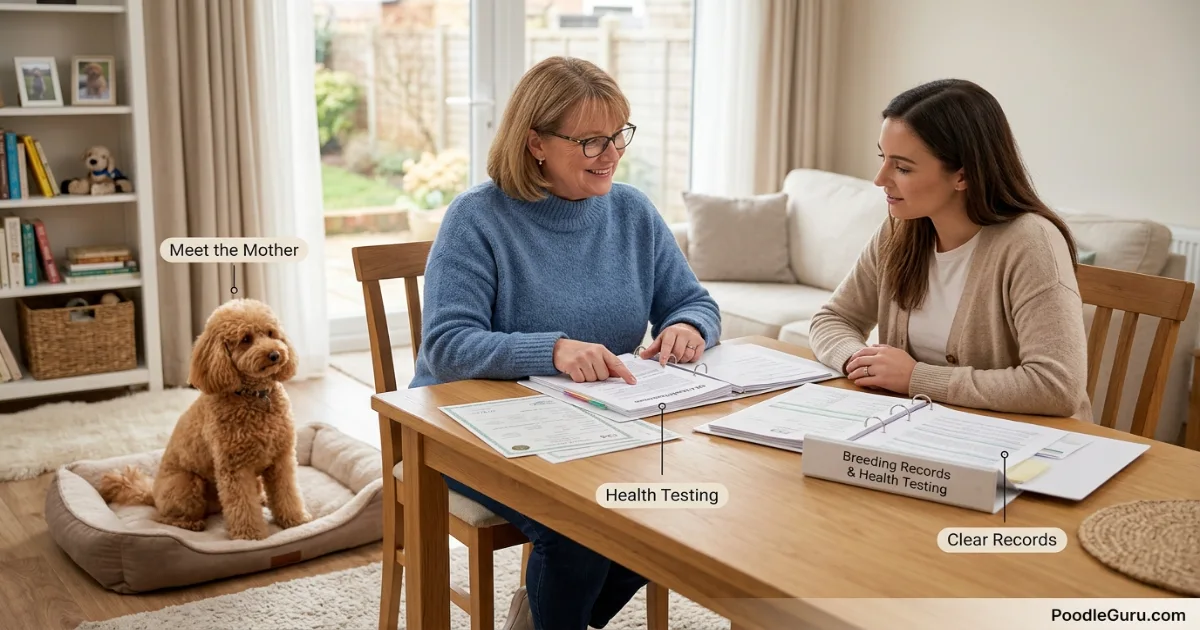
If you want a small Poodle, look for a breeder who speaks in official size language and can explain why health matters more than extreme tiny size. A trustworthy breeder should not pressure you with “last tiny teacup available” tactics. They should welcome questions, provide records, and care where the puppy goes.
Buyer Checklist Before Sending a Deposit
- Ask what AKC variety the puppy is registered as: The answer should be Toy, Miniature, or Standard, not “teacup.”
- Request parent health records: Ask about patellas, eyes, cardiac screening, and relevant genetic testing for Toy Poodles.
- Meet the puppy’s mother when possible: This helps you judge temperament, condition, and likely adult size.
- Avoid “micro,” “pocket,” and “extreme tiny” pressure language: These terms often signal marketing over welfare.
- Review the contract: Look for health guarantees, return policy, spay/neuter expectations, and breeder support.
- Ask about feeding schedule: Very small puppies need careful transition plans to reduce stress-related problems.
- Walk away from vague answers: A good breeder will not be offended by serious health questions.
Is a “Teacup” Poodle Ever Worth It?
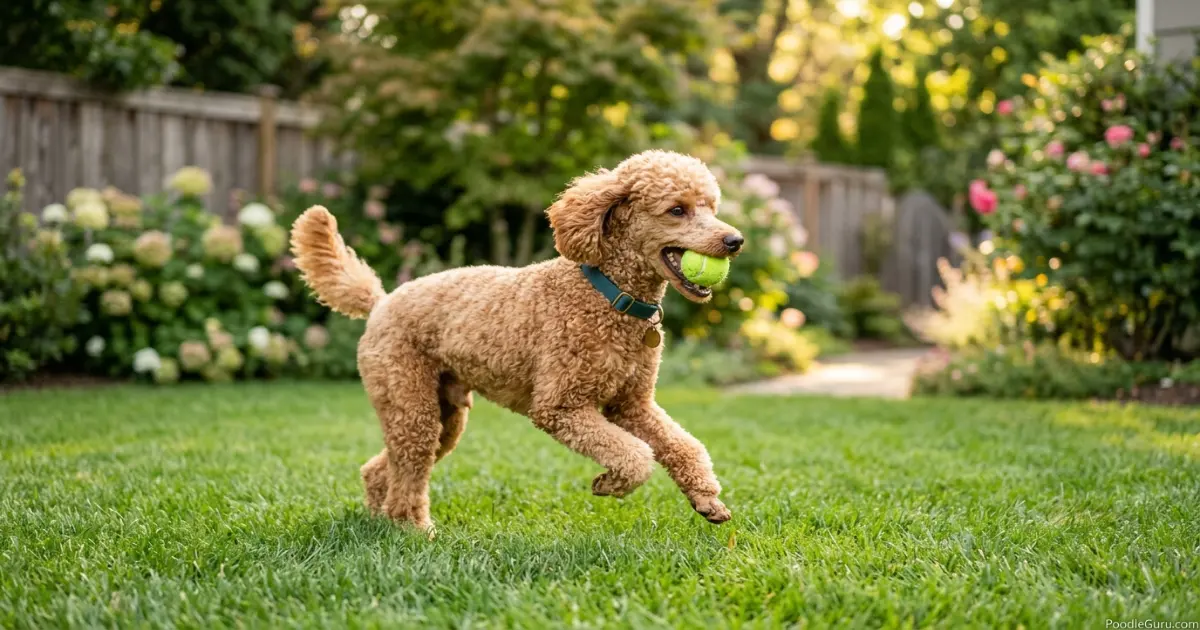
If your goal is a small, portable, affectionate companion, a well-bred Toy Poodle already delivers that. The practical difference between a sturdy 5-pound Toy Poodle and a fragile 3-pound puppy may look big on a sales page, but in daily life both are tiny. The sturdier dog usually has a better chance of normal play, safer handling, and fewer size-related worries.
That does not mean every small Toy Poodle should be rejected. It means buyers should reject the idea that smaller is automatically better. Choose the puppy with the best chance of a healthy, confident life, not the one photographed in the smallest cup. A dog is not a fashion accessory. Your Poodle will live with the breeder’s choices long after the online listing disappears.
Frequently Asked Questions About Teacup Poodle Recognition
Is a teacup poodle a real breed?
No. “Teacup poodle” is not a separate breed. It is a marketing term usually used for a very small Toy Poodle.
Can a teacup poodle be AKC registered?
Only as a Toy Poodle if the dog qualifies for AKC registration. The AKC does not register a separate teacup category.
What is the smallest poodle recognized by the AKC?
The Toy Poodle is the smallest AKC Poodle variety. The AKC standard describes Toy Poodles as 10 inches or under at the shoulder.
Why do breeders use the word teacup if it is not official?
Because it attracts buyers and can increase perceived value. The term suggests rarity, but it is not an official breed-standard designation.
Are teacup poodles more expensive than Toy Poodles?
Often yes, but the higher price usually reflects demand and marketing, not official recognition. Health testing and breeder ethics matter more than size claims.
Are all teacup poodles unhealthy?
No, but extreme smallness can increase risk. Buyers should look for a sturdy Toy Poodle from health-tested parents rather than choosing only by tiny size.
What health questions should I ask a teacup poodle breeder?
Ask about parent health testing, patellas, eyes, cardiac screening, dental history, feeding schedule, hypoglycemia prevention, and what happens if the puppy develops a health issue.
How can I find a healthy small poodle without supporting risky teacup breeding?
Choose an ethical Toy Poodle breeder who uses official size terms, health-tests parents, raises puppies in a clean home environment, and prioritizes temperament and structure over extreme tiny size.
The Honest Truth for Buyers
So, is teacup poodle AKC recognized? No. The AKC recognizes Toy, Miniature, and Standard Poodles. “Teacup” is not an official variety; it is a sales label that can range from harmless description to serious breeder red flag. The safest buyer is the one who understands that papers do not make the teacup label official, and tiny size does not prove quality.
If you want a small Poodle, choose health, temperament, structure, and breeder transparency first. A well-bred Toy Poodle can give you the portable, loving companion you want without chasing an unofficial label that may cost more and protect less.